For Marcus King, sharing about his music comes with a powerful openness about his mental health struggles and substance abuse.
Such war stories aren’t uncommon among musicians, especially rock ’n’ soul road warriors like King. But the good-natured 28-year-old isn’t smiling, or laughing, or inviting flattery. He isn’t reminiscing so much as taking inventory of past traumas. By the time he was 11, King shares, he’d started experiencing what he now recognizes as panic attacks; once, in an effort to soothe a nasty cough, he drank an entire bottle of Robitussin, which led to a hallucinatory episode that frightened him deeply, intensifying these bouts of anxiety. “I would just get worked up,” he says. “I’m still learning how to address those and recognize them.”
“I struggled with that. Bipolar disorder ran in the family,” he adds, “I’ve had abandonment issues and poor attachment styles—all the things that I research now [while trying] to become the best partner that I can be.”
This is, of course, the language of mental-health maintenance, of therapy sessions and self-help reading lists, and King speaks it with equilibrium, like a man for whom sharing or purging means healing. (How’s this for metaphor: King joined our interview from a sauna.) Today, he’s found love and remains committed to both his own wellness and his opportunities as an artist to advocate for mental-health awareness.
Marcus King - F*ck My Life Up Again (Lyric Video)
Yet, he is also keenly aware that the kind of transparency that he expresses himself with isn’t much of a Dixie tradition. “I grew up in a Southern household, and men just didn’t really share their emotions openly,” says King, who was raised by his father, Marvin, a blues guitarist and singer. “Only through music would they even get close.”
King’s new album, Mood Swings, produced by Rick Rubin, is a kind of “open diary,” the guitarist explains, “for everybody to be able to open it up and have a look, have a read.” It chronicles the nadir of those long-running struggles with mental illness and substance abuse, as well as the redemption that arrived in the form of Mrs. Briley King, whom Marcus married last year in Nashville.
Following the vintage boogie rock of 2022’s Young Blood, the new record sounds especially bold, even brazen. At times it features King—a last bastion of guitar-driven integrity amongst late-millennial smartphone culture—performing atop programmed or sampled beats and high-tuned snares, Philly-soul strings, and stirringly modern vocal backing. It summons up an ambiance of contemporary R&B, pop and folk, and the smartly grooving studio-centric vibe that descends from Prince, as well as the artier psychedelic soul of songwriters like Brittany Howard. Sampled dialogue, from the landmark 1959 documentary The Faces of Depression and from one of King’s own elated, drunken voicemails, crops up as candid experimental touches. Mood Swings also finds the guitar god streamlining his solos into concise melodic delights of varying textures, placing the song and the sentiment before the Allmans-styled flights with which he made his name. “If you stay in your wheelhouse and you do something just like you’ve done before, you don’t lose any fans, but you don’t gain any,” King says. “I wanted to do something new and venture my own path and take the guitar along with me.
“[So why not] try to pitch [my instrument] in a way that’s more digestible to a generation who didn’t grow up with guitar-prominent music?”
“I’ve had abandonment issues and poor attachment styles—all the things that I research now [while trying] to become the best partner that I can be.”
Those newer generations, currently facing down historic mental-health crises, should have plenty to connect with in King’s album-length act of catharsis: “Mood Swings,” “F*ck My Life Up Again,” “Soul It Screams,” “Save Me,” “This Far Gone,” “Bipolar Love.” Even “Cadillac,” its namesake an icon of goodtime American songwriting, is a haunting exploration of suicidal ideation. “Not a lot of metaphor in the song; it’s just kind of straight up,” King says. “It is what it is: Cadillac, garage—just kind of my exit strategy, as it were. And not in any way trying to condone, or trying to glorify or romanticize that in any way. Just trying to be truthful as to where I was at the time.”
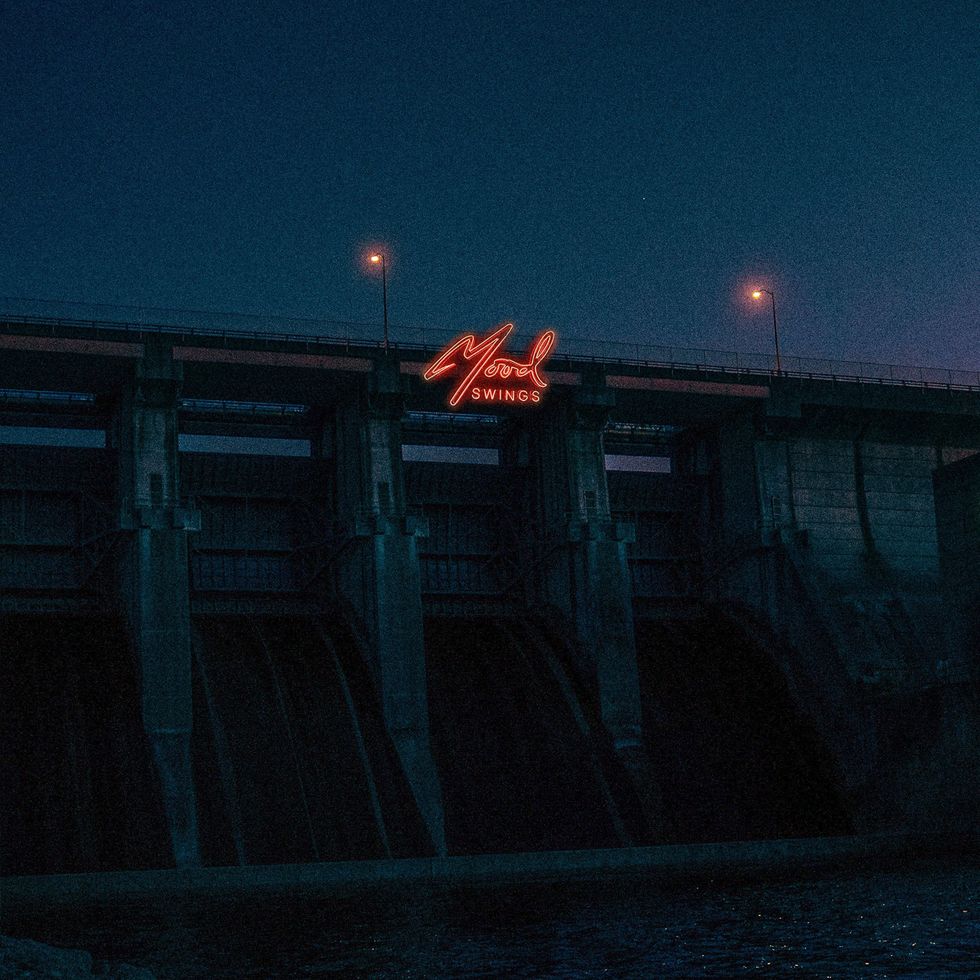
The recording sessions for Mood Swings started at Shangri-La Studios in Malibu, then later moved to Rubin’s facility in Tuscany, where King would pull 14-hour days working on the record.
Where had King been? To hear him recount the musician’s life that culminated in his version of rock bottom, he was in a kind of fever dream, shuttling between tour dates and writing and recording sessions, as his torment expanded and his ability to take care of himself withered. “I’m a mental patient, technically,” King says. “I seek treatment for mental, chemical imbalances.” But the day-to-day of a touring blues rocker didn’t square with what a therapist might call doing your homework. “I was medicated and then would be improperly medicated, because you’re not really home enough to see someone consistently,” he explains. “If you’re eating at all, you’re eating really shitty food and you’re just drinking your dinner, so your gut health is terrible, [and your] mental health is struggling as a result of it.” On the road nearly 300 days a year, King’s life was largely unfolding inside a van, without “a lot of shit to see between Colorado and St. Louis,” he says. “So you’re just kind of driving, and there’s a lot of ways to numb that—not only the pain, but the mundane as well.”
A few years ago, King started writing in Los Angeles, trapped in a soured relationship he was documenting in real time as new songs, some of which would end up on Mood Swings. He wrote about the “codependent nature of our relationship,” King says, “and the substance abuse that came with it and the excess in everything, passion included.” Later, after his partner suddenly moved thousands of miles away, a debilitating sense of isolation set in. “I couldn’t write; I couldn’t handle it,” he says. Idle time meant indulgence and the wrong kind of company. When concert schedules started up again following the pandemic, King had designs on the most desperate kind of farewell tour. “I had unfortunately made up my mind to check out of here in my own way,” he says, “on my own timeline.”
“I grew up in a Southern household, and men just didn’t really share their emotions openly. Only through music would they even get close.”
In 2019, prior to those writing sessions, the guitarist began talking to Rick Rubin. The super-producer had seen King perform “Goodbye Carolina,” an affecting midtempo rocker off 2018’s Carolina Confessions, in his Grand Ole Opry debut, and decided to make a cold call. “We spoke for quite a while about mental health and about viewing it as a writing partner,” King says, “allowing it to help me speak my truth.” A studied music fan whose knowledge belies his age, King had “always revered Rick,” he says. He recalls how Rubin’s late-career recordings of Johnny Cash were some of the last music that King and his grandfather, a country fan and performer, absorbed together. As a tween, the guitarist started digging into hip-hop, eventually making his way to the pioneering LPs that Rubin helmed for Def Jam, by the likes of Public Enemy, Beastie Boys, and Run-D.M.C. He especially appreciated Rubin’s beaten-path-detour efforts to combine rap and rock. “I really liked the phrasing,” he says, “and the way [hip-hop MCs] would rhythmically say what they needed to say over breakbeats. And I loved James Brown, and everybody [in hip-hop] was sampling ‘Funky Drummer,’ so everything just kind of came full circle in those moments.”
Marcus King's Gear
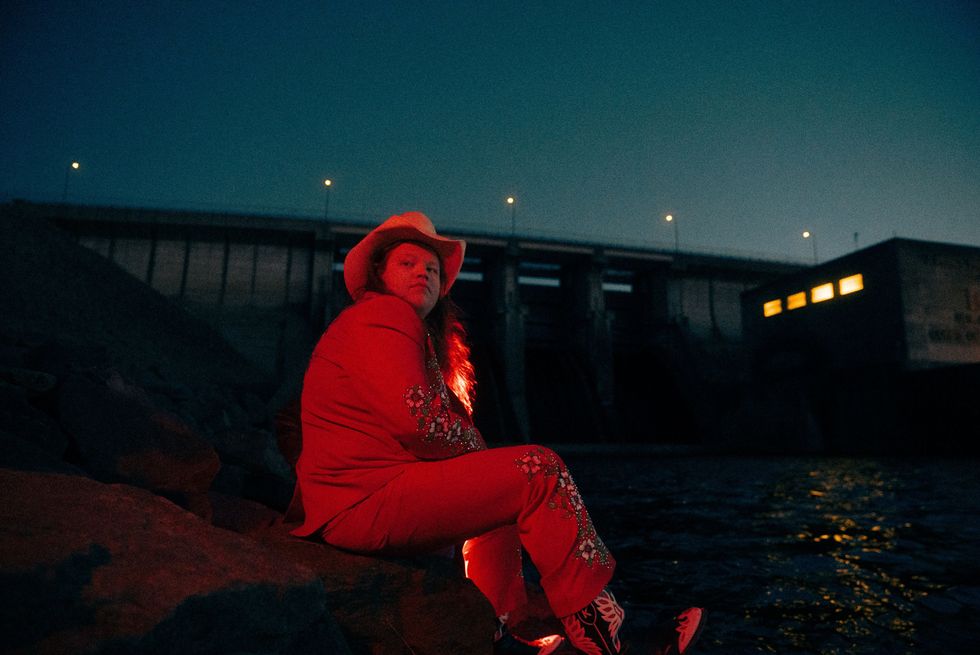
The 28-year-old King grew up listening to Johnny Cash, then later, hip-hop artists like Public Enemy and the Beastie Boys.
Guitars
- “Big Red”: 1962 Gibson ES-345 originally purchased by King’s grandfather
- Gibson Custom Shop Marcus King 1962 ES-345 with Sideways Vibrola
- 1962 Fender Stratocaster
- Harmony Sovereign acoustic
- Gibson dreadnought owned by Rick Rubin (used on Mood Swings)
- Gibson ES-330 (Shangri-La studio backline, used on Mood Swings)
- 1939 Martin D-18
Amps
- Fender Super Reverb (studio)
- Fender Deluxe Reverb (studio)
- Orange MK Ultra Marcus King Signature 30-watt head (live)
- Orange slanted 8x10 cabs with Celestion speakers (live)
- 1968 Fender Bandmaster head/Bassman cab with two Celestion 15" speakers (live)
Effects
- Ibanez Tube Screamer
- Tru-Fi Colordriver
- Tru-Fi Two Face
- Tru-Fi Ultra Tremolo
- Dunlop EP103 Echoplex Delay
- Dunlop Rotovibe
- MXR Phase 100
- MXR M300 Reverb
- MXR Micro Chorus
Strings & Picks
- Elixir Nanoweb (.011–.049)
- Dunlop Jazz III
When the sessions for Mood Swings commenced at the Shangri-La studio in Malibu, King found himself jamming with one of the funkiest drummers alive, Chris Dave, at Rubin’s behest. Alongside King and Dave, whose credits include Robert Glasper, D’Angelo, Maxwell and Meshell Ndegeocello, was keyboardist Cory Henry, a jazz, R&B, and gospel ace who earned acclaim in the fusion collective Snarky Puppy. Rubin’s idea, King comments, was simply for the trio “to create. And I think one of the initial ideas to approach this album was to kind of sample ourselves.” For about a week and a half, in six-, seven- and eight-hour days, the trio jammed and explored using a handful of simple, folkish songs King brought in.
For his part, Rubin was nowhere to be found, though he was still overseeing the sessions. “I’ll tell you,” King begins, “Rick is such a truthful, and whimsical, fan of music. He loves music so much, and he’s such a sweet human. But some of the stories you hear about him, about his eccentric approach to producing, are true.” Like the “Producer of Oz,” Rubin had GoPro cameras and microphones set up around the band, to monitor progress from afar. “He was like, omnipresent,” King says. “His presence was there, but not physically. It was really kind of a trip.”
“I was in that situation, like, breaking bad habits,” King adds, “and trying to abandon the idea that the structure and the form needed to be there before we started experimenting.”
“If you stay in your wheelhouse and you do something just like you’ve done before, you don’t lose any fans, but you don’t gain any.”
About a year later, after the sessions had moved to Rubin’s facility in Tuscany, songcraft came further into focus. King pulled 14-hour days, and Rubin, in the flesh, offered his famously sage insight. “I was really pleased to find out that this is the most intimately Rick’s been involved in a project in some time. And we spent every day together,” King says. “We would just sit on adjacent couches and listen back to what I’d done the day before.”
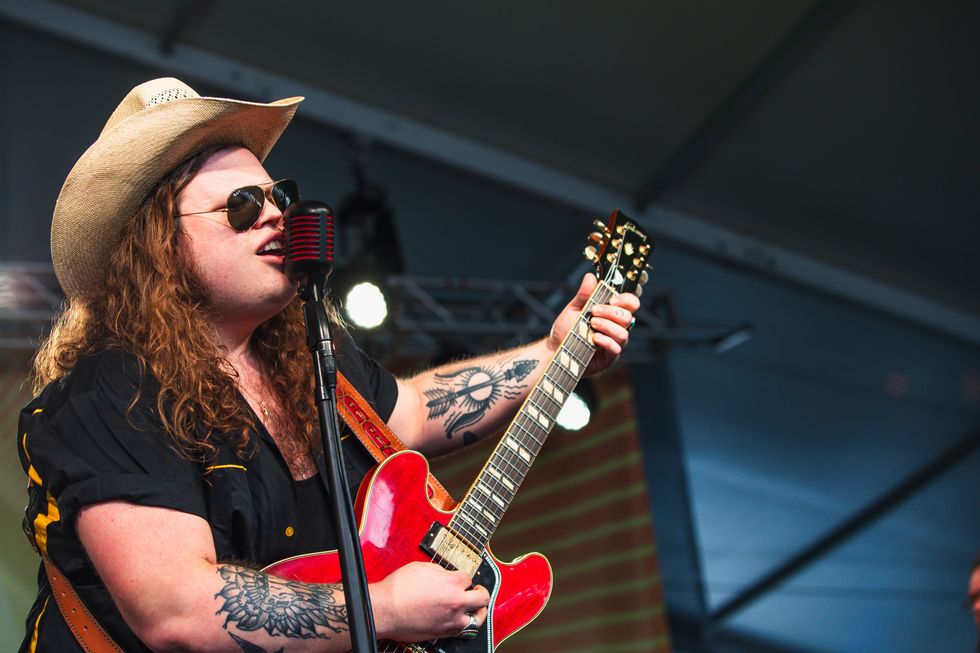
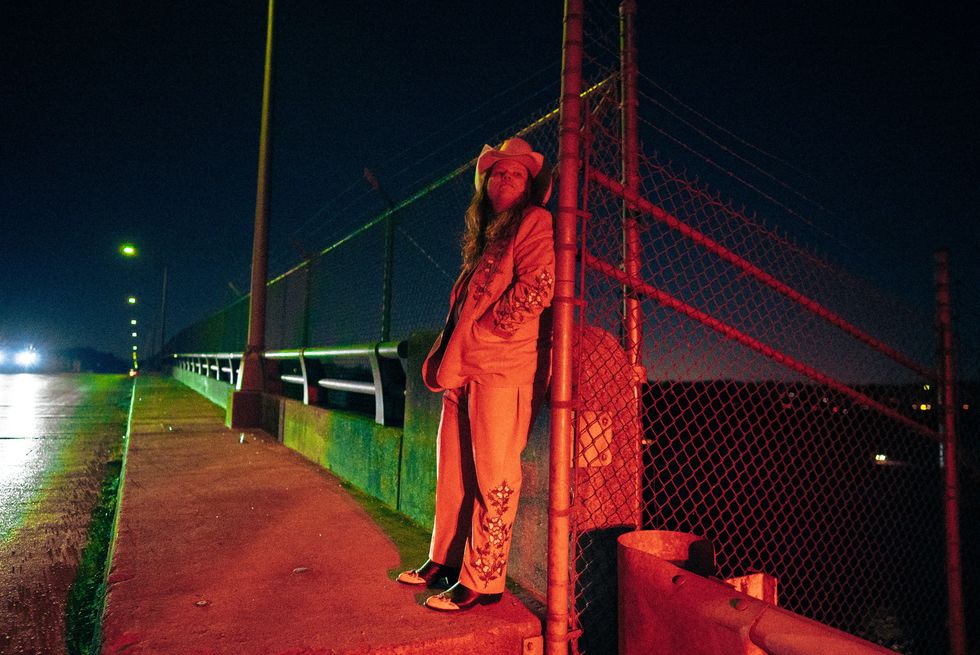
King first connected with Rubin after Rubin made a cold call to the guitarist after having been impressed by his Grand Ole Opry debut performance.
Photo by Tim Bugbee
One of the more fascinating angles of Mood Swings is how it represents progress, not only for King, but for his producer as well. Part of the Rubin lore has been his unmatched ability to deliver great artists from periods of profound and often painful change, by having them tap into their quintessential sounds, as if harnessing their most vital contributions to rock history. Think of Metallica’s return-to-thrash-form on Death Magnetic, or John Frusciante embracing sobriety to rejoin Red Hot Chili Peppers for Californication.
With Mood Swings, Rubin helped King regain his footing in life by unsettling him creatively, urging him toward audacious work that is nonetheless streaked with King’s signature brilliance. “Delilah” evokes the kind of wistful, classic R&B ballad that the Greenville, South Carolina’s Marcus King Band delivered with period precision. On “Bipolar Love,” its chorus a hooky, soulful marvel, King plays a luminous solo of unerring taste on Big Red, the trusty Gibson ES-345 that belonged to his grandfather, through a Fender Deluxe Reverb. Elsewhere, the album renders Marcus King a consummate neo-soul rhythm player and a shrewd, sonically curious soloist. Rubin and King employed the 6-string “the way that we approach any of the instrumentation that we love. We would deconstruct everything to the point that it was foundationally sound,” King says, so that “the song could stand up on its own with just the vocal.” (This was judicious, as King can sound like an heir apparent to Solomon Burke, with bits of Joplin grit.)
“We spoke for quite a while about mental health and about viewing it as a writing partner, allowing it to help me speak my truth.”
Still, expect to find multiple Reddit threads offering both transcriptions and attempts to decode the masterfully dialed tones throughout Mood Swings. To start, King explained that his leads here “are a little more polished, just because I wanted them to be more like written solos, almost. They were improvised in the moment, but obviously I was stacking them or adding harmonies…. Then [the solo] kind of became a part, because you gotta play it the same way every time.”
King is a guitar obsessive, to be sure, but you’d never tag him a geek; he speaks about gear and technique with a meaningful, big-picture expertise that comes off as nonchalance. During the Mood Swings sessions, he didn’t have access to a massive arsenal of gear, but did smart work with some loyal axes, among them Big Red and his red Tele, his ’62 Strat, his Harmony Sovereign acoustic, and a Gibson J-45 or J-50 owned by Rubin. On “F*ck My Life Up Again,” he tracked the backwards solo on a Strat, “trying to go full Hendrix,” he says. Amp-wise there, he recalls a “Super Reverb in a big chambered hallway—get some natural ’verb, amp cranked,” along with what he believes was his Tru-Fi Colordriver for fuzz. (I’d like to rank this the second-finest Hendrixian backwards solo to go down on Rubin’s watch, following only Frusciante on “Give It Away.”) For “Hero,” a cowrite with the Black Keys’ Dan Auerbach, he tracked a Strat slide solo on top of an acoustic lead. The slide work on the sanctified “Me or Tennessee” is a triumvirate of Strat, Super Reverb, and Tube Screamer, and finds King invoking the sacred-steel tradition, as turbocharged by Roosevelt Collier and Robert Randolph. For some of his favorite tones on the record, King decided to go straight “David Gilmour and hook the fuzz pedal up and play straight through the console and just high-pass it.”
The core performer trio on Mood Swings was made up of King, drummer Chris Dave, and keyboardist Cory Henry.
Mood Swings is still a kick-ass guitar record, even if it’s not a willfully “kick-ass guitar record” like King’s previous effort, Young Blood, produced by Auerbach with bloozy panache and released on Rubin’s American label. When that homage to the early ’70s was captured, King was still in a bad place. “I was really mentally detached during the recording process,” he admits, even as he takes pride in its ZZ Top swagger. And although certain songs foreshadowed the confessional bent of Mood Swings, King says he “didn’t feel as personally connected to some of the material.” In a way, he explains, his primary instrument became a crutch. “I felt like I leaned more heavily on the guitar, which had always been a safety blanket for me from when I was a kid, from young traumas to teenage traumas.”
“His presence was there, but not physically. It was really kind of a trip.”
Back in 2021, in the summer before Young Blood was announced, King returned to the road following the pandemic, opening dates for Nathaniel Rateliff. “On that first show back, I realized my actions and everything I was up to extracurricular-ly affected me performing,” King says. “I was having a hard time getting through the show.” The following morning, his health necessitated a doctor’s consult. “He said, ‘Just don’t quit everything at once, and just start putting things down,’” King shares. “And then that’s kind of when I started that process.” That same day, King met his wife, Briley, who sweetens “Delilah” and “Cadillac” with vocals. “I met her, and she had her shit together and I did not,” he says. “And I just wanted to have my shit together for her…. And I wanted to have my shit together for myself, for the first time in a long time.”
King’s focus these days, he says, is doing the heavy lifting of improving his physical and mental health. “It’s like anything else, man. It’s a skill and it’s not innate,” he argues. “I kind of [liken] it to reading music. I used to read music, but if you put something in front of me now, I couldn’t do it.”
Already his efforts are paying off. “I was out in L.A. recently, doing some work, and I got to the hotel I was staying at … and it was the same room that I’d stayed at when I wrote ‘Bipolar Love,’” he recalls. “Just being back in that same room … ’cause they say a man never stands in the same river twice, it felt like I was back in that river, I’d returned. And I just was completely different and water had already flowed through. It felt really full-circle and validating, the whole process.”
YouTube It
Watch King perform “Goodbye Carolina” in his 2019 Grand Ole Opry debut—the performance that captured the interest of super-producer Rick Rubin.