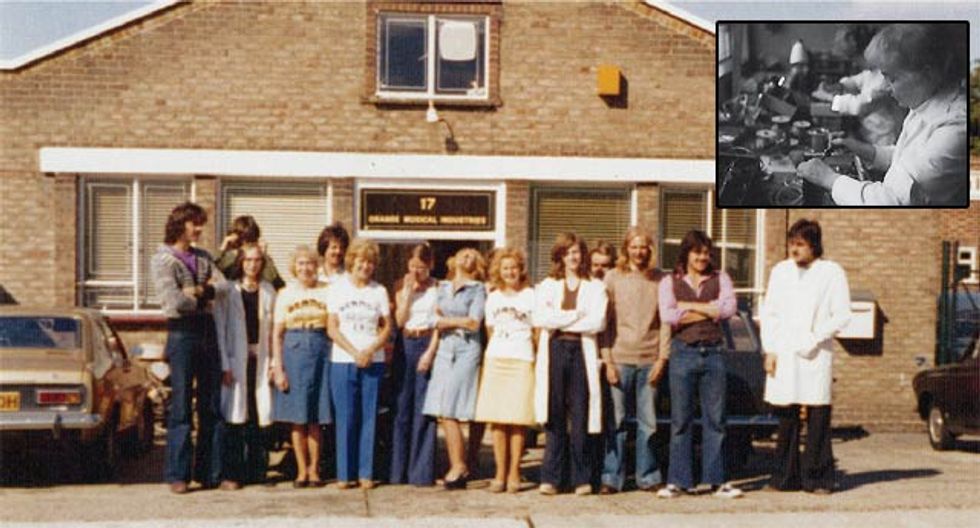
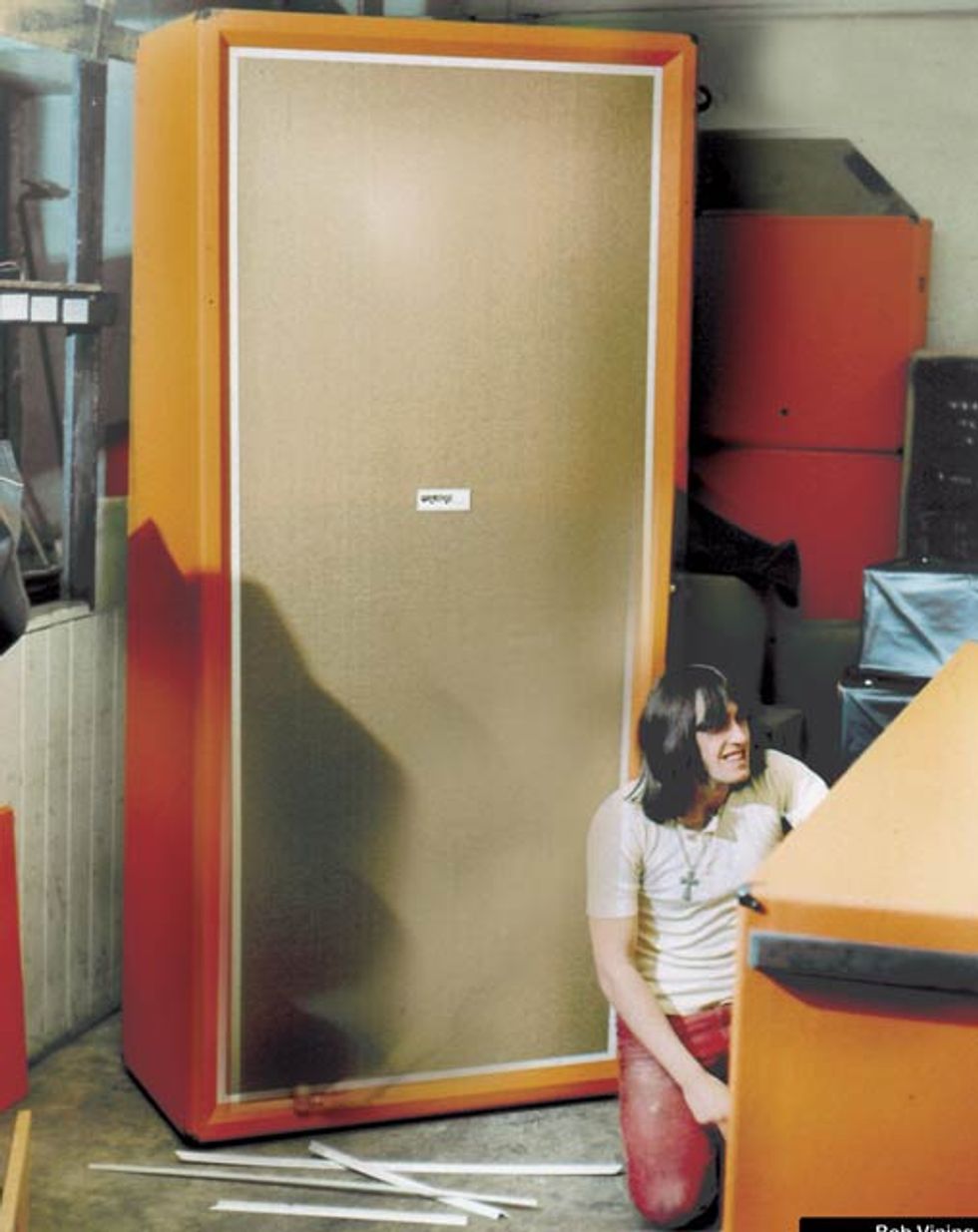
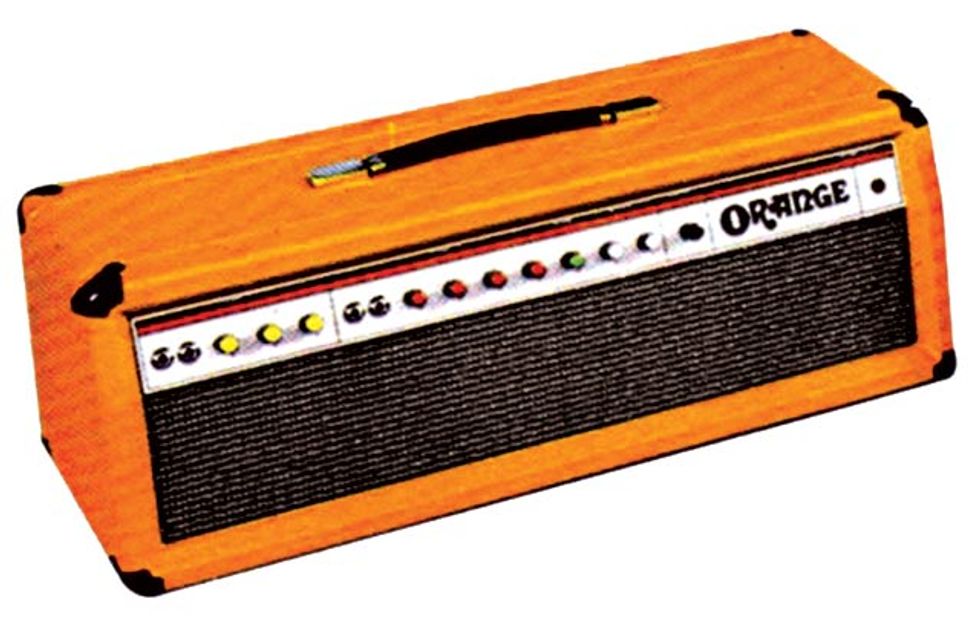
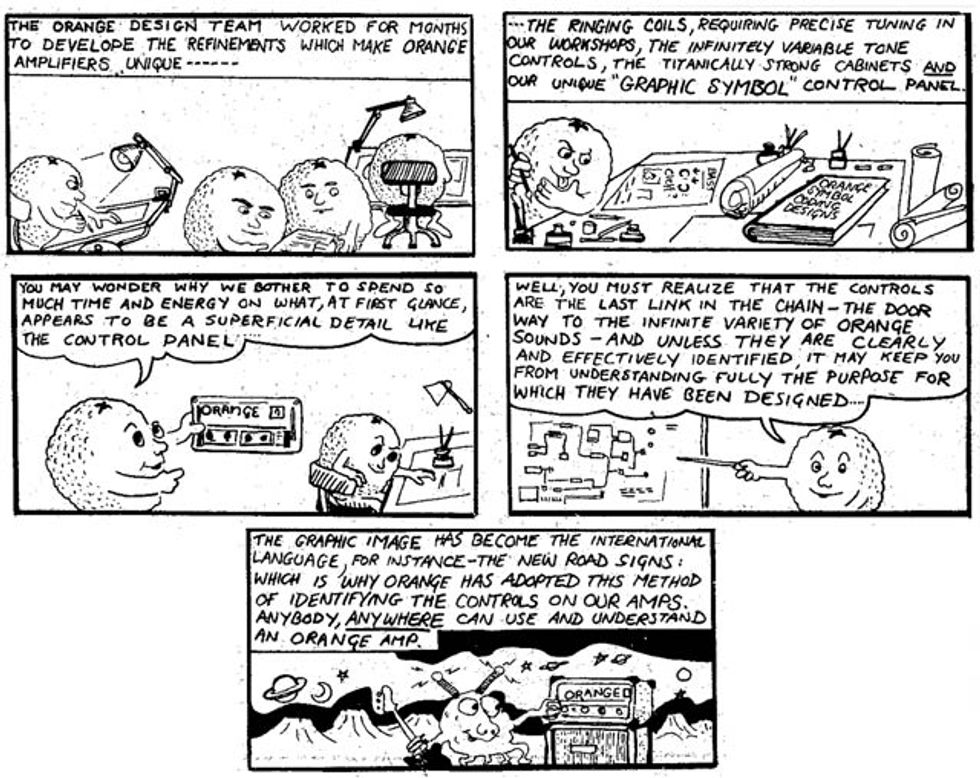
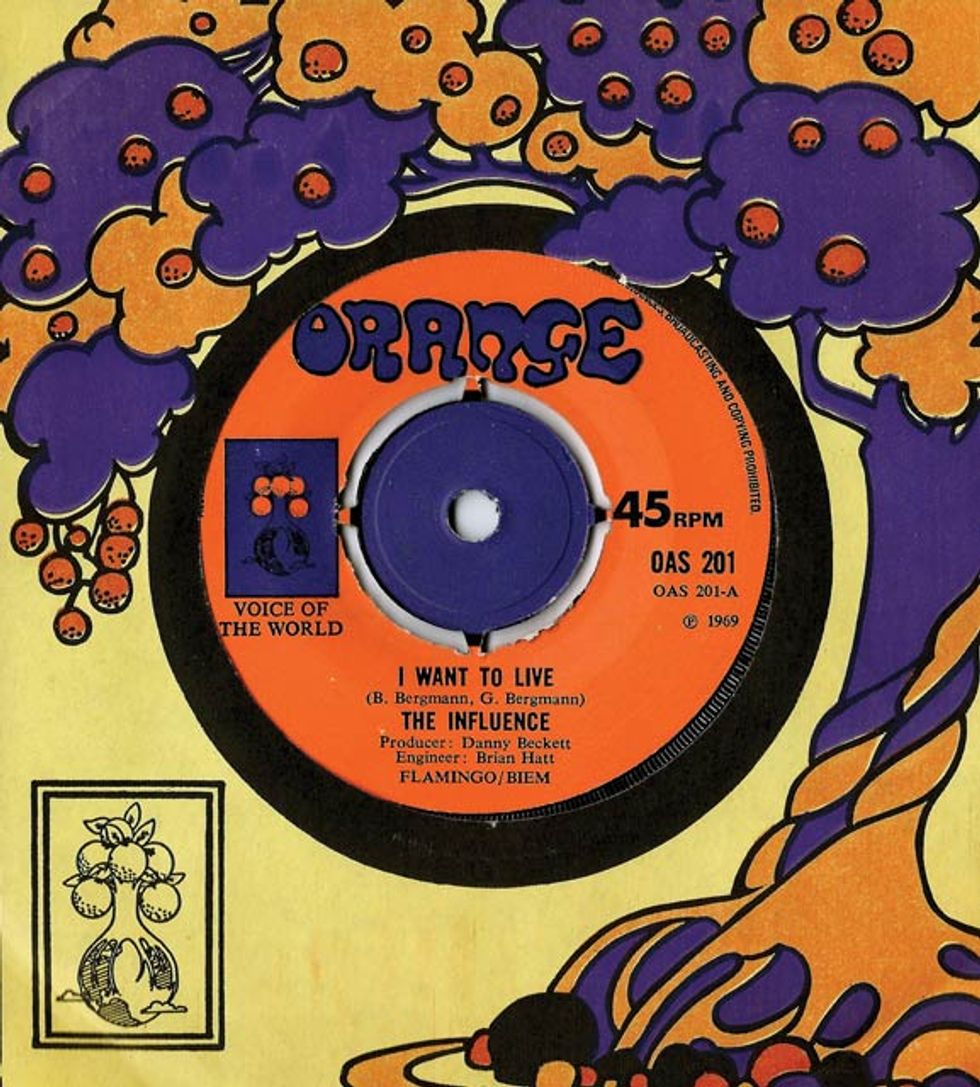
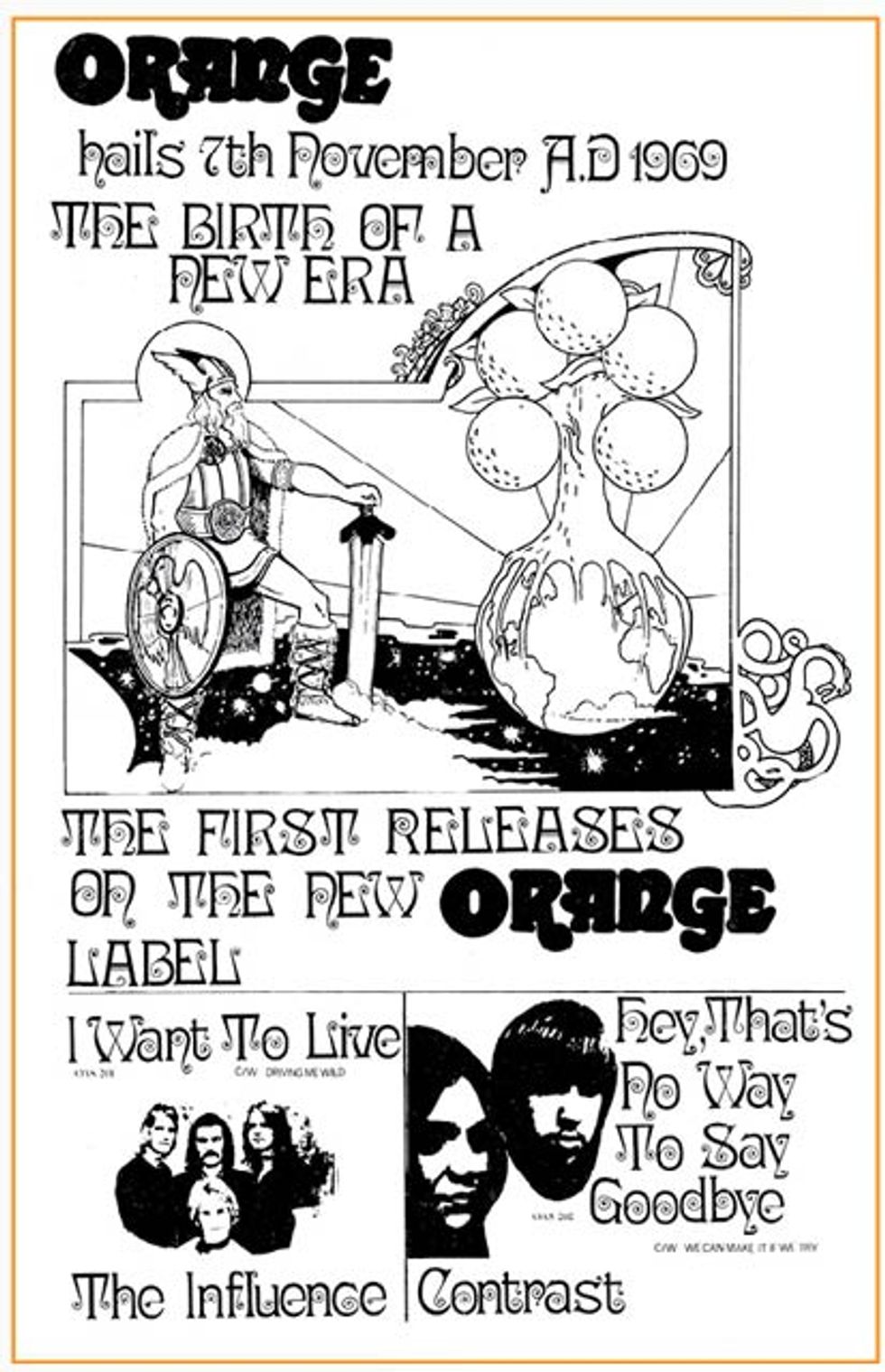

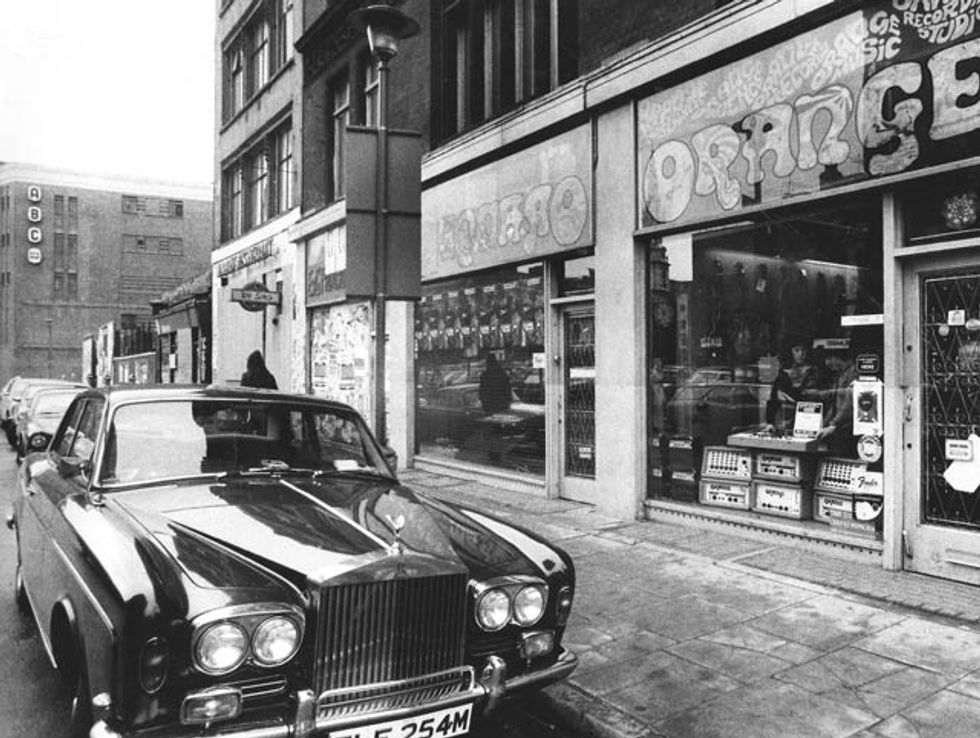
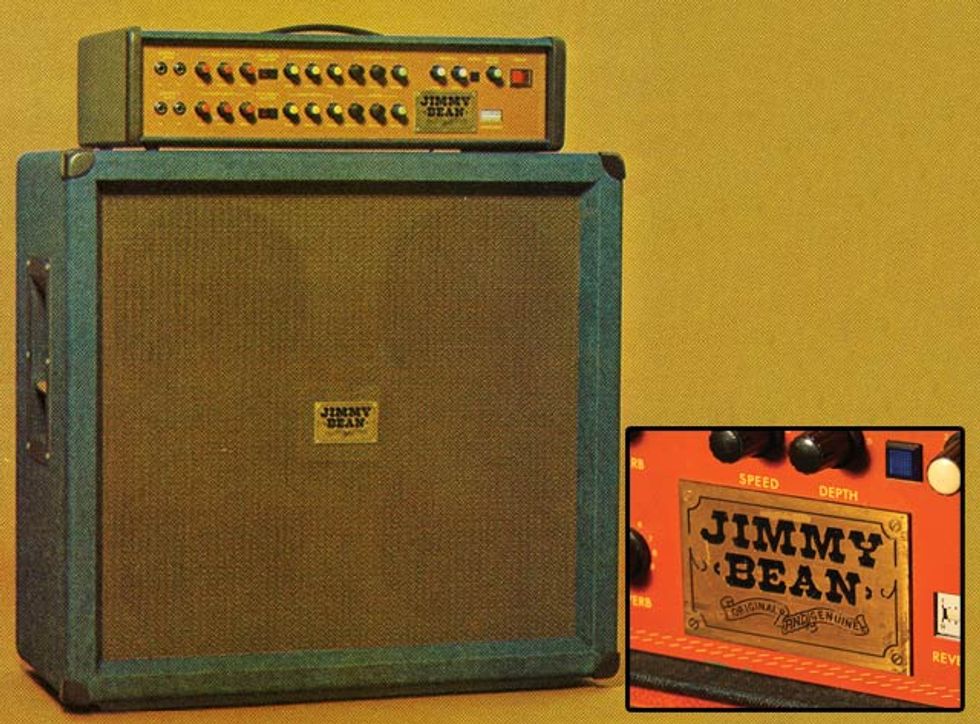
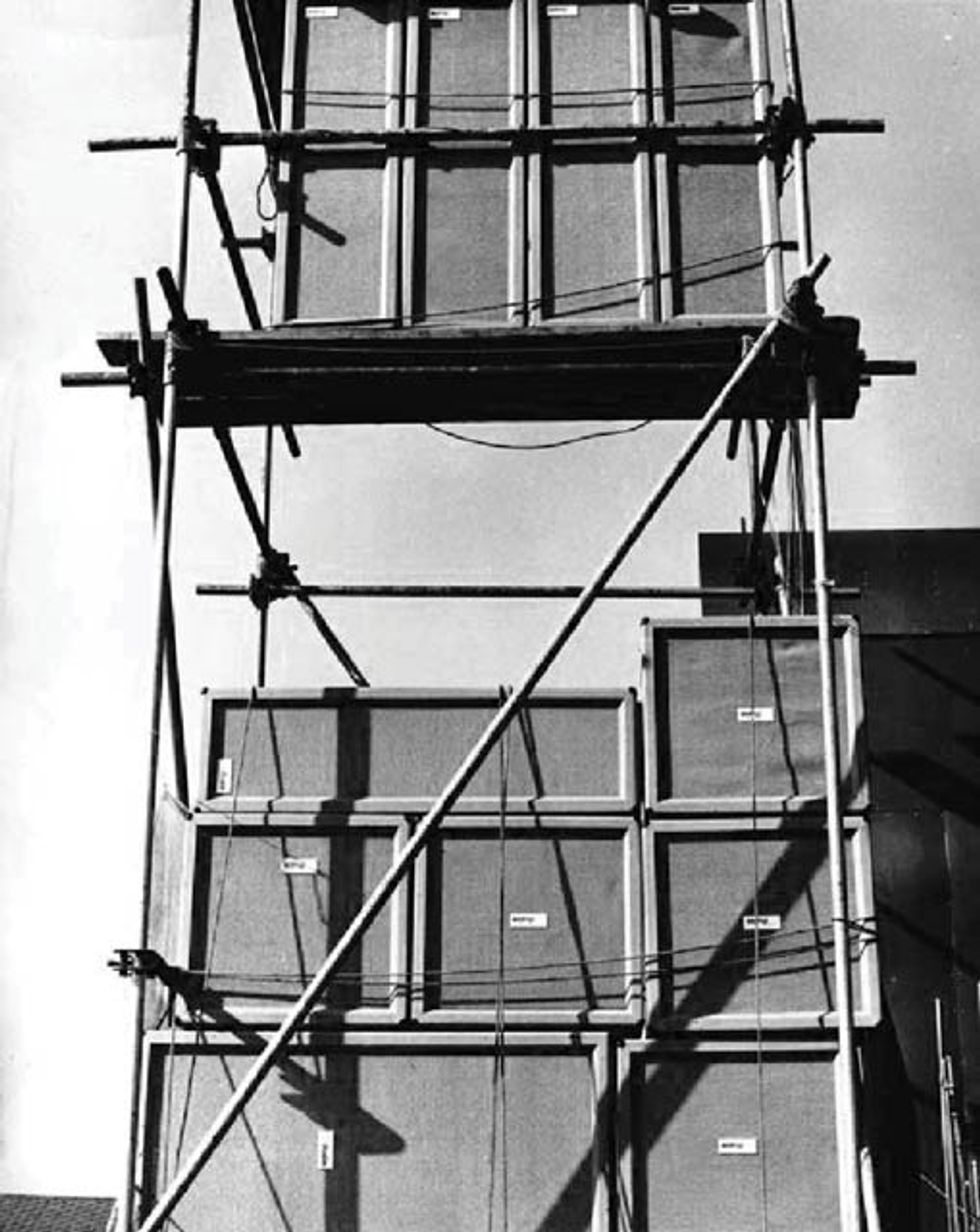
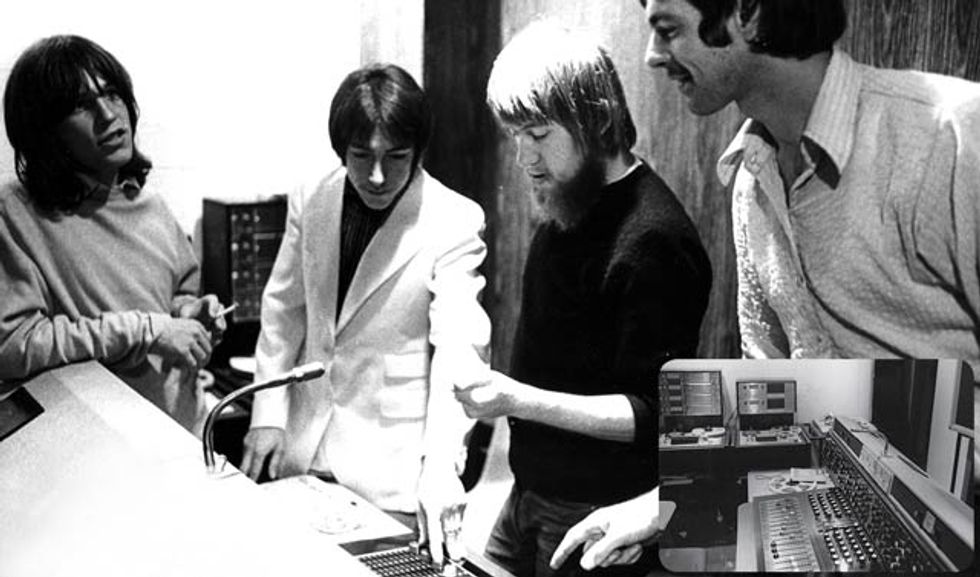
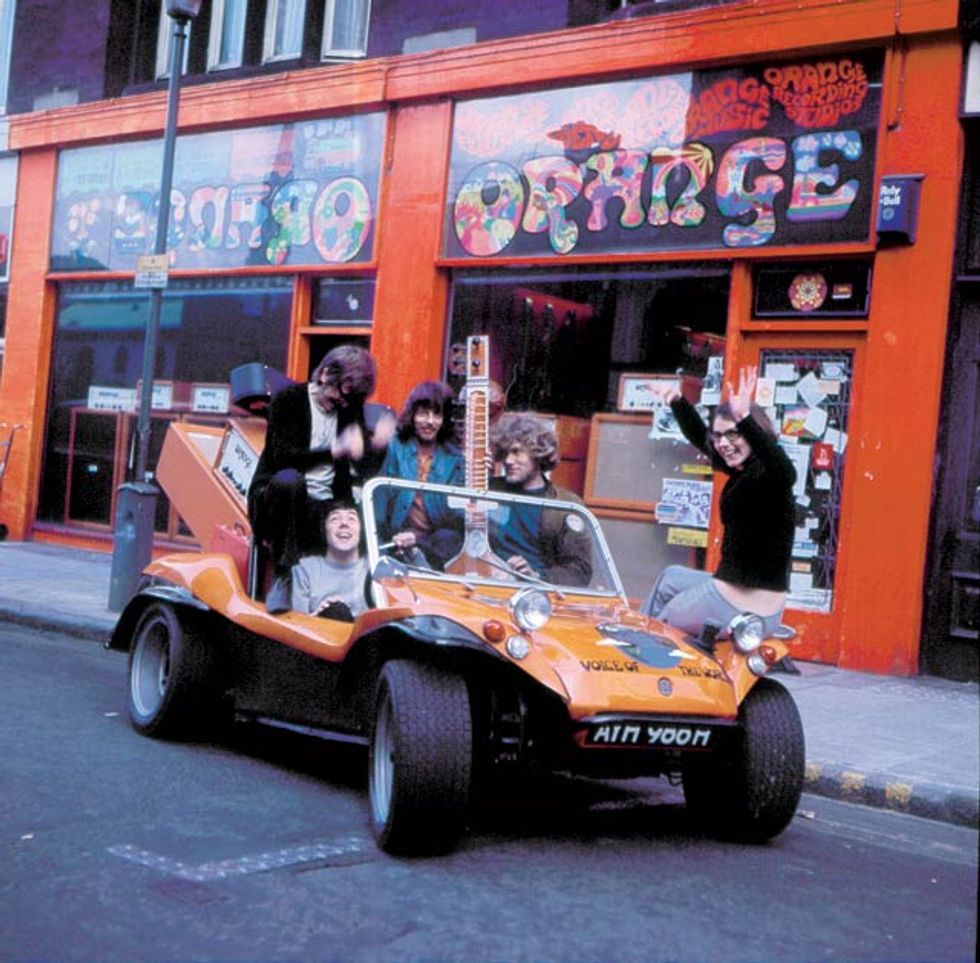
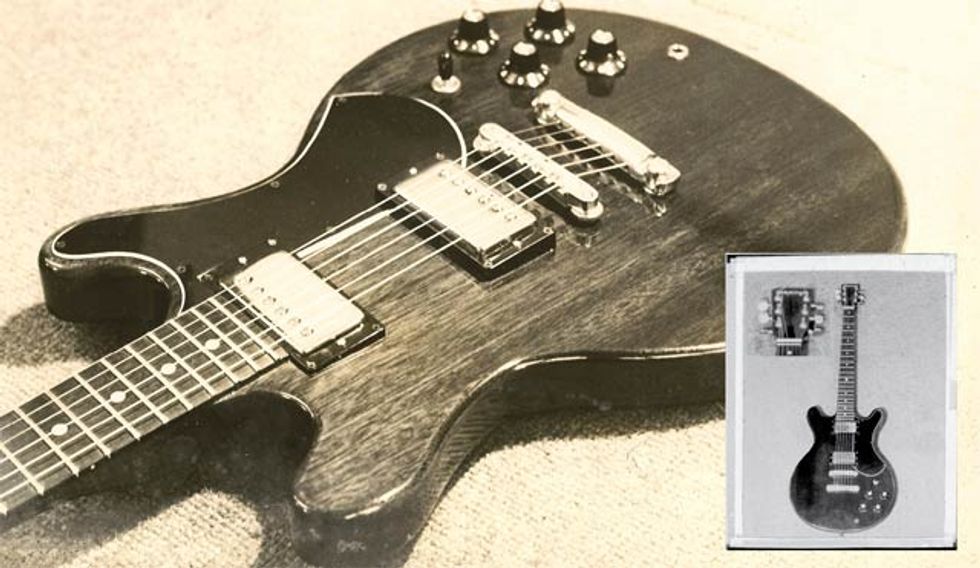
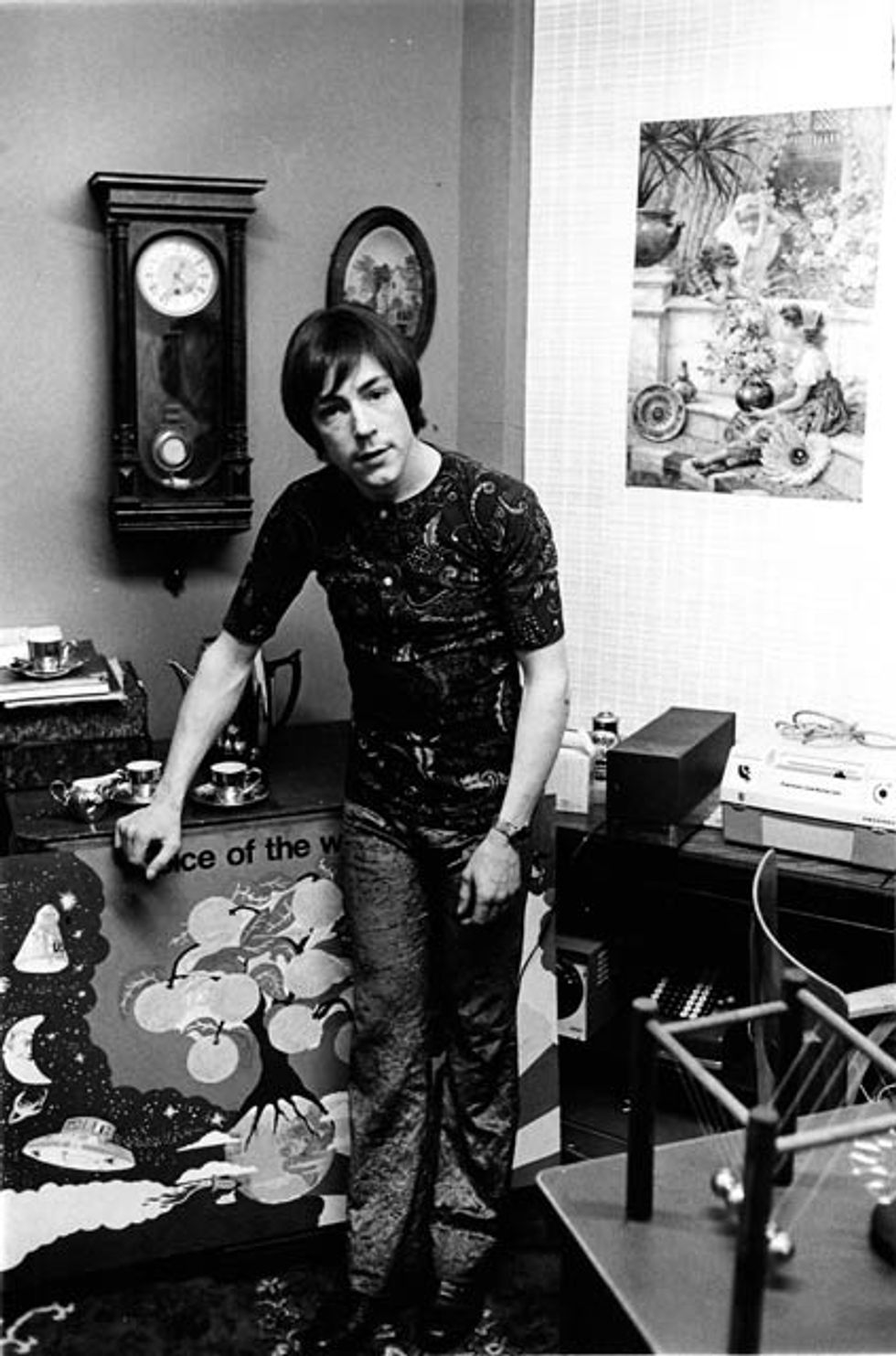
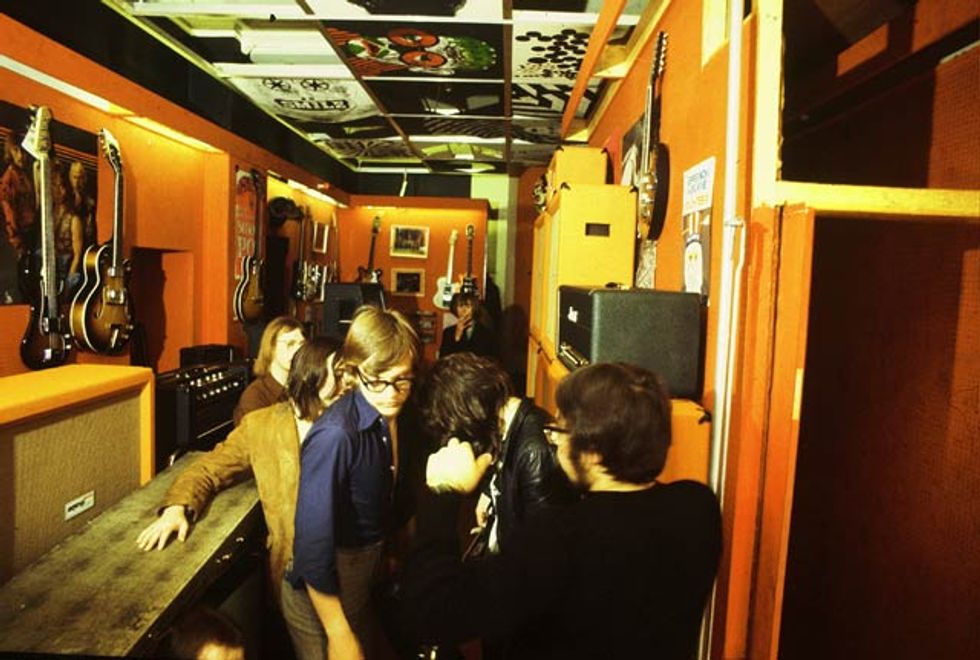
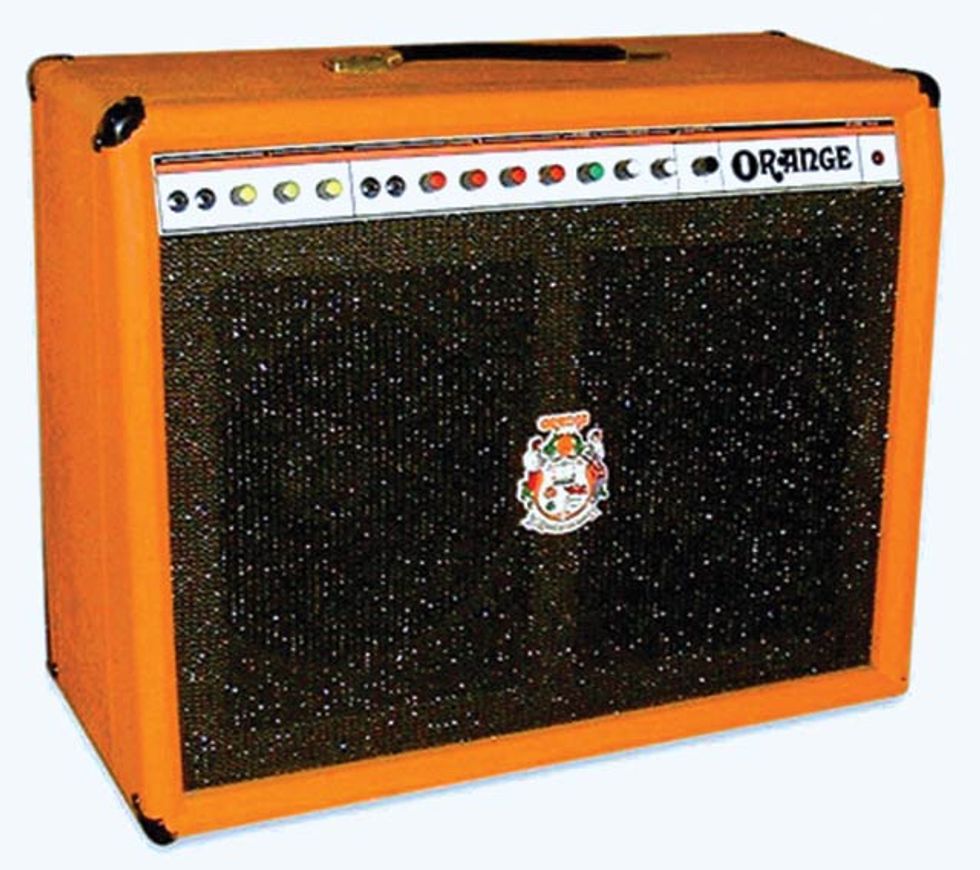
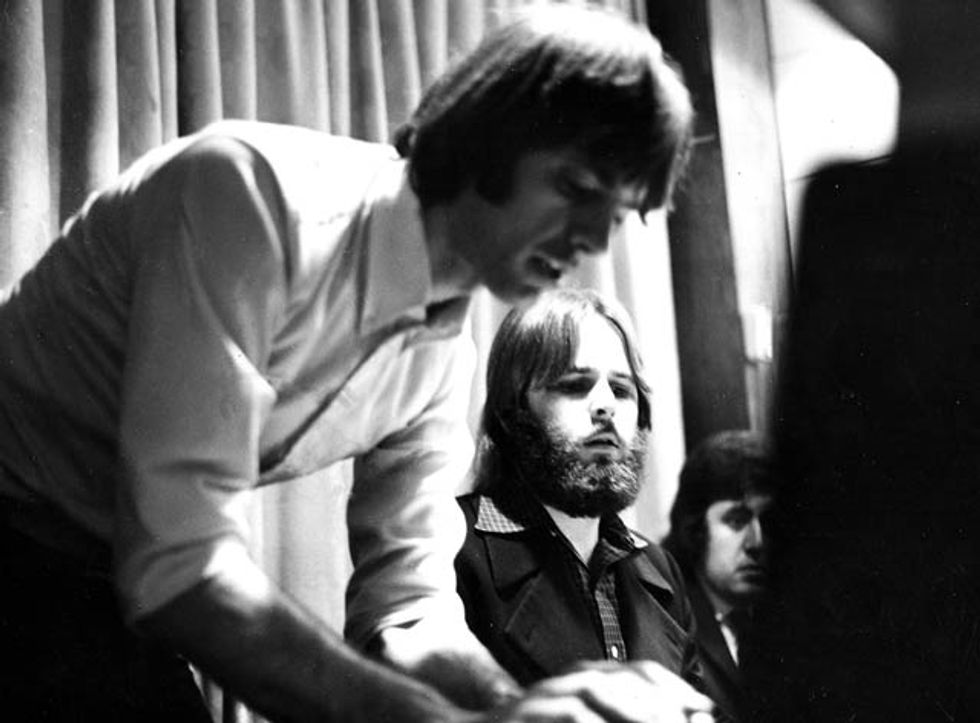
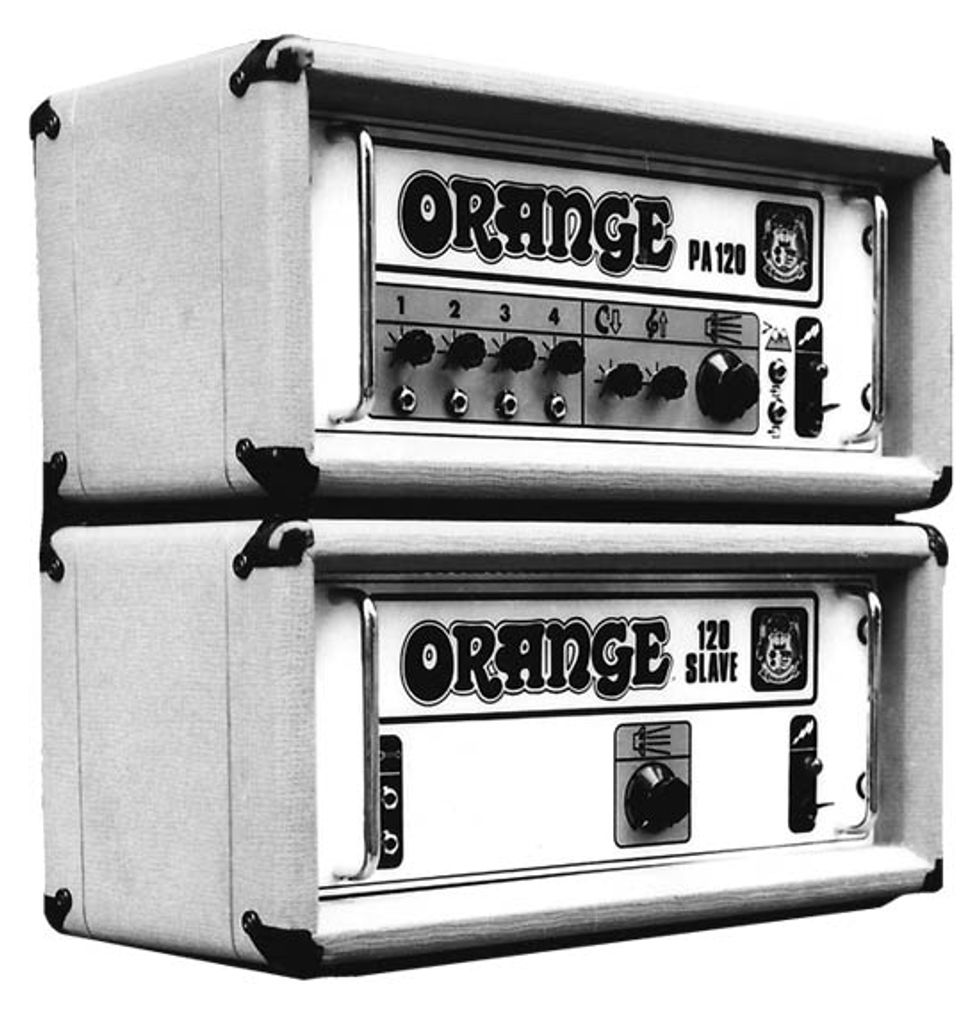
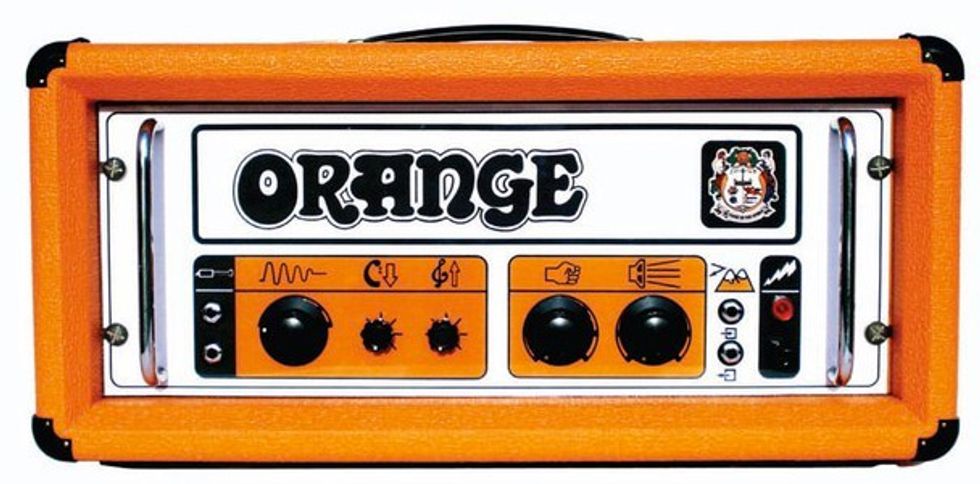
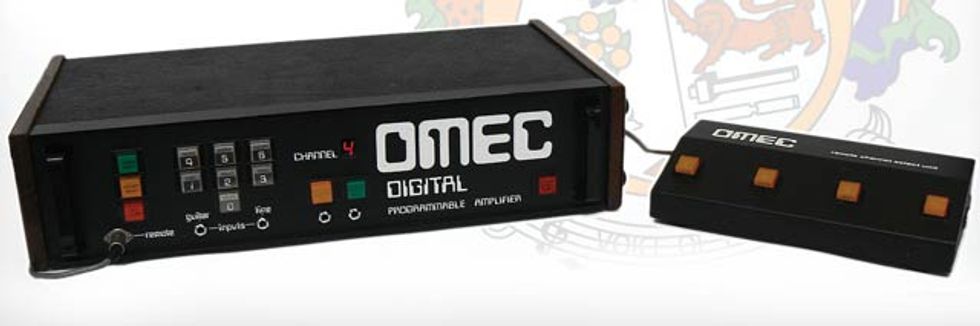
"This 1969 ad celebrated the debut of the record label with its two artists, John Miles' The Influence and Contrast, a duo featuring Roger and Christine Jeffrey."
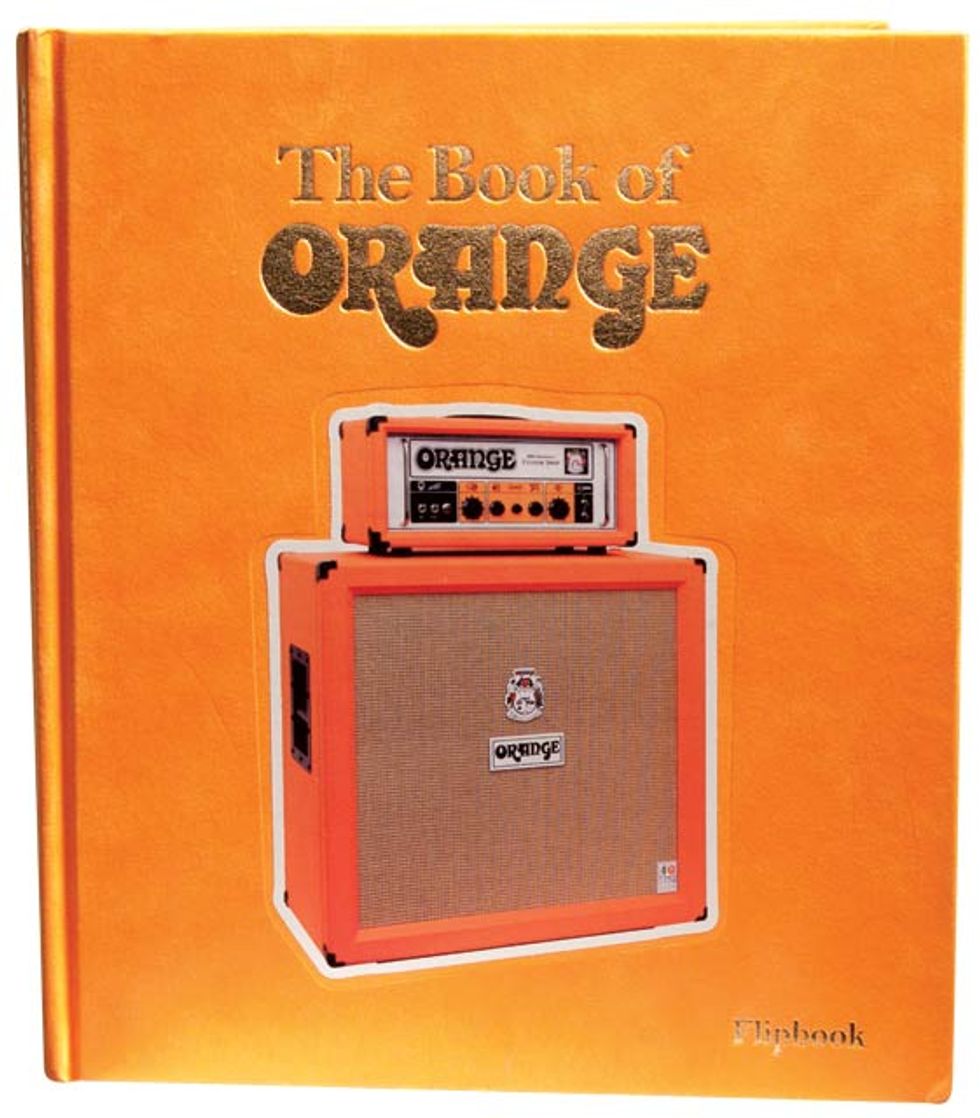
To read more from The Book of Orange, check out our exclusive excerpt!

The Blondie co-founder talks early Stratocasters, fingerpicking punk riffs, CBGBs-era New York, and the cultural truth of electric guitars.
Chris Stein of Blondie joins the Axe Lords for a deep conversation about tone, technique, and the guitars that shaped Blondie’s sound from their early years at CBGBs to today. The Rock & Roll Hall of Famer also explains why he dislikes relic guitars, how he came to his very un-punk fingerpicking picking technique and reveals that some of the band’s most iconic “synth” sounds were actually produced by guitars. A thoughtful, opinionated, and unrelentingly wise-cracking look at creativity by a punk and new wave legend who Dave says is basically his best friend. Make sure to stick around through the end of the episode for a deep dive into the design and build of Cindy’s D&D guitar.
The original SansAmp Classic, introduced 37 years ago, was in constant production for 27 years until 2016. After a 5-year hiatus and a surge in popular demand, it was reissued in 2021. Once again, its enduring popularity has prompted Tech 21 to do another release of a limited quantity scheduled for early 2026.
Virtually unchanged and still made in the USA, the all-analog SansAmp Classic pedal design is B. Andrew Barta's unique invention that was the catalyst for the whole “going direct” movement way back in 1989. Since then, SansAmp evolved into an extensive line of pedals and racks, as well as being the essential element of Tech 21’s Fly Rig series.
Of the pedal formats, SansAmp Classic is the most sophisticated. There is a bank of eight Character switches to adjust tonality, harmonics and dynamics; a 3-position input switch offers a choice of pre-amp styles; and four knob controls to shape pre-amp contours, power amp contours, volume and final tone.
It is rare an electronic music-related product can withstand such a test of time. For over almost 40 years, the SansAmp Classic has been used for every kind of music style from death metal to commercial jingles, in countless pro studios, on tours around the globe, on a vast variety of major releases (including Grammy Award-winning records), and by hundreds of thousands of everyday players, producers, and engineers.
While all SansAmps are flexible, user-friendly, robust devices that deliver the warm, rich, natural tones of the most desirable tube amplifiers on the planet, the SansAmp Classic is the original. Not just for guitar and bass, everything from industrial samples to maracas have been saved from atonal death by its analog magic. It has defied the odds and to this day, remains the standard of the industry.
To celebrate the late great Space Ace, we called up PG’s favorite Kiss fan, Chris Shiflett.
On at least one of your 100 Guitarists hosts’ favorite episode of Shred with Shifty, the Foo guitarist sat down with Ace to talk about his guitar playing on “Shock Me.” It’s a fun interview with lots of great anecdotes and killer vibes. But Shiflett has a lot more perspective on Ace, going way back to meeting the members of Kiss without their makeup as a kid.
Just Mustard performs at Dublin's 3Olympia Theatre.
Sean McMahon
All it takes is a minute or so of listening to Just Mustard’s music—a bewitching and unruly blend of fuzzy, guitar-driven post-punk and shoegaze-y noise rock—to make one thing abundantly clear: They’re not exactly aiming to challenge Taylor Swift for chart supremacy. “No, we’re not really interested in having pop singles,” says David Noonan, who, along with fellow guitarist Mete Kalyon, delights in creating cavernous, atmospheric walls of sound for the Irish quintet. “We’ve always been trying to make music that’s more avant-garde. I know it’s a cliché, but we like to push boundaries.”
He pauses for a second, then adds, “Which isn’t to say that we don’t want to be popular, because that would be great. We just want to do it our way.”
Just Mustard (which also includes singer Katie Ball, bassist Rob Clarke, and drummer Shane Maguire) have a doozy of an album with their new We Were Just Here, which builds on the strengths of its predecessors, 2018’s Wednesday and 2022’s Heart Under. Like those records, it’s an immersive sonic extravaganza, brimming with walloping, cavernous soundscapes and gnarly, twisted guitar lines that dart off in all kinds of directions. At the same time, it ventures into warmer, friendlier territory. Lead single “Pollyanna” is one of the band’s most cheerful efforts to date—Ball’s enchanting, ethereal vocals float though its feedback-laden textures—and the propulsive, synth-like title track has an irresistible early-’80s peppiness to it.
“It’s interesting—people have said that song reminds them of early New Order, which isn’t what we were going for,” Kalyon says. “I think when you try to make guitars sound like synths it actually works sometimes. But I never want to disguise the sound of the guitars entirely. I’d rather have people say, ‘Wow, that’s a cool guitar sound,’ not ‘Are you playing a synth there?’”
David Noonan
Ginger Dope
Unconventional as they may be in their guitar approaches, both Noonan and Kalyon came by their love of music by way of bands like the Beatles, Queen, and Led Zeppelin. “I wanted to be a saxophone player and a drummer at first, but they were too loud, so my parents got me a guitar,” Noonan says. His first guitar—a Squier Strat—practically became firewood when he discovered Nirvana. “The music was so exciting, and I thought that’s how you were supposed to play guitar, by throwing it around your bedroom and breaking things,” he says.
"I think when you try to make guitars sound like synths it actually works sometimes. But I never want to disguise the sound of the guitars entirely."—Mete Kalyon
It was also Nirvana that ignited the spark for Kalyon. “I used to listen to their greatest hits album, and that made me go, ‘All right, I need to learn how to play guitar,’” he says. “I got a crap guitar and played the hell out of it.” However, Kurt Cobain wasn’t the only Seattle guitarist who excited him: “I used to play loads of Jimi Hendrix’s stuff on guitar, but I can’t do it anymore,” he says.
Noonan laughs and says, “The first thing I remember about Mete was that he could play Hendrix’s ‘Little Wing.’ We were so impressed that he could break something like that out.”
Noonan met Kalyon in the college town of Dundalk, where he and pal Clarke, enthralled by electronica and groups like the Pixies and Sonic Youth, had moved in the hopes of starting a band. Hooking up with Ball put things in motion, but they soon realized they needed a second guitarist to fill out their sound. “It wasn’t quite an abduction, but I guessed they had heard that I played guitar and was into their kind of music,” Kalyon recalls. “I just remember David grabbing me off the street and saying, ‘Quick—you’re joining our band.’ It was quite shocking, really. Just like that, I was in.”
After a few jam sessions, it became apparent to both guitarists that their experimental approaches to sound complemented each other perfectly. “We grew up with traditional rock and blues, but we did away with that once we formed the band,” Noonan says. “The idea was to sound like electronica, but with guitars making all the noise.”
“The idea was to sound like electronica, but with guitars making all the noise.”—David Noonan
Over the course of their first two self-produced albums, the duo created abrasive sheets of pedal-driven textures—loud then soft, continuing the Nirvana template—with Noonan driving home sparky lead lines wherever they seemed to fit. But the two insist that there’s no dedicated “lead player” in the group. “We’re quite capable of swapping roles,” Kalyon says. “If I’m making one sound, David does the other, and vice versa.”
Noonan graduated to producer on We Were Just Here, and his basic approach involved recording the band live and then adding numerous guitar tracks—Noonan on a Fender Jaguar, Kalyon on a Fender Telecaster—to heighten the overall impact. “Silver” is an unnerving yet wondrous full-frontal assault on which Noonan piles tracks of pitch-shifting noise, enhanced by a Hologram Effects Dream Sequence. He and Kalyon ratchet up the chaos on “Endless Death”—its engulfing sonic boom is spiked with jagged melody lines that seem to escape at random times, shrieking and sputtering from all ends of the frequency range.
Mete Kalyon
James Streiker
“We kind of came at that one with everything we had,” Noonan says. “There was a lot of tinkering that went into that song, and now we have to figure out how to play it live.”
The matter of transferring their new material to the stage is a task that the band is now pondering, and Noonan admits that it’s going to be a harder nut to crack than before. “On some level, we just have to do what feels right at the moment, which is what we’ve always done,” he says. “Here’s a guitar melody that sounds right, but then you’ve got to slip back into the sonic happening and play something that’s not necessarily a lead part.”
He continues, “When we’re in the studio, there’s a lot of constructing bits that can make everything sound overproduced, but we don’t want to get to the level with some bands where you go to see them live and they have to have backing tracks or add these session musicians who go on tour with them. When you come see us, we want you to experience what you’re hearing on the record, which is us playing everything.”
The Electro-Harmonix story is long and complex with more untold stories beneath the surface than most could imagine. Part of that untold story is all of the pedal ideas that never got made for one reason or another. EHX aficionados Josh Scott and Daniel Danger had been digging through all of the EHX’s history when they came upon an old schematic at the home of original Big Muff Pi designer, Bob Myer. Initially passed over by EHX Founder, Mike Matthews, for what would become the Op-Amp Big Muff Pi back in the late 70’s, this schematic serves as a window into that untold story of forgotten pedals, so Josh went to work to bring this circuit to life in collaboration with Electro-Harmonix. The result, a Dual Op-Amp fuzz that’s very much Big Muff with its own character dubbed the Big Muff Pi 2.
The Big Muff Pi 2 is a slight detour from the usual Big Muff tone. Slightly lower gain, slightly less refined edges with a unique feel, but with the signature sustain and full-bodied BMP tone known and loved by countless players. Housed in EHX’s Nano-sized chassis in a vibrant refinish with graphics by Daniel Danger, the pedal features the familiar SUSTAIN, TONE, and VOL controls. SUSTAIN controls the amount of distortion from heavy crunch to full speaker pounding saturation. The TONE knob is a classic BMP-style tone control, boosting treble and cutting bass as it’s turned up, from wooly to searing. VOL adjusts the overall output of the effects.
This lost piece of the pi ships a 9 Volt battery (power supply optional), is available now and has a U.S. Street Price of $122.00.