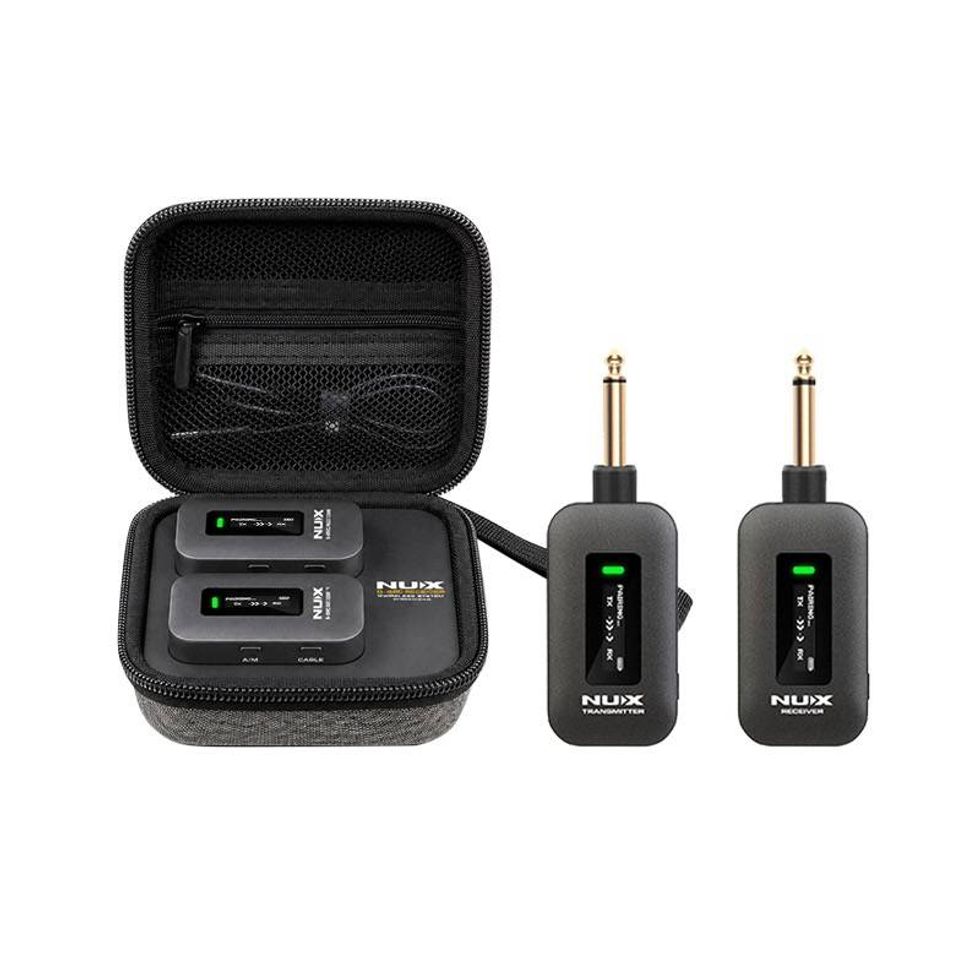
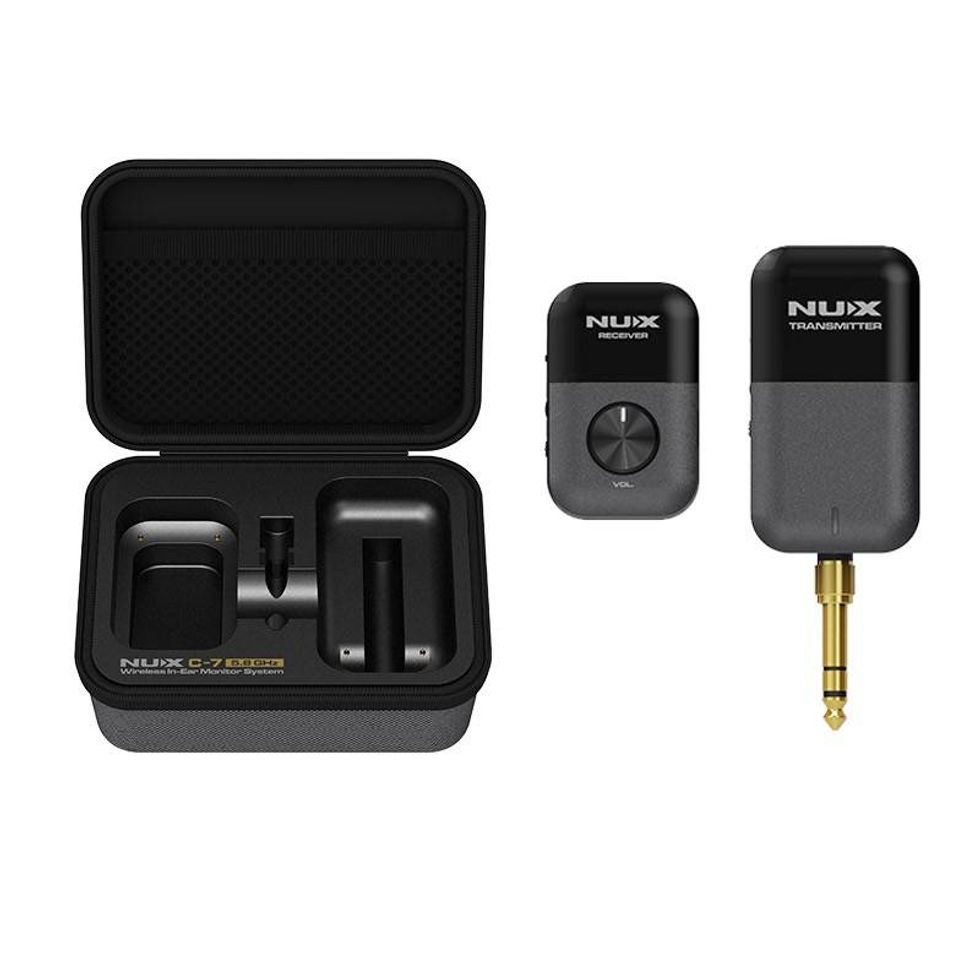
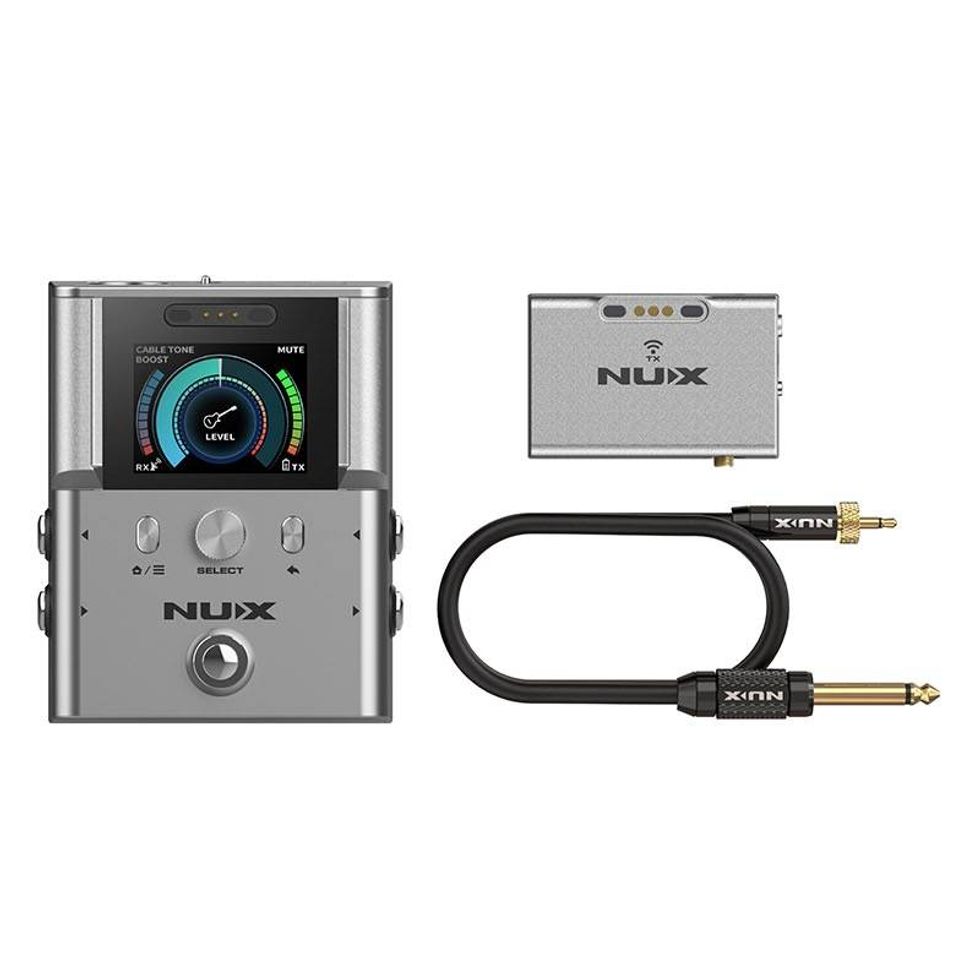
Wireless has reached the point where most players can’t hear the difference, so the more interesting question is what else the box can do while it’s working. PG contributor Tom Butwin details three new solutions from NUX: the C-58RC instrument system, the C-7 stereo in-ear monitor rig, and the B-8S, a beltpack-and-pedal setup that doubles as a DI, tuner, boost, and effects loop. Each offers automatic and manual pairing and ships in a charging case or charges magnetically through its receiver.
The C-58RC covers guitar and bass with active and passive modes, a cable-tone setting, one-touch reconnect, and a built-in tuner with mute and a flippable screen. Its case delivers roughly three full recharges. The C-7 turns wired earphones into a stereo monitoring rig with five EQ presets, one-touch frequency hopping, support for multiple receivers off a single transmitter, and 18 hours of total runtime.
The B-8S uses 1 MHz narrowband transmission for more usable channels in a crowded room, and its pedal receiver charges the beltpack while handling balanced DI, send and return, buffer, boost, and a 2.4" color screen that rotates for different board layouts. A ground lift and a 1/4" input on the side mean it still works wired if the connection ever drops.
NUX C-58RC Wireless System
Plug-and-play guitar/bass wireless with active/passive switching, Cable Tone, built-in tuner, and a 3,000 mAh magnetic charging case. Coming soon.
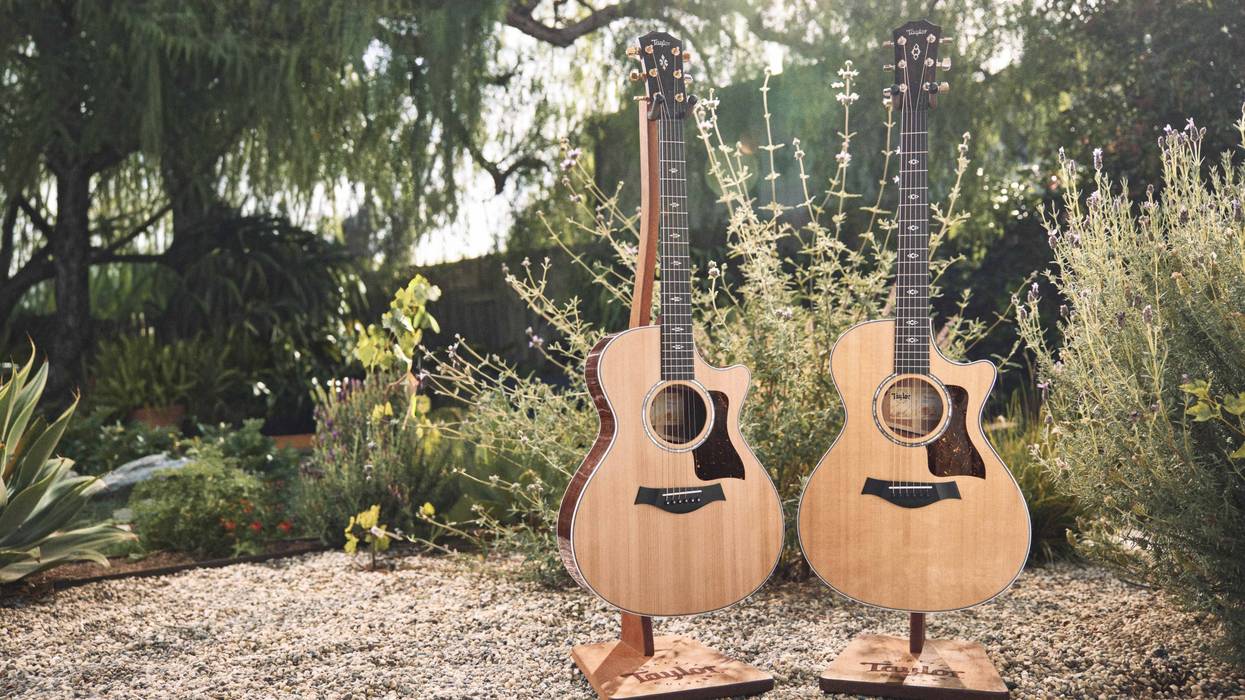
Taylor Guitars continues to evolve the acoustic guitar experience with the introduction of the Next Generation 512ce and 712ce, two new Grand Concert models that bring a powerful combination of tonal character, player-focused innovation and effortless playability to one of Taylor’s most comfortable body shapes.
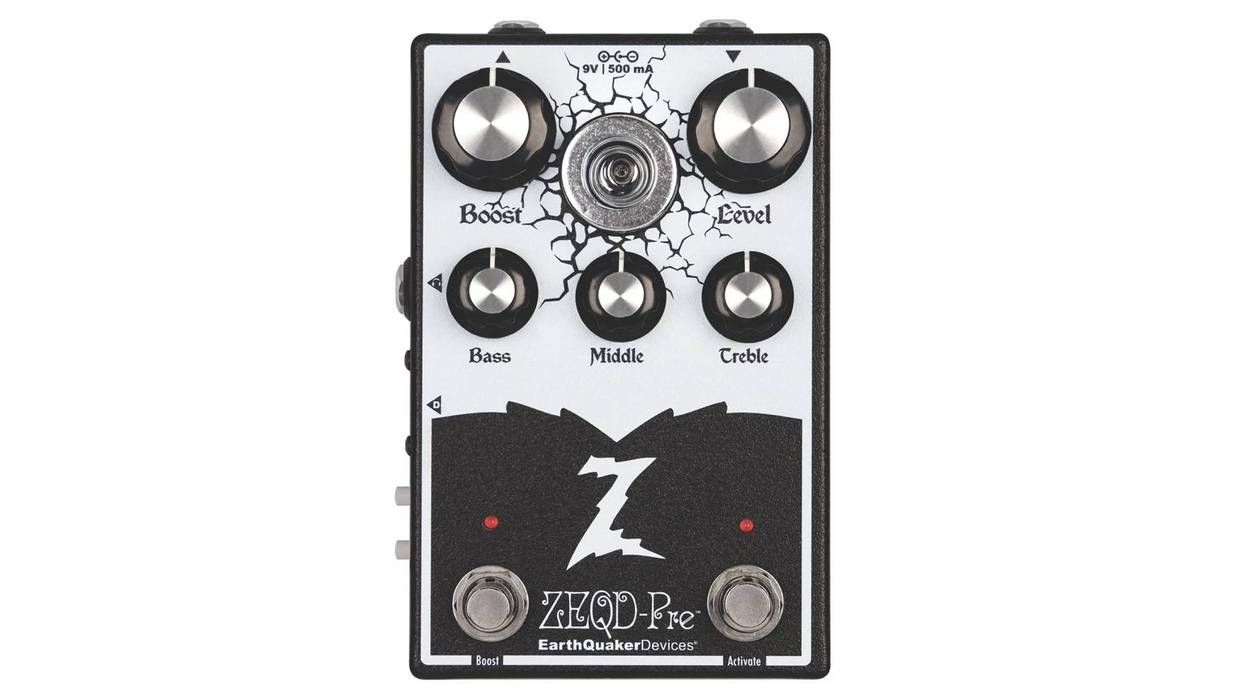
This month's roundup features 15 essential releases, including EarthQuaker Devices’ all-analog tube preamp, Red Panda’s new pitch delay, and a studio-grade line isolator from Lehle. Whether you need vintage grit or modern precision, we’ve got the highlights.
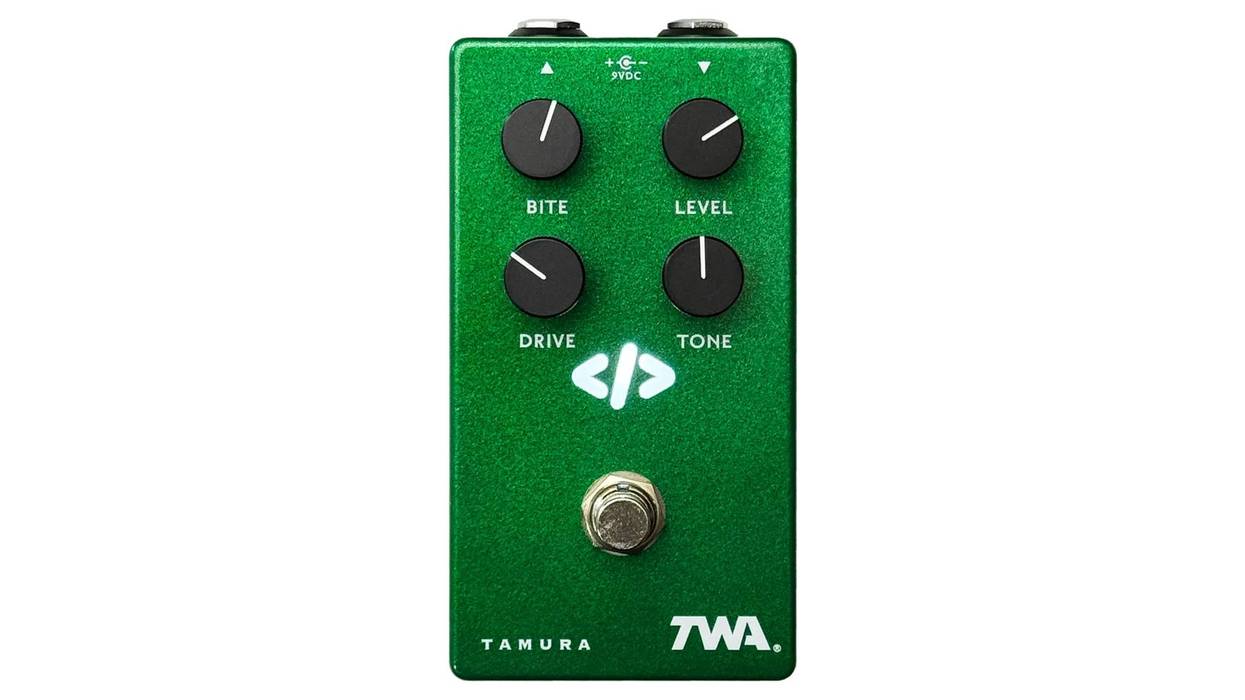
When Japanese engineer Susumu Tamura designed the Maxon OD808 overdrive, he could hardly have known that it and its export twin, the Ibanez TS808 Tube Screamer, would become perhaps the most influential and, probably, imitated pedals in stomp box history. In fact, upon its introduction in 1979, the Tube Screamer, whose smooth sound is characterized by a bass roll off, midrange bump, and slight high-end attenuation, was not an instant success. But as the pedal was adopted by players as disparate as Stevie Ray Vaughan and Kirk Hammett, it gradually became a ubiquitous presence on pedalboards of all persuasions.