After a devastating theft in 2021, the metal band’s guitarist rebuilt his tone empire around some life-changing loans.
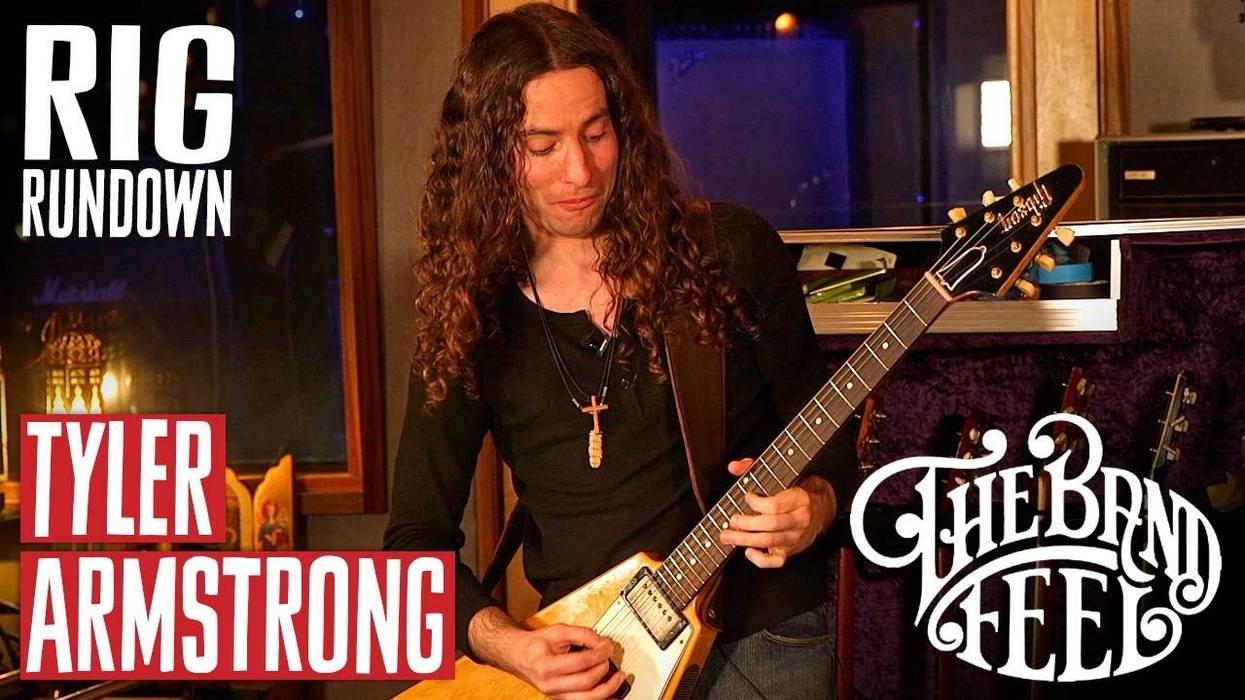
Chicago post-metal band Russian Circles had to battle their way back to gear heaven. In 2021, the bulk of the band’s gear was stolen while on tour, leading to a years-long rebuild. As a result, many of the items you might’ve seen in guitarist Mike Sullivan’s Rig Rundown back in 2017 are long gone.
PG’s Chris Kies recently met up with Sullivan at the band’s Chicago practice space, where they’ve resided for nearly 20 years. Check out some highlights from Sullivan’s new, resurrected rig below.
Sullivan has been favoring Dunable guitars of late, borrowing one from tourmate Chelsea Wolfe after his other guitar was nabbed. The green one is based on the Dunable Narwhal, with a more Gibson-like scale—comparable to Sullivan’s old Les Paul. This Narwhal has a mahogany body and neck, maple top, and a coil-tap function for the two humbuckers: a DiMarzio PAF 26th Anniversary and a DiMarzio Joe Duplantier Fortitude signature. Vibrating atop those pickups are D’Addario strings—a set of .011–.056, with the low E swapped for a .058. Sullivan uses a number of different down tunings, all with D-A-D-G-A-D as a starting point.
The white Dunable has a maple neck, a 25.5” scale, and is tuned lower, with a .062 for the low E string. It’s used for drop-A tunings, and has the same DiMarzio pickups.
Gettin’ Hi
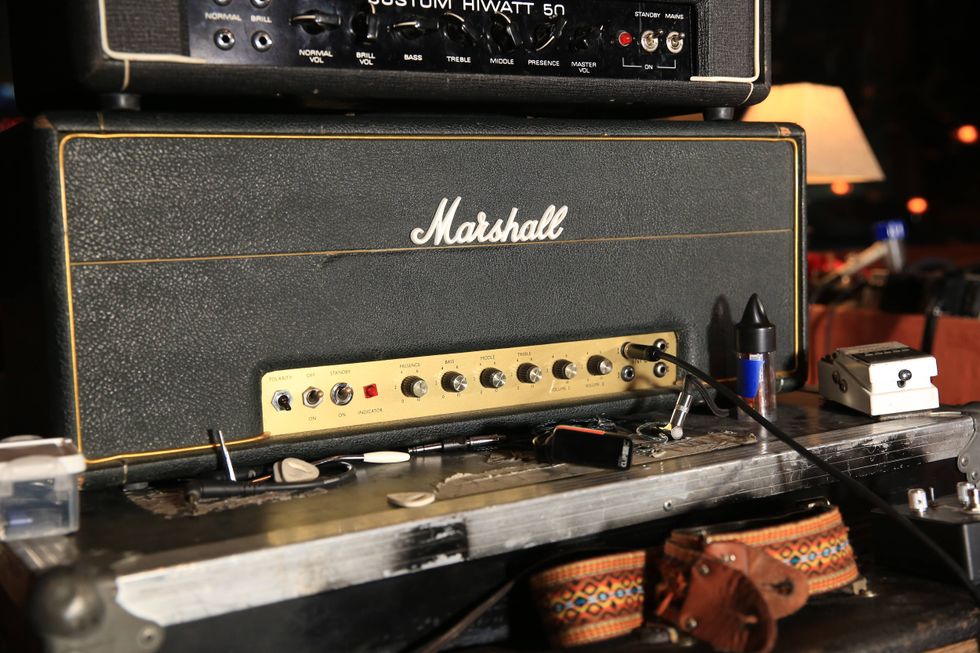
Sullivan was turned onto Hiwatts after acquiring some on loan in the wake of the gear theft, and he hasn’t turned back since. The cabinets are loaded with Hiwatt Octapulse speakers.
Mike Sullivan’s Pedalboard
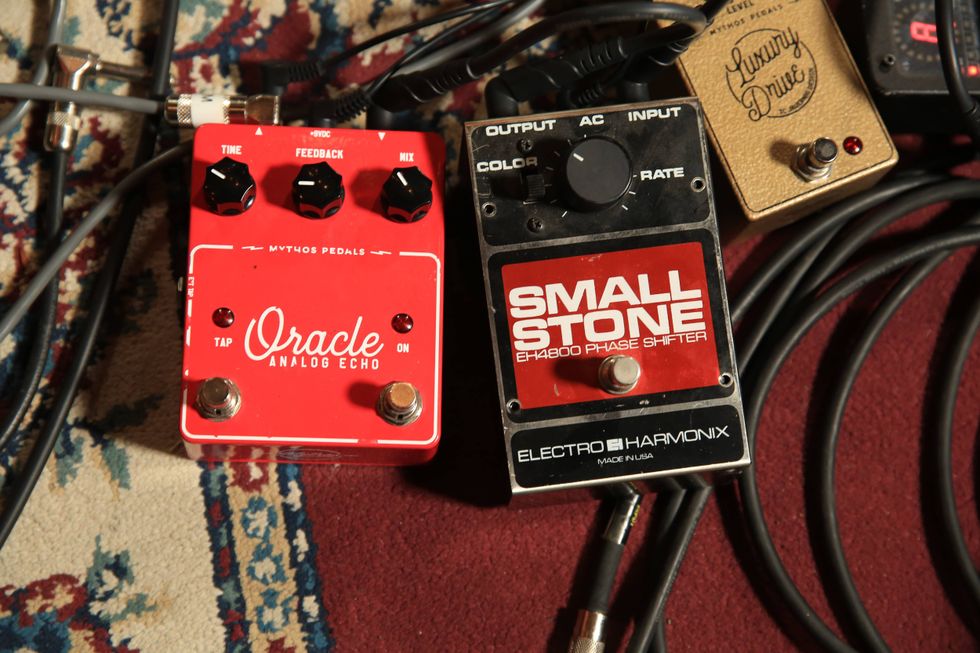
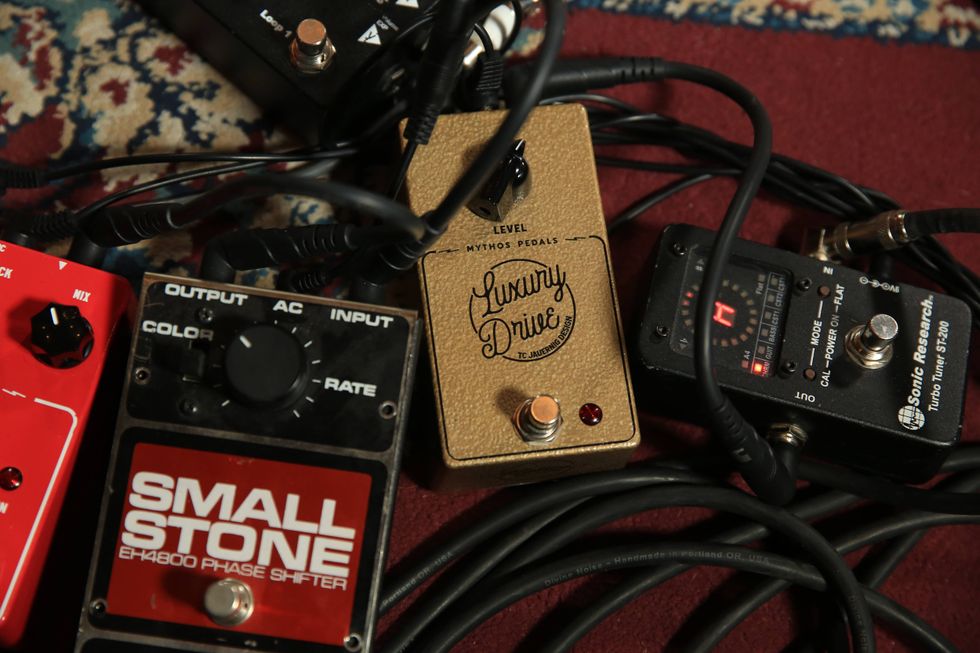
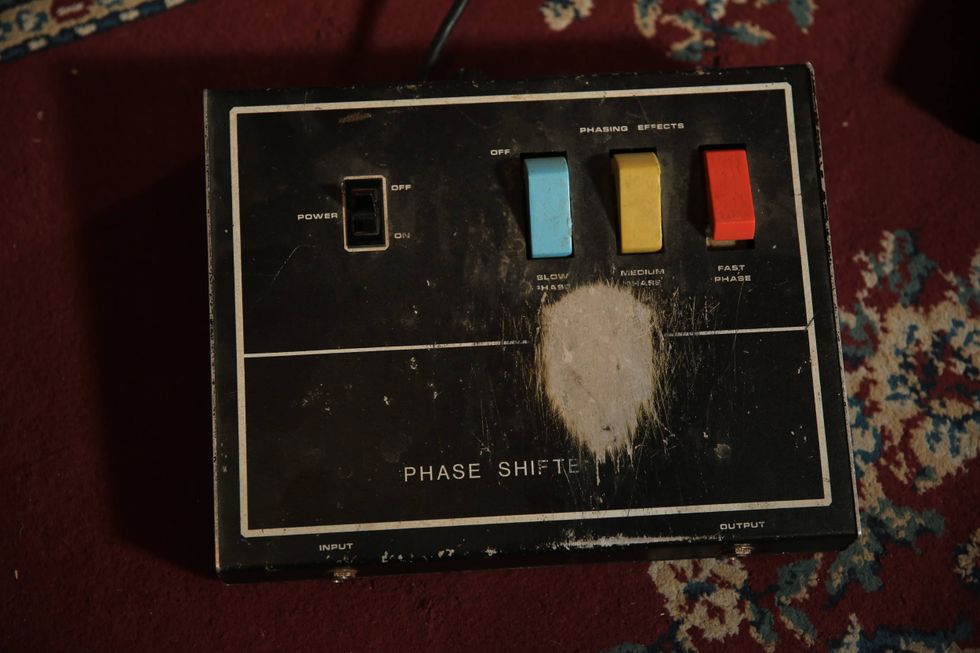
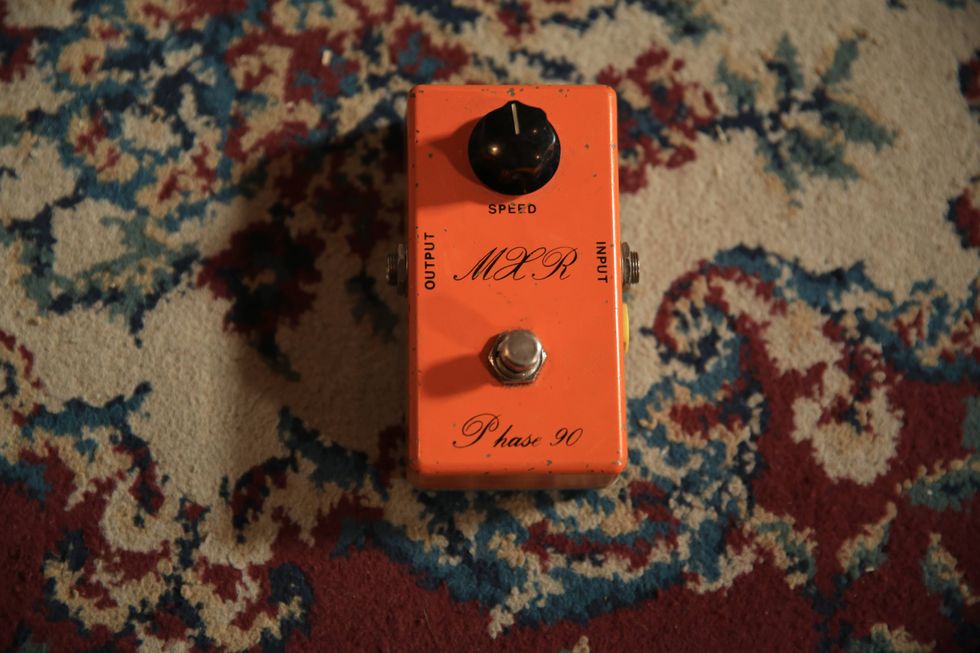
Sullivan runs two pedalboards. The first includes a Peterson tuner, Shure P9HW, Dunlop CBM95 Cry Baby Mini, DigiTech Drop and Whammy Ricochet, and MXR Phase 95.
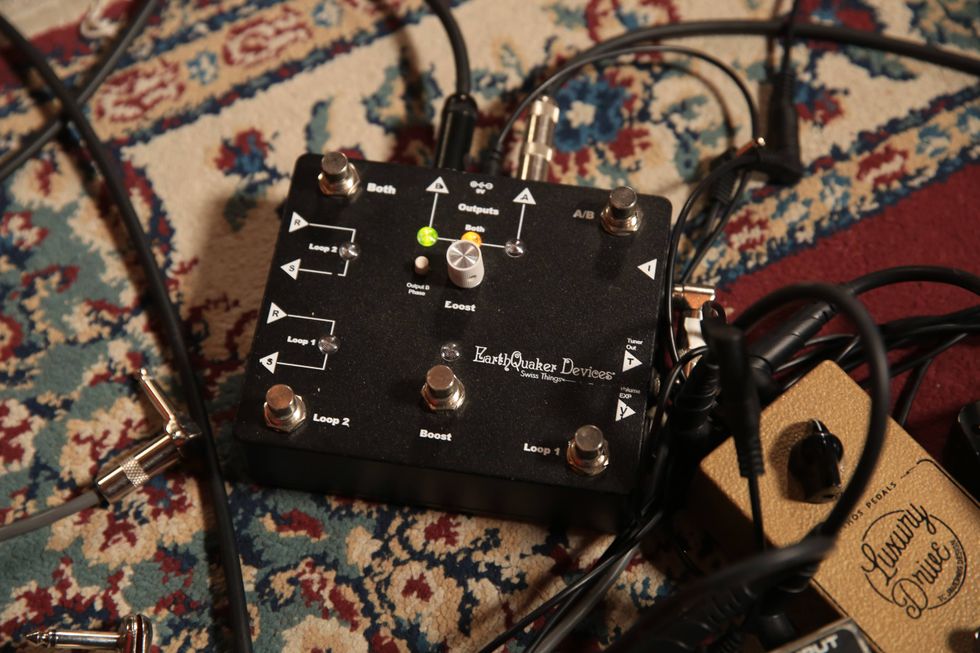
The motherboard carries a Dunlop DVP3 volume pedal, a Friedman BE-OD Deluxe, Strymon Dig, TimeLine, and Flint, a T-Rex Image Looper, DigiTech JamMan Stereo, MXR CAE Boost/Line Driver, Foxrox Octron3, Electric Eye Cannibal Unicorn, Maxon Apex808, Fortin-Modded Ibanez Tube Screamer, and a Radial Shotgun Guitar Splitter and Buffer.
The legendary country musician and his right-hand man, guitarist Kenny Vaughan, prove that Fender guitars through Fender amps can still take you a long way in this world.
Today, we’re excited to bring you a Rig Rundown that we’ve been chasing for years: country legend Marty Stuart, and his right-hand man in his band the Fabulous Superlatives, Kenny Vaughan. Stuart and the Superlatives hit the road this year supporting their new instrumental record, Space Junk.
PG’s John Bohlinger recently convened with Stuart and Vaughan onstage at the CMA Theater in Nashville, where the duo walked us through the most prized pieces from their bottomless tone trunks. Tune in to get the details and stories in this special Rundown!
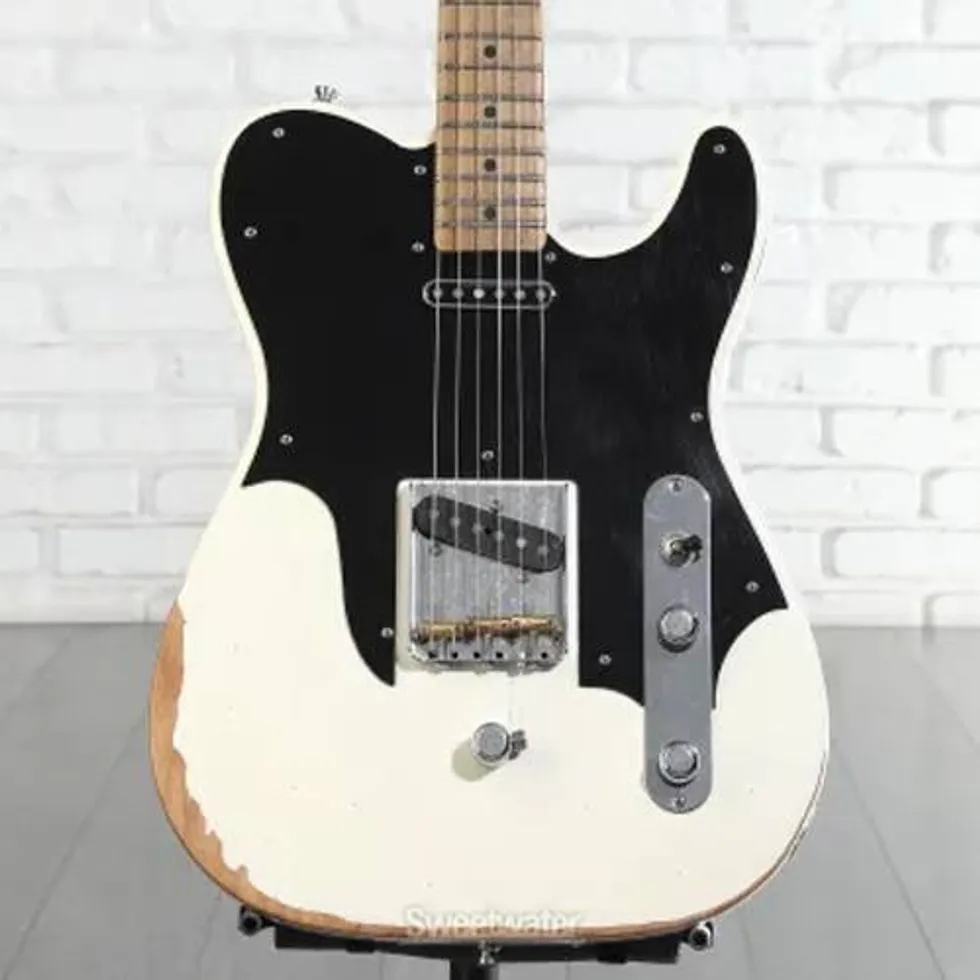
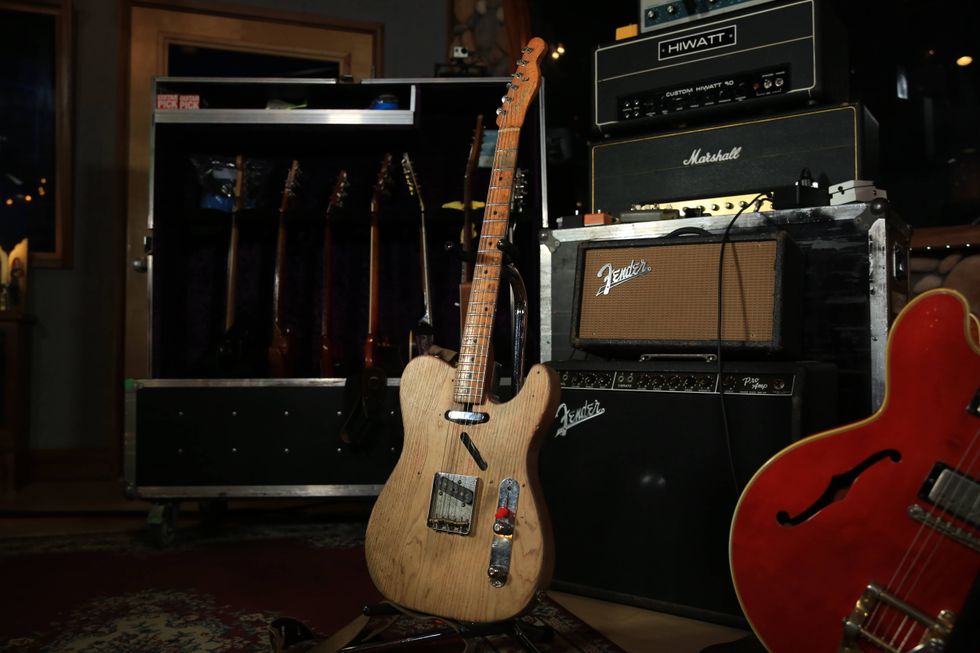
“Clarence is like a band member,” Stuart explains of his iconic Telecaster. “Still, in my mind, it’s Clarence’s band.” Stuart procured the Tele, which belonged to guitarist Clarence White, in the 1980s while playing in Johnny Cash’s band. Stuart has only modified two things on it: He moved the “Scruggs” tuning peg from the fifth string, and added a special, Ralph Mooney-built bender for the low E string. It’s triggered by the black “button” beneath the bridge—Mooney drilled a hole in the guitar and installed the rubber footing from one of the legs of his pedal-steel guitar. The rest of the guitar is stock—well, Clarence White-stock. The Jerry Jones sitar to Clarence’s left runs through the upper Deluxe Reverb, and through the Radial PZ-DI direct to front of house.
Stuart’s backup is a 1952 Fender Esquire, which he guesses is the best electric he owns. He bought it off of dealer and friend Danny Shea in New York City; before it entered Shea’s possession, it belonged to Mick Ronson. “You can tune it and come back a week from now, and it’s still in tune,” says Stuart.
Please Sign In
Stuart bought this mandolin from Roland White for $650, and turned it into a guestbook of sorts. It features signatures from Johnny Cash, Doc Watson, and plenty of others. Miked with an AEA Nuvo Series N22 ribbon mic, it sounds “big as a house,” says tech Mick Conley.
California Dreamin’
The “voice” of Stuart’s guitars is a silver-panel Fender Deluxe Reverb that he acquired in California from rental company SIR. “When I plugged into that amp, I saw palm trees and sunsets, and California popped out of the speaker,” recalls Stuart. He played it for three days, then bought it from SIR when he returned.
An AmpRx Brownie powers the pair of Deluxes.
Marty Stuart’s Pedalboard
Stuart’s main tools are a Boss TU-12EX, JHS Mini A/B, Radial BigShot PB-1, and an MXR Six Band EQ, plus an AEA R92 ribbon mic on his Deluxe Reverb. A JHS Switchback effects loop can engage a Keeley Super Phat Mod for solos; the MXR Reverb is on hand in case the Deluxe’s onboard ’verb fails, and the Flamma FS06 has a Deluxe Reverb emulation that shoots to front of house.
Acoustic instruments run through the Radial PZ-DI, and the Radial BigShot ABY is used for large shows when Stuart runs two amps.
Triple Threat
Vaughan’s principle instrument is this 3Bender T-style, built by Wade Black in Arkansas. Custom-made for Vaughan, it sports a pine body, maple cap, 21 frets, and is capable of bending three strings: the A, G, and B. A Fender Stratocaster is on standby.
Dan, Rick, and Marty
This Danelectro DC-12 is tuned to an open F major 9 chord, and runs through one channel of the Vibrolux with a bit of delay and compression. Vaughan plays it with both pickups engaged, and its flat radius makes it a speedy player.
After recording with Mike Campbell’s Rickenbacker 12-string, Vaughan picked up one of his own from a music store in Berry Hill. But this one is unique: It lacks the model’s classic sound hole, has Martin-style trim down its back, and the neck dates to 1969, while the pickups are from the early ’80s. The best hypothesis so far is that it was made by an employee at a music store in Pennsylvania.
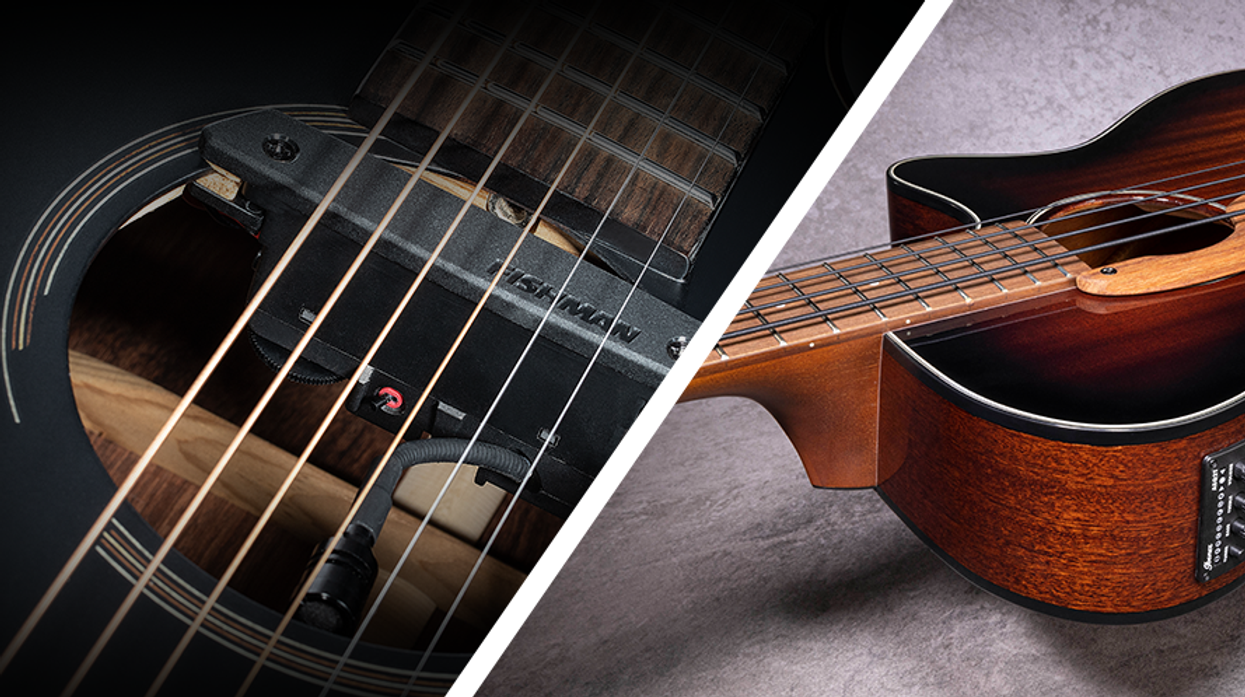
The Martin D-45 dates to 1988, and is equipped with a Fishman Matrix pickup
Special ’67
Vaughan trusts his 1967 Vibrolux Reverb, miked, like Stuart, with an AEA R92.
Kenny Vaughan’s Amp and Pedalboard
Vaughan bought his first pedal back in 1966, and from his collection of hundreds, he’s chosen these special few for his live setup. There’s a Peterson Stobostomp, Dunlop volume pedal, Xotic XW-2 wah, Keeley-modded Ibanez Tube Screamer, Xotic SP Compressor and EP Booster, MXR Smartgate and Joshua, and Keeley Magnetic Echo, Comp Mini, Zoma, and Eccos.
Vaughan’s Rickenbacker runs through the Radial Pro-48 to front of house. A JHS Mini A/B handles switching, and the Radial PZ-DI handles acoustics.
DragonForce shred wizard’s signature SE is specialized but built for lightning speed.
The SE Chleo is the result of an intimate collaboration between PRS Guitars and award-winning guitar player Herman Li. Best known for his work as one of the lead guitar players in the power metal band DragonForce, Li is a demanding guitarist known for his fast and precise playing style. Based on the exclusive 2025 PRS Chleo Limited Edition, this SE signature model is a unique guitar in the PRS lineup designed with the modern metal guitarist in mind. The SE Chleo boasts the same Fishman Fluence Signature Series Omniforce Herman Li pickups as the Limited Edition that preceded it. With three distinct voices and a versatile switching system, the guitar offers up to 13 unique tone combinations.
“With the PRS SE Chleo, we set out to create the best affordable guitar that delivers a unique combination of effortless playability, outstanding craftsmanship, and versatile tonal range. It combines modern innovations with classic style, giving players the tools they need to create everything from classic tones to cutting edge new sounds. The SE Chleo proves that a world-class instrument doesn’t have to break the bank—it’s a guitar that brings high-end performance within reach for everyone,” said Herman Li.
In addition to the Charcoal Purple Burst and Orchid Dusk that the Limited Edition models were offered in, the SE Chleo introduces a third color, Mantis Burst.
A kingly serving of powerful, varied fuzz tones explode from this enhanced riff on the classic Tone Bender MK III template.
Sitting between the original vintage vibes of a 2-transistor fuzz and the over-the-top wall of sonic mayhem that is that 4-transistor Big Muff is the humble 3-transistor Tone Bender-style of fuzz known for being punchy with a unique sonic texture. The EHX Bender Royale is Electro-Harmonix’s new take on the Germanium MkIII version of the circuit with a ton of added flexibility to bend your tone even further. From thick and smooth to brash and spitty, the Bender Royale has a range of sounds all its own.
Housed in EHX’s Nano-sized chassis, the Bender Royale builds on a standard control set of VOL, FUZZ and BASS (originally Treble / Bass) controls for an authentic, familiar feel. The FAT switch adds bass and low-mids for tonal thickness. Use the BIAS knob to dial in a sweet spot for the perfect amount of rip or leave the circuit starving for voltage. Switching the CLIP switch from Ge to LED re-biases the final germanium transistor to produce a rougher edge on the fuzz tone. The TREBLE control is an active treble shelving filter used to rein in high frequencies. The BLEND knob mixes between your wet and dry signals and can be especially useful for maintaining clarity when using bass or stacking other drive pedals.
The Bender Royale employs mechanical relay true-bypass switching on a soft footswitch with selectable latching/momentary functionality. Tap the footswitch for normal latch switching function or press and hold for momentary blasts of fuzzy goodness.
The EHX Bender Royale comes equipped with a standard EHX 9 Volt power supply. It is available now and features a U.S. Street Price of $149.00.
Electro-Harmonix
Bender Royale Germanium Fuzz Pedal
Fuzz Guitar Pedal with Treble, Bass, Blend, Bias, and Fuzz Controls, Clip Switch, and Fat Switch
PG contributor Tom Butwin explores the versatile Pulze Mini from Hotone. The size of a smartphone, the Pulze mini sports full-featured modeling engine, extensive app control, and even a built-in USB audio interface. With 52 amp models, 48 cabinet simulations, 20 user-loaded IR slots, 7-slot effects chains, and up to 11.5 hours of battery life on headphones, you can practice anywhere, anytime.