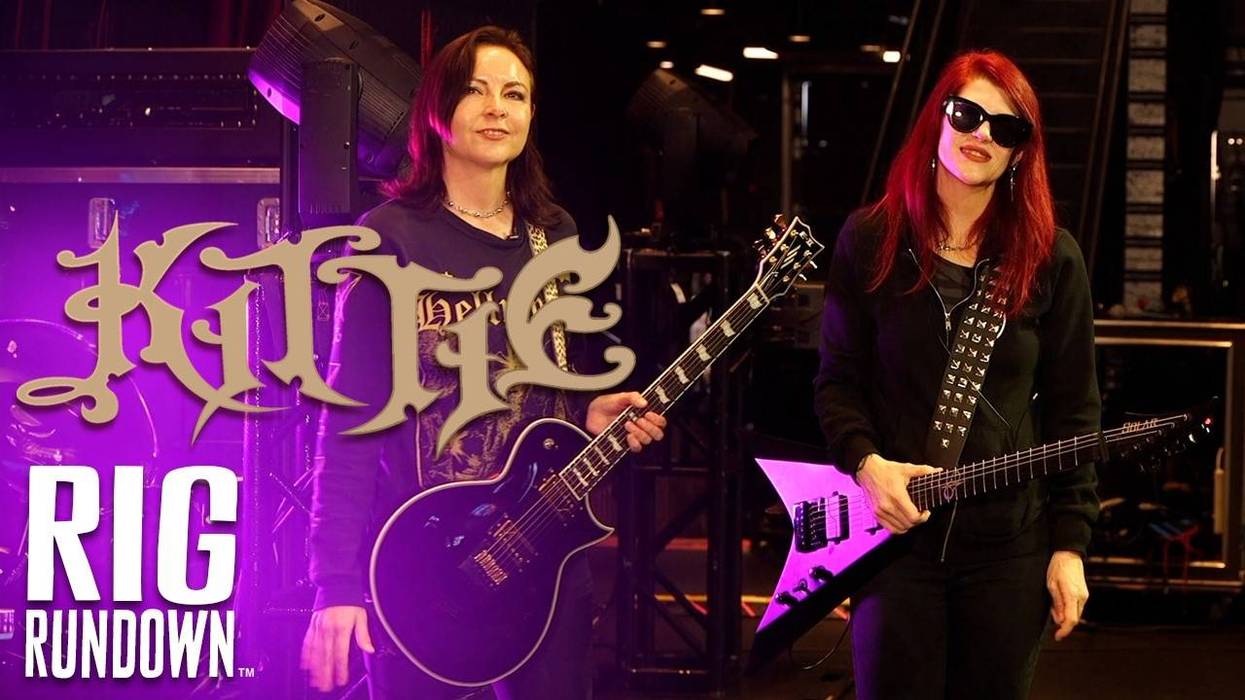



PG’s John Bohlinger caught up with Muse at Lakewood Amphitheater outside Atlanta, where Matt Bellamy’s tech Chris Whitemyer and Chris Wolstenholme’s tech Jon Ashworth walked through a pair of rigs built on custom instruments, retired parts stockpiles, and a lot of MIDI. Have a look at some quick highlights below, and tune into the new Rig Rundown for all the details.
Brought to you by D’Addario.
Number One
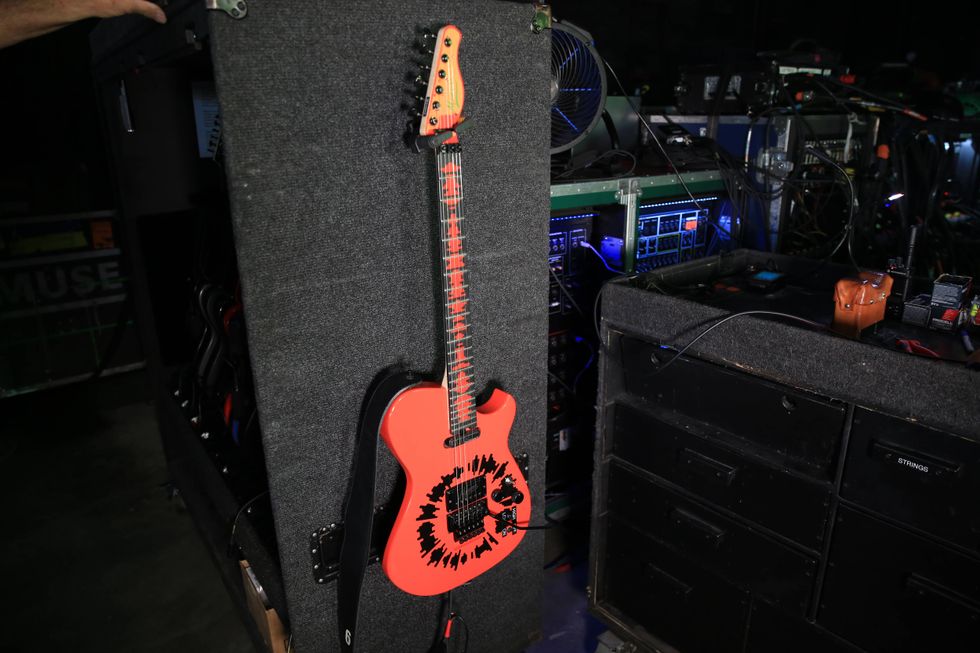
Bellamy’s main Manson MB gets played at least half the show—ash body, maple neck, rosewood board, with a Manson humbucker at roughly PAF output and a Sustainiac. Strings are Ernie Ball .009–.048 in standard tuning, and Whitemyer labels the controls so Bellamy doesn’t have to think about anything but singing. The bridge is a Floyd Rose Low Pro, long out of production: this one came off a 2008 guitar, and when Floyd Rose wound the model down the crew bought up the last of the parts.
Plug In Baby
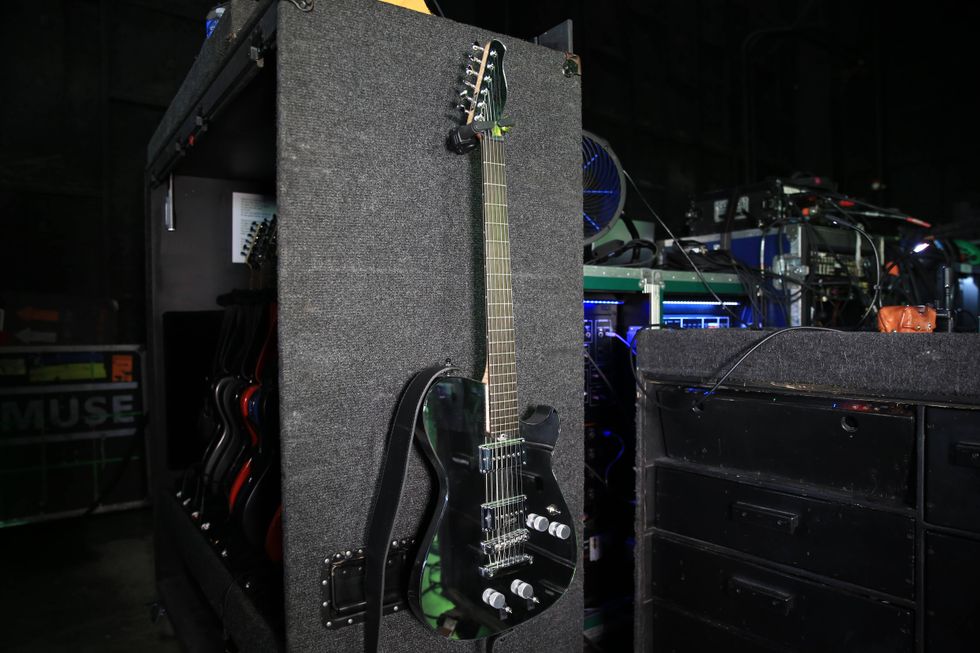
Bellamy’s custom Manson mirror guitar has an MXR Phase 90 and a ZVex Fuzz Factory built in, with no external controls—the Phase 90 lives at about 11 o’clock, set from the back. The Fuzz Factory’s gate and volume are onboard, so Bellamy can pitch it like a whammy. It runs single-coils, which suit the fuzz better, and two 9-volts, one per circuit.
The Kaoss Truth
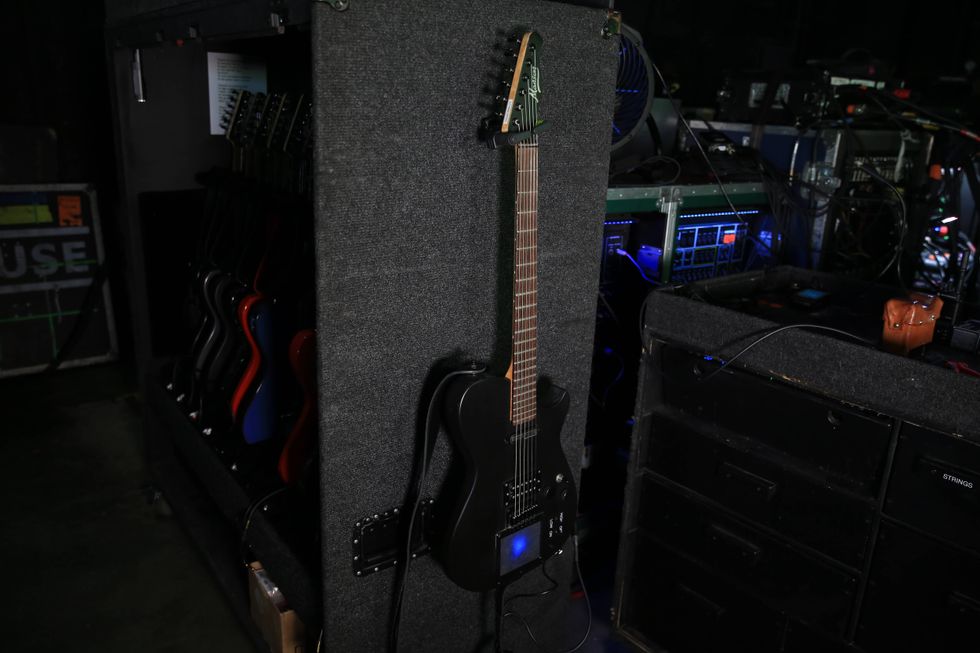
Everyone assumes there’s a Kaoss Pad in this Manson. There isn’t—it’s the controller only, sending MIDI to a Kaoss Pad in the rack for pitch-shifted synth textures blended with the guitar. Whitemyer buys every model that turns up on eBay. It also carries a Sustainiac, a humbucker, volume, tone, and a hardtail bridge.
Lower Than Vai
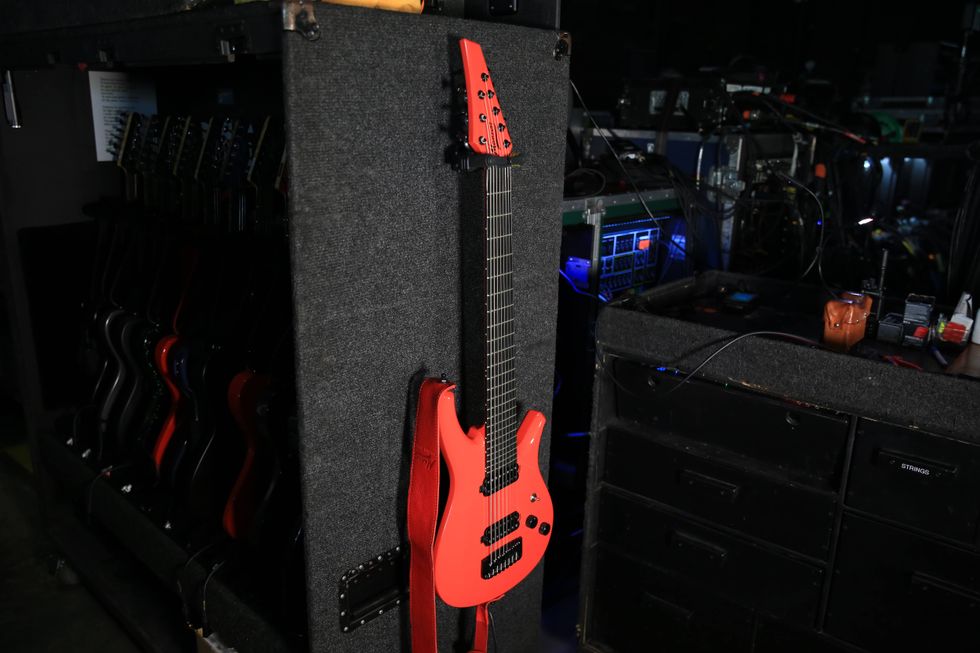
New for this tour: an 8-string Manson tuned E, B, then standard E–A–D–G–B–E. Basically, a guitar with two bass strings underneath it. No Sustainiac, no bender, nothing fancy; it comes out for two songs: “Unravelling,” and a new one.
Amps in a Box
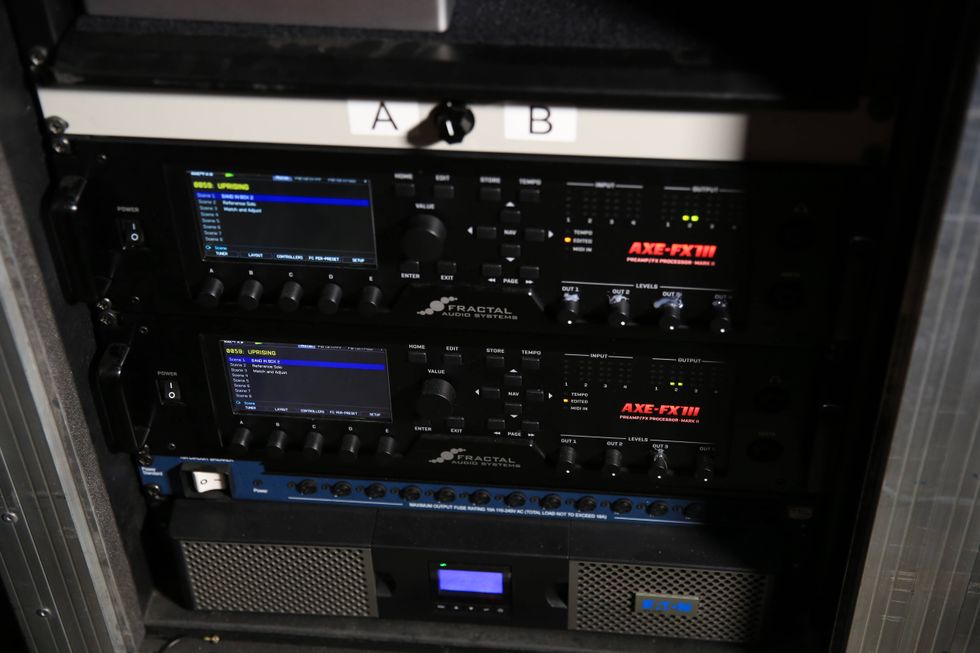
Outboard Holdouts
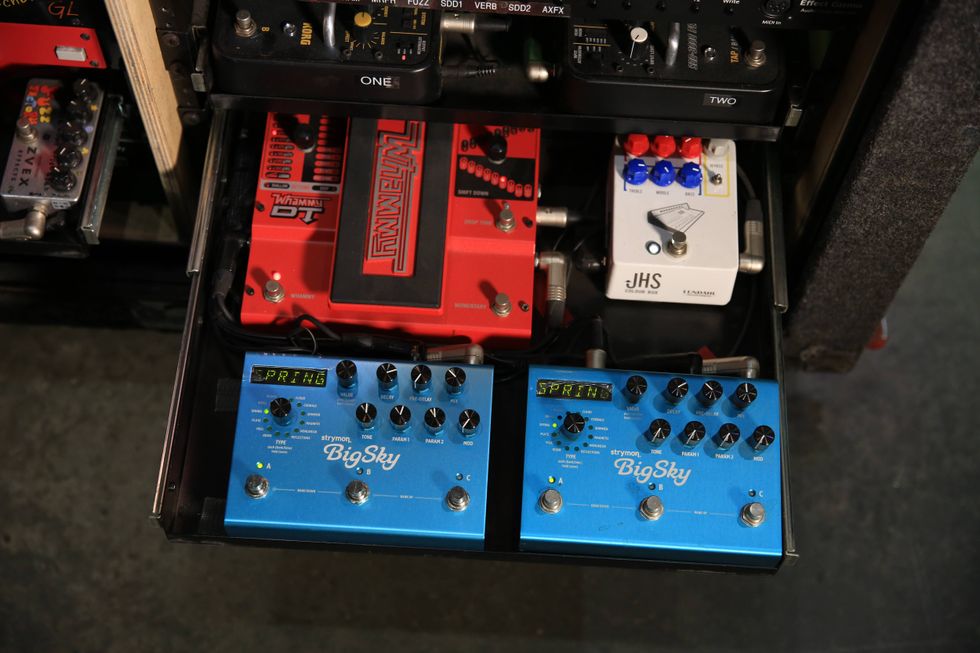
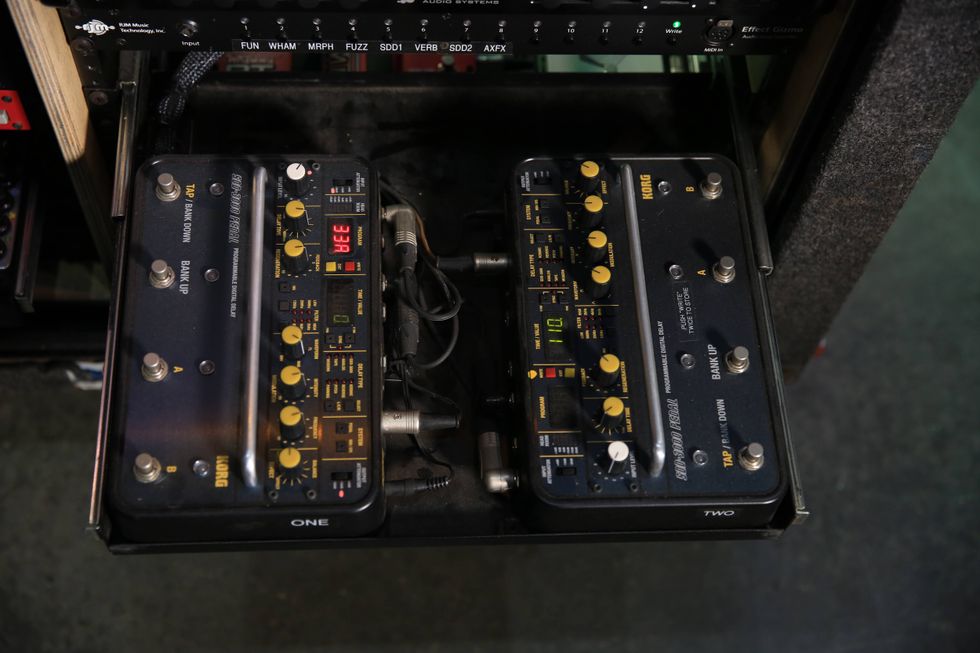
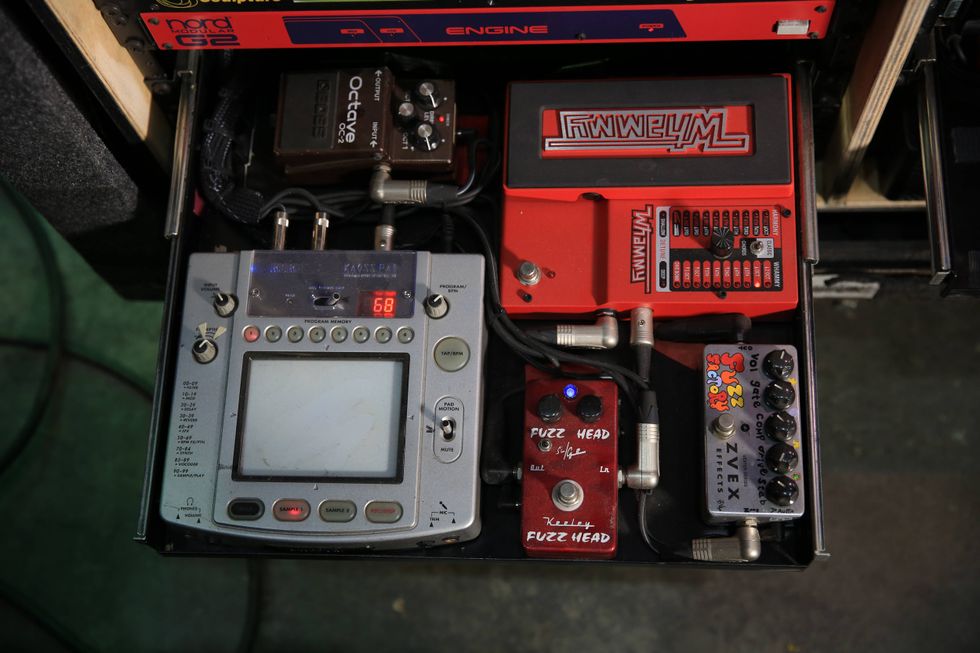
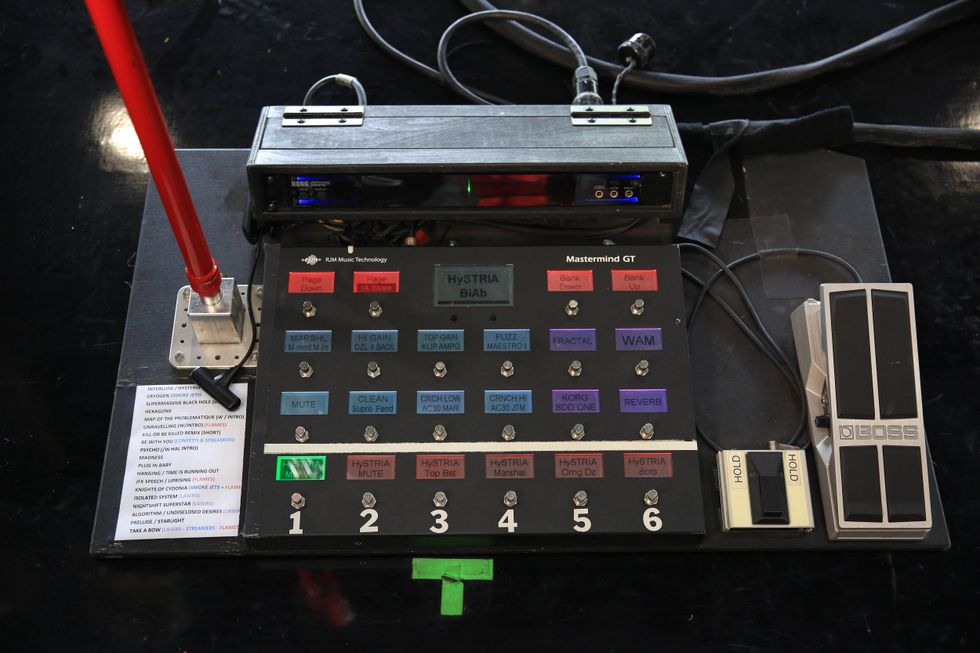
None More Red
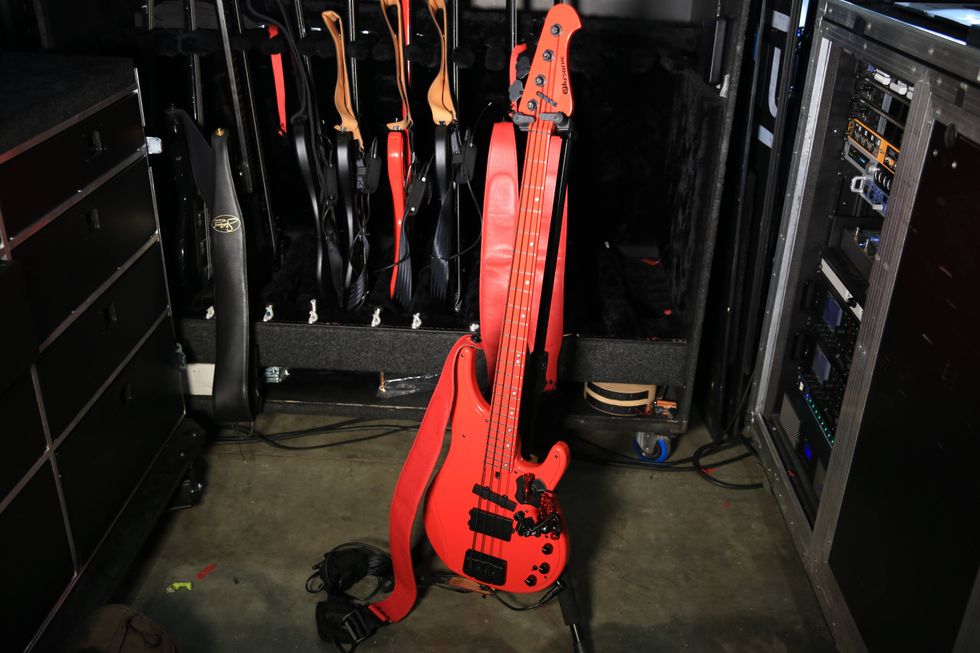
Wolstenholme’s new Alusonic basses replace the Statuses he’d played for over a decade. The signature CW model boasts a roasted maple neck, sassafras body, and carbon fiber top and fretboard, with Hipshot hardware and everything else made in-house in Italy. The pickups are Alusonic’s own—a Stingray-style humbucker and a single-coil across five switch positions, four of which get used in a show, all level-matched well enough to swap mid-song.
Madness, Mark III
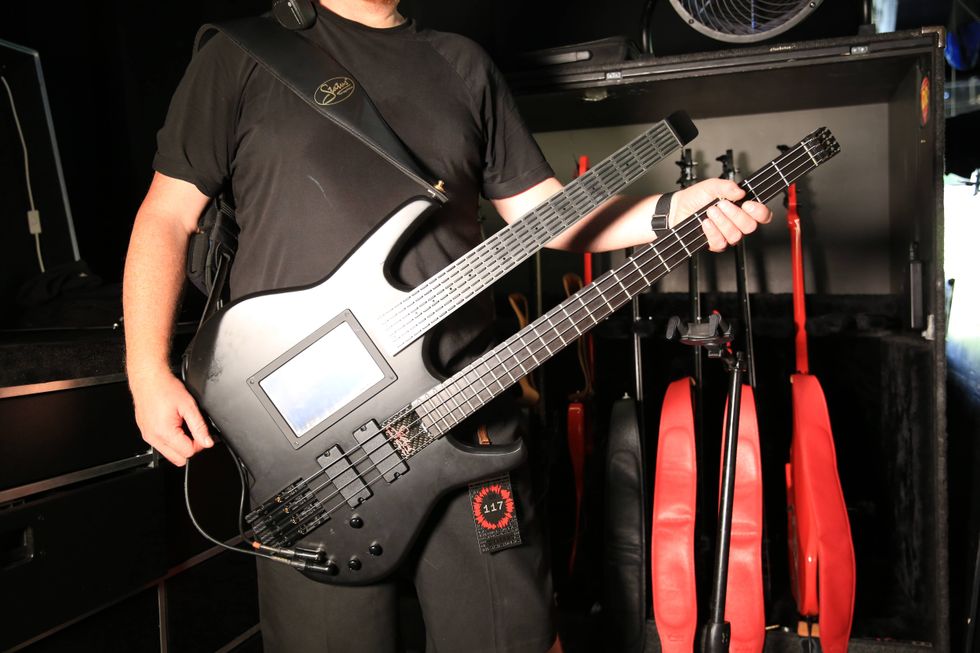
The “Madness” Status bass is on its third build. It started as a Misa Kitara grafted into a Status by Rob Green, moved to a Starr Labs iPad-based version, and now runs a Mosi Nova neck built into a Manson-engineered instrument with an XY pad, a MIDI merger, and a PC computer the size of a card deck inside it. Ashworth powers it up three songs early to let Windows boot.
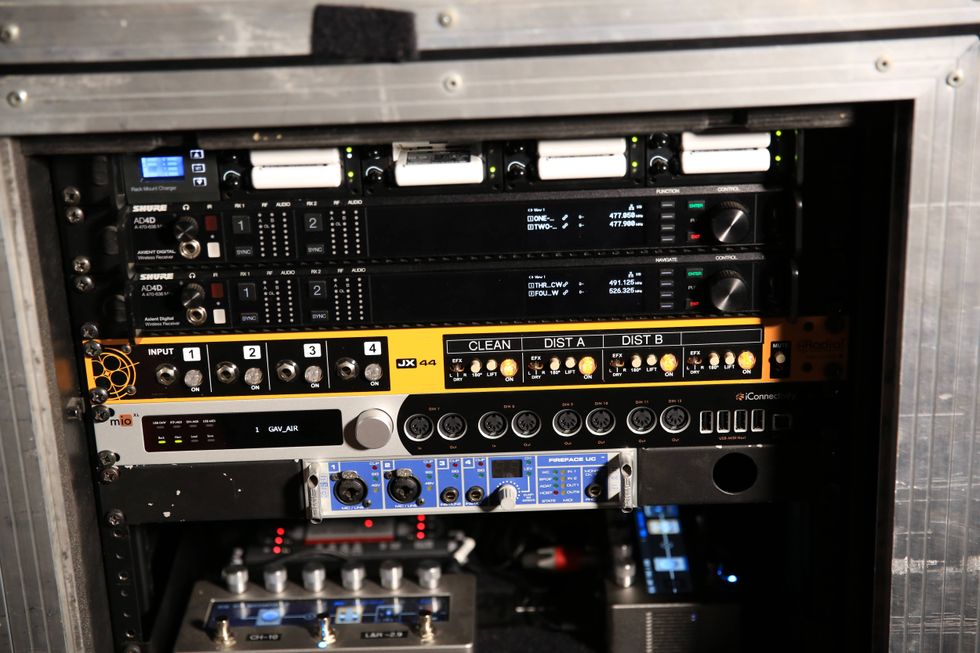
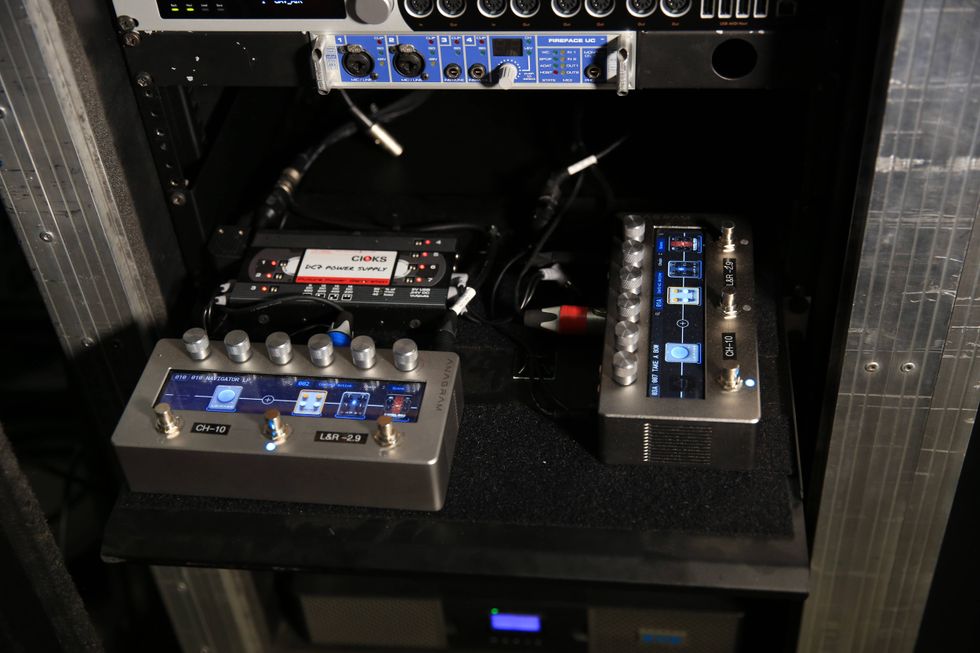
Wolstenholme’s Rig
Two Keys, One Harp
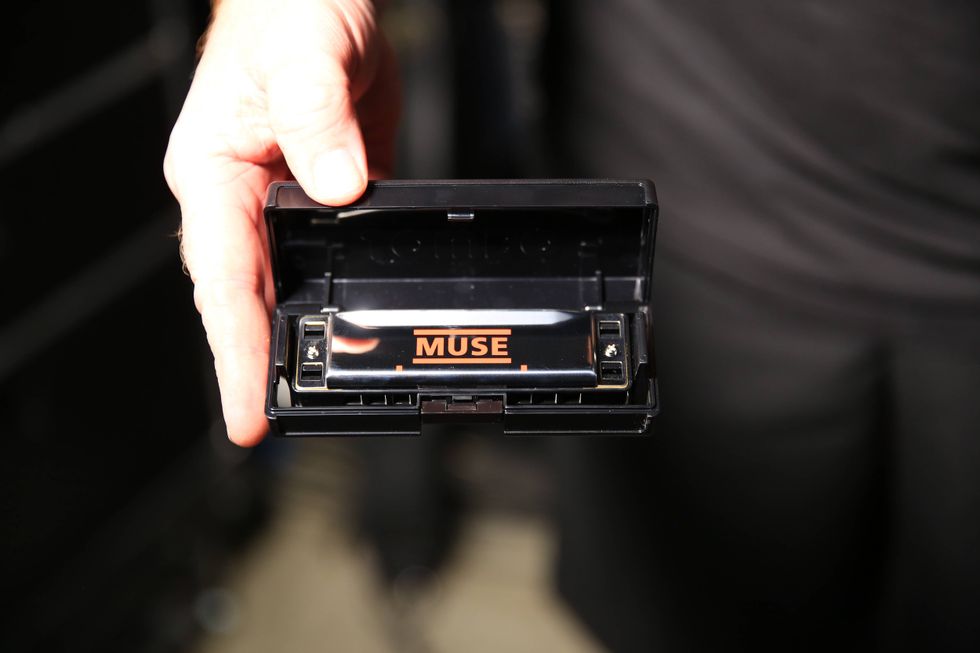
The “Knights of Cydonia” intro is played on custom Lee Oskar harmonicas built with two keys in one, so Wolstenholme doesn’t have to switch mid-part. They’re made in limited-edition colors each season, and he throws them into the crowd when he’s done.