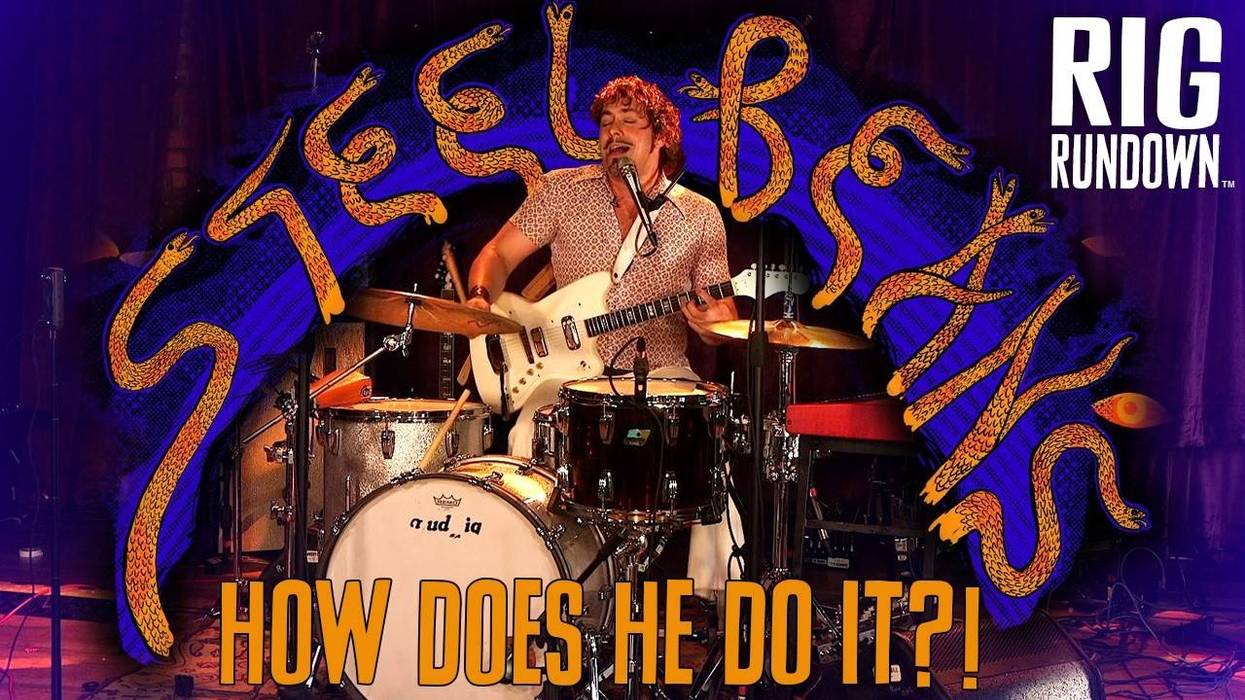



Iron Maiden brought their Run for Your Lives World Tour to Sports Illustrated Stadium in Harrison, New Jersey, for two nights on September 5 and 6, and PG’s Perry Bean got backstage with techs Brent Diamond, Alan Sosa, and Colin Price to go through the rigs behind Steve Harris, Janick Gers, and Dave Murray. Have a look at some quick highlights below, and tune into the new Rig Rundown for all the details.
Brought to you by D’Addario.
The Only One
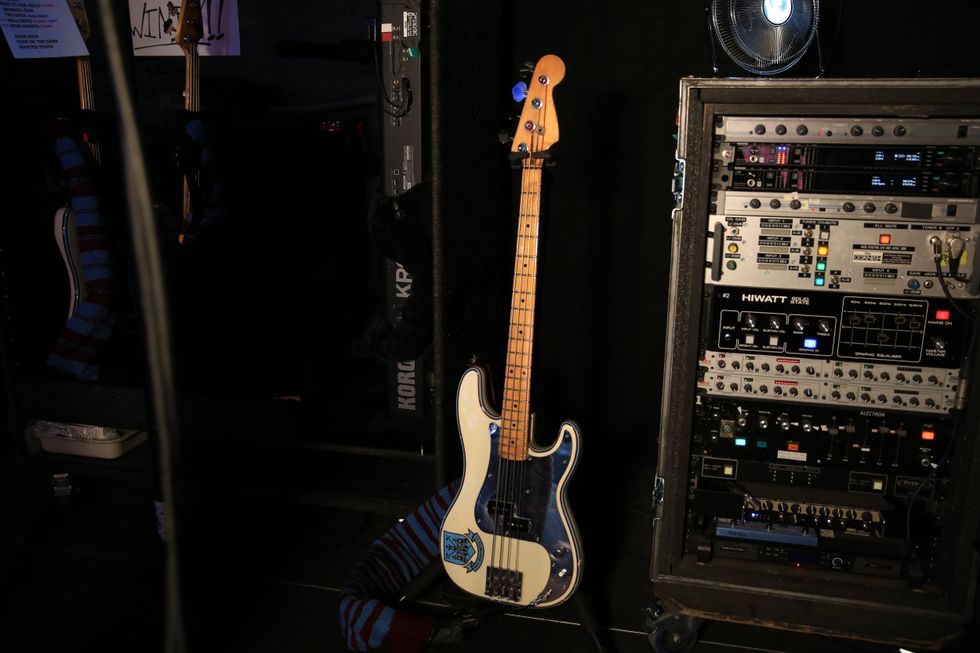
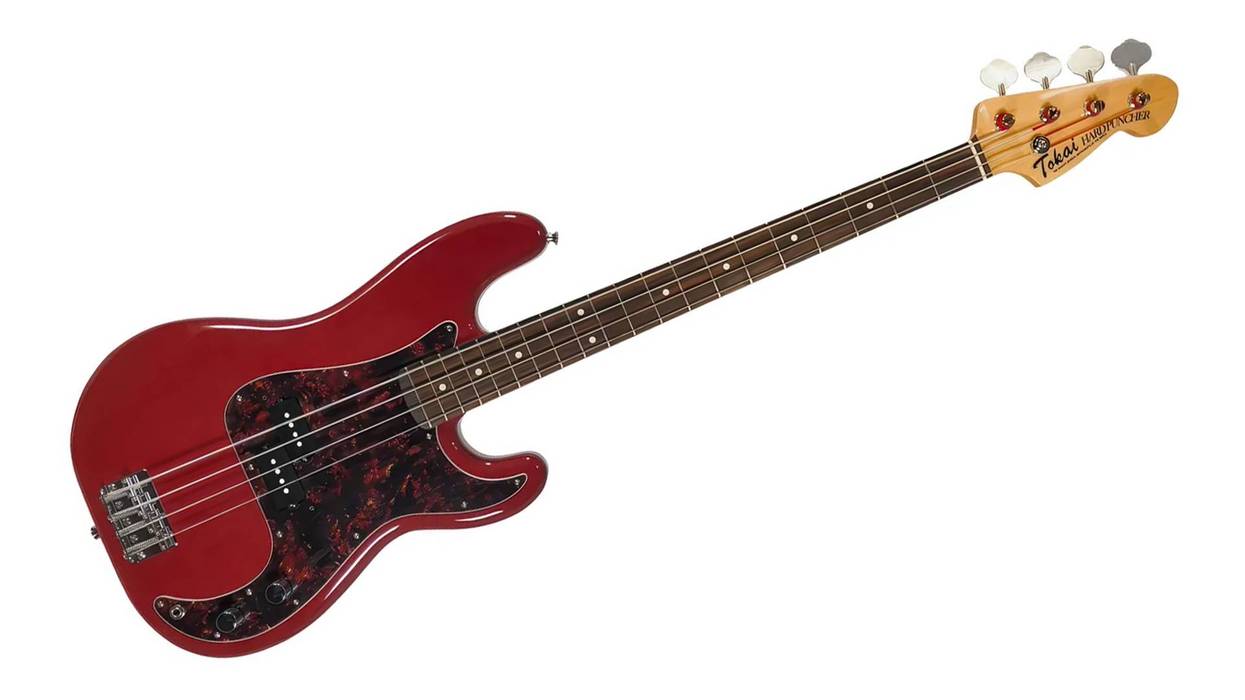
Harris has had this roughly 1971 Precision since the mid ’70s, right when Maiden was starting, and has played it at more or less every show the band has ever done. It’s had numerous paint jobs, the headstock logo is long gone, and the truss rod stopped being adjustable years ago—fortunately it’s sitting right where he wants it. Body and neck are otherwise stock apart from a Badass II bridge, his signature Seymour Duncans, and his signature Rotosound flatwounds (.050–.110), which he uses because he doesn’t like the noise rounds make when he slides. The tone knob is pulled out of the circuit entirely so it can’t get turned by accident.
Just in Case
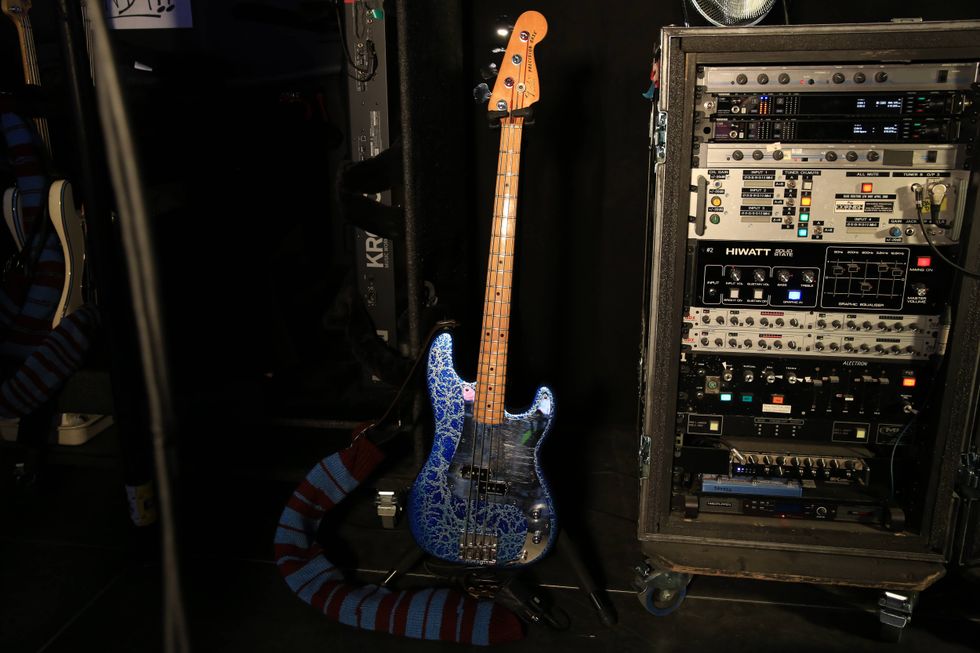
A 1978 Precision is the designated backup, with a Harris signature model also out on the road, though both are there for emergencies rather part of the than rotation. Harris checks his tuning before the show, walks out, and the bass doesn’t come back to Diamond until the night’s over—even when there’s an acoustic in the set.
Built in ’81
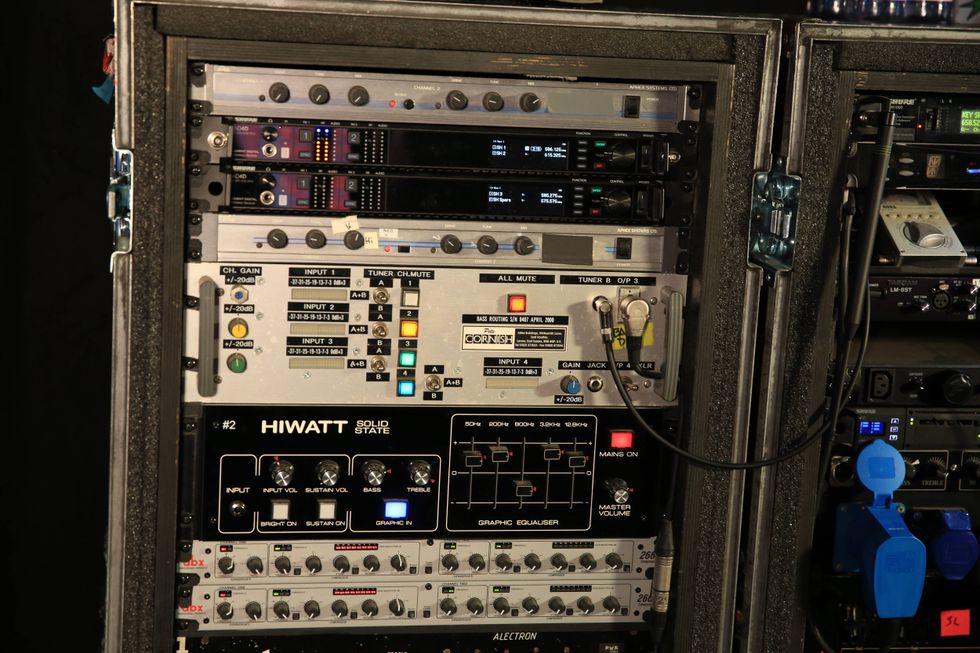
A Shure Axient wireless runs four channels—three basses at the moment, plus the acoustic when it’s in the set—into a custom Cornish selector, which picks the active instrument, lets Diamond balance gain between them, and has meters for spotting where the signal is and isn’t. The Cornish is Harris’ second; the first was built in the ‘80s and this one dates to 2000.
Back to the Hiwatt
 Built in ’81
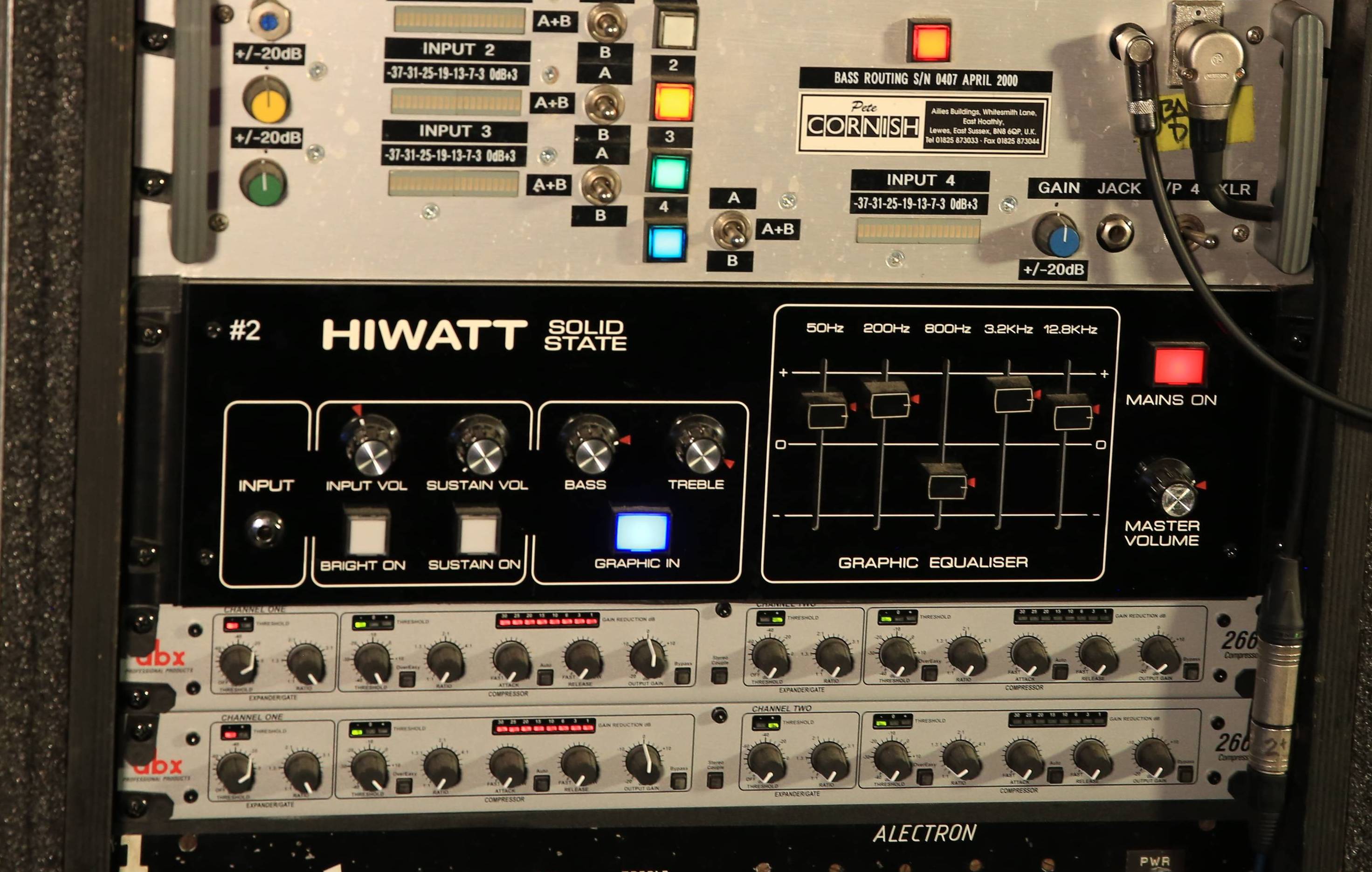
Harris settled on a Hiwatt NCA108 around 1981, but racking it didn’t take—it fell apart on the road—so he had Alectron build copies and ran those for 40-odd years. Then the originals turned up in a warehouse. Mark Dunn rebuilt them, rack-mountable this time, and Diamond says they edge out the Alectrons, though barely.
Heavyweights
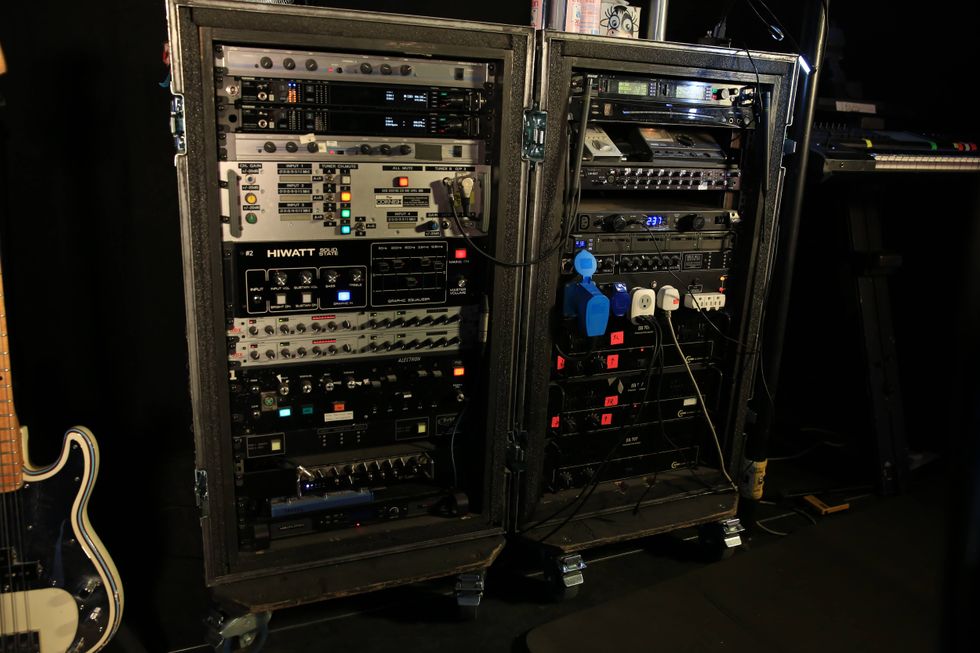
Cambridge Audio SR707 amplifiers have been driving the rig since day one. Diamond says you don’t want to lift one, but they’re bulletproof. They push two stacks of Marshall 800-series 4x12s, beefed up beyond stock and loaded with EVM 12Ls—a guitar cab for bass, which Diamond admits is a little bizarre, and which Harris has run for as long as anyone there can remember.
Break Glass
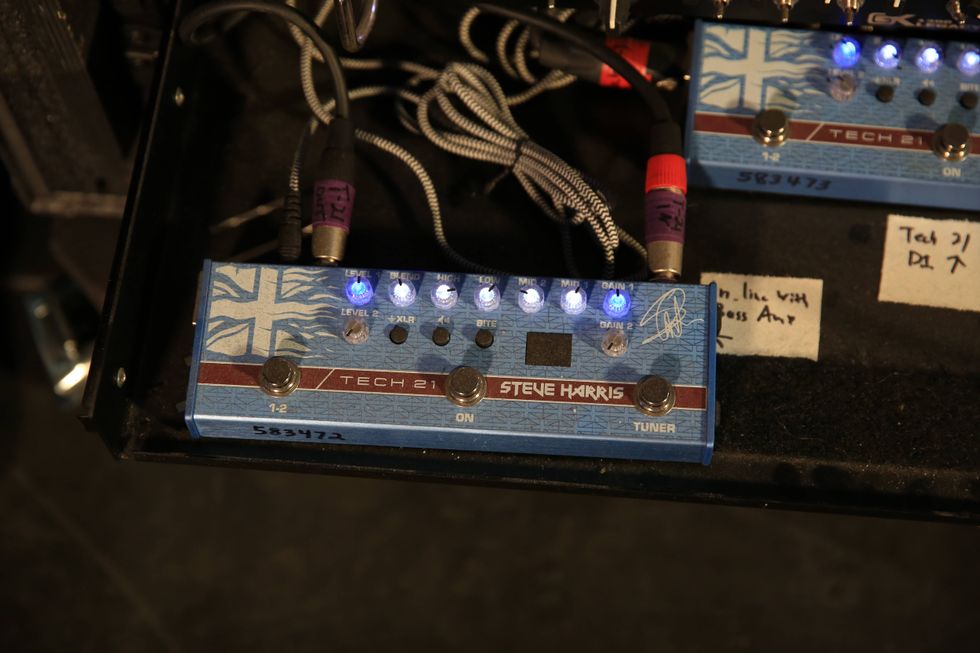
A Tech 21 SH1 Steve Harris Signature SansAmp pedal handles the direct line to front of house. It exists because Michael Kenney, Harris’ tech at the time, worked with Tech 21 to get his rack tone into a stompbox for small British Lion club shows.
Tuner Loyalty
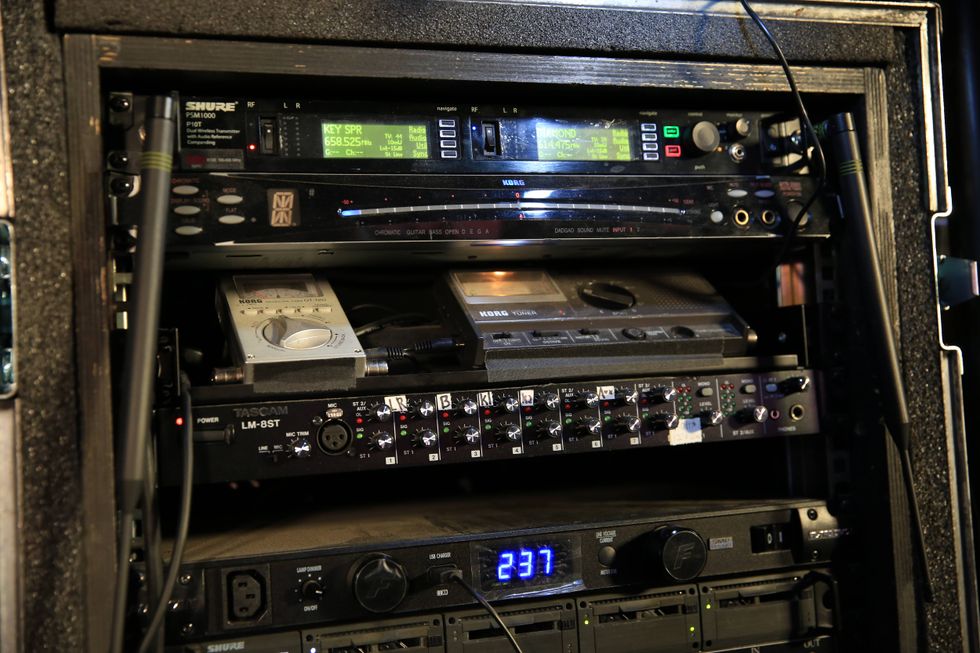
Harris tunes his own bass, and he does it on a Korg WT-12 that came out in 1980. It’s old enough to be unreliable—sometimes great, sometimes not—so there’s a second WT-12 onstage and another Korg beside it.
Gillan’s Gift
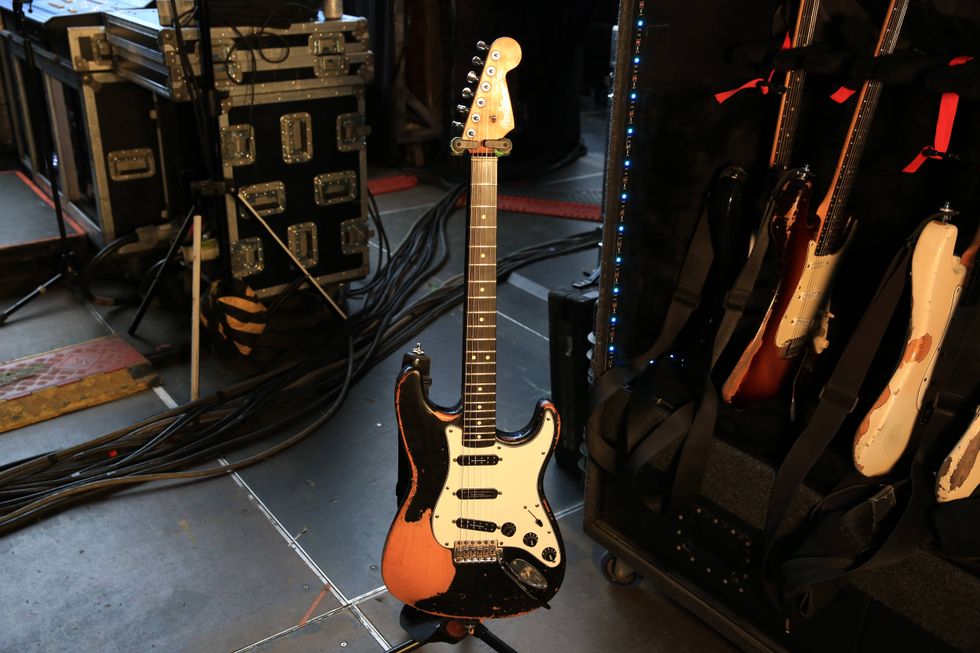
Gers’ number one is a Fender replica of a black Strat that Ian Gillan gave him. He played the original into the ‘90s, retired it, and had this one built; it was mint when it arrived and isn’t anymore. There’s a Duncan JB Jr. in the neck and bridge and a Hot Rails in the middle. Strings are .010–.046, and he likes swapping one for a lighter gauge— Sosa isn’t sure whether that’s about tension or superstition.
“Whitey”
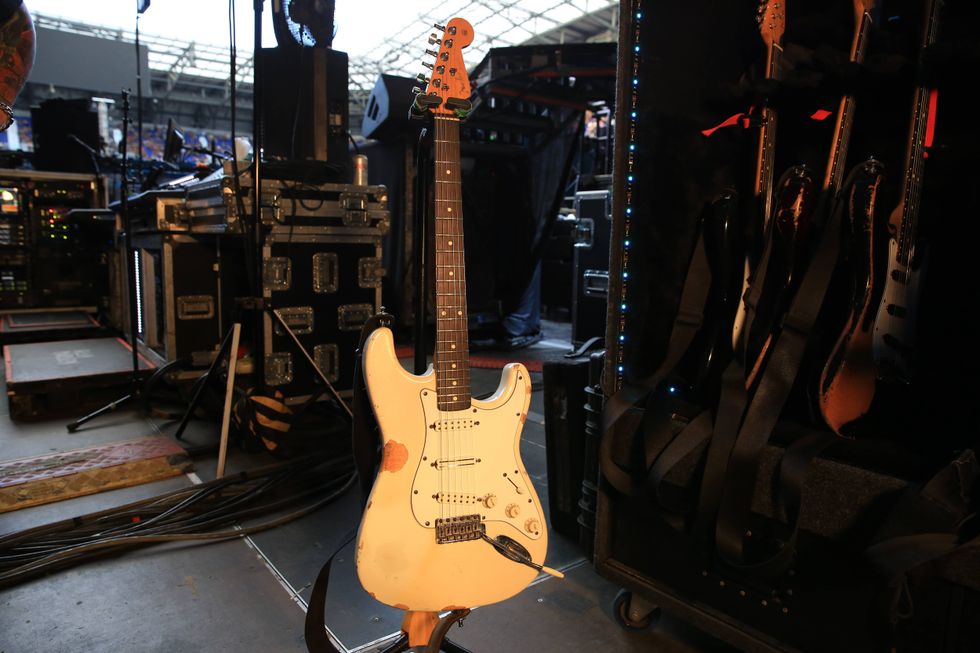
Gers’ other main Strat, also from the ‘90s, has the same JB Jr. and Hot Rails setup. The tape on the back is there because he wears a bullet belt— Sosa figures it buys the finish a little time, though it’s going regardless.
A Real Trooper
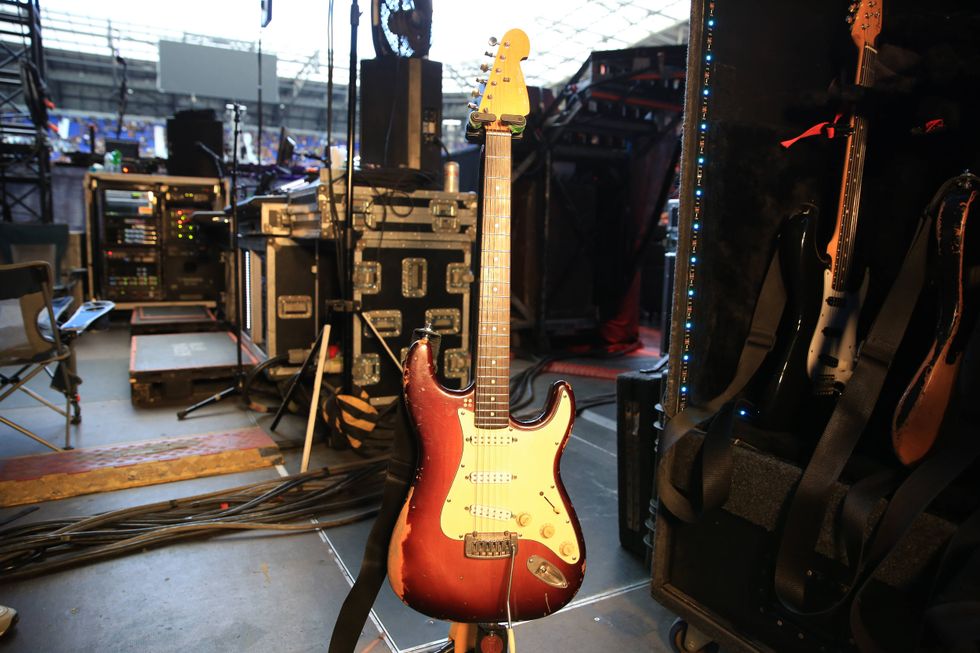
Sandberg has built Gers a few guitars over the years. This one has three JB Jr. pickups, and it comes out for “The Trooper.” The body’s close to a classic Strat, but the bridge, the headstock, and the sculpted heel are all Sandberg’s own.
First Strat
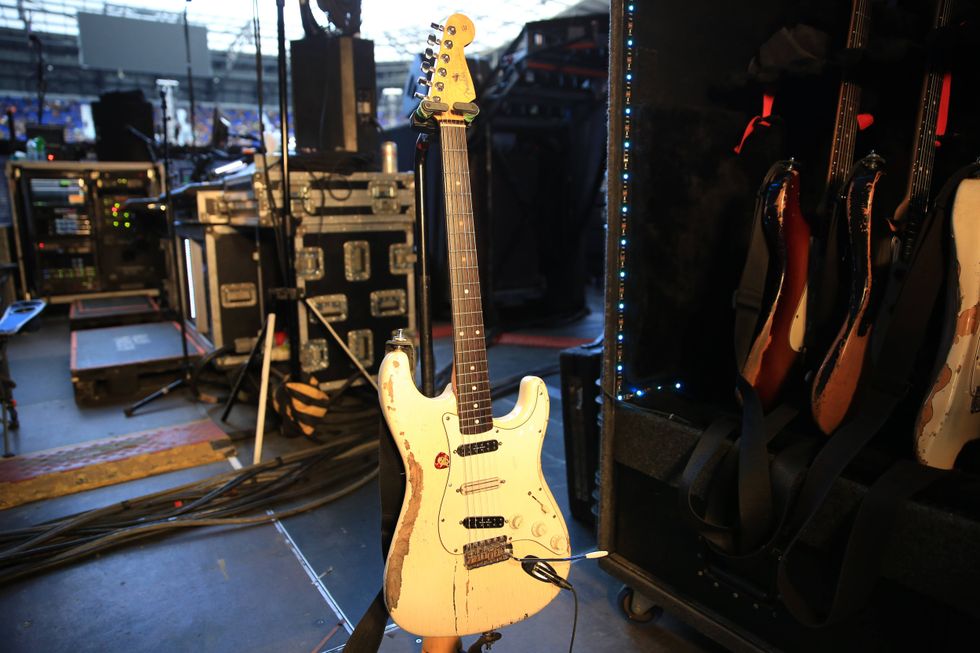
Gers has had this Strat since roughly his first band, and Sosa says he doesn’t give it a break—most of the checking is real cracks in the wood rather than cosmetic crazing. The neck is new because the old one was past working on, and the guitar’s been apart and back together more times than anyone can say.
Janick Gers’ Rack
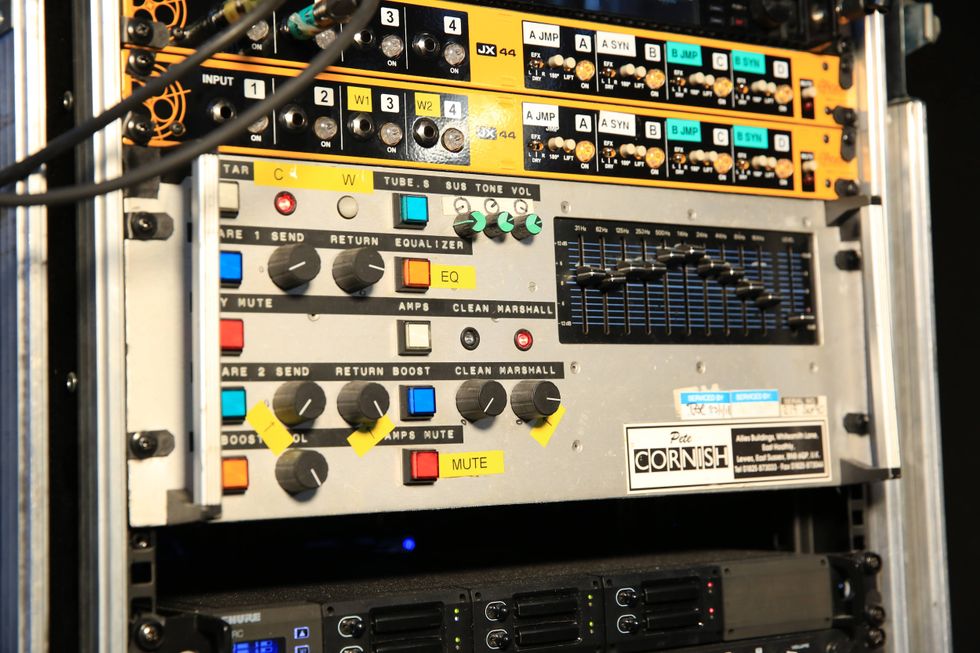
A Shure Axient True Wireless covers the three songs Gers wants to run around for; the rest of the night he’s on a cable. Both feed a Radial JX-44. A custom box that used to be the brain of the rig still earns its keep for its Tube Screamer, EQ, and a treble booster Sosa kicks in when Gers wants feedback at the end of a song.
Marshall Law
Number One, Literally
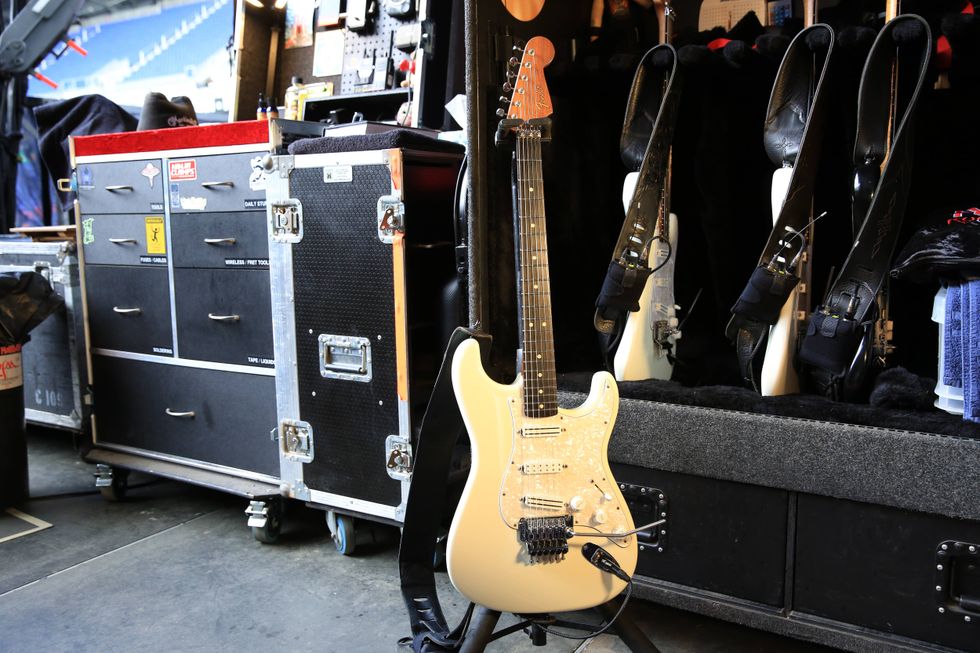
Murray’s main guitar is a Stratocaster from Fender masterbuilder Andy Hicks in Olympic white with a walnut neck that Price says doesn’t move. It’s DM0001, the first of a 70-piece run Hicks has just completed, and Price’s had FU-Tone and titanium parts fitted throughout. Three Hicks builds are out on this tour. The pickups are the Dave Murray Seymour Duncan set—Hot Rails at neck and bridge, and a JB Jr. in the middle for the cleans on “Seventh Son,” “Hallowed,” and the middle section of “Rime of the Ancient Mariner.” The big headstock and the Olympic white finish are both nods to Hendrix.
Kossoff Copy
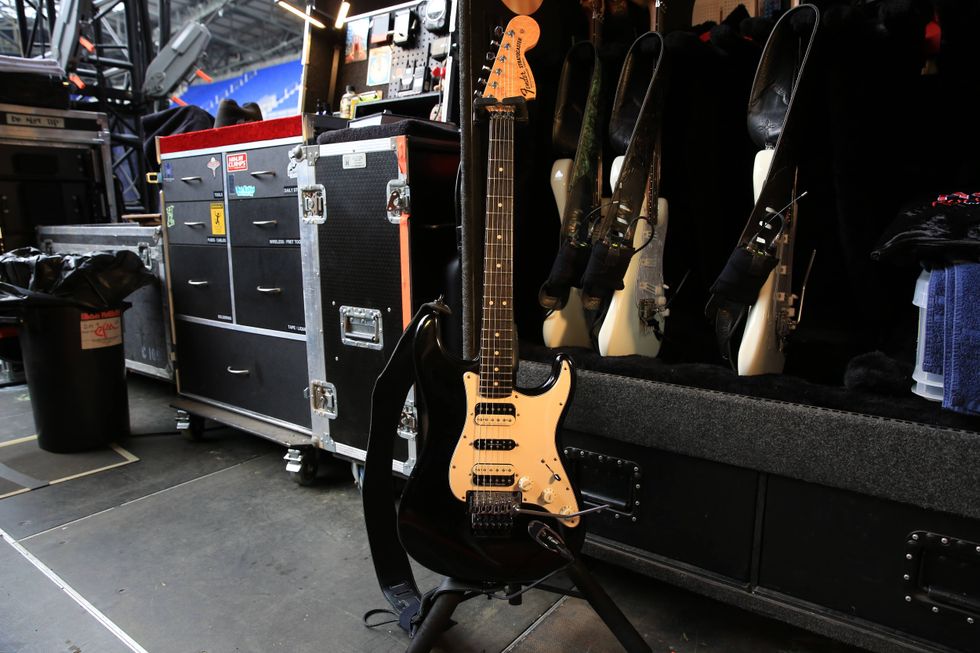
A guitar from Fender masterbuilder Jason Smith based on Paul Kossoff’s Strat, which Murray has had since about 2010 and kept at home for years before it came back out last year for the older material. It started with a JB and a ‘59; Price has since experimented his way to two JBs and a JB Jr. in the middle. The bird’s-eye top and the zebra coils are the reason everyone stops to look at it.
Dave Murray’s Rig
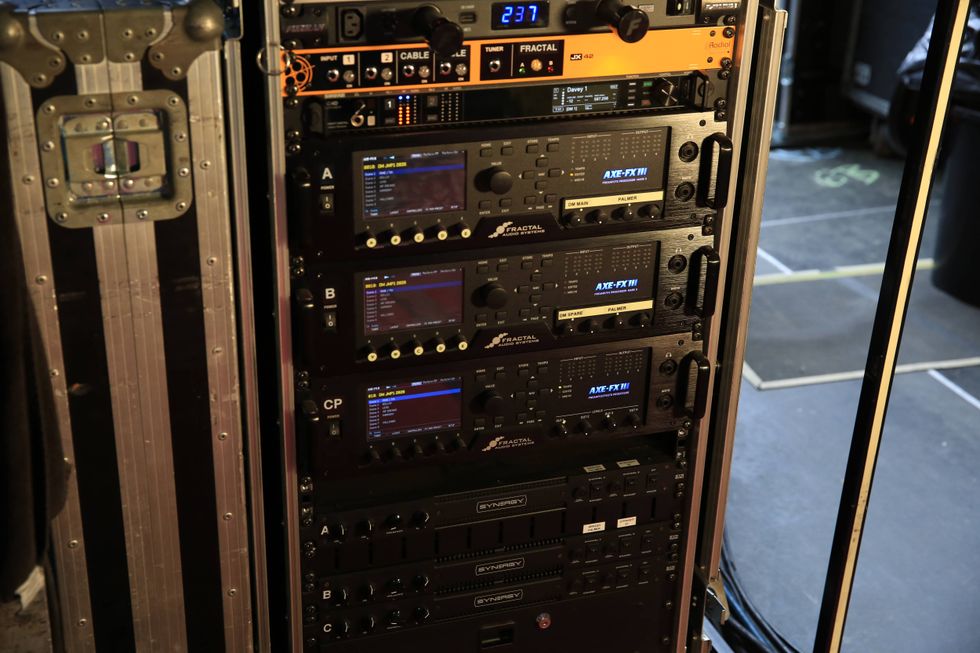
Murray runs a Fractal Axe-Fx, which Price came to after subbing on Devin Townsend gigs. It started as a JMP model—Murray’s sound—and has grown to four or five amps for different songs. A stereo out feeds Murray’s in-ears, which Price describes as “Steely Dan” clean; another goes to front of house and out to two Marshall cabs onstage, dialed cleaner to keep things from getting swampy. There are also cabs because Harris and Bruce Dickinson still work off stage sound.