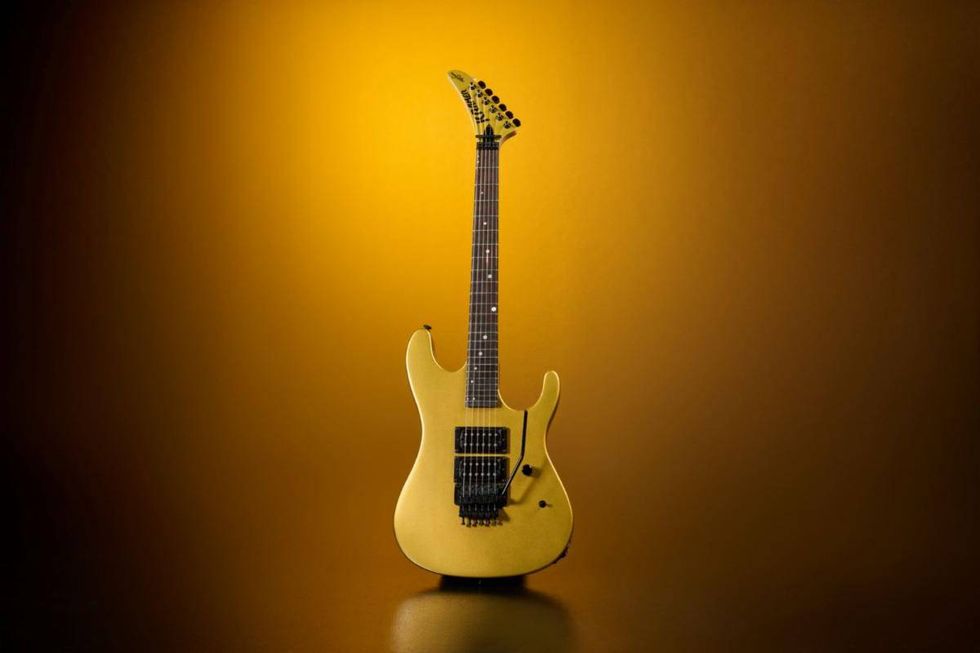
Since its founding, Kramer® has stood at the forefront of modern guitar evolution, building high-performance instruments trusted by legendary virtuosos and technically demanding players who continue to redefine what electric guitars can do. This year, the guitar brand synonymous with raw power, premium craftsmanship, and an unapologetic rock ’n’ roll attitude proudly celebrates its 50th anniversary with the unveiling of the Kramer 50th Anniversary Collection, honoring five decades of innovation, speed, and performance-driven design.
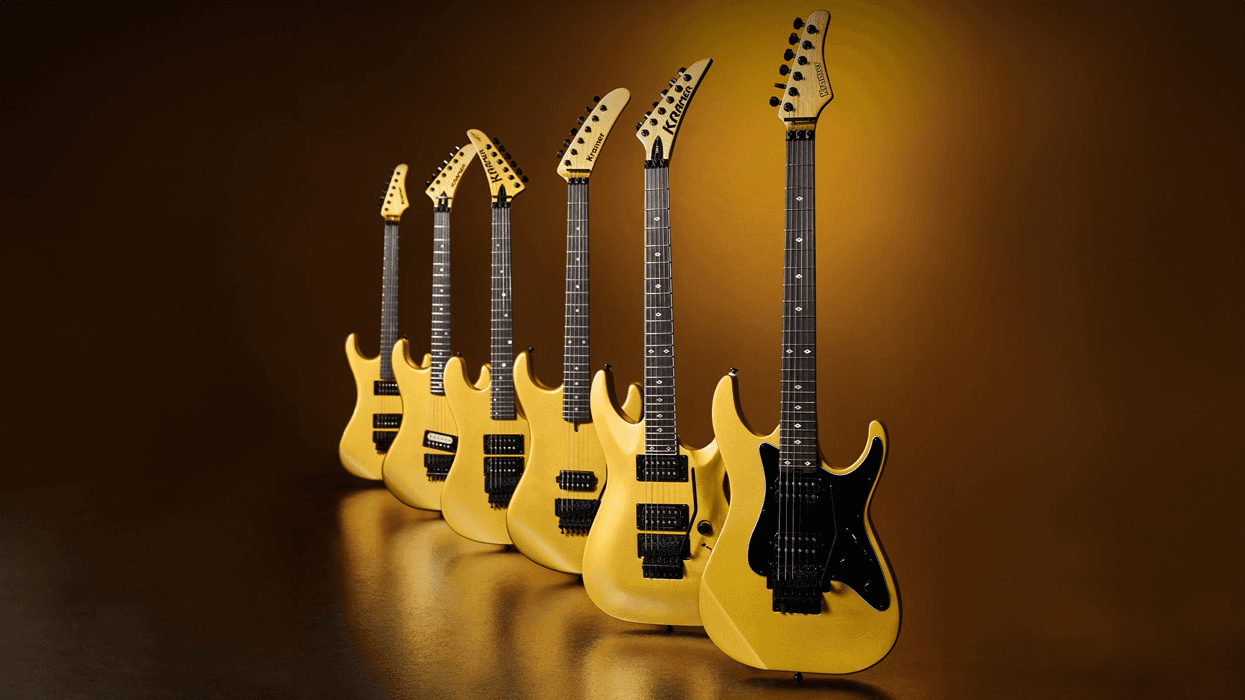
To commemorate the milestone, Kramer introduces limited-edition 50th Anniversary versions of six of its most recognized guitars: the 84, SM-1 HH, NightSwan, Baretta, Pacer Carrera, and Volante HHFR. Each model blends classic Kramer DNA with modern enhancements and is finished in a metallic Anniversary Gold. The collection is available for a limited time during the anniversary year through authorized Kramer retailers worldwide, with exclusive anniversary colorways offered only at KramerGuitars.com.
"I'm incredibly proud to be celebrating Kramer's 50th Anniversary with this stunning collection of limited-edition guitars," says Aljon Go, Product Manager at Kramer. "Performance has always been at the core of what Kramer stands for, and that spirit is deeply personal to me. My very first electric guitar was a Kramer, a Christmas gift from my parents in 1988. That guitar lit the spark for a lifelong passion, and when I pick up these 50th Anniversary models today, I feel that same sense of excitement and inspiration. Every detail of this series reflects the uncompromising quality, precision craftsmanship, and player-first design that define Kramer at its best."
Kramer 84
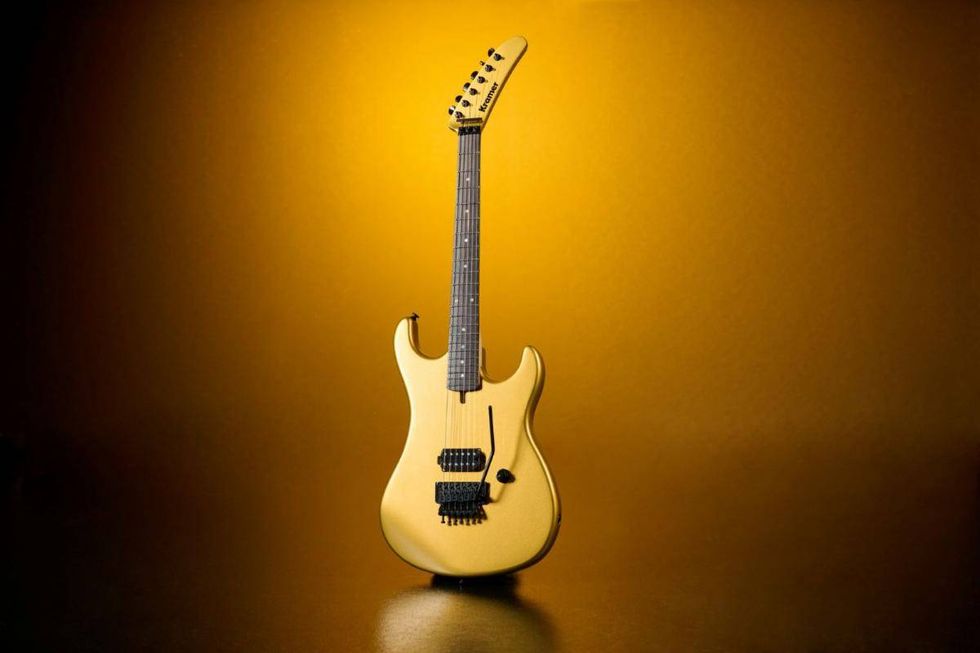
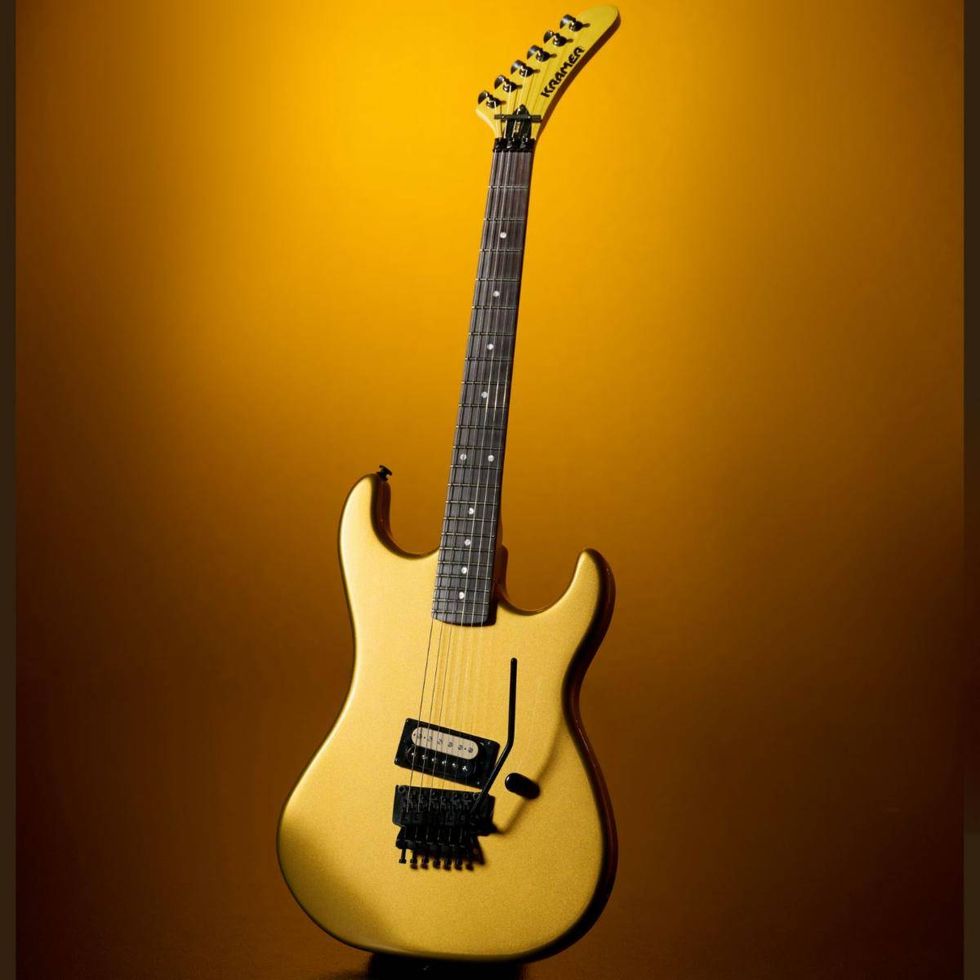
The Kramer 50th Anniversary 84 is a limited-edition revival of one of the brand's most influential guitars, finished in gloss metallic Anniversary Gold. Its alder body features forearm and belly contours and deep double cutaways for upper fret access. A satin-finished bolt-on maple neck with a walnut skunk stripe, 25.5" scale, maple fingerboard, and K-Speed SlimTaper™ C profile pairs with 22 jumbo frets.
The signature big banana headstock anchors a Floyd Rose® R2 locking nut, black mini die-cast tuners, a black string retainer, and a matching wrench holder. A Floyd Rose 1000 Series tremolo provides tuning stability under aggressive use. Electronics feature a single body-mounted Kramer Eruption PRO™ humbucker with double black bobbins, controlled by one volume knob with a push/pull series/parallel switch — parallel mode for a brighter, more articulate response; series for full humbucker output.
Each Anniversary 84 ships with a premium Kramer gig bag and is available only during the 50th anniversary year, making it both a high-performance instrument and a collectible tribute to the company’s original Golden Age.
Kramer SM-1 HH
The 50th Anniversary SM-1HH comes from Kramer’s Original Collection and traces its lineage back to the Stagemaster Mach II, the company’s first neck-through-body design. Its construction centers on a full-length mahogany neck paired with mahogany body wings, delivering exceptional sustain and resonance. The double-cutaway shape and contoured heel make the entire 25.5” scale easily accessible, while the ebony fretboard features 24 jumbo frets and elegant diamondshaped pearloid inlays. A bound, pointed headstock finished to match the body houses black die-cast tuners, a Floyd Rose® R2 locking nut, and a rearmounted wrench holder for quick on-the-fly adjustments. The Floyd Rose 1000 Series tremolo provides rock-solid tuning stability even under the most extreme tremolo use.
Under the hood, the SM‑1HH is equipped with a pair of Kramer Eruption PRO™ humbuckers, controlled by a three‑way selector switch, master volume and tone knobs, and premium CTS® pots for smooth, reliable performance. A mini‑toggle adds even more tonal versatility by switching the neck pickup between series and parallel wiring, with parallel mode offering a brighter, snappier response. Each guitar includes a premium Kramer gig bag, making it ready for the stage, studio, or road. Built with top‑tier components and infused with decades of rock heritage, this anniversary model is available for a limited time and stands as a modern classic crafted to celebrate Kramer’s legacy.
Kramer NightSwan
The 50th Anniversary NightSwan™ revives everything players loved about this late-80s performance icon. Its double-cutaway mahogany body features an aggressively deep lower-horn carve that makes reaching the highest frets effortless. A bolt-on three-piece hard maple neck attaches with a black Kramer four-bolt plate and sports a smooth natural satin finish, shaped into a slim and fast C profile ideal for fluid lead work and high-energy riffing. The ebony fretboard includes 24 jumbo frets, a 16-inch radius, white side dots, and the NightSwan’s signature “ping-pong” inlay pattern of varied-size dots.
The headstock showcases the distinctive NightSwan reverse-Explorer™ silhouette, equipped with a top-mounted Floyd Rose® R2 locking nut, black premium die-cast six-in-line mini tuners, a black string retainer, and a matching rear-mounted wrench holder to keep essential tools close at hand. Finished in Anniversary Gold to match the body, it pairs with a Floyd Rose 1000 Series tremolo that delivers exceptional tuning stability even under heavy vibrato use.
A pair of Kramer Eruption PRO™ humbuckers provides the NightSwan’s unmistakable voice. Controls are streamlined for onstage efficiency: a single master volume knob and a three‑way mini toggle for fast pickup selection. The knurled black metal volume knob complements the all‑black hardware while offering a secure grip during demanding performances. Each 50th Anniversary NightSwan ships with a premium Kramer gig bag, making it ready for travel from day one. More than an instrument, it stands as a milestone in Kramer’s history—built with premium components and offered only during this celebratory year, giving players a rare chance to own a modern take on a true rock icon.
Kramer Baretta
The Kramer 50th Anniversary Baretta pays tribute to the company’s first Golden Age, channeling the individuality and raw power of one of rock’s most iconic single-pickup designs. Built for modern players who demand speed, precision, and authority, it thrives in everything from classic ’80s metal to today’s heavier styles. Its maple body features forearm and rear contours for exceptional comfort, while deep double cutaways make the highest frets easy to reach. A satin-finished, bolt-on three-piece maple neck offers a 25.5-inch scale length, an ebony fretboard, and the fast-playing Kramer Thin profile. With 22 jumbo frets, bends and vibrato feel smooth, controlled, and expressive.
The signature hockeystick headstock reinforces the Baretta’s unmistakable attitude. It comes equipped with a Floyd Rose® R2 locking nut, black mini die‑cast tuners, a black string retainer bar, and a matching wrench holder on the back for quick adjustments. Finished in Anniversary Gold to match the body, the headstock completes the unified commemorative look. A Floyd Rose 1000 Series tremolo anchors the hardware, delivering rock‑solid tuning stability no matter how intense the vibrato work becomes.
Electronics are intentionally streamlined for maximum impact. A single uncovered Kramer Eruption PRO™ humbucker with zebra bobbins feeds into one volume control, which includes a push/pull series/parallel switch. Parallel mode provides a cleaner, brighter response, while series mode unleashes the full, high‑output humbucker power that drives amps—and audiences—into high gear. This minimalist setup keeps the focus on pure tone and performance.
Every 50th Anniversary Baretta ships with a premium Kramer gig bag, ready for travel, rehearsals, and the stage. With its commemorative finish, premium components, and unmistakable heritage, it stands as both a performance powerhouse and a collector’s gem. Available only during this anniversary year, it offers a rare chance to own a reborn piece of rock legacy—one built to make its mark all over again.
Kramer Pacer Carrera
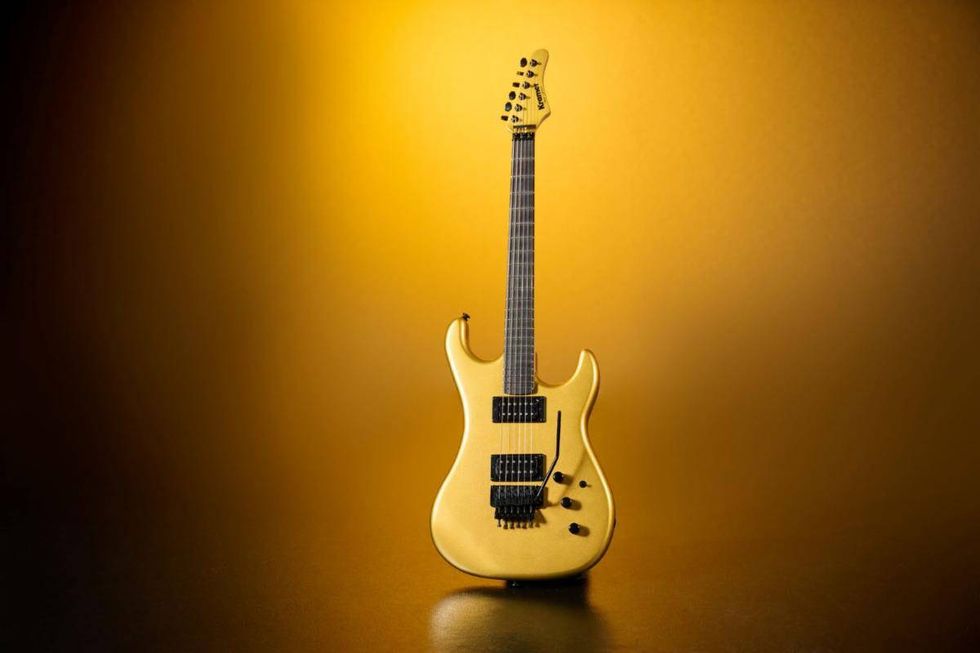
The 50th Anniversary Pacer Carrera features a double-cutaway maple body with forearm and body contours. The bolt-on maple neck is secured with a Kramer four-bolt plate and shaped into a Slim profile with a satin finish. The ebony fingerboard has white side dots, no inlays, a 12" radius, and a 25.5" scale. The classic Kramer "beak" headstock is finished to match the body and equipped with a Floyd Rose® R2 locking nut, black die-cast tuners, a string retainer bar, and a rear-mounted wrench holder.
A Floyd Rose 1000 Series tremolo handles tuning stability. A pair of Kramer Eruption PRO™ humbuckers — Eruption R PRO at the neck, Eruption T PRO at the bridge — is controlled by a master volume, master tone, and three-way toggle selector with black knurled metal knobs. Each guitar ships with a premium Kramer gig bag.
Street price is $1199.
Kramer Volante HHFR
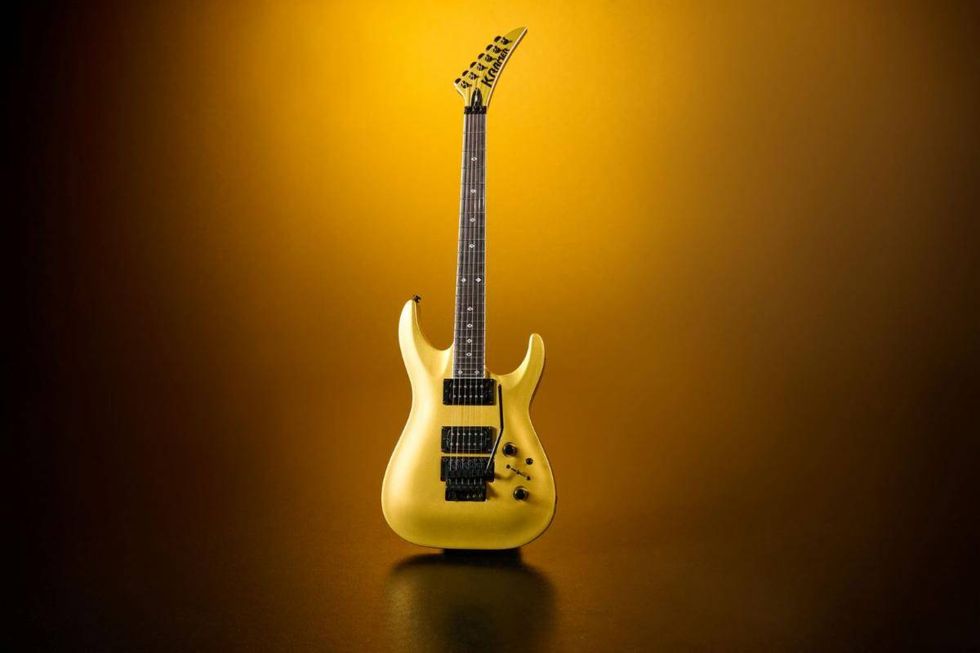
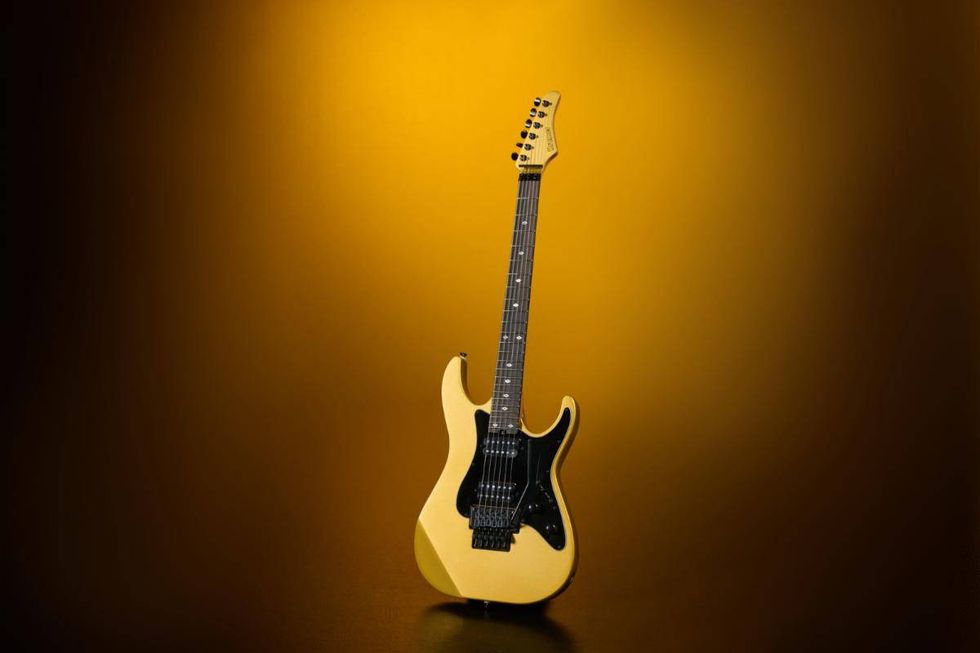
The 50th Anniversary Volante HHFR takes its name from the Italian word for "flying" or "light." Its lightweight alder body pairs with a three-piece thermally aged maple neck that bolts on using five ferrules for enhanced stability. A contoured heel allows access to the upper frets. The neck features Kramer's KeyLock system — engineered by Senior Product Development Engineer Richard Akers — which eliminates neck-pocket movement and improves tone transfer.
The ebony fretboard features a 10–14" compound radius, mother-of-pearl small diamond inlays, and 24 jumbo frets. A spoke wheel truss rod adjustment sits at the body end. The "beak" headstock is finished in Anniversary Gold and equipped with a rear-mounted Floyd Rose® R3 locking nut, black mini die-cast tuners, a string retainer bar, and a rear wrench holder. A Floyd Rose 1000 Series tremolo rounds out the hardware.
A pair of Kramer USA Neptune humbuckers is controlled by a master volume, master tone, and five-way blade switch. Each position is hum-canceling: bridge humbucker in series (1), both pickups in single-coil mode (2), both pickups as full series humbuckers (3), neck pickup as a parallel humbucker (4), and neck humbucker in series (5). Each guitar ships with a premium Kramer gig bag and is available only during the anniversary year.
Ahead of Hayley Williams’ recent solo show at the Ryman Auditorium, PG’s Chris Kies linked up with bassist Joey Howard and guitarists Bryan Robert Jones and Logan MacKenzie (also of Paramore). Check out what gear they’re using to back up Williams in this new Rig Rundown. Brought to you by D’Addario.
GoldFender
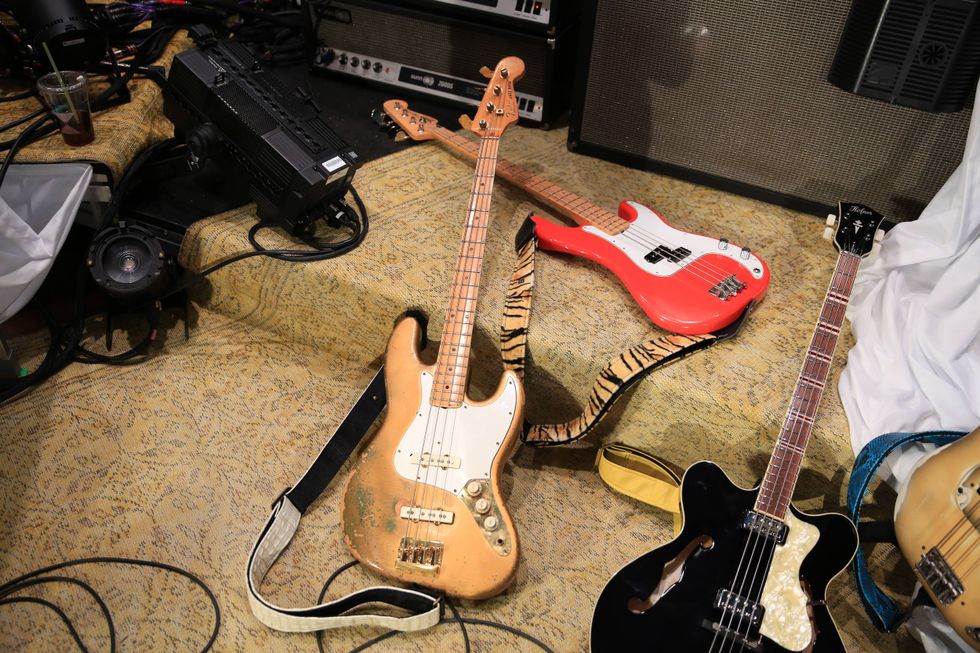
This all-original 1981 Fender Jazz bass is used for songs where Howard plays fingerstyle.
Pick it Up
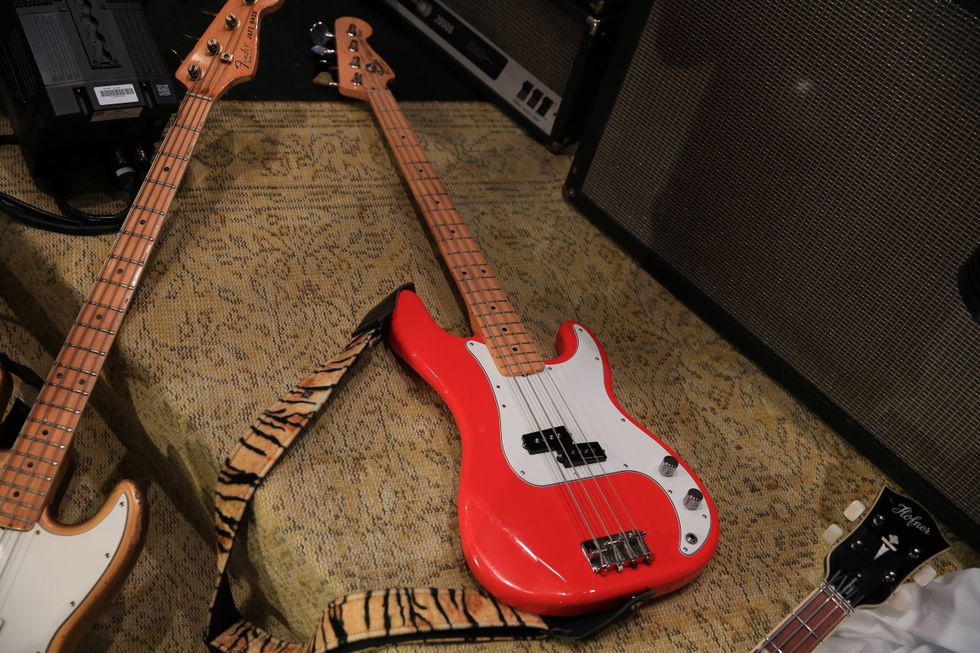
This Japan-made Fender P bass reissue comes out for heavier tunes, when Howard uses a pick.
Here Comes the Sunn
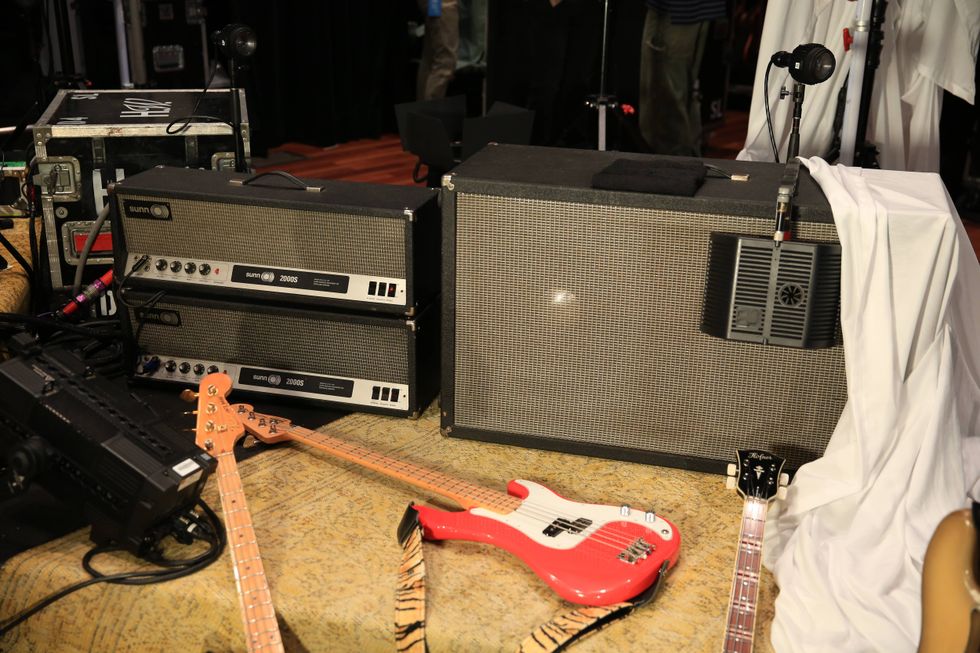
Howard’s stage sound comes from a pair of 1969 Sunn 2000S heads, paired with a 2x15″ speaker cabinet.
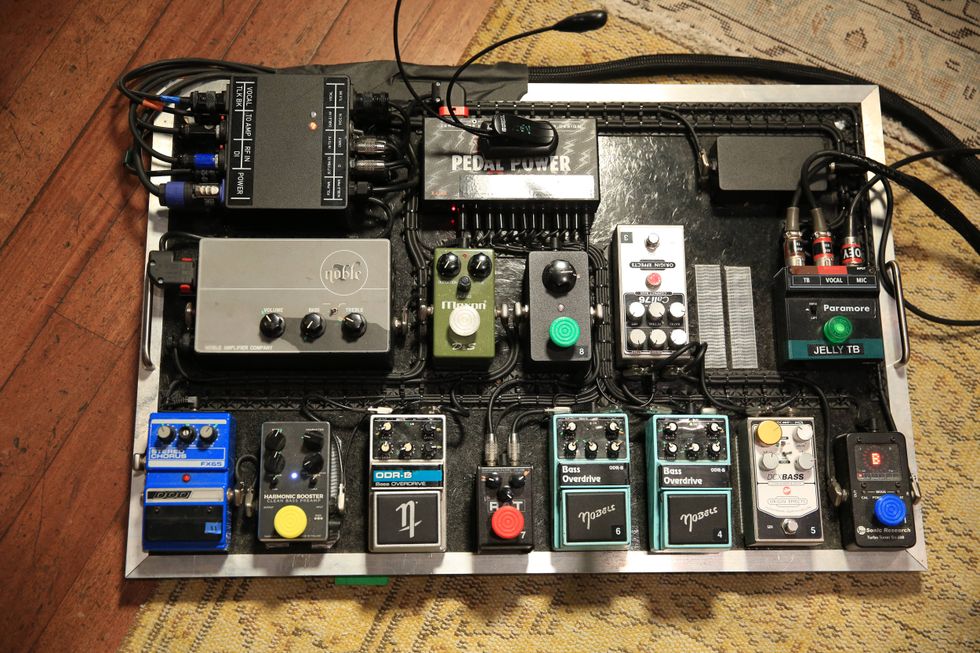
Joey Howard’s Pedalboard
Howard’s bass board includes a Sonic Research Turbo Tuner ST-300, Origin Effects DCX Bass, a trio of Nobels ODR-B Bass Overdrives, Pro Co Lil’ RAT, Darkglass Harmonic Booster Clean Bass Preamp, DOD FX65, Origin Effects Cali76, Maxon D&S, and Noble Vacuum Tube Preamp and DI Box; a Voodoo Labs Pedal Power 2 Plus supplies the juice.
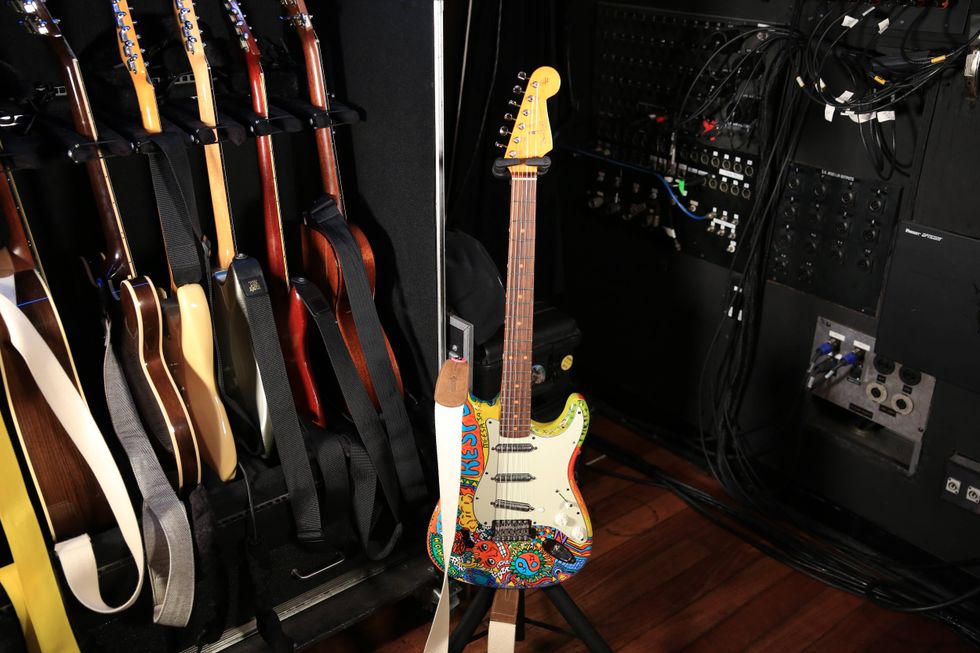
Pucker Up
This modded Stratocaster, fitted with lipstick-style pickups, is Jones’ main workhorse.
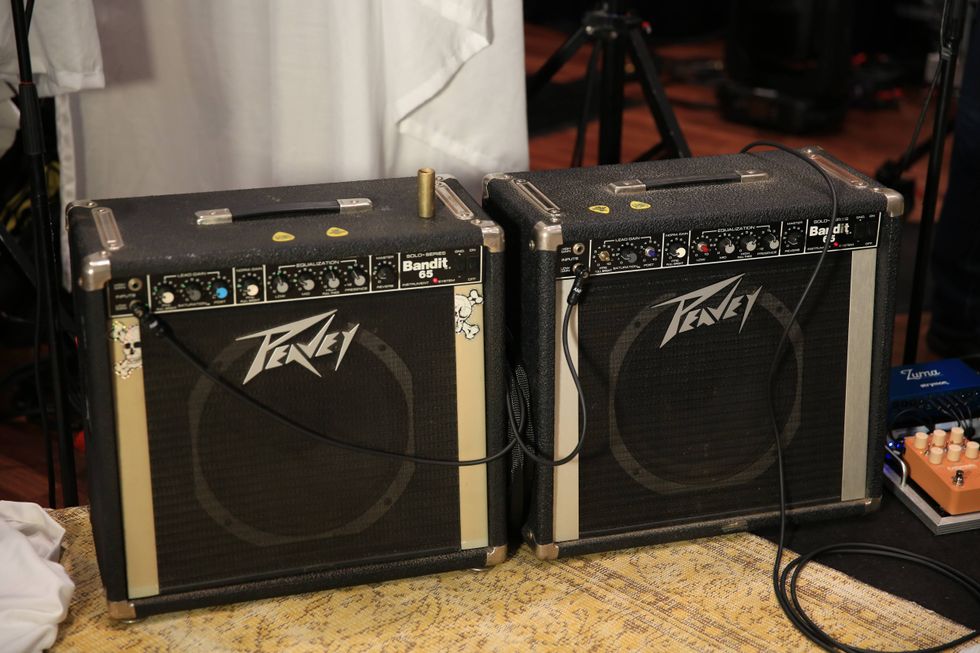
Pancho and Lefty
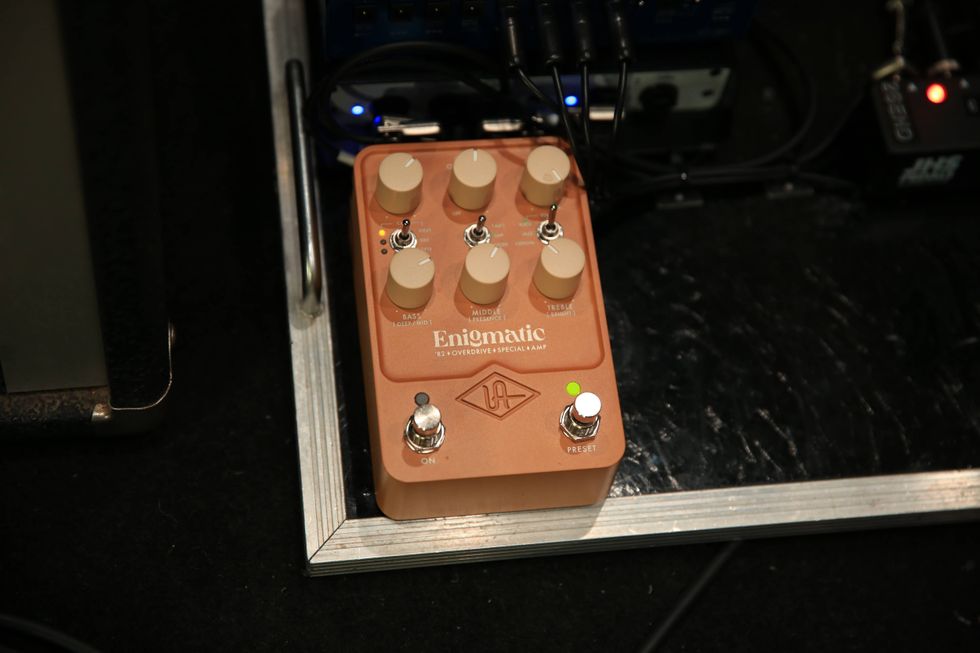
<p>Jones’ duo of Peavey Bandits are mostly on hand to complete the look, and for a bit of stage volume. His main sound comes from a <a href="https://www.uaudio.com/" target="_blank">Universal Audio</a> Enigmatic ’82 Special Overdrive pedal.</p>
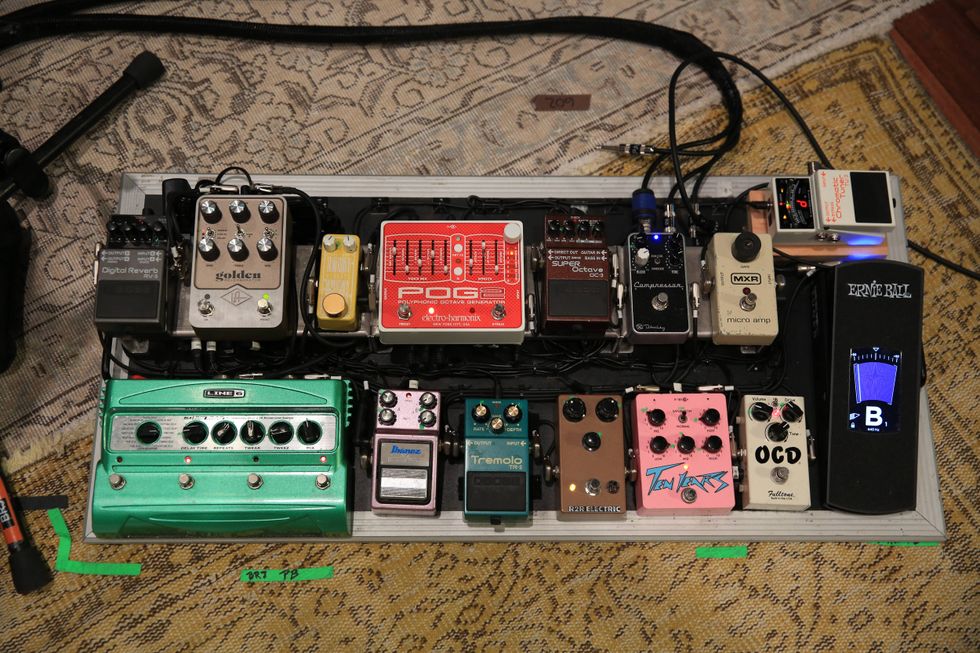
Brian Robert Jones’ Pedalboard
Jones’ board includes a Boss TU-3, Ernie Ball VPJR. Tuner, Fulltone OCD, Jason Moser Ten Years (is a Decade), R2R Electric fuzz, Boss TR-2, Ibanez BC-9, Line 6 DL-4, MXR Micro Amp, Keeley Compressor, Boss OC-3, Electro-Harmonix POG2, Malekko Vibrato, Universal Audio Golden Reverberator, and Boss RV-5.
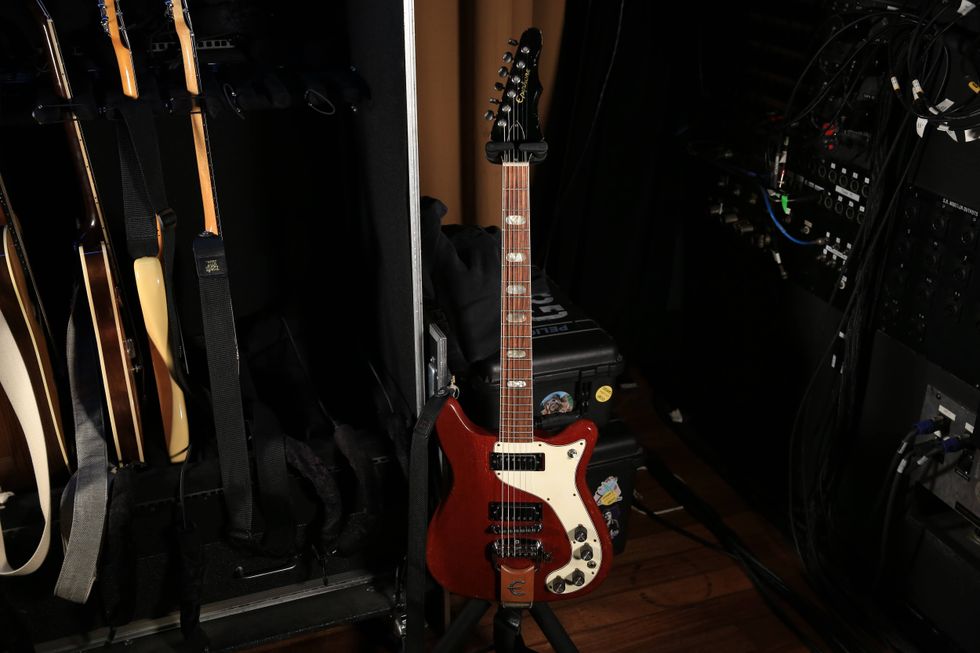
Crushing Crestwood
MacKenzie acquired this Epiphone Crestwood in Nashville in 2017, and while he’s had to treat it to a refret and have the neck reset, he still loves bringing it out on the road.
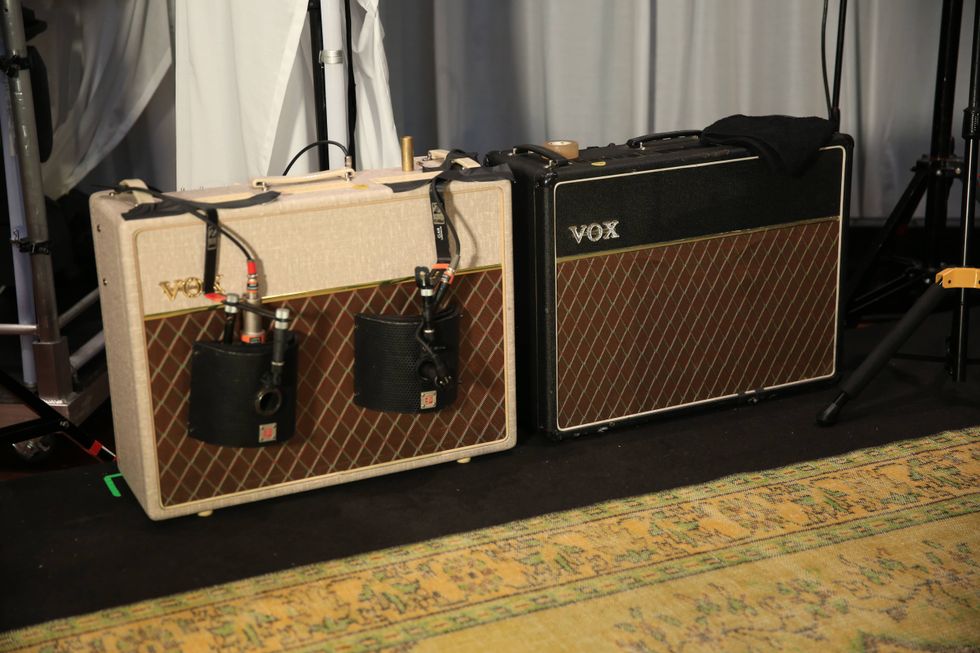
British Blues
Mackenzie plays through Vox AC30s stocked with Celestion Alnico Blue speakers, a combo that provides him with a malleable pedal platform.
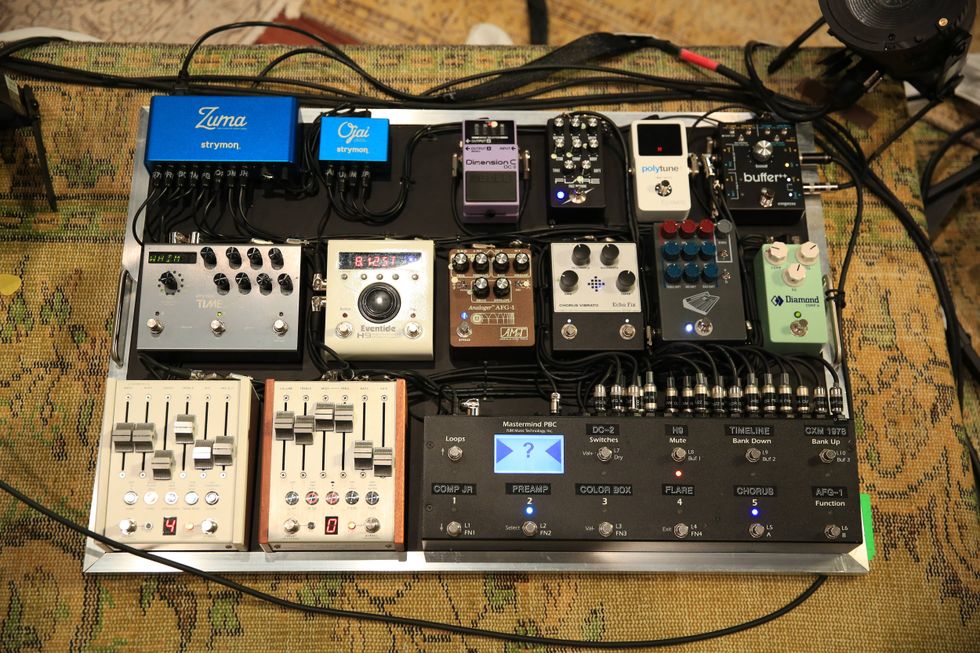
Logan MacKenzie’s Pedalboard
MacKenzie’s board is controlled with an RJM Technology Mastermind PBC, which handles all the pedals you see here: a Chase Bliss Automatone Preamp MkII and CXM 1978, Diamond Comp/EQ, Echo Fix EF-P3, JHS Colour Box, Asheville Music Tools AFG-1, Eventide H9, Strymon TimeLine, TC Electronic PolyTune 3, Aion FX Flare Fuzz Machine, Boss DC-2, and Empress Buffer. A Strymon Ojai and Zuma power the board.
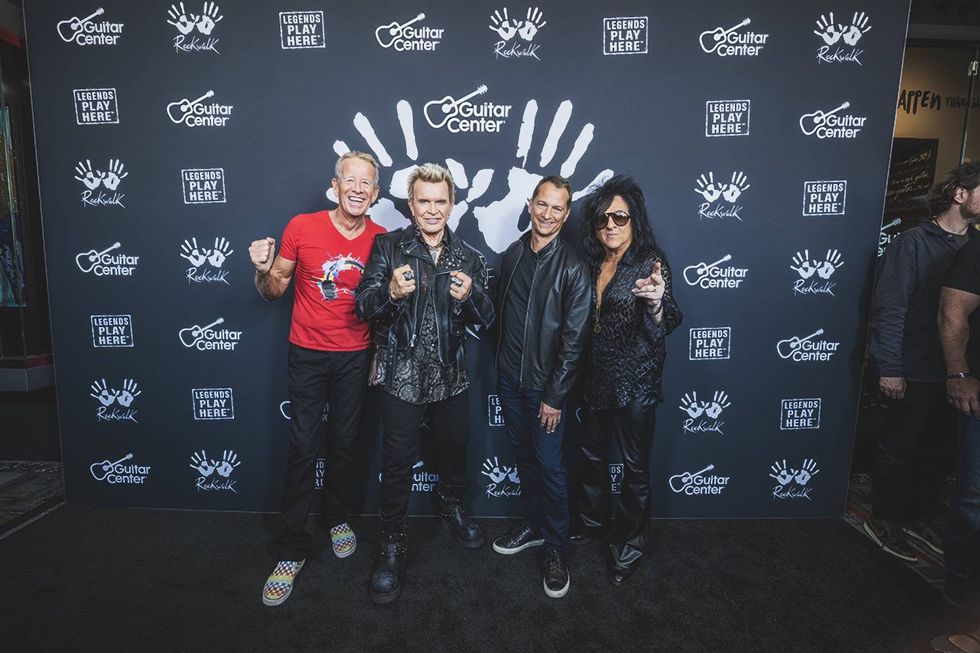
Guitar Center inducted rock icons Billy Idol and Steve Stevens into the Hollywood Rockwalk during a ceremony at Guitar Center’s flagship Hollywood location on Sunset Boulevard.
Hosted by legendary radio personality Richard Blade and attended by Idol, Stevens and Guitar Center CEO Gabe Dalporto, the event celebrated one of rock music’s most enduring creative partnerships. Idol and Stevens commemorated the occasion with a handprint ceremony outside the store, joining more than 150 legendary artists and innovators who have been honored by the Rockwalk since its founding in 1985.
The ceremony also marked the continued return of the Hollywood Rockwalk, part of Guitar Center’s broader commitment to celebrating music culture, honoring influential artists and creating meaningful experiences that inspire musicians and fans alike.
Ceremony quote highlights:
“Rockwalk exists to honor the artists who leave a lasting mark on music culture,” said Gabe Dalporto, CEO of Guitar Center. “Billy Idol and Steve Stevens have inspired generations of musicians, created entirely new sounds, and Guitar Center has had the privilege of being part of that journey.”
“I’ve had a fantastic time with Steve, he's made a lot of my crazy ideas come true. You can never really ask for anything more than that. It really is special and incredible, and I’ve enjoyed every minute of it. It’s great to be honored together by Guitar Center on the Rockwalk,” said Billy Idol.
“It’s humbling to now be amongst this incredible group of musicians on Guitar Center’s Rockwalk. More than anything, this is a testament to over 45 years of great laughs, great songs that now belong to the world, and a great friendship,” said Steve Stevens.
More about Rockwalk:
Founded in 1985, Guitar Center's Rockwalk is located at the entrance of our flagship store on Sunset Boulevard in Hollywood, CA. This pedestrian path and industry-recognized music landmark is dedicated to honoring the musicians and industry pioneers who have made significant and lasting contributions to the growth and evolution of music, through an exceptional level of talent, outstanding innovation and creative ingenuity.
Rockwalk has celebrated some of the most recognized names in rock, blues, soul and popular music through signature and handprint ceremonies outside Guitar Center Hollywood. More than 150 artists and innovators have been inducted, including Eric Clapton, John Lennon, Stevie Wonder, Aerosmith, Janis Joplin, Jimi Hendrix, Alanis Morissette, Black Sabbath, The Ramones, Elvis Presley and Johnny Cash.
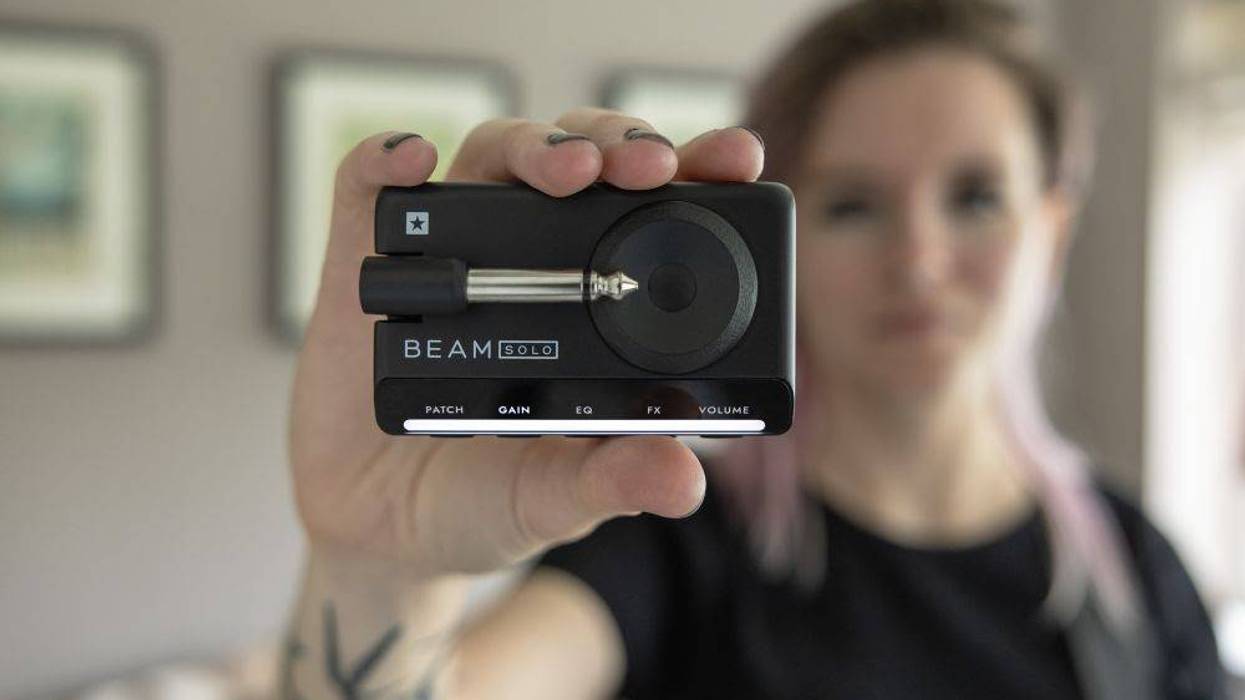
Blackstar Amplification has partnered with TONE3000 to deliver NAM A2 capture support to the Beam Solo headphone amp, making it the first headphone amp in the world to natively run Neural Amp Modeler (NAM) technology. The update arrives as a free firmware upgrade, available from the 10th June via the Beam app.
Powered by TONE3000's NAM A2 engine, Beam Solo users can load NAM A2 Lite captures directly into their Beam Solo, accessing the accuracy and detail of neural amp modelling in a compact, plug-in-and-play format. It's a significant technological step for the headphone amp category, and a clear differentiator for players who demand more from a practice and recording tool.
The Beam Solo already delivers a broad and capable feature set: eleven amp models drawn from iconic reference amps and Blackstar’s own valve amp stable, over 35 effects, CabRig speaker simulation with In The Room technology, patented ISF tone control, XpressFX, SpeedDial, Bluetooth music playback, a headset mic input with studio-quality preamps, multi-channel USB-C recording, and full integration with the Beam app community. NAM A2 support adds a new dimension to that platform, giving players access to an ever-growing open-source library of thousands of NAM captures.
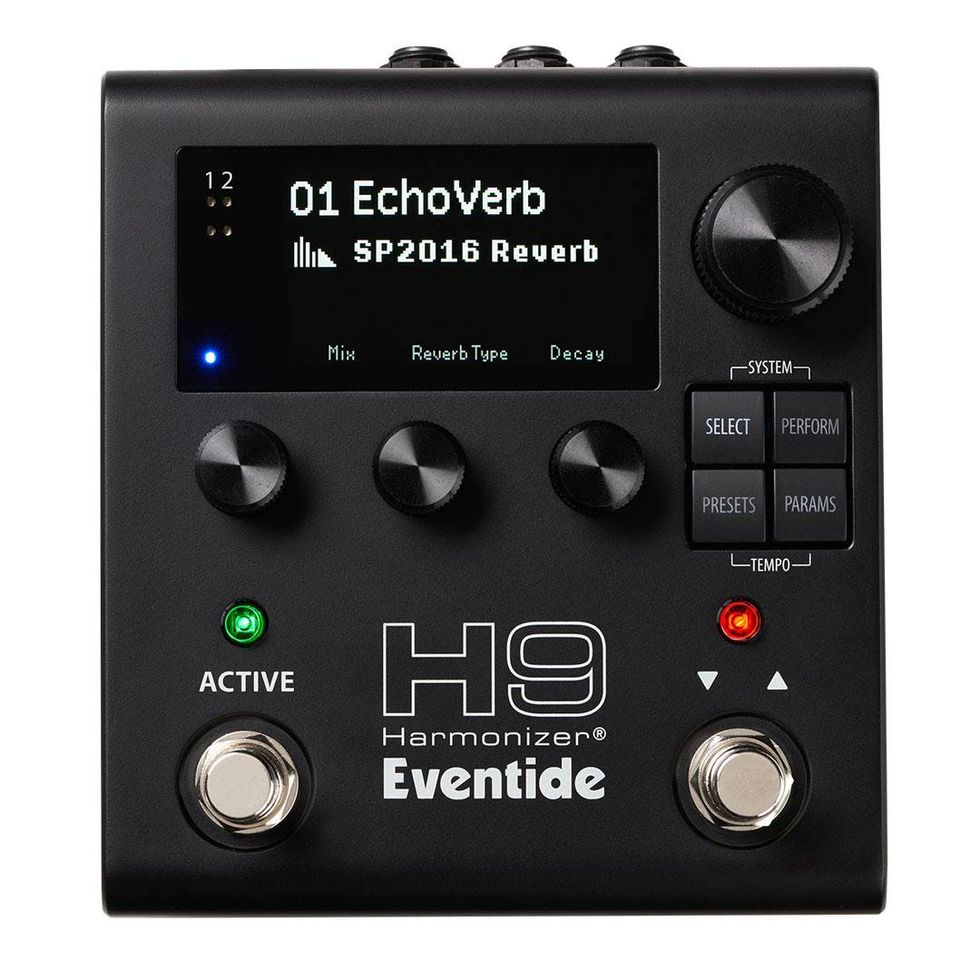
Today Eventide Audio released the H9 Harmonizer Gen 2, the next evolution of its iconic multi-effects pedal platform. Built on the same modern processing architecture as the H90, the new H9 Harmonizer combines Eventide’s flagship algorithm library, streamlined workflow, and modern connectivity in a compact, performance-ready format designed for today’s players.
Building on the original concept, H9 Harmonizer Gen 2 expands the complete H9 Max library to the full 74-algorithm lineup from the H90. From delay, reverb, and pitch-shifting to granular processing, vocal effects, and synth manipulation, it delivers the broadest collection of Eventide effects ever assembled in a single-algorithm pedal.
Reimagined for today's players, the new H9 Harmonizer delivers the full depth of a professional multi-effects system. Featuring a faster, more intuitive workflow, powered by a larger display, redesigned controls, dedicated workflow modes, and enhanced performance features.
“We couldn't leave the H9 behind!” expressed Russell Wedelich, President and CTO of Eventide Audio, on the latest release, “So, borrowing from H90, we preserved all the cherished Eventide FX, leaving plenty of room for future innovation. I'm beyond proud of the entire Eventide team and excited to get this playable little box into the hands of all our fellow music making humans out there.”
The new H9 Harmonizer delivers the power of Eventide's algorithms in a sleek pedal format, with true spillover between presets for seamless transitions. The pedal comes equipped with modern ARM-based processing with improved overall fidelity, updated converters, and flexible routing options such as Pre/Post and Wet/Dry configurations for easy integration into pedalboards, amp loops, hybrid rigs, and studio setups.
H9 Harmonizer Gen 2 ships with over 1,000 presets and remains compatible with legacy H9 presets, allowing existing H9 users to bring their sounds forward into the next generation of the platform. Integrated with Eventide Control, the new H9 Harmonizer is designed to evolve alongside the needs of today’s musicians and producers.
Features
74 algorithms, including the full H90 and H9 Max libraries
High Fidelity Polyphonic Pitch FX using SIFT technology
1,000+ presets out of the box
Transform vocals with the Harmonizer+ suite together with MixingLink® (sold separately)
Redesigned UI with 3 Quick Knobs and button pads
Full parameter control directly from the pedal (no app required)
USB-C connection to Eventide Control app
Dual instrument & line-level I/O for flexible studio + live use
2 programmable footswitches, plus HotKnob and HotSwitch macro control
Seamless effects spillover between presets
Select, Perform, Preset, and Parameter Modes for flexible workflows
Flexible routing (Wet/Dry, Pre/Post)
Larger display with faster, streamlined interface
Fully compatible with H9 Classic presets
Built-in tuner
H9 Harmonizer Gen 2 is available June 24, 2026 for $599 MSRP through Eventide Audio and authorized dealers worldwide.
Eventide Audio
H9 Harmonizer® Gen 2
Multi-FX Pedal with 74 Algorithms, ARM Processing, 1,000+ Presets, 3 Modes, SIFT Polyphonic Pitch-shifting, 2.5" Display, Bluetooth Control, USB-C, MIDI, and Flexible Instrument/Line-level I/O