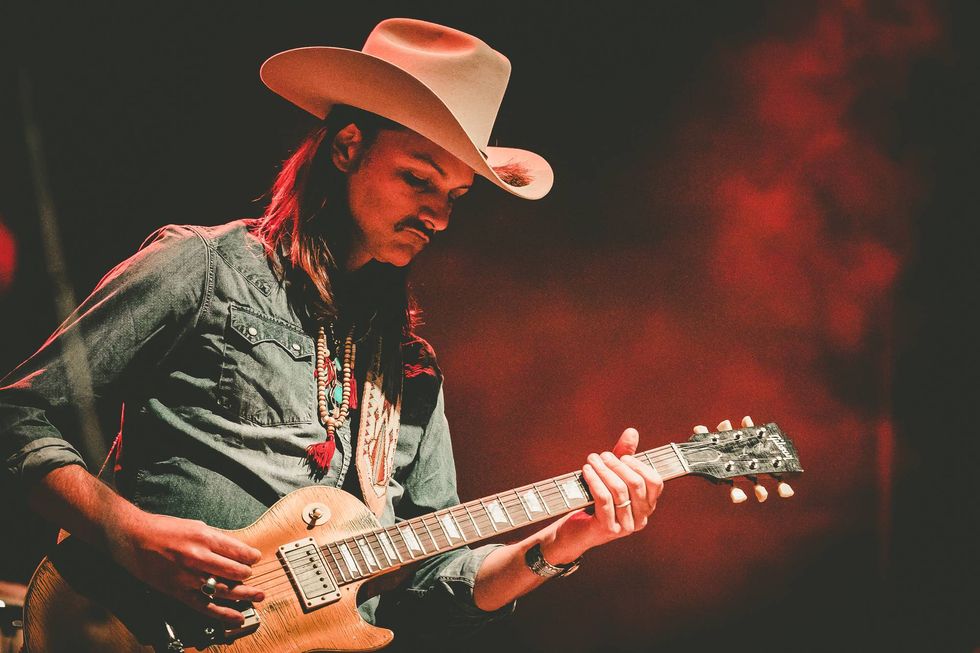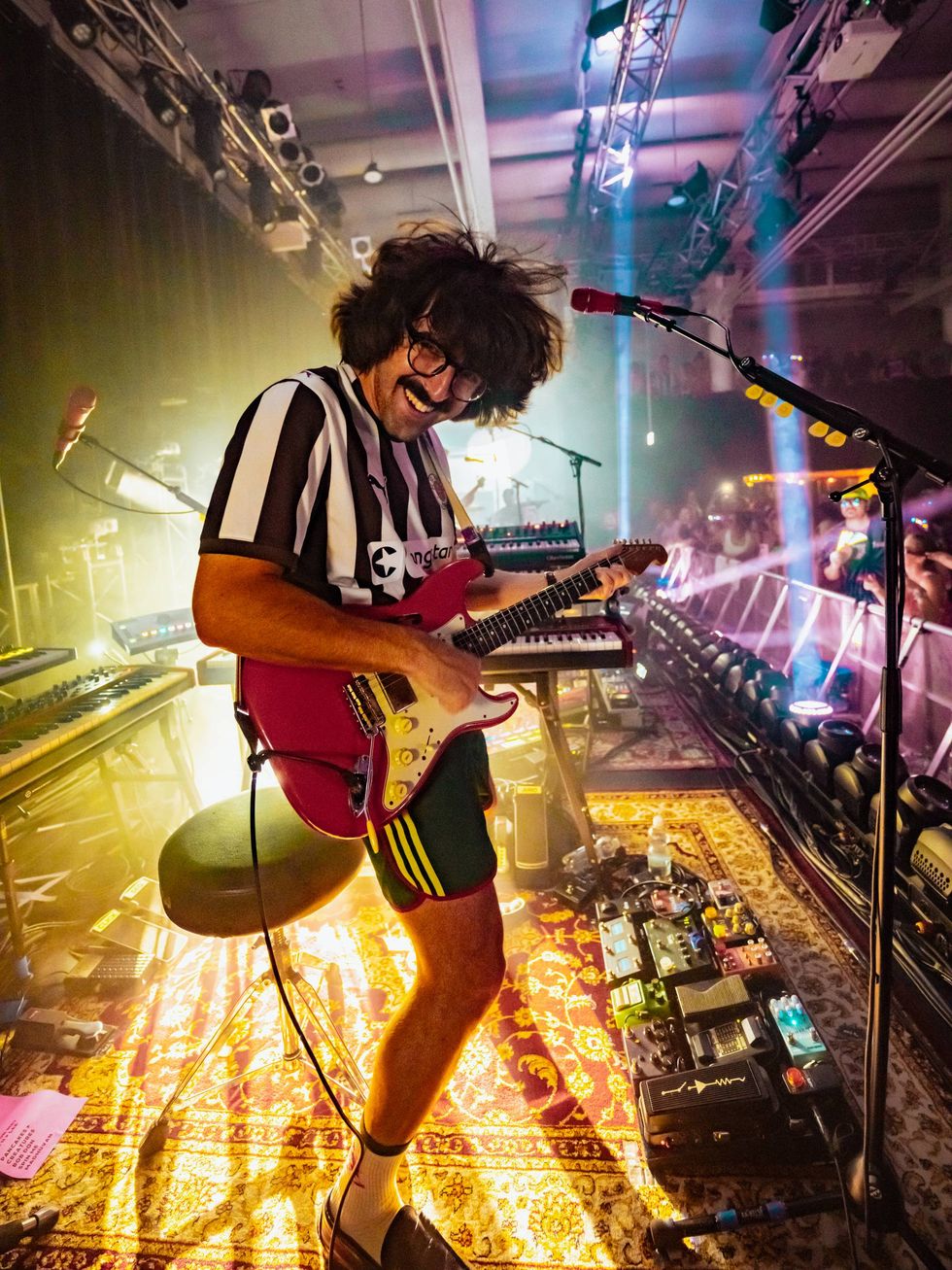

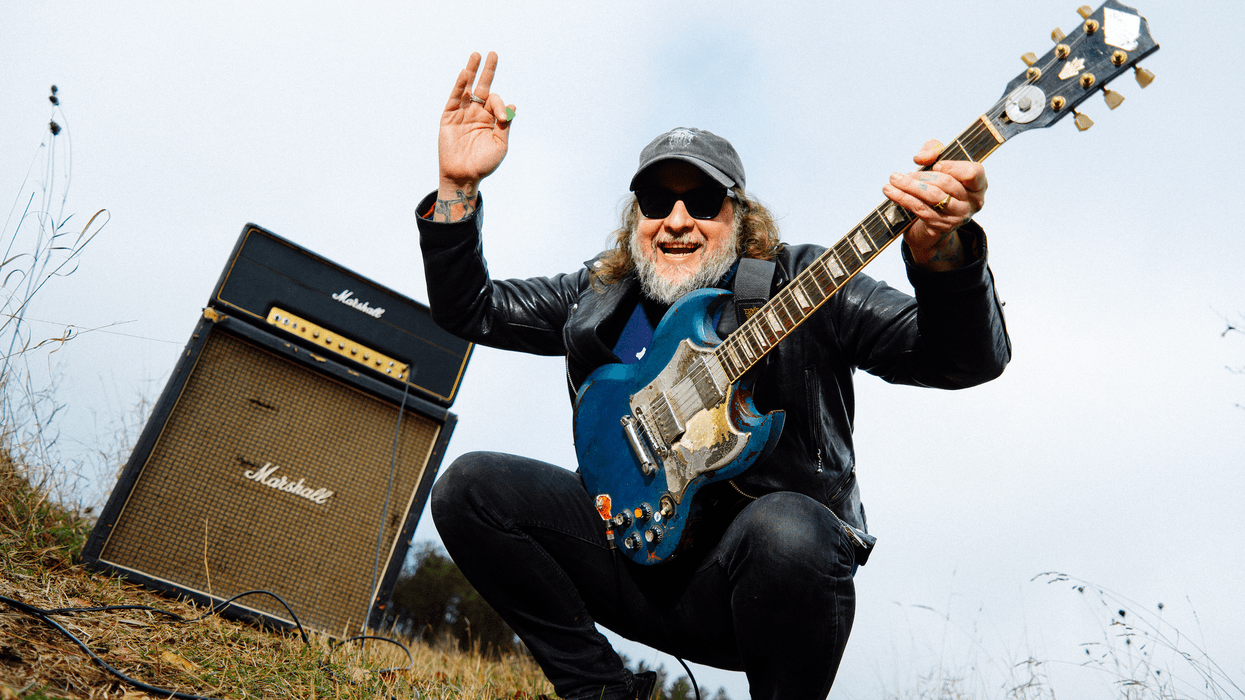

Back in 2007, Vermont’s Kyle Thomas recorded an album under his new moniker, King Tuff. It was called Was Dead—as in, King Tuff Was Dead—and Thomas cut it on a Tascam 388, an 8-track reel-to-reel recording and mixing machine. He’d traded in an Ibanez electric to buy the Tascam at a music store in Keene, New Hampshire, in 2003. (Thomas didn’t know it then, but at the same time, his garage-rock contemporaries Ty Segall and the Osees’ John Dwyer were experimenting with the same machines out on the west coast.) He stuck an SM57 on his amp, and hit record. No outboard gear, no processing. It was the heart of the lo-fi revival’s heyday.
Thomas moved to Los Angeles, the heart of the genre’s new American boom, signed to Sub Pop, and released 2012’s King Tuff and 2014’s Black Moon Spell, both collections of unrepentant, gnarly garage-rock music. Then came 2018’s The Other and, in 2023, Smalltown Stardust. These were more manicured, high-fidelity endeavors. The arrangements were softer and slower. Production was clearer and more considered. When it came time to take the albums on tour, Thomas faltered. “When I would play the older songs that were more straightforward rock, it was just so much more fun,” he says. “I wanted to make a record with that in mind: What’s going to be fun to play live?”
Moo, King Tuff’s seventh record, is what he came up with. Recorded before departing Los Angeles for good, Moo is Thomas’ return to the Tascam 388, and to the earworm musical dirt-baggery he first traded in. Opener “Twisted on a Train” announces this proudly. Its an A-major foot stomper, led by the perfectly muffled snap of Thomas’ guitar, that recounts a disturbed, weed-gummy-fueled train ride from Tucson to Los Angeles. The cheap-beers-on-the-beach groove of “Stairway to Nowhere” keeps the ball rolling while Thomas looks back on his years in L.A.: “I’m so tired of spinnin’ my wheels / Negative numbers, dead-end deals / Wined and dined in paradise.”
“I really just wanted to get back to how I used to do things, more DIY,” Thomas says of the recording and release plan (Moo is coming out on his own record label). “I just feel more connected to the work that way, and I feel more connected to the fans if I’m actually giving them something that I made personally.” Vermont is a good place to do things yourself, surrounded by weavers and woodworkers instead of influencers and industry dependents: “It’s nice to be somewhere where not everyone’s trying to make it. I think cities trick people into thinking that you have to be there for shit to happen in your life, and I don’t think it’s true.”
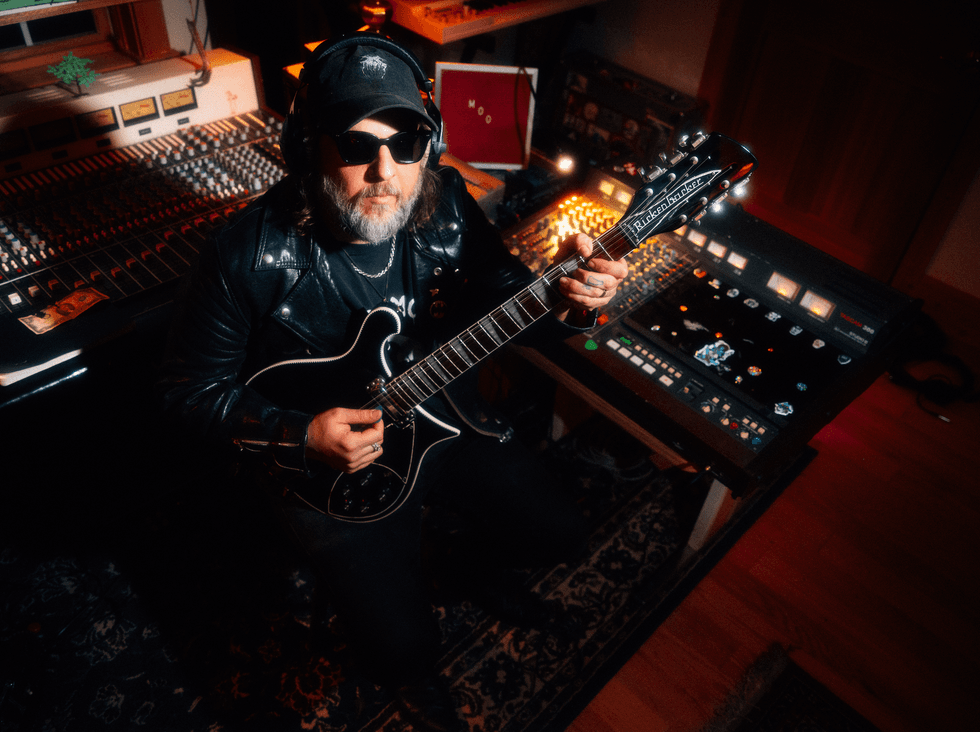
Thomas with his Rickenbacker 660-12TP. Behind him on the desk, the secret weapon of King Tuff’s recordings: his treasured Tascam 388.
Wyndham Garnett
Kyle Thomas’ Gear
Guitars & Bass
1995 Gibson SG Standard (with bolt headstock repair by Reuben Cox)
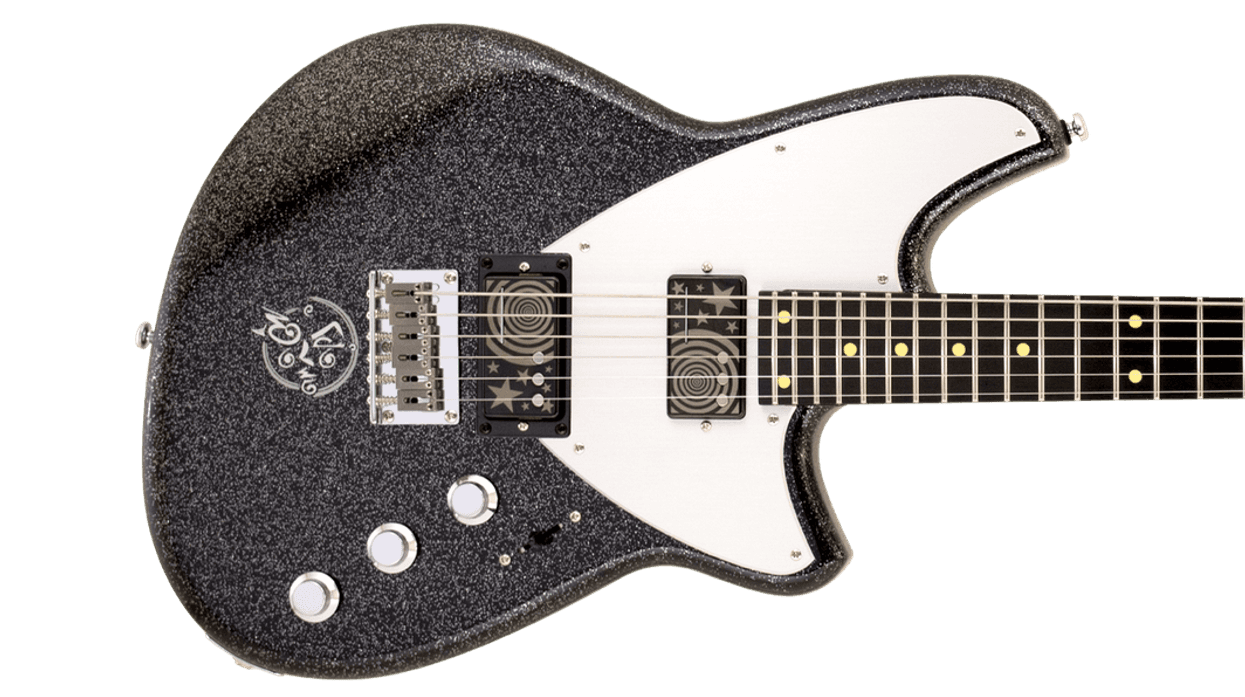
Rickenbacker 660-12TP
1968 Fender P bass
Amps
Early-’60s brown-panel Fender Deluxe 6G3
Early-’80s Fender Super Champ
Effects
Ceriatone Centuria
Dunlop Cry Baby Q-Zone
Vintage Mu-Tron Phaser
Moog MF Delay
Recording Equipment
Tascam 388
Shure SM57
Reconnecting with the Tascam made Thomas realize how important the machine is to his work. Maybe it’s the tone the Tascam imparts that endears him to it, or maybe it’s the particular workflow it demands. Regardless, working with the 8-track device, Thomas felt like himself again. He didn’t sing his vocals a hundred times and comp the best bits together, or overwork his guitar performances until they were flawless. There’s noises—hissing and buzzing and popping—plus other peculiarities and variances from one riff to the next. “It’s all about the performance and just capturing something, and not doing it to death. You can get good results doing things the new-school way,” he admits. “But you might feel sadder at the end.”
So why did it take so long for Thomas to return to his beloved Tascam? “I finally got it fixed,” he shrugs. “That’s really all it was. It was broken.”
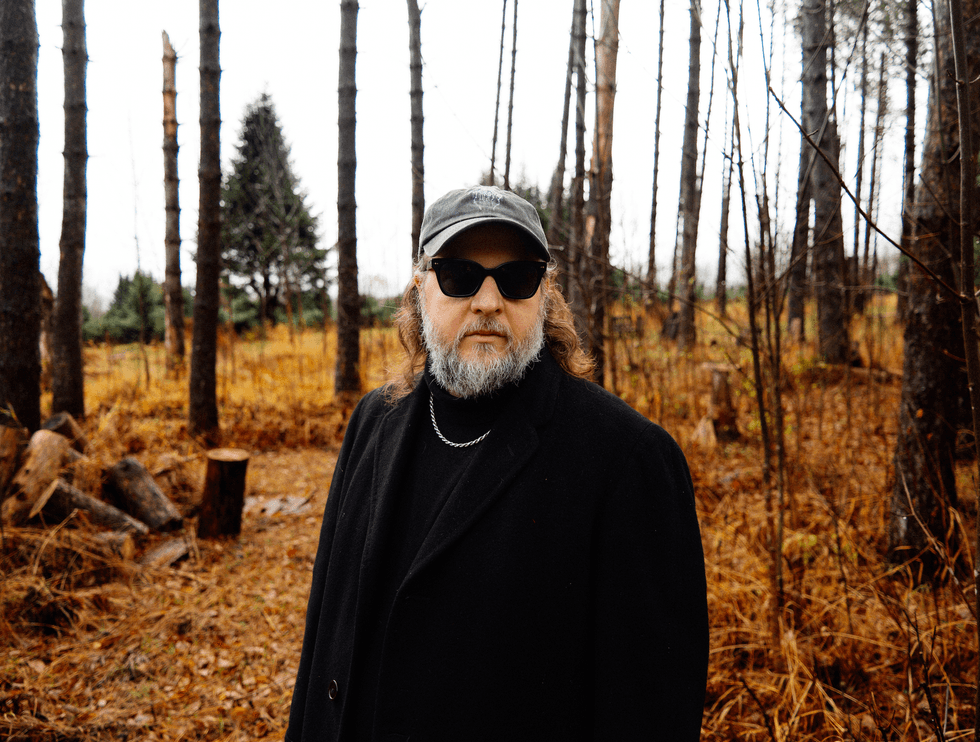
The self-proclaimed “freak from the woods,” Kyle Thomas a.k.a. King Tuff.
Wyndham Garnett
Given his recording philosophies, it probably isn’t a surprise to hear that Thomas doesn’t like players who are “too good”: “It’s boring. I don’t think rock music should be perfect. I think rock music suffers when people make it on the computer and fix everything.” Wipers’ Greg Sage and Dead Moon’s Fred Cole are key inspirations for Thomas, alongside imperfect shredders like Jimmy Page and Jimi Hendrix. “I like shittier guitar players better than really good ones, usually, or guitar players that are rough around the edges,” he says. “They can be good, but they fuck up a lot.” The continued pull toward imperfection is, of course, colored by Thomas’ estimation of his own playing. “I’m not a slick guitar player, I’m not smooth,” he explains, then grins. “My hands are shaky. They’re like bald eagle talons.” The influence of more polished players like Tom Petty and Mike Campbell are in frame on Moo, too, especially courtesy of a Rickenbacker 660-12TP—Petty’s signature model—that Thomas acquired just before making the record.
“I think rock music suffers when people make it on the computer and fix everything.”
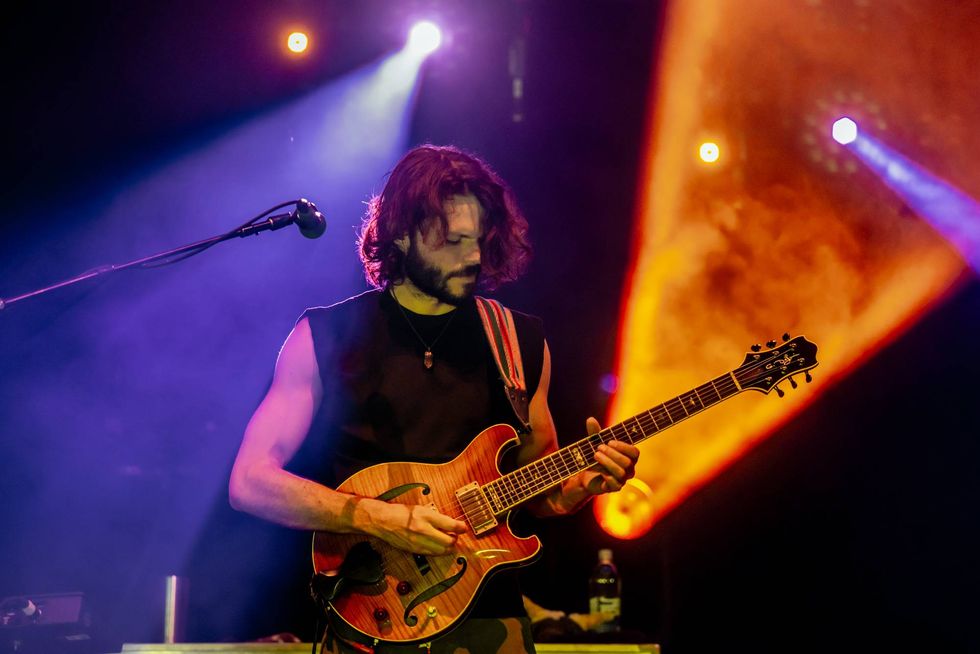
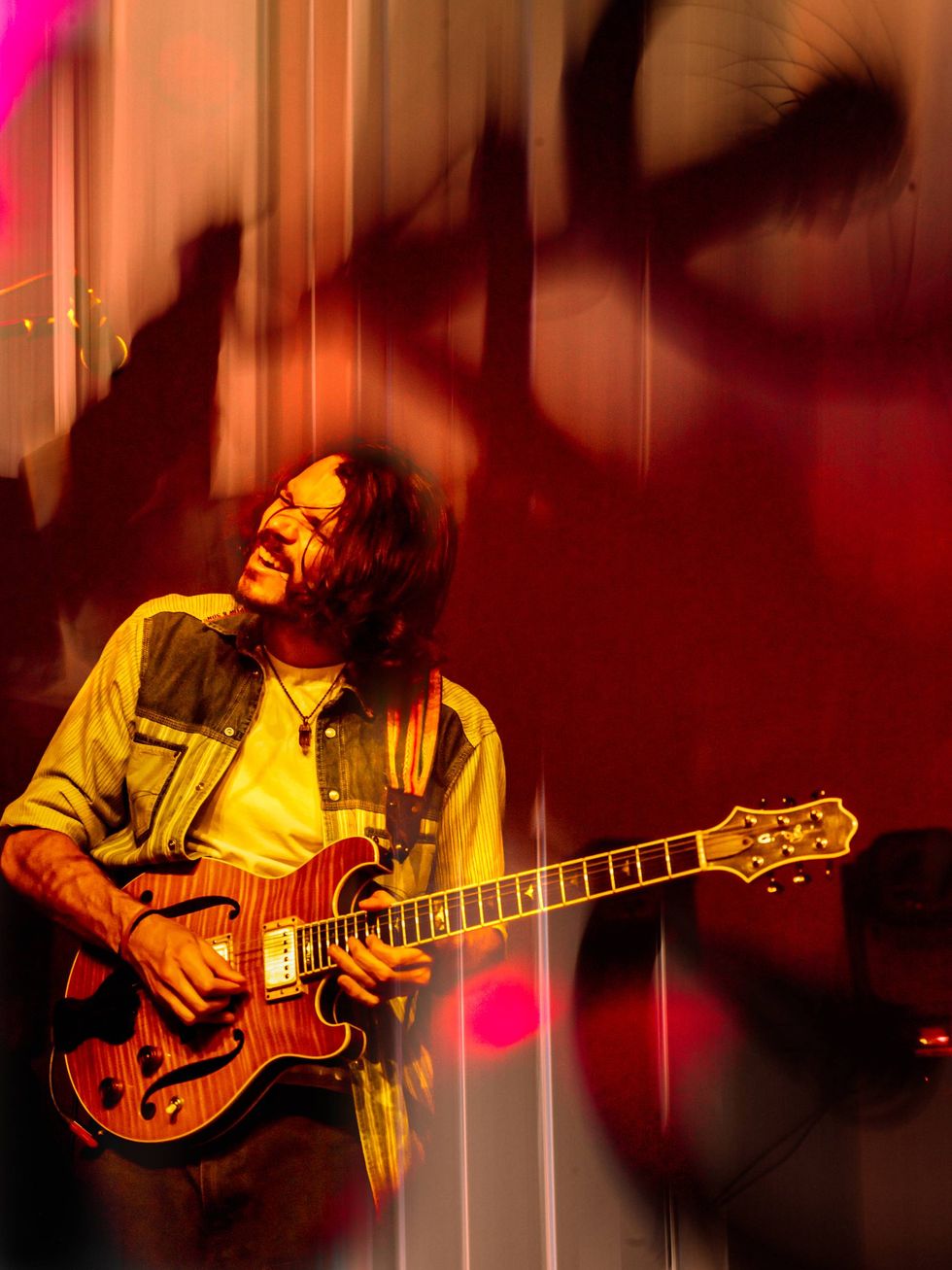
Thomas is an SG player first and foremost, and he’s played his beloved late-’90s Gibson SG Standard, named Jazijoo, for more than two decades. It’s been thrashed and colorfully decorated over the years, and its cracked headstock kept breaking until Reuben Cox, of L.A.’s Old Style Guitar Shop, put the problem to rest—by driving a bolt through the headstock, Frankenstein’s-monster style, to secure it. Because of its fragility, Jazijoo doesn’t come out on the road these days, but teamed up with a Mu-Tron Phaser that Thomas scored in a thrift store for five bucks in the early ’90s, it’s created the King Tuff sound. To round out that pairing on Moo, Thomas borrowed a brown-panel Fender Deluxe 6G3, which handled most of the guitar tones on the record, along with a small Supro combo and an early-’80s Fender Super Champ.
Almost 20 years after Was Dead, Thomas is back living in the forests of Vermont. His neighbors don’t know or really give a shit about his music, and that’s a good thing. “It’s fucking paradise,” Thomas says, straight-faced, on a video call from a room in his home crammed with music gear. “Obviously L.A. is supposed to be paradise, and it is in some ways, but I don’t know. I really missed the seasons. I get ideas and feelings here that I just didn’t have out there. I do love L.A., but I’m a freak from the woods.”