

Robert Pollard, the Guided by Voices frontman known for his economical alt-rock compositions, believes his longtime bandmate, guitarist Doug Gillard, does not wank. “Doug is original and also diverse in technique,” the singer told a reporter recently. “He shows restraint, and his playing compliments the songs.” But Gillard himself disagrees. “I think I do wank!” he says. “Sometimes you can’t help it. I try not to. I try to wank melodically.”
Gillard, 60, is not above endless jams on his black 1976 Gibson Les Paul Custom. After growing up in tiny Norwalk, Ohio, he began his career with a punkish Cleveland band called Death of Samantha, and from 1984 through 1989, “I was nothing but nonstop leads, and diarrhea of the fingers and stuff,” Gillard says, on a Zoom call from his home in Queens, New York. “That band had songs that lent themselves to that.” Gillard did his best not to step on the vocals, by John Petkovic, but it wasn’t until the mid-’90s, when he formed Gem and became its principal songwriter, when he “probably started playing more chords and wanted to serve songs more.”
This philosophy—lots of guitar, but none of it overwhelming the vocals and the melodic original songs—runs through Parallel Stride, Gillard’s fourth full-length solo album and first since 2014’s Parade On. The album has a classic ’60s pop and rock ambience. The opening track, “Face of Smiles,” matches the pulse of the Velvet Underground’s “I”m Waiting for the Man;” the title track and “Lost Alarmists” rely on Pete Townshend-style power chords; and “Saving My Life Every Day” matches the herky-jerky rock Gillard plays with Guided By Voices.
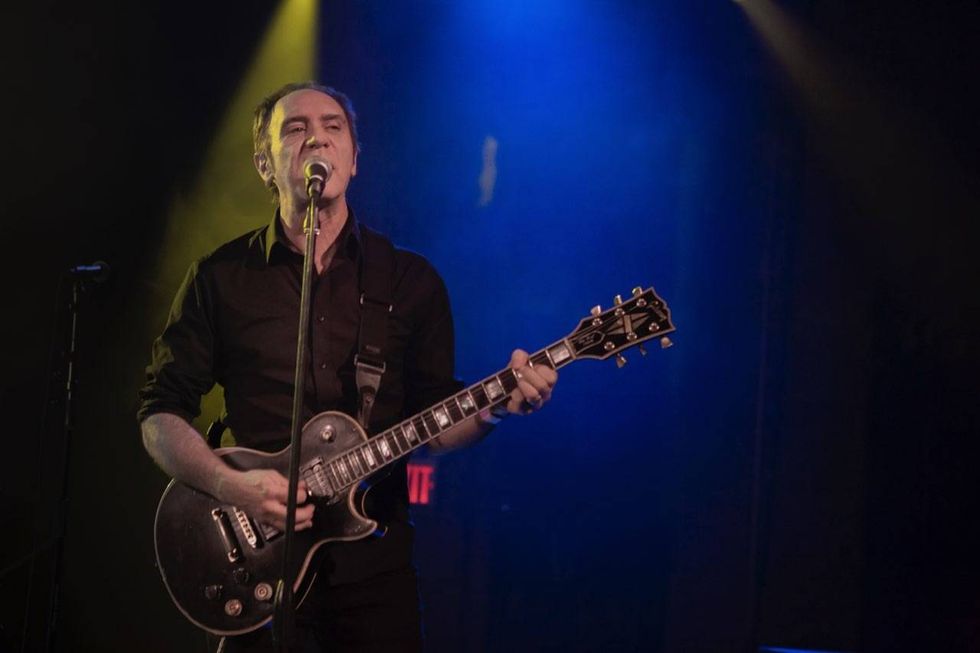
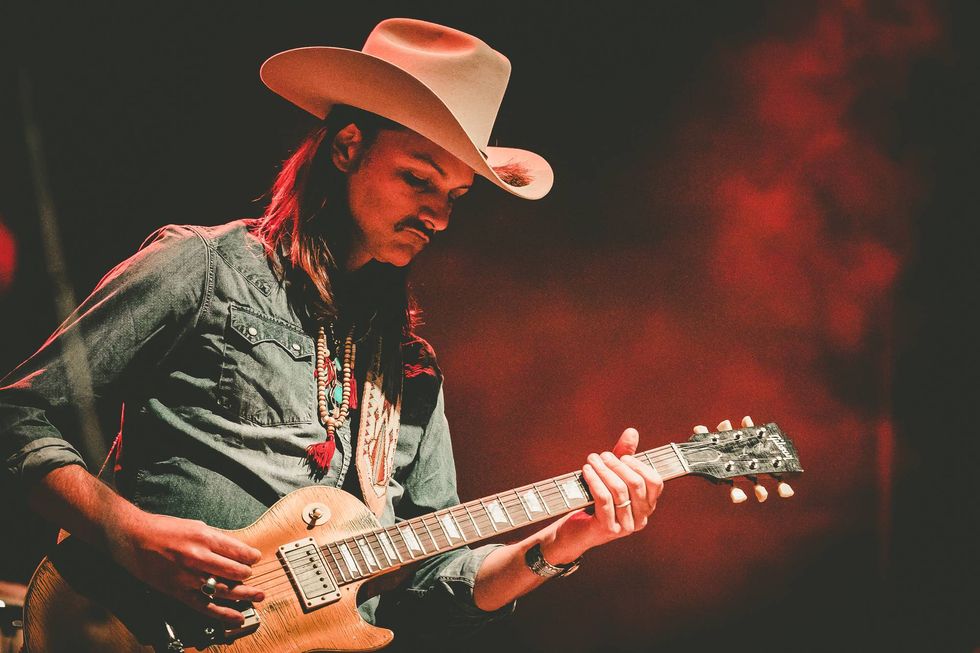
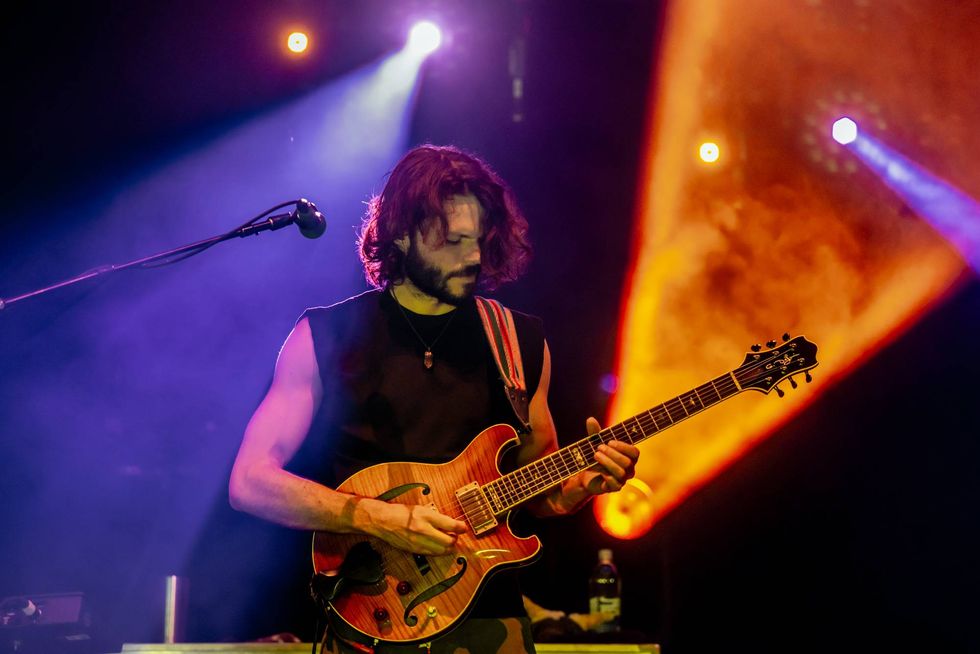
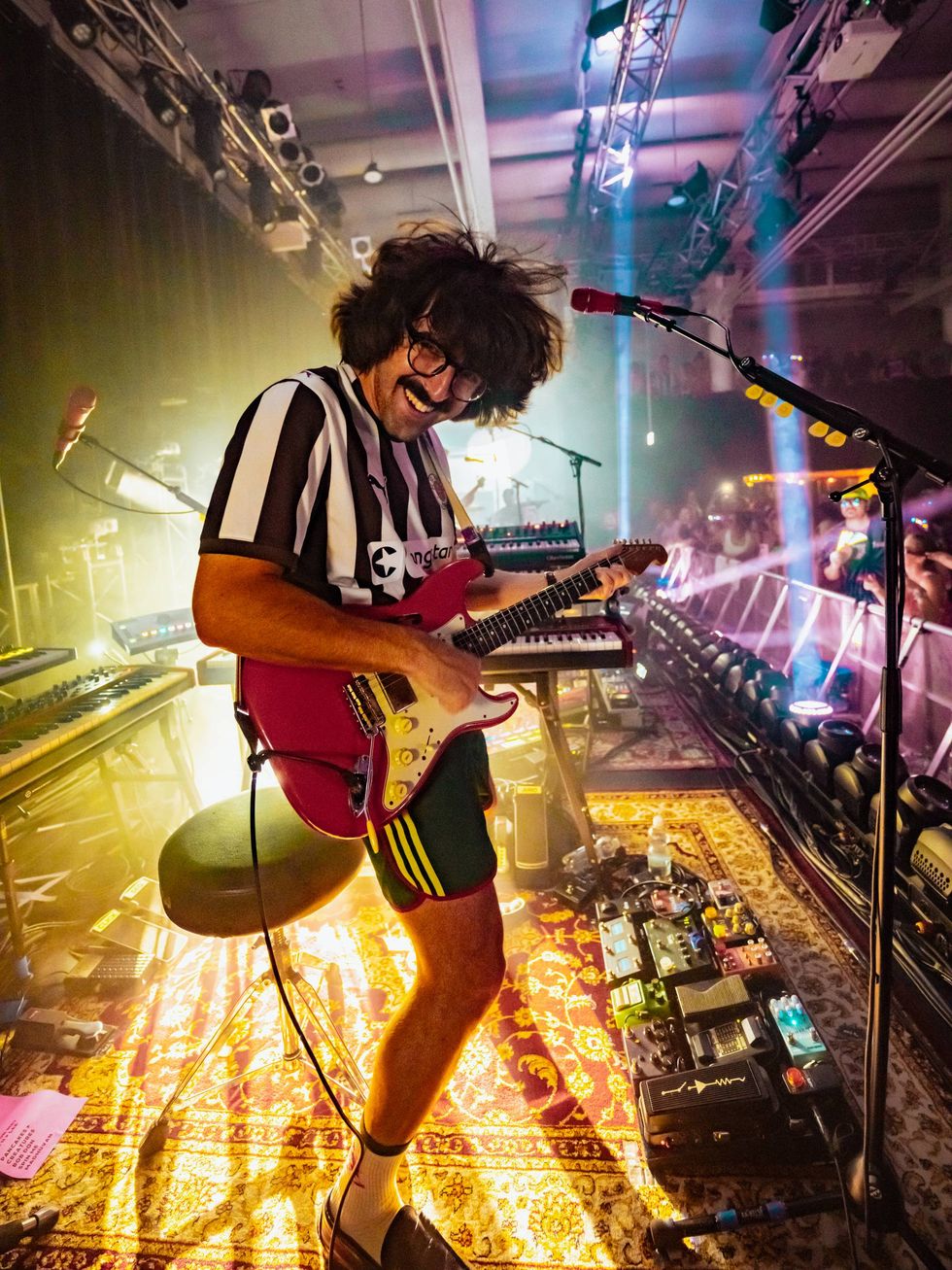
Gillard onstage with his 1976 Les Paul Custom
Photo by Michael Nigro
Doug Gillard’s Gear
Guitars
- 1976 Gibson Les Paul Custom
- Gibson Custom 1961 SG Reissue
- Gibson ES-330
- 2023 Gibson Murphy Lab ’57 Les Paul Gold Top Reissue (further aged by Danocaster guitars, with Arcane pickup in the bridge position)
- Eastwood Sidejack Baritone
- Hofner Verythin Standard
- Rust Guitars S-Style
- Rust Guitars T-Style
- Rickenbacker 12-string electric
- Alvarez acoustic
Basses
- Fender Precision
- Fender Pawn Shop Mustang
Amps
- Ampeg Reverberocket
- Marshall JCM800
- Carr Super Bee 1x10 combo
- Vox AC30
- EVH 5150 100-watt 6L6 head
- 3 Monkeys Sock Monkey head
Effects
- Kogoy Musical Devices HSL9000 (made by John Kogoy in Asheville, N.C.)
- Boss GE-7 Graphic Equalizer
- Boss CE-5 Chorus Ensemble
- Klon Centaur
- EarthQuaker Devices/Park Fuzz Sound Vintage Germanium Fuzz Tone
- EBow
- Greer Lightspeed Organic Overdrive
Gillard began envisioning the album many years ago, recording the mid-tempo “New Vista” in roughly 2014, then “My Friends” and “Cannons” around 2017 at producer-engineer-journalist Tom Beaujour’s Nuthouse Recording studio in New York. During the COVID-19 pandemic, GBV’s touring abruptly stopped, like everybody else’s, and Gillard had time to flesh out the eventual Parallel Stride songs in the studio. “I may have jotted down some more ideas during that period,” he says, “but I also enjoyed taking that time to just not do anything.”
Since the pandemic, Gillard has resumed his GBV schedule of not just touring, but also going along with Pollard’s frenetic recording pace. The band released three albums in 2023, one in 2024, and another two last year—a total of 80 new songs, all shockingly high-quality given the speed and efficiency of their creation. “Last year, we weren’t playing as many Guided by Voices shows as in the past, and it wound down. I had a little more time to go into the studio,” Gillard says. “There was definitely time to work on this stuff.”
Because Parallel Stride is the result of bursts of inspiration over a 12-year period, the only thing resembling a cohesive artistic mission statement is its overall sound—Gillard’s gentle high voice, the swirl of guitars, and the aggressive playing adds up to a dreamy ambience. “It’s a mish-mosh, a collection of stuff without a main concept,” he says. “It was a slow process. I was slowly working toward an album without having an end date or a master plan. Some things might have been ideas I had on Voice Memos—guitar sketches or chord progressions.”
“Some things might have been ideas I had on Voice Memos—guitar sketches or chord progressions.”
Like the performer and his music, the album’s cover—a pen-and-ink sketch of amorphous, potato-like shapes stamped with the Spanish words for “Medicine Faculty”—is unique, unassuming, and weirdly memorable. They turn out to be mutating cancer cells, as depicted by Gillard’s wife’s father, who drew them while in medical school in Mexico in the early 1950s. During a Thanksgiving gathering a few years ago, family members divvied up the artwork. “It’s turned sideways,” Gillard says. “It just seemed like a better configuration.”
Soft-spoken and friendly in glasses and a knit cap, Gillard wears a black leather jacket on stage with GBV, and his resting glare face is an anchor and foil for Pollard’s high-kicking acrobatics. The fact that Pollard is from Dayton, Ohio, and Gillard’s hometown is about 170 miles away, is “pretty significant,” according to Gillard, who first learned of GBV in the 1990s, at the apartment of Scat Records owner Robert Griffin. Soon afterwards, Pollard himself showed up at a party and chatted with Gillard in the kitchen. Pollard, alt-famous during the grunge-rock days of the early ’90s, revealed himself to be a Death of Samantha fan, singing a guitar riff from “The Set-Up (of Madame Sosostris)” to the Ohioan who played it. (They had a connection, too: Death of Samantha was signed to Homestead Records, owned by Gerard Cosloy, who would later form influential indie label Matador and sign Guided by Voices.)
“He actually had our records,” Gillard recalls. “Bob looked up to Cleveland at the time. He said, ‘In Dayton, we thought Cleveland was the big city.’”
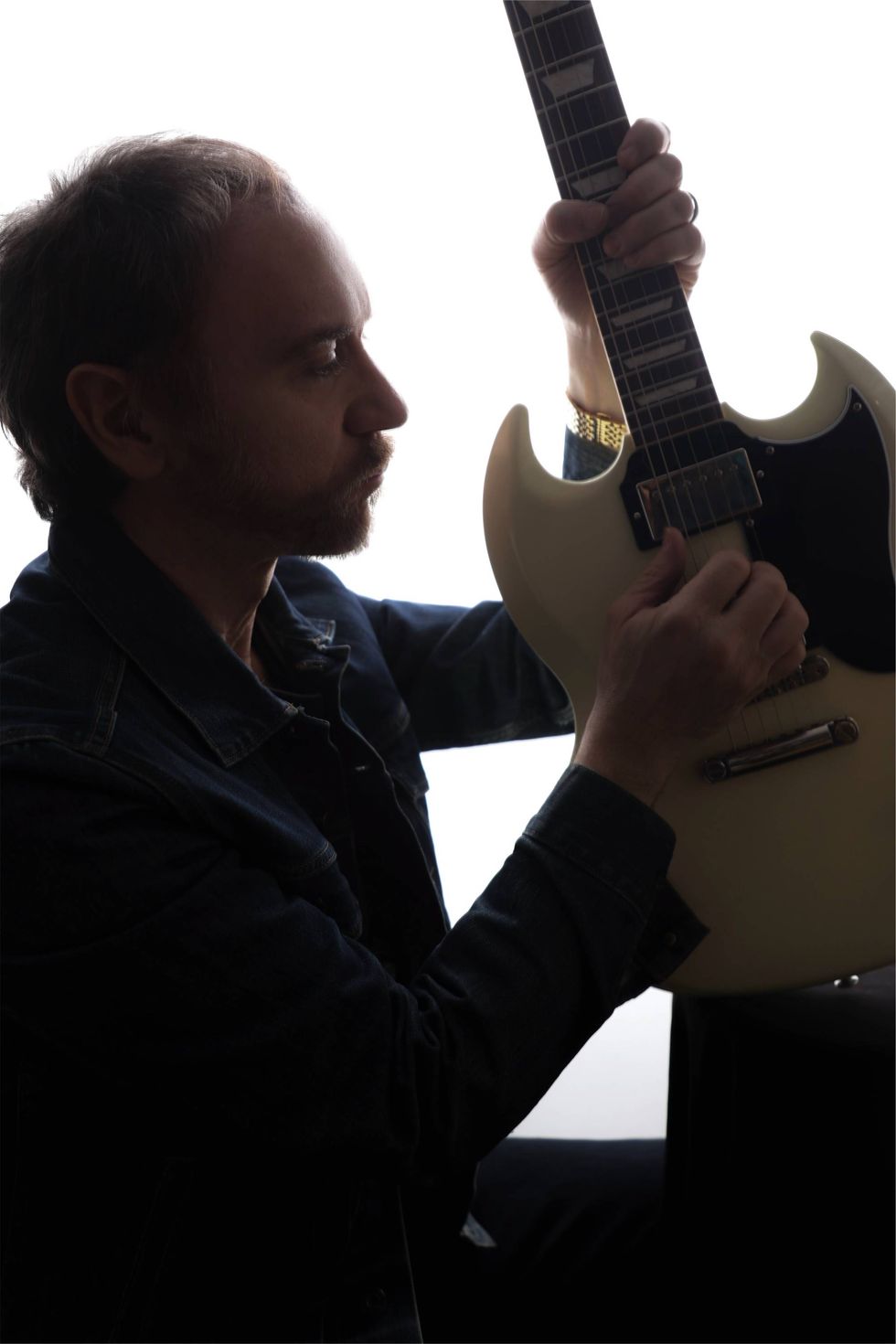
“It’s a mish-mosh, a collection of stuff without a main concept,” Gillard says of Parallel Stride.
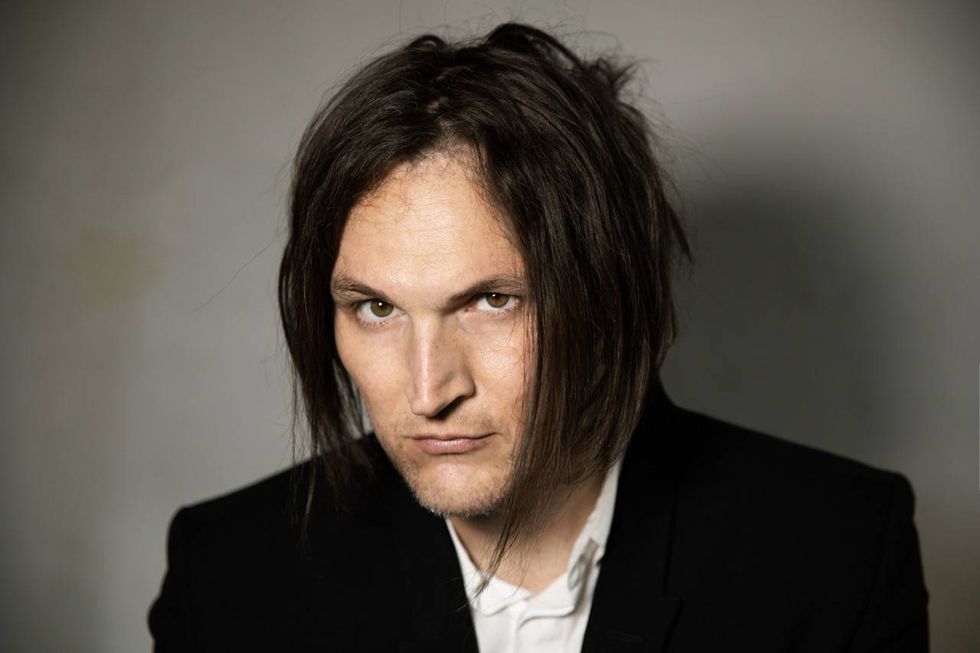
Photo by Le Studio NYC
Pollard invited Gillard into GBV in 1996, and the guitarist stayed until the group split up in 2004, later joining Nada Surf; when GBV reunited in 2016, Gillard became a permanent member. Pollard, 68, has an ageless quality, the Springsteen-like ability to prance around the stage, frantically running through dozens of songs for two-and-a-half hours every night. By contrast, Gillard is stationary, often looking down at his axe, unaffected by the mayhem surrounding him.
Because he doesn’t have to follow Pollard through his onstage calisthenics, touring is manageable from a workout perspective. “I wouldn’t say it was grueling at all. It’s fun,” Gillard says. “The only daunting thing is making sure you remember all those songs and all your parts. You just have to pace yourself and make sure you don’t drink too much liquid.”
So how does Gillard handle the need for bathroom breaks? GBV is not known for its intermissions. “If there’s an encore, we go backstage and you can go to the restroom,” he says. “You also sweat, and that takes care of a lot of things.”
“The only daunting thing [about playing with Guided By Voices] is making sure you remember all those songs and all your parts.”
As a little kid, Gillard initially took up drums, but his dad, David, was an amateur guitarist who played a Kay Thin Twin model—at the time, used by the likes of Jimmy Reed and Hubert Sumlin—purchased at Montgomery Ward, along with an amp. (He traded it for a cheap 1972 Gibson SG II that became Gillard’s first guitar.) Gillard’s father was a “pretty good player,” Doug recalls, and taught his son how to tune a guitar and play country classics like “Steel Guitar Rag.”
Father and son collaborated only once, as part of a formative experience that Gillard has mentioned to several interviewers over the years. His sister, Cheryl, was married to a man in the U.S. military stationed in Germany in the early ’70s; the family recorded reel-to-reel tapes so they could airmail their voices to each other. At one point, five-year-old Doug sang “Jingle Bells,” while his dad played a sort of Bill Doggett boogie-woogie pattern into the tape recorder, activated by his mother. “He would take the guitar out once or twice a year,” Gillard recalls.
In fifth grade, Gillard played lead guitar along to Kiss’ “Calling Dr. Love” in a school talent show, and in high school, he joined a punk band that appeared in Cleveland clubs. He absorbed the Who’s “Magic Bus” and Frampton Comes Alive!, learning power chords and melodies he would employ in his solo work and Guided by Voices. (Gillard wrote the ringing, single-note, “I Am a Tree” in the early ’90s, and it landed on one of GBV’s best-known albums, 1997’s Mag Earwhig!) On “Parallel Stride,” he had Pete Townshend in mind. “I guess he’s always been looming,” Gillard says. “I never realized much of a power-chord influence from him. He would play tops of chords; I tend to play bottoms of chords and go for root and bass notes.”
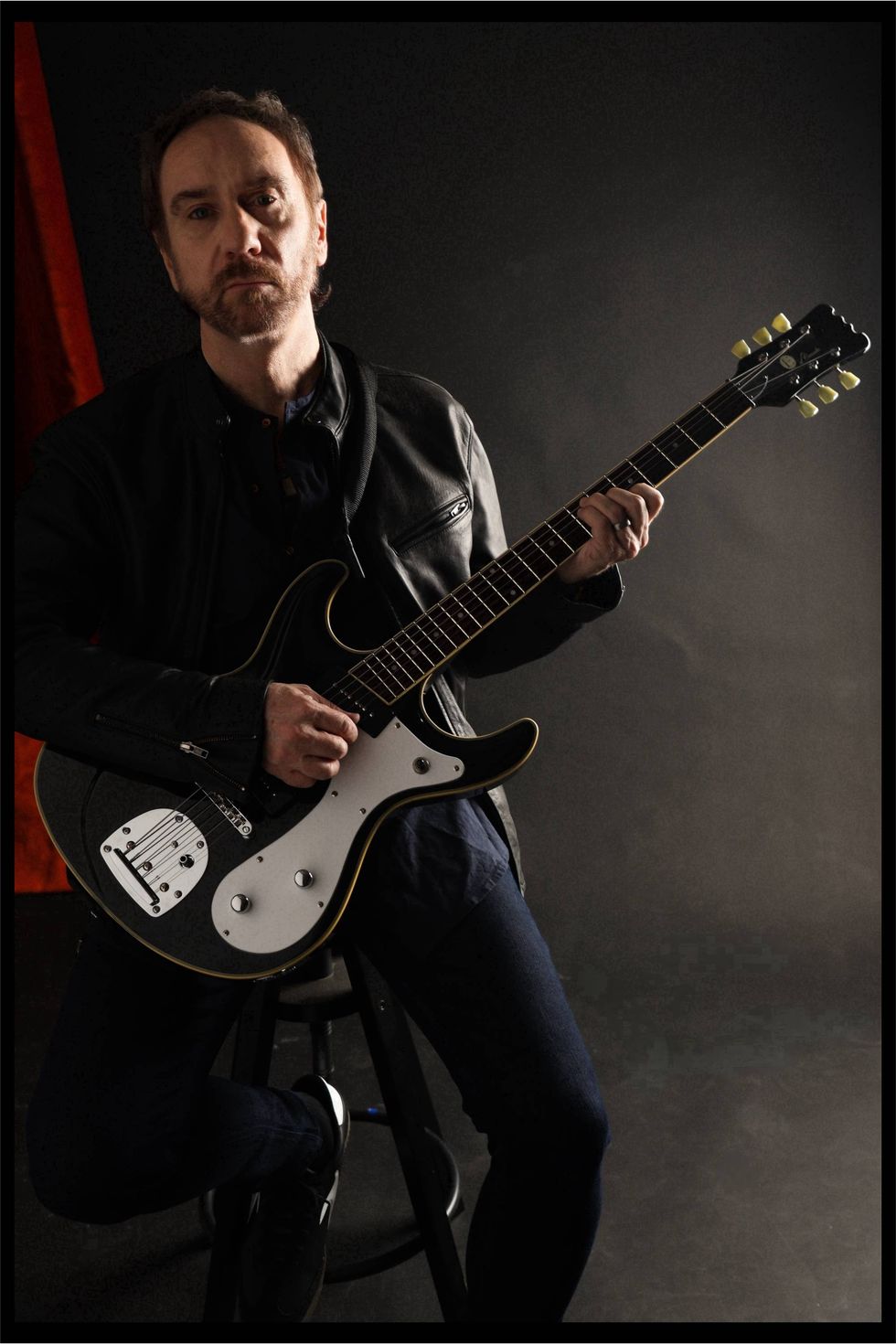
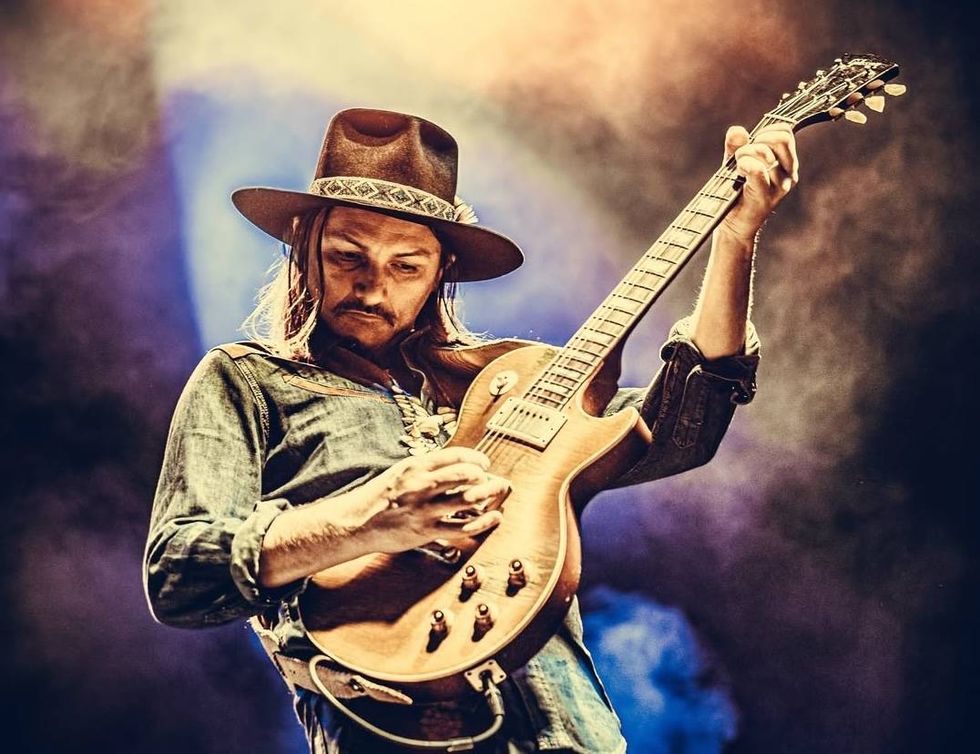
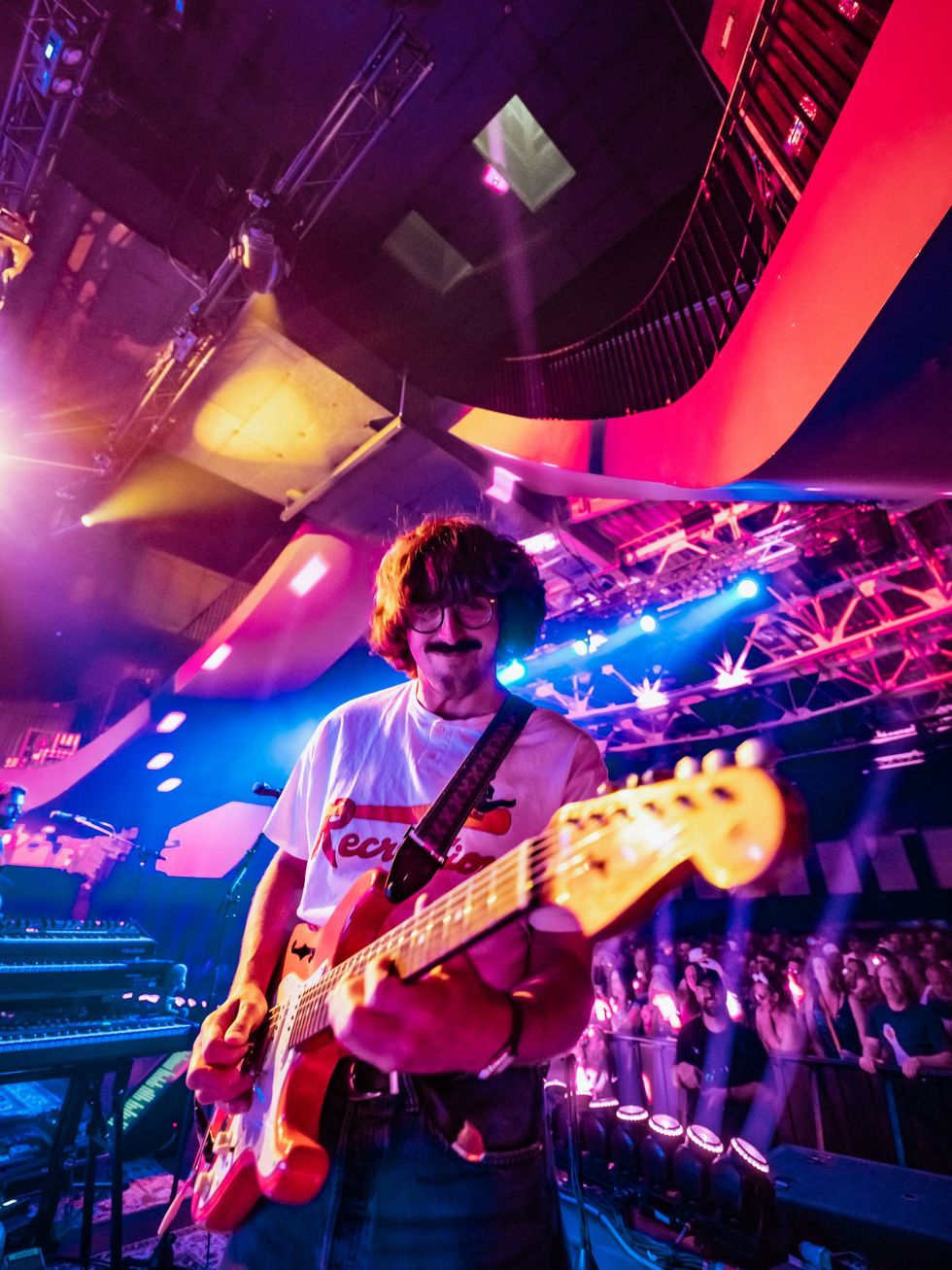
Gillard with his Eastwood Sidejack Baritone
Photo by Le Studio NYC
Gillard adds that he often has to remind himself that another bassist will be handling the bottoms of songs and he can lay off the root notes. “Maybe it’s because my dad had Chet Atkins albums,” he says, referring to the country picking legend. “I always liked that fullness.”
Gillard’s parents supported his music career, providing lessons when he was in grade school. “They weren’t pushing me towards anything at all,” Gillard says. His dad died when Doug was 15, and eventually, well into his music career, Gillard found a replica of his dad’s original guitar, a Kay Old Kraftsman, at a Cleveland music store. “He didn’t really get to see much of the trajectory [of my career], beyond jazz band and stage band in school,” Gillard recalls.
But his mom, Vera, often showed up at the punk gigs. “It was like, ‘We see he has an aptitude, and we have to make sure he doesn’t get into the dangerous side of rock ’n’ roll.’ They didn’t want me to be influenced by things that were too out-there,” Gillard says.
Was he? “Of course! I joined a punk band,” Gillard says with a laugh, then adds: “We weren’t destroying anything. I wasn’t living in a tenement or anything in Cleveland. I was still living at home until I was 18.”
“I tend to play bottoms of chords and go for root and bass notes.”
By the 2000s, Gillard was a sort of low-key indie-rock renaissance man, releasing solo albums such as 2005’s Salamander and 2008’s Call from Restricted, as well as playing in a variety of bands, including Bambi Kino, a Beatles tribute focusing on the group’s pre-fame days playing clubs in Hamburg, Germany—where Gillard and the band, which includes members of Nada Surf and Cat Power, have showed up to play in person. Bambi Kino focuses on songs the Beatles covered, from Chuck Berry to delightful obscurities like Joe Brown & the Bruvvers’ “A Picture of You.” “You learn what they were learning, which are a lot of jazz chords and sevenths and neat shapes—different shapes than I grew up learning in the ’70s, ’80s, and ’90s,” Gillard says. “More traditional. It’s really cool, different ways of thinking and playing.”
While in Hamburg, Gillard and crew met Horst Fascher, a former boxer who’d served as the Beatles’ bouncer in the early days, and studied the city’s cultural history from that time. They learned the city was just coming out of its post-World War II malaise, and local teenagers who’d barely remembered the war were yearning for new experiences. The Beatles’ job was to entertain the hangers-on around the Reeperbahn, the city’s infamous red-light district, and they had to mach schau, or “make show,” as club owners instructed at the time. “That’s why [they did] all the antics onstage, and drawn-out songs—they had to pad the set,” Gillard says. “They were playing piano, eating food on stage, goofing around. They had to invent things.”
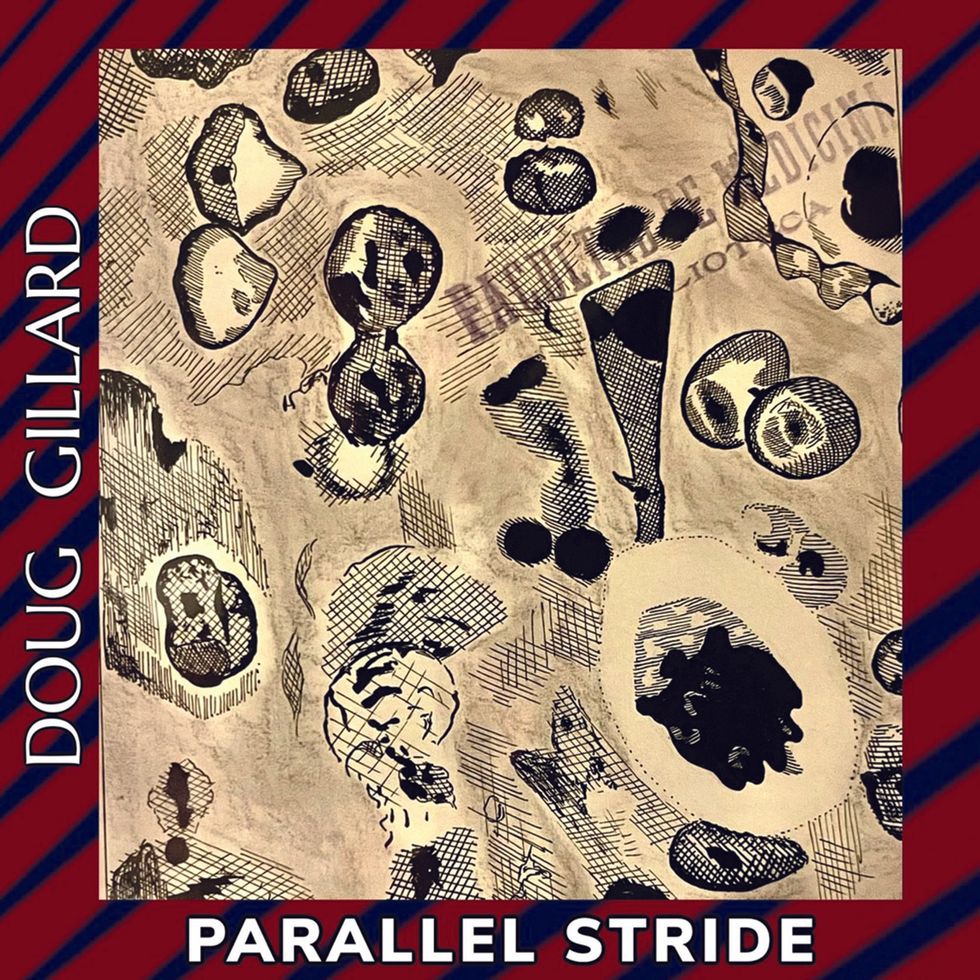
The cover of Parallel Stride features a pen-and-ink sketch of mutating cancer cells, stamped with the Spanish words for “Medicine Faculty.”
Gillard’s encounter with another classic band was more direct: On Facebook last July, he posted ads for a show he played with Death of Samantha at Boston’s Green Street Station in 1989. Opening act: Nirvana. “A few memories associated with this night,” Gillard wrote.
Like what? For one, Gillard recalls that, for some reason, Kurt Cobain did not have a guitar that night. “He just held the mic and ran around the stage,” he says. “I thought that he was wearing a dress, but photos show that was not the case.”
Like Pollard, Nirvana’s three members were fans of Death of Samantha at the time—“a little bit,” Gillard clarifies. At one point, Gillard and another band member were in the parking lot, dressing for the gig, and as Gillard was checking himself out in their van’s side-view mirror, another figure came into view behind him. It was a tall guy in a white T-shirt, holding a fifth of rum. “Are you guys Death of Samantha?” the stranger asked. “Yeah,” Gillard said. It was bassist Krist Novoselic. “You guys are from Seattle, right?” Gillard wanted to know. Novoselic hastily assured him Nirvana was “not like those other guys”—Nirvana was into the Beatles.
“I loved that,” Gillard says today. “I gravitate more towards melodic stuff.”

![Rig Rundown: The Black Crowes’ Rich Robinson [2026]](https://www.premierguitar.com/media-library/youtube.jpg?id=66952027&width=1245&height=700&quality=70&coordinates=0%2C0%2C0%2C0)