
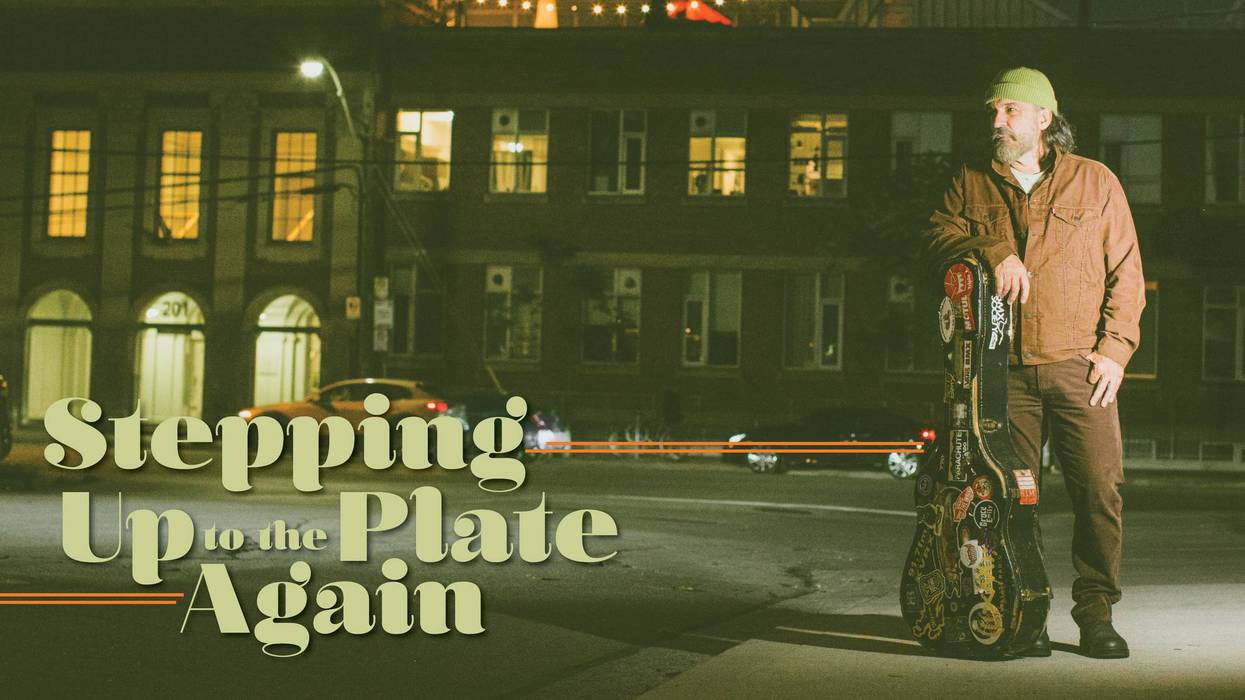

Joe Pernice never would have written “It Got Away From Me,” a haunting orchestral-folk ballad from his new album, Sunny, I Was Wrong, if one of the baseball players he coached hadn’t casually tossed out that hooky turn of phrase during a game. By extension, he also never would have collaborated with Jimmy Webb, one of his “all-time songwriting idols,” who plays tasteful piano on the tune. “A kid dropped an infield pop-up,” he tells Premier Guitar. “And as he ran by during the change of innings, I said as a teaching moment, ‘Hey, what happened out there?’ He goes, ‘I don’t know, coach. It just got away from me.’ I was like, ‘Oh, my god.’ I sat down in the dugout and wrote that title in my phone. I was like, ‘That’s a hook I hadn’t known, and there’s a lot of possibility with a line like that.’”
Turns out, you have to be open in order for the gods to gift you a great song—even in such unlikely places. That seems to be a mantra for Pernice, the singer-songwriter best known for his work with the alt-country act Scud Mountain Boys and the long-running indie-pop outfit the Pernice Brothers. He leaves guitars in almost every room of his Toronto home (not the bathroom—yet), picking them up for a meditative strum in case inspiration strikes. He might start a song and whittle away at it for a few years, finally finding the perfect pathway into a melody or lyric. You have to let the song present itself. That seems to be another mantra for Pernice—and that process has never been more apparent than on the gorgeous Sunny, his proper solo debut following a pair of pandemic-era home recordings.
“I go digging,” the Massachusetts native says, breaking down his delicate blend of the literal and abstract. “I’m often trying to learn something about myself, and what I have learned how to do over time is to relax. Before, I’d think, ‘You’re being untrue to this. Blah, blah, blah.’ But if you’re trying to write the most evocative song you can, you have no choice but to try other things. I think I learned that from writing books—you sometimes have to abandon your true story for the better story.”
The way Pernice tells it, an essential part of Sunny’s story is, once again, America’s pastime.
“For years, I coached baseball,” he says. “I had a kid, and I decided I wasn’t going to tour as much. Even though music was always there, for years it wasn’t my main focus. It was being a decent parent and spending time with my kid while he still wanted to spend time with me. When they get to a certain age, they don’t want to spend time with their old man. I get it. He became a freak for baseball and played high-level ball for years, and I got roped into coaching. I think my time away from focusing so hard on music just brought me back to it—I started to get my time back when my son was a certain age, and I think I’d learned a bunch of stuff. I know it sounds clichéd, but I was a different person.”
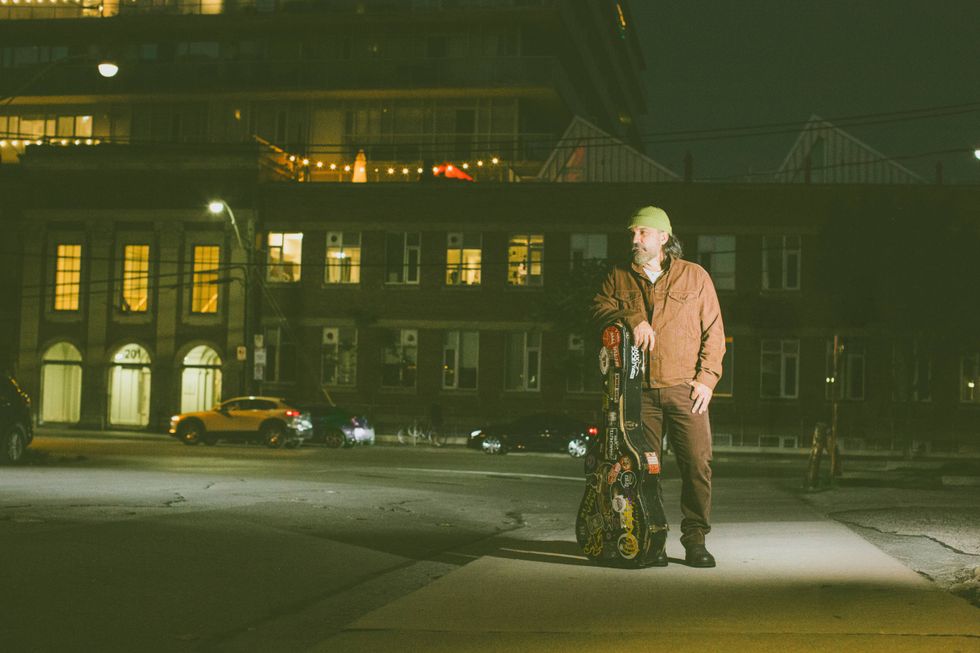
Photo by Colleen Nicholson
Joe Pernice’s Gear
Guitars
- Martin D-15M w/ Fishman Matrix pickup (light strings, detuned one whole step)
- Godin-made La Patrie nylon-string w/ Fishman Matrix pickup (detuned one whole step)
- Early 1970s Gibson Blue Ridge w/ Fishman Matrix pickup (detuned a whole step, guitar is highly modified with a custom bridge, nut, Grover tuners, and re-bracing)
- 1999 stock Fender American Standard Telecaster (medium strings)
Bass
- 1976 Fender Mustang w/ Badass bridge
Amps
- “Older” Fishman Loudbox
- 1998 Fender Deluxe
- Ca. 2000 Ampeg bass amp with a single 15" speaker
Pernice says he became more “chill” as a songwriter, realizing the most ambitious idea isn’t always the best one. So much of his past work, including the Pernice Brothers’ acclaimed 1998 debut, Overcome by Happiness, is defined by clever, classic pop craftsmanship: how the chords and melodies and harmonies unfurl in ways both surprising and instantly satisfying. But with Sunny, I Was Wrong, he wanted to get out of his own head.
“I decided, ‘It doesn’t have to always be so complex,’” he says. “‘You don’t have to always have a middle-eight with a key change. You don’t have to over-produce stuff.’ That opened up a lot of possibilities. I might have been more accepting of songs that were not so complex where, at another point, I might have thought, ‘That’s not original’ or ‘That’s not good.’ I think having been a parent and going through all the shit that involves, good and bad, I was open to being changed. Now I really don’t care. More than ever, I’m just in it for myself.”
Here, with this “solo” branding, he’s also in it by himself—or, at least, largely without the services of the Pernice Brothers (his brother Bob sings on the peaceful title track, and Patrick Berkery plays drums amid the blissful folk-rock sway of “If You Go Back to California”). “Kind of without making a big deal about it, I think my old band is over,” he says. “I can’t really see myself doing a record as Pernice Brothers anymore. I can’t say it will never happen, but I think that’s run its course.”
“I think one of the hardest things to achieve with a record is a sound, a vibe.”
That decision had nothing to do with musicianship. It mostly came down to geography. Since his bandmates are “scattered all over the world,” he says, “it was nearly impossible to get people [together] to record, let alone rehearse a few times to get a sense of the songs.” And with Sunny, Pernice wasn’t interested in remote recording. He wanted the intimate feel of a band playing in real time. “I think one of the hardest things to achieve with a record is a sound, a vibe. There are different ways to get that, but in this situation, I wanted all the people in the same room.”
An opportunity presented itself—once again, in a roundabout way—through family. Pernice’s son, now 20, went to school with the daughter of Barenaked Ladies bassist Jim Creeggan, and the two musicians became friends. “I met Jim not through music but through the school community,” he says. “Jim’s wife has a nonprofit organization and raises money for different causes. Jim has a world-class recording studio, and a few years back he said, ‘My wife is doing a fundraiser. Would you come play a few songs, and I’ll back you up?’” Creeggan suggested they play as a trio, joined by pianist Mike Evin. That lineup sparked something in Pernice: “I always knew Jim was a great player, but that fundraiser put it in the back of my mind. I also knew I was going to use [Mike] because his style spoke to me—it was exactly what I was thinking.”
They all teamed up at Creeggan’s studio, with their core lineup rounded out by drummer Mike Belitsky, best known as a member of Canadian indie-rock band the Sadies. They instantly found a chemistry, reflecting the vast and “vibrant” musical community in Toronto. “I know more musicians here than when I lived in New York City,” Pernice notes. “We started messing around, and it was like, ‘Holy smokes, this sounds really good. We’re getting a thing that I can’t get remotely.’ Before you know it, you’re like, ‘Oh, this is an entirely different project.’”

“I’m often trying to learn something about myself,” Pernice says, “and what I have learned how to do over time is to relax.”
Photo by Glen Quinn
They achieved exactly what he initially sought: a warm, unfussy, live-ensemble sound with minimal punch-ins. And the actual compositions reflect that energy: melancholy and graceful, full of introspective and imagistic lyrics, dominated sonically by acoustic strumming, adorned with occasional accoutrement like moaning slide guitar (the gentle “I’d Rather Look Away”) and past-sunset pedal-steel. The most notable addition is an airy vocal harmony from Aimee Mann, who adds a touch of elegance to “Deep Into the Dawn.”
“No exaggeration—as soon as I started singing the melody, I started thinking about Aimee Mann,” he says. “I think I have 19 or 20 albums. That single recording is my favorite of any I’ve ever done because it happened exactly as I hoped. I wouldn’t change a thing. To my ear, that one just had it all.”
“I don’t think I used a pick on a single song. It’s all thumb and strummed with my fingers.”
Pernice also has no regrets about the album’s soothing acoustic-guitar sound. “I think it’s just perfect,” he says. “I don’t think I used a pick on a single song. It’s all thumb and strummed with my fingers. We tried to use my nylon-string, but it was just too dark. Jim said, ‘Hey, Ed [Robertson, from Barenaked Ladies] has this no-name, small-body, parlor-size, steel-string acoustic. I’ve used this before. It sounds great. Wanna try it?’ We did, and we were like, ‘Holy shit, it sounds incredible!’ I said to Jim, ‘Will Ed sell this?’ He said, ‘Absolutely not, because I’ve already tried to buy it.’ It’s some ’80s knockoff that just sounds fantastic. I do not exaggerate when I say I couldn’t tell you what brand the guitar is—not only because I’m a luddite, but also because it was nothing of note.”
It’s not that Pernice doesn’t value quality guitars—it’s more that he’s open to any instrument that sounds and feels inspiring, regardless of the brand on the headstock. His collection runs the gamut: a Martin D-15, a Godin nylon-string, and a “weird one-off Gibson” with a Martin top that he got from a friend at a guitar-electronics company. (“It was never meant for human consumption,” he says. “But I’ve consumed it.”)
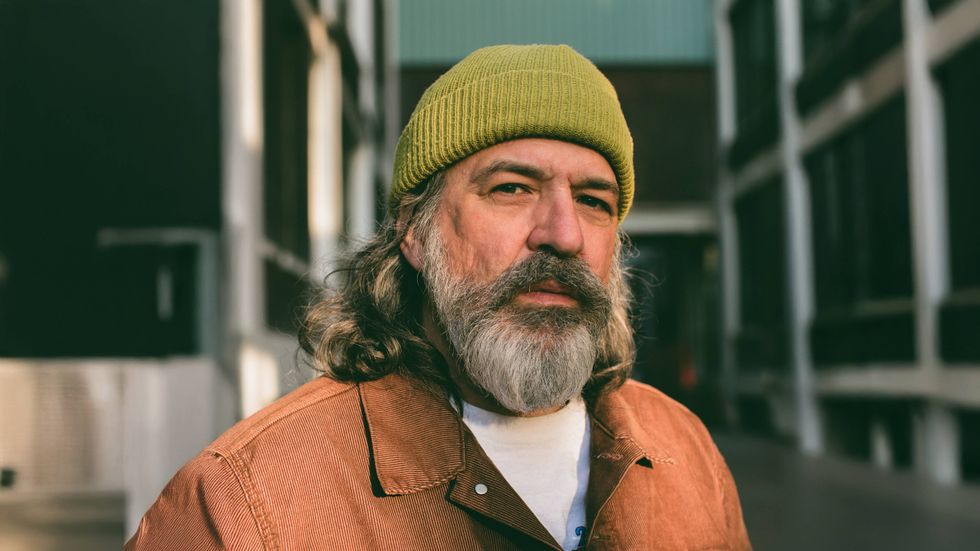
Photo by Colleen Nicholson
Another notable piece: a Gibson Blue Ridge with a bolt-on bridge and a fascinating backstory. “In 1978, there was a big blizzard in Massachusetts—it was a state of emergency. There was like four feet of snow. My brother, as a teenager, was hired with his buddies to shovel snow for a week. My late cousin worked in a place called the Record Garage in Cambridge, and they sold guitars, too. He called my brother and said, ‘I have this Gibson that turns out to have been owned by Billy West of Ren & Stimpy fame.’ My brother bought that guitar. I was a bike racer as a teenager and into my early 20s, and at one point I traded a 1987 Cannondale bicycle for the Gibson, and I still have it. I wrote a million songs on that guitar—probably more on that than anything. I learned how to play on that guitar.”
“The lucky thing for me is that picking up a guitar and strumming is a super-attractive event.”
Guitar-wise, nothing much has changed for Pernice in the many years since. He surrounds himself with 6-strings, makes a habit out of strumming around on them, and waits for that a-ha moment. His batting average is clearly excellent, but it’s all about putting in the reps: One ordinary day, he wound up writing five songs, four of which were “keepers” and two of which (“Peace in Our Home,” “Force Feed the Fire”) ultimately made it onto Sunny, I Was Wrong. “The lucky thing for me is that picking up a guitar and strumming is a super-attractive event,” he says. “I don’t have to make myself do it. It’s instant gratification.”
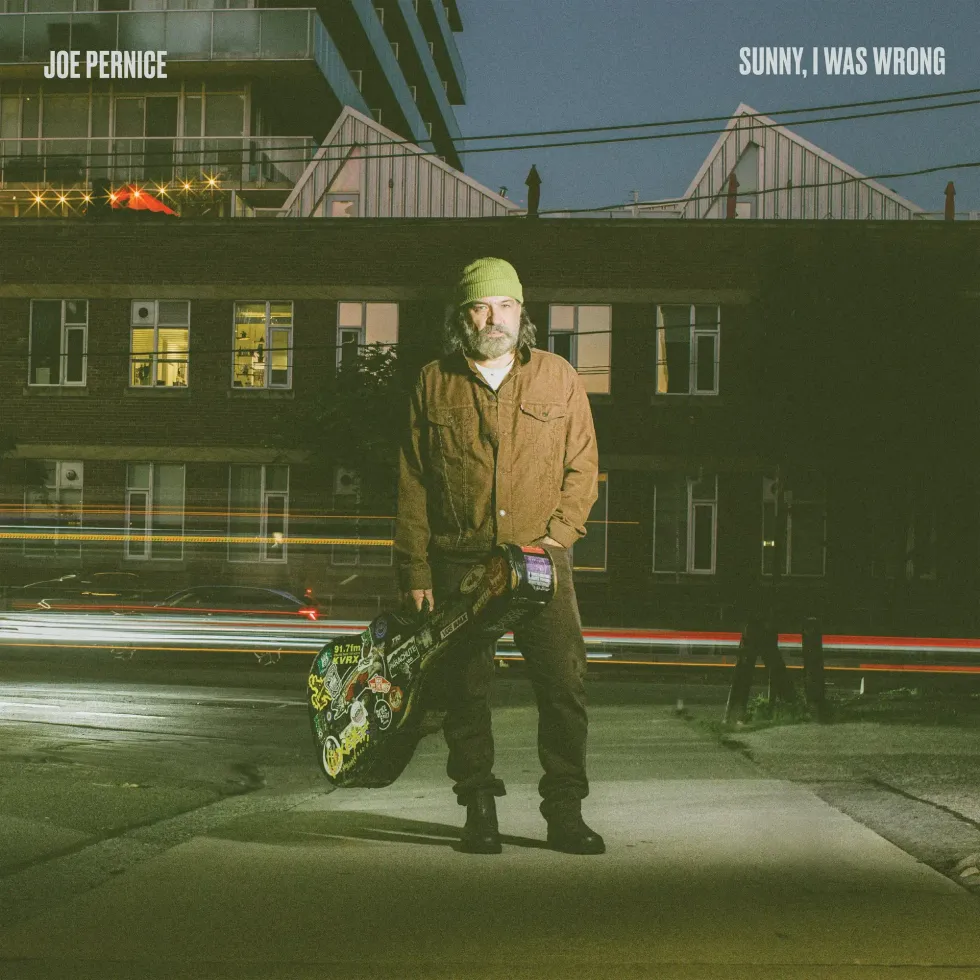
Pernice’s new album is his debut solo studio effort.
It also leads to surreal moments he still can’t wrap his brain around, like working with Webb on “It Got Away From Me.” After that baseball player planted the initial seed of inspiration, Pernice fleshed out the full song—including a lyrical reference to the Webb-penned 1967 orchestral-pop smash “MacArthur Park.” Pernice sent the track to friend and Webb collaborator Pete Mancini, hoping he’d play it for the maestro himself. He did—and then wound up playing on the piece. “I’m a huge fan,” he says. “He’s like a Beatle to me.”
When he thinks about the journey that song took—from a kid’s casual remark to collaborating with an all-time hero—it makes him realize how strange and beautiful songwriting can be.
“I remember writing that song at my kitchen table,” he says. “I was probably sitting with a cup of coffee in the morning in my underwear. It goes from an idea, to a finished song, to a recording, to having one of your songwriting idols playing on it—and now I’m talking about it to you, a guy I’ve never met. That came from a kid saying something on a baseball field! That kind of stuff always blows my mind: ‘That’s so weird. It came out of nothing.’”




![Rig Rundown: The Black Crowes’ Rich Robinson [2026]](https://www.premierguitar.com/media-library/youtube.jpg?id=66952027&width=1245&height=700&quality=70&coordinates=0%2C0%2C0%2C0)