
When the Black Crowes convened at producer Jay Joyce’s Neon Cross studio in Nashville to work on what would become A Pound of Feathers, the plan was straightforward: spend a week with guitarist Rich Robinson, his brother and Black Crowes singer Chris, and drummer Cully Symington fleshing out songs, then bring in the full band to properly record everything.
“We did two songs the first day,” Rich recalls. “We’d finish a song, I’d add bass, add guitars, and it was like, ‘Wow, this is great. Let’s do another one.’ By the end of five days, we had nine songs. We went into the next week and finished the record by the eighth day.” They worked so fast, Rich reports, that, “Before we had the chance to bring the band in to go over the songs, we had kind of just finished the record.”
That record is the Black Crowes’ second since Rich and Chris reunited (for the third time) in 2019. The following year, they embarked on a 30th anniversary tour in support of the Crowes’ 1990 debut, Shake Your Money Maker, and in 2024 released Happiness Bastards. That record, their first studio effort in 15 years, earned the band a Grammy nod for Best Rock Album, and helped secure their recent Rock and Roll Hall of Fame nomination. But where Happiness Bastards benefited from extended pandemic writing time—Robinson had sent Chris “about 40 or 45 songs” that were “pretty much fully developed”—A Pound of Feathers emerged almost entirely in the moment.
According to Rich, the Crowes wanted to use the studio as a compositional tool this time, developing material organically rather than arriving with concrete arrangements. Joyce had worked similarly with the brothers during Happiness Bastards, setting aside a day or two to see how they wrote together before the full band sessions began. Those spontaneous moments yielded some of the album’s strongest parts—moments that proved impossible to recapture again. “Sometimes trying to deconstruct and reconstruct an album or a song or a part that everyone loves and thinks is magical is kind of counterproductive,” Robinson explains. “Because it’s never going to be exactly what you wanted it to be.”
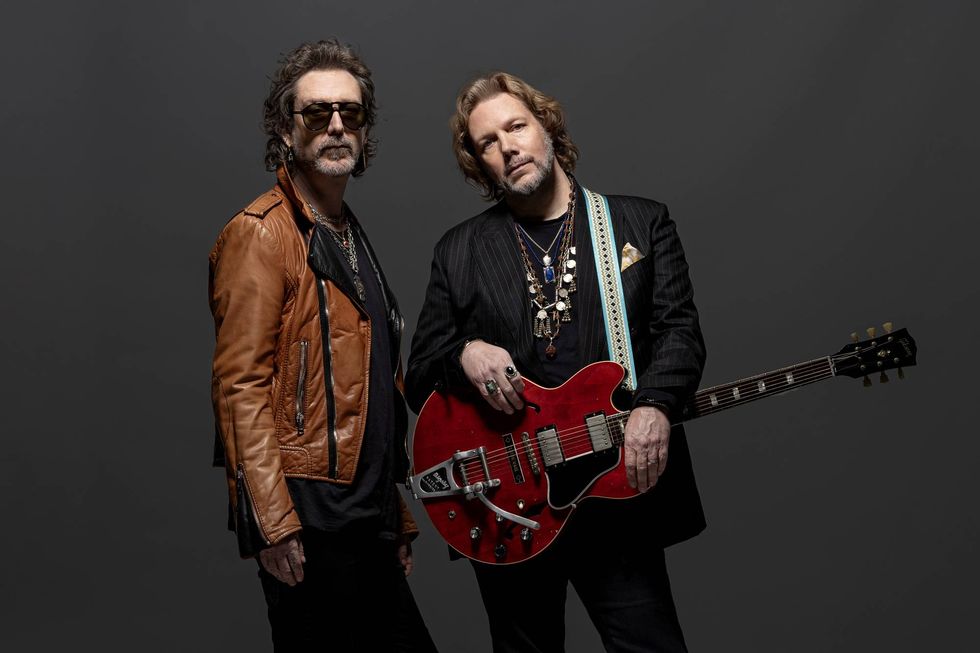
The brothers Robinson: Chris (left) and Rich
Photo by Ross Halfin
When the creative flow started happening at Joyce’s studio, they didn’t fight it. “We were kind of rushed from excitement,” Robinson says. “It forces you to work from an instinctual level instead of a head level. You’re just like, ‘Oh, let’s just do this. Let’s put this on. Let’s move on.’ You’re jumping from that place, which I always think is a better place to come from than overthinking something.”
There’s precedent in the Crowes’ catalog for working this fast. The band recorded their classic 1992 sophomore effort, The Southern Harmony and Musical Companion, in roughly eight days as well, although the circumstances were vastly different. At that time, they had just come off 19 months of relentless touring behind Shake Your Money Maker—300-plus shows that transformed them from a weekend bar band into a road-tested unit with serious chops.
“We were ready to go—from a band standpoint, how we all played individually and how we played together, and also from a songwriting standpoint,” Robinson says. “Chris and I spent that whole tour constantly writing. We wrote probably two or three records worth of material.”
“We’d finish a song, I’d add bass, add guitars, and it was like, ‘Wow, this is great. Let’s do another one.’”
Most of that material never made it onto Southern Harmony. “The only two songs that wound up on that album that we had written on tour were ‘My Morning Song’ and ‘Thorn in My Pride,’” Robinson notes. “Everything else we wrote over the weekend before we went in to make the record.”
This time, there was perhaps even less preparation. It was more about being in the moment and using the studio as a tool. “This is the first time that we really went in and did it like this,” Robinson says. “I can’t remember another record where we used the studio that much.”
The approach manifested in unexpected ways, drawing on influences that might surprise longtime Crowes fans. Robinson says “High and Lonesome” reminds him of the Clash, the Specials, and the English Beat—bands the brothers grew up listening to in Atlanta during the same era they were watching R.E.M. emerge from the local Athens, Georgia, scene. Those years helped shaped their understanding that music doesn’t need to stay in narrow categories. “When we would go see R.E.M., in one show they’d play a Velvet Underground song, they’d play a Big Star song, they’d play an Aerosmith song,” Robinson says. “And there was nothing weird about that. It was great and appropriate.”
Even as they remain rooted in classic rock, the Crowes throughout their career have been defined by a similar eclecticism. “We are the band that can tour with AC/DC and a year later play with the Grateful Dead,” Robinson says. “We played in front of Neil Young, his audience loved us. We played in front of AC/DC, their audience loved us, too.”
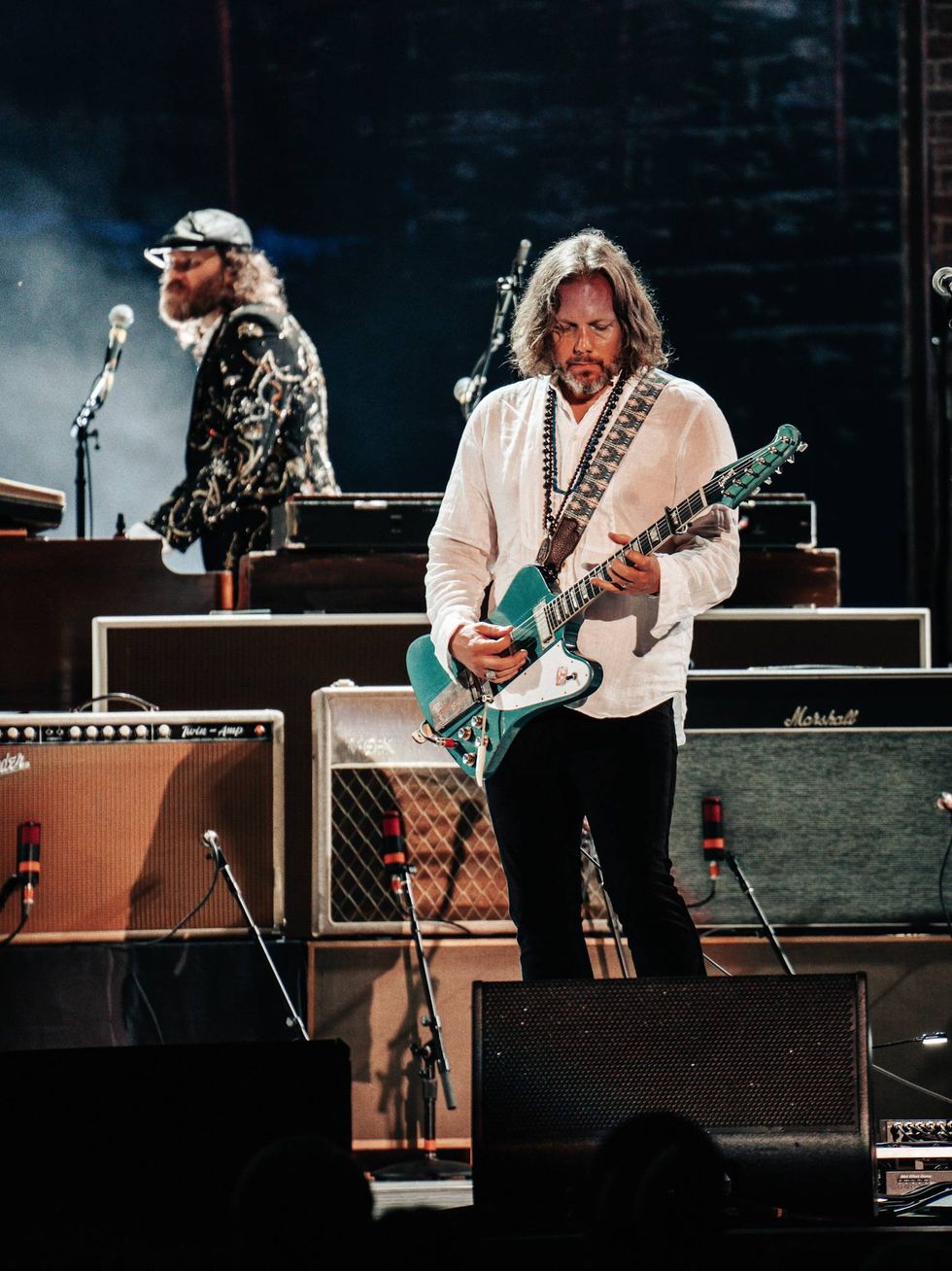
“We are the band that can tour with AC/DC and a year later play with the Grateful Dead,” Robinson says about playing live.
Photo by Will Wittmann
Rich Robinson's Gear
Guitars
- 1961 Gibson ES-335 – Cherry
- 1962 Gibson ES-335 – Sunburst
- 1968 Gibson ES-335 – Cherry
- 1968 Gibson Les Paul Gold Top
- 1963 Gibson SG Custom – White
- 1956 Gibson Les Paul Special – TV Yellow
- 1958 Gibson Les Paul Junior – TV Yellow
- 1960 Gibson Les Paul Junior – Black
- 2025 Gibson Les Paul Custom
- 2025 Gibson Custom Shop SJ-200 Murphy Lab
- 2026 Gibson Custom Shop ES-335 – Black
- Fender “Mary Kaye” Stratocaster – Blonde
- Fender Telecaster Custom Black
- 1967 Fender Telecaster – Blonde
- 2021 Fender Telecaster – Blonde
- 2021 Fender Telecaster w/ Glaser Bender
- 2020 Gretsch G6136T-RR Rich Robinson Signature Falcon
- Gretsch White Falcon
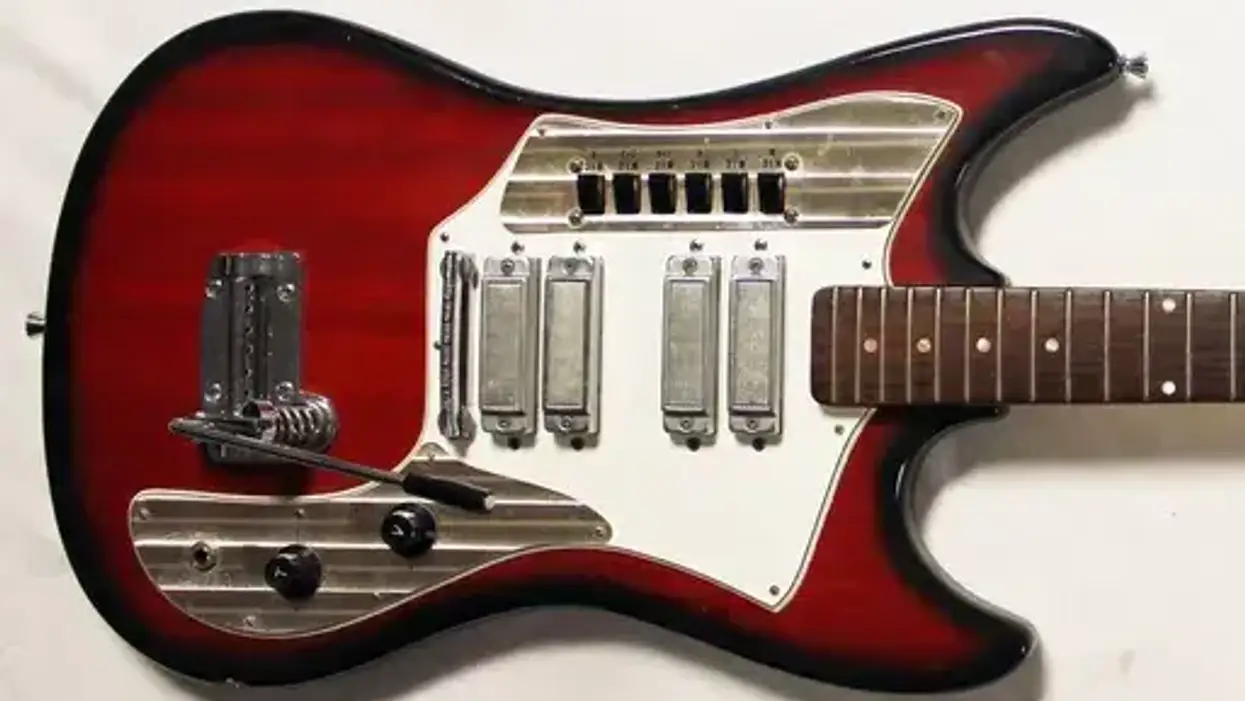
- Zemaitis Disc Front
- Zemaitis custom “Heart” acoustic
- Martin D-28 Rich Robinson
- Martin parlor
- Martin 0000
- Eastman 12-string
- Guild 12-string
Amps
- Various ’50-era Fender tweed combos
- 1950s Fender White Model 80
- 1968 Marshall Bluesbreaker
- 1971 Marshall JMP 50-watt
- 1987 Marshall Silver Jubilee
- Muswell Breaker 50-watt
- Alessandro High Power Fender Twin copy (custom build)
- Gas Can amp (for dressing room/practice)
Effects
- BMF Effects Sisyphuzz Silicon Fuzz - CA/RR Spec Limited Edition
- Electro-Harmonix Cathedral
- Electro-Harmonix Ravish Sitar Emulator
- Electro-Harmonix MEL9
- Electro-Harmonix Attack Decay
- Electro-Harmonix Stereo Memory Man
- Way Huge Angry Troll
- Way Huge Red Llama
- Behringer Octavia Octave Fuzz
- Fulltone Tape Echo (2)
- Fulltone Clyde Wah
- Keeley Rotary
- Keeley Zoma
- Ebo Customs Tube Rackmount Reverb
- SoloDallas The Schaffer Replica EX Tower
- Analog Man ARDX20 Dual Analog Delay
- Pedal Pawn NOS AC128 Fuzz (Limited Edition)
- AmpRX Backline 2400
- Lehle A/B splitter
- Lehle Volume Pedal
- Radial JX44 switcher
- RJM Mini Effect Gizmo X Audio Loop Switcher
- RJM Mastermind GT/16 MIDI Foot Controller
That sonic openness runs throughout A Pound of Feathers. Perhaps no track better exemplifies both the eclecticism and the spontaneous spirit of the sessions than the closing track, “Doomsday Doggerel.” The song emerged almost by accident when Robinson was “messing around with a big Gretsch,” trying to dial in a specific tone for another song entirely.
“Chris was like, ‘That’s a song. You need to write it,’” Robinson recalls. “I’m like, ‘It’s not. I’m just trying to get a sound for another part on this other song.’”
But Chris apparently heard something his brother didn’t. The inspiration? The Cramps and the B-52s—specifically the angular, minimalist guitar work of Ricky Wilson on the latter’s first couple of records. “Those guitar parts are so amazing,” Robinson says.
To get the vibe he was after, Robinson detuned a full step below standard, cranked the reverb, and let the riff speak for itself. “It’s one of those songs that took five minutes to write.”
Another unusual move? For a guitarist who has spent four decades developing a signature sound rooted in open tunings, numerous songs on A Pound of Feathers see Rich working in standard—a notable shift. “Typically, I’ll write in open tunings and I’m so embedded in that world,” he says. “For whatever reason, the songs I was writing and the songs I was hearing this time were in standard.”
“Sometimes trying to deconstruct and reconstruct an album or a song or a part that everyone loves is kind of counterproductive.”
One exception is the churning, darkly psychedelic “Blood Red Regrets,” which he composed in DADGAD. “That’s a really weird tuning for me,” Robinson says. “But I love it.” During the track’s bridge section, he also kicked on an Electro-Harmonix MEL9 Tape Replay Machine, adding some “Rain Song”-esque Mellotron-like textures for good measure.
Gear-wise, Robinson arrived at Neon Cross with approximately 40 guitars and a truckload of amps. The collection included various Gibson ES-335s (a ’61, a ’62, and a ’68), multiple Teles and SGs (including a white ’63 SG Custom with three pickups), his ’56 Les Paul Special, and a P-90-equipped Les Paul Junior with “so much bottom-end, it’s crazy.”
As for amplifiers, Robinson used his Muswell Breaker amps—his own design, based on his cherished Marshall Bluesbreakers. “We got these custom transformers and some amazing tubes and new old stock capacitors and stuff like that, that really just add so much to the sound of the amp,” he says of the Muswell. He also brought the actual vintage Bluesbreakers themselves, several tweed Fenders from the ’50s, a Marshall Silver Jubilee, and a 1971 JMP 50-watt head. He also used a small Fender “White” combo—“a student model from the ’50s that they were trying to break off from Fender and sell,” he says. “It’s just this tiny little amp with, I guess, a single eight- or ten-inch speaker, and it sounds great.”
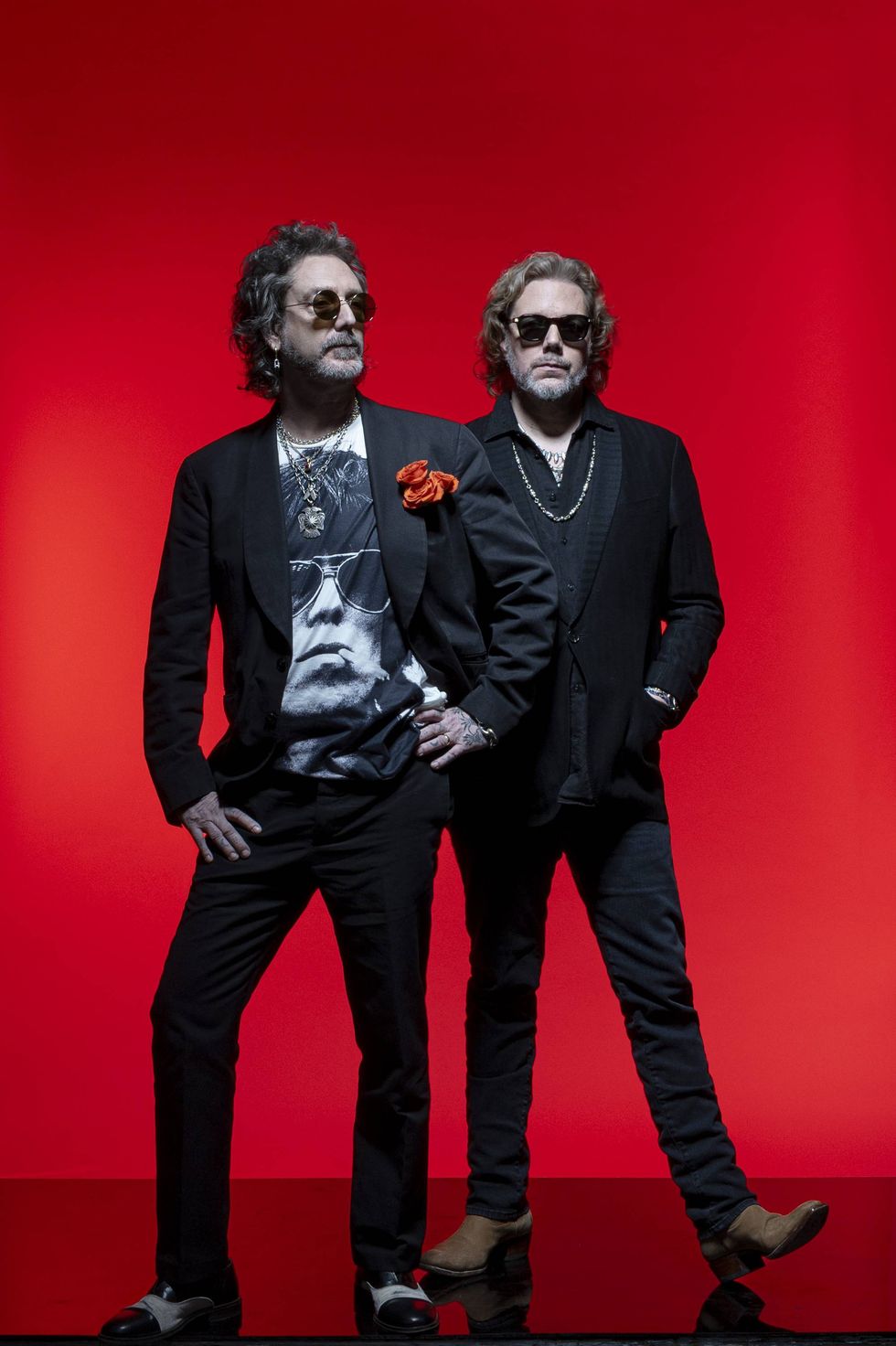
“We were kind of rushed from excitement,” Rich says of working with Chris in the studio on A Pound of Feathers.
Photo by Ross Halfin
The sheer amount of gear might seem excessive, but for Robinson, it’s about having options for every moment and every room. “Guitars are guitars, but they’re all different,” he explains. “Each one sounds different, plays different, feels different. And every place that you’re in, it’s also going to sound different because of that. The way the room sounds—some nights certain guitars sound amazing and other nights you’re like, ‘God, what’s wrong with this?’ But it’s the room and the frequencies and the amp and everything involved.”
Robinson doesn’t necessarily stick with the guitar he wrote a song on when it comes time to record it. “A lot of times I’ll write on acoustic and then it’ll go electric,” he says. Over the years, he’s even changed which guitars he uses for certain songs. “For years I used to use a Tele on ‘Wiser Time’ [from Amorica], and now I use a 335 because it sounds better to me. Over the years, things kind of change and it moves.”
When asked if he’s able to specify which guitars he used on which tracks for A Pound of Feathers, Robinson simply laughs. “No. Someone wrote it down for me, but I don’t remember.”
“We’re definitely not planners, and we’re definitely not people that think about something that’s too far ahead.”
That expansiveness, both in terms of gear and creative approach, reflects where the Black Crowes are now: a band that’s absorbed all their different eras into something cohesive. The harder-edged, riff-driven attack of their early records now coexists with the more exploratory tendencies they’ve developed over the years and decades. Those first few albums were built around concise, hard-driving rock songs—three-minute bursts that announced the Crowes as a straight-ahead rock ’n’ roll band. But that started to shift with 1994’s Amorica. “Chris was getting way into the Grateful Dead, and I wasn’t into the Grateful Dead too much,” Robinson says. “But in a sense that pulled us into these directions that were kind of a little bit different.”
Over subsequent records, and tours with jam-oriented acts, that side of the group deepened—and by the time of albums like 2008’s Warpaint and 2009’s Before the Frost...Until the Freeze, had perhaps even moved to the forefront. But playing Shake Your Money Maker every night on the reunion tour rewired something fundamental. “It gave me a huge appreciation for the three-minute song,” Robinson says. “We realized we don’t have to turn everything into a 15-minute jam. I think we definitely see that on these last two records.”
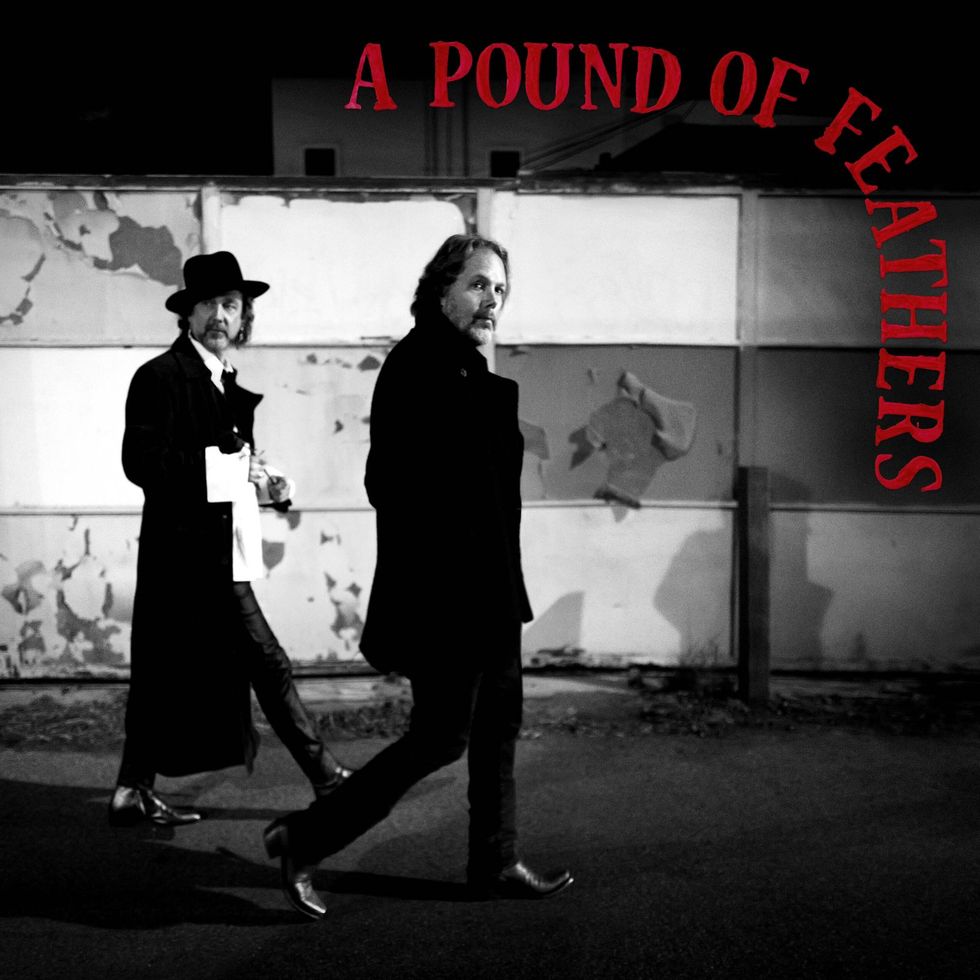
A Pound of Feathers is the Black Crowes’ second studio effort since reuniting in 2019.
Even as they create new music, the Crowes have been releasing deluxe reissues of those early albums, which has led to Robinson rediscovering forgotten material. For the Amorica reissue, they uncovered sessions from Daniel Lanois’ Kingsway studio in New Orleans—dubbed the “Marie Laveau sessions”—featuring Chris and Rich writing new songs in anticipation of that record. “That was never released, but some people got demos of it and put it out, but it never sounded that good,” Robinson says. “Now, it sounds amazing.”
Listening back to isolated tracks from Southern Harmony, meanwhile, proved particularly revealing. “To be able to hear [late keyboardist] Ed Harsch’s part on ‘Remedy’ was unbelievable,” he says. “It takes you there. You’re thrown back into that exact moment when you’re in the studio recording that stuff.”
It’s an interesting dichotomy—looking backward and forward at the same time. But for Robinson, it all connects back to the same fundamental principle that guided the Nashville sessions for A Pound of Feathers: follow the music, and don’t overthink it.
And for now, at least, Robinson is fully focused on the present. “We’re definitely not planners, and we’re definitely not people that think about something that’s too far ahead,” he says. “But I’m always up for making new records. Anytime I can be in the studio, I’ll be in the studio.”