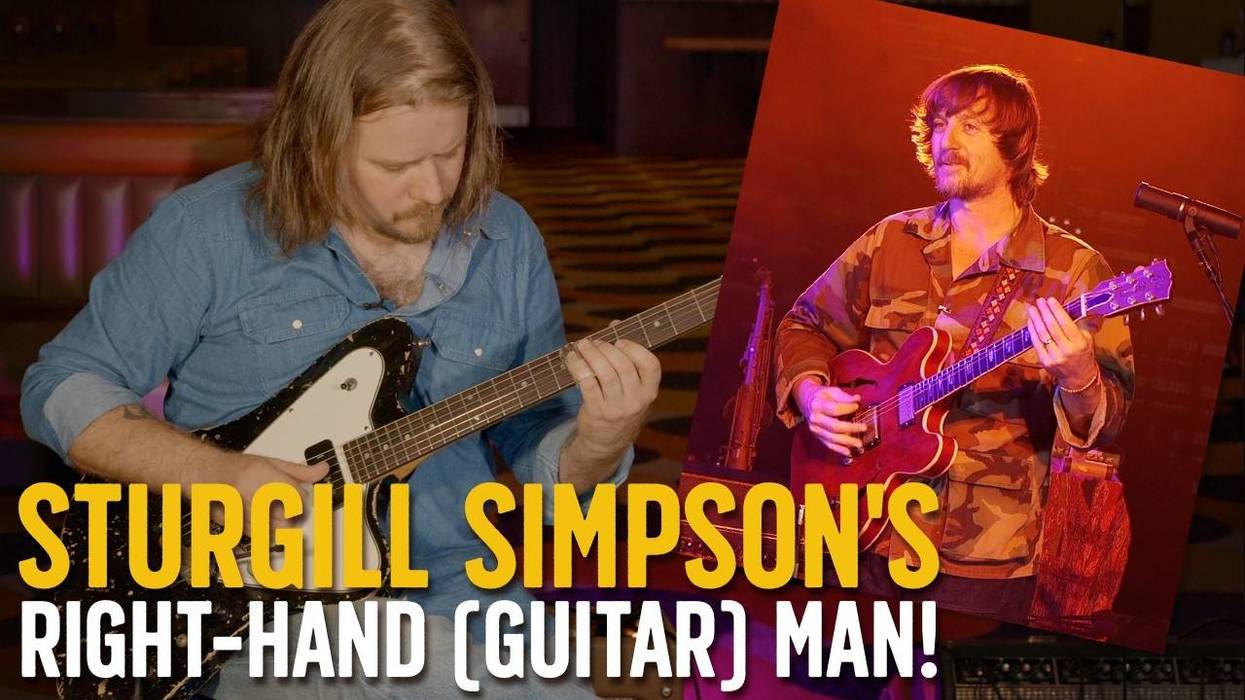

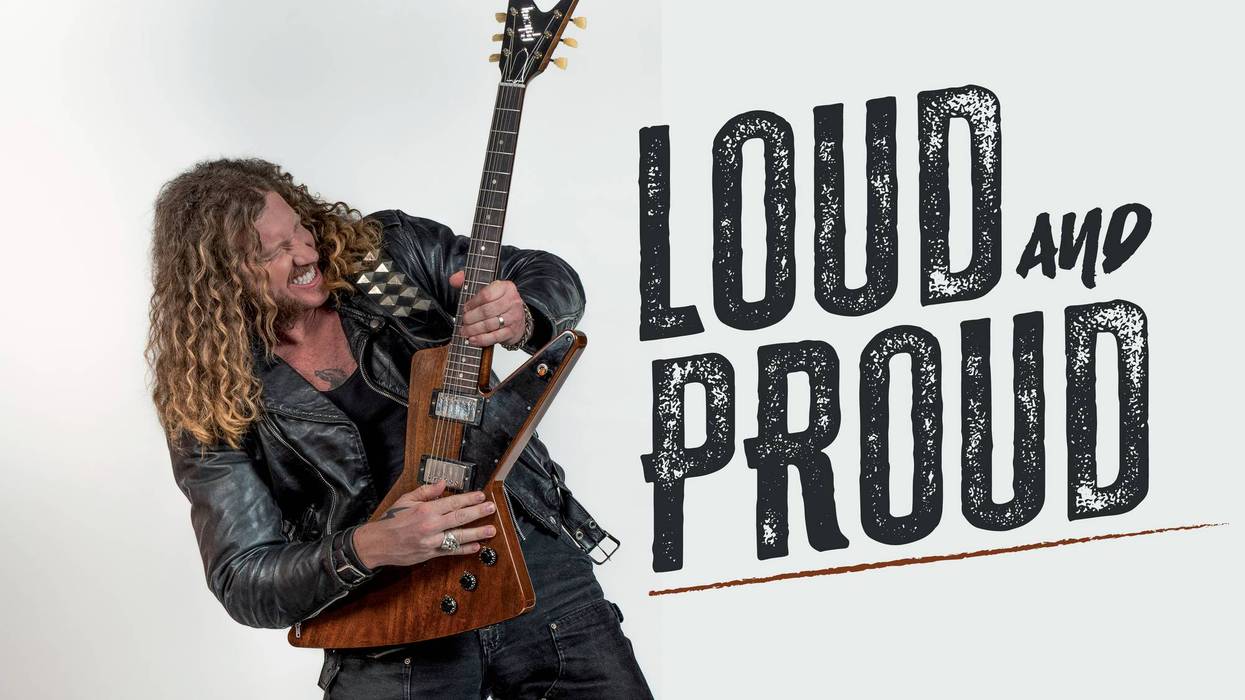
“Killing Time,” the roiling centerpiece of Jared James Nichols’ fourth LP, climaxes with a cinematic guitar solo—one that, he recalls, brought a close collaborator to tears in the studio. That visceral response is understandable. Nichols, one of his generation’s most lauded hard-rock guitarists, has built his career on bluesy dexterity—but he’s never sounded more tastefully cathartic than he does here. It’s a symbol of the vulnerability that radiates throughout the new Louder Than Fate.
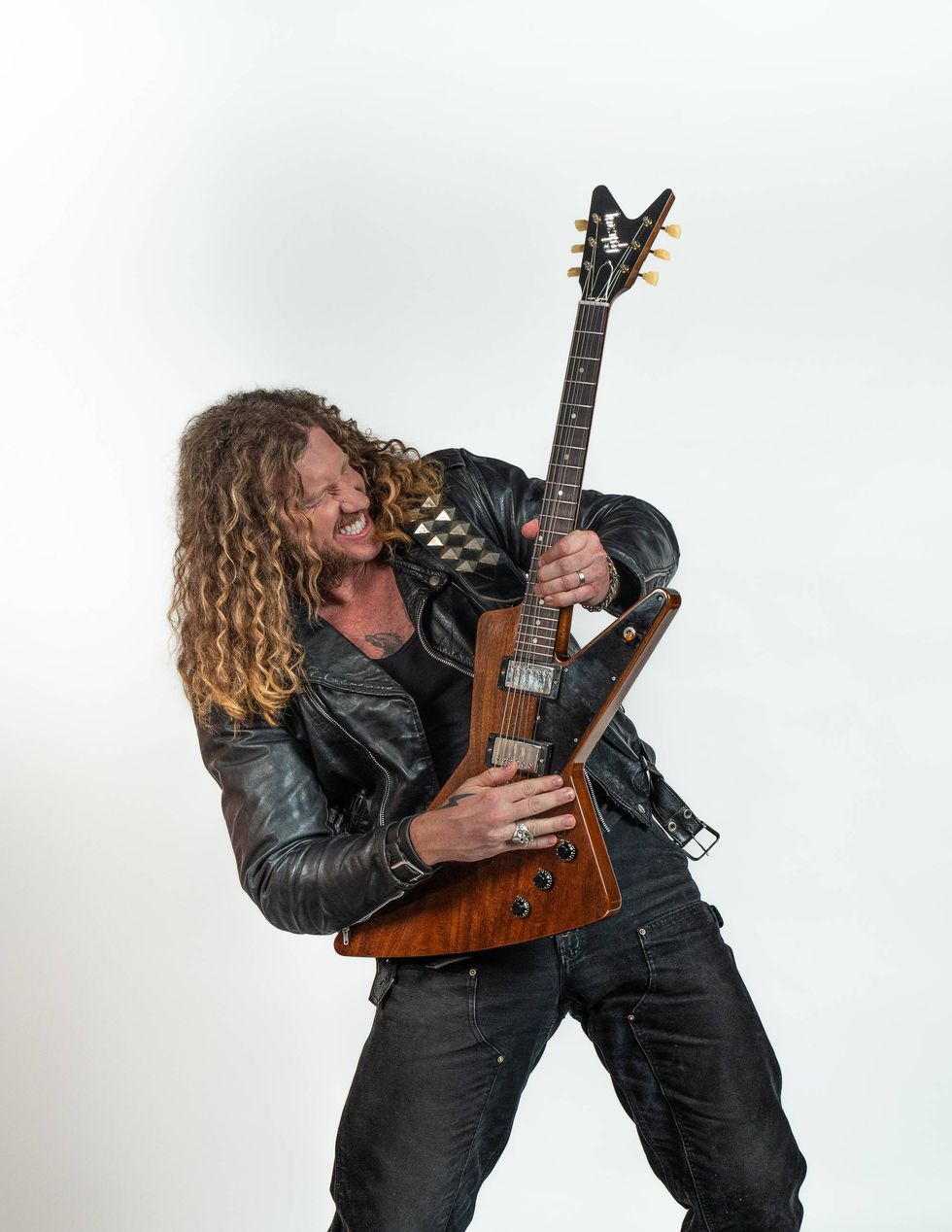
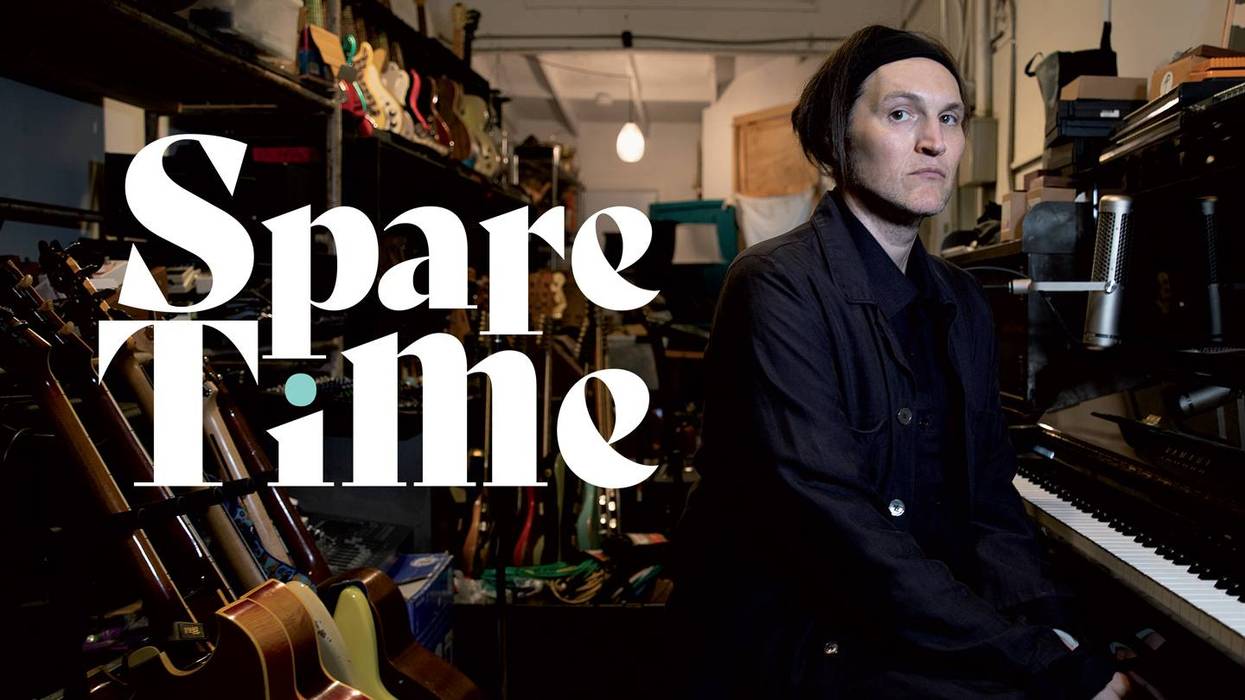
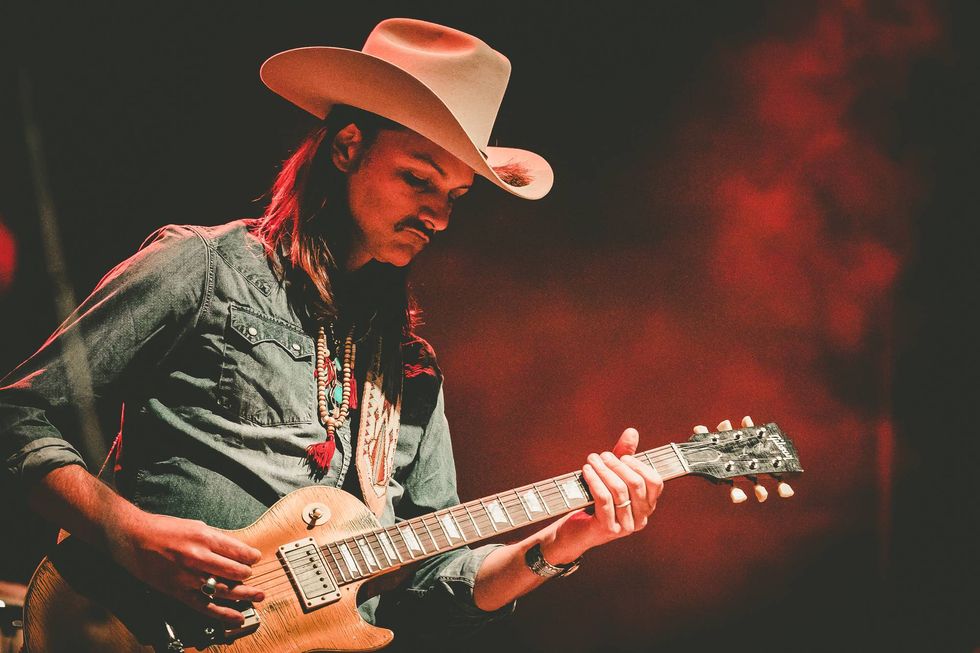
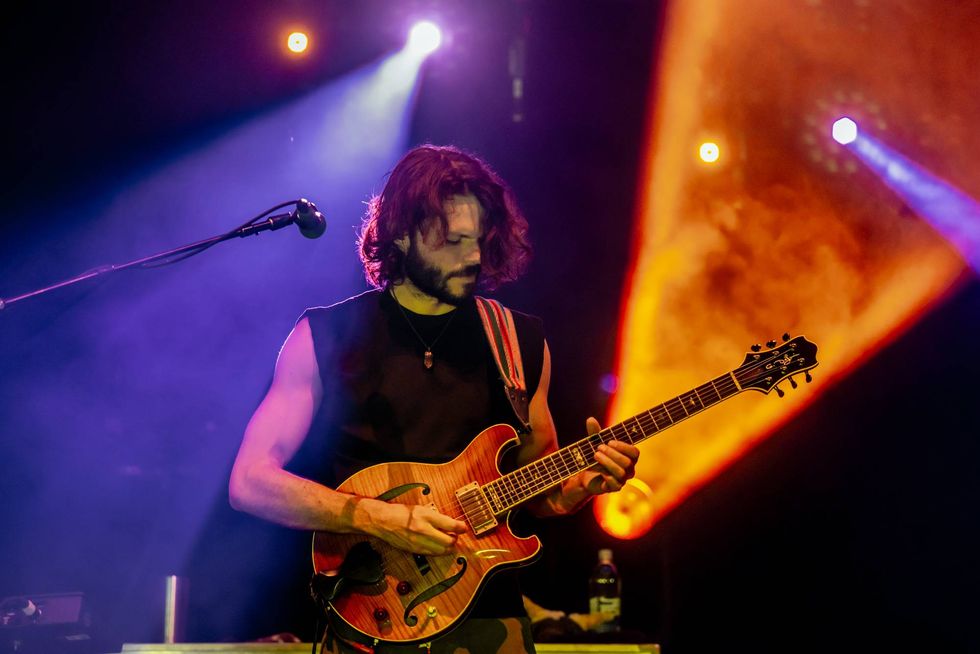
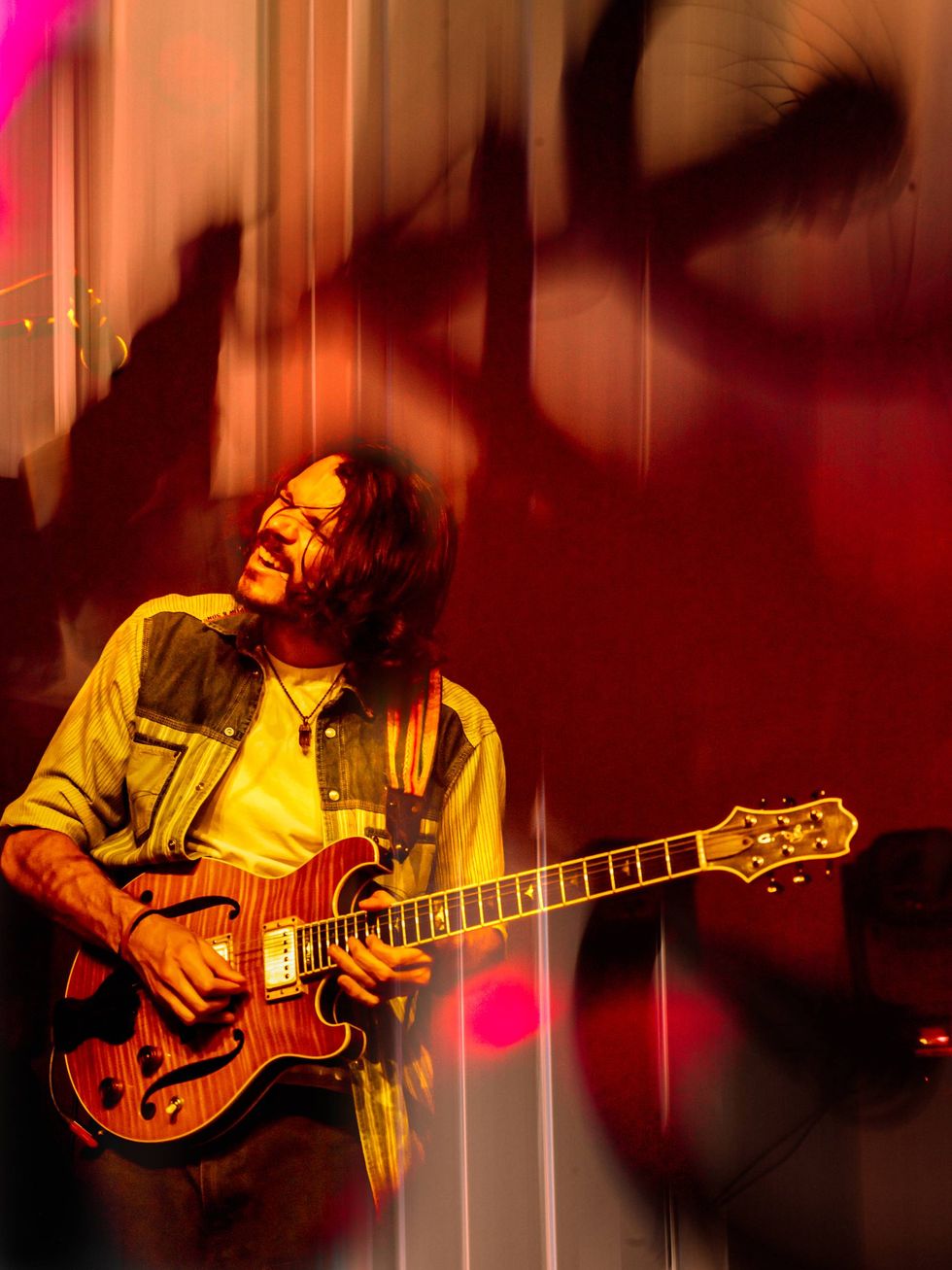
Nichols with his Gibson Custom Shop Futura.
Photo by Eric Ahlgrim
“Roger [Alan Nichols, a producer on the album] has always been very complimentary about my playing,” he tells Premier Guitar. “But [for ‘Killing Time’] he said, ‘Do something special.’ It kind of stuck with me. That night, I was driving home from the studio, exhausted, and I’m listening back to the chord progression: ‘What the hell am I gonna say, man?’ It’s not like most of them, where you just play a burning guitar solo. It was like, ‘How am I gonna paint this picture?’ I slept on it, woke up in the morning, and started humming melodies on the way in. Roger said, ‘Good morning,’ and I said, ‘Roll the tape.’”
He wound up with the album’s definitive moment. “After that, [Roger] looked at me, and by the time I got done—and I’m not even joking—he was crying. He had a tear in his eye. He looked at me and goes, ‘That’s fucking perfect.’ It sounds like a tall tale, but I knew right then that we did it. It was so raw and real. I felt like I was on a roller coaster, just riding the rails. You can hear the scrapes and the squeeze of it. I even said, ‘I’ve had solos in the past, like [2020’s] ‘Threw Me to the Wolves,’ where I was really, really proud, but that ‘Killing Time’ solo is as honest and genuine as I’ve ever played.”
“Moving to Nashville has really, really changed a lot for me as far as becoming a songwriter, trying to figure out who I am and what I want to say.”
The honesty there is key—while Nichols, 37, has always been known for his instrumental skills above all else, he wanted to get deeper as a songwriter on Louder Than Fate, revealing more sides of himself. The record, like all of his past work, is built on snarling blues and heavy riffs—but it also dips its toe into light-show balladry, arena-rock choruses and twangy slide guitars, often showcasing the grit and elasticity of his vocals alongside his fingerstyle fretwork.
Nichols has always been the virtuoso in any room. Early on, he briefly attended Berklee College of Music, won big-deal guitar contests, formed a power trio that shared stages with giants like Zakk Wylde, and earned multiple signature models with the Gibson brand—including the Epiphone "Old Glory" and "Blues Power" Les Paul Custom models. And even though he was grateful for the major profile his playing has provided, he’s always been eager to expand.
“It was such a calling card for so long,” he says. “Basically, my whole career was built around that, and it opened up so many doors. It was such a blessing. When anyone asks me about guitar, or any of the companies I’ve worked with, or who I’ve jammed with, I always start with, ‘I’m really lucky.’ Because there are so many amazing guitar players from all different genres and walks of life. The fact that I was able to get on the fast track a little bit and get recognized, I was just lucky. But having that wind in the sails, it starts to get detrimental. You go, ‘Cool, but now I need to be the musician and the artist I want to be.’ There’s so much more to say.”
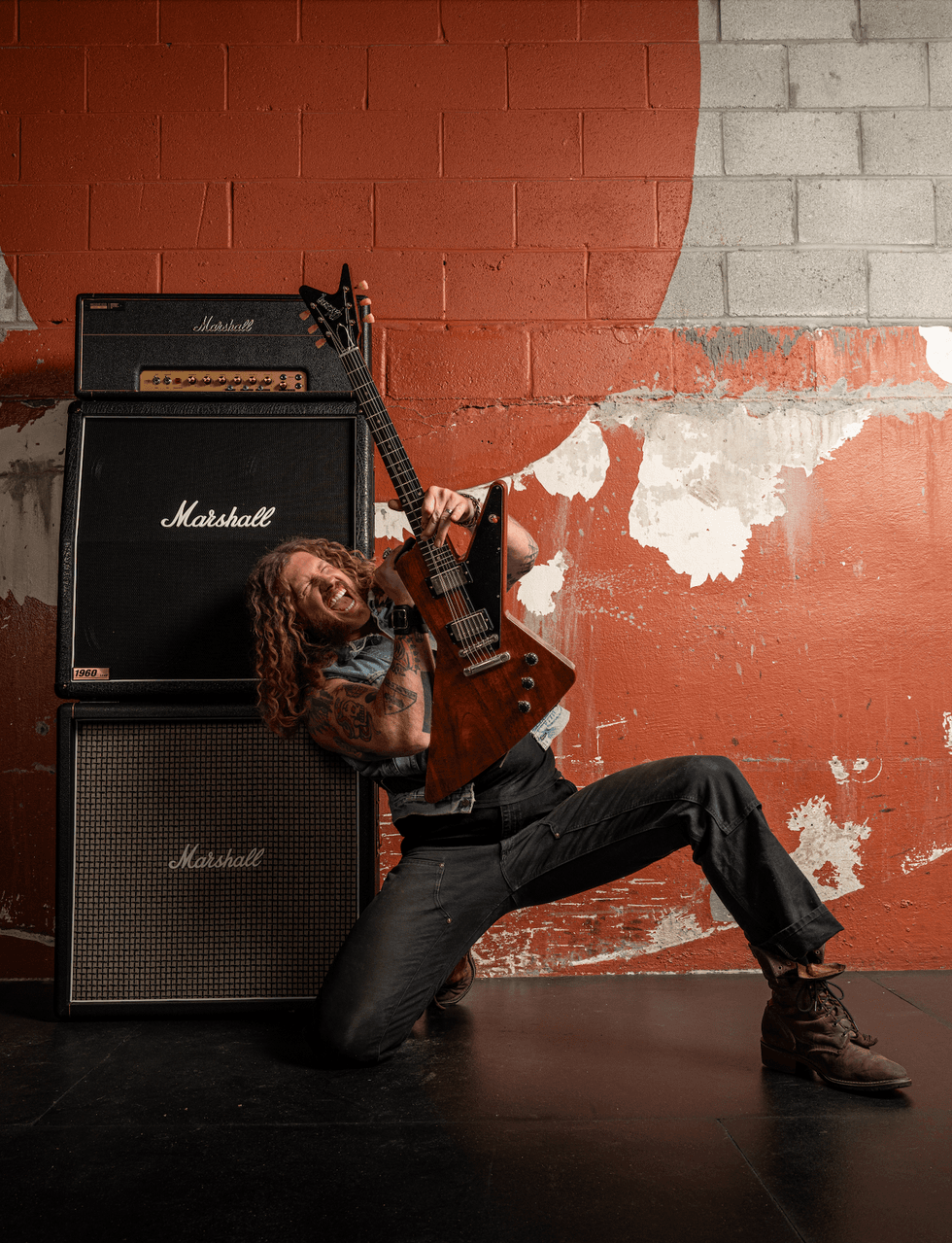
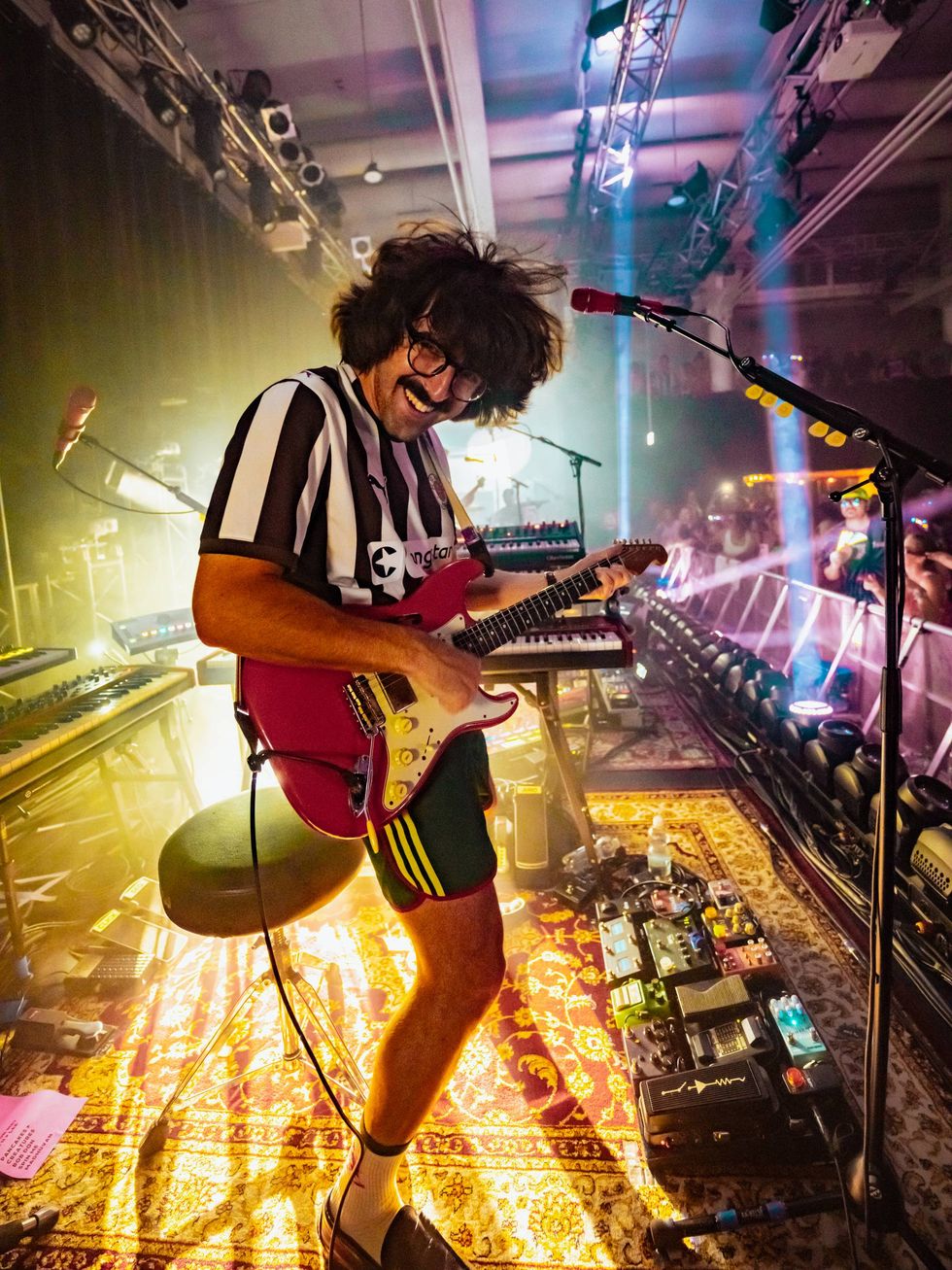
Photo by Eric Ahlgrim
The Wisconsin native found the perfect spark for that growth in his current home of Nashville, co-writing with professionals (including his friend CJ Solar) who weren’t concerned whatsoever about any potential “guitar hero” baggage. “Moving to Nashville has really, really changed a lot for me as far as becoming a songwriter, trying to figure out who I am and what I want to say,” he says. “It’s almost as if I took myself away from a lot of my friends for a little bit who are straight-up guitar. I wanted to hang out with people who didn’t care about that. I started to do songwriting sessions. I threw myself in the fire, writing with different artists. They knew I was a guitarist, but they didn’t walk into the session going, ‘This is a guitar guy, so we have to write like this.’ It was a beautiful moment of taking that guard away.”
“I could literally run my Gibson, a cord, and a Marshall amp, and it’s all there.”
Nichols continues, “I think the biggest thing I’ve been trying to do is lead with my head and my heart and say, ‘What does this song need?’ For this new record especially, we wrote songs and we put the guitar to the songs. In the past, it was all about the guitar, all about the solo. For this record and where I’m at now, I consider the guitar a huge force, as it always has been, but it’s just a piece of the overall puzzle.”
But Nichols also admits—multiple times, in various contexts—he was “nervous” about showing other sides of himself. “Killing Time,” with its clean picking, tender belting, and dramatic string lines, shows exactly how he pushed himself. “When I wrote that intro riff, I was initially thinking super old-school blues,” he says. “But I went into the chord progression for the verse, and it started to take on this different form. It’s something I’m really passionate about now—no matter what dynamic I’m playing at or singing at, I want to have the intensity for the song. And when I say ‘intensity,’ I don’t mean brute force, like my last records. I mean this certain emotion I can convey.”
Another example of this new range is “Bending or Breaking,” a quiet-loud tale of relationship turmoil laced with swirling keyboards, heart-tugging acoustic patterns, and anthemic, layered guitars during the almost-proggy instrumental bridge. “When I was in the studio, I was thinking of Brian May, of Neal Schon—of that stuff where the songs were obviously compositions, but when the guitars come in, it meant something,” Nichols says, reflecting on those harmonized leads. “[Those songs] took you on a ride. That middle section [of ‘Bending or Breaking’] never happened until we were in the studio. I was like, ‘Let’s build this. This has potential. This is where the guitar can really shine.’ It has a cool, dramatic rise, and then breaks it back down.”
Nichols kept that song in his back pocket for a while, lacking the confidence to put it on the record—until he played it, along with other demos, for Louder Than Fate producer and mixer Jay Ruston. “Once that vocal came in, he kinda twisted his head and said, ‘Which one is this? You didn’t send me this!’” Nichols recalls. “It’s a little more vulnerable. I’m showing a little more skin. I’m not using a wall of guitars. It was so incredible. We cut this song at Dave Grohl’s studio, 606—we cut a lot of material there. Once we started recording with the band, it was the first time with material like this that I actually felt like me. There’ve been a lot of times I tried to play things that were a little outside of my grasp—or, at the time, depth. This was the first time I was able to do this and believe in myself.”
Not that everything on Louder Than Fate moves somewhere surprising—one of its highlights is the haunted, grunge-dusted rocker, “Ghost,” which draws from some of his staple inspirations. “My biggest vocal hero ever is Layne Staley [of Alice in Chains],” he says. “I love all of those dark undertones, but [thinking about] ‘Ghost’ especially, one of the first records I ever bought was Silverchair’s [1997 album] Freak Show. There’s something to be said about a bone-crushing riff and a cool vocal. ‘Ghost’ kind of bridges the gap between my love of grunge, hard rock, and blues—it’s even got a little Southern twang on the front end, too. That one is just kind of a juggernaut of all of the things I love.”
Jared James Nichols’ Gear
Guitars
2026 Gibson Custom Shop Futura w/ Seymour Duncan Antiquity pickups
2023 Gibson Custom Shop 1957 Les Paul w/ signature Seymour Duncan JJN P90 Silencer pickup in neck
2022 Epiphone Jared James Nichols “Blues Power” Les Paul w/ Seymour Duncan JJN P90 Silencer pickup
1952 Gibson Les Paul “Dorothy”
Amps, Cabinets, and Switcher
Two modified Marshall 1959 Super Lead heads
Marshall 1960A cabinet
Marshall 4x12 cabinet with Greenback speakers
Radial Bones Twin-City AB/Y amp switcher
Effects
Seymour Duncan Pickup Booster Mini
Klon Centaur (silver)
1981 Ibanez Tube Screamer
TC Electronic Polytune Tuner
Strings & Cables
DR Veritas .010-.046 gauge strings
Klotz Cables
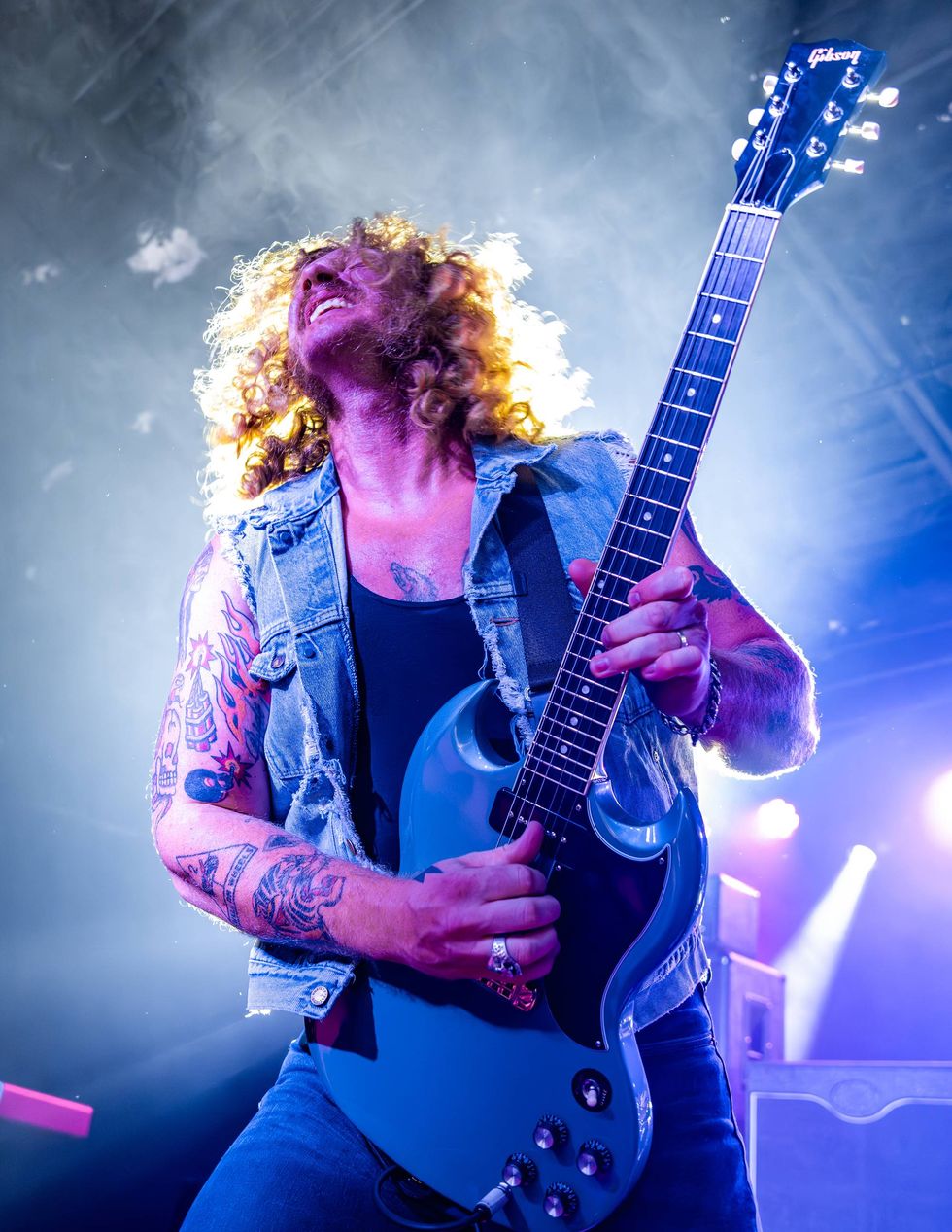
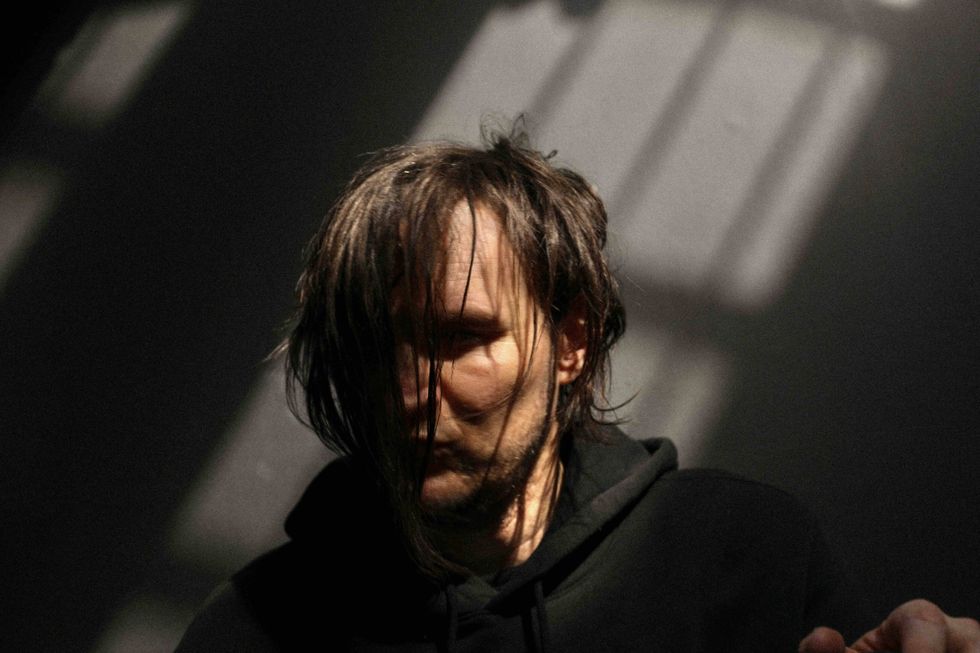
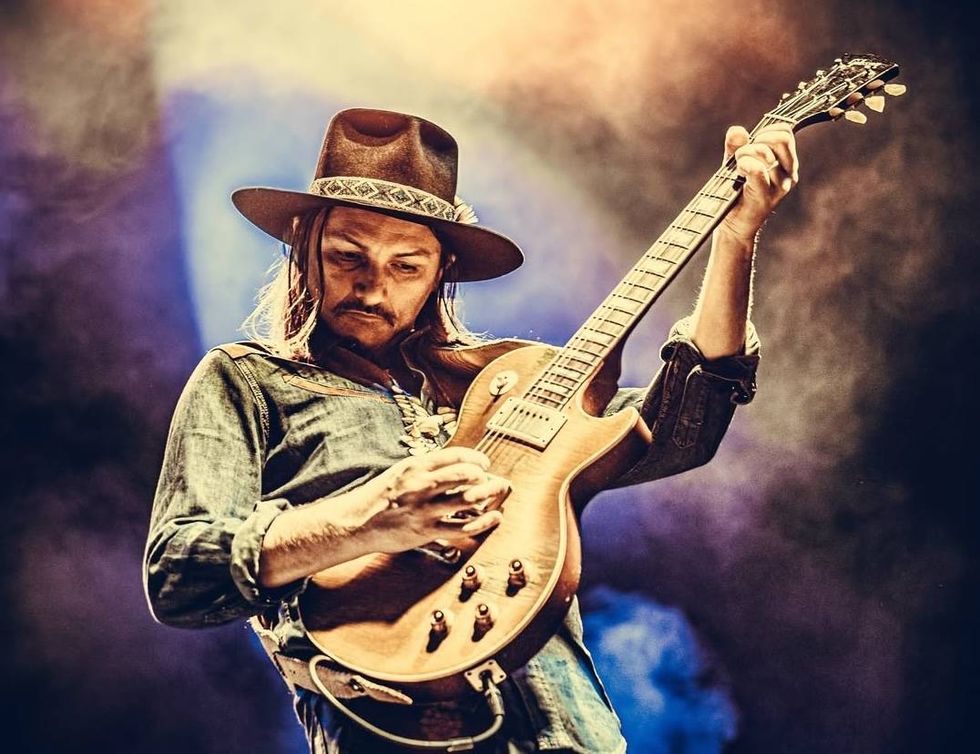
Nichols onstage at the "Ozzy Forever: Celebrating the Prince of Darkness" tribute show at the Basement East in Nashville, August 21, 2025.
Photo by Jeff Graham
To help him achieve the album’s tonal range, he stuck with a simple and classic setup—utilizing both his Les Paul and a Marshall. “I have a killer amp that basically does everything I want it to do,” he says. “I could literally run my fucking Gibson, a cord, and a Marshall amp, and it’s all there. What’s cool—and funny—is that it almost goes against everything modern. It’s not a throwback to be a throwback, but it makes you think in a certain way—you’ve got to really dig into what you have available. I have to get all these tones in my head that fit for the song through those. When you listen to ‘Killing Time,’ that intro and all that guitar is the volume set at, like, 7 on my guitar. Then, when it gets to the solo, the volume’s at 10. That’s literally the change of that, tone-wise. It’s a cool way of operating. People would be like, ‘That’s fucking nuts.’ But in my eyes, it’s closer to the heart of what it all is. It’s like a voice going from a whisper to a scream.”
“That ‘Killing Time’ solo is as honest and genuine as I’ve ever played.”
Nichols has repped signature Blackstar amps for years—and he maintains that it’s been a great relationship. But recommendations from fellow musicians ultimately piqued his curiosity. “I started going to my friends like Joe Bonamassa and Zakk Wylde,” he says. “I was like, ‘Hey, what did you use on Ozzy? What did you use on this?’ The thing that kept coming up was, ‘Jared, you have to try a Marshall.’ For the last record [2023’s Jared James Nichols], I borrowed a Marshall from a friend—a 1968 Super Lead plexi, just like Jimi Hendrix or Eric Clapton would have played. Let me tell you, brother—riding that kind of horse literally puts you in a different headspace. It’s like a wild animal. Not only is it a throwback to the sounds of those records we grew up on, but it’s also like, ‘How am I gonna harness this energy?’ It’s like riding in a muscle car without a seat belt on. You’re like, ‘I better keep this thing on the road.’
“On the last record, it kept really being a thing for me: the Marshall thing, the Marshall thing,” Nichols continues. “I wanted to keep getting closer to the sun. I had the opportunity recently to get some Marshalls and start using them. I’ll tell you what—it’s so exciting for me. On this record, every tone you hear has been powered by Marshall.”
But sick gear can only get you so far—a point Nichols seems especially keen to make these days. Louder Than Fate brings the riffs, no doubt, but it’s also the work of a more mature, expansive songwriter. For yet another example, look to the dust-blown rocker, “Way Back,” which stunned even some of his close friends when they first heard it. “I remember when I started off, I did it in a super country [style], almost as a joke,” he says. Jay [Ruston] was like, ‘Dude, that’s fucking badass!’ I was like, ‘Really?’ I went all-in. [Some friends] gave me this look, like, ‘This is different. There’s more going on here.’”
Nichols continues, “For me, that’s the greatest thing that could happen with this record. People can hear it, dig on these songs, and hear the next evolution of me as an artist—not just as a guitar player, but as an artist.”