The 1970s were a time when the great guitar heroes ruled the earth. Legendary 6-string warriors like Jimmy Page, David Gilmour, and Ritchie Blackmore regularly held tens of thousands of fans spellbound in arenas and stadiums across the United States and beyond.
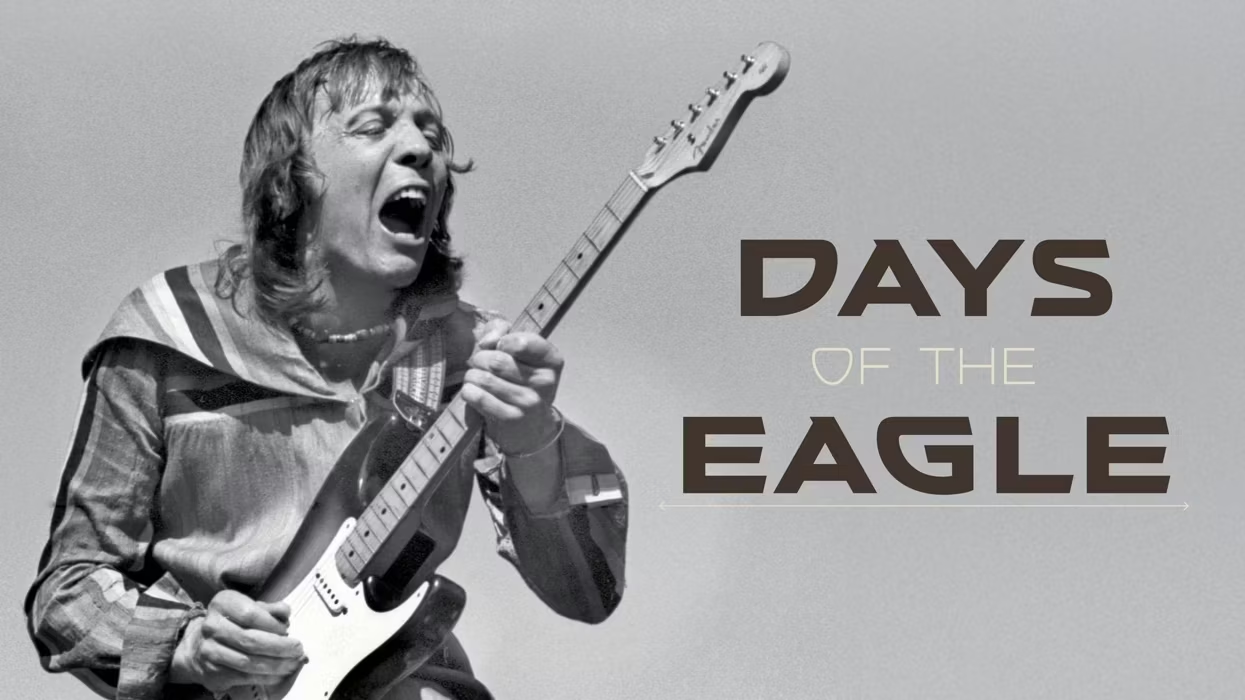
Among those titans stood Robin Trower. His breakthrough album, 1974’s Bridge of Sighs, featuring the FM radio staple “Day of the Eagle,” transformed his power trio into one of the hottest live acts in rock. But it wasn’t just the virtuosity or the riffs that captivated listeners—it was his sound. Vast, emotional and velvety, it moved and churned like a rising tide enveloping the listener.
“We recorded Bridge of Sighs quick—in just a little over two weeks,” Trower recalls to Premier Guitar. “The guitar sound was my invention, but we were very lucky to get Geoff Emerick to engineer it. The studio was quite big, and Geoff just listened while he walked around the room and placed the mics where he thought things sounded best. There was no science—it was just him and his magic set of ears.”
At the time, Emerick was one of the most respected engineers in the world, having worked extensively with the Beatles, and his instinctive approach helped shape the immense, swirling guitar tone that became a defining element of Trower’s music.
The following year, that humungous sound arrived onstage in Stockholm.
On February 3, 1975, Trower, bassist-vocalist James Dewar, and drummer Bill Lordan stepped onto the stage of Stockholm Concert Hall to begin a European tour. The stately 1,770-seat venue—home of the Swedish Royal Philharmonic Orchestra and the Nobel Prize ceremonies—was designed for classical music, but its wood-paneled interior gave the trio’s sound an unusual warmth and clarity. What the band didn’t realize was that Swedish Radio was recording the entire performance on a state-of-the-art RKB-branded Nagra eight-track mobile recorder, capturing what would eventually become one of the most celebrated live guitar albums of the decade.
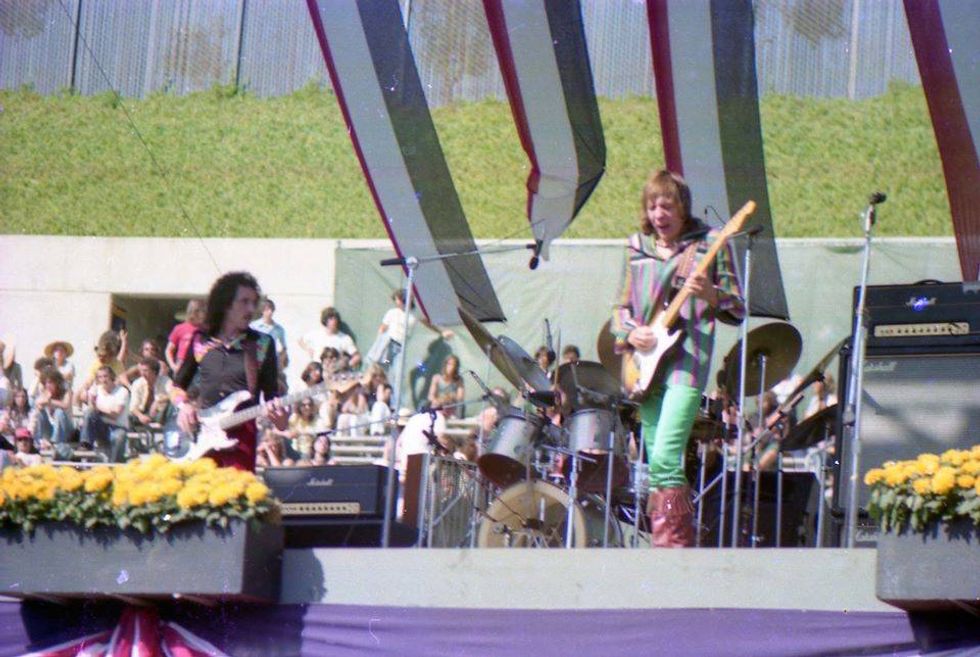
Caption: Onstage with bassist/vocalist James Dewar (l) and drummer Bill Lordan (obscured)
Photo by Ron Draper
“We were very lucky that tape was rolling that night,” Trower says. “We were performing in a proper concert hall and it sounded fantastic, which inspired us to play in top form. It was very refreshing, because most of the time we were playing in these hockey arenas that sounded awful. We weren’t even aware that they were recording it.”
To Trower’s surprise, a few months later Swedish Radio sent the band a cassette of the broadcast. Like many European broadcasters at the time, the network routinely recorded touring rock acts for its archives. Hearing the power of the performance—and the unusually high quality of the recording—the decision was made to remix the tapes and release them as a live album.
The result surfaced a year later, in March 1976, as Robin Trower Live!, a record that arrived just as the guitarist’s career was reaching its commercial peak. Mixed by Trower and Emerick, the album cracked the Top 10 in the United States and became Trower’s biggest chart success in the U.K., confirming what concert audiences already knew: that the soft-spoken guitarist from Southend had quietly become one of the defining players of the decade.
But despite its reputation among fans, the original Live! album only told part of the story.
The Stockholm concert itself had been considerably reshaped to fit the limitations of a single LP. Of the twelve songs performed that night, only seven were selected for release. Even those tracks were re-sequenced, abandoning the original running order in favor of a set designed to deliver maximum impact across two vinyl sides. The result captured the spirit of the show—but not the full arc of the performance.
“We were very lucky that tape was rolling that night.”
Even the album’s artwork introduced a bit of theatrical sleight of hand. The cover image suggested Trower performing before a vast outdoor stadium crowd—a sea of heads stretching into the distance. In reality, the recording came from a comparatively intimate Scandinavian concert hall.
“It didn’t occur to me at the time,” Trower says when asked about the discrepancy. “There were no photos taken at the gig. The one they used was from a baseball stadium in San Francisco, I believe.”
If the cover leaned toward rock ’n’ roll illusion, the audio carried its own behind-the-scenes adjustments. During the mixing sessions at London’s AIR Studios, Emerick and Trower discovered that Dewar’s vocal microphone had captured substantial spill from the drums and amplifiers onstage, making it unusable. The solution was simple: Dewar re-recorded his vocal tracks in the studio.
“Jimmy sang it all again,” Trower explains matter-of-factly. “He polished it off in about an hour—just ran through it in real time.”
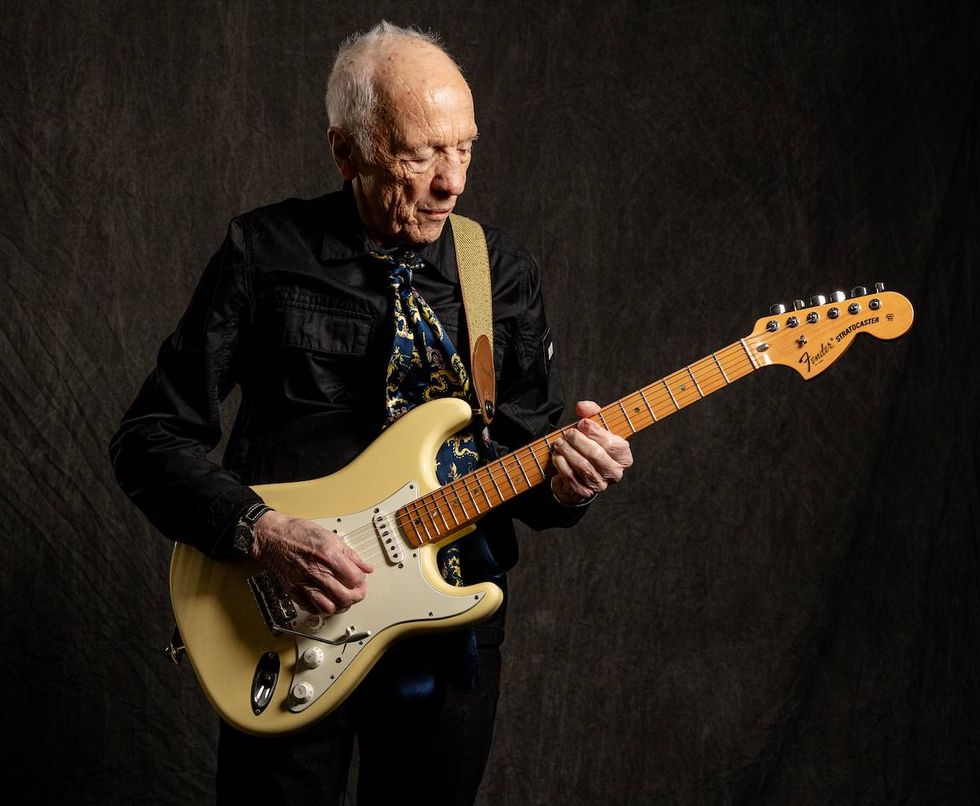
Trower today
Photo by Blackham Images
Nearly 50 years later, the new anniversary edition of Live! reveals the full picture for the first time. Remixed by Richard Whittaker from the original tapes, the restored edition presents the entire Stockholm performance exactly as it unfolded that evening—12 songs rather than seven, sequenced in their original order, with Trower’s onstage introductions and the audience’s reactions intact. What once felt like a highlight reel now plays like a complete musical journey.
The difference is striking. The pacing of the show suddenly makes sense. The opening salvo—“Day of the Eagle” followed by “Bridge of Sighs”—builds the atmosphere naturally before the trio moves into material from For Earth Below, which had not yet been released at the time of the concert. Later in the set, the delicate meditation of “Daydream” gives way to the explosive momentum of “Too Rolling Stoned,” a moment when the band shifts into near-punk velocity.
Listening now, what stands out most is the chemistry between the three musicians. Dewar’s bass lines provide both muscle and melody beneath his soulful vocals. Lordan’s drumming drives the music forward with power. And at the center stands Trower himself, shaping vast arcs of spacey atmosphere and psychedelic blues from his Stratocaster. Together, they created a sound that felt far larger than the trio format should allow. And on that winter night in Stockholm, the band was flying.
“If there’s any secret to my tone, it’s that all my guitars have relatively high action and heavier strings.”
So how exactly did Trower achieve that otherworldly sound?
“There was no magic amp or special guitar,” he says. “Almost everything I owned was pretty new. I just went to Manny’s, the legendary guitar shop in New York City, bought a 100-watt Super Lead Marshall, and listened to about six or eight Strats acoustically before settling on a black-and-white one with a maple neck.
“If there’s any secret to my tone, it’s that all my guitars have relatively high action and heavier strings. Back then I played in standard tuning and used .010-gauge strings. It’s all about getting the strings to ring acoustically, and that’s what translates into a great electric sound.”
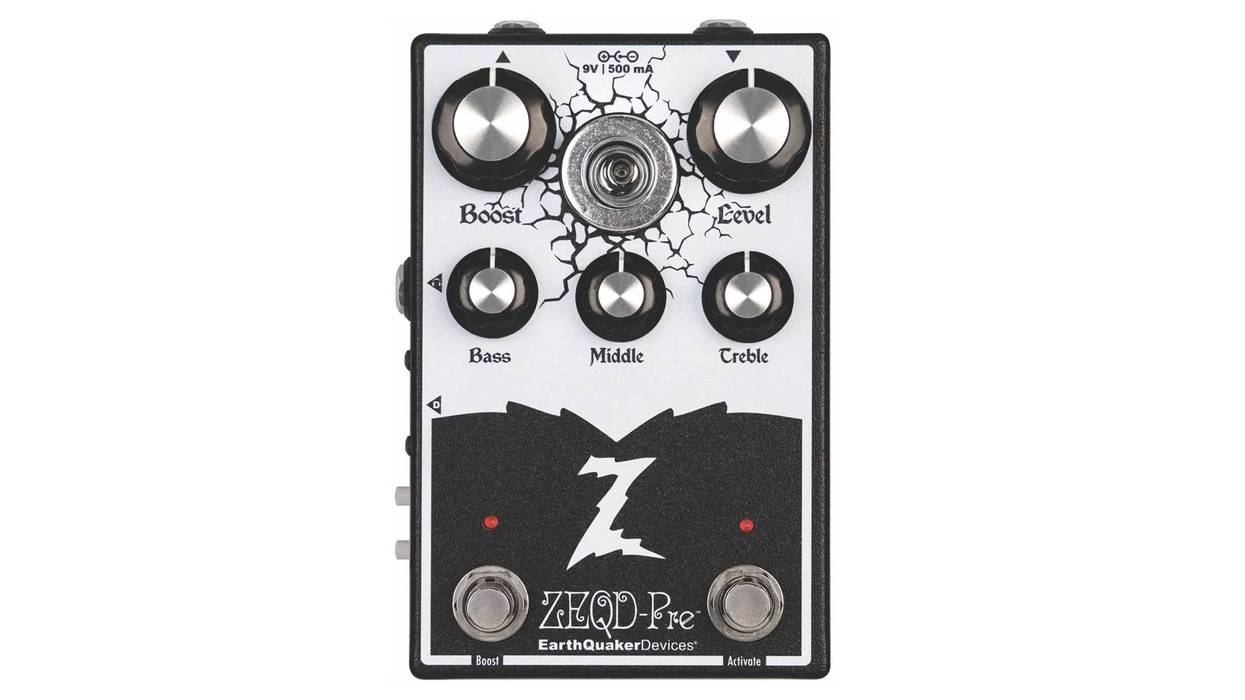
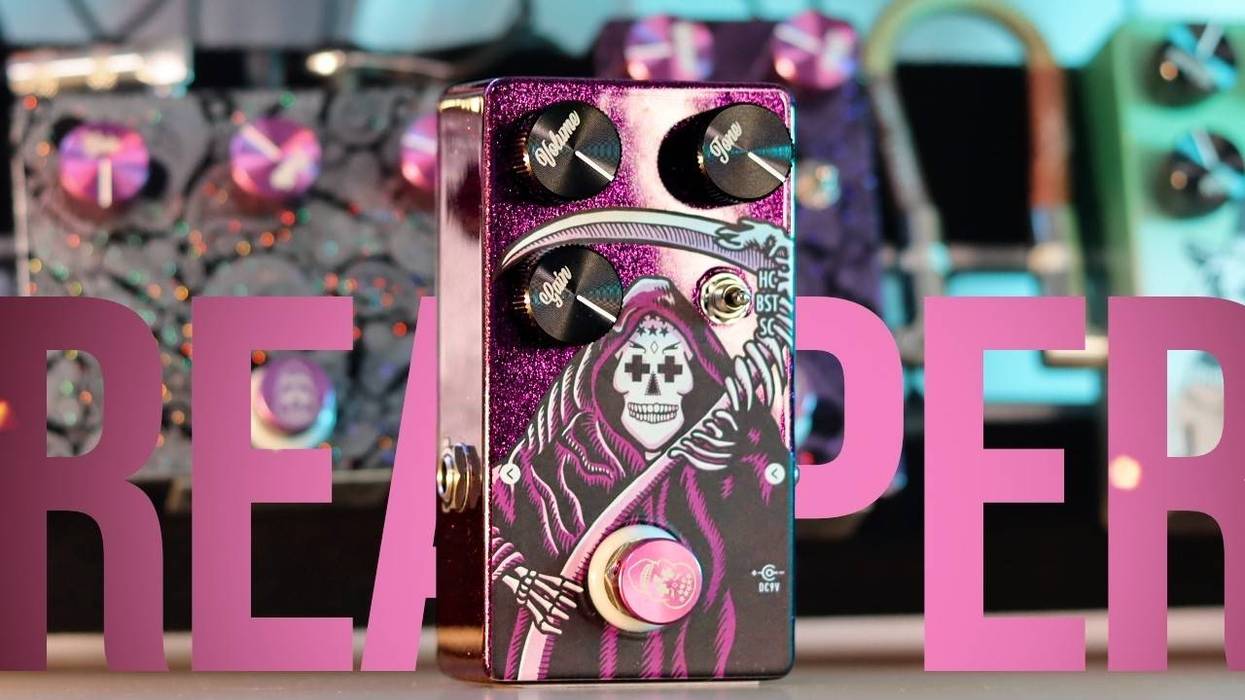
Effects also played an important role in shaping Trower’s liquid tone. His signal chain typically included a Vox V846 wah, a Shin-ei Uni-Vibe, and a custom-made boost pedal that pushed the signal level before hitting his Marshall. The simple “clean boost” provided a lift for solos without drastically altering the guitar’s character, adding sustain, thickening the Strat’s midrange, and making the Uni-Vibe’s swirling modulation sound even more liquid.
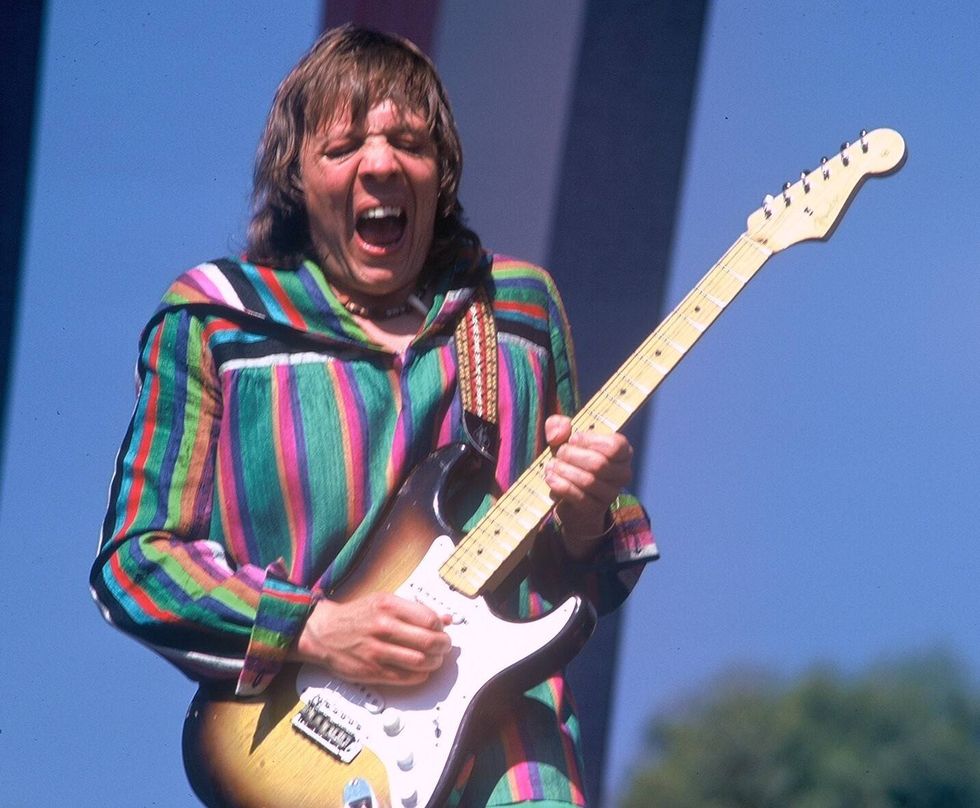
“There was no magic amp or special guitar,” Trower says of his revered tone.
Photo by Ron Draper
Trower also kept his overall gain surprisingly restrained.
“I usually kept the volume around seven or eight,” he says. “You need to have a little head room. I’m not interested in having too much distortion. My goal is to keep the clarity of the notes and chords and maintain a clear midrange, which is very important to my sound. I tried to avoid creating any mush.”
While Trower is proud of the 50th anniversary edition of Live!, he’s not particularly nostalgic or inclined to dwell on the past. What’s remarkable is that he has continued releasing albums well into his late seventies and early eighties—something very few guitarists from the classic-rock era have managed. In the last decade alone, he has recorded eight albums, including Come and Find Me (2025) and the blistering concert set, One Moment in Time – Live in the USA (2026).
Still, if Trower tends to look forward rather than back, he has no hesitation when it comes to praising the musicians who helped shape his most celebrated work—especially bassist and singer Dewar, who died in 2002 at the age of 59. Dewar was far more than a supporting player in the trio. With his rich, soulful tenor and muscular bass lines, he provided the emotional center of the band’s sound, grounding Trower’s expansive guitar work with a voice that was equal parts blues grit and melodic warmth. Across seven studio albums—from Twice Removed from Yesterday through Victims of the Fury—Dewar emerged as one of the defining vocalists of the 1970s guitar era.
“I’ve always enjoyed the trio format. It forces me to cover a little more ground instrumentally, but in a way, the economy was our secret weapon.”
“I couldn’t have asked for a better collaborator than Jimmy,” Trower says. “He was warm, funny, and never sang a bad note. People always say he’s underrated, and I totally agree. But that probably wouldn’t have been the case if we’d been called the Jimmy Dewar Band,” he adds, with a wry shrug.
Alongside them was drummer Bill Lordan, whose disciplined yet powerful playing completed the chemistry of the group. Lordan, who had previously worked with Sly Stone, brought a precise sense of groove that allowed Trower’s expansive guitar phrasing to breathe, while still driving the music forward with authority. Together, the three musicians created a sound that felt far larger than the trio format might suggest.
For Trower, the stripped-down lineup was never a limitation—it was the very thing that made the band’s sound so powerful. “I’ve always enjoyed the trio format,” he says. “It forces me to cover a little more ground instrumentally, but in a way, the economy was our secret weapon. It was much easier to achieve definition and clarity with just three instruments and a vocal when you played in those big, boomy halls. It would be less of an issue today—the PA systems and monitors are so much better.”
That sense of space and definition is part of what gives Robin Trower Live! its enduring power. Unlike many live albums of the era, which relied on layers of overdubs or heavy post-production polish, the Stockholm recording captures a band operating with remarkable precision and restraint. The trio moves with the ease of musicians who had spent hundreds of nights refining the material onstage, allowing the songs to stretch and breathe without losing their focus.
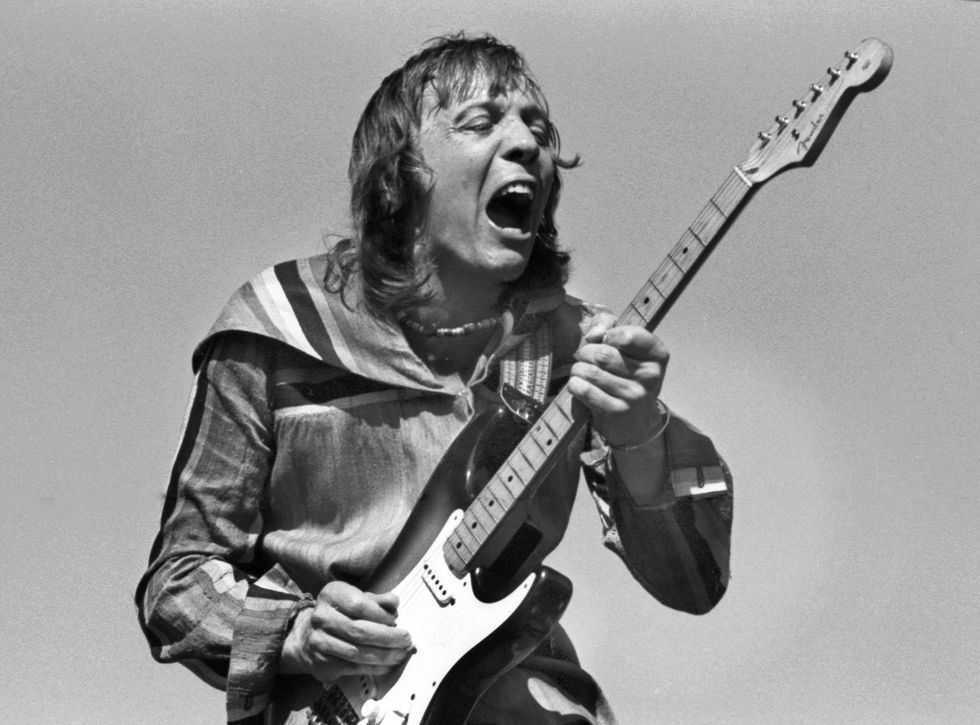
Photo by Richard McCaffrey
Years later, Robert Fripp, the famously exacting guitarist of prog-rock pioneers King Crimson, offered a vivid assessment of Trower’s playing during that era. Fripp first encountered Trower while touring the United States in the early 1970s.
“I toured America in 1974 with Ten Years After top of the bill, King Crimson second, and Robin Trower bottom,” Fripp recalled in a 1996 essay penned for the liner notes to a Trower reissue. “The chart positions were the opposite: Ten Years After in the Billboard 160s, Crimson in the 60s, and Trower climbing remorselessly through the Top 20. Nearly every night I went out to listen to him. This was a man who hung himself on the details—the quality of sound, the nuances of each inflection and tearing bend, and the abandonment to the feel of the moment. He saved my life … and later, in England, he even gave me guitar lessons.
“He is one of the very few English guitarists that have mastered bends and wobbles,” Fripp continued. “Not only has he got inside them, with an instinctive knowing of their affective power, but they went to live inside his hands.”
Fripp’s admiration speaks to something many guitarists recognized at the time but rarely articulated so clearly. Trower’s playing was never about speed or flash. Instead, he built his style around touch—wide bends, patient vibrato, and an almost orchestral sense of space that allowed every note to bloom and hang in the air.
That sensibility is all over Robin Trower Live! Nearly half a century on, the sound Trower summoned from a Strat and a Marshall still feels otherworldly. It’s no wonder even Robert Fripp went looking for lessons.