

Before it ever reached me, “Pattie,” a dark, mysterious Gibson Style O archtop guitar born in 1913, had already lived through the end of two bands (Cream and the Beatles), the beginning of two solo careers (Eric Clapton and George Harrison), a marriage that fell apart, a romance that was born, the formation of Derek and the Dominos, and at least one friendship that didn’t survive any of it.
I grew up on all that music. At 15, I watched Cream’s final show at Madison Square Garden. By the next year, I was running my first recording studio. By 2010, I found myself on Broadway in RAIN, a jukebox musical featuring the music of both George Harrison and Eric Clapton.
By then, I was certain of one thing: I didn’t like touring. But I was also born too late to rely on the old system recording advances, royalties, and sales. That world had already begun to collapse. So instead, I took everything I had and set out to build something else. In 2011, I took over as the head of the old Victor Talking Machine Company. Through that work, Pattie entered my world. It was originally intended as a working instrument for Victor’s recording arsenal and acquired by the company for its dual use as an Edwardian/Victorian display alongside master recordings of Big Bill Broonzy, a Victor Artist most affiliated with the Gibson Style O model.
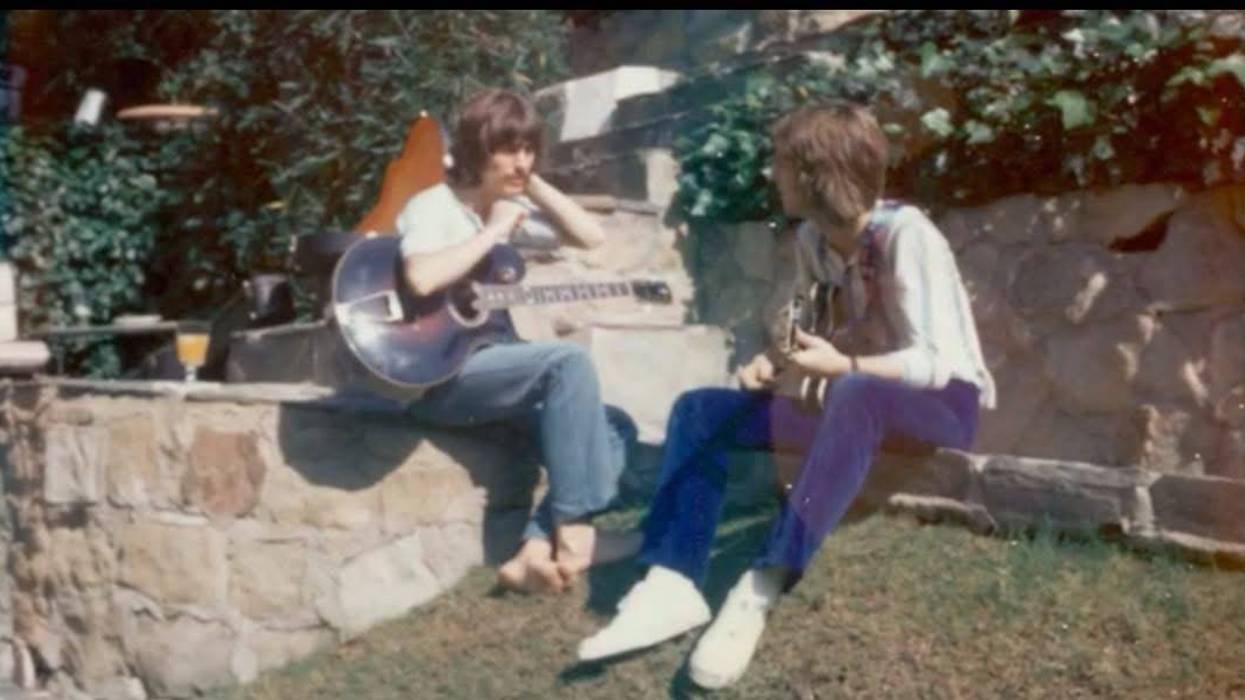
We were unaware of the guitar’s full history, though we did know of its connection to Delaney Bramlett, whose estate sold the instrument following his passing in 2008. It wasn’t until 2025 that the guitar’s deeper story emerged, as its former owners (Eric Clapton and George Harrison) were identified through company research. As it so happens, Clapton and Harrison used the guitar in their earliest garden songwriting sessions, and they were photographed using it the day prior to recording sessions for their first co-written hit, “Badge,” which was recorded in Los Angeles in November of 1968. Later, Eric gifted the guitar to Bramlett, who ended up owning the guitar from 1970–2008.
Meanwhile, in 2025, I had been playing the guitar like any other. (I’m 6'4", 240 pounds—I play hard.) I’ve always felt guitars like this are supposed to feel delicate and distant. Instead, this one responded like a fine old tool … one that had simply been used longer than most! Other session and live musicians for the company utilized the fabled instrument, but I certainly commandeered it.
You don’t overplay a guitar like this. It doesn’t reward it; it pushes you toward simplicity. And yet, Pattie remains surprisingly modern-feeling compared to most archtops.
“Delaney often handed this guitar out to friends for impromptu writing and jam sessions—sessions that included close friends Leon Russell, Duane Allman, and others.”
Its real legacy is in composition. Songs like “Badge,” “Here Comes the Sun” (Harrison and Clapton), “Let It Rain” (Clapton and Bramlett), and “My Sweet Lord” (Harrison, Bramlett, and Clapton) weren’t isolated works. They were responses—fragments of conversations happening in real time between artists.
I had no idea of this history during most of my early time with it, which, in retrospect, was probably a blessing. Delaney often handed this guitar out to friends for impromptu writing and jam sessions—sessions that included close friends Leon Russell, Duane Allman, and others. Though these sessions don’t yet have documentation, they still add to Pattie’s mystique adjacent to music royalty.
I’ve used the guitar the only way that made sense: in the studio, on stage, and in writing. At Victor Studios, it sat in sessions alongside modern equipment without issue. At Victor SoundWorks in New Jersey—then called the Victor Vault—it held its own in live performance, not as a novelty, but as part of the show. And in the summer of 2025, I used it to front a symphony orchestra, something none of its previous owners had asked of it (to the best of my knowledge).
Pattie didn’t struggle in any of those environments. It adapted even to the somewhat questionable pickup I temporarily installed just to get it above the cellos and trumpets.
When it came time to write with it, it didn’t make anything easier. It didn’t offer ideas. But it carried a cheeky implication: “At one time, I helped shape some of the best work of Eric, George, and Delaney. If they could find something in me and you can’t, that’s not my problem!” I appreciated the blunt quality of that reality. I couldn’t ever blame the instrument for being incapable of writing beautiful songs!
Pattie remains one of the highlights of my life with instruments. But if you know anything about me or my commitment to Victor’s mission of building a fairer, more functional music industry, you know I don’t like to sit in any one place in music for too long, and nor does the Victor Company. (“I’m much too fast…” as David Bowie once put it.) Given its relatively brief but important time with Clapton and Harrison between 1968 and 1970—and its upcoming appearance at Heritage Auctions Celebrity Instruments Showcase, May 8th, 2026—it seems Pattie doesn’t, either!

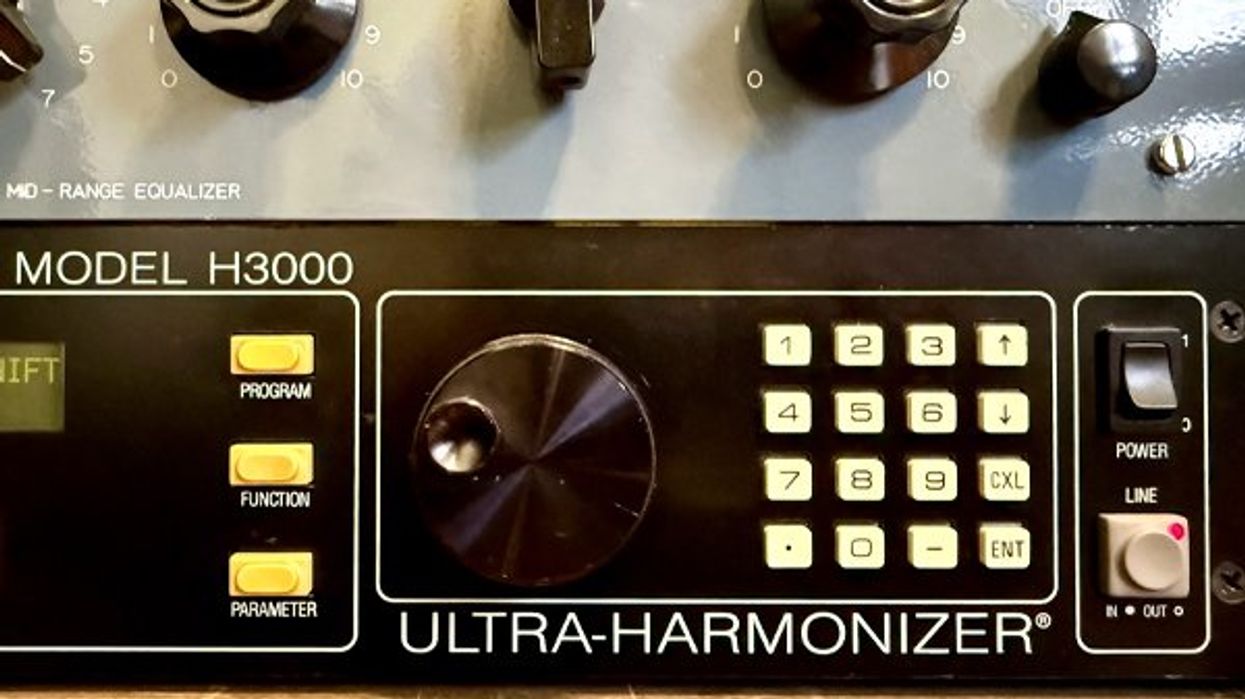
 Guitarists are used to coveting cranky, old gear, but if you’re not a rack user, the H3000 might not be for you! If you ever see one of these in a studio, be sure to take some time to check it out, and maybe give the plugin a try.