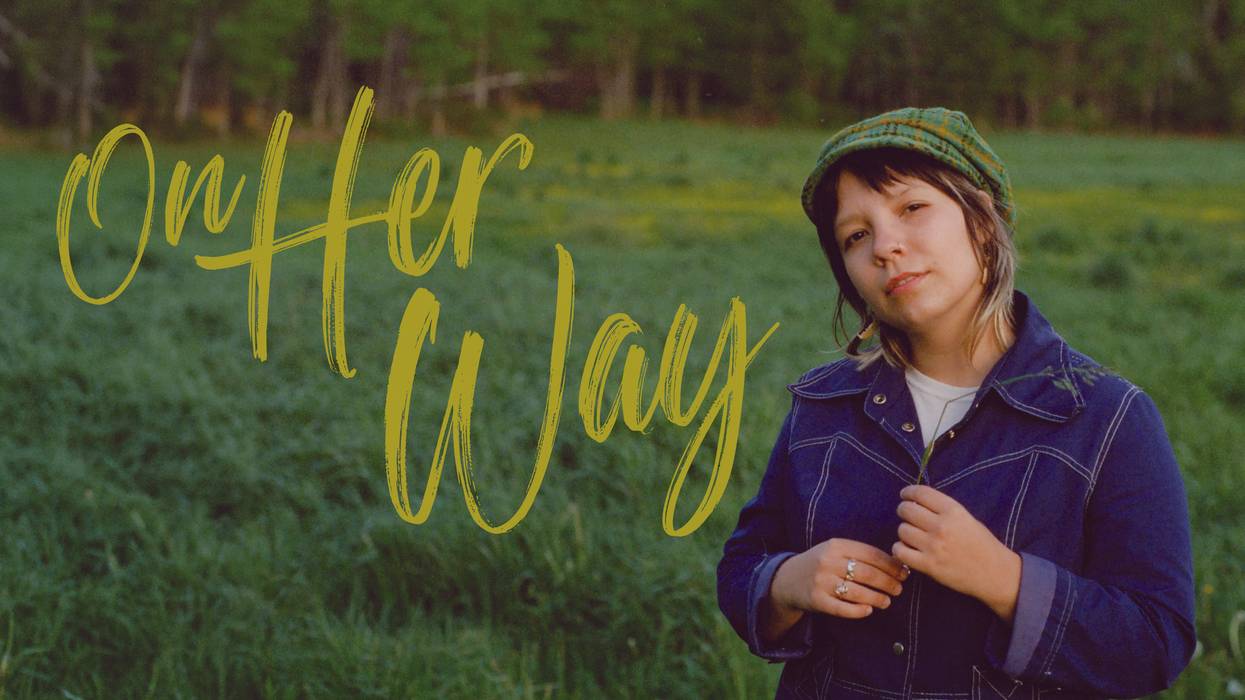

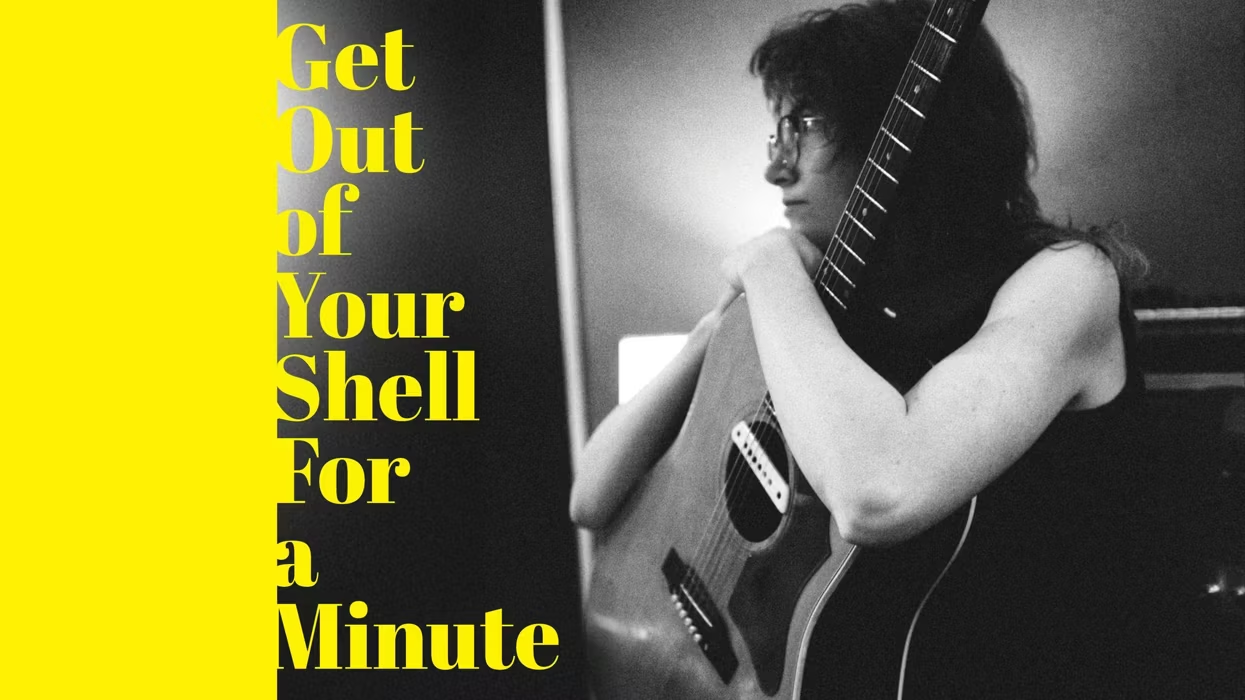
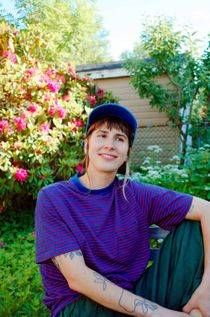
Since her 2008 debut, Toronto artist Charlotte Cornfield has built a catalog marked by close observation and emotional precision. On her sixth album and first for Merge Records, Hurts Like Hell, she widens her scope, writing beyond her personal experience for the first time. “When I think about this record,” Cornfield reflects, “I think about it being written from the perspective of being on the other side of something.”
Inspired in part by the “vulnerability and fragility and wildness” of new parenthood, Cornfield distills her vision into 10 songs that arrive at a shared conviction: that the deeply personal becomes universal. Within the tracks’ specifics, human truths emerge.
Cornfield writes alone, as a rule. This time, holed up in the shed of the Weather Station’s Tamara Lindeman writing Hurts Like Hell, Cornfield had a sounding board in Phil Weinrobe (Adrienne Lenker, Buck Meek, Hand Habits), who produced, recorded, and mixed the album. “Having somebody to bounce those ideas off of was amazing, but [the writing process] was still kind of solo,” Cornfield notes about her most collaborative effort to date. “I just knew that I wanted to have a bunch of people in the room when we made the record, and let the musicians interpret the songs.”
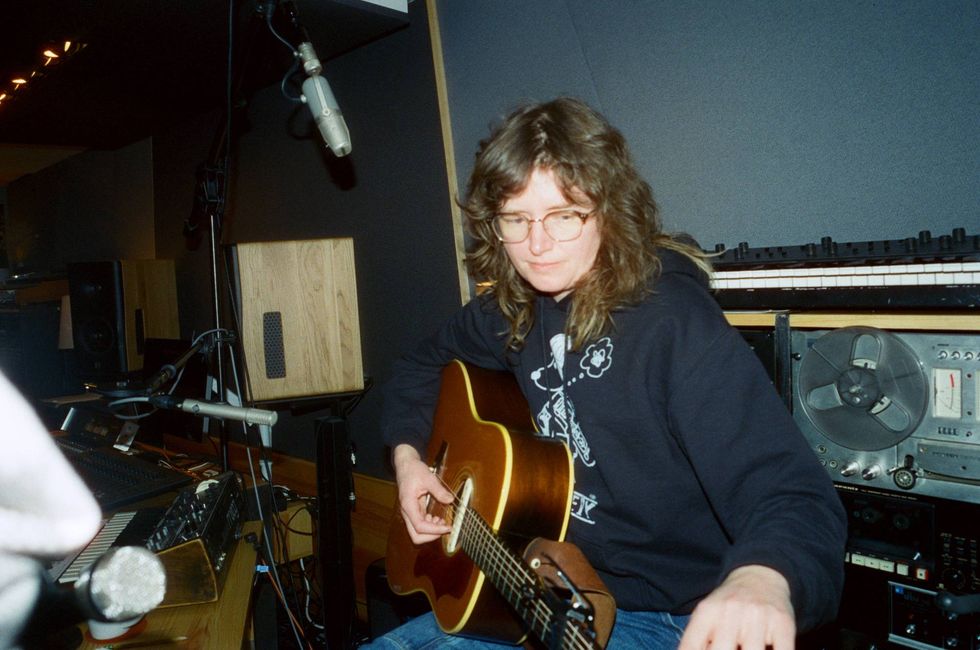
Cornfield and one of her most important collaborators: her late-’60s Gibson J-50.
Photo by Sara Melvin
Weinrobe’s gentle insights through the album’s nascent stages helped guide Cornfield’s writing and the curation of the tracklist. “I think the thing that was most helpful to me is how honest Phil was when there were things that he really liked,” Cornfield says. “He felt okay saying things like, ‘Well, when I was listening to that song, my mind drifted.’” Feedback from a trusted partner allowed Cornfield to cull the filler and draw out the essence of the album, “so that everything we did end up recording was something that [Phil] and I were really excited about.”
Among the albums referenced when envisioning Hurts Like Hell were Willis Alan Ramsey’s and Bobby Charles’ self-titled records, both from 1972. Drawn to the “live and loose” feel of those albums, Weinrobe planned accordingly for their studio time: “His approach is for the musicians to not hear a note of anything until day one of the session,” Cornfield explains. Arriving at Sugar Mountain studio in Brooklyn on a January day, Palehound’s El Kempner (guitar/vocals), Lake Street Dive’s Bridget Kearney (bass/vocals), Adam Brisbin (guitar/pedal steel), and Sean Mullins (drums) brought fresh ears and a blank slate.
“Having vocal mics next to guitar amps next to drums, it just created this world where it kind of sounds like one.”
Starting drum lessons at age 12, and eventually pursuing jazz drumming at Montreal’s Concordia University, Cornfield’s unique flow and rhythmic sensitivity are earned. Feist calls it “embedded tap-dancing”: the way ribbons of musicality unfurl through Cornfield’s distinctive meter. In the making of Hurts Like Hell, Weinrobe was attuned to this. “I have a rhythmic approach to songwriting, so [Phil] wanted to make sure we built a deep pocket,” Cornfield says. Hurts Like Hell inhabits a groove so accommodating and innate that, as if stepping off a boat onto dry land, the effect lingers in the body after the album is over.
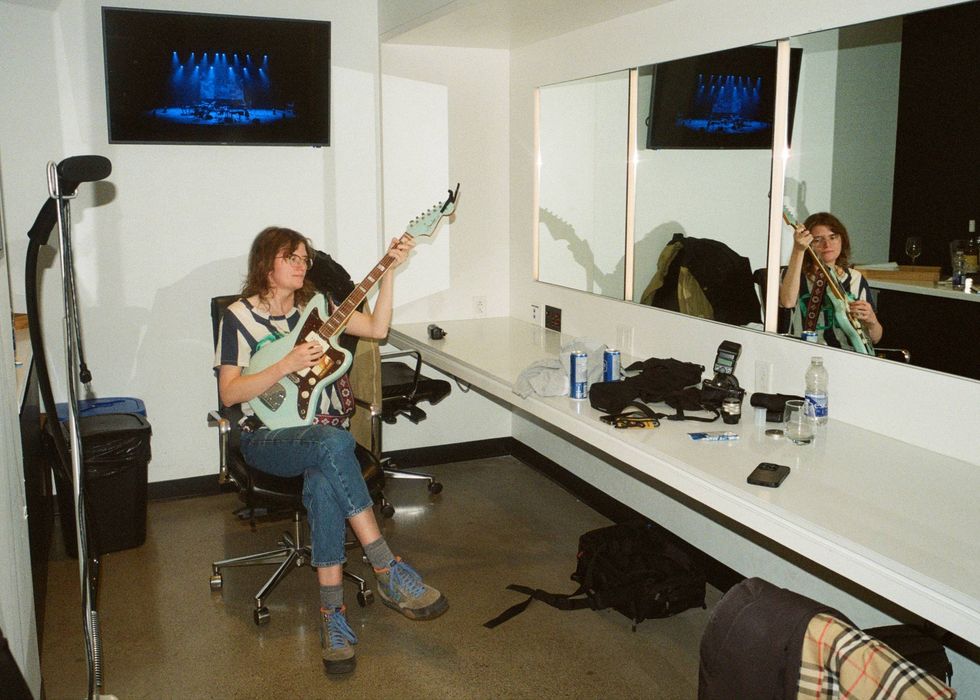
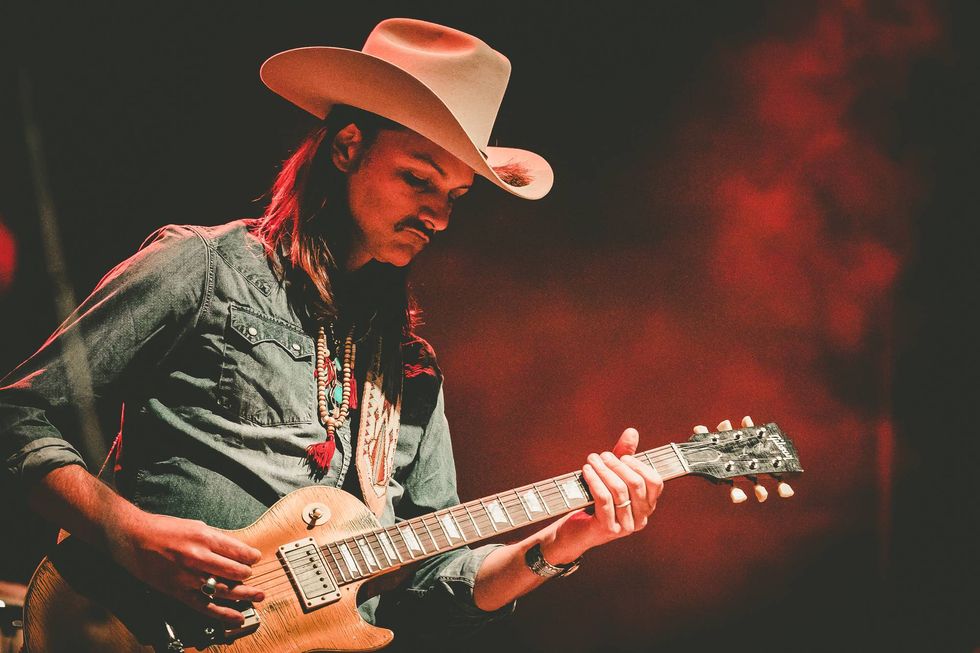
Backstage at Toronto’s Massey Hall, Cornfield warms up with her Fender Jazzmaster.
Photo by Sara Melvin
The collection was recorded live off the floor, without headphones. The band had to play at a volume where they could still hear each other in the room, Cornfield explains, “so the intensity is there everywhere [on the album], even if the volume wasn’t high.” Unorthodox though it may be, Weinrobe’s recording philosophy considers clean signal superfluous, and the result is a feeling that you are listening from within the instruments being played. “Having vocal mics next to guitar amps next to drums, it just created this world where it kind of sounds like one,” Cornfield says.
With the cohesion of the album front-loaded into the process, the musicians were free to play across a palette of genres and feels. Songs like “Hurts Like Hell” and “Number” have a country bent (Weinrobe suggested the addition of slide guitar, a note that pleasantly surprised Cornfield). Picking up the pace is “Lucky,” whose descending vocal melody and proggy, crunchy guitar solos over driving bass set the listener in motion. “Livin’ With It,” featuring Feist’s accompanying vocals, is a saccharine prod of an old bruise with a diabolically catchy chorus.
Leaning into the familiarity of her 1967 Gibson J-50, a trusty collaborator through the last 18 years of her career (“It’s been my baby this entire time … somehow I’ve managed to not get it stolen or messed up”), Cornfield allowed her instincts to take the lead. “I leaned into the guitar style that I’m confident with: playing rhythm chords on the acoustic with no pick, no open tunings, nothing fancy.”
“I leaned into the guitar style that I’m confident with: playing rhythm chords on the acoustic with no pick, no open tunings, nothing fancy.”
Parked in her wheelhouse, Cornfield could get out of the way and let the songs unfold. Often, this is the hardest thing to do. “In the past, I’ve challenged myself a bit instrumentally,” she says. “This time around, I found that living where I was comfortable was the best approach.” Minimizing complexity in her guitar playing freed Cornfield up to take more risks with her voice. “Phil pushed [my vocal range] higher and higher and higher,” she says with a laugh. “As we got higher, it drew out a different kind of emotionality”.
Throughout Cornfield’s back catalog, a tender objectivity accompanies deeply personal details, creating a detachment that sacrifices no poignance. On Hurts Like Hell, she flexes her storytelling to sketch characters outside of herself, coloring in their stories and their pain with her signature attention to detail. Her ability to conjure the interiority of the anxiety-riddled characters in the album’s title track or a washed-up frontman in “Lost Leader” betrays a devotional attention to the human condition.
Charlotte Cornfield’s Gear
Guitars
1967 Gibson J-50
2018 Fender Jazzmaster
Amp
2020 Fender Princeton Reverb
Effect
TC Electronic Spark Booster
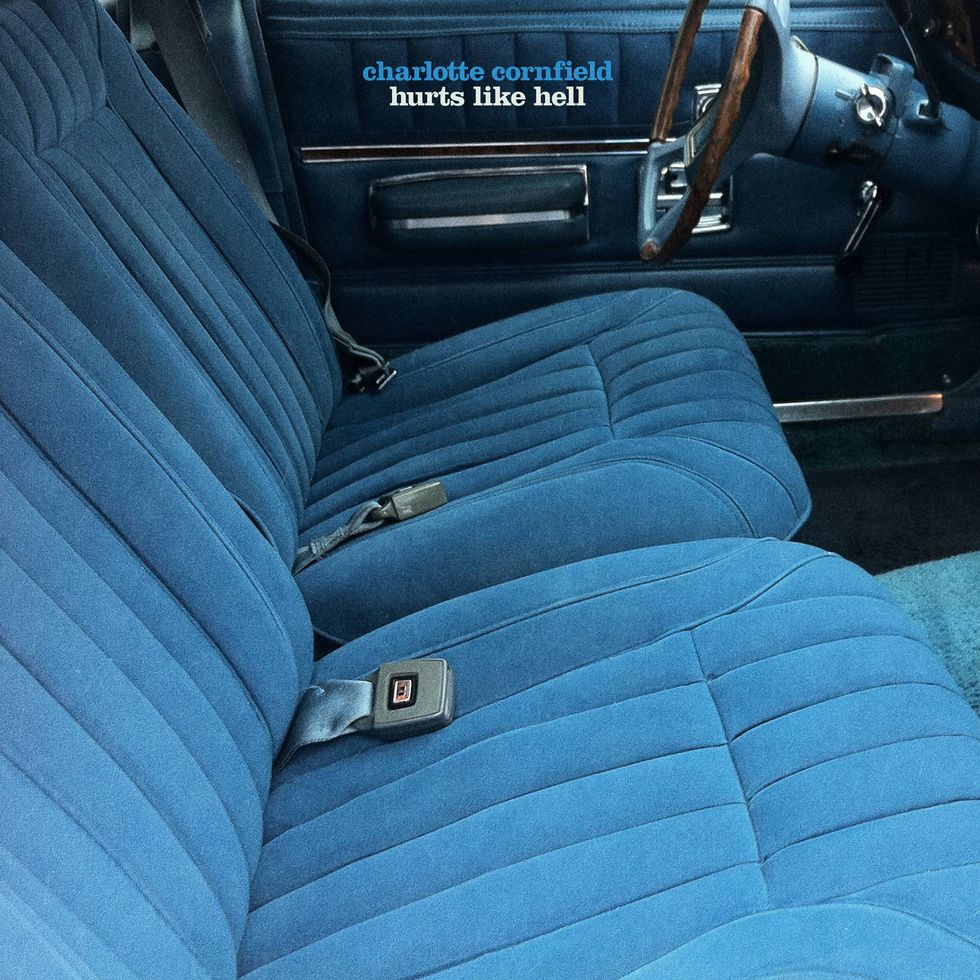
Hurts Like Hell is Cornfield’s sixth full-length record, and her debut for Merge.
Ever observant, tender, and curious, Cornfield mines the subtleties of maturation in this latest work. References to coming of age in the music industry pepper Hurts Like Hell, “because that’s been the backdrop to my whole life”, Cornfield explains. “Through the process of writing this record, I realized how formative those experiences were for me: coming of age in Montreal and New York, and learning the hard way.”
The lyrics in “Long Game” stream like sap from a maple in spring, Cornfield’s tree of years as a working musician, tapped and proffering. “I was still having fun / Worshipped my idols, and wanted to be one,” she reflects in the song. Realism about the industry’s harsher sides is scaffolded with empathy rather than cynicism: “Coming out of it unscathed was impossible / I changed, wasn’t mystified in the same ways, anymore.” Cornfield’s perspective in the song is of someone on the outside looking in, arms extended towards past versions of herself.
In the past, Cornfield has used songwriting as a portal through which to transmute and process difficult experiences in real time. Having reached a limit of what she wanted to write from her own perspective, Cornfield began searching further afield. “For the last number of years, I’ve been in such a stable place in my life that I felt like I needed to pull from other things for this record,” she says. Finding herself sucked into TV shows, books, and stories, Cornfield looked around and found no shortage of inspiration from other people: these endlessly endeavouring, failing, growing creatures, many of them just like young children.
“I also attribute some of the perspective shift to becoming a parent … I think that experience has pulled me out of myself a little bit,” she says. Shepherding a new life through the world rarely fails to recontextualize a person’s sense of self. Not only did the birth of her daughter free her up to play and create with more ease, Cornfield noted that she feels less pressure than before to fit any particular mold with her music.
What is the feeling that comes to Cornfield now, in her Toronto home with her partner and three-year-old daughter, at the finish line of her sixth album and looking back on all the versions who worked so hard to get there? After a thoughtful pause, she offers with earned certainty: “Yeah … it’s acceptance. Acceptance of the path, the journey, the hard things, the slog at times, the painful experiences.”
The wider the net a songwriter casts for subject matter, the more personal the work becomes, by virtue of what is deemed worthy of inclusion. Through stories both intimate and external, we glimpse the heart of the artist. In reaching outwards, Charlotte Cornfield brings us closer to her.