
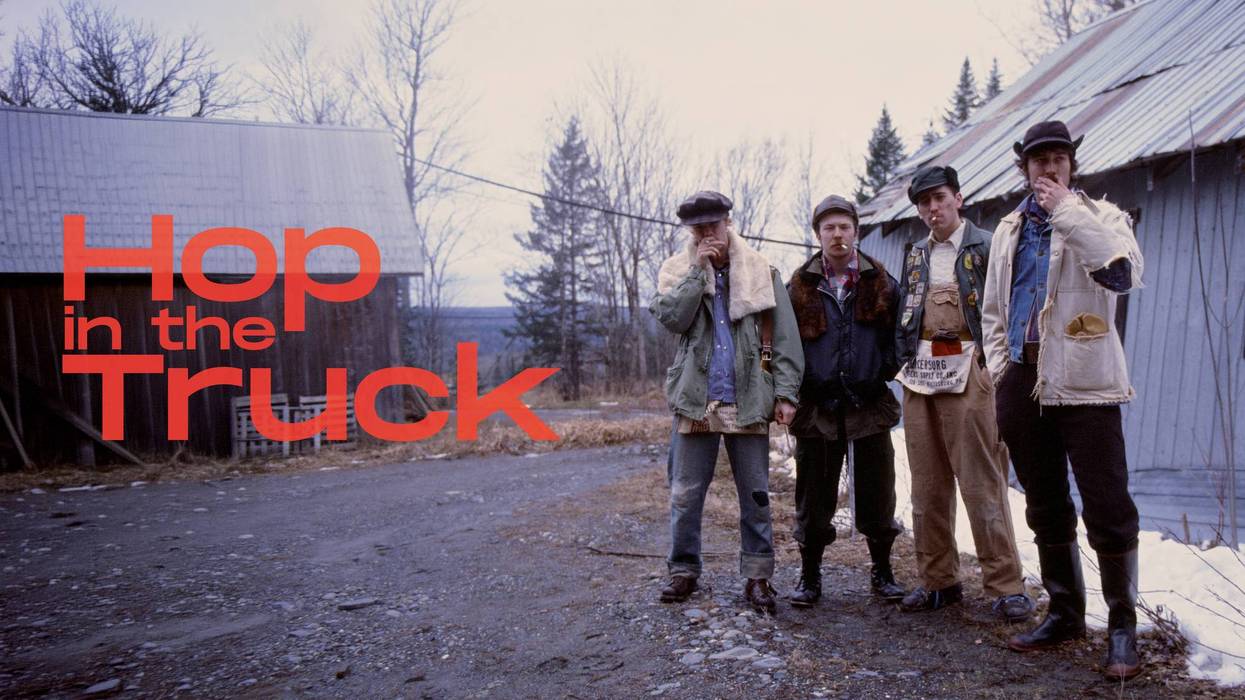

You can’t throw a rock in Montreal these days without hitting someone who plays in a hardcore band. The city’s hardcore-punk scene—and especially its DIY segment—is thriving in an era where venues are closing and the cost of living is skyrocketing. That’s in part thanks to a built-in focus on all-ages shows, makeshift stages, and self-directed, budget-friendly operations. Bands like Béton Armé, Puffer, Faze, and Spite House are all enjoying international breakouts after years of grinding out the Quebec DIY circuit.
Spearheading the younger element of this local surge are Truck Violence, an alternative-hardcore outfit composed of vocalist Karsyn Henderson, guitarist Paul Lecours, bassist Chris Clegg, and drummer Thomas Hart. Their 2024 debut record, Violence, earned them a glowing review at Pitchfork—a sign that their music was reaching far beyond local borders. More importantly, it helped them cement a position in the broader scene as a band with freer ideas about how to make heavy music. There were scraps of folk and bluegrass crudely stitched into noise and sludge-metal compositions, or vice versa. Henderson’s vocals were confrontational and unsettling, introducing him as a rural Albertan counterpart to Chat Pile vocalist Raygun Busch. Clegg and Lecours played with tones that felt rusted and decayed—unsurprisingly popular aesthetics amongst a generation born into climate catastrophe, endless wars, corporate welfare, and crumbling infrastructure.
In April, Truck Violence played the 2026 edition of prestigious heavy-music fest Roadburn in Netherlands—another major coup. This summer, the band will release their second LP, The weathervane is my body, via Mothland and outsider-metal institution The Flenser (Chat Pile will now be their label mates). The board is set for Truck Violence to have a very good year.
weathervane is a more refined collection than its predecessor, with a noticeably clearer mix and sonic environment, which is unsurprising given that their debut was recorded in the band’s apartment. Henderson wretches and growls to start the record under a nervous spiral of a riff that eventually goes major-key in what feels like a mud-smeared chorus. “Jaundiced and reaching for a mother” blasts in on a nu-metal groove that devolves into a half-time noise-rock churn, accented with Lecours’ pinch harmonics. A simple banjo and acoustic guitar waltz carry the lo-fi, bedroom-indie cut “House caught fire”; later, “Gerard, be quiet” adds whining slide leads to the mix. None of this is particularly radical, but there’s a sense of freedom and a spirit of experimentalism that courses through these songs, and that sets them apart from the pack. We live in weird, disturbing times—people need weird, disturbing music.
“The alternative scene that we’re playing in tends to be younger, and a lot less people have established careers and a big source of income, so it gives this drive of, ‘We’ve got to find a way to get this album out.’”—Paul Lecours
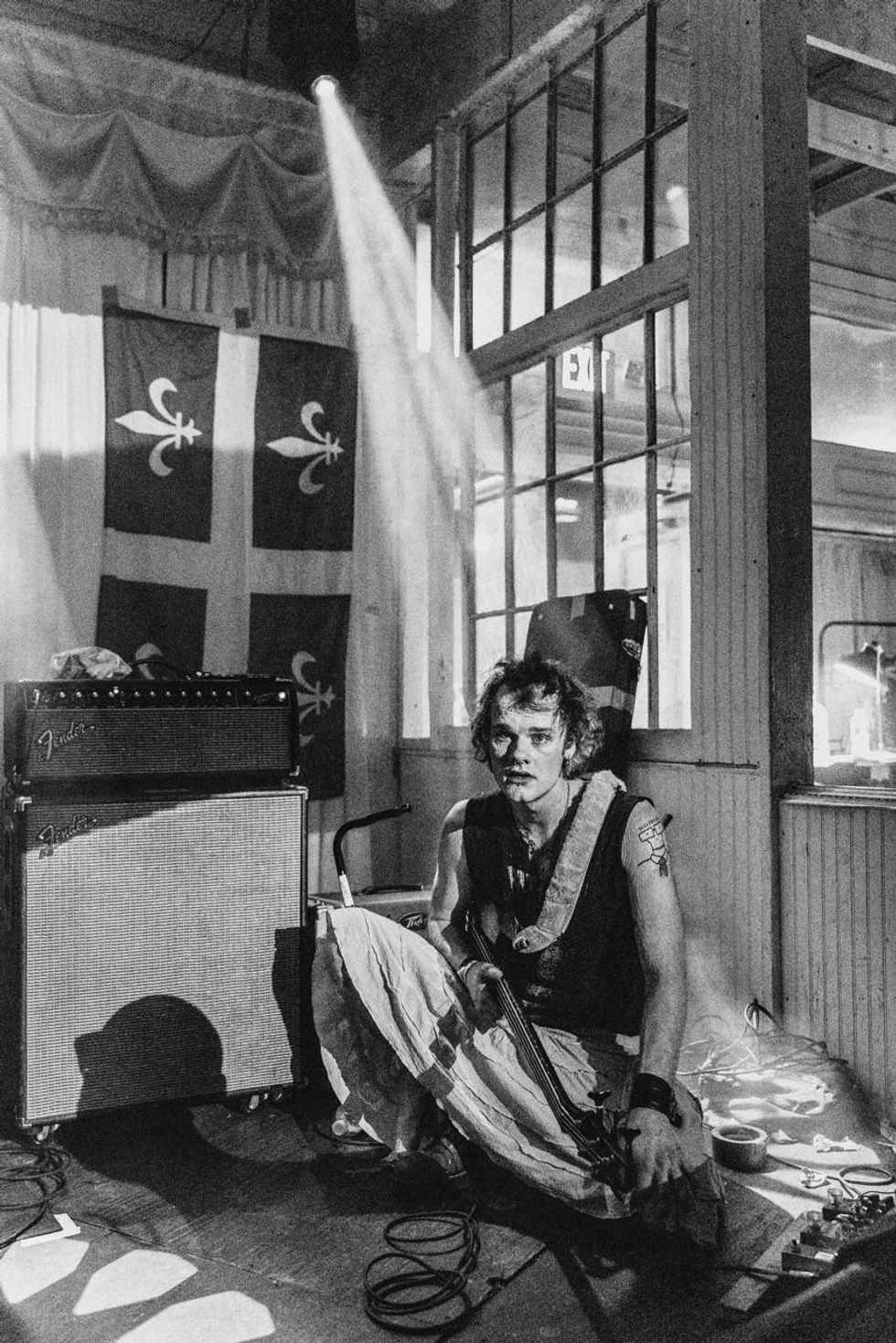
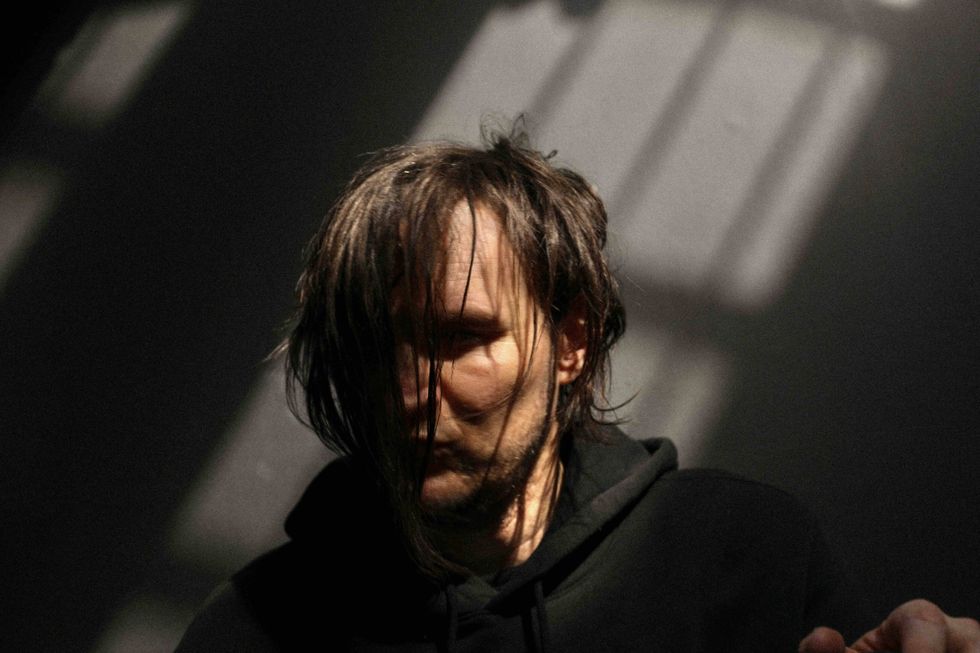
Chris Clegg, bathed in light
Photo by Nicole Miller
Chris Clegg's Gear
Basses & Guitar
- Yamaha RBX6JM2 6-string bass
- Ibanez SR505 (used to record both Violence and the Weathervane)
- Hagstrom custom acoustic guitar
Effects
- MXR Bass distortion
- Joyo Dyna Compressor
- TC Electronic Polytune
- Line 6 DL4 MK1
- Small plank of wood with pedal tape as a pedalboard
Amp
- Quilter Bass block head
- Eden 4x10 cab
Strings, Picks, Etc.
- Dunlop Tortex triangle pick .73mm
- Nickel Wound Long Scale Slinky 6 String Bass Strings
- Cheapest possible instrument cables because they always break anyways
- Duct tape
- Altoids tin (to store picks)
Truck Violence made the new record at Clegg’s father’s home studio in Mont St-Hilaire, Québec, with Lecours engineering and producing on gear rented from Long & McQuade; Lecours also put together a pre-mix to help he and his bandmates zero in on a feel for each track. The band’s success with this approach is testament to the fact that you can still do these things yourself (with, admittedly, a little help from your parents—a dynamic many musicians benefit from, few of whom have the integrity to discuss it). The end result might not be perfect, but it can be good enough—and it can be really, honestly yours. “You just take time to get something that sounds good,” Lecours says with a shrug. “It’s nothing crazy. I’ve only learned off of YouTube and Google.
“I don’t think anybody in Montreal, if you’re in your early 20s, actually has money to go to a professional studio,” Lecours continues. “The alternative scene that we’re playing in right now tends to be younger, and a lot less people have established careers and a big source of income, so it gives this drive of, ‘We’ve got to find a way to get this album out.’”
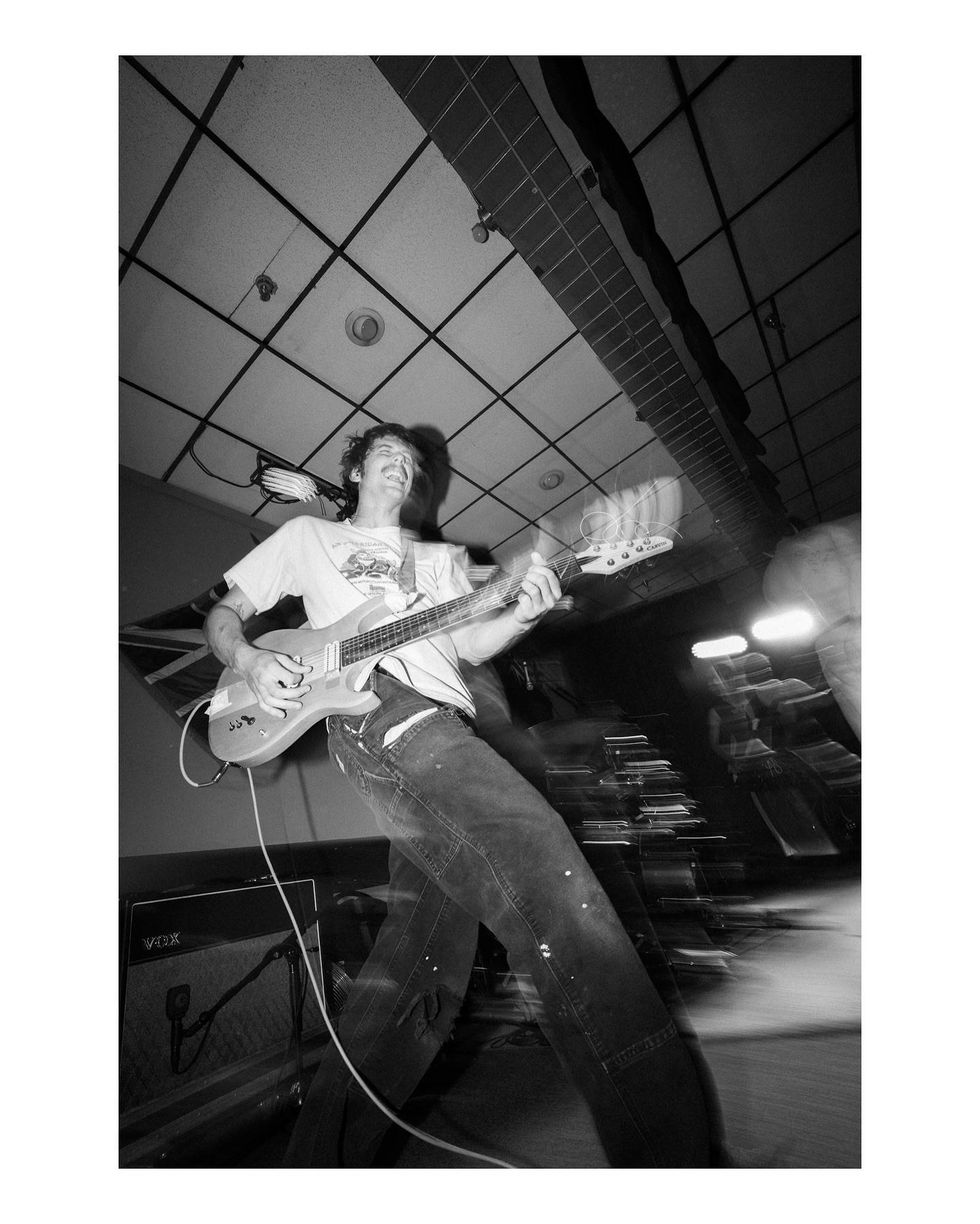
Lecours and his Carvin DC747
Photo by Nicole Miller
Paul Lecours' Gear
Guitars & Banjo
- PRS SE 7-string (w/ Bare Knuckle Juggernaut pickup)
- Carvin DC747
- Gold Tone CC-50TR Cripple Creek Open-back 5-string Banjo
Effects
- Peterson StroboStomp Mini tuner
- DemonFX Dualgun Overdrive
- Eventide TimeFactor delay
- Boss RV‑200 Reverb
- Saturnworks Active 2‑Channel Mixer
- SanDisk MP3 player
- JHS Pedals Mute Switch
- Homemade pedalboard so it fits in my backpack
Amp
- Mesa/Boogie Mark V
- Old Crate 4x12 with Celestion Vintage 30s
Strings & Picks
- D’Addario EXL110-7
- Random D’Addario picks
“We’re all very motivated people that really want to get things done, and do it the way we see it,” says Clegg. “That doesn’t mean not relying on other people when you need the help. Just because you’re doing it yourself doesn’t mean you have to do it alone.” Relying on tried-and-true DIY band-operation techniques has its advantages, too. Clegg and Lecours note that if a label were bankrolling their studio time, there would be strict parameters on how much time was available to work on certain elements of the record. Working outside of those supports and constraints gives them the ability to tweak and tinker as much as the work demands.
Lecours met vocalist Henderson in high school in Lac La Biche, Alberta, a small oil-patch town, where they formed a metalcore band that eventually evolved into what Lecours calls “death-metal indie-fusion.” When they moved to Montreal in 2020, they began an experimental electronic project before finally settling into Truck Violence. Lecours brought his love for Norwegian death-metal outfit Obliteration and American prog-metal icons Periphery to the mix. Clegg grew up listening to his dad jam grunge songs with his friends before falling in love with lo-fi acoustic acts like Eliott Smith; now, Quebec’s always-booming folk-punk and trash-folk communities feel like home. For bass playing, though, Clegg looked south: Florida prog-metal bands Cynic and Death (in particular the latter’s 1993 record Individual Thought Patterns) were pivotal creative texts.
“Just because you’re doing it yourself doesn’t mean you have to do it alone.”—Chris Clegg
Clegg uses a 6-string Yamaha John Myung Bongo bass, paired with an MXR Bass Distortion and Quilter Bass Block for live performances; for weathervane, most of the bass was tracked DI. Lecours uses a PRS 7-string with a Bare Knuckle humbucker in it that he bought at 15. He’s reglued the neck joint four times in the wake of bending accidents, but it’s still going strong. The PRS runs into his Mesa/Boogie Mark V head, and he says the key to his live sound is an Eventide TimeFactor delay—he manipulates the TimeFactor and his Boss RV-200 on the fly with his feet. Lecours only recently picked up the banjo, which has made its way onto both of Truck Violence’s releases. At this point, it’s a textural flourish that Lecours plays like a guitar, but he’s interested in learning claw-hammer technique. “Maybe for the third album, I’ll be shredding bluegrass,” he says with a grin.
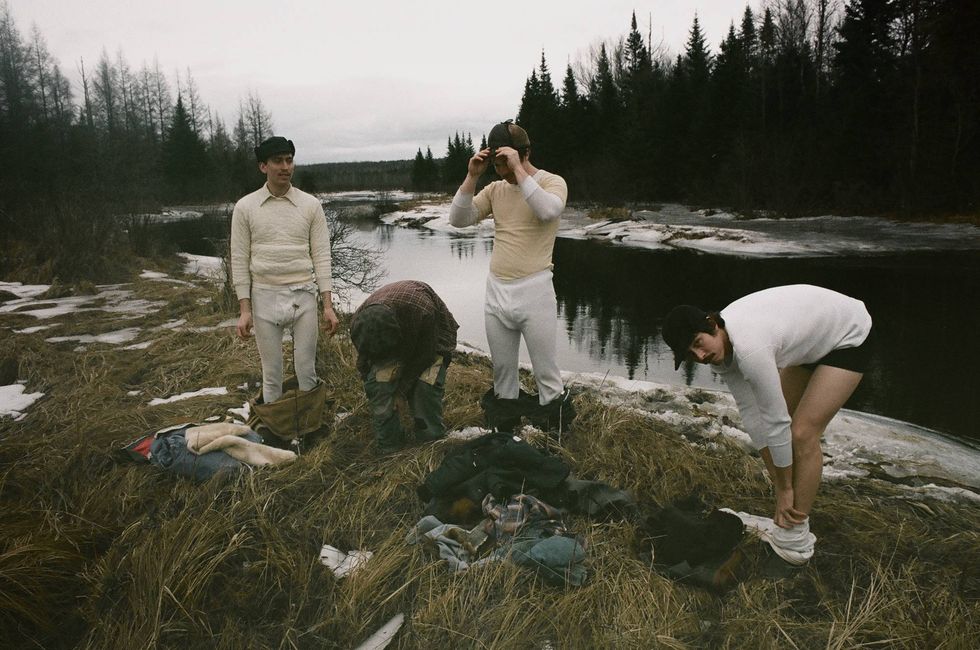
Photo by Matthew Van Dystadt-Aguiar
Onstage is where Truck Violence hit the hardest, and for all the sound systems you could see them play through, the best might be a PA run by a gas generator, under a bridge or on a tucked-away patch of underused public land. In Montreal, outdoor show hotspots are constantly being shut down, and Truck Violence and other DIY acts are one step ahead, scouting new places for all-ages, pay-what-you-can outdoor gigs. For Lecours, the game of Whack-A-Mole is invigorating. “You’re going to have a thirst, almost a need, for those spaces once you know that they’re possible,” he says. “They’re gonna open, they’re gonna close. We’re lucky we found another spot that we’ve been throwing shows at, and we’re definitely gonna do shows this summer outdoors.”