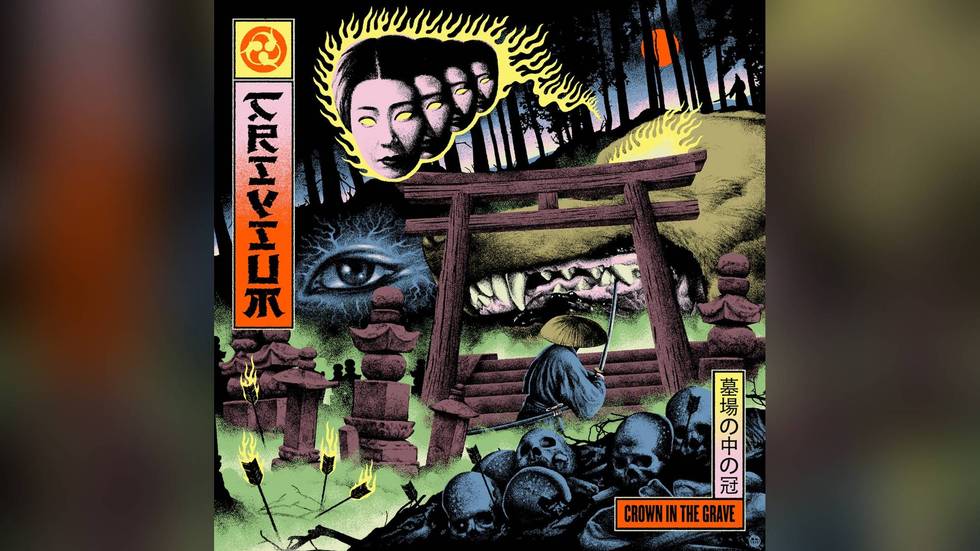
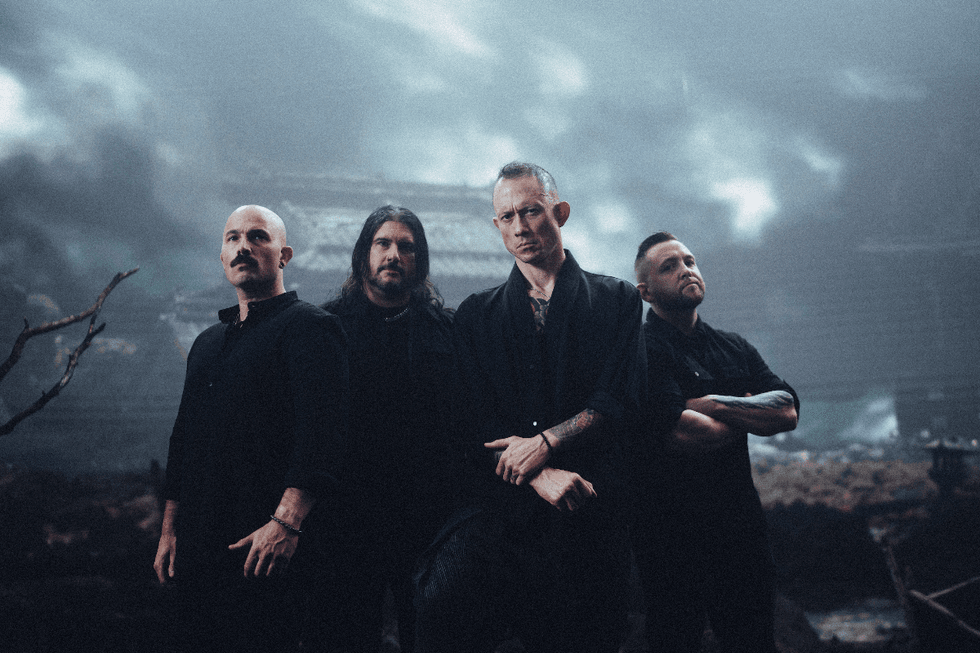
GRAMMY-nominated heavyweights Trivium—vocalist/guitarist Matthew K. Heafy; guitarist Corey Beaulieu; bassist Paolo Gregoletto; and drummer ALEX RÜDINGER—are thrilled to announce their new album Crown in the Grave. It arrives November 20 through Roadrunner Records. Pre-order it here.
Trivium today share the title track, which builds from a gradual progression of layered riffs into an explosive wall of metal, pairing crushing heaviness with the precision, melody, and technical firepower that have defined the band for more than two decades. The song is vintage Trivium—galloping riffs, robust solos, and battering ram percussion, seamlessly sewn together with three-tiered vocals. But like the rest of the album, it stays true to the band's signature sound, all the while pushing it further into new sonic terrain.
The accompanying, Japanese Noh theater-inspired, post-apocalyptic music video brings the album's artwork and themes into a smoke-filled dojo, where the main characters prepare for an impending showdown through a series of tense, atmospheric sequences. Drawing on the band's longtime passion for classic Japanese theater and martial arts, the visual captures the discipline, drama, and focused physicality at the heart of the song's storytelling.
Watch the video, directed by Pavel Trebukhin, here .
"Crown In The Grave is our eleventh record, and when you get this far into a career, it’s easy to rest on what you've already done—or to reinvent yourself just for the sake of it," says Gregoletto. "With this record, we wanted to find the space between those two things: Take everything we've learned and everything that makes Trivium what it is, but present it in ways we hadn't before."
He continues, "We also wanted the record to exist within its own world. That began with the title track, inspired by Akira Kurosawa's Throne of Blood, and led us deeper into Japanese horror and cinema from the '50s, '60s, and '70s. That influence grew into this darker, ghostly atmosphere that became a set of guardrails for the music, lyrics, artwork, and overall identity of the record."
The bassist finishes, "We built our studio so we could give ourselves the time and space to figure out exactly what an eleventh Trivium record should be, and Crown In The Grave is the answer we arrived at. It honors where we’ve been without living in the past, and pushes into new territory without abandoning what makes us Trivium. I think when you hear it, it'll somehow feel both new and like a return."
After over two decades in the spotlight, Trivium have realized their collective potential like never before. They have absorbed the wisdom gained through writing hundreds of songs, the experience derived from playing thousands of shows, and the fire maintained by never giving up and perfected their signature sound at the highest level. The riffs crunch and crack bones, solos burst into flames upon impact, screams bleed truth without filter, and towering hooks break through the clouds. This is Trivium confidently reborn as the beast they were meant to be.
"Facing yourself is the final quest," Heafy observes. "We had to do it as a band, and I had to do it in my personal life. I freed my mind from the constraints of being worried. I made a decision to just sing."
A perfect storm of mental health struggles, physical injuries, and intense anxiety brought him to a crossroads. Bravely, he chose to embrace therapy, found an appropriate medication regimen, and reframed his mindset. "I cleared the plate," the frontman admits. "I stopped trying to be safe and perfect at every show. Instead, I was actually enjoying the experience and living. If I messed up, it was okay because I'm human. With all of the changes Trivium went through, it's like a brand new band."
For the first time, the group crafted Crown In The Grave in their own creative hub and de facto clubhouse—The Hangar—in Orlando. Plus, they officially welcomed drummer Alex Rüdinger (Rüdi) in the studio. During 2015, the drummer nearly joined Trivium, but opted to focus on other endeavors. A decade later, he heeded the call. "It happened when it was meant to," Heafy declares. "Rüdi didn't just kill it on the drums; his contributions as a writer made a huge difference."
Reteaming with longtime producer Josh Wilbur [Korn, Lamb of God] and working with mixer Jacob Hansen [Volbeat, Amon Amarth] for the first time, the musicians rallied around a shared vision. "We took all of the elements of Trivium, honed in on them, and focused on writing songs with big riffs and big hooks,” notes Beaulieu. "We made the record we'd been dying to make. The late great Shaun Glass [Soil] was a big Trivium fan. He'd always say, "You guys don't cook the same meal.' Even though we use the same ingredients, we always make a new dish."
"Any band who has been around this long starts to ask: Where do we go from here?" says Gregoletto. "We decided to challenge ourselves to top everything we've done. We referenced a lot of '90s albums. If you look at The Black Album by Metallica, Countdown To Extinction by Megadeth, or Superunknown by Soundgarden, the choruses are so important, and the songs are relatable. That's what we strived for."
Thematically, Akira Kurosawa's Throne of Blood served as a north star. Gregoletto brought the film to the group’s attention. "Kurosawa took Macbeth and set it in a feudal Japan," the bassist elaborates. "There's minimal dialogue, yet the storyline is powerful. There are these haunting elements of being tempted by fate and this man's downfall."
Trivium will hit the road on November 5 in St. Petersburg, Florida and run through December 19 in Charlotte, North Carolina for a North American headline run with In Flames, Orbit Culture, Fit for an Autopsy, and Frozen Soul in tow. It is a truly stacked lineup that cannot and should not be missed. Get tickets here .
"This fall's Trivium tour is a huge one for us," the band declared upon announcing the tour earlier this year. "The lineup is stacked from top to bottom, and we're honored to have special guests In Flames, who not only influenced our early years but continue to prove time and again why they're one of the greatest metal bands of all time. With Orbit Culture, Fit For An Autopsy, and Frozen Soul rounding out the bill, we can't wait to get out there, kick off this next era of Trivium with Rudi behind the kit, and give you a taste of the new music we've been working on. We'll see you soon!"
Trivium ON TOUR: WITH IN FLAMES, ORBIT CULTURE, FIT FOR AN AUTOPSY, AND FROZEN SOUL:
11/5 — St. Petersburg, FL — Jannus Live
11/6 — Atlanta, GA — The Eastern
11/7 — Louisville, KY — Old Forester’s Paristown Hall
11/8 — Grand Rapids, MI — GLC Live at 20 Monroe
11/10 — Silver Spring, MD — The Fillmore
11/11 — New Haven, CT — College Street Music Hall
11/12 — New York, NY — Terminal 5
11/14 — Philadelphia, PA — Franklin Music Hall
11/15 — Worcester, MA — The Palladium
11/17 — Laval, QC — Place Bell
11/18 — Toronto, ON — GCT Theatre
11/20 — Royal Oak, MI — Royal Oak Music Theatre
11/21 — Chicago, IL — Aragon Ballroom
11/22 — Madison, WI — The Sylvee
11/24 — Nashville, TN — The Pinnacle
11/25 — Chesterfield, MO — The Factory at The District
11/27 — San Antonio, TX — Boeing Center at Tech Port
11/28 — Houston, TX — Bayou Music Center
11/29 — Dallas, TX — South Side Ballroom
12/2 — Phoenix, AZ — Arizona Financial Theatre
12/3 — Las Vegas, NV — The Pearl
12/4 — Inglewood, CA — YouTube Theater
12/5 — San Francisco, CA — The Masonic
12/7 — Penticton, BC — Penticton Trade & Convention Centre
12/8 — Vancouver, BC — Doug Mitchell Thunderbird Sports Centre
12/9 — Seattle, WA — Paramount Theatre
12/11 — Reno, NV — Grand Sierra Resort — Grand Theatre
12/13 — Denver, CO — Mission Ballroom
12/15 — Tulsa, OK — Tulsa Theatre
12/16 — Omaha, NE — Steelhouse
12/18 — Pittsburgh, PA — Citizen's Live at The Wylie
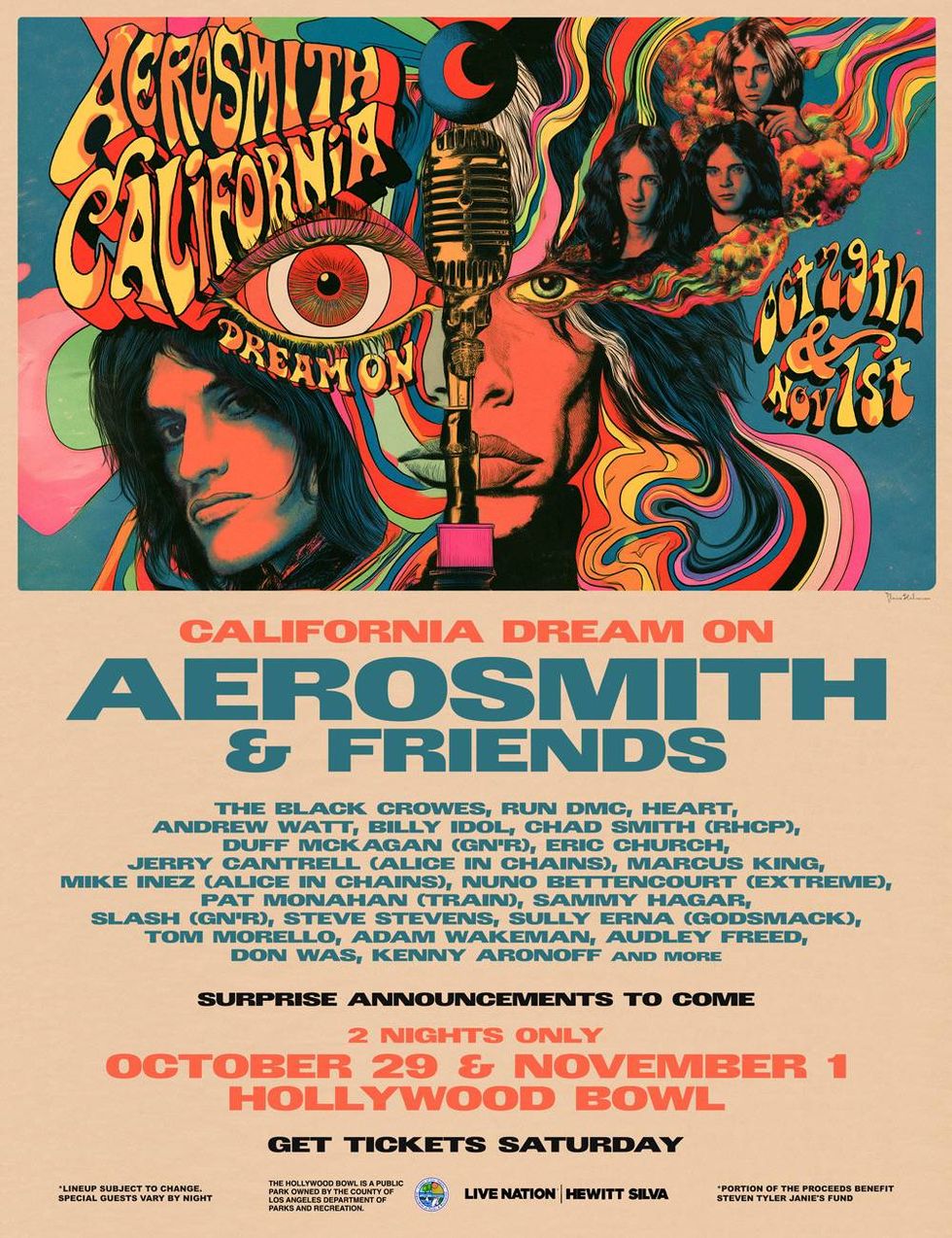
Live Nation-Hewitt Silva and Blackbird Presents today announce California, Dream On: Aerosmith & Friends, a monumental concert celebration honoring the unmatched history, explosive live performance and enduring legacy of America’s Greatest Rock Band. This historic event will take over the Hollywood Bowl in Los Angeles, California for two unforgettable high-octane nights on October 29 and November 1, 2026.
For more than five decades, Aerosmith has defined the sound, raw spirit, and rebellious attitude of American rock & roll. From their Boston breakout to the Super Bowl, the band epitomizes the rock ‘n roll dream come true. Now, in a triumphant and highly anticipated return, the legendary rock titans will command the stage together again. This monumental event will celebrate the band’s extraordinary career, timeless catalog, and unparalleled global influence alongside a staggering lineup of fellow legendary artists.
This epic celebration has the star power that only Aerosmith can deliver, bringing together an electrifying, cross-genre lineup of superstars, each a defining force in their field. Spanning rock, country, hip-hop, and alternative music, the lineup features The Black Crowes, RUN DMC, Heart, Andrew Watt, Billy Idol, Chad Smith (RHCP), Duff McKagan (GN’R), Eric Church, Jerry Cantrell (Alice in Chains), Marcus King, Mike Inez (Alice In Chains), Nuno Bettencourt (Extreme), Pat Monahan (Train), Sammy Hagar, Slash (GN’R), Steve Stevens, Sully Erna (Godsmack), Tom Morello, Adam Wakeman, Audley Freed, Kenny Aronoff and more, all anchored by the legendary Don Was serving as Music Director. This stellar roster brings together iconic artists who have previously performed or recorded with Aerosmith and a new wave of stars who cite the band among their ultimate musical influences. Even more artists, special guests, and surprise appearances will be announced in the weeks ahead, promising unforgettable collaborations and unexpected moments across both nights. The lineup will vary each night. Final nightly lineups will be announced at or near showtime and are subject to change.
From “Dream On,” “Sweet Emotion,” and “Walk This Way” to “Janie’s Got a Gun,” “Crazy,” “Cryin’,” and “I Don’t Want to Miss a Thing,” Aerosmith’s catalog has become a defining element of modern music culture, with an influence that extends across rock, pop, hip-hop, and blues. These highly anticipated performances will mark a return to the stage for Aerosmith, giving fans a rare opportunity to experience the band together once again and the unmistakable chemistry and stage presence that have defined their live shows for more than five decades.
Aerosmith are four-time Grammy Award winners, Rock and Roll Hall of Fame inductees, and MusiCares Person of the Year honorees, but those accolades tell only part of the story. Their enduring relevance is reflected in the milestones they continue to shatter, with the band among the only groups to score Top 10 Billboard 200 albums across six consecutive decades, while helping shape new generations of boundary-pushing artists who cite Aerosmith as their musical inspiration. This historic event will honor the extraordinary journey and lasting impact that have made Aerosmith one of the most important, defining, and enduring bands in music history.
Citi cardmembers will have access to presale tickets beginning Thursday October 8th at 10am PDT until Friday October 9th at 10am PDT through the Citi Entertainment program. For complete presale details visitwww.citientertainment.com. Additional presales will run throughout the week ahead of the general on-sale beginning on Saturday October 10th at 10am PDT. Visit www.aerosmith.com for more information.
The shows will also offer a variety of different VIP upgrades and experiences for fans to take their concert experience to the next level. Upgrades vary but include access to the pre-show Aerosmith VIP Lounge, a limited-edition Aerosmith jacket, a specially designed VIP-exclusive T-shirt, early entry into the venue & more. VIP upgrade contents vary based on the offer selected. For more information, visit vipnation.com !
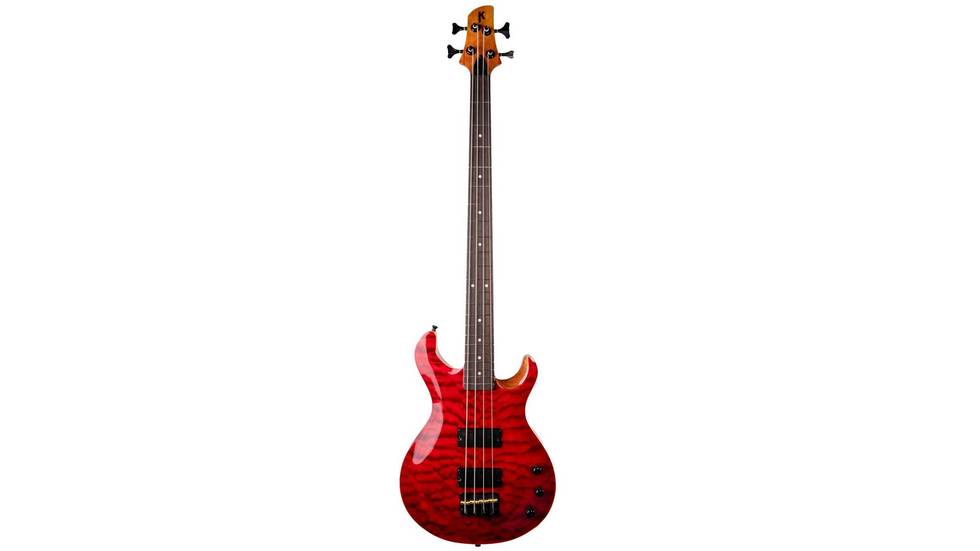
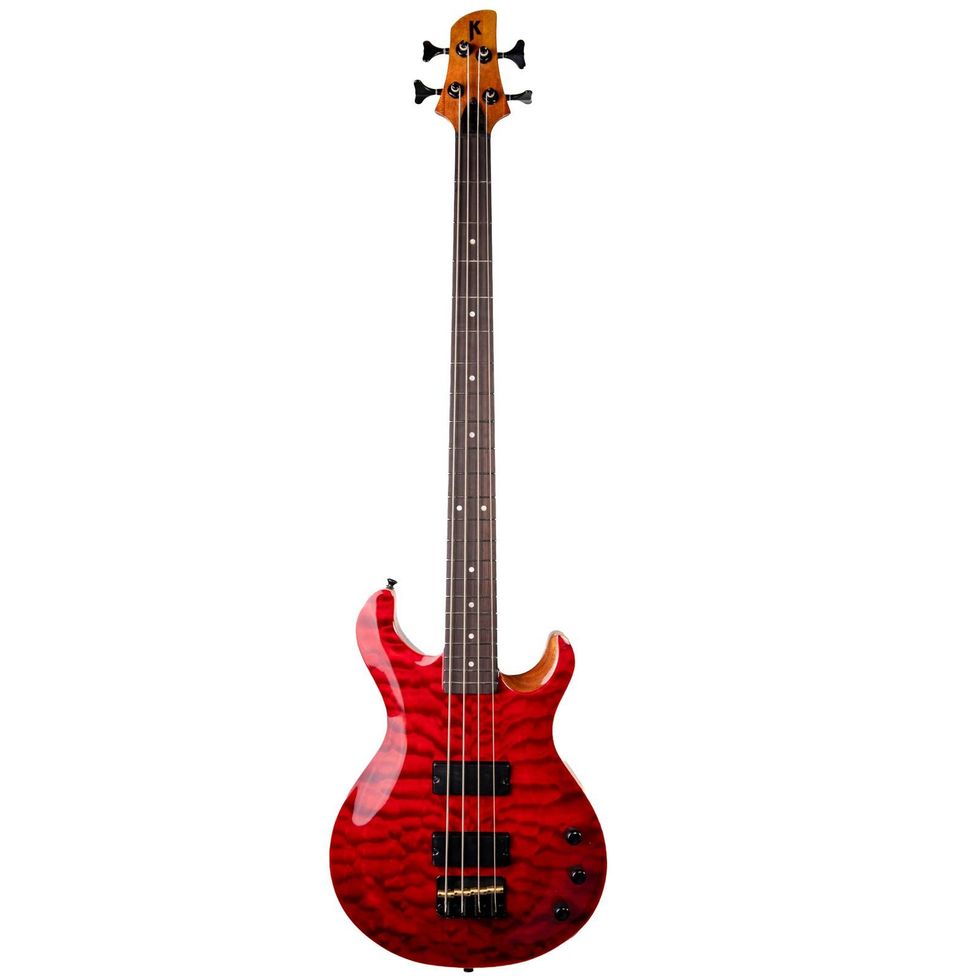
Kardinal Guitars has introduced the Kardinal Bass: a four-string electric bass designed to offer professional-grade tone at a very accessible price. Available for pre-order through November 20, 2026, the Kardinal Bass ships with a spec sheet that punches well above its $549 pre-order price.
The Kardinal Bass features a neck-through mahogany body design, delivering superior resonance and sustain compared to bolt-on alternatives, and its quilted maple top provides eye-grabbing appeal. It features a rosewood fretboard with a 12" radius and stainless steel frets.
At the heart of the Kardinal Bass are a pair of custom-wound dual-coil soapbar pickups loaded with Alnico V magnets, which deliver a warmer, fuller character than ceramic alternatives, with greater dynamic sensitivity and reduced string pull for improved sustain. The result is a passive bass that responds to how hard you dig in, cleans up when you back off, and sits in a mix without fighting for space. Full-size pots and a simple Vol/Tone/Blend layout keep everything player-focused and intuitive.
The Kardinal Bass is available in three launch colors: Cardinal Red, Sapphire Blue, and Midnight Black.
Kardinal Bass Key Features:
Neck-through mahogany body construction for enhanced resonance and sustain
The Kardinal Bass is available exclusively through kardinalguitars.com for $549. Pre-orders are open now through November 20, 2026.
Kardinal Guitars
Kardinal Bass
Kardinal Guitars has introduced the Kardinal Bass: a four-string electric bass designed to offer professional-grade tone at a very accessible price. Available for pre-order through November 20, 2026, the Kardinal Bass ships with a spec sheet that punches well above its $549 pre-order price.
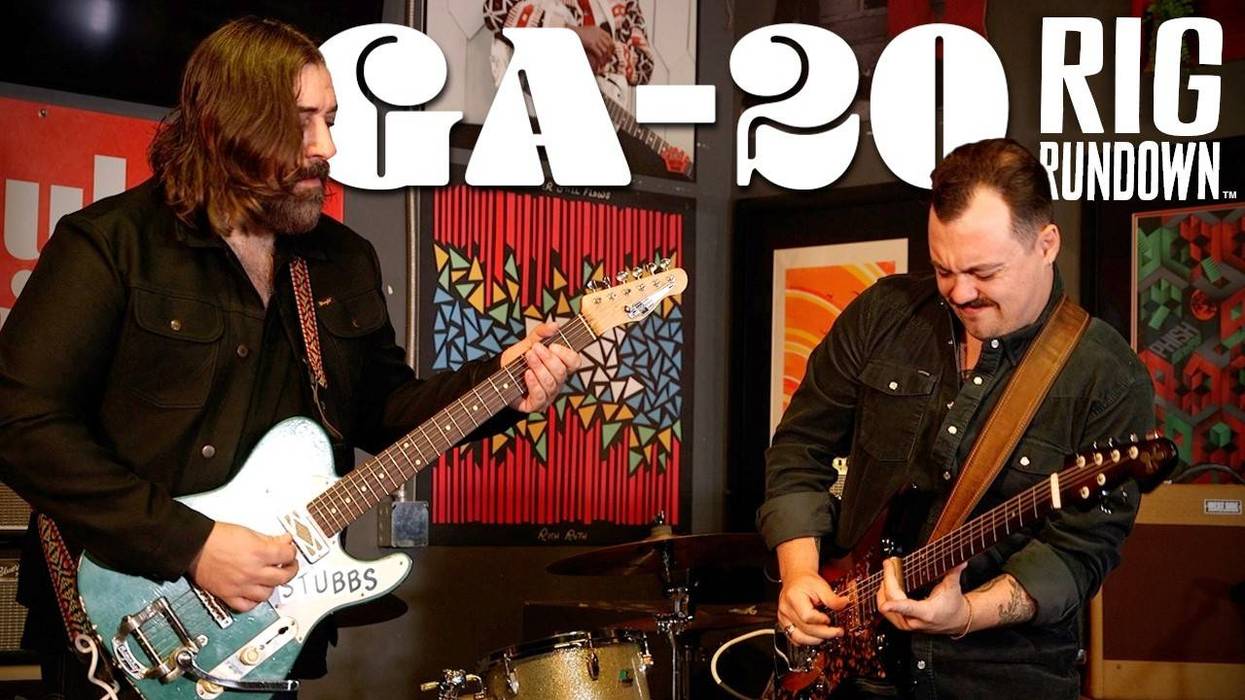
PG’s John Bohlinger met up with Cody Nilsen and Matt Stubbs of GA-20 at the Vinyl Tap in Nashville. The band takes its name from the Gibson GA-20, which they’ve now retired from the road—what’s left is two guitarists, no bassist, and a stack of amps that never get switched off. Have a look at some quick highlights below, and tune into the new Rig Rundown for all the details.
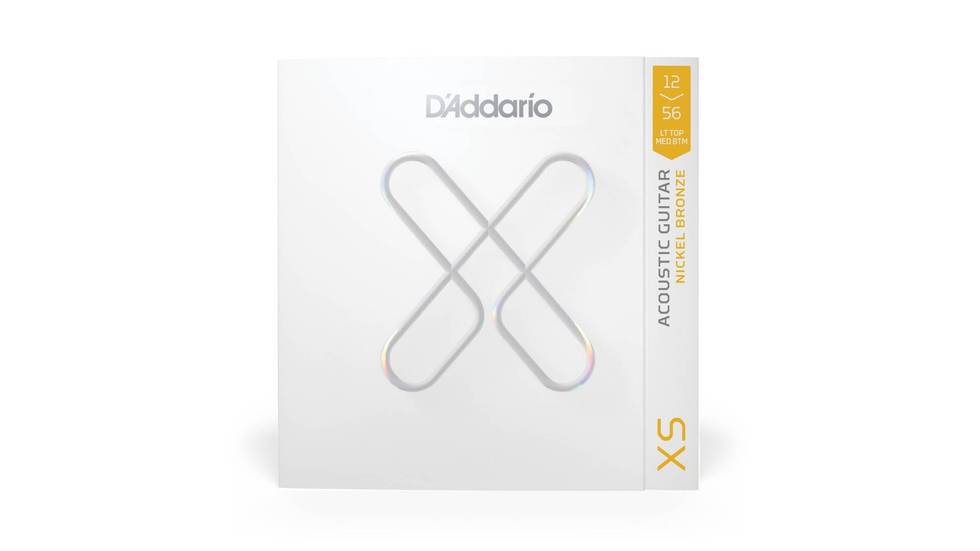
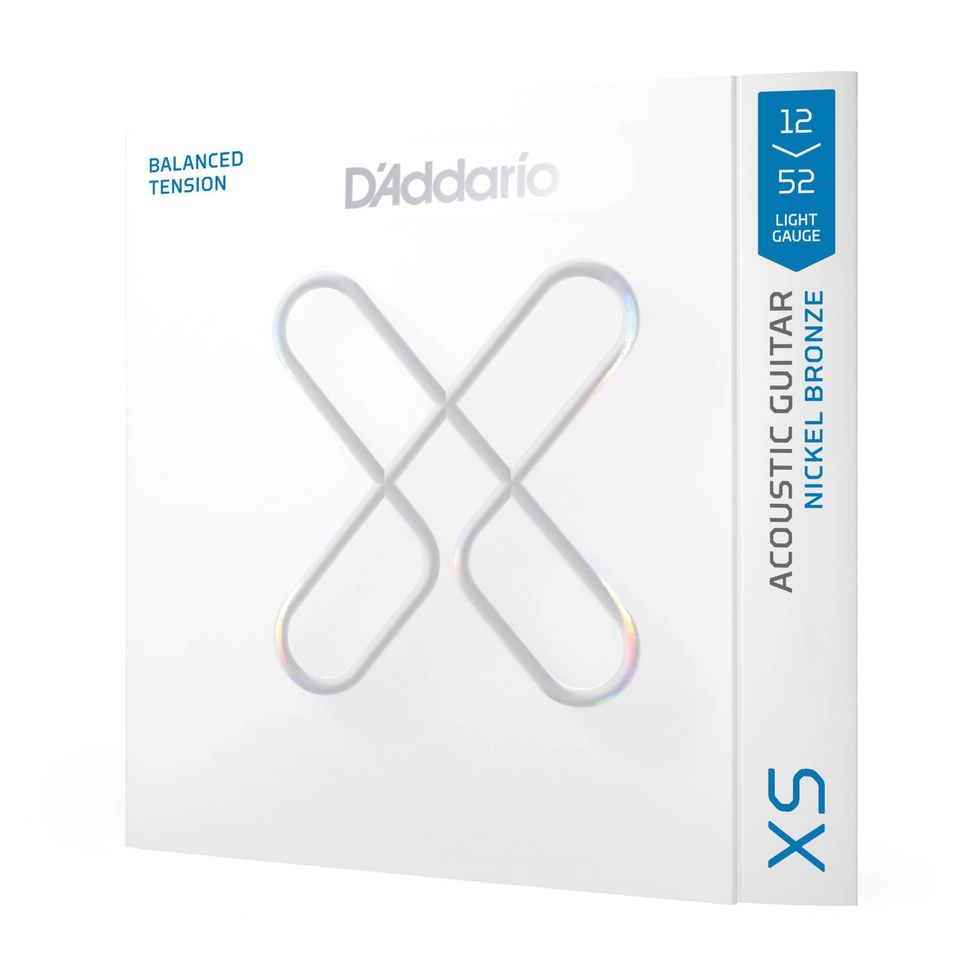
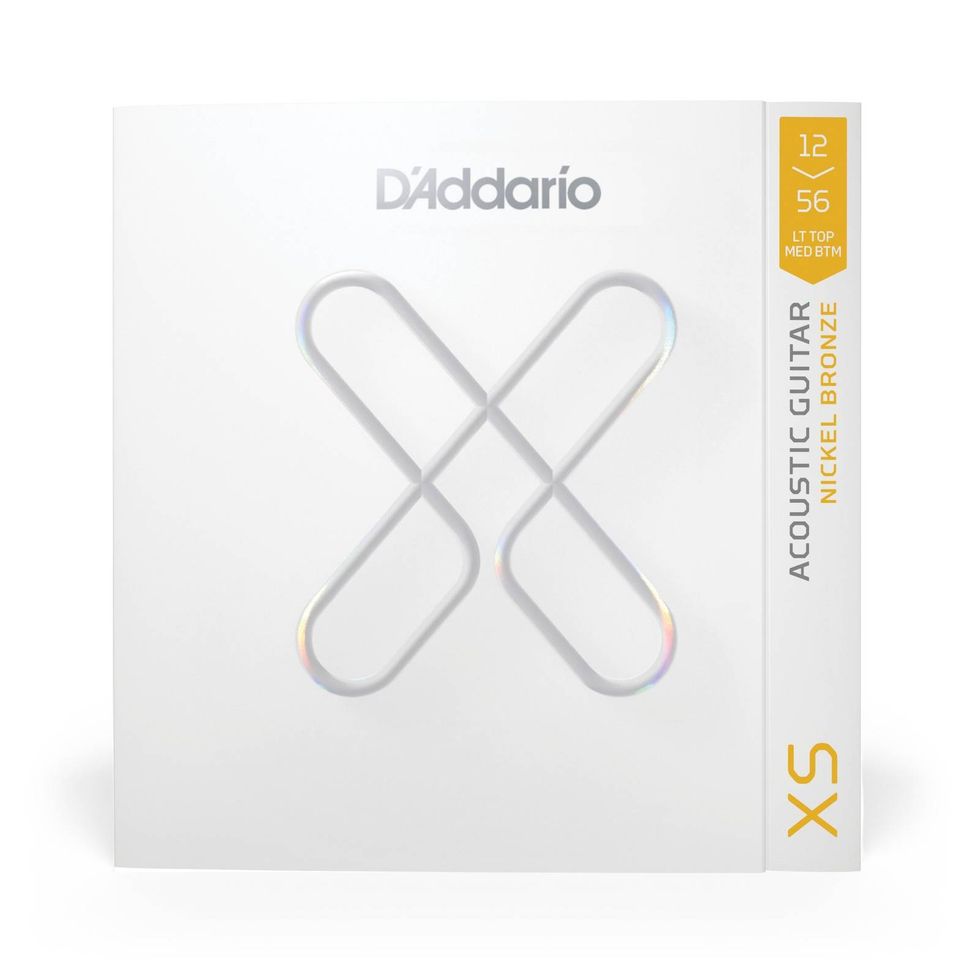
D’Addario introduces XS Nickel Bronze, featuring both the clear, transparent tone of Nickel Bronze and the extended lifespan, smooth feel, and tuning stability of XS. XS Nickel Bronze strings give acoustic guitar players a fresh tonal option within the XS lineup.
The Nickel Bronze alloy creates a clear, harmonically focused sound with distinctive note definition, which allows the natural character of the instrument to shine through. Meanwhile, ultra-thin XS film coating protects the wound strings from corrosion and contaminants, maximizing the lifespan of the string while delivering the smooth feel XS is known for.
The Best of Both Worlds
“Players have long loved Nickel Bronze for its clear, transparent tone and its ability to reveal the unique character of their instrument, while XS has earned a following for keeping strings sounding, feeling, and performing their best for longer,” said Founder Jim D’Addario. “With XS Nickel Bronze, we’ve brought those two innovations together, delivering the true Nickel Bronze voice players love with the extended life, tuning stability, and smooth feel that define XS.”
With the addition of Nickel Bronze, players can now choose from three distinct tonal options across the XS Acoustic lineup: Nickel Bronze, Phosphor Bronze, and 80/20 Bronze.
Maximum String Life: Ultra-thin XS film coating protects the string against corrosion and prevents contaminants from building up in the string windings, greatly lengthening the life of the string
Clear Nickel Bronze Tone: XS Nickel Bronze strings have distinctive note definition and a transparent sound that highlights the natural character of the instrument
Smooth Feel: XS coating is durable enough to protect the string, but thin enough to create a smooth feel
Enhanced Strength: High-Carbon NY Steel wire produces enhanced break strength
Made by D’Addario: Wire drawing, string winding, and coating are controlled in- house for consistent performance
D’Addario XS Nickel Bronze strings are available in popular acoustic guitar gauges and a mandolin gauge at daddario.com and authorized retailers. Sets start at $19.99.
D’Addario
XS Nickel Bronze
D’Addario introduces XS Nickel Bronze, featuring both the clear, transparent tone of Nickel Bronze and the extended lifespan, smooth feel, and tuning stability of XS. XS Nickel Bronze strings give acoustic guitar players a fresh tonal option within the XS lineup.