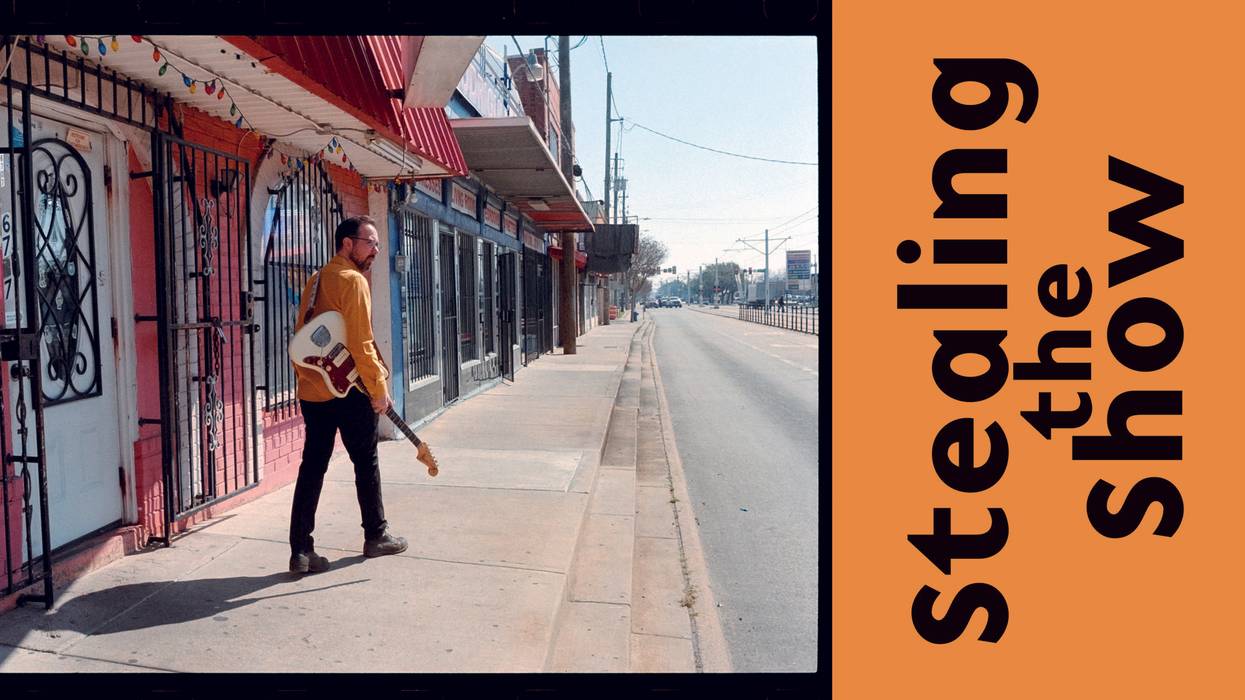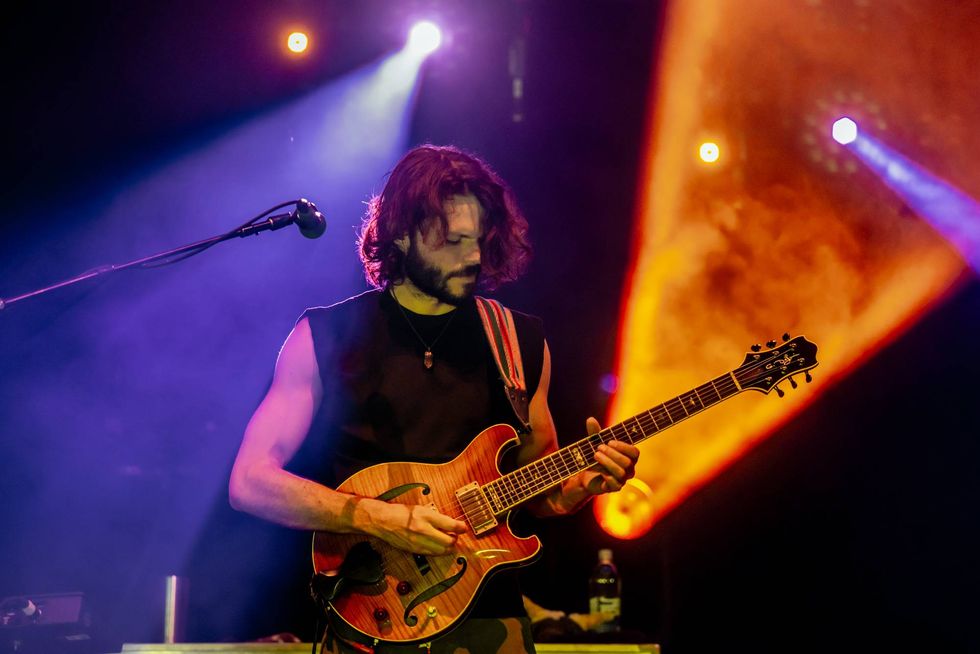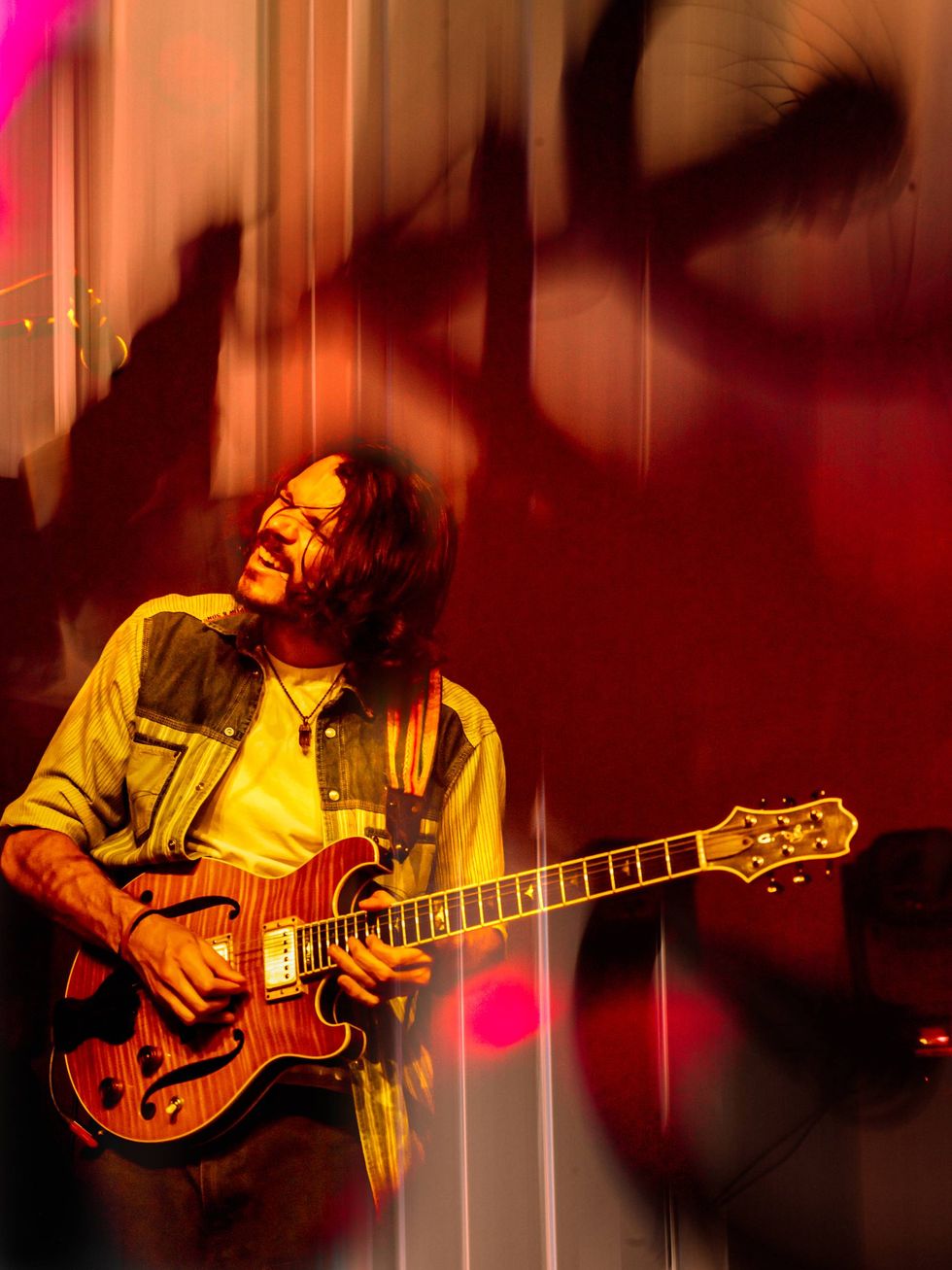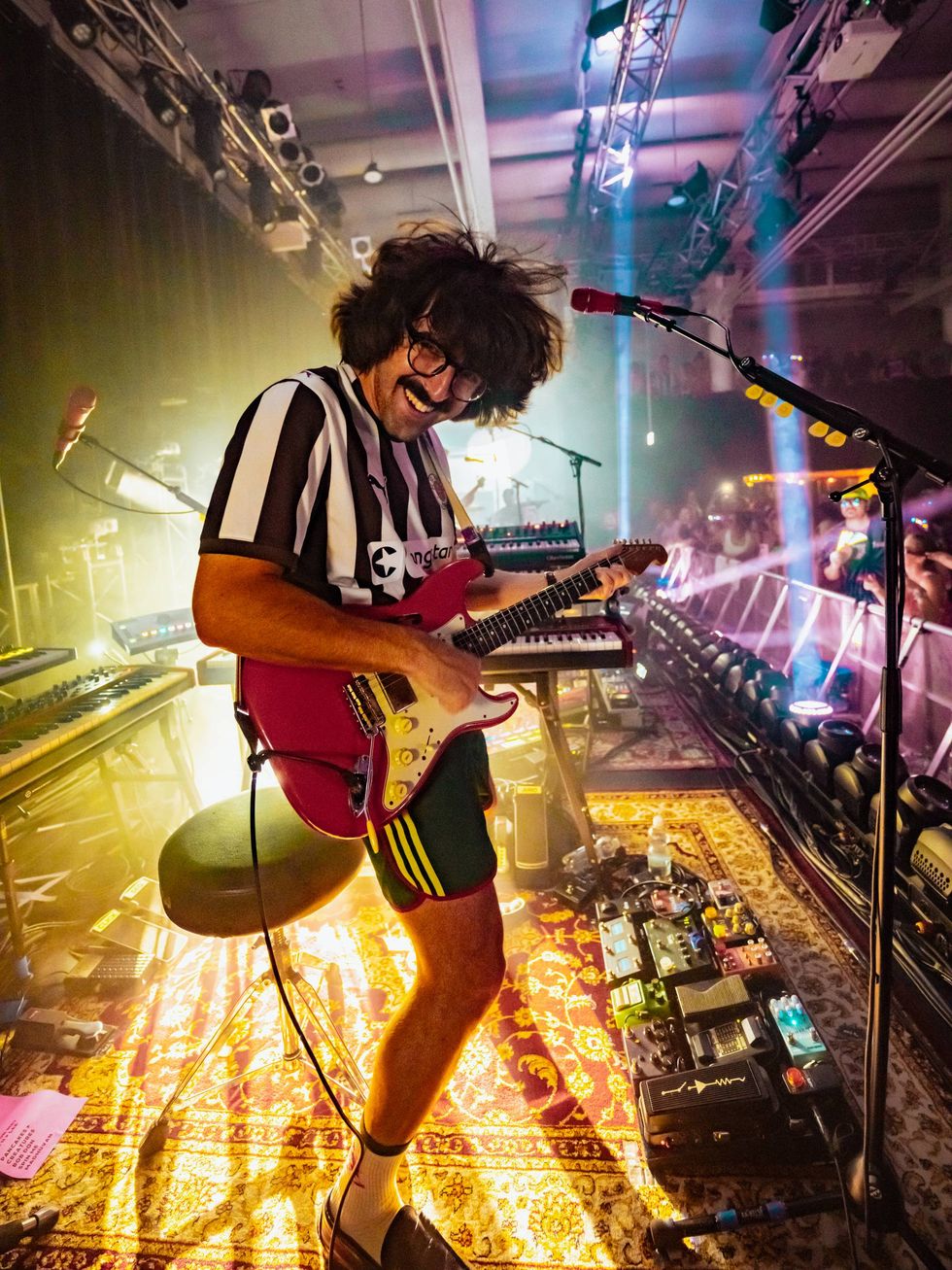



The Estonian guitarist left home more than a decade ago to take a shot at Nashville, walking off a plane and straight into Sturgill Simpson’s band. Now, reunited with Simpson as Johnny Blue Skies & the Dark Clouds, the Telecaster ace has never sounded freer.
Over the past few years, Johnny Blue Skies & the Dark Clouds have been one of the hottest bands in America, even if their name has caused some confusion. In 2021, Sturgill Simpson, a rising rocking outlaw country superstar, stopped touring. When he returned three years later, it was under a new name: Johnny Blue Skies.
And while no one quite knew what to make of the name, the return to musical greatness was undeniable. It was clear on Passage du Desir, the first music released under the new name—and on the tour that followed, consisting of scorching, three-hour-plus single-set shows. As for the band lineup, it featured the same three musicians who had backed Simpson earlier: guitarist Laur Joamets, bassist Kevin Black, and drummer Miles Miller, augmented by keyboardist Robbie Crowell.
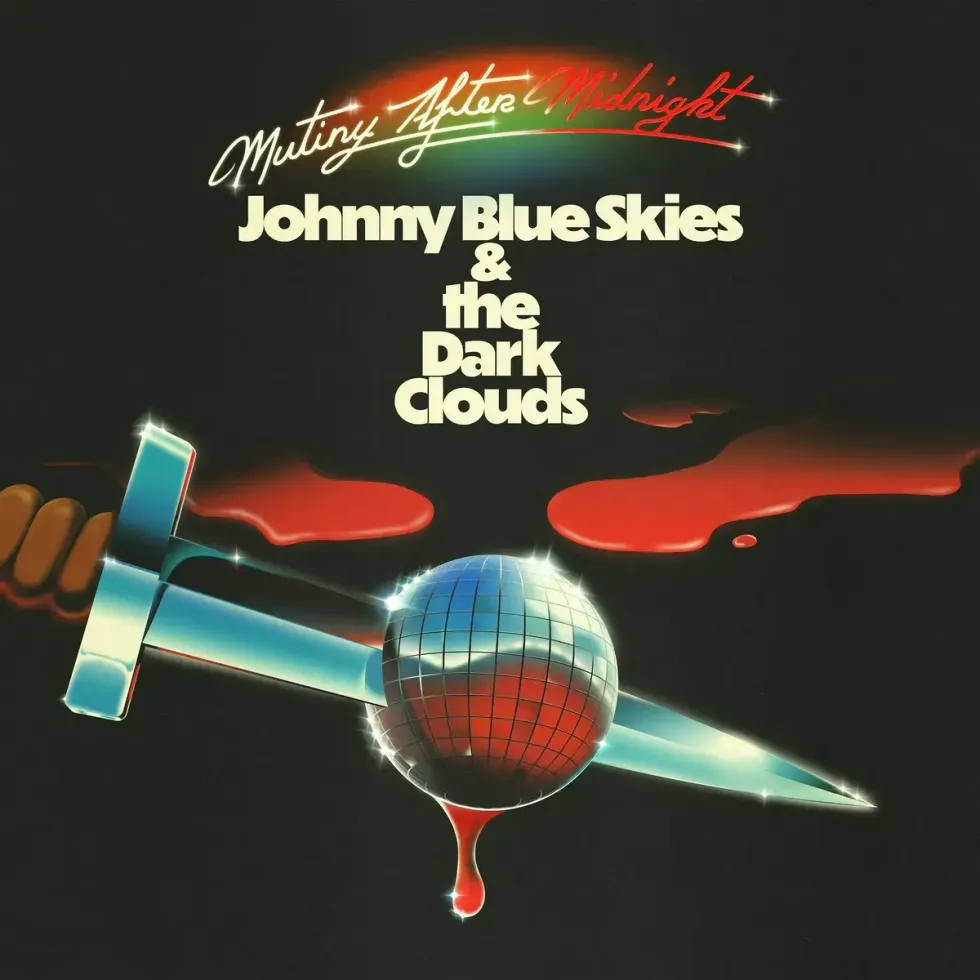
Now, Johnny Blue Skies & the Dark Clouds are back with Mutiny After Midnight, an album that was released in March on physical media only—Simpson/Blue Skies are nothing if not iconoclasts.
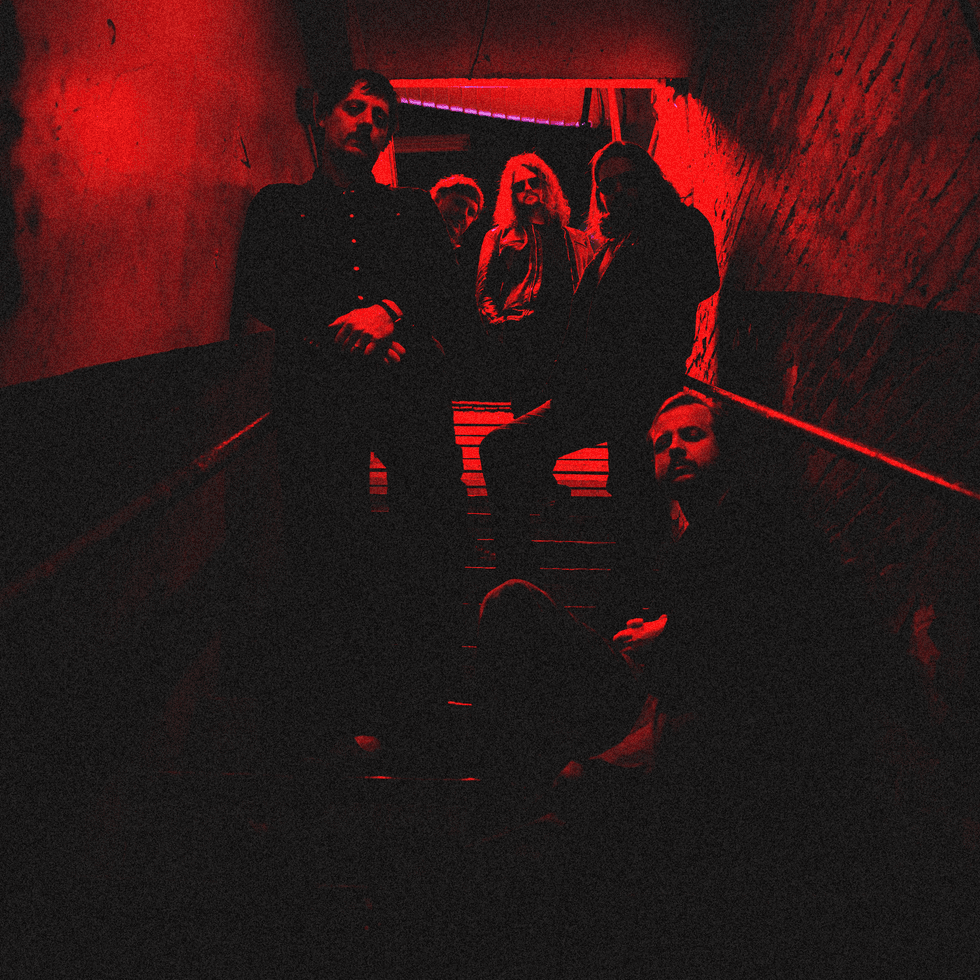
Johnny Blues Skies & the Dark Clouds
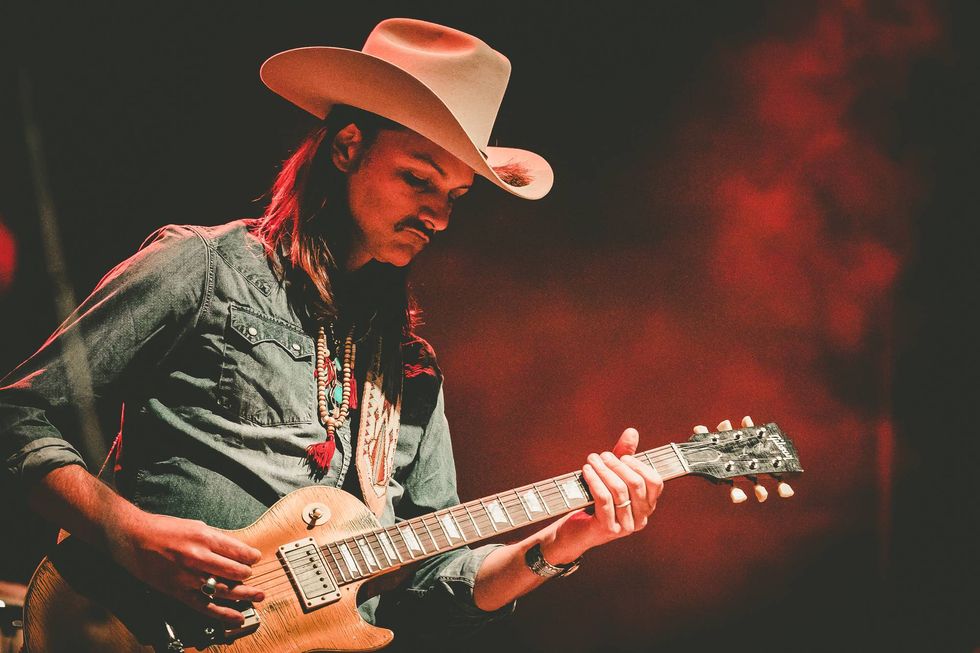
Photo by Edwin Keeble
Joamets is a blazing guitarist, combining precise country style Telecaster licks with overdriven rock riffs, all underpinned by a clear blues grounding. He and Blue Skies have excellent interplay. And the music on the new Mutiny After Midnight sounds very much like the product of a band, not a group backing a performer, something that’s reflected in the moniker. It’s the first time Simpson’s backing band has been specifically named.
“This time, it seems to me that he wants this to sound like a band, and have as many different influences in there as possible,” Joamets says. “There’s always going to be country in there, but it’s more open for all of us now. I can be freer and wider as far as my influences and playing style go.”
“There’s always going to be country in there, but it’s more open for all of us now.”
Joamets’ rise towards the top of Nashville’s guitar world is quite an astounding story. He grew up in Tartu, Estonia, and started subbing for his guitarist father when he was 15 years old. He learned classic rock by the likes of Deep Purple, Led Zeppelin, and Jimi Hendrix by listening over and over to his dad’s Soviet vinyl albums.
“I was three years old when the [Berlin] Wall came down, but what I’ve heard is it took six months for records by the Beatles or Zeppelin to get to Soviet Estonia,” he says. “Even though there was the Iron Curtain, people found a way to get that stuff. It’s impressive how scarcity makes people value the product a lot more.”
When Joamets Sr. started a Jerry Lee Lewis tribute band, his piano player became “a great source of information on ’50s rock ’n’ roll, rockabilly, and blues, as well as Danny Gatton and the ’80s resurgence of rockabilly, like Stray Cats,” Joamets says.
Joamets digested that music and found himself drawn ever more to the bluesier side of guitar playing. His journey from performing in clubs in his hometown, to touring with Simpson, to then becoming a central part of Johnny Blue Skies & the Dark Clouds, began with meeting Michael Miley, the American drummer in Rival Sons, who lives part time in Estonia. They became friendly when Joamets’ band opened for them and Miley began lobbying the guitarist to move to the U.S.
“He kept saying, ‘Dude, if it doesn’t work out, you can always come back and you’ll only be 30! You never know what might happen. What you don’t want to do is not try anything in life, then wake up older and with regrets,’” Joamets recalls.
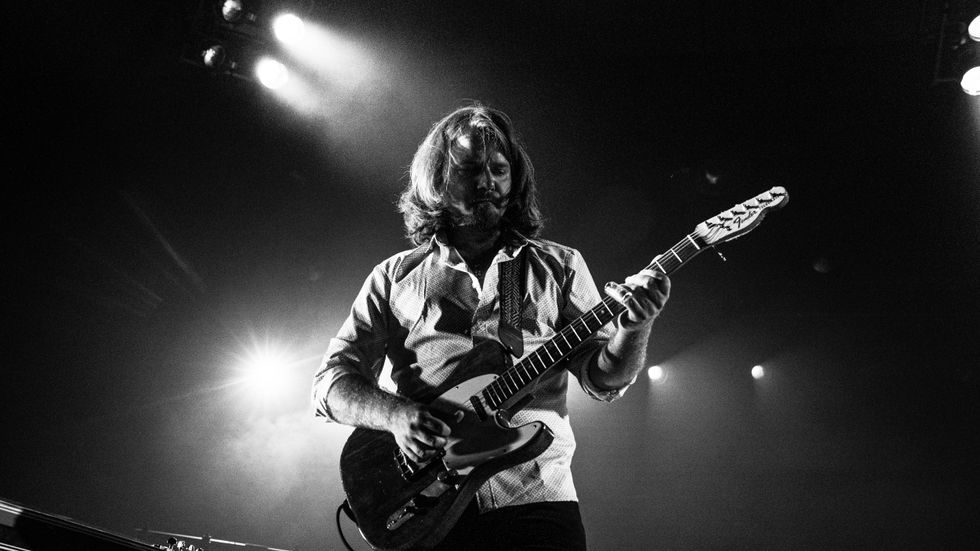
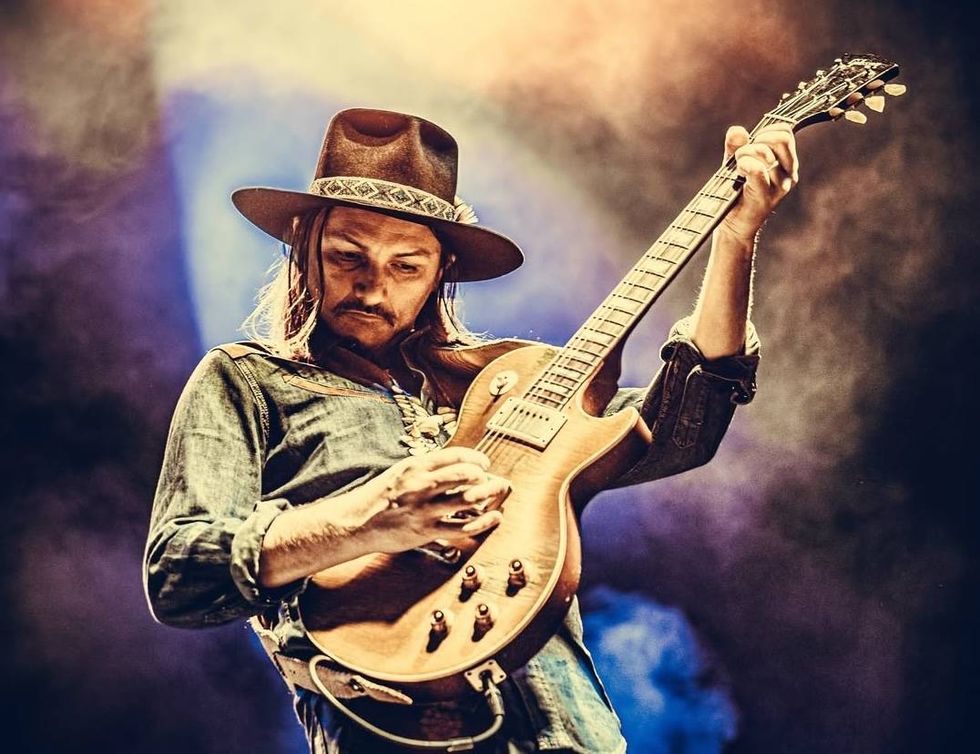
Photo by Edwin Keeble
Laur Joamets’ Gear
Guitars
1967 Fender Telecaster
Fender Custom Shop Dual Mag II Stratocaster w/ Lollar Dirty Blonde pickups
1997 Gibson Custom Shop Historic 1957 Gold Top Reissue w/ OX4 pickups
Gibson 1958 Les Paul Junior Reissue
Fano Alt de Facto PX6
ZumSteel Stage One E9 pedal steel
GFI Ultra 12-string pedal steel
Amps
Magnatone Varsity Reverb
Urmas Anderson Charmer (“basically an Estonian brown-panel Deluxe”)
Fender Pro Junior
1970s Music Man 2x12 combo, heavily modified by John Capito from Black Tape Amplifiers
Effects
T-Rex Replica
Real McCoy wah
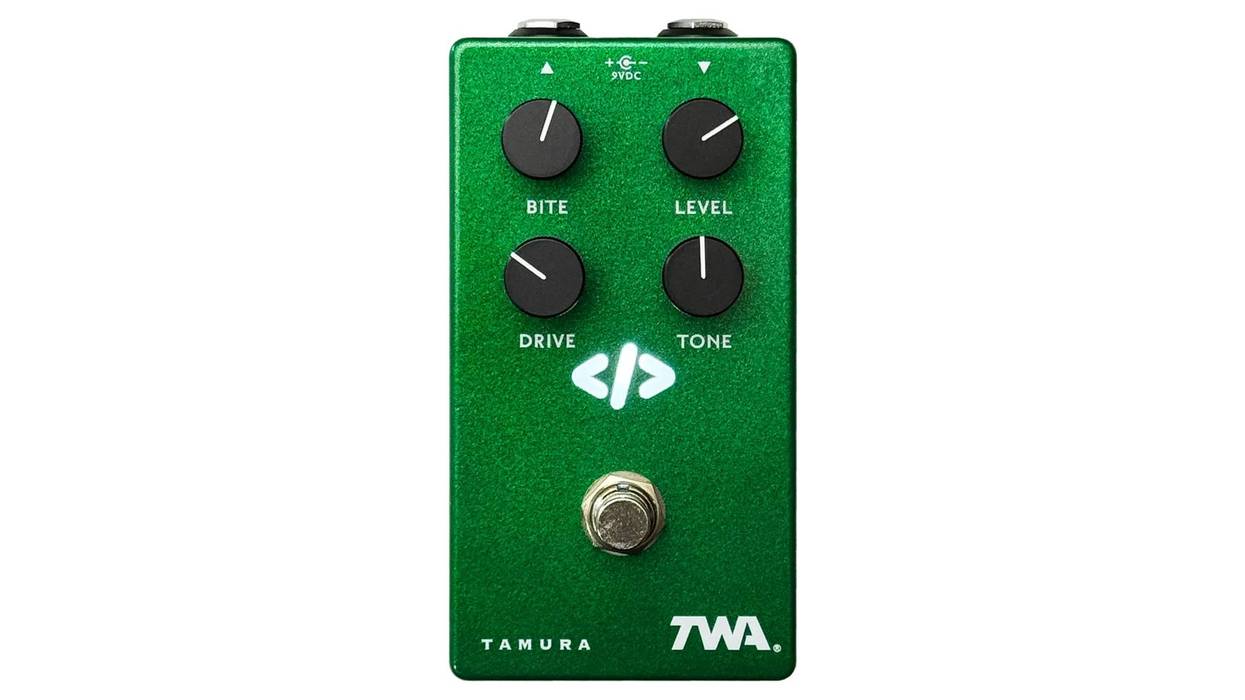
sRossFx “Double Essassin” booster/overdrive/fuzz
Kogoy Tone Bender
Roger Mayer Octavia
MXR Flanger
MXR Mini Booster
MXR Echoplex
Source Audio True Spring Reverb
T-Rex Replicator D'Luxe Analog Tape Delay
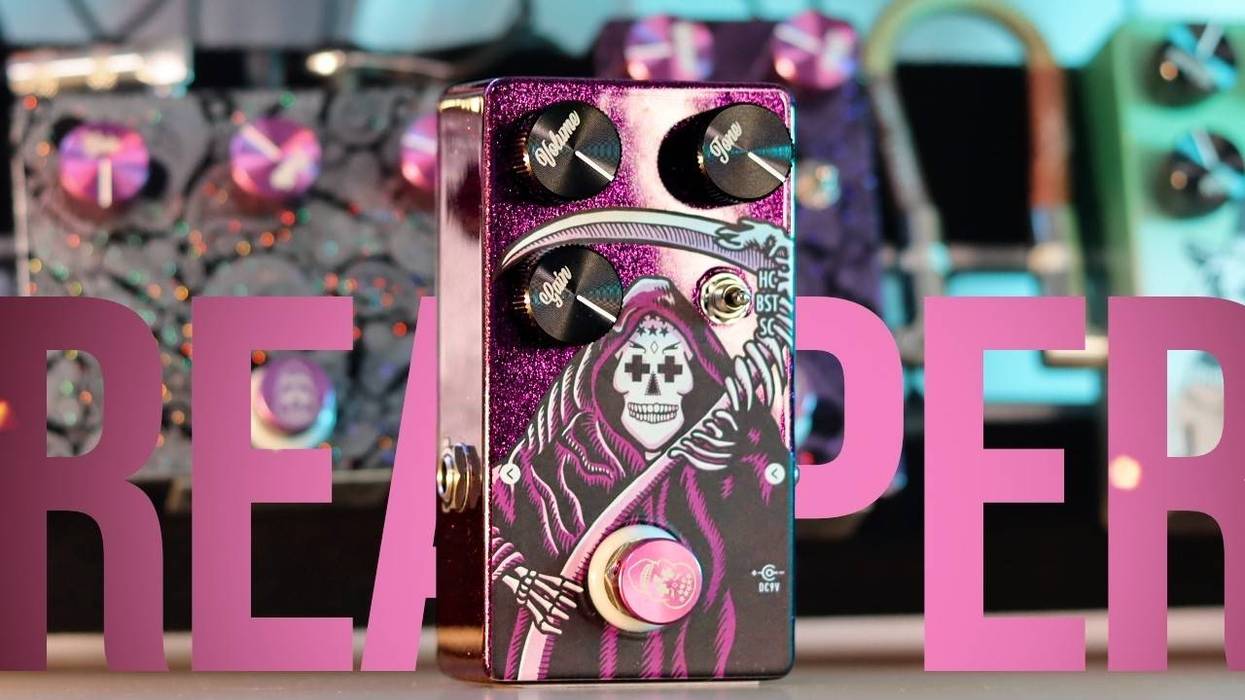
“Spencer Ross of Ross Effects built a boost pedal for me that is probably going to be my signature pedal. It’s a diverse pedal with mild overdrive mixed with a little bit of fuzz.”
Strings, Picks, & Slides
Elixir strings (.010–.046; for open tunings, .011–.049 or .052)
Custom Dunlop Pedal Steel E9 strings
Dunlop Wedge .88mm picks
Songhurst Rock Slide
Clinesmith Polymer 7/8" x 3.25 Pedal Steel Tone BarA couple years later, with enough money saved to ease his fears, Joamets asked Miley for some introductions. The drummer sent some of his Estonian friend’s links to producer Dave Cobb, who happened to be in the studio with Simpson, who happened to be looking for a guitarist. That got the ball rolling, and before long Joamets was walking off a plane and into a minivan with a new band. It was the very start of Simpson’s rise to becoming a certified sensation. Upon arrival, Joamets says that his English was “awful” and that he thinks his bandmates “suspected that I was autistic because I was so quiet.”
“There’s so many great guys here who do that Telecaster thing so well and are immersed in classic country, so there’s no point in trying to get a guy like that from anywhere else,” says Joamets. “Lucky for me, [Simpson] wanted something different.”
Joamets was almost immediately in the studio recording 2014’s Metamodern Sounds in Country Music, an album that Simpson told American Songwriter was recorded and mixed “in five and a half days for about $4,000.” It was critically lauded and boosted Simpson’s profile, before the follow-up, 2016’s A Sailor’s Guide to Earth, made him a superstar. Both are landmark albums in modern outlaw country, completing Joamets’ remarkable ascension.
But by 2017, after four years and two terrific albums together, Joamets left Simpson’s band, shortly after landmark performances on Saturday Night Live and at the Grammys. What looked like a triumphant peak from the outside felt to Joamets like the beginning of the end.
“We had been grinding for a long time, and it’s hard to see how fast the train is going when you’re in it,” he says. “Honestly, I may have started to burn out a bit by the time of that SNL show. It was a little bit of everything. I may have had a personal identity crisis. I didn’t really understand who I was as a musician, or maybe even as a person. The moving to another country part turned out to be a little harder than I thought it would.”
“I worried I didn’t sound American enough, that I had no right to be playing this music.”
After leaving Simpson’s band, Joamets further established himself in Nashville, formed his own group, Lore, and played with Drivin N Cryin for seven years. He continues to sit in or sub on lead guitar for the long-running Atlanta rockers whenever possible, and singer/guitarist Kevn Kinney and bassist Tim Nielsen remain important supporters and mentors.
“They’ve always been very easy to be around and are almost like a bunch of uncles who showed me the ropes and how to do this thing right,” he says. “They’ve seen it all, and are a very encouraging and forgiving bunch of people.”
When Simpson returned to touring after a three-year break, performing as Johnny Blue Skies, he reassembled his band—including Joamets, by then an established Nashville badass and an American citizen, who was thrilled at another chance to play with him under any name. (In keeping with the public name change, the story will hereafter refer to Johnny Blue Skies, not Sturgill Simpson.)
“I was absolutely excited to be back on stage with Johnny, and to do it with the same people who picked me up from the airport in a minivan,” says Joamets. “When we got together again, just to jam and brush up on things, everything was there immediately, even though we hadn’t been together for seven years. We started playing, and it was like putting on an old leather jacket that you loved. Everything was just like it was supposed to be, very effortless, and now I enjoy every minute of it in a way that I just couldn’t the first time.”
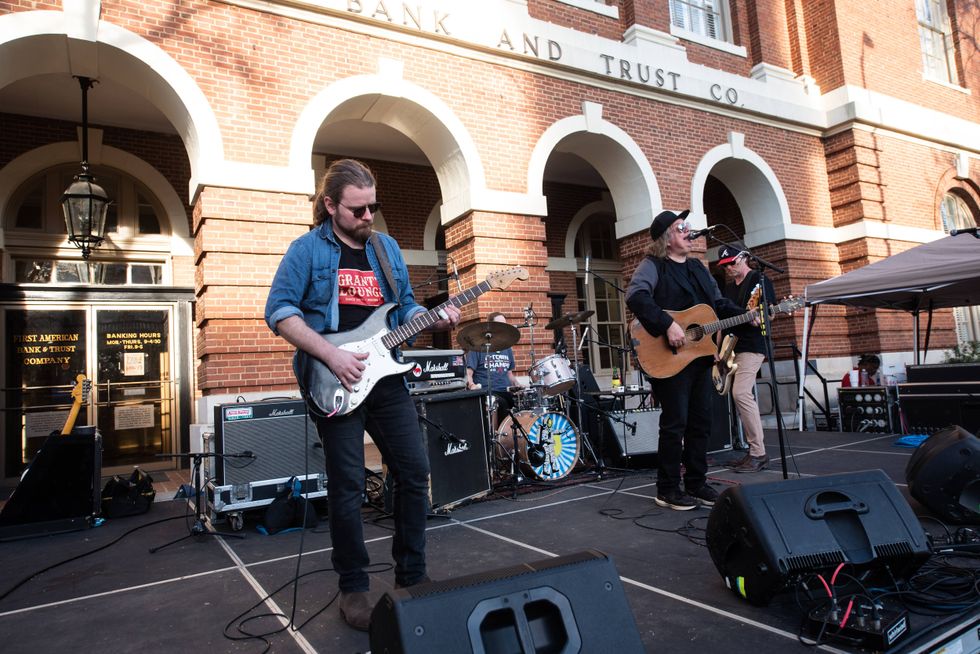
Joamets performs with Drivin N Cryin at the FAB (First American Bank & Trust) Festival in Athens, Georgia, on March 17, 2022.
Photo by Mike White
Mutiny After Midnight is a diverse album that flows like a live performance, moving through disco beats, hard-rocking jams, and looped guitars. Simpson’s voice, a rich, resonant instrument redolent of Waylon Jennings and other country greats, is mostly down in the mix, emphasizing the music and the sound of the band. The music has a feel and flow that is reminiscent of group improvisation, the kind of thing that can happen when you have a great band with excellent chemistry and they just start jamming. It sounds like that because that’s what it is.
“Some of these songs were jams,” Joamets says. “We had these progressions or parts of songs that were recorded during the last tour and soundchecks, and then I think [Johnny] just ended up writing lyrics on top of those. He had a groove or a beat and just laid a bunch of chords and wrote songs on top of them at the spot, so everything was very spontaneous, and he works extremely well in these conditions. It’s remarkable to watch. I had a lot of fun doing it this way.”
Anyone who’s ever been in a hot band knows about the killer jam that starts when one person plays a riff or sets a groove and everyone falls into place. It can be the perfect way to create great music when you have the right guys and the right vibe—you’re playing every day, and getting to know one another’s moves with the intensity and immediacy that creates the best music.
“There’s definitely great chemistry between Johnny, Miles, Kevin, Robbie, and myself,” Joamets says. “The thing that Johnny did that I think is so smart, is we recorded this album when we were fresh off a tour and still warm from that experience.
“I enjoy working like that, because on a great tour, you almost develop some telepathy about what you’re doing, so things were happening as we recorded that we didn’t even talk about. It’s that sort of stuff that comes with time and chemistry. Having just been on the road for a year and a half, we were in a great spot to record and create some music on instinct.”
“We started playing, and it was like putting on an old leather jacket that you loved.”
Joamets himself was far more comfortable this time around—with his own playing, with his role in the band, and with his place in the American music world.
“I have now lived and played with a ton of different musicians and learned a lot more,” he says. “There was much less stress this time—less worrying if I was doing it the right way, if I was good enough, why I was even there. When I first came, I felt responsible for not messing up this long history of music. This is American culture and I wasn’t born here, so I felt a huge responsibility not to screw it up. I had this kind of imposter syndrome—and it’s not totally gone! I worried I didn’t sound American enough, that I had no right to be playing this music.”
Joamets continues, “With Metamodern, [Johnny] was making an album that was more inspired by ’50s and ’60s country, which means that you have to play quite authentically to the way that people played back then. It was also the first time for me to record in America. Now, I was less stressed about it.”
Onstage, Joamets uses a minimal pedal board, though he is more open to experimenting in the studio. “I like messing around with weird sounds and gadgets while recording more than live,” he says. “Onstage, I just want a dependable tone and to play music. When I go to shows, I don’t care what the guys are using or if they’re changing their delay pedal sounds or whatever. I want to hear the notes and the music and how it fits together, so that’s what I focus on myself.”
Joamets is also a fine slide player. He wears it on his pinky, which allowed him to also handle rhythm when playing without another guitarist in Estonia. Johnny Winter is a clear influence here, as well as Sonny Landreth; a video of Sonny fretting behind the slide was key to Joamets’ developing his own technique. With Blue Skies, he has also become an adept pedal-steel player.
The guitarist has been working on a solo album, mostly instrumental, with a few songs featuring vocals by Aaron Lee Tasjan, who also wrote the lyrics to those tracks. The album isn’t completed yet, but the title is set: Foreign Feathers.
“We have an old saying in Estonia, which basically translates to, ‘I decorate myself with foreign feathers,’” Joamets says. “Which, to me, is the essence of being a musician. You want to be original, but you can’t create anything out of nothing. It all comes from different places. So I have songs that reference David Bowie and Queens of the Stone Age and Albert King, even if nobody but me will hear that. It’s like a phrase that I’ve learned here—the definition of true originality is undetected plagiarism.”
Completing this solo album will help Joamets put an exclamation point on his remarkable journey. It’s been a head-spinning experience, from learning guitar in Estonia from his father, to playing in cover bands there, to coming to America, to learning English, to now finding himself touring arenas.
“I definitely wake up everyday trying to remind myself to be grateful, because this doesn’t happen, ever,” Joamets says. “That’s all I can do—remain as humble as possible, try to do a better job, and appreciate that I’m here.”