
“The mere fact that you’re enveloped in the middle of an onslaught of decibels, in front of big stacks of amplifiers … it’s a whole different ball game altogether.”
I am on a Zoom call with Jorma Kaukonen and Jack Casady, and Kaukonen is explaining the dynamics of playing in a loud power trio. As founding members of Jefferson Airplane—Kaukonen on lead guitar and Casady on bass—they were both inducted into the Rock & Roll Hall of Fame three decades ago. Today, Premier Guitar is going deep with them on their longtime side project, Hot Tuna. After 68 years of performing together in various configurations, we want to know what it means to still be bandmates and collaborators.
Kaukonen is in his home in southeast Ohio. Gold and platinum Jefferson Airplane records hang on the wall behind him. “Those were collecting dust in the garage,” he chuckles, “but my wife said, ‘No, those are coming inside, and we’re hanging them up.’ So there they are.”
Casady is in his studio at home in Los Angeles. The interior is strewn with bass guitars on stands and lots of amplifiers. “I have six Versatone amps here,” he shows me, stacked neatly under the windows. One of them has the words “Jefferson Airplane” stenciled on the back in white paint. These 35-watt boutique bass amps rarely come up on sites like Reverb these days. They were built in small batches in Van Nuys, California, about 60 years ago. More on those later.
On the walls hang photographs from across Casady’s storied career. There’s a shot of him and Jorma onstage when they first started playing together in 1958 in their hometown of Washington, D.C. The duo attended the same high school about five miles from the White House. “I was a guitar player who became a bass player,” Cassady points out. “That’s me playing a 1958 Telecaster. I paid 114 bucks for it, new, back then. I’m 14 years old there, and Jorma is 17.” Kaukonen jumps in excitedly: “I’m playing my 1954 Gibson J-45!”

Electric Hot Tuna onstage in the '70s in Italy
Photo by Aldo Pedron
Later, Kaukonen ventured to California to attend college and quickly met folkie guitarist and budding songwriter Paul Kantner. They joined forces to launch a band, and in 1965, when the first bass player left, Kaukonen called his old D.C. pal and flew him out to San Francisco. Casady strapped in just as the Airplane lifted off, soon to score hits like “Somebody to Love,” “White Rabbit”, “Crown of Creation,” and “Volunteers.” Along with the Grateful Dead and Janis Joplin, the Airplane defined the San Francisco psychedelic sound that permeated popular culture. They played the era’s iconic festivals, from Monterey Pop in June of 1967 to Woodstock in August 1969, and adorned the cover of LIFE magazine. They appeared on all the TV showcases of the time, including American Bandstand, The Smothers Brothers Comedy Hour, The Dick Cavett Show, and Ed Sullivan. Worldwide, Jefferson Airplane sold more than 4.5 million records.
Kaukonen and Casady enjoyed the ease of playing together since they were kids, and their musical roots fused well. Casady was steeped in jazz, which his father taught him to love. Kaukonen, meanwhile, came to the San Francisco scene already a scholar of fingerpicked acoustic country blues. Artists like the Reverend Gary Davis and Blind Boy Fuller were a huge influence on him.
By 1969, Kaukonen and Casady were itching to expand beyond the structures of the Airplane’s music. “One night we were at the Fillmore, and there was some time to kill,” Kaukonen recollects, “and Paul Kantner said, ‘Why don’t you and Jack go up there and play a few songs?’ And we did. That became Hot Tuna.”
The point of Hot Tuna, at least at first, was to play in a power trio format, and to do so very loudly. Casady explains to me something he calls the “sonic presentation” of the notes: “ It takes a certain amount of volume to allow the overtones to just creep up. And with all those overtones, pretty soon there’s a lot more music going on than it looks like on paper.”
Casady digs deeper: “As the bass player in a power-trio format, I’m not necessarily playing a drum pattern, I’m thinking about melody like a jazz player would. I’m bringing influences like Eric Dolphy to this. Roland Kirk, those kinds of guys. I’ve always liked to move up the neck to get the low end of my tone, and use my right hand up and down the length of the strings. That gave me room to fill up the sonic space so that Jorma could expand his solos without feeling like the bottom was literally falling out. And Jorma could bring his fingerpicking techniques to some of those jams, which allowed me to fill out the sound without a rhythm guitarist in the mix.
“We didn’t really talk about this; we never had any band meetings, ever. What we did was listen to each other onstage, and new stuff came out.”
Kaukonen concurs: “It was pretty liberating, because we didn’t have to play our hits. We didn’t have any hits!”
The lack of songs was evident in their very first performances. In June of 1969, with Joey Covington on drums, Casady and Kaukonen made their way to a gig in Santa Rosa, California, opening for the Grateful Dead. This night has been released as the album Before We Were Them, recorded by legendary Dead soundman and LSD chemist Owsley “Bear” Stanley. The band rooted themselves in 12-bar, I-IV-V blues structures, but then they pulled away from those chord changes into long, heavy jams that sounded like America’s version of Cream.

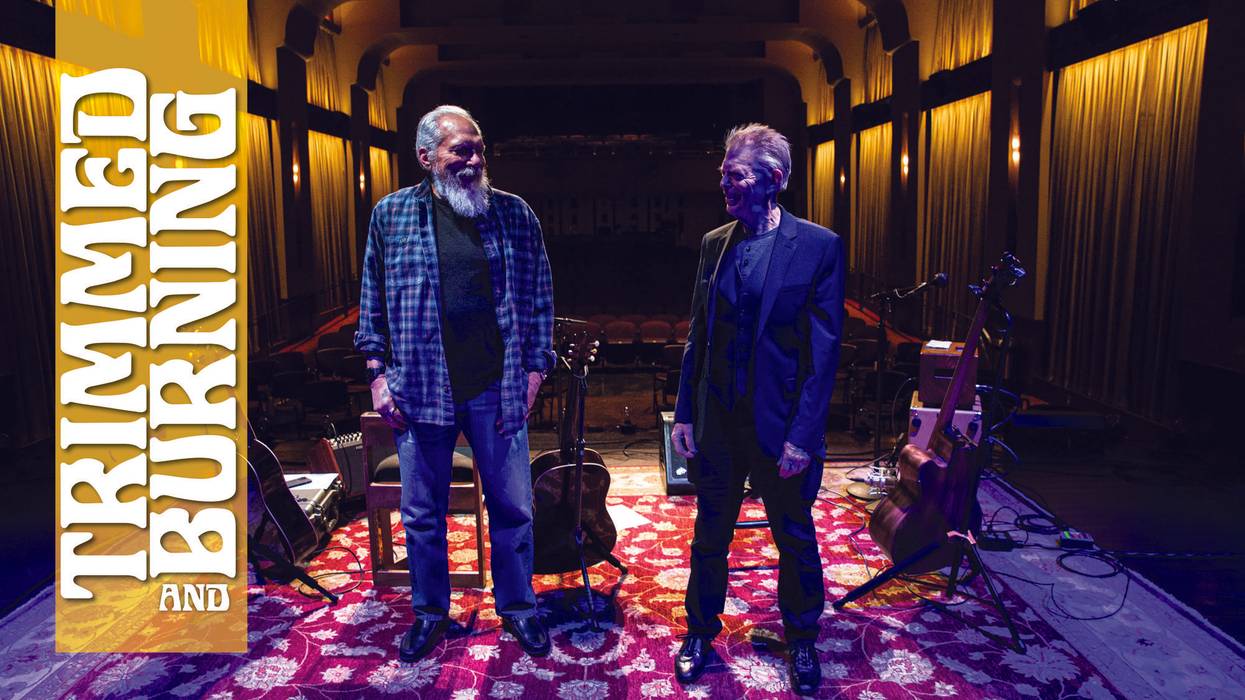
Jorma Kaukonen (l) and Jack Casady
Photo by Jeff Fasano Photography
Jorma Kaukonen’s Gear
Guitar & Pickup
Flammang Guitars acoustic custom built by David Flammang
LR Baggs HiFi Duet pickup
Amp
Fishman Loudbox Artist
Effect
Grace Design FELiX
Strings & Picks
Martin Guitars Lifespan Phosphor Bronze (.012–.054)
Dunlop Medium thumbpicks
Dunlop Brass .025 mm fingerpicks
Jack Casady’s Gear
Basses
Epiphone Jack Casady Signature Bass
Custom Ribbecke Guitars “Diana” Bass
Guild Starfire (modified by Owsley Stanley)
Amps
Alessandro Basset Hound head
Aguilar Jack Casady DB 285 JC cabinet
Strings & Picks
Dean Markley Blue Steel bass strings (.045–.110)
Rotosound strings (on the Ribbecke “Diana”)
Pyramid Gold strings (on the Guild Starfire)
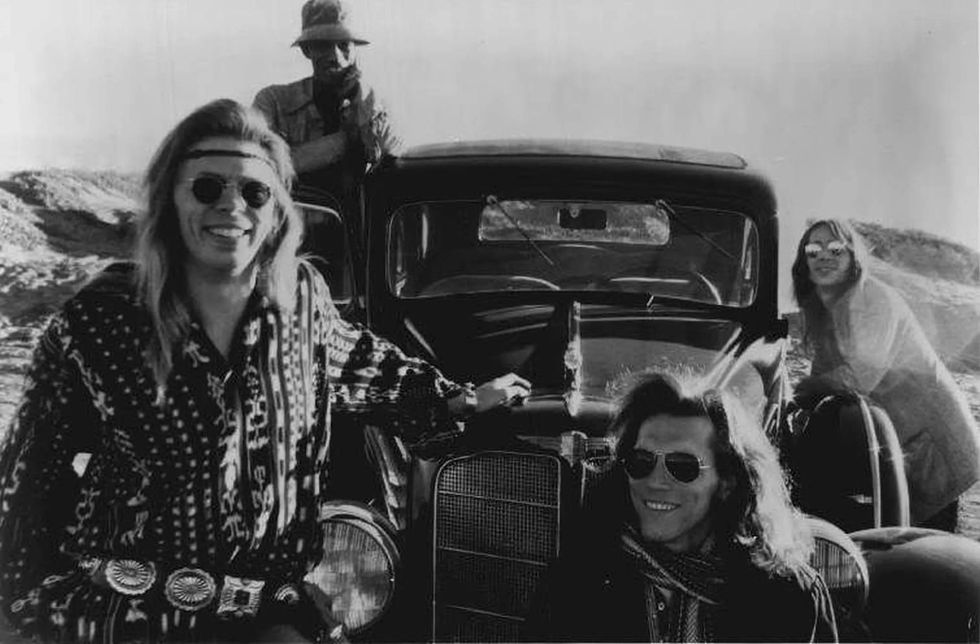
Hot Tuna ca. 1972 (l-r): Casady, violinist Papa John Creach, Kaukonen, drummer Sammy Piazza
Photo by Brice Steinberg
When I point this out to Kaukonen, he quickly retorts, “When Cream first came to the Fillmore, I saw them. And I flipped out because I realized it was possible to liberate oneself from a more traditional format where you had that expanded rhythm section—another guitar player, or a keyboard player. And the substitute for that was volume. That’s an absolute component of electric trio music. Without volume, it wouldn’t have the same effect at all.”
Hot Tuna wouldn’t play only at blistering decibel levels; Kaukonen and Casady also performed acoustic music. Recently, the duo released a 1960 recording that Casady made on a Wollensack reel-to-reel tape deck in his childhood basement rec room of Kaukonen playing acoustic blues that is essentially proto-Tuna. Numbers that Kaukonen already had under his fingers at the age of 20, like “Death Don’t Have No Mercy,” “Hesitation Blues,” and “Keep Your Lamps Trimmed and Burning,” would later be staples of Hot Tuna setlists. In 1970, the duo released their first official album, the self-titled Hot Tuna, a live acoustic blues recording from 1969 in Berkeley, California.
“Your focus shifts when you’re playing acoustic,” Casady offers. “You don’t have all that volume. I go into more of a jazz mindset—like Joe Pass. I’m thinking like a guitar player even though I’m a bass player at the same time. We’re still working with melodies, just not that big sonic stuff. We want to have some of our hearing left.”
Photos abound of Casady and Kaukonen playing a variety of instruments, amps, and pedals across the decades. “I never saw myself as a collector,” Kaukonen declares, “but guitars are fun to own.” He was known in Jefferson Airplane for embracing a cherry Gibson ES-345, but there were a couple of other guitars before that.
“We didn’t have to play our hits. We didn’t have any hits.”—Jorma Kaukonen
“I got a Rickenbacker 12-string at first because Paul Kantner insisted that I needed it,” he says. “But I realized quickly that I was going to need a 6-string, too. One night at a bar in North Beach, I saw the Lovin’ Spoonful, and Zal Yanovsky was playing a Guild Thunderbird. I loved the way it looked, and I got one. I used that Thunderbird a lot in the Airplane, and put it through a Standel Super Imperial amp, a solid-state,” Kaukonen tells me. “Nobody would do that today, but that’s what I used on the solos for ‘Somebody to Love’ and ‘White Rabbit.’ Here’s the thing about Thunderbirds: They have a kill switch on them, and after too many times of embarrassing myself by hitting the kill switch while I was playing onstage, I abandoned it.”

Photo by Jeff Fasano Photography
He continues: “The Gibson 345 came about because I went to the Fillmore one night before it was a white dance hall, and I saw Johnny Talbot and De Thangs, Bobby ‘Blue’ Bland, and B.B. King. B.B. was playing a 355, and I just loved how that thing looked. I went to the San Francisco music shop Sherman Clay and financed a 345. First thing I ever financed in my life. That’s the guitar I really learned how to play electric on. It had that 6-way Varitone dial on it, and I learned pretty quickly the settings were ‘shitty, shitty, shitty, shitty, shitty, and B.B!’ So that’s the only setting I used.”
Over the years, Kaukonen has also played Stratocasters, Les Pauls, and Firebirds, among others. “Later on,” he says, “I used a 1957 Stratocaster in Hot Tuna that was modified and painted for me into an American flag motif.” Kaukonen sighs at the thought of desecrating a pre-CBS Strat, “but back then, a 1957 Strat was just known as an ‘old guitar.’”
Today, none of the Airplane guitars remain in his collection. “What can I say,” he groans. “I got divorced in the ’80s.”
Casady has always sported a rotating cast of basses, from a Guild Starfire modified by Owsley Stanley to a Flying V copy built by legendary Bay Area guitar tech Glen Quan.
When discussing gear, the conversation lights up like LEDs on a modern stompbox. After nearly seven decades of making music together in various formats, I ask Kaukonen and Casady how they keep things fresh. “Buy new gear!” Kaukonen quips with a smile. But he’s serious, too. “Look, gearheads who read Premier Guitar know what I’m talking about. You go over to a buddy’s house and borrow his guitar, or he’s got some pedal or some amp that you’ve never heard before, and you say, ‘I gotta get me one of those!’”
Casady jumps in: “You have to remember, in the ’60s and ’70s, there was less stuff, and so if you got a pedal or an amp, you had to work with it and milk its possibilities. There weren’t pedals that did 200 things each. But the joy of that was that you could use these pedals to help you create. Once you figured out the possibilities, new songs would evolve. The effects were part of the song and the song’s evolution. It’s not like today, where you can add anything you want in ProTools.”
Casady explains that his tone wasn’t shaped by pedals, but by the unique characteristics of his Versatone amps. “I first found that amp when the Airplane was recording Crown of Creation in 1968, and the studio engineers were complaining that our stage rigs were too loud for the room. In the next studio over, Carol Kaye [legendary L.A. session player] had left her bass set up there, and she was using a Versatone. I played through it, and I was knocked out.
“I never assume I know what Jorma will do. He doesn’t either with me.”—Jack Casady
“It used four Sylvania 7591 power tubes, and the way it was designed, two were dedicated to the high end and two to the low end. It was a unique circuitry. I could blend them, and at about 10 o’clock the tone was just gorgeous. You could plug in, and it sounds just great. And as I turned it up, it would get this incredible growl in it, and then it would start to really sustain. Throughout my entire career onstage in the Airplane and Hot Tuna, I’d have a Versatone and also a big rig for the dryer sound going through the PA system, and I’d blend them in the mix. That was my tone, my essential sound.”

Photo by Jeff Fasano Photography
On Hot Tuna’s ’70s recordings, you can hear Kaukonen playing through everything from octave fuzz to wah pedals. “The one that wrote the book is the Thomas Organ Cry Baby Wah that was built in Italy,” he tells me. “The ones they make today are not the same! I still have four of the old ones left that I had restored by Analog Man.”
Kaukonen continues, “I was playing a lot of stereo guitar at the time of the Airplane, and I would blend that Cry Baby on the bridge pickup with a Maestro Fuzz on the neck pickup, and that’s how I shaped a lot of my tone at the time. You can hear that high singing sound on the intro to ‘Good Shepherd’ on the Volunteers album.”
From June 1969 until the fall of 2023, Hot Tuna played electric sets—band and fans alike referred to it as “Electric Tuna” to differentiate the two ends of the project. Casady and Kaukonen finally gave it up only when they felt their hearing couldn’t take it anymore.
Today, Jack Casady focuses on his Epiphone signature bass model. It’s based on an obscure single-pickup Les Paul bass that Gibson issued in 1972; Casady ran into one decades ago at Chelsea Guitars, in the Chelsea Hotel in New York City, and loved the tone. He bought it on the spot. “It was an instrument that had an impedance-selector switch that allowed you to toggle between 50 ohms, 250 ohms, and 500 ohms,” he explains. “It’s like an internal compressor. Fifty was really open dynamically, and as you went, it pushed it into a squeezed, more nasally sound. And it had a full 34" scale and was semi-hollow. I’ve always chased a jazz sound, and a longer scale helps you get that full bottom, that penetration of the lower notes.”
Casady wanted even more clarity from the instrument, and so he approached Gibson to reissue that 1972 Les Paul bass, reconfigured to his specs. They did so, and for years, it’s been his Epiphone signature model. He plays them right out of the box.
Today, Kaukonen’s main acoustic is a custom-built model from luthier David Flammang. “I’ve played a lot of guitars because I’ve been playing so damn long, but my acoustic style was really defined by my 1958 Gibson J-50, which I bought in 1960 for a hundred bucks,” Kaukonen explains. “I still have it, by the way! The feel of that guitar, the short-scale neck was just right: not too wispy, but not a baseball bat either.
“Somebody came to one of my guitar workshops, and he had this Flammang guitar that looked and sounded just like my 1958 J-50! I had a sort of out-of-body experience playing the thing, and I got in touch with David and told him about it. I ended up getting two of them from him. I’ve been playing those guitars pretty much ceaselessly ever since.”
I’m hard-pressed to think of another musical partnership like Jack Casady and Jorma Kaukonen’s. When I ask them how they’ve kept the musical conversation between them fresh for almost seven decades, Kaukonen says, “One of the things that’s really important and has served us well over the years is we really listen to each other onstage. Sure, there are basic arrangements, but we’ve never had the attitude of, ‘Here’s my part, and that’s your part.’”
Casady sums it up: “We are really thankful. When we hit the stage, we’re still amazed that we get the opportunity to play and make this our life’s mission. And I never assume I know what Jorma will do. He doesn’t either, with me. When we walk onstage, it’s new and of-the-moment every night. That’s one of the reasons why we continue to tour, even as it gets tougher at our ages. We want to let the day’s distractions fall away and see where we can take the music. That’s never left us.”