
The chameleonic Connecticut-based band Goose have covered a lot of musical ground during their career, offering a little bit of something for just about everyone. Starting out as a self-described “indie-groove” outfit, they were quickly adopted by the jam-band community thanks to the group’s enthusiastic embrace of improvisation, and utter disregard for musical boundaries. Goose’s collision of genres—both onstage and over the course of five studio albums—has smashed together folk, jazz, funk, R&B, pop, progressive, and psychedelic rock. Thus far, they have yet to fold Swedish death metal into the mix, but give them time and they surely will.
Fans can personalize and interpret a band in a multitude of ways, but what does founding guitarist, singer, and primary songwriter Rick Mitarotonda want listeners to appreciate about Goose?
“I don’t think I have any ideas of what I want people to understand about the band,” he says. “For us, I think the goal is to just follow our instincts and creativity and be authentic to ourselves. And continue to uncover and unravel what that is and what that could be.”
He lets that sink in, then continues, “Everyone’s got their own prism through which they see the world and how they relate to things, and there’s no way to know or understand or try to intellectualize what people seem to be thinking about us or what they think of what we do or anything like that. It’s unknowable. It’s not up to us what people make of what we do. It’s just up to us to try to do the best we can with what we have.”
For the group’s growing and fiercely loyal legion of devotees—an audience now large enough to fill amphitheaters, pavilions, and arenas—Goose are doing just fine with what they’ve got. The band’s three-hour-plus shows are fast becoming the stuff of legend for their “anything goes” ethos in the grand tradition of premier jam bands both past and present.
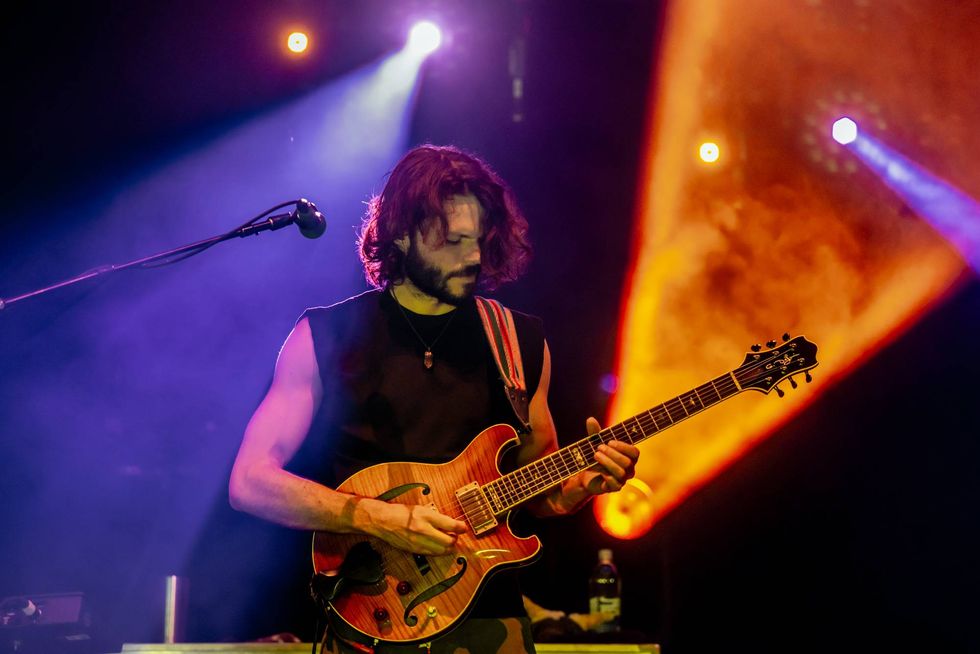
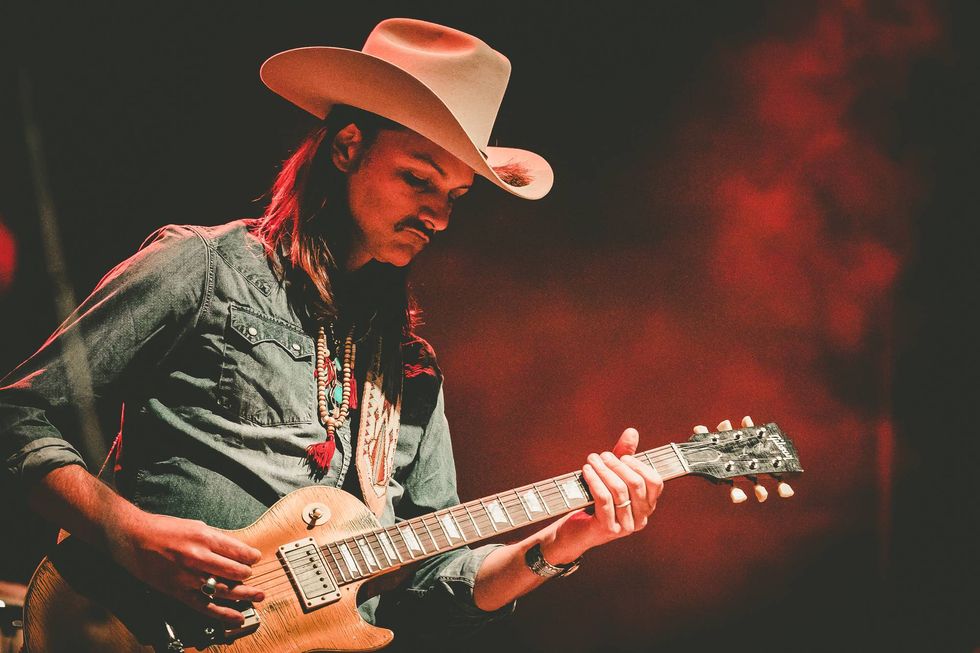
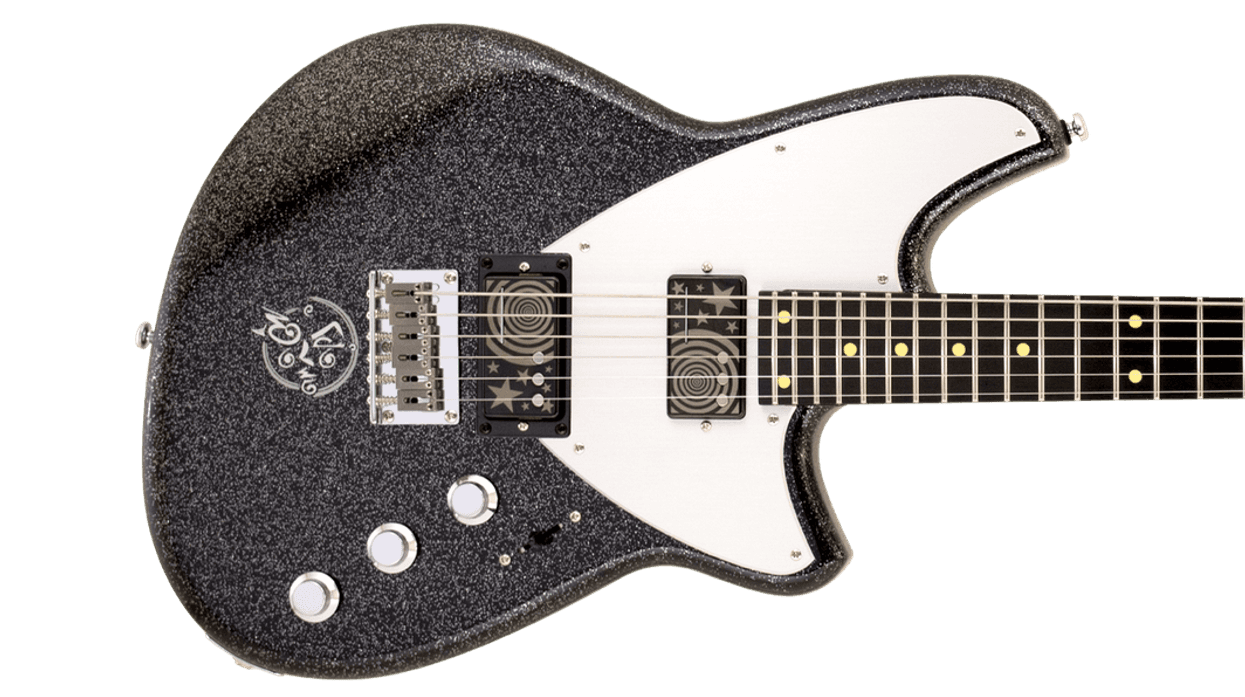
Mitarotonda used his Greg DeLuis Empress to track the entirety of Big Modern!
Photo by Juliana Bernstein
Rick Mitarotonda’s Gear
Guitar
- Greg DeLuis Empress custom model
Amps
- 1960s Fender Deluxe
- Vintage Marshall combo
Effects
- Ibanez Tube Screamer
- MXR Carbon Copy
- Strymon El Capistan Tape Delay
- Strymon Deco Tape Saturation & Doubletracker
Strings, Picks, & Cables
- D’Addario NYXL strings (.010 –.046)
- Dawg David Grisman mandolin pick
- Mogami cables
These aren’t just concerts; they’re more like communal experiences. And the group’s marathon improvs, led by Mitarotonda’s breakneck virtuosity, aren’t self-indulgent, murky ragmops. Each extended interlude is packed with fun, discovery, and a bit of high-wire danger, and carries a sharp emotional breakthrough. There isn’t anything calculated or predictable about Goose (the lineup also features guitarist-keyboardist Peter Anspach, bassist Trevor Weekz, and drummer Cotter Ellis); everything they do feels spontaneous and alive. Nowhere is this more evident than in their playful and promiscuous choice of covers, which can sashay from Laura Branigan to Bob Seger one night, Steppenwolf to A-ha the next.
How a band navigates success can be a tricky bit of business, particularly as it transitions from cult darlings to mainstream stars. Mitarotonda admits that Goose’s rocket-like ascent has presented some challenges. “Certain aspects of this are totally overwhelming,” he says. “There’s little junctures where things you do or things you intend get misinterpreted, and you have no control over it. That can be difficult to contend with. Plus, there’s a struggle to find a balance and wanting to have time to breathe and reflect and process and write and do other things in life that feed creativity amidst the constant ability to tour.”
“There’s no way to know or understand what people seem to be thinking about us or what they think of what we do.”—Rick Mitarotonda
Anspach, who joined Goose in 2017 following the departures of several guitarists and keyboardists, isn’t feeling the pressure. “There have been a lot of times where it’s felt like just tour, tour, tour,” he says. “The pace isn’t really locked down, though. Last year, we put out two albums [Everything Must Go and Chain Yer Dragon], but before that we were touring for two years without a new record. I think in general, we definitely want to keep making records. I don’t really see that slowing down just yet.”
Mitarotonda, for his part, isn’t letting fame affect his creative decisions. “We’re not that big where we’re at risk of jumping the shark,” he says with a smile.
For a band that consistently throws left curves to its audience, Goose’s new album, Big Modern!, is one hell of a wild ride. While it’s not a dedicated concept record—there’s no narrative story or stated theme—it does feel, in sometimes jarring ways, like an homage to the glory days of MTV-era 1980s. The sleek, pulsating groove of “Torero” recalls Jan Hammer’s lush, synthetic noir soundscapes in Miami Vice, while “Savenger” is a synth-pop pastiche that evokes the Human League, Howard Jones, and Mr. Mister. “Media” is a dense and chaotic cardio workout that combines Remain in Light-period Talking Heads with the Tubes at their commercial peak. And if you’re too lazy to search for Nena’s “99 Luftballoons” or Kim Wilde’s “Kids in America,” you can simply cue up “Pop,” a delicious power-pop knockout. It’s all over-caffeinated and overblown, wildly entertaining, and hooky as hell.
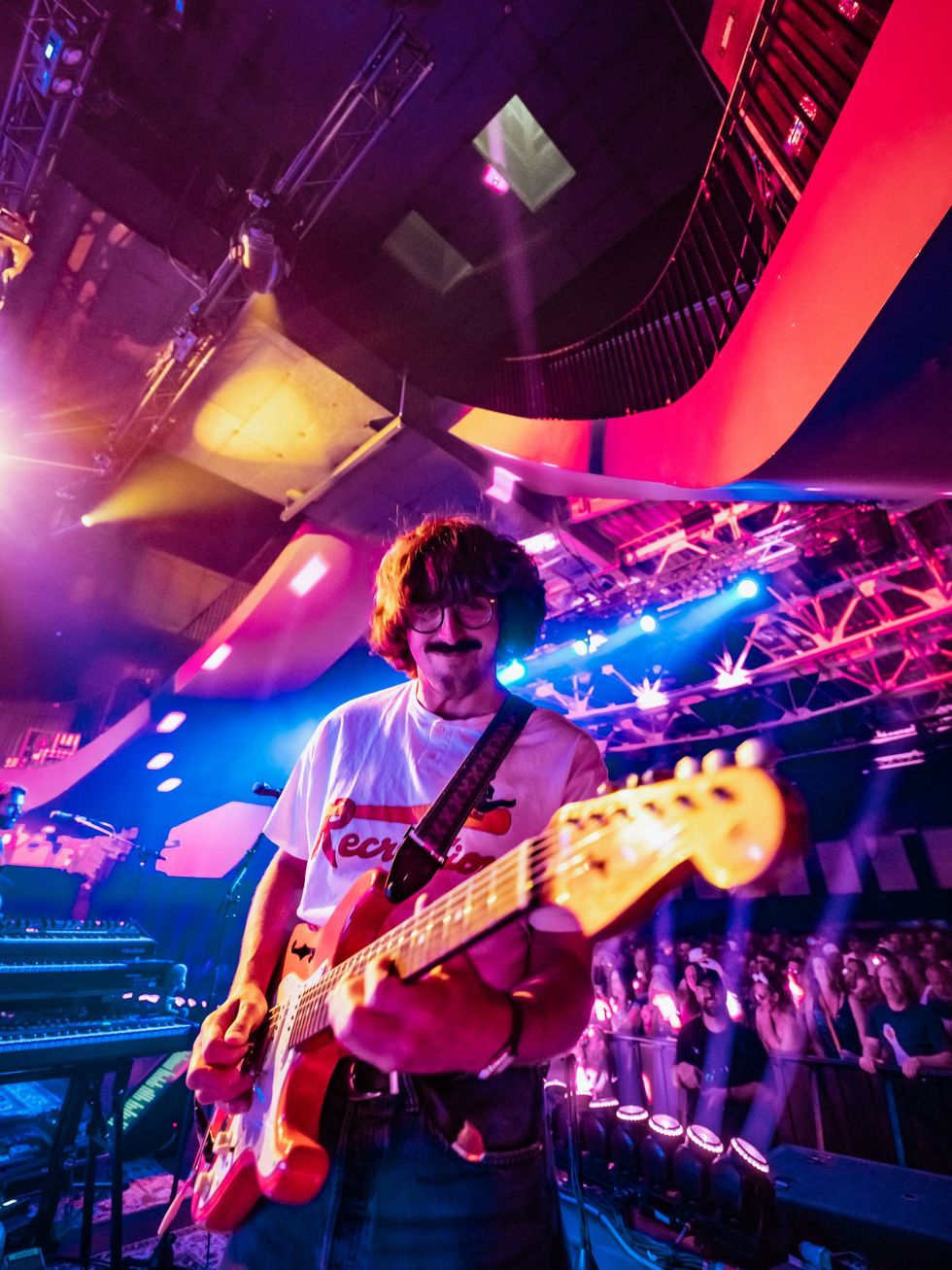
“We do as much as we can to keep things at a certain level, and we have a great guitar tech and audio team,” Anspach says of Goose’s live shows.
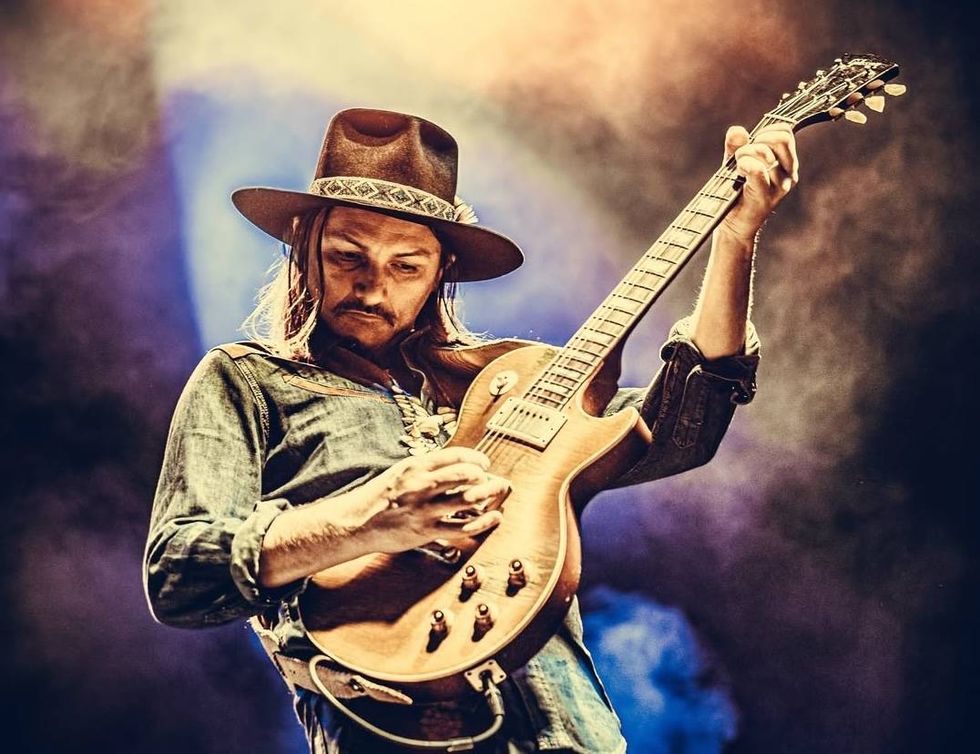
Photo by Juliana Bernstein
Peter Anspach’s Gear
Guitars
- John Suhr Classic S
- Gibson Firebird (belonging to producer D. James Goodwin)
Amps
- 1960s Fender Princeton
- Vintage 100-watt Hiwatt
Effects
- Boss DD-20 Giga Delay
- Analog Man King of Tone
Strings, Picks, & Cables
- D’Addario NYXL strings (.010 –.046)
- D’Addario picks
- Mogami cables
Mitarotonda reasons that if Goose made an ’80s record, they did so unwittingly. “There’s no denying that’s a pretty consistent thread throughout,” he says. “It’s a very synth-heavy record. The drums and the guitar tones are big. A lot of things just pushed the material in that direction, but not in a contrived way. It’s funny, because obviously I wasn’t alive during the 1980s—I was born in 1990—but when I think about that period in time, it was like there was this big, superficial sense of forward momentum. Everybody was saying, ‘The future is now,’ and there were these extremes in sound and fashion. There was new technology coming very fast, and I think people were just inundated with stimulation. The aesthetic was loud, and I think that loudness is a perfect metaphor for the overstimulation that’s going on with technology right now.”
As has been the case since the early days of Goose, tunes are rarely born from jams. Much of the material on Big Modern! was written by Mitarotonda and his longtime collaborator, Matt Campbell. The two recorded “fairly fleshed out” demos that the guitarist says “really informed the trajectory of where we were going.”
“Usually, we kind of sketch out bare-bones demos and then fly by the seat of our pants hashing it out in a practice room,” he says. “This time, we went deeper with the demos, and it became a really valuable process because there were layers and textures that came out of it. We’d be working on a piece, and I’d say, ‘I want to add some bass on this.’ I would just track some bass, then play something and listen back to it, and I’d feel like it became a part of something. There were lots of weird little segments that stood out to me that just kind of added to the whole thing.”
Anspach listened to the demos and was faced with deciding between vintage ’80s-style keyboard textures or some level of dual-guitar attack. “There was a lot of keyboard stuff to learn and figure out for this record,” he says. “But there were also songs like ‘Torero,’ where I’m playing these keyboard layers, but then I switch to guitar. But we’ve developed the technology so that the synths can continue to play while I’m on guitar.”
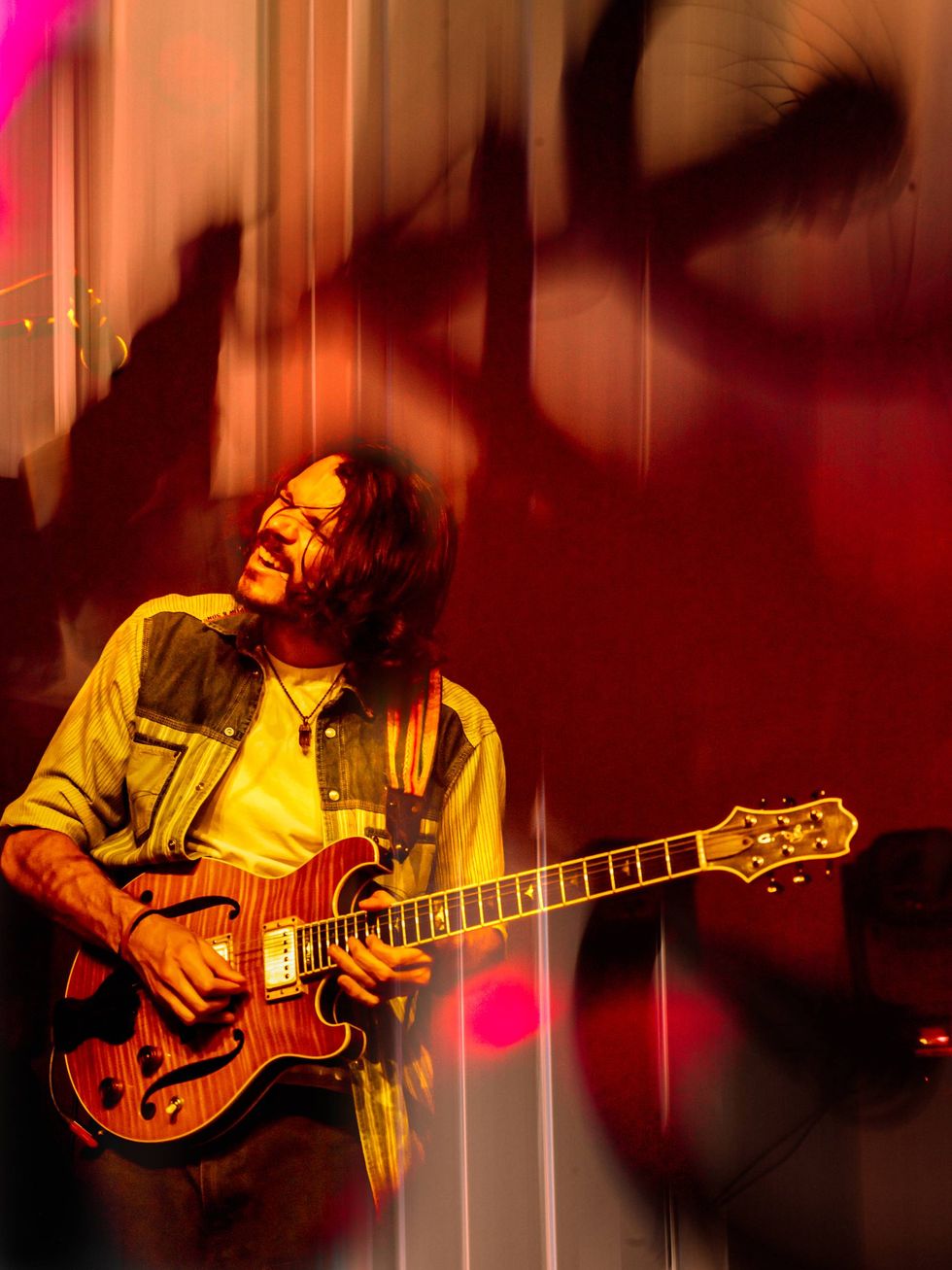
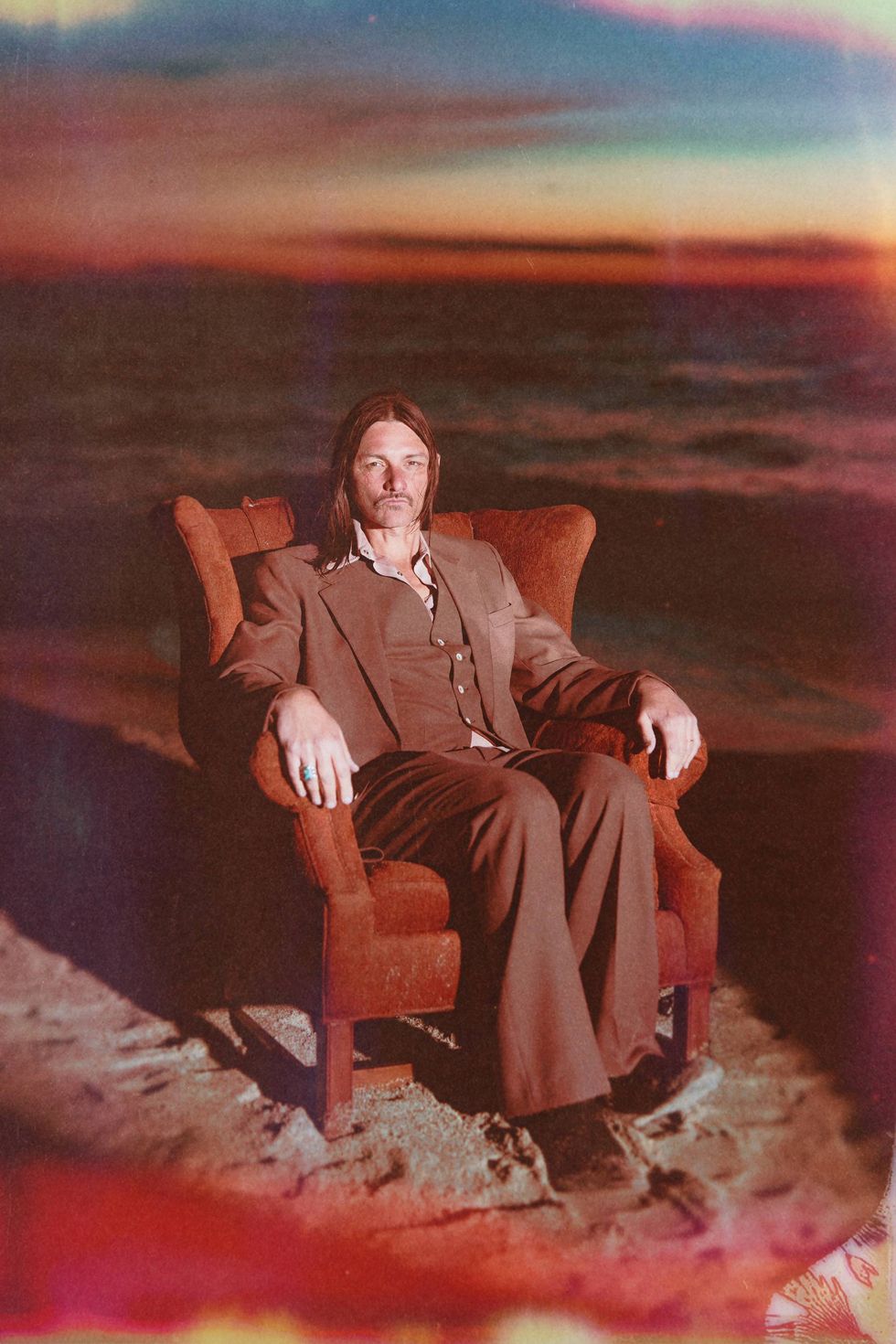
Photo by Juliana Bernstein
Mitarotonda marvels at his bandmate’s multi-purpose capabilities. “Peter’s pretty clutch at all that,” he says. “On this record, we really built the shit out of these tracks to get them to sound really big. Then we had to try to figure out how to recreate it with just the four of us. There was a point when it was like, ‘Shit, do we need another guy to do some of this stuff?’ But Peter was like, ‘I can be three guys, actually.’ He figured out the game plan and the tech, and he’s playing guitar and four keyboards at the same time.”
“Torero” is one of the focus tracks on Big Modern!, but it almost didn’t see the light of day. The band road-tested it live to great effect before hitting the studio, but the song refused to behave once recording was underway. “We spent a whole day on it, and it just wasn’t there,” Mitarotonda recalls. “After dinner, we went back to it and figured out the arrangement and were just ripping takes. The energy that didn’t exist before became explosive. It was so cathartic, and the way Cotter dug into it, it was epic.”
So, too, is the guitarist’s splashy and exuberant solo, which hits like a ton of bricks. “Good 2B” features another turbulent lead break, but one that takes on a surreal quality as the song churns on. “That one presented some challenges because we knew we could really open the song up live,” Mitarotonda says. “Coming out of the drum break, there’s a ton of steam and it just wants to go on forever.”
His solo on the huge rocker “Salt” generates heat in a different way—it’s slow and full of legato lines, calling to mind George Benson’s unhurried manner of phrasing. “That was the biggest improv on the record,” he says. “We did a bunch of takes as a band, just trying out things, and they all went to different places. In the end, there was a long jam and it just seemed right to leave all those spaces between notes.”
“It’s a very synth-heavy record. The drums and the guitar tones are big.”—Rick Mitarotonda
For the most part, Mitarotonda improvised his solos while tracking with the full band. It’s taken him a while to adopt this approach, and he admits that when Anspach joined Goose, he still maintained a perfectionist’s attitude of crafting and nailing solos during the demo phase. “Peter finally said, ‘Dude, let’s just track it already.’ And he was right. Nothing can touch a holistic take when you’ve got everybody together. You just can’t fake that energy.”
Neither guitarist changed much about his guitar and gear setups for Big Modern! Mitarotonda relied on the same Greg DeLuis custom-made Empress model he’s been playing since 2023. “There’s only a couple of times I might pick up something else,” he says, “but I tracked the whole record with the DeLuis.” Likewise, he estimates that he recorded “perhaps 99 percent” of the album with his favorite amp, a 1960s Fender Deluxe, and “one tiny segment” with a vintage Marshall combo. “I’m not sure what kind,” he says with a smile. “I’ve always been a bit of a simpleton when it comes to gear.”
Anspach kept things basic, as well, using a John Suhr Classic S, as well as a Gibson Firebird that belongs to the band’s producer, D. James Goodwin. “That Firebird rips. It’s pretty sick,” Anspach says. Ampwise, he alternated between a 1960s Fender Princeton and a vintage 100-watt Hiwatt.
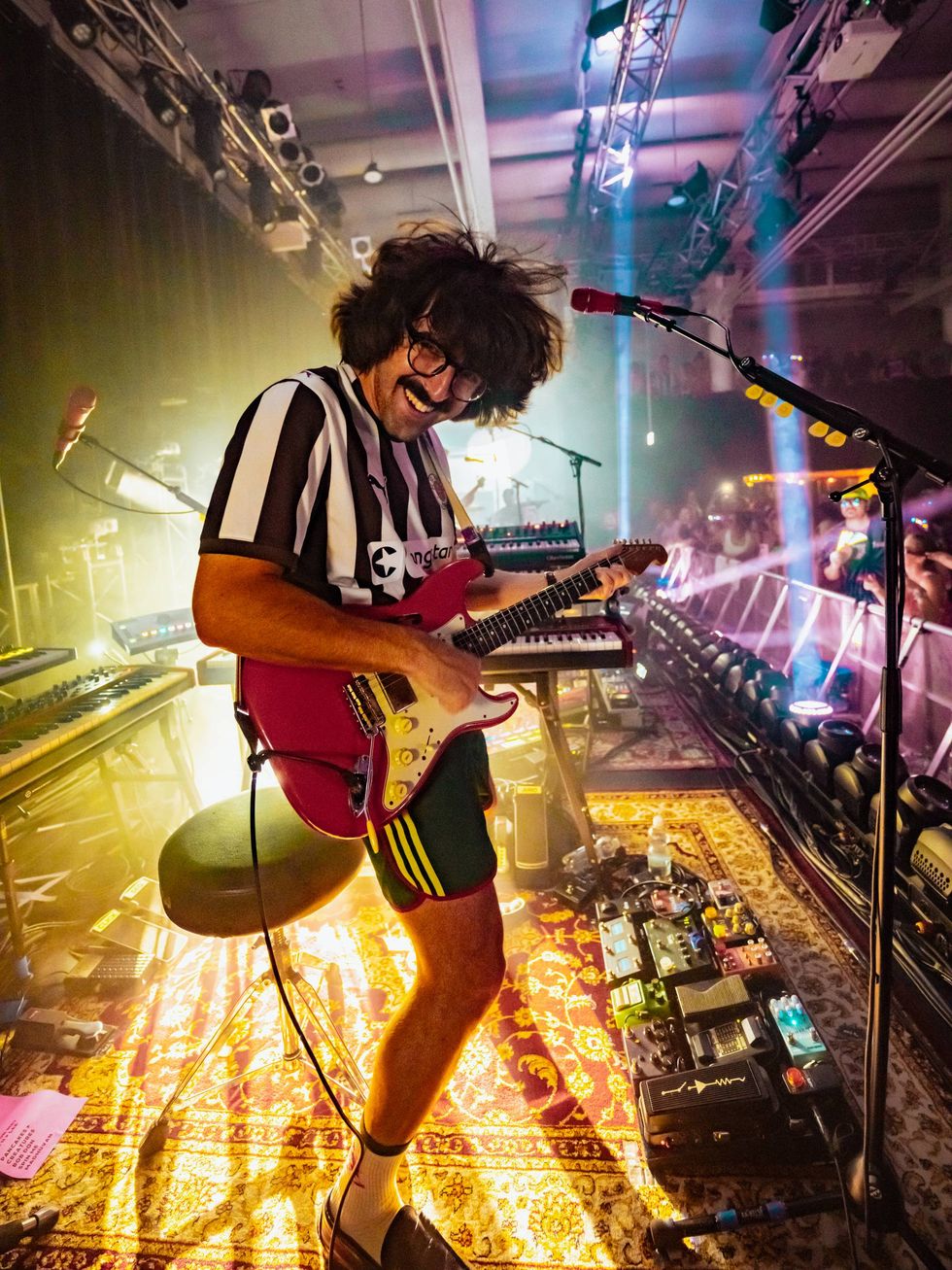
Photo by Juliana Bernstein
Controlling guitar sound in the studio is a far easier affair than achieving consistent onstage tone and balance—each venue offers its own variables, particularly for outdoor gigs, where sound waves are at the constant mercy of temperature and humidity.
“We try to deal with that as best we can,” Anspach says. “The fact is, it changes night to night, so you just have to embrace it and be like, ‘This is what we have to work with.’ We do as much as we can to keep things at a certain level, and we have a great guitar tech and audio team. There have been a few times where we’re feeling like something is really off, so you make little adjustments. Ultimately, you have no choice but to just ride the wave. The show goes on.”
Sometimes that show goes on without a soundcheck, as was the case last year at the Newport Folk Festival, when a series of thunderstorms and a shelter-in-place order threatened to nix Goose’s appearance entirely. When the weather cleared, the band took to the stage for a shortened set, which turned into a “you-had-to-be-there” moment when they were joined by Kenny Loggins for a high-octane performance of the singer’s cinematic mega-hit, “Danger Zone.”
“It was totally wild and hilarious,” Mitarotonda says. “We had no soundcheck, so it was pretty rough. Kenny couldn’t hear us, we couldn’t hear him, he couldn’t hear himself—it was crazy. We were literally in the danger zone with Kenny Loggins. It was quite the experience. Kenny’s the man.”