
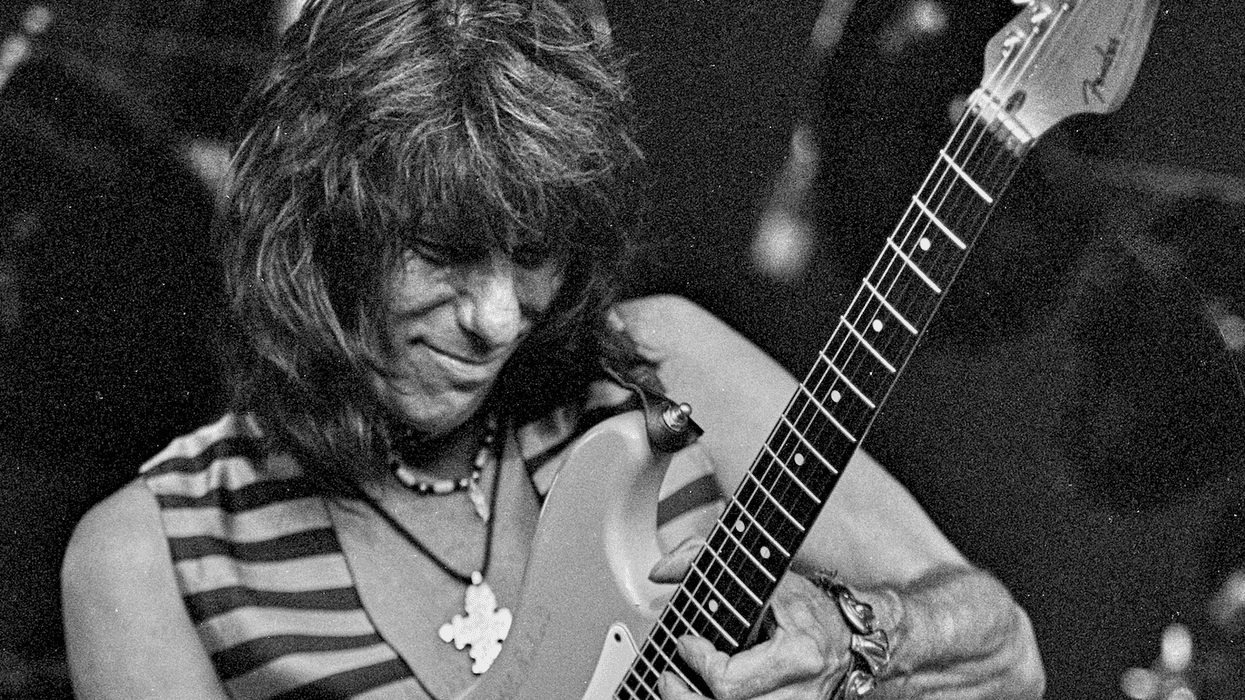
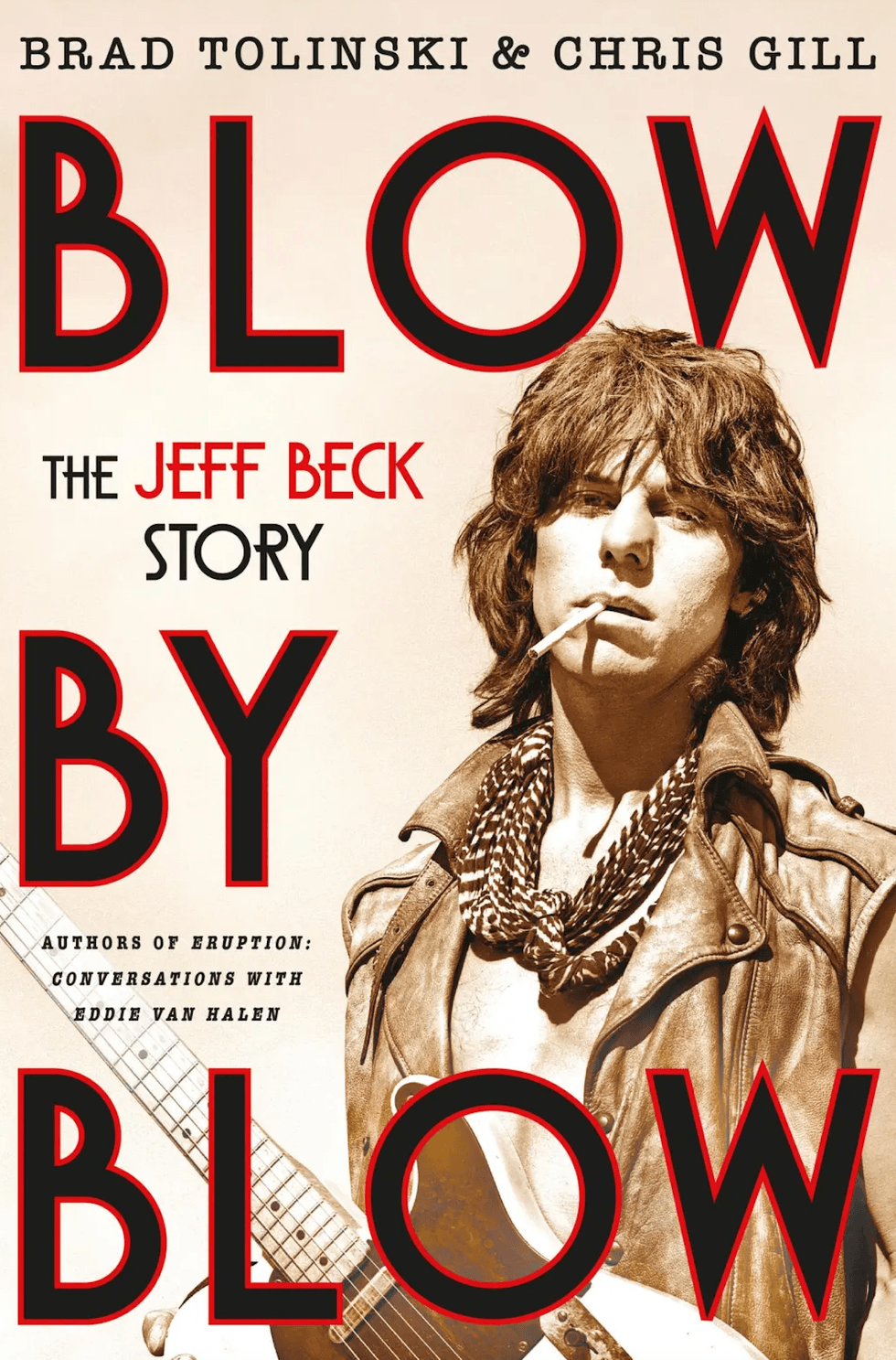
Set for release on July 14, Blow by Blow: The Jeff Beck Story is a new biography of the iconic guitarist written by Brad Tolinski and Chris Gill—the pair behind the acclaimed Eddie Van Halen oral history Eruption—and drawn from roughly 30 hours of interviews with Beck himself, along with conversations with his collaborators, colleagues, and loved ones. In this exclusive excerpt, Tolinski and Gill revisit the 1989 Fire Meets the Fury tour, where Beck and Stevie Ray Vaughan pushed one another—and themselves—to extraordinary heights.
For Jeff Beck’s return to the U.S. touring circuit in 1989, Epic Records and his management arranged a co-headlining run with Stevie Ray Vaughan & Double Trouble. Vaughan and Beck first met during the CBS Records Convention in Honolulu, Hawaii, in March 1984, where they shared a memorable jam session.
Vaughan later recalled, “We rehearsed a couple of times, smoked cigarettes, and went crazy. Then we played and just had a blast. Jeff did this solo in Hawaii that night that was unbelievable. It took me watching it on videotape for about a month to really grasp what he played. Whether he’s pulling our leg, and he really knows what he’s doing before he does it, I don’t know. It doesn’t really matter. But he finished this solo and got this big grin on his face and stuck his hand in his pocket and stood there for a while like, ‘You can put that one in the bank.’ It was amazing.”
Beck later reciprocated Vaughan’s praise: “Stevie Ray Vaughan’s playing was great. It was the closest you could get to hearing Jimi Hendrix play the blues. I could listen to Stevie play ‘Red House’ over and over. In 1989, there was a complete east-west divide between what Stevie was doing and what I was doing. He was playing Tex-Mex blues, and I was playing dangerously on-the-edge techno with drum loops, and doing weird modern things that hard-nosed guitar freaks probably didn’t like, but our tour together was like a jumbo burger to a burger lover.”
Fittingly called “The Fire Meets the Fury Tour,” the 30-date U.S. trek ran from October 25 in Bloomington, Minnesota, to December 3 in Oakland, California, primarily in large arenas like Madison Square Garden and the Los Angeles Memorial Sports Arena. The two guitarists alternated headlining duties, with Jeff winning a coin toss to close the first night.
“There were only three exceptions to that arrangement that we agreed upon in advance,” said Double Trouble drummer Chris Layton. “Stevie wanted to close in New York and Austin because of his huge followings there, and Jeff wanted to close in L.A.”
Beck’s set list leaned heavily on [his 1989 album] Guitar Shop, omitting only “Two Rivers.” He rounded it out with fusion-era staples—“Blue Wind,” “Freeway Jam,” and “Goodbye Pork Pie Hat”—plus an instrumental take on “People Get Ready” to satisfy the MTV-era fans who mostly knew him as “that
guitar player in the Rod Stewart videos.” Regardless of who topped the bill each night, Beck and Vaughan typically closed the show together with an encore of “Going Down,” trading solos and squaring off like two blues gunslingers.
The tour lived up to its name. Critics raved about the entire show, equally praising Vaughan and Beck for presenting different but complementary displays of guitar-playing virtuosity, far removed from the tawdry shredding of the hair-metal era.
"It was like walking on a tightrope without a net. I fell sometimes and made some horrible mistakes."—Jeff Beck
Despite Beck’s commanding stage presence, one song proved a nightly tightrope walk: “Where Were You.” “I dug myself a trench with that one,” Beck admitted. “I knew that I wanted to play it live when I first recorded it, but when we went on tour, I was still feeling my way around trying to find all of the right harmonics. Sometimes it was like trying to give birth, but the baby wasn’t going to come. I didn’t want to cheat either and just play something else. I had to play as close to the record as possible, so it was like walking on a tightrope without a net. I fell sometimes and made some horrible mistakes, but when I pulled it off you could really feel the lumps forming in everyone’s throats. The emotion of a spontaneous performance is much more important to me than worrying about making mistakes, so I’m always prepared to look the chump. If you become too guarded and too processed, the music loses its spontaneity and gut feeling.”
When the tour reached Los Angeles on December 1, it was like a Grammy after-party. Beck was surrounded by friends and admirers like Chrissie Hynde, Steve Lukather, Slash, and Slim Jim Phantom, and icons like David Bowie, Albert Collins, Bonnie Raitt, and Eddie Van Halen. All were photographed backstage with a beaming Beck alongside [drummer Terry] Bozzio and Vaughan.
Two nights later, the tour wrapped in Oakland, but not before an unexpected twist. “I remember seeing these black limos pulling into the back of the stage area, which was a little unusual,” Chris Layton recalled. “As soon as Jeff’s set ended, he and his band just jumped in and took off. No good- bye. No nothing. They were just gone. We still had to play our set, and I remember thinking about the encore, because people were expecting to see Jeff and Stevie jam. Fortunately, Carlos Santana had come to the show and was happy to play, so we had him play the encore instead. It turned out fine, because Oakland was Santana’s hometown, so the audience was happy to see him and Stevie play.”
It’s no wonder that Jeff was in a partying mood by the end of the tour. After a decade of chasing pop success— whether solo or alongside Rod Stewart and Mick Jagger— he had finally reclaimed his identity as an acclaimed instrumental guitar-playing phenomenon. Beck reached the level of recognition he fought for throughout the ’70s, and Guitar Shop opened new avenues, freeing him from the constraints of jazz-fusion’s fading popularity.
As he entered the ’90s, Beck had something rare: momentum. For once, he controlled the direction of his career. It was now up to him to keep the ball moving forward, which was always his greatest struggle.
Pick up Blow by Blow: The Jeff Beck Story on Amazon here.