
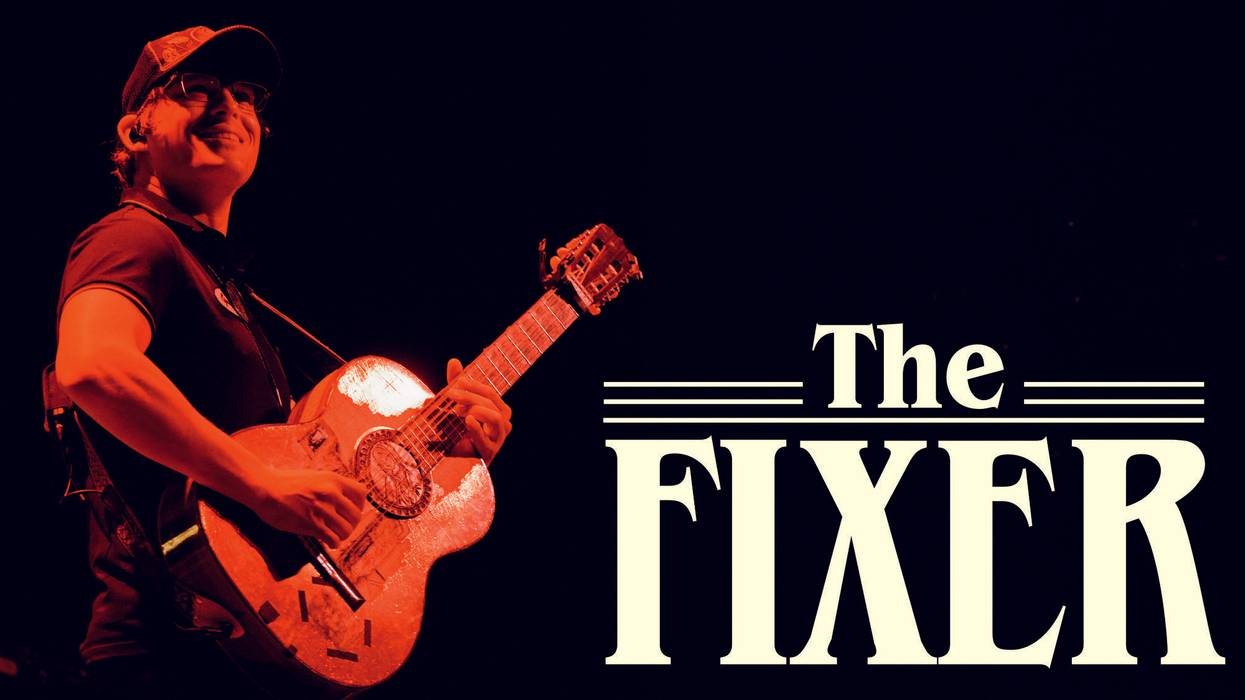
After Stephen Wilson Jr. wrote the lyrics to his melancholy country song “Gary,” inspired by a highway billboard depicting a 16-year-old who died in a car accident, he needed a particular kind of guitar riff. The song is about a “hustler,” Wilson says, someone who’s “always on the move, always thinking about something—he’s like an engine, in a loop, firing pistons. The harmonious, cyclical nature of pistons moving.”
In a phone interview, Wilson scat-sings the dnh-dnh-dnh-dnh engine-piston sound he sought. “Like revving up a big block engine,” he says. “I don’t really write songs to guitar riffs. I find the guitar gets in the way, as a songwriter. I wrote the whole song in my car. I had the chorus, all the verses, pretty much written. I had nothing to sing it over. It was trying to create that. The opening chord is like putting the key in the ignition and it’s turning over the motor and it just goes.”
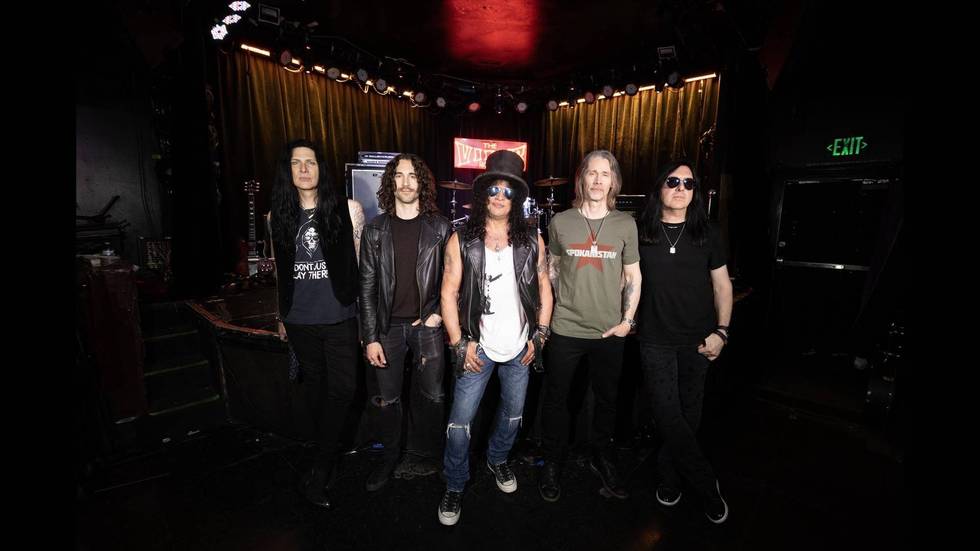
Wilson, 46, who grew up in Seymour, Indiana, just north of Louisville, working in his father’s body shop and hunting and eating rabbits and squirrels, is 11 years into a singer-songwriter career that has led him from anonymity, to signing with Morgan Wallen’s record label Big Loud, to a 2025 Country Music Association award nomination for New Artist of the Year, to opening for Guns ’N’ Roses. He has a weathered voice somewhere between Chris Stapleton and Eddie Vedder, which provides the country soul in covers like Ben E. King’s “Stand by Me” and poignant originals “Year to Be Young 1994,” “Patches” and “Father’s Son,” all on last year’s 34-track album son of dad.
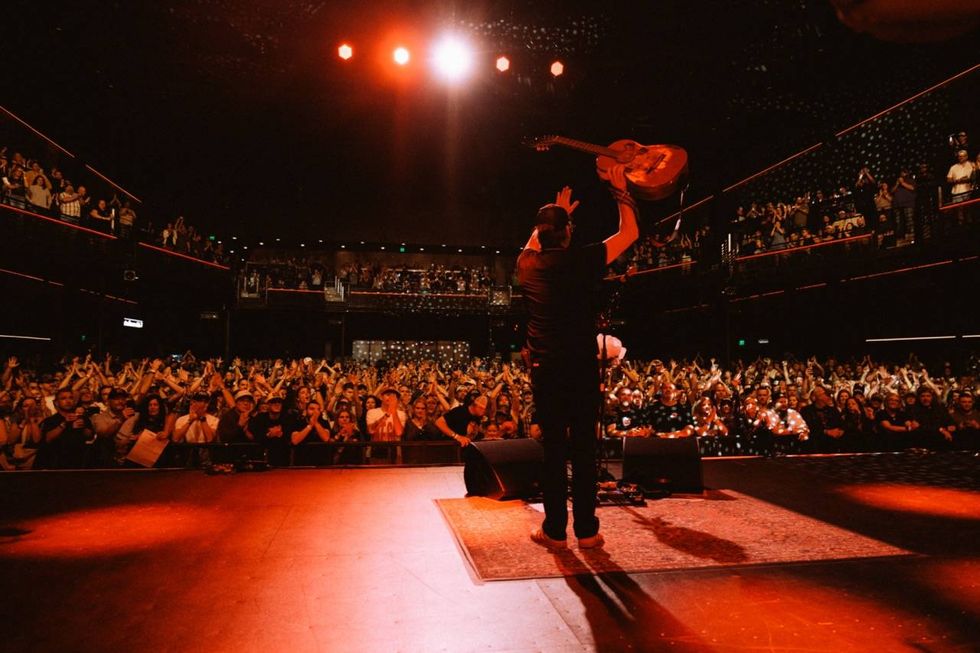
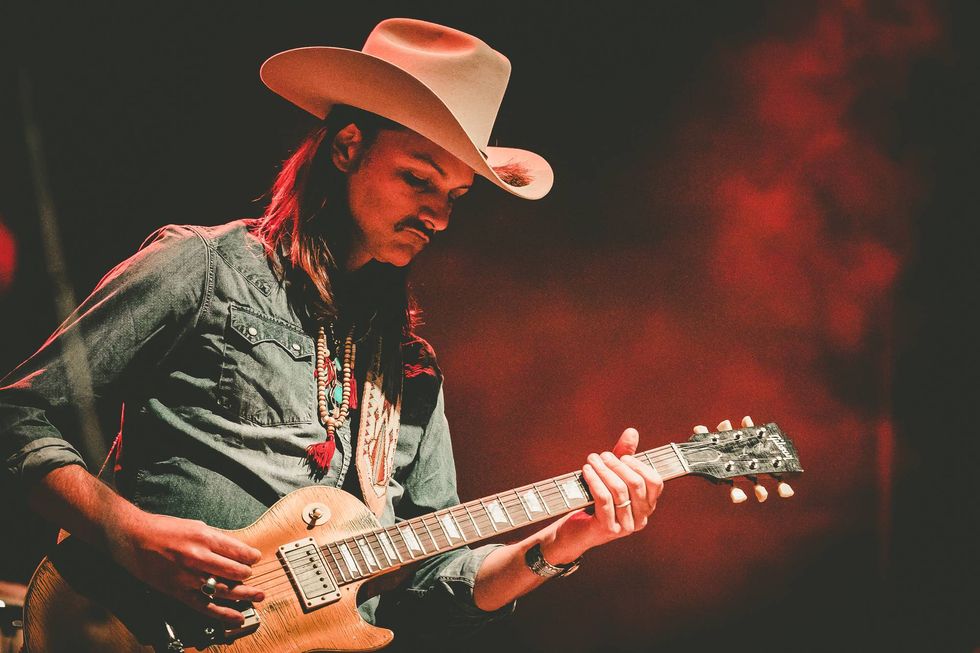
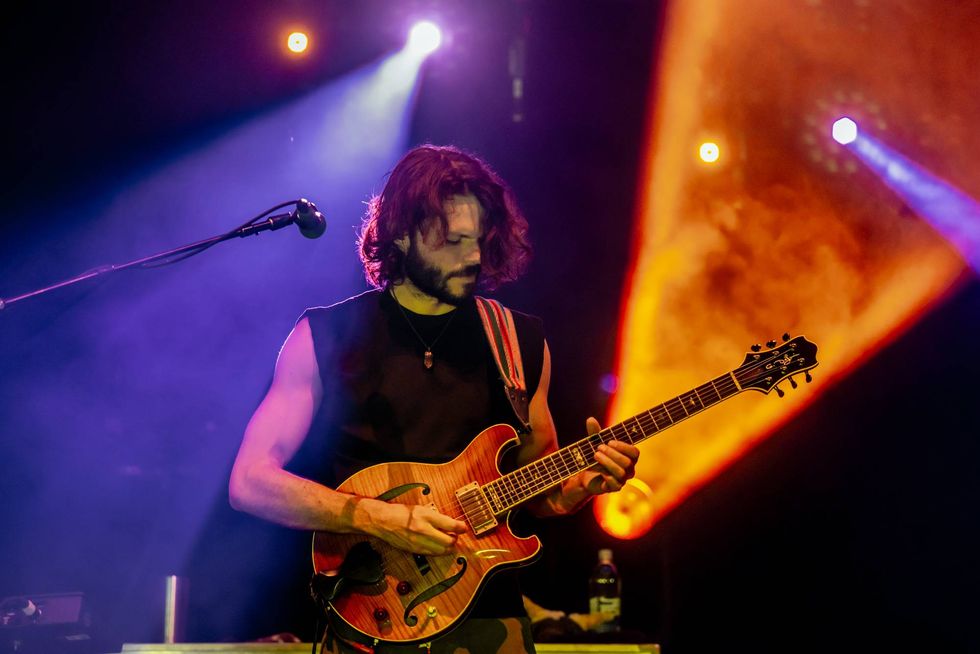
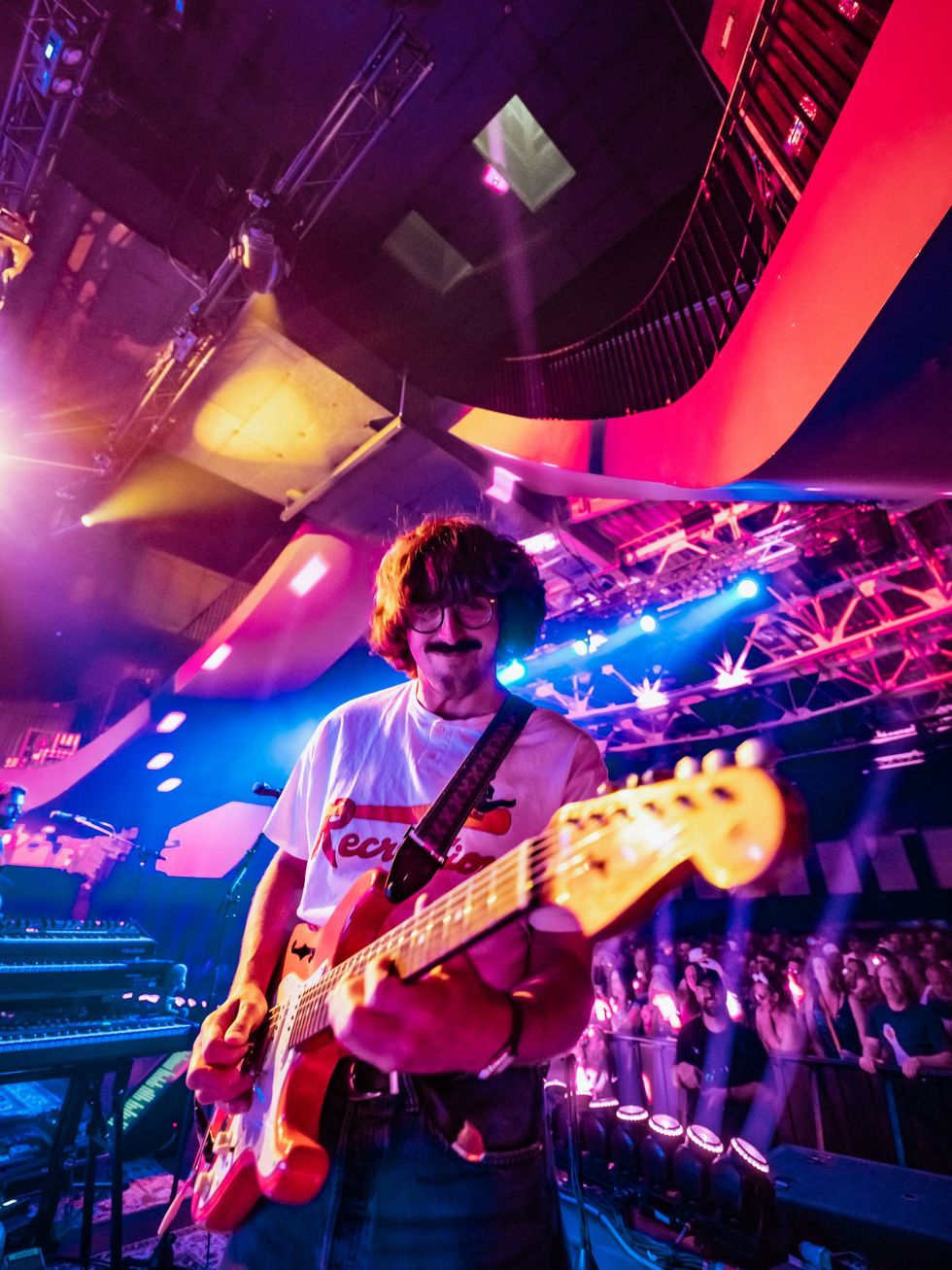
Wilson Jr. onstage at the Steelhouse Omaha on April 22, 2026
Photo by Jace Kartye
Stephen Wilson, Jr.’s Gear
Guitars
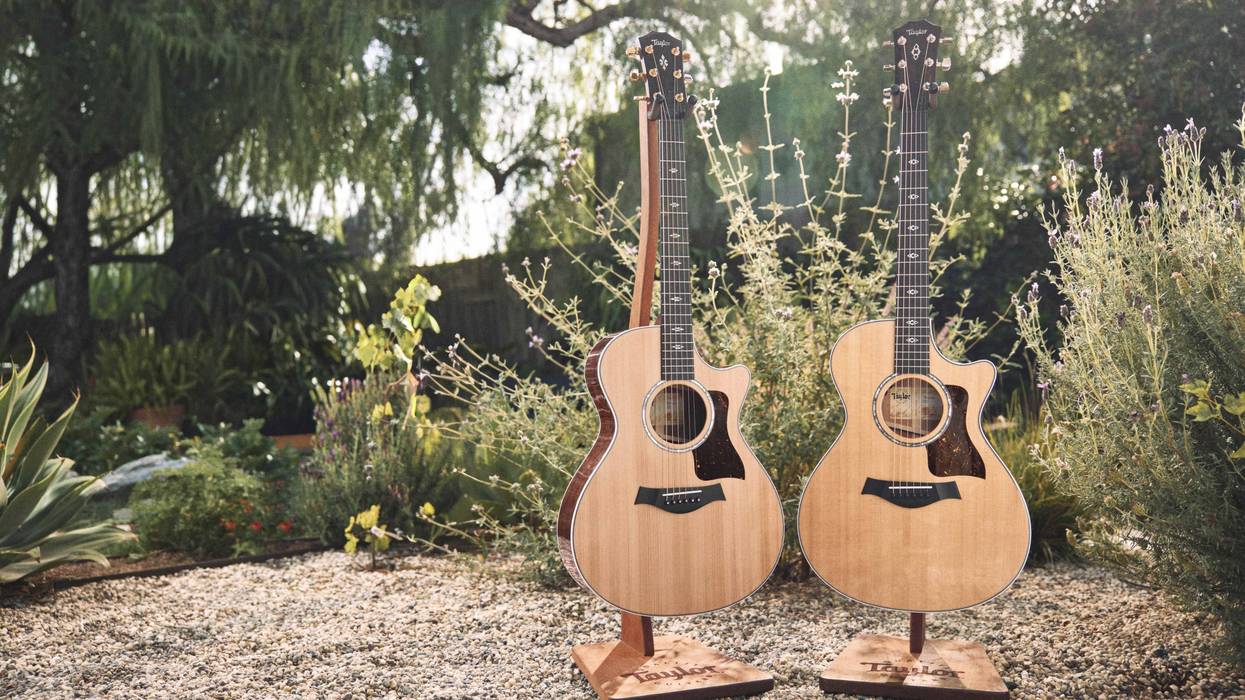
- Two Takamine acoustics “with gut strings”
Amps
- Fender Princeton
- Fender Deluxe
Pedal
- Ibanez Tube Screamer
Wilson lives in Nashville, and unlike many of his neighbors in the country-music business, he did not aspire to music stardom at an early age. He had a talent for science, describing himself as a “nerd” who kept stacks of biology books in his childhood bedroom. And while he started playing guitar when his late father bought him an Alvarez Telecaster at 16, he landed a microbiology degree from Middle Tennessee State University, then scored an early job as a food scientist in research and development for food-and-beverage giant Mars, Inc.
“With the guitar, that’s what I was put on Earth to do,” Wilson says, from a Florida casino hotel, two hours before that G ’n’ R show, part of the Official Formula 1 Miami Grand Prix Kickoff Concert in late April. “Then there’s science, which is just something I'm good at.”
“As much as I thrived in the electric guitar world, I think my heart was always with an acoustic.”
Wilson’s father, Stephen Sr., who died at 59 in 2018, encouraged him to quit his Mars job and pursue his calling. Stephen Sr. was an odd sort of father—Wilson refers to him multiple times as “crazy.” The singer adds: “In the best way possible. He was such a dreamer. He had this ability to dissociate from reality, like, ‘What was normal?’” Stephen Sr. was a single dad who drove a bus and worked at a body shop. He hunted for food because grocery stores were too expensive; he was a professional boxer who encouraged his son to take up the sport when he was seven, which he did, eventually becoming an Indiana Golden Gloves finalist.
Wilson’s decision to change careers wasn’t easy, especially because he had a lucrative job with health benefits and was likely to ascend to a management position. But he had a more creative vision for himself, first sparked by the 1993 River Phoenix movie about Nashville songwriters, The Thing Called Love. After seeing it as a kid, he says, “I remember thinking, instantly, ‘That job probably didn’t exist. This is fiction. But if it ever did exist, that’s what I would want to do.’” One day, at Mars, one of his bosses referred to another employee’s impending “golden handcuffs.” Wilson was spooked: “It scared the life out of me.”
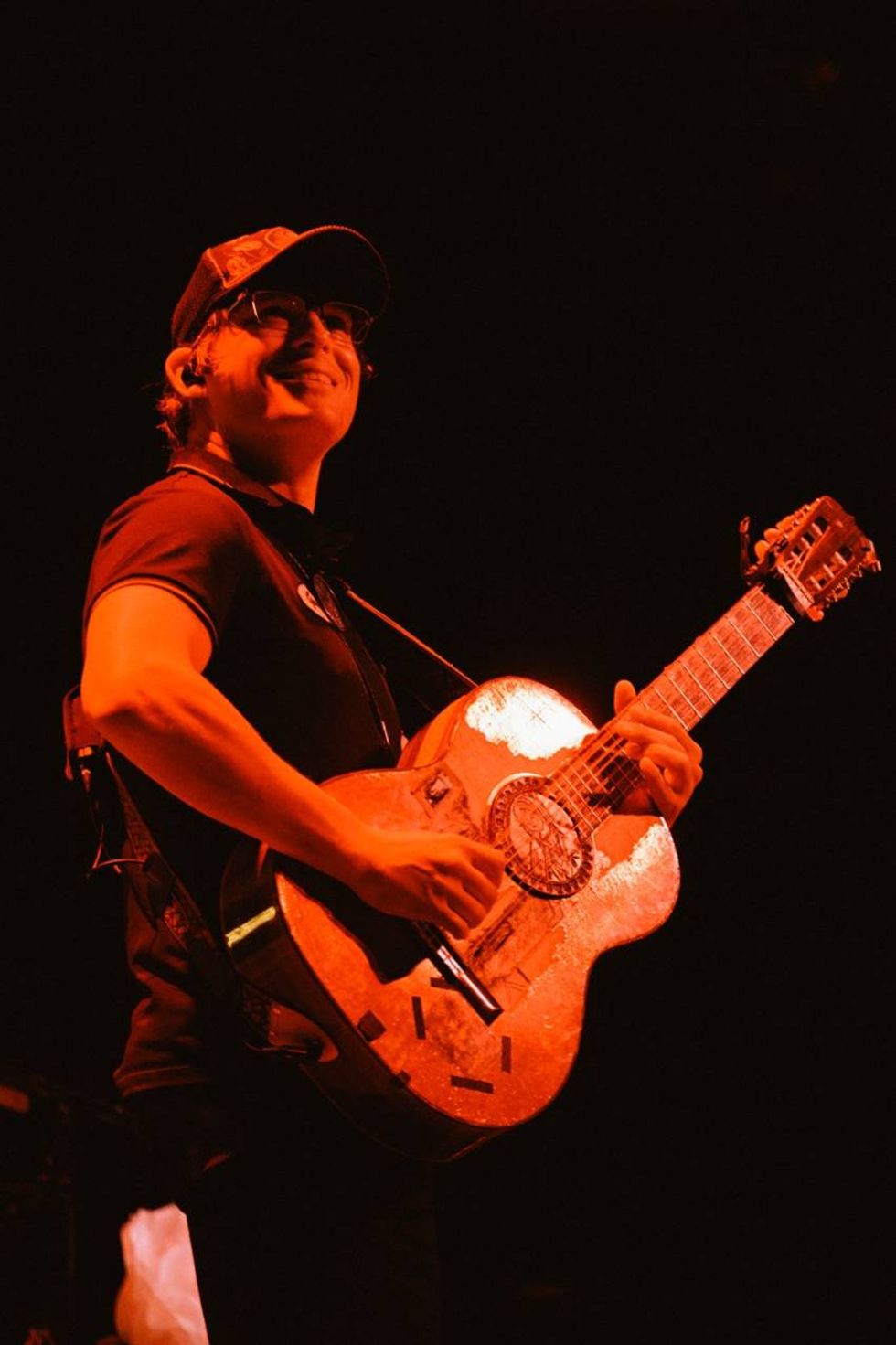
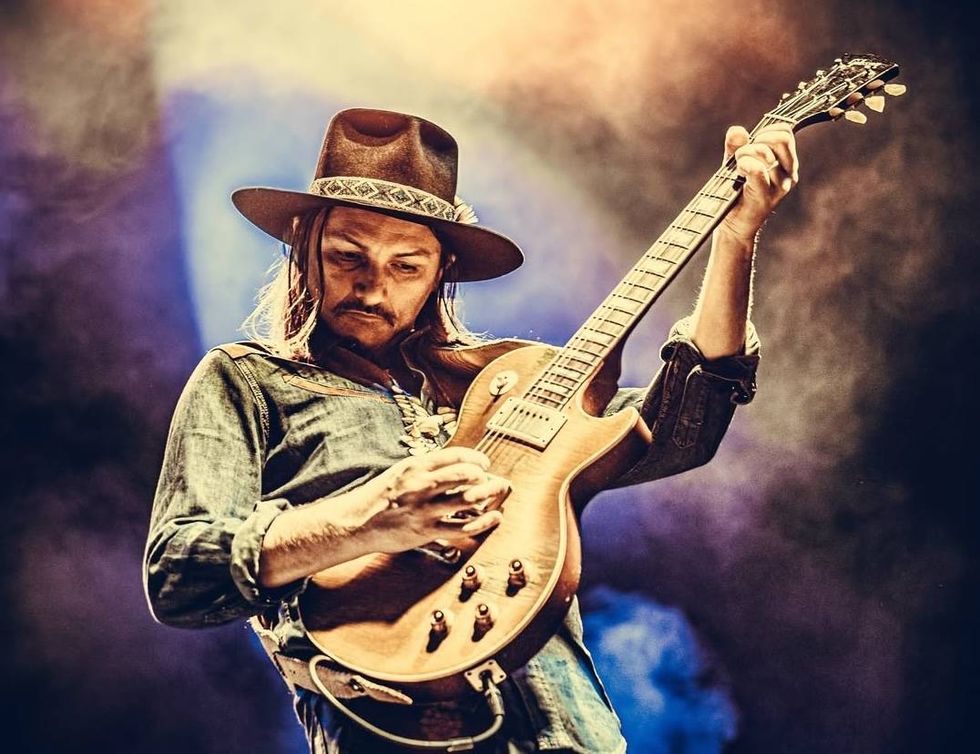
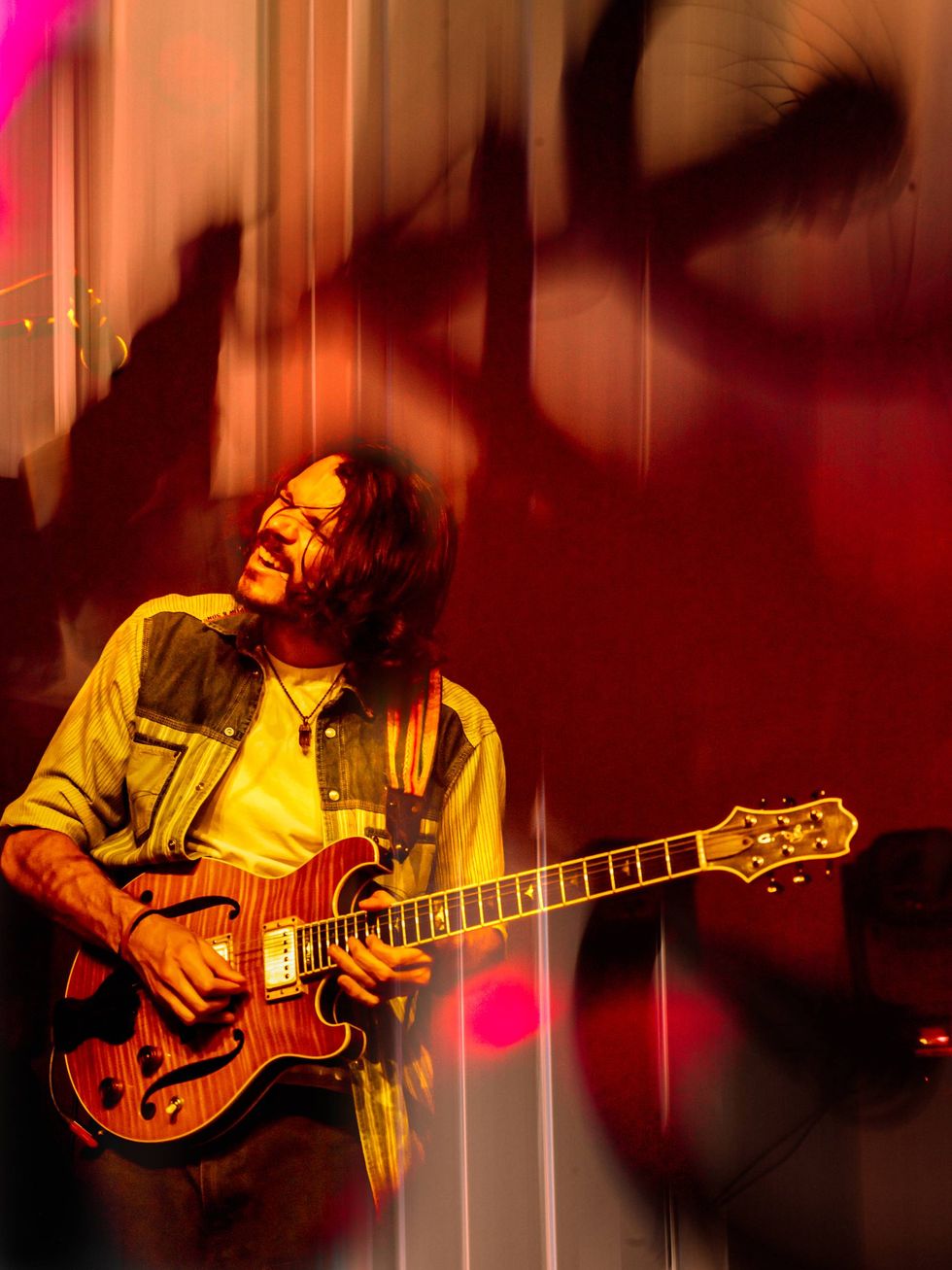
Wilson Jr. with his Takamine
Photo by Jace Kartye
Friends and co-workers suggested to Wilson he’d be crazy—that word again—to contemplate another career. But Wilson couldn’t shake the idea. It was his father who was the exception. “My dad was always my corner man in boxing, but also, like, in life,” Wilson recalls. “My dad was the only person that was saying, ‘You’re crazy to stay at that job.’ ‘You’re crazy to not give up everything.’ ‘You’d be crazy to face that kind of regret 10 years from now.’” Six months later, Wilson gave his two weeks notice and, despite never having “sang a song for anybody in my life,” he woodshedded for two years, trying to write songs before feeling ready to perform in every songwriters-in-the-round bill he could find.
Wilson had a bit of music-business experience by that point. In addition to his boxing career, he’d played lead guitar in an indie-rock band, AutoVaughn, after graduating from college. He was beginning to think of himself as a “song scientist,” using a new composition as a hypothesis, and an audience as a test laboratory. “I just really leaned into that,” he says. “In a science lab, you can spend six months waiting to get half a result, and with songs, you get an immediate result—you learn real quickly whether there’s any lack of truth there. That’s all I’m trying to do: Say the truest thing I can and look at truth in a different way.”
“In a science lab, you can spend six months waiting to get half a result, and with songs, you get an immediate result.”
Eventually, Wilson’s songwriting talent led him to a BMG Nashville publishing deal, and country stars from Tim McGraw to Trace Adkins began to cut his tracks. By 2019, he put out his first single, “The Devil,” on an EP named for a small town southwest of Nashville: Bon Aqua.
It was in Bon Aqua that Wilson observed 16-year-old Gary Russell III’s name and face on the billboard. Driving down the highway, Wilson blurted out: “Man, there ain’t a lot of boys named Gary these days.”
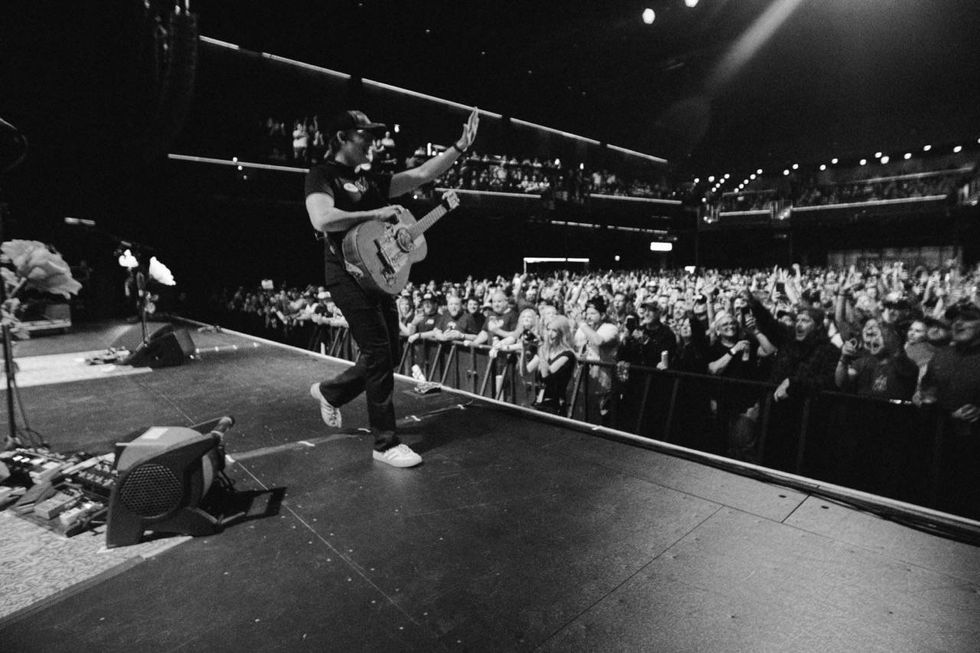
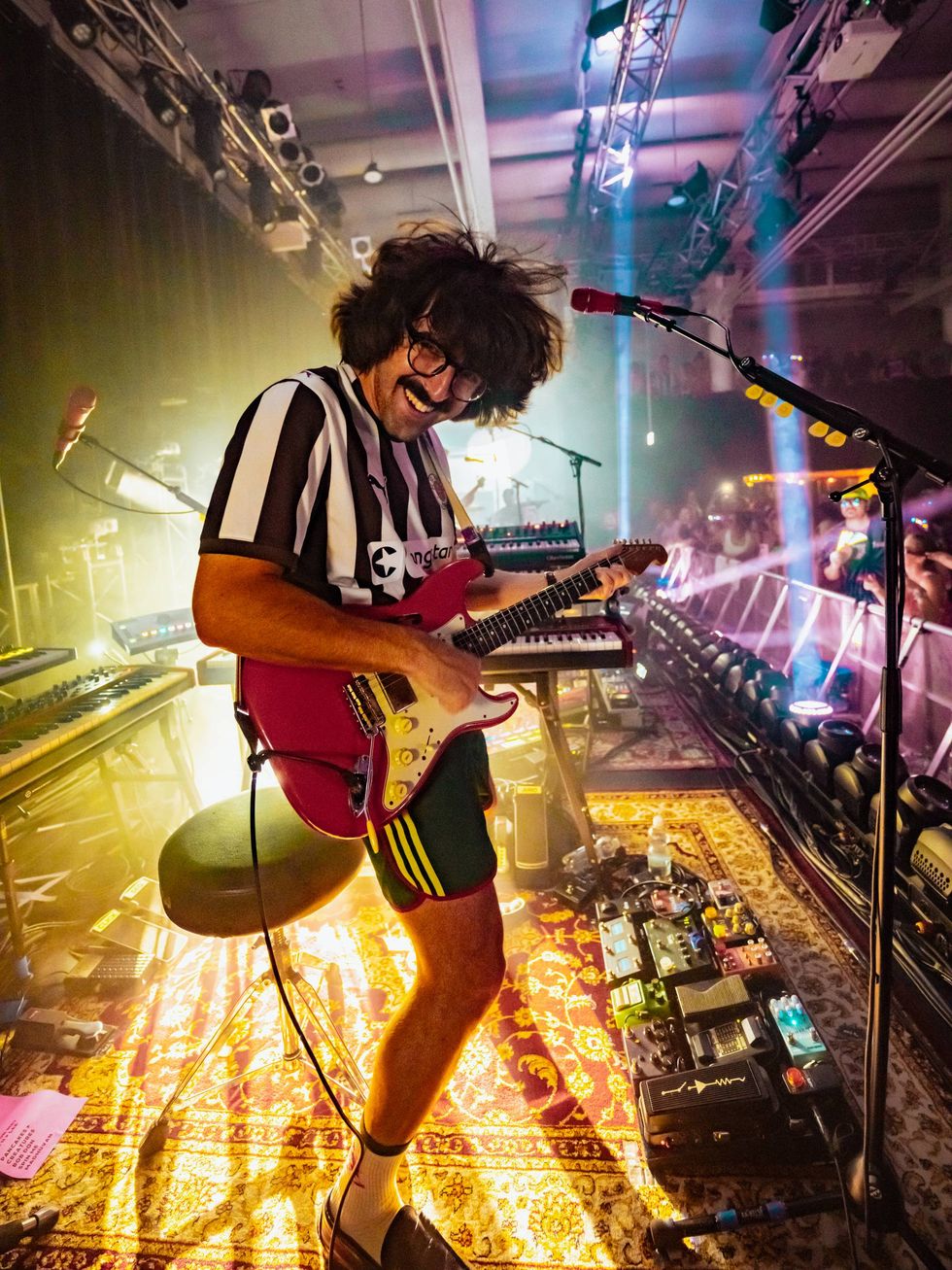
Photo by Jace Kartye
The blurting prompted a theory, then a storyline, then a mythology, which would make up the single “Gary,” released last November. In Wilson’s philosophy, “Garys” are friends and neighbors who do important work for others while demanding little in return. And they have a certain look. “That means born with a cigarette glued to your lips that’s kind of hanging there, for some reason, and you’re talking, and it ain’t dropping,” Wilson says. “They can fix just about anything. They were born in a broken world, where everything is broken, and they had to learn how to fix it because nobody else is going to. We tend to benefit from the Garys, more so than we even know. We live in a less-broken world because of the fixers, but the fixers are going extinct, so that means the world will become broken again. I’m just calling out that warning.
“Those guys that will change your alternator for a case of beer may not be around too much longer,” Wilson continues. “I grew up in a body shop full of Garys in a town full of Garys—and those are fewer and farther between, and the Garys that used to be there just aren’t as abundant anymore. Those characters—or ‘Garacters’—are something to celebrate. They’re generally forgotten. You hand them 300 bucks and they get your life back on track and you don’t really think about them again and you think about some other famous person that really ain’t done nothin’ for you—and celebrate that person instead.”
In the March video for “Gary,” Gary Sinise portrays a brazen Bon Aqua bank robber who Robin-Hoods the cash he steals to a grateful trailer park. (Sinise, the veteran Forrest Gump and Apollo 13 actor, had already heard and admired the song when Wilson reached out to offer the role; he quickly accepted.) The film was shot in the Bon Aqua home of Carl Lee Certain, Jr., a retired mechanic whom Wilson approached because he liked the look of his trailer. “I put a note in his mailbox on his birthday—I didn’t know it was his birthday,” Wilson says. “I said, ‘Hey, I’m shooting a music video, I’m a country artist. I would love to use your house to shoot a music video. I have $200.’ He accepted it willingly. And his place was already ready for the shoot. I didn’t have to do anything for it. We could’ve spent a million dollars trying to replicate this place and we wouldn’t have done as good a job as he did.”
“We live in a less-broken world because of the fixers, but the fixers are going extinct, so that means the world will become broken again.”
Certain died before the “Gary” video came out, and he receives an “In Memory Of” tribute at the end, along with Gary Russell III. Wilson had not initially planned to show an image of the Bon Aqua billboard that inspired the song—until one day, while he and his crew were making the video, he received an Instagram DM. It was a woman who’d heard an interview with Wilson talking about the inspiration for the “Gary” song. “Gary’s my brother,” she told Wilson, and filled him in on 16-year-old Gary’s fatal car accident. The woman gave permission to show the billboard—in the video, Sinise spots it while driving down the highway—and Wilson took pains to make the release date the anniversary of Gary’s death. “We went into overdrive getting this video edited, finalized, approved, ready to put in the pipeline, in a matter of weeks, just so we could make sure it came out on March 15 to honor the young man that inspired the whole thing,” Wilson says. “That’s why the song is so sad. Gary dies in the song and the video. It was rooted in that.”
For the scheduled phone interview, Wilson appears on the conference call about 15 minutes late, with an excellent explanation. Staying in his Florida casino hotel, he left his key in his room, then had to venture to the lobby for a new one—at which point, he encountered 100 fans “who were like, ‘What the hell are you doing here?’ And it got real weird,” he says. The encounter ended with a surreal kind of A Hard Day’s Night scene, as Wilson describes it: “Just kind of running through casinos and people chasing you down. A lot of stimulus, a lot of bells and ‘ding, ding, ding!’” He apologizes repeatedly: “It’s my own fault.”
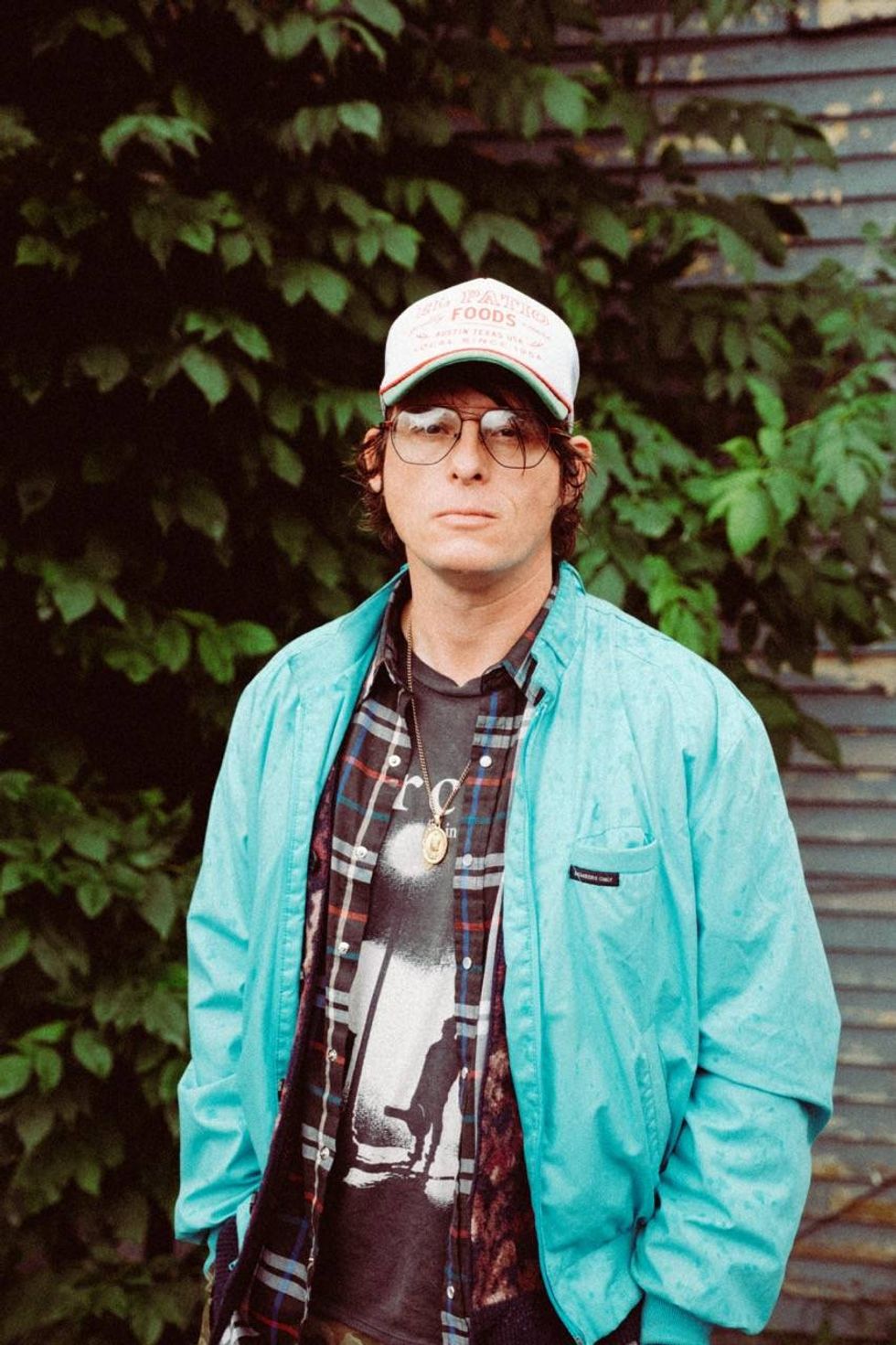
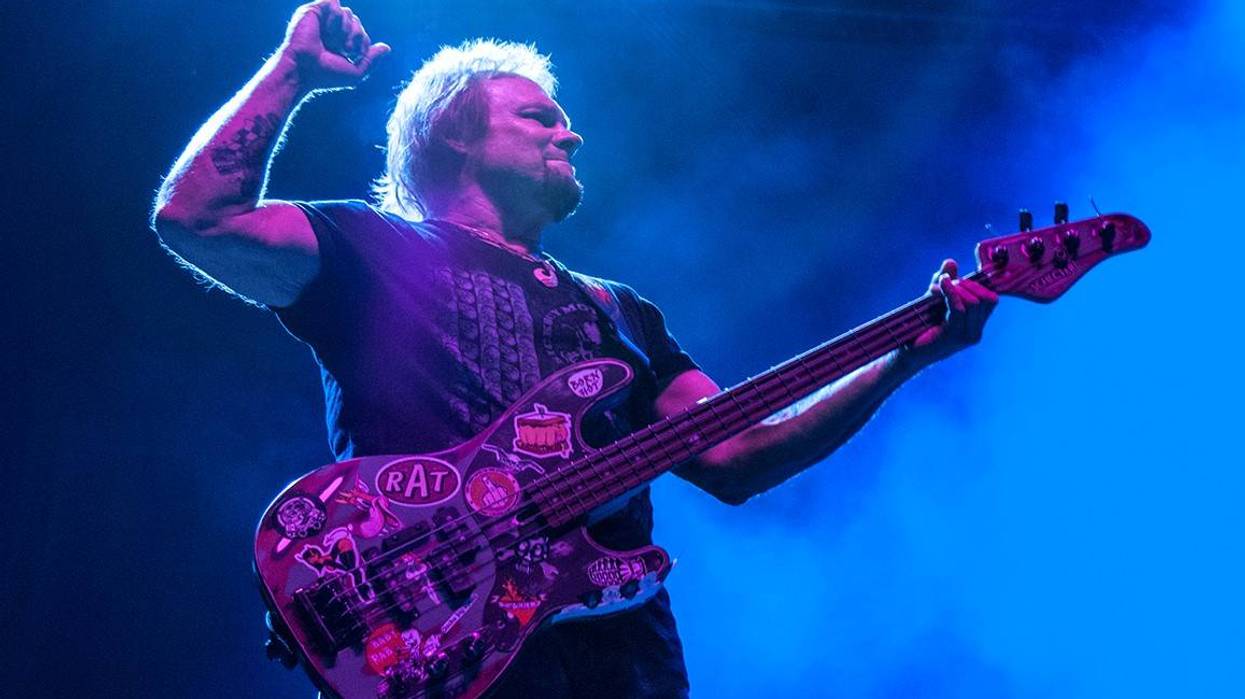
Photo by Jace Kartye
Throughout the interview, the talkative Wilson raves about that early Alvarez Telecaster, which had a pine neck, black finish, and white pickguard. (“I would love to have that guitar back,” he says.) On this Tele, he learned Soundgarden’s “Superunknown,” a key early influence. He graduated to an Al Di Meola cassette that introduced him to “Mediterranean Sundance,” then developed a fascination with Jimmy Page’s “Celtic weird tunings” and acoustic Led Zeppelin parts on songs like “Over the Hills and Far Away.” You can hear some of this inspiration in Wilson’s songs, especially those with roaring electric solos in the background, like “Holler from the Holler.” “As much as I thrived in the electric guitar world,” he says, “I think my heart was always with an acoustic.”
Stephen Sr. had intuited that a guitar would change his son’s unseen life in southern Indiana. “He was probably like, ‘Damn, man, this kid needs a life,’” Wilson recalls. “He got me a guitar and, needless to say, I became a more popular kid at school. But I was nonexistent until that guitar ended up in my hand. Somehow, by my senior year, I think somebody knew that I even went to school there, at least.”
Years later, when Wilson began to perform and record as a professional musician, his dad showed up. Stephen Sr. heard his early demos. He watched Stephen Jr. perform at the influential Bluebird Cafe in downtown Nashville. “He’d never heard me once sing a song, ever, not even in church, and here I am singing with a guitar—and holding my own, for what it’s worth,” Wilson says. “I think that’s when it hit him: ‘Oh, you’re really going for this.’” Stephen Wilson Sr. died two years later.
Before saying “I love you,” four times, Stephen Sr.’s last words to his son were, “Write a good song for me, Stephen.”