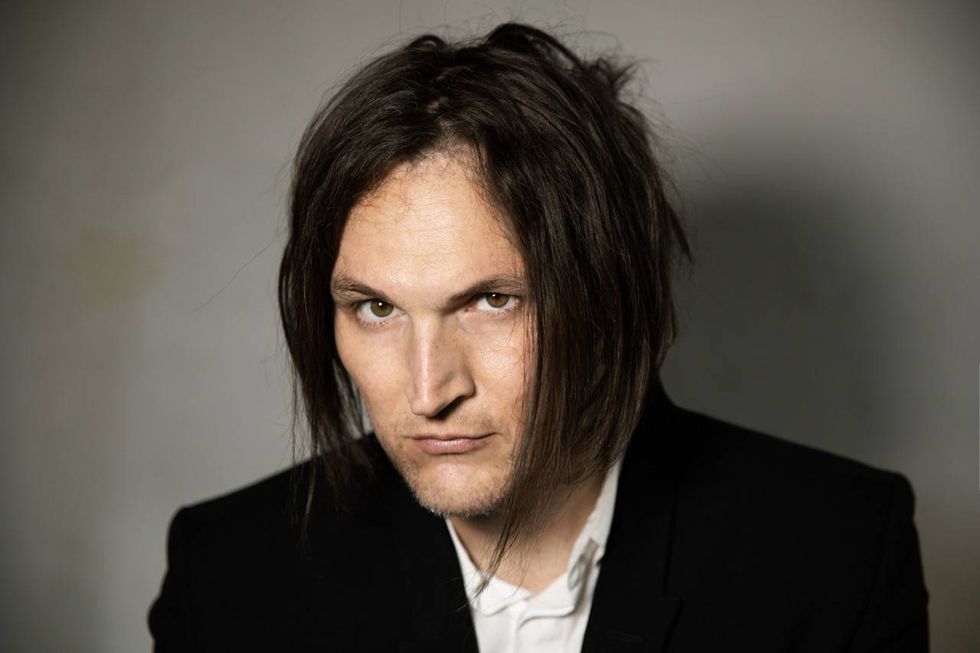

Schoolly D sent Kurt Vile a link. “Somebody stole my fake fur coat,” the pioneering gangsta rapper told the easygoing folk-rock singer-songwriter. “And you can’t be the King of Philly without your fur coat.” Without hesitation, Vile clicked the link and bought Schoolly D the coat.
With this transaction, the rapper best known for 1985’s “P.S.K. ‘What Does It Mean?’” showed up at music club Kung Fu Necktie in a red cap, shades, and, yes, the fur coat, to film what became a few seconds in Vile’s new video “Chance to Bleed.” “Anything for Schoolly D,” Vile says in a phone interview. “He’s literally just himself. All he’s got to do is fuckin’ show up.”
Schoolly D’s cameo is one of many subtle references to Vile’s hometown throughout his 10th and latest album, Philadelphia’s been good to me, from name-dropping the late astronomical jazz bandleader Sun Ra in “You don’t know cuz it’s my life” to references to the Schuylkill River and Baltimore “just across the way,” to titling “Holiday OKV” for his home studio. (Vile first met Schoolly D at the 2023 Philly Music Fest, and they discussed a potential future collaboration.)
“I don’t know if I’ve ever been to a Philly music museum! If there is one, I’d like to go,” Vile says. “I definitely delve into the books and the music. I do have that Philly pride.”
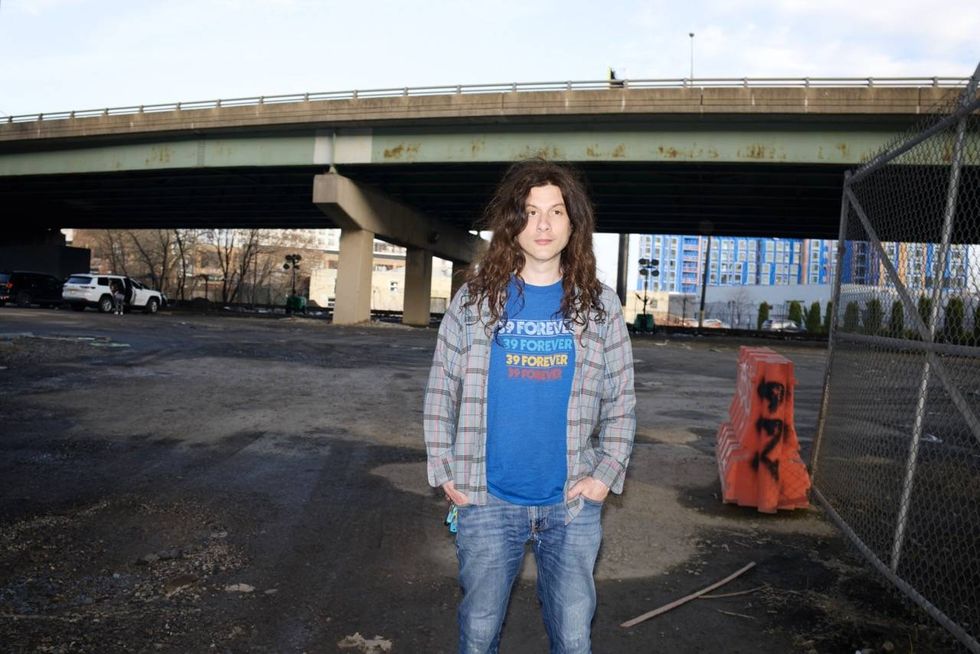
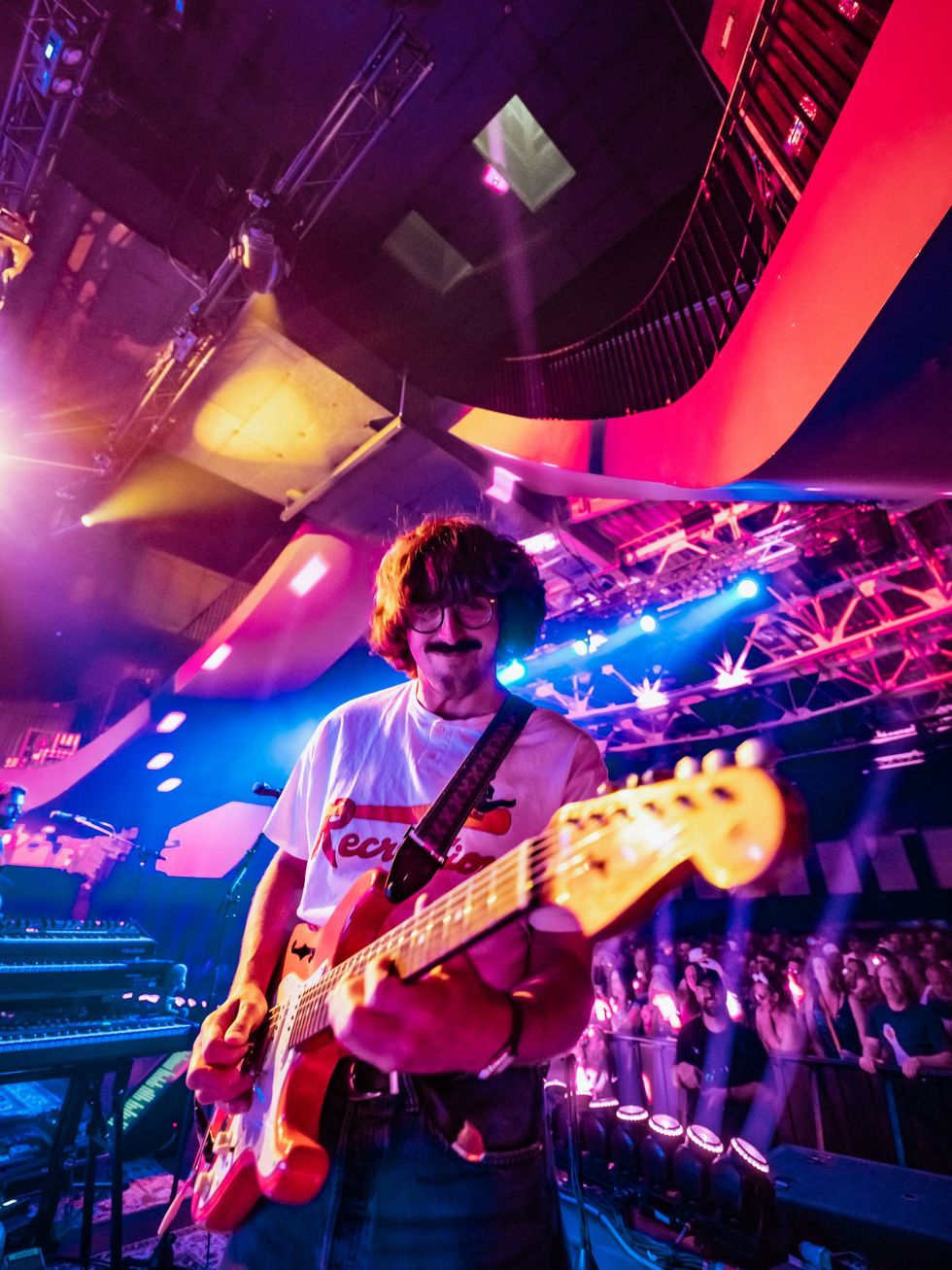
Photo by Eleanor Petry
Vile, 46, started his music career in Landsdowne, Pennsylvania, his birthplace, as a 14-year-old banjo player who recorded his own compositions. It was the era of grunge, DIY, and whatever Neil Young happened to be doing, and Vile began to put out his own cassettes before joining singer-songwriter Adam Granduciel in the War On Drugs, then departing before the band truly took off. By then, he’d developed a distinctive voice—a thin, scratchy, friendly-next-door hippie singer-songwriter style resembling Dinosaur Jr.’s J Mascis. He signed to indie-rock fixture Matador Records, and his fourth album, 2011’s Smoke Ring for My Halo, showed talent for pop hits—like 2015’s “Pretty Pimpin,” which hit 100 million Spotify streams and turned him into a star.
“It’s been a minute before I got a bunch of good electric-guitar solos. I finally captured that in the studio.”
For years after that, Vile seemed to be everywhere—touring solo, gracing the War on Drugs albums, collaborating with Courtney Barnett, the Sadies, and the late John Prine. These days, he’s no longer hovering around the indie-rock high-water mark commercially, but he and his band, the Violators, are big enough to play festivals and ballrooms everywhere. “I’m making a living off my music—that’s the beauty,” Vile says. “I’m happy about that.”
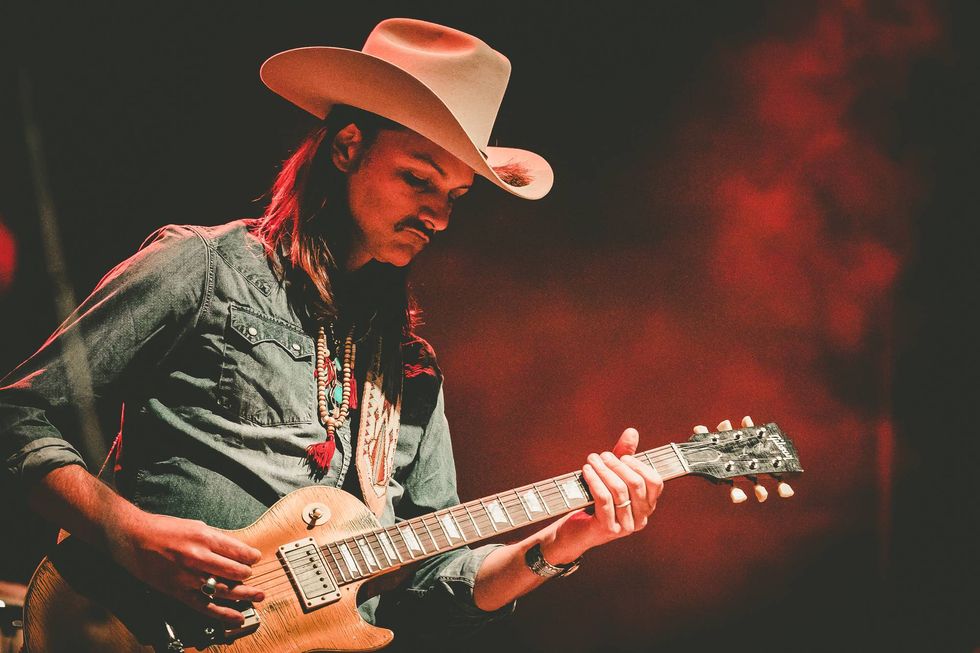
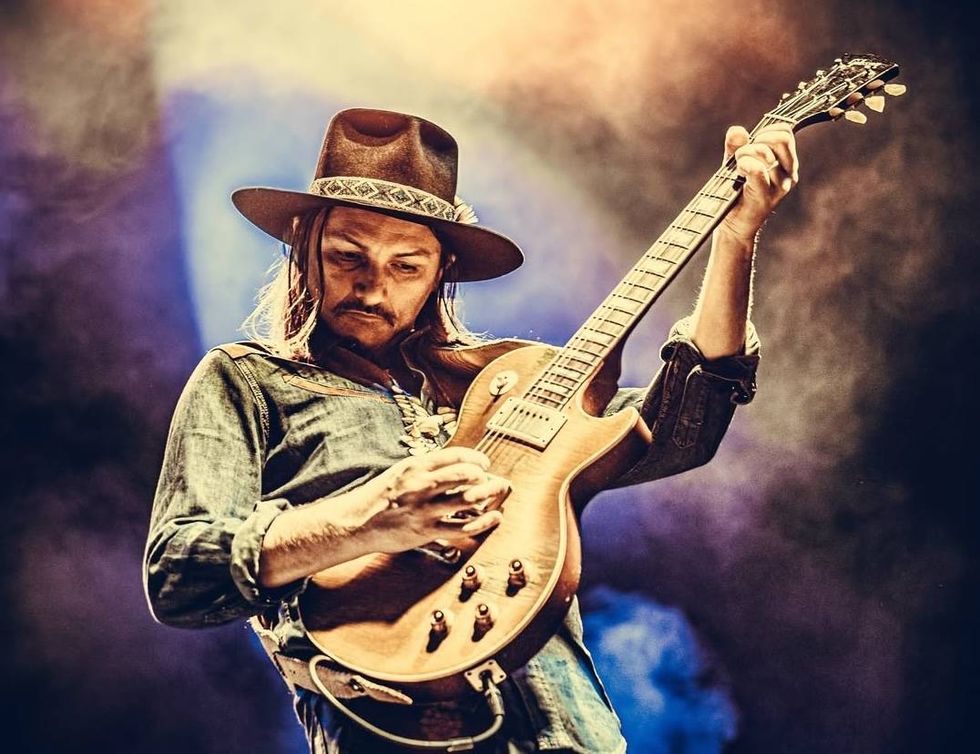
Philadelphia’s been good to me, recorded at OKV Central, which Vile and his longtime bandmate Adam Langelloti began building during the pandemic, is, characteristically, filled with songs that combine contemplative, minor-chord melodies with upbeat guitars and mandolins. In the opening track, “zoom 97,” he sings: “I wrote a song, yeah / some people said / I was doing it wrong, yeah / but check out my hands / my chiming chords / on a Gold Tone mandolin guitar.” At one point during “99 bpm,” Vile exults: “Yeah! Twang-pop. Whoo!”
In a press release for the album, he declares Philadelphia “my best vocal record,” “my best electric guitar record,” and “my most organic record, made in the comfort of my own zone.” In the interview, by phone from his home in the Northern Liberties section of Philadelphia, Vile says his manager told him Philadelphia is his “most upbeat record in a long time.”
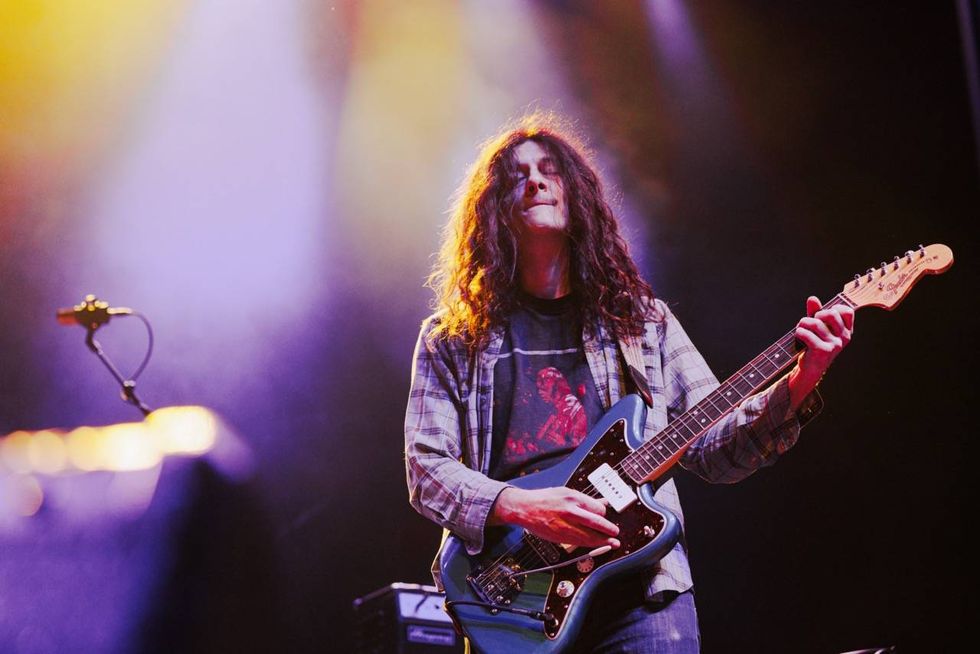
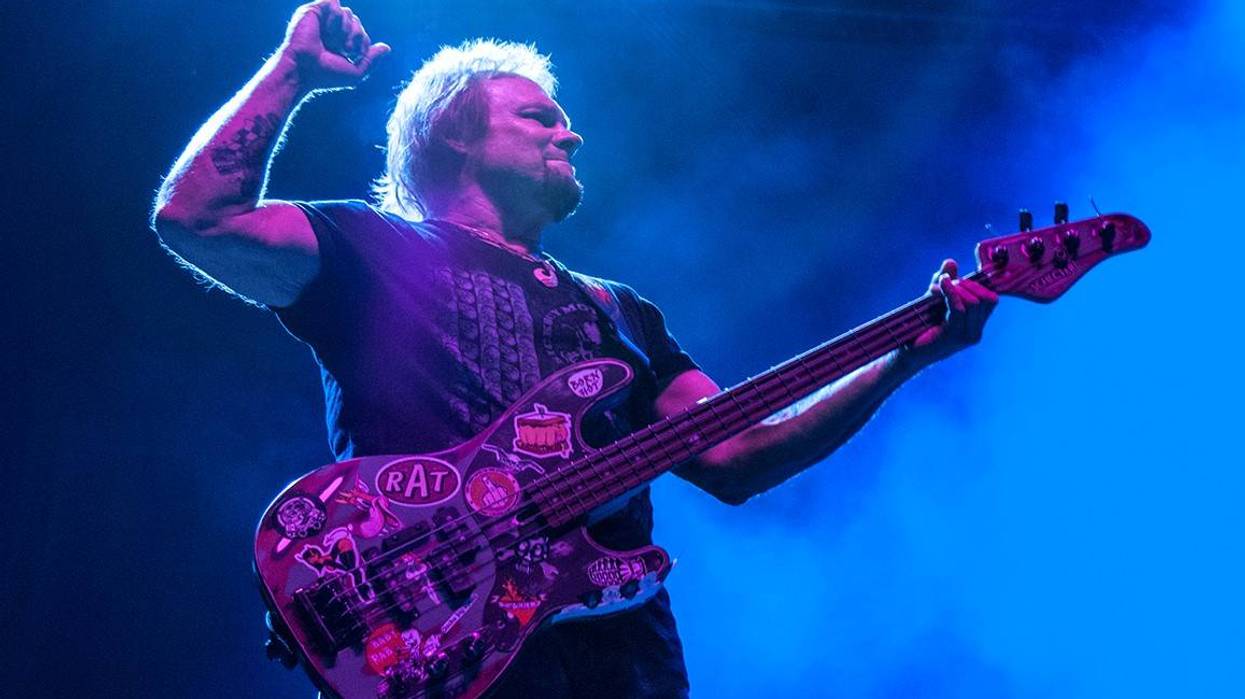
Photo by Tim Bugbee
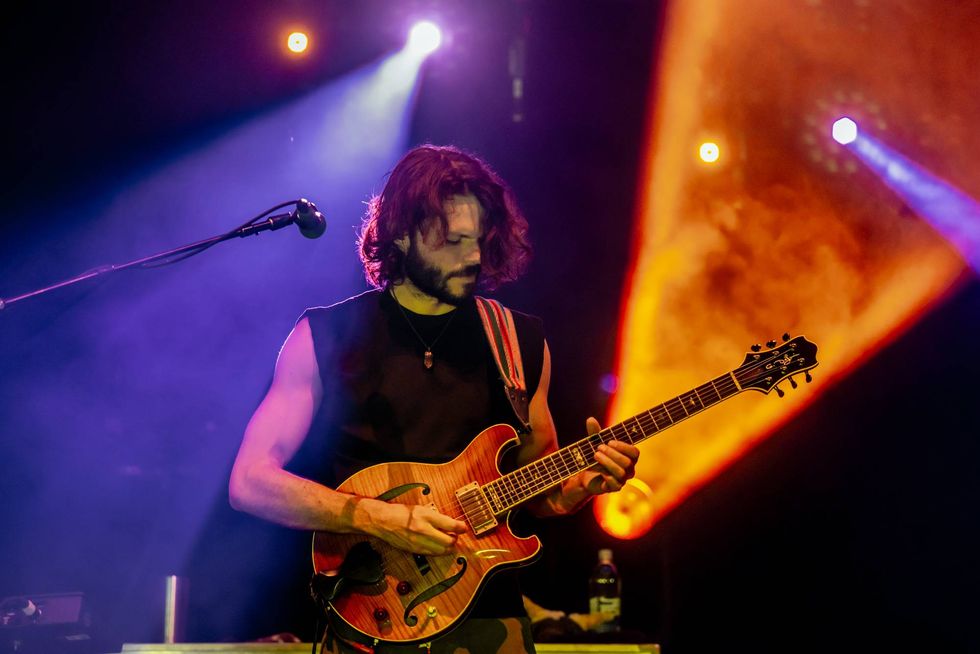
Kurt Vile’s Gear
Guitars
- 1960s Gretsch Tennessean
- 1960s Gretsch 6120
- 1960s Fender Electric XII
Amps
- Fender ’65 Princeton Reverb
- Fender Princeton “TV Front”
- Fender tweed Deluxe
Effects
- Echo Fix EF-P2 Spring Reverb
- Pete Cornish NG-3 fuzz
The album, he adds, is “not like bubblegum—it’s just comfortable and happy. I’m calling out my hometown by name, which I do a lot, but I haven’t done it in an album title. If I feel comfortable and happy, in a lot of ways, I am. As happy as I can be, with this crazy world.
“I’m no Frank Sinatra,” Vile continues. “I just feel a little more comfortable. My voice is relaxed, but it’s got some good melodies and some good emoting. And then electric guitars—a lot of times, I end up acoustic in the studio. It’s been a minute before I got a bunch of good electric-guitar solos. Just from touring and stretching out a little more, I finally captured that in the studio.”
Unlike 2013’s “Wakin On a Pretty Day,” a small hit that has become one of Vile’s signature songs, Philadelphia leans minimalist. “Wakin On a Pretty Day, that’s like one-million guitars,” Vile says. “Some people say that record of mine is kind of epic, but this one’s more organically Neil Young-style, where it’s, like, one guitar solo.”
As for the way he combines downbeat music with upbeat guitar sounds, Vile gets briefly technical: “You leave the high E open all the time. Things like that make things dreamy. If you play an F, and leave the high E open, it’s a dreamy sound. So maybe the combination is, you’re getting the pretty melancholy thing, but there’s so much sunniness in the other notes.”
“I’m making a living off my music—that’s the beauty. I’m happy about that.”
One stretch of “Every time I look at you,” a love song, demonstrates this happy-sad contradiction: “I flew close to the sun / and I had a lot of fun / Then I guess I had to come down,” Vile sings, his voice surrounded by xylophone plinks and upbeat guitar arpeggios. “Punishment fitting the crime.” The album feels like arriving somewhere after a difficult journey. Vile has two daughters, 13-year-old Delphine and 16-year-old Awilda, and they both play multiple instruments, focusing on the harp, tutored by family friend Mary Lattimore, a Vile collaborator and former Philadelphian. “They can just pick anything up,” Vile says. “Girl-dads are the best. Daughters are the best.”
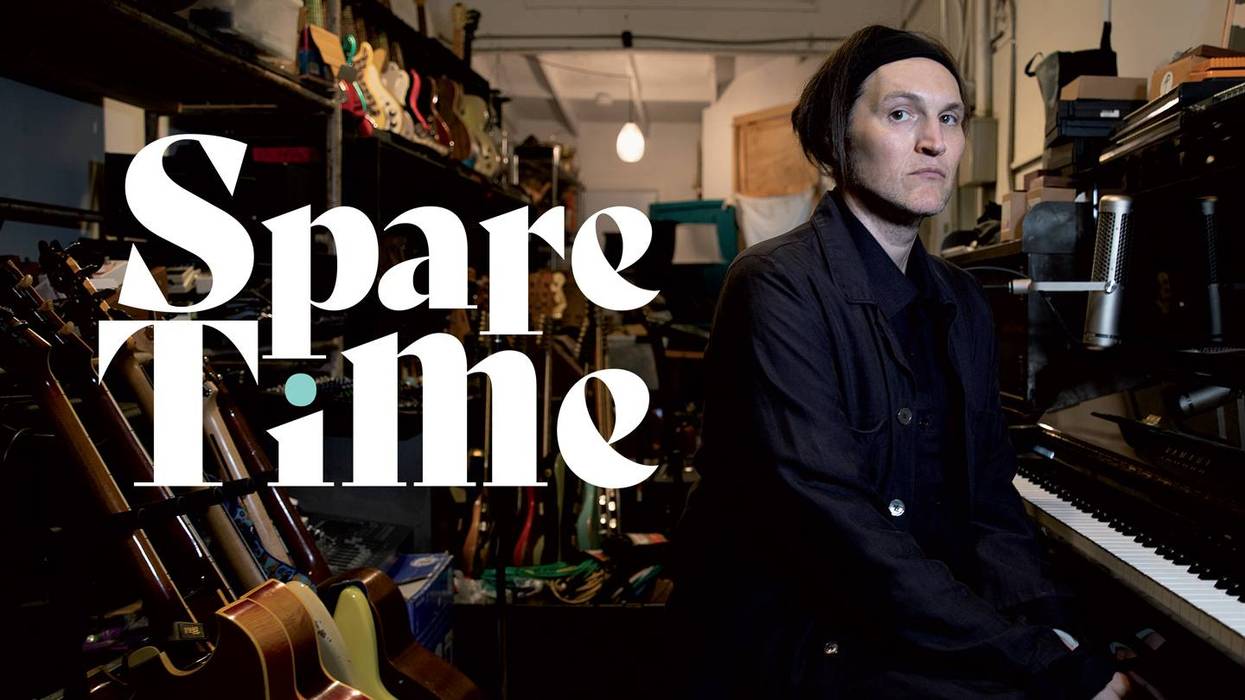
OKV Central was an important source of the comfort that inspired the album, a fact that he brings up frequently. Langellotti, a longtime Vile bassist who is now his primary engineer, helped the singer-songwriter achieve the studio’s ambience—it’s named for singer Tompall Glaser’s Nashville facility, nicknamed Hillbilly Central, where the late Waylon Jennings and others helped build the foundation for what became the outlaw-country movement in the ’70s. “I love Waylon. I wear him on my shirt a lot because he’s the coolest and the realest,” Vile says. “[OKV Central] is a place where I could be real and not have other people telling me how it’s done—and surround myself with people who want to be there. It’s my version of my outlaw era.”
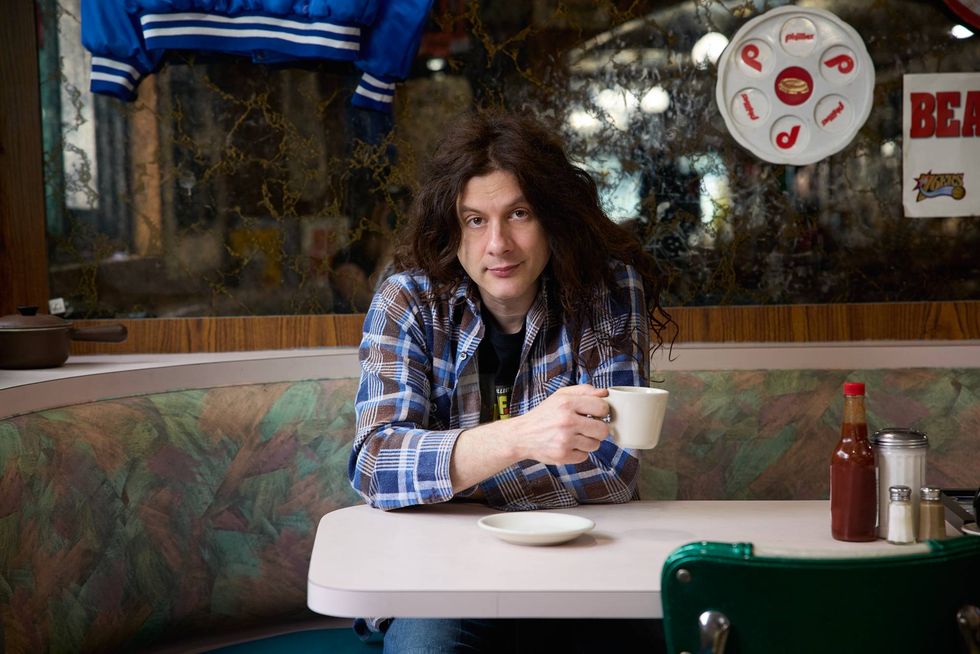
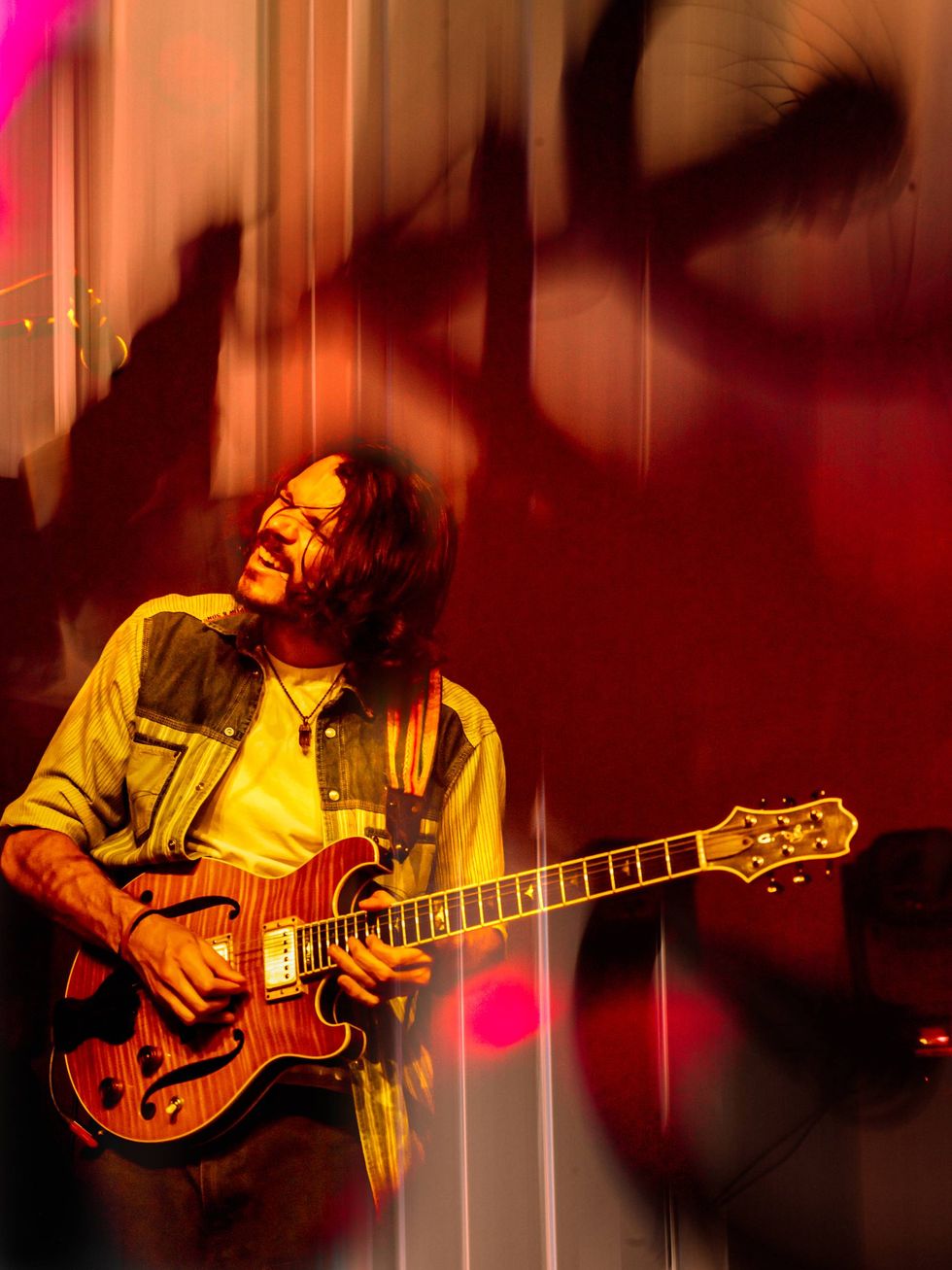
Photo by Eleanor Petry
OKV Central is the kind of musical space where friends have the time and trust to conduct experiments to achieve the perfect sound. One of Vile’s bandmates, keyboardist Matthew Jugenheimer, came up with the handclaps in the closing track, “Avalanches of Snow,” by listening to Ol’ Dirty Bastard’s double-clapping 1999 hit with Kelis, “Got Your Money.” Vile sat at his desk, but every time the pair tried to record the handclaps, he says, “It didn’t sound like that. It’s the way your head hears something.” They moved around, shifted the mike position and employed a Zoom recorder until they achieved prime ODB-ness.
“My band members are all my good friends. The band is growing. A lot more weight off my shoulders,” Vile says. “Happy to be among my people and among my family and be able to combine the two.”
Vile mostly produced Philadelphia himself, with help from the Violators, including Langellotti, Jugenheimer, drummer Kyle Spence, and guitarist Jesse Trbovrich, as well as longtime producer Rob Schnapf. At first, at OKV Central, Vile was “excited and hands-on and learning the gear—and I could run it all if I have to.” But he found turning on computer screens “kind of zaps my creativity,” so he ceded much of the technical details to others. “I like to record simply, from a four-track or a reel-to-reel or a Zoom recorder, or even on my phone. Get it down when you’re feeling it. Any way you can. Always record,” he says. “But it’s definitely complicated. Every one of my bandmates has been an engineer. I joke that people aren’t put in my band for what they play—it’s more they’ve got their hands in everything. That’s what I like.”
“Laid back is ultimately where I want to be, but there’s a lot of stress to get there.”
The non-technical ingredient for Philadelphia was, of course, Philadelphia itself. Vile is a prolific reader, and his studio is filled with books. One is John Szwed’s Space Is the Place, a biography of Sun Ra, who was born in Birmingham, Alabama, and died there in 1993, but spent much of his career working in Philly—he’s so associated with the city that his longtime saxophonist, Marshall Allen, now in his 90s, still lives in the Sun Ra house, not far from Vile’s home. “I just loved that book. It was like my bible,” Vile says. “[Ra] is from Saturn, and what he did for his people, and just his output in general—he was a fascinating character. You could visit his various ghosts around here.” During the phone interview, Vile refers to reading Mo’ Meta Blues: The World According to Questlove, the autobiography of Ahmir “Questlove” Thompson of the Philadelphia-born Roots, and the fact that Ice-T borrowed Schoolly D’s “P.S.K. ‘What Does It Mean?’” for 1986’s “6 in the Mornin’,” which inspired the beginnings of gangsta rap.
Although the Roots became famous out of Philly just a decade or so before Vile did, the singer-songwriter has seen the hip-hop band from The Tonight Show with Jimmy Fallon only once, in 2012, when both headlined the Sasquatch Music Festival in Washington state. “They just blew my mind. They didn’t stop,” Vile recalls. “And [lead rapper] Black Thought was so cool to me and my brother backstage. I’ve got to make a point to get to a Roots Picnic or something.”
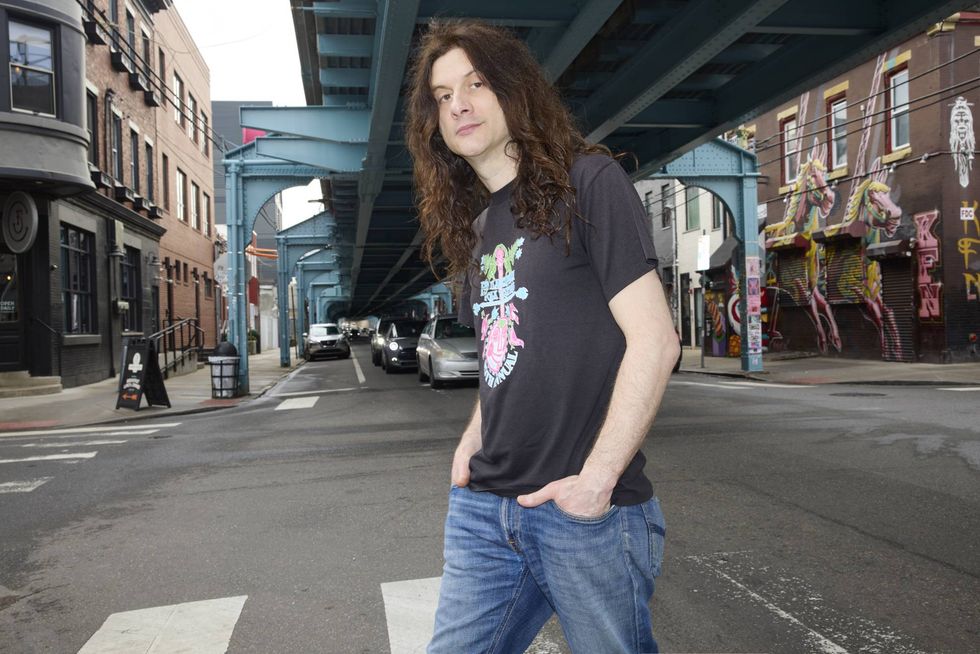
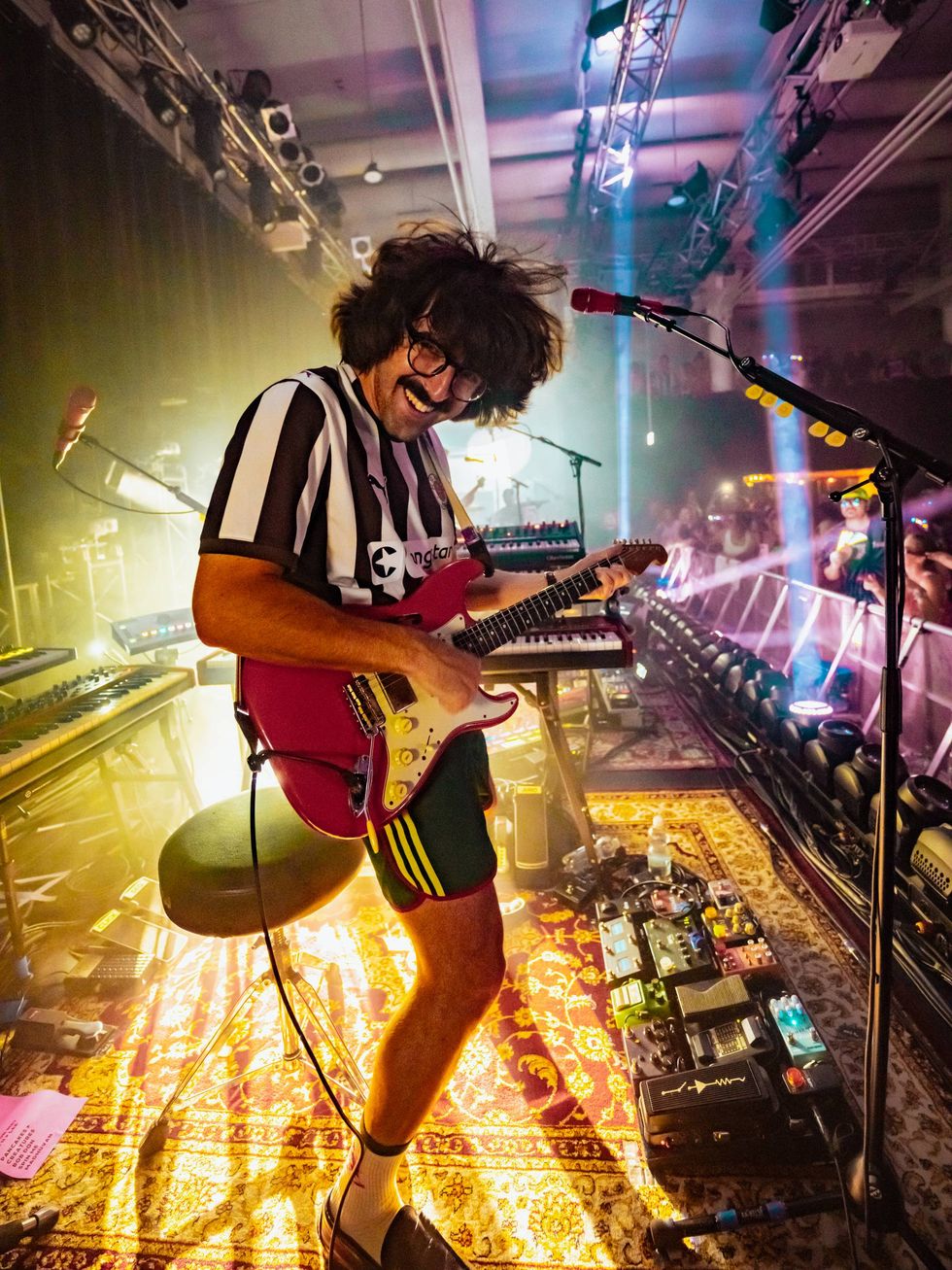
Photo by Eleanor Petry
Befitting his public musical image, Vile speaks in a slow, friendly tone, as if you expect him to start puffing on a vape during the call. (Unprompted, he refers to himself multiple times as “laid back.”) But in a 2013 Pitchfork interview, Vile quoted his producer, John Agnello, suggesting some of this is carefully constructed: “I’ve never associated you with being laid back whatsoever,” Agnello told him. So what’s the secret to making music that sounds laid back while not actually being laid back?
“That’s, like, a persona I give off from the stage—but behind the scenes, anyone who works with me knows you’ve got to push to get it right. I’m sort of pushing for it to come off laid back,” Vile says. “Laid back is ultimately where I want to be, but there’s a lot of stress to get there.
“You’re trying to chill and relax in general. Even when I was a kid, all I wanted to do was sit in the shade,” he continues. “And it doesn’t really change. You’re still trying to get out in the sun and relax. But there’s a lot of work to get to that point sometimes.”
Early in his career, Vile had to struggle. He was a forklift operator in his early 20s, while putting out cassettes and CD-Rs on the side. The employer was Eagle Air Freight, in Everett, Massachusetts, near Boston, where he lived with his future wife, Suzanne, who was in graduate school at the time. He unloaded tractor trailers. “That’s the kind of ball-busting job I had,” Vile recalls. “Lately, I’m watching The Wire, Season 2—[the freight job] was not unlike the docks. I said, ‘I’m never going to drive a forklift again.’”
Later, when Vile and Suzanne returned to his hometown, he found work at Philadelphia Brewing Company—and one of the jobs on the premises was forklift operator. “Because I was so good at the forklift, it’s like, you get a break from the other job,” Vile says. “I loved driving a forklift there. They were definitely impressed by my forklift skills.” He worked at the brewing company from 2003 to 2009, when he signed with Matador as a solo artist, and life changed.
“I’m pretty positive I’m not gonna have to go back to driving a forklift,” he says.