

Reader: David Tyree
Hometown: Denver, CO
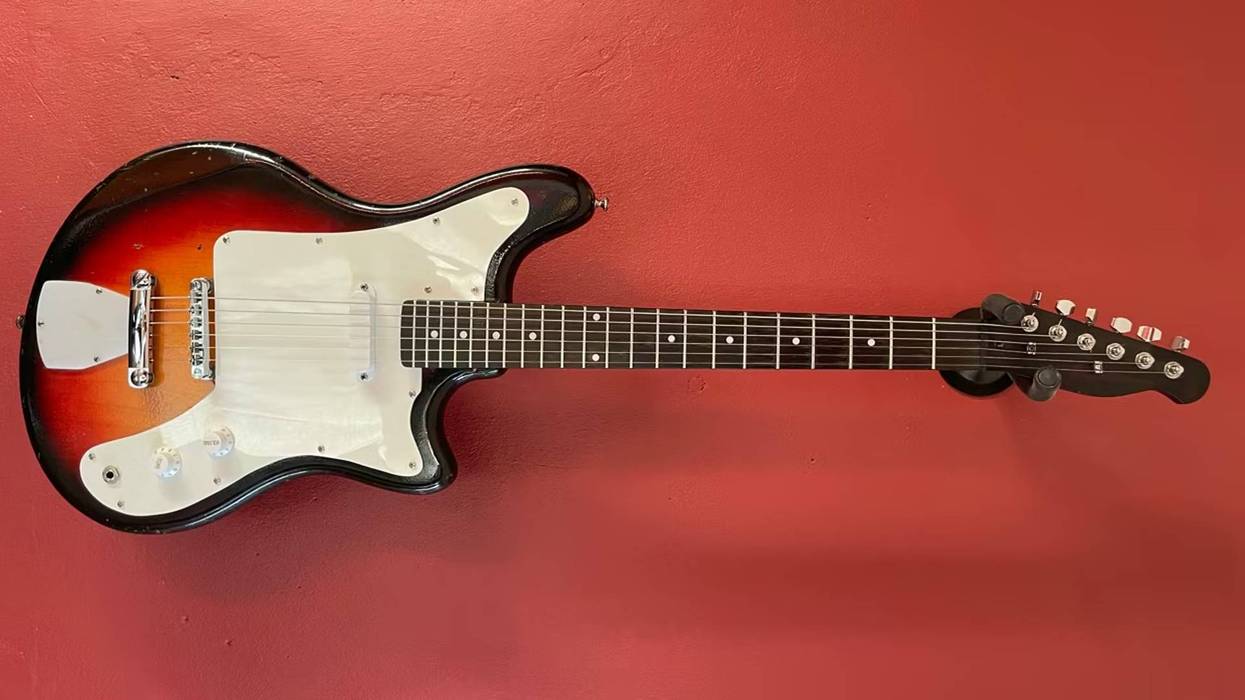
Guitar: Marco Polo V2.0
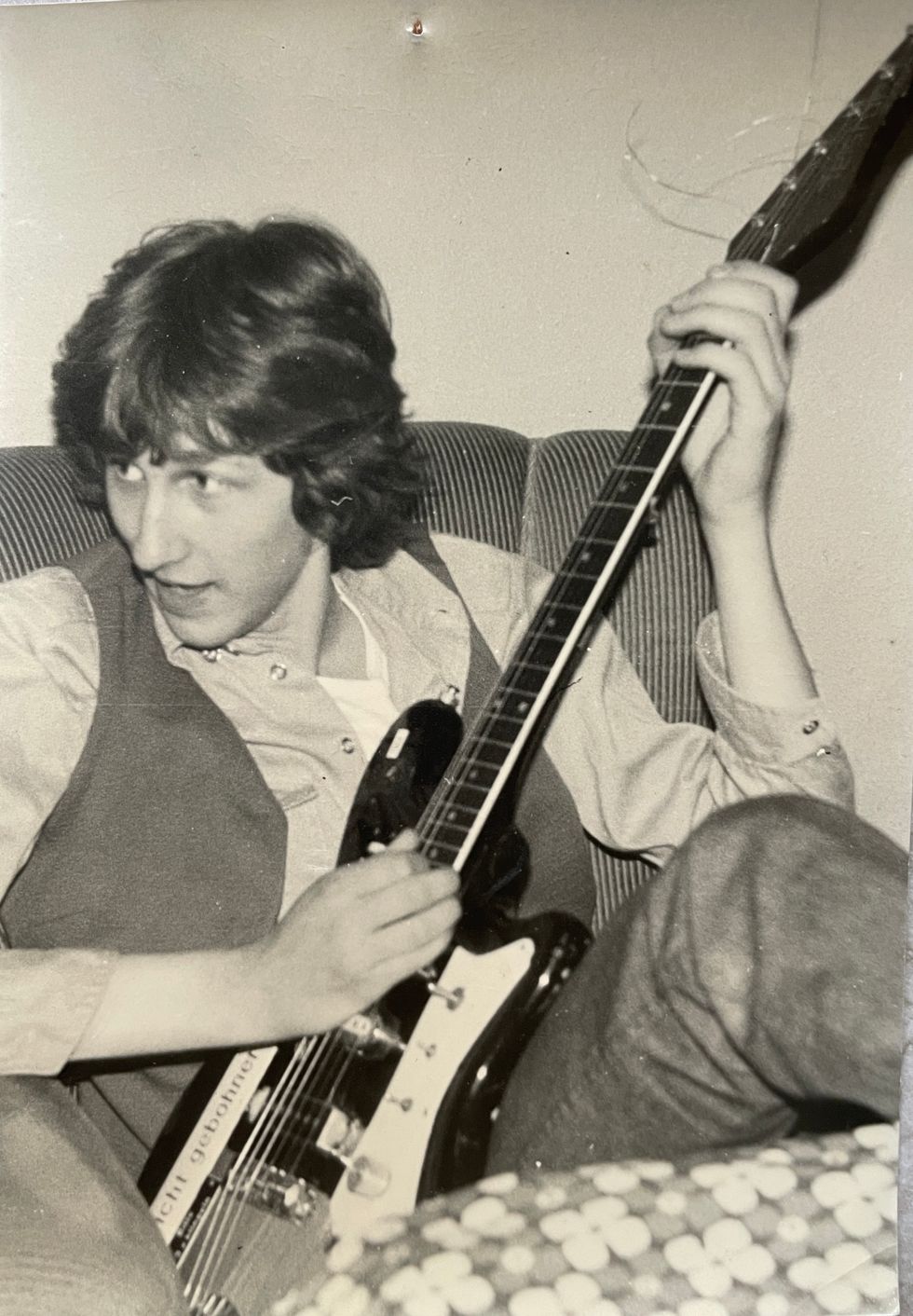
Growing up, my father was a music professor and my mother a mezzo soprano, which meant my family life was heavily dominated by classical music. But exposure to guilty pleasures like Deep Purple, the Doobie Brothers, Chicago, Black Sabbath, Led Zeppelin, Faces, ELP, and Cat Stevens widened my interests considerably. Captivated by guitars since middle school, I started out with a factory-second Sigma, sold under the Picador name, that I still have. But a fair number of second-hand and hard-luck guitars have found their way to me over the years.
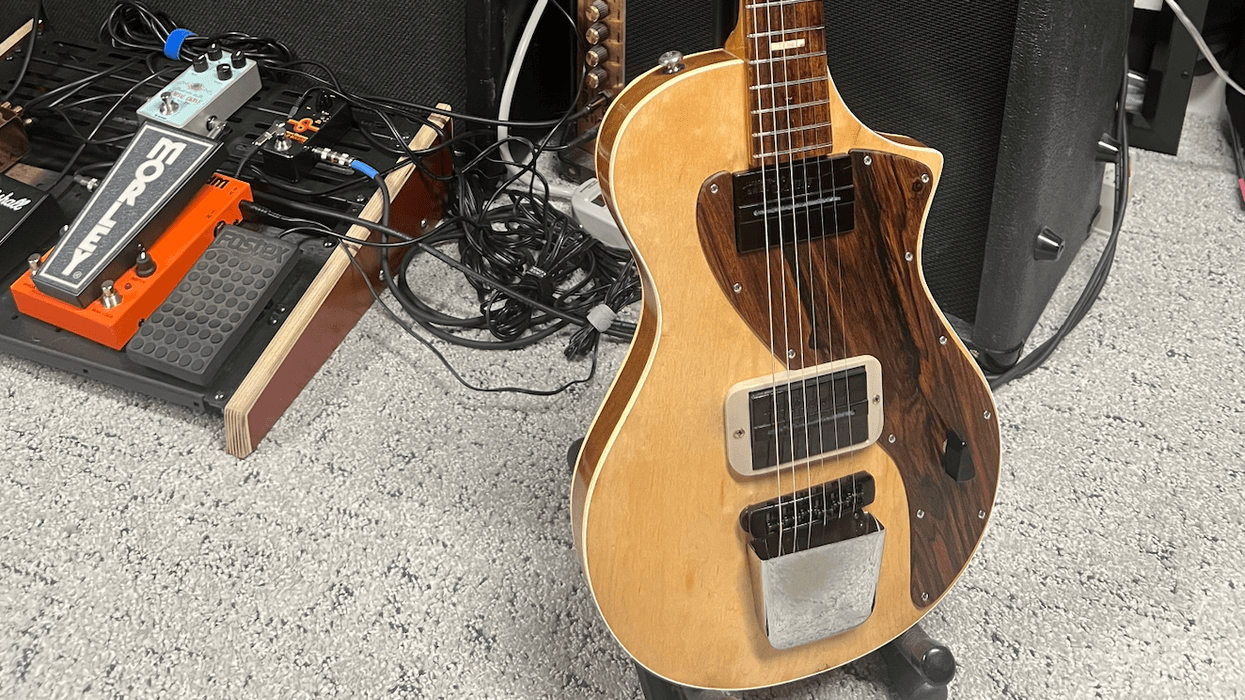
Working at a thrift shop in 2024, I came across a dismantled guitar—a solid mahogany body with a glued-in neck and a jumbled bag of original parts. I was unfamiliar with the Marco Polo brand on the headstock, and an internet search didn’t help. My coworkers would have pitched the sorry old thing, but the compact solid mahogany body, 25" scale and light weight appealed to me. Eventually, I ID'd the pickups as Guyatones, and with that information I tracked down a picture of the same guitar—a 1959 Guyatone LG 60 B—on [Premier Guitar columnist] Frank Meyers' Drowning In Guitars website. The Marco Polo, like my Picador, was a rebranded Japanese import.
The Marco Polo had suffered a trauma that damaged the neck pickup, detaching its lead, breaking the pickup mounting ring, and cracking the bakelite pickup cover and pickup selector knob. Thankfully, a good friend who possessed a magnifier-equipped soldering station was kind enough to reattach the pickup lead for me.
Restoring the guitar to its original state was possible, but the broken mounting ring was incomplete, as was the pickguard. Also, the compensated bridge was quite tall, and was not adjustable or physically attached to the guitar (by design!), which made it drift. Frankly, it looked like something forged by the dwarves of Moria under the mountains of Middle Earth. Given that playability and good intonation were beyond hope, that the electronics were a mess, and that parts were rare, I opted to modify the guitar instead.
Musically, I don’t find the combined sound of widely-spaced neck and bridge pickups very useful, so I didn’t want to keep that feature. Also, the idea of bypassing volume and tone pots for a purer tone was an attractive option. Among the original parts there was a 3-position rotary selector switch, and I really wanted to use that with an old black bakelite arrowhead knob that matched the black pickup covers perfectly. Okay then, how about a mute-neck-bridge pickup selector switch, the output jack, and nothing else? Sweet!
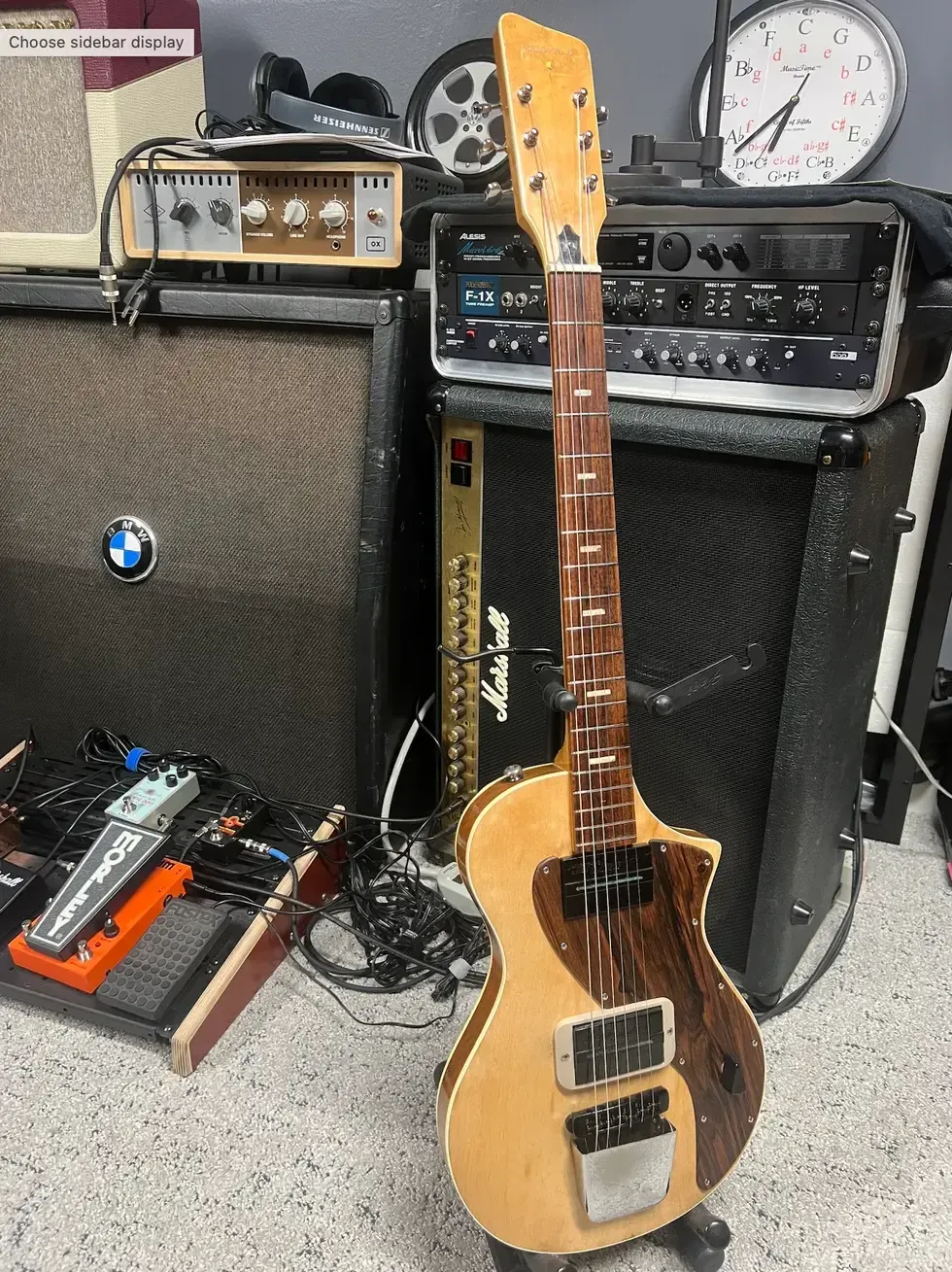
This resto-mod wasn’t rushed, and it didn’t happen overnight. It was a lengthy, spare-time process spanning two years. I routed the pickup cavities a little deeper, then sanded the guitar top and the dinged-up back of the neck. I shaped and polished the impossibly skinny frets and oiled the fretboard many times. Old rosewood was used to make a new pickguard, and a Schaller roller bridge, Grover tuners, and a new custom TUSQ XL nut replaced the tired original parts. Finally, I added a strap button on the upper bout.
I love the lively, full-voiced sound of the Marco Polo V2.0. It’s chimey, airy, spunky, and dynamic—a little like some semi-hollowbody guitars I’ve tried, but without the acoustic resonance that limits their versatility. What really impresses me is how quiet the guitar is. Maybe it's all down to those vintage Guyatone pickups and the stripped-down electronics. The whole guitar is comfortable, light, nicely balanced, and feels super solid without being massive. That's a cherished combination.