

Reader: Andreas Schwartau
Hometown: Hamburg, Germany
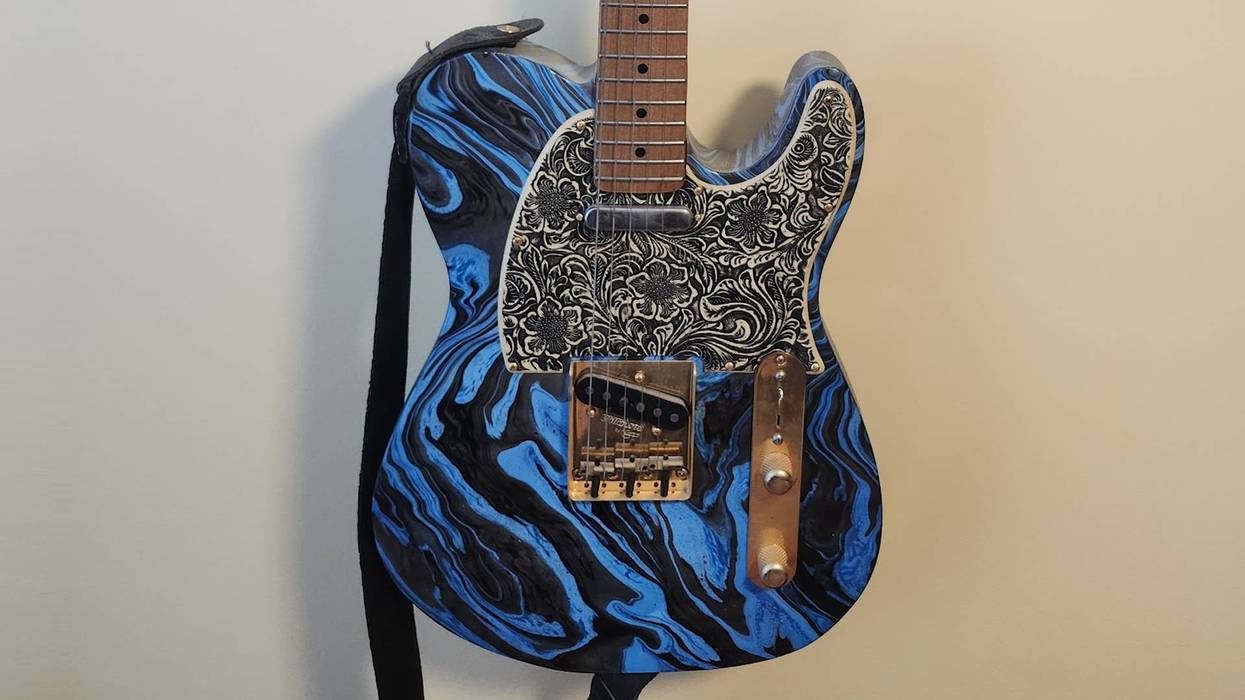
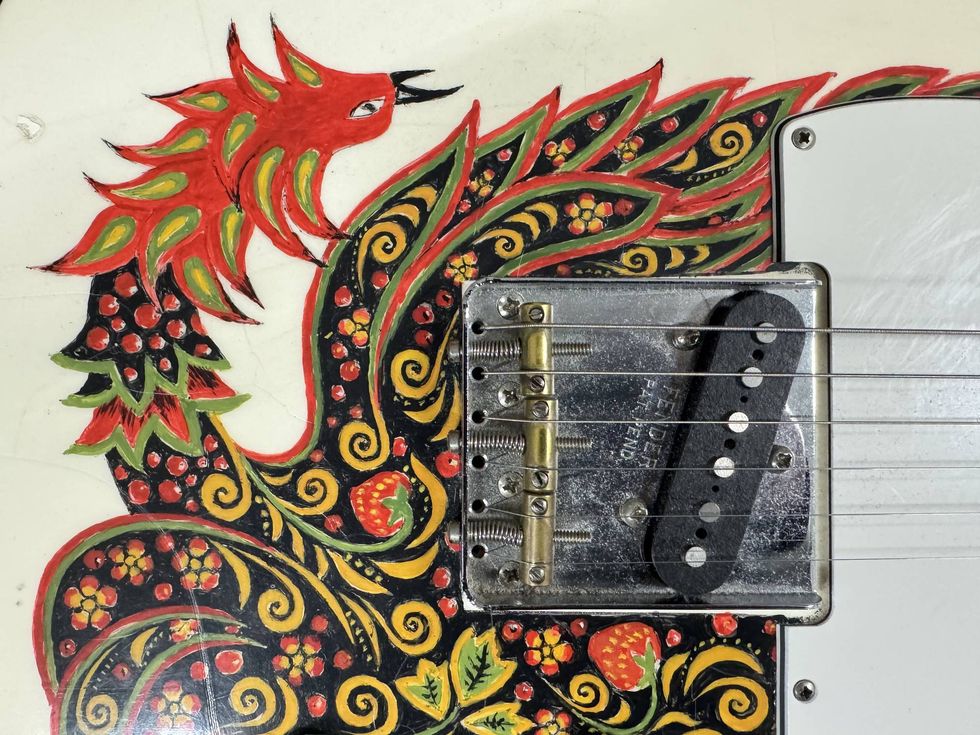
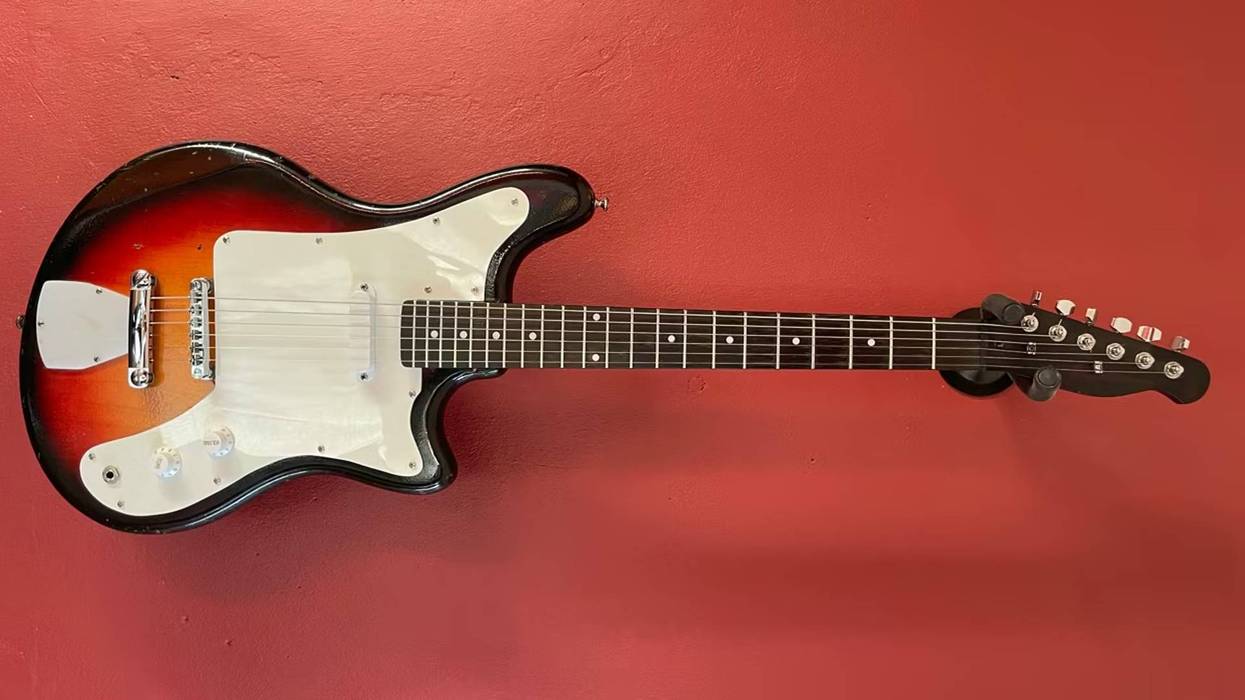
Guitar: Schwartocaster #1
1974. Picture a boy in his PJs in front of a black-and-white idiot box with eyes and mouth wide open, staring at the outrageous glittery costumes, risky platform boots, and over-the-top makeup of glam rock bands the Sweet, Slade, T. Rex, and Sparks. Today, when I watch these clips from the German TV show Disco on YouTube, I still get excited by the music these bands made and how they looked. I also understand why my parents were horrified and worried for the mental health of their 11-year-old firstborn. I imagine their faces when I asked for a guitar for my birthday as they considered how the urge to create these crunching, screaming, chugging noises on a shiny axe had gripped me.
Thanks to an intervention by my grandma, I was allowed to buy an acoustic, though I had to scrape together half of the 130-Deutschmark cost for a Framus Wanderlust, which I still play today! Just one year later, I had my first electric—a used and very worn ’60s Hopf Telstar Standard with an already badly warped neck. I played it for a few years, though the many pickups, switches, and pots confounded me. In an attempt to fix the neck, I tore out the frets, sanded the fretboard flat and played it as a fretless for a while, then left it lying around for almost 50 years. In the intervening years, Arias, Ibanezes, Fenders, and Gibsons came and went. Yet the ruined Hopf stayed and settled dust. I’m sure more than a few Premier Guitar readers can relate why I kept it, right?
“What a glorious moment it was when I first strung it up to ‘feel the noize’ of the still pickup-less body and neck for the first time in decades!”
Last year I decided to either throw it out or Frankenstein it. I can do some easy repairs on my own guitars and those that belong to friends, but I’m not a luthier by any stretch. Anyhow, I accepted the challenge. Removing the bolt-on neck was hard, because a previous owner had applied glue. I read Irish luthier Gerry Hayes’ recommendable newsletter and found out how to steam it off, which took days and a lot of patience. Everything else was relatively easy though. I found a sort of T-style neck from a flea market, some half decent tuners, and a pickguard blank. And because the original selection of pickups and switches was confusing anyway, I made the move to a single Seymour Duncan Mustang-style pickup, and two pots. A lot of measuring, sawing, and drilling ensued, and I’ll admit I drilled through the fretboard once. I also did a lot of manual sanding to fit the neck into the narrow pocket. I feared I would have to relocate the bridge posts since the Hopf neck was a shorter scale, but it ended up working fine. What a glorious moment it was when I first strung it up to “feel the noize” of the still pickup-less body and neck for the first time in decades!
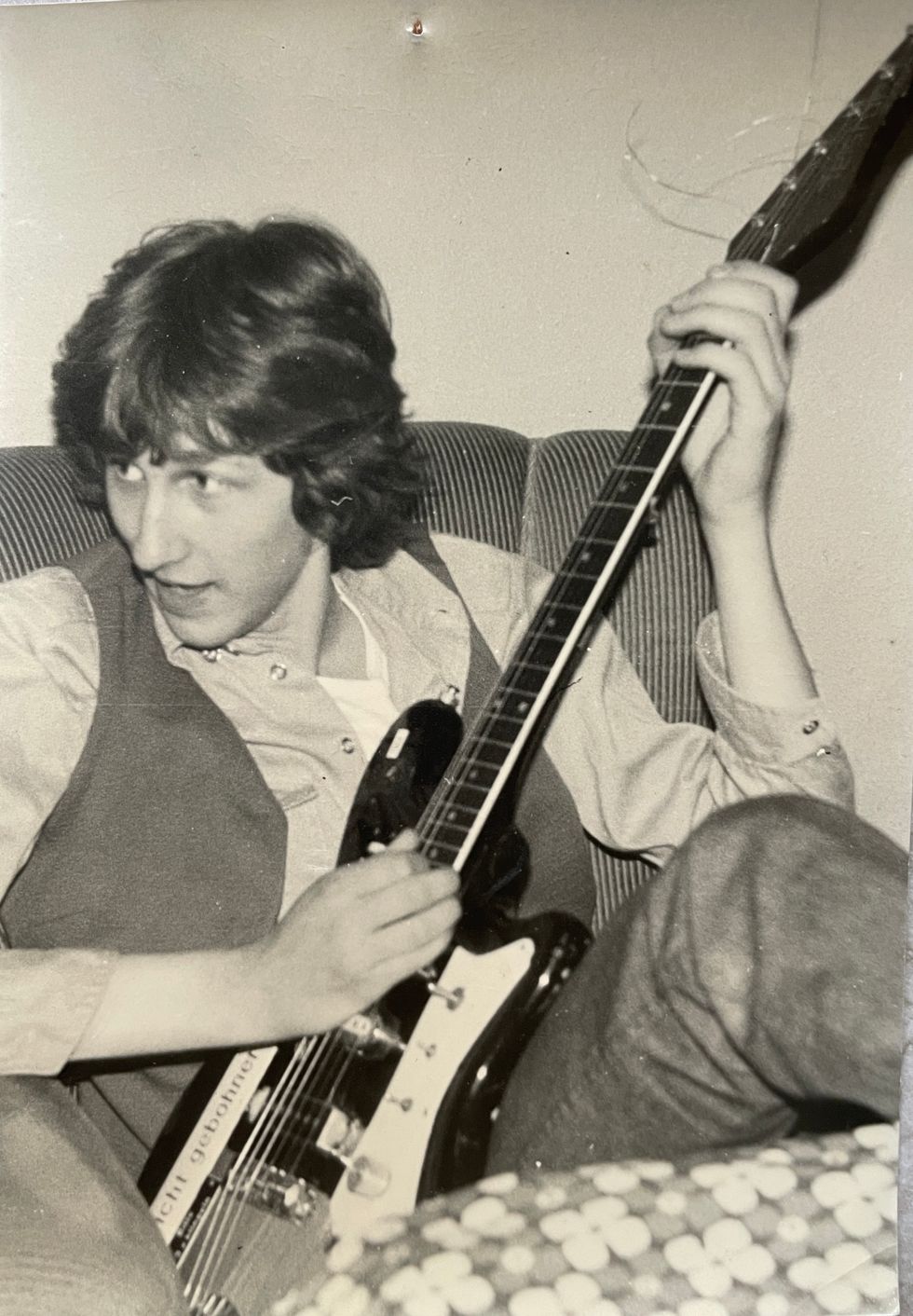
The author, circa 1978 with the Hopf before the many changes.
Sure, the Telstar is far from a professional-grade guitar. The tuning stability could be better and the narrow spacing of the neck bolts—typical for German guitars of that era—makes the neck a bit wobbly. Maybe I’ll fix this at some point. But even now my Schwartocaster #1 is great fun to play. It’s lightweight and balanced, it intonates well, and the single pickup has a husky, jazzy voice. I still marvel at how I pulled it off, but I’m glad I tried, and I’m glad it worked out.