
In the world of rock guitar, Glenn Tilbrook may be the ultimate IYKYK (“if you know, you know,” for us old-schoolers). Because anyone familiar with Squeeze, the band he co-founded in the 1970s, is aware that hiding in plain sight alongside his songwriting and lead vocals are some masterful guitar hooks, solos, and arrangements. In a Tilbrook appreciation titled “Humble Guitar God,” CultureSonar editor Al Cattabiani declared, “Simply put, he’s a quiet monster.”
Squeeze has been termed new wave, pub rock, power pop, post-punk, and more—always a sign that a good rock ’n’ roll band has multiple tools in its shed. In its 50-plus years, surviving breakups, hiatuses, and wholesale personnel changes, Tilbrook and Chris Difford have been its only constants. “Chris and I were writers, first and foremost, and we were an exciting rock band,” Tilbrook reflects. “We were probably better than most of our contemporaries, I would say. We were more rock ’n’ roll, and we could deliver as a band onstage.”
They still do. Though they had more success in the U.K. than in the States, folks everywhere seem able to hum “Tempted.” They were making videos as far back as their 1978 single, “Take Me I’m Yours,” three years before MTV came along, and were on American Bandstand in ’82. Top 10 hits in England like “Cool for Cats” and “Up the Junction” didn’t dent American charts, but crowds large and small sing along to them—as well as “Hourglass,” “Annie Get Your Gun,” “Black Coffee in Bed,” “Is That Love,” and “Pulling Mussels (from the Shell).”
In 1973, 18-year-old Chris Difford put a wanted ad in the window of a sweetshop in Blackheath, Southeast London. It sought a guitarist with influences like the Kinks, Lou Reed, and Glenn Miller. Tilbrook, three years younger, was the only person who responded.
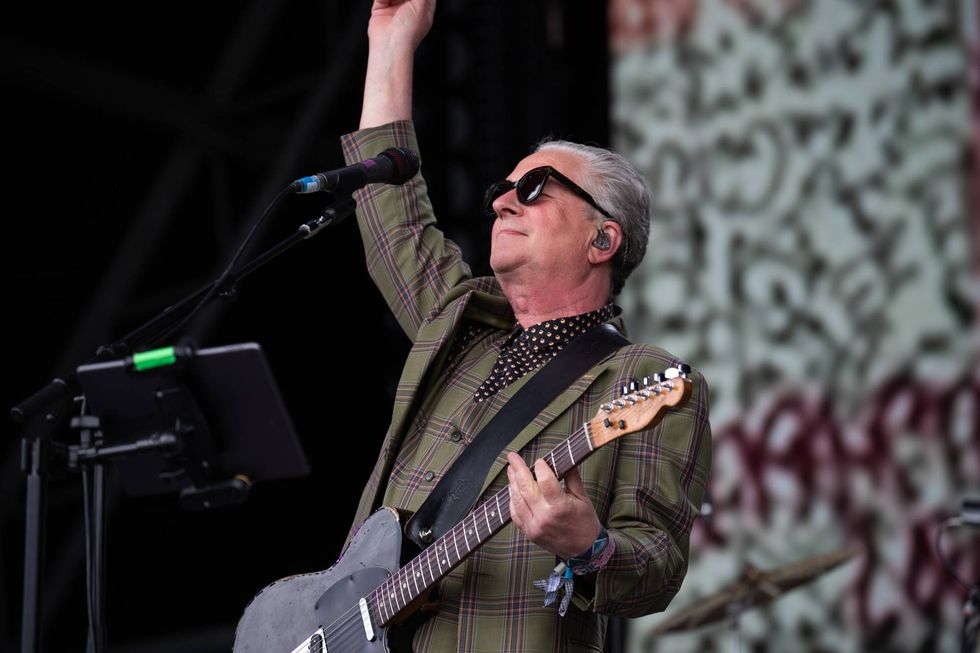
“When I tour, and almost always in the studio, I mostly use my black ’66 Tele,” Tilbrook says.
Photo by Connie Virdie
Glenn Tilbrook’s Gear
Guitars and Basses
- 1954 Fender Telecaster
- 1966 Fender Telecaster (black) with Gene Parsons StringBender (added in ’75)
- 1954 Fender Stratocaster
- 1966 Gibson ES-345
- 1930s Gibson parlor acoustic
- Gibson Firebird
- Gibson ES-125
- Gibson ES-335
- Gretsch Chet Atkins Country Gentleman
- Jerry Jones Master Electric Sitar
- Taylor 665 12-string
- Avalon L10C
- Danny Ferrington custom f-hole guitar
- Martin nylon-string
- Hofner Violin Bass
- Fender 5-string bass
Amps
- Fender Blues Junior IV
- Fender Twin
Effects
- Dunlop Cry Baby
- Strymon Deco
- Strymon Flint
- Strymon Riverside
- Strymon El Capistan
They determined that Glenn was better equipped to put music to Chris’s lyrics. They were called “the new Lennon and McCartney,” an appellation nobody cares to be saddled with. In terms of a working model, they more closely resemble Bernie Taupin and Elton John. “Yes, exactly like that, in that order,” Tilbrook says. “Each one handwritten on the page, and I go off and do my thing, write the chord changes.”
Difford rarely offers any direction, leaving Tilbrook to his own devices. Glenn recounts, “When I was growing up, there were songbooks that just had the lyrics of the hit songs of the day, and that was a lot of how I learned. I could figure out how they went. If I didn’t know the song, I’d make up my own tune. I’ve written some stuff, but my lyrics aren’t very good. Chris was more developed as a songwriter.”
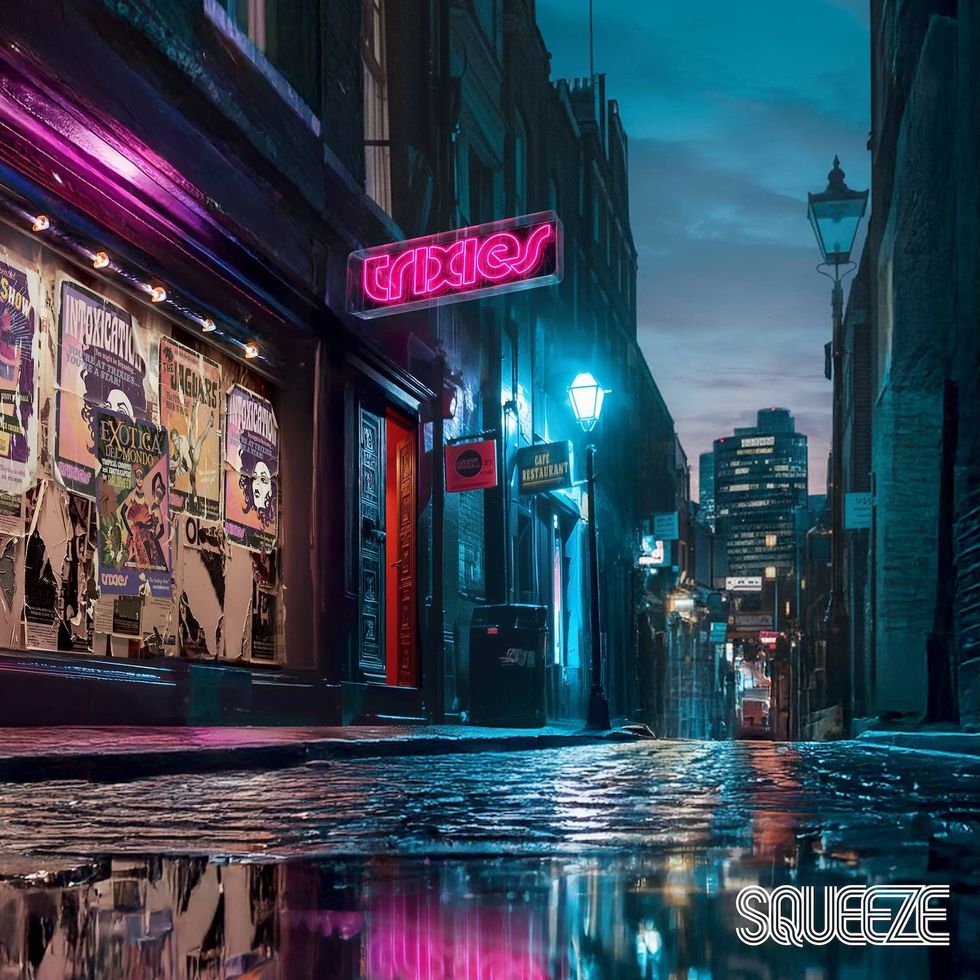
A window into the early stages of that partnership is the new Trixies. “It’s a set of songs that we demo-ed in 1974,” Tilbrook details, “obviously when we were hoping to get signed, but that didn’t happen. I’m honestly amazed at what we did at that point. It was more sophisticated than stuff we did quite a few years after that. Our manager said, ‘You have to simplify; otherwise, people won’t know who you are.’ We were all over the place, but the band couldn’t play it then. Now we can play it, so it’s really gratifying to see the path and development.”
Re-recorded with the current lineup, the new release is a concept album about a nightclub named Trixies. “‘Good Riddance,’ I actually did eight solos, and then I stitched it together,” Tilbrook says. “It reminded me of listening to shortwave radio as a kid, with stations drifting in and out. It’s my Gibson ES-125. I write 80 percent on keyboard—a lot of this on an RMI.”
“Chris [Difford] and I were writers, first and foremost, and we were an exciting rock band.”
A child's first album and concert may not be pivotal, but they’re often revealing. “Last Train to Clarksville,” with the layered guitars of Louie Shelton, Gerry McGee, and Wayne Irwin, prompted Tilbrook to fork over six shillings and eight pence for the single. “What a great record,” he exclaims 60 years later. Despite the controversial revelation that the Monkees didn’t play on their records, he declares, “They were a massive thing for me. To me, it absolutely was real. I think they made great pop records. The first concert I went to was at a folk club when I was 13, to see an Irish duo, Tír na nÓg. I was absolutely enchanted by them. Sort of whimsical folk music. Then the first bigger concert I saw was T. Rex. ‘Bang a Gong’ had just come out, and Electric Warrior, and that just blew my mind. Marc Bolan was such a weird songwriter and player. He wasn’t very good, but he was great at the same time. And the effect he had on the audience was also part of the experience and atmosphere. It was electrifying. I was literally buzzing.”
Bolan’s influence can be heard on “It’s Over” from Trixies. “The house band, the Jaguars, are through the prism of T. Rex, which was quite English. Bolan’s solos are really odd. I don’t know how he gets to the places he does and gets away with it. But he does.”
Sometimes as important as a first guitar is a tape recorder. “I started playing when I was six or seven, and I put a lot of time into it,” Tilbrook says. “I was fascinated, and there was music in the house, like Sinatra, Ella Fitzgerald, George Shearing. My nylon-string guitar didn’t have a make. I very much regretted painting it with wall paint when I was 11 or 12. It was still playable, but something changed about the sound, regrettably.”
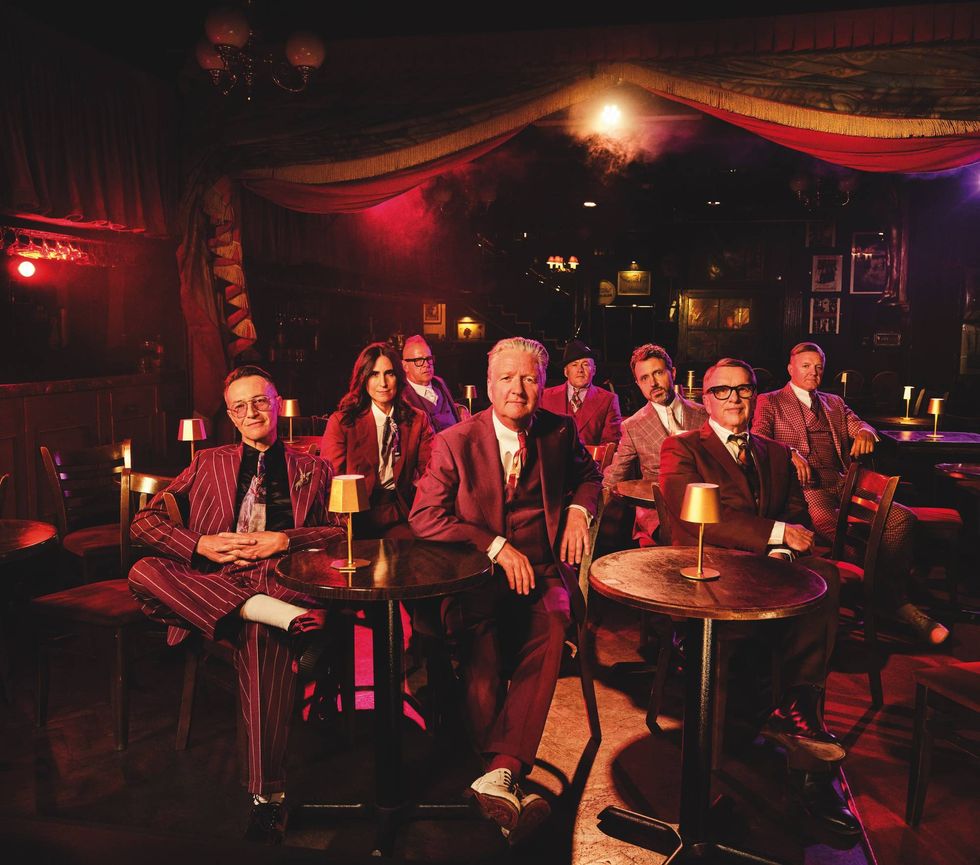
Caption: Squeeze 2026 (l-r): keyboardist Stephen Large, backing vocalist Danica Dora, drummer Simon Hanson, Tilbrook, percussionist Steve Smith, bassist Owen Biddle, Chris Difford, pedal steel guitarist Melvin Duffy
Photo by Dean Chalkley
He continues, “Recently I’ve gone back to playing a nylon-string. It has such a lovely, emotive sound. I can remember the exact date that my dad bought me a cassette recorder—December 19, 1967. It was everything I wanted. The fact that I could record myself was pure pleasure. I loved learning, and by the time I was 12, I could play pretty well. I’ve had a studio since ’93, and the first things I could afford to work with were ADATs. They were absolutely brilliant and very game-changing for me.”
Squeeze’s 1977 EP, Packet of Three, and self-titled debut album the following year were produced by Velvet Underground alumnus John Cale. “Our manager got him to produce us,” Glenn explains. “Chris was into Velvet Underground before I was, but I really liked them, too. John didn’t like the pop side of us, and he didn’t much like our songs, and threw them out. But when he was engaged and onto something, he was one of the most inspirational people I ever worked with.”
Two subsequent albums were produced by John Wood, while Elvis Costello and Roger Bechirian took over for 1981’s East Side Story. “Elvis got us all working together, getting good takes,” Tilbrook offers. One of those takes was Costello’s decision to have keyboardist Paul Carrack, who’d replaced Jools Holland, take over lead vocals on “Tempted.” The song reflects Tilbrook’s affinity for the ’60s soul of Stax and Motown. “All that is in there,” he says. “Obviously, ’60s music is the bedrock of what I learned growing up. I don’t want to stay there as a writer, but it’s part of my DNA.”
“In the ’80s, guitar was such an uncool instrument in the U.K. But I had moments.”
Calling Tilbrook underrated as a guitarist barely covers it—as evidenced by everything from the muscular solo in “Pulling Mussels” to the restraint of “Black Coffee,” the staccato double-stops of “Is That Love,” and the say-it-all-in-13-seconds brilliance of “In Quintessence.” “I’ve not pushed myself forward as a guitar player,” he admits. “I think I do that more now. I wasn’t embarrassed, but in the ’80s, guitar was such an uncool instrument in the U.K. But I had moments.”
Some guitar influences he cites are surprising, and not the typical Clapton, Beck, Page. “I liked Kelly Joe Phelps a lot,” Tilbrook says. “Hendrix is my first big love, and my parents loved Wes Montgomery; I do too. Amos Garrett is another, and I’m a big Willie Nelson fan as a guitarist. In 1981, I went to see him with Elvis, and it was one of those defining moments for me. His voice, his songwriting, his artistry. I understood, with the help of Elvis, that all those barriers—‘We do that, we don’t do that’—are all nonsense. It’s delivering from the heart, and anyone can do that if you’re receptive to it.”
Tilbrook’s solos are smart without being pretentious, clever without being cute. And like his role in the band, they’re composed. Worked-out solos often get a bad rap, as if one must jump off a high dive and improvise or it’s cheating. But countless composed solos (Harrison, Fogerty, even Page) rank among rock’s most iconic. Tilbrook points out, “From Cool for Cats [1979] onward, I started working on constructing solos. I was influenced by Tony Peluso, who played the great solo on the Carpenters’ ‘Goodbye to Love.’ I love the melodic element of it. I began really working on a solo and then cutting it together. And then I’d learn it. That would be the solo—not improvised.”

Photo by Sean Scheidt
For “Another Nail in My Heart,” he continues, “it’s such an unusual place for a solo, coming after the first verse and chorus. After I got the first bit right, I’d figure out where it’s going to go. That was an afternoon’s work to get it down. But it sounded interesting, and it sounded like it was part of the song then. It occupied another part of musical narrative. That really nailed the benefit of doing that.”
Although he doesn’t consider himself a gearhead, Tilbrook has an impressive collection of guitars. “I’ve never gotten rid of anything unless it’s been stolen. My first Strat, a ’58, which is still the best Strat I ever had, I bought from a guy in Steeleye Span. I used it on the early Squeeze albums, and then it got stolen in Liverpool. It still upsets me.”
Tilbrook continues, “When I tour, and almost always in the studio, I mostly use my black ’66 Tele. I use the B-bender sparingly, but it’s an integrated part of my playing now. The first record I used it on properly was ‘Hourglass.’ I used to use Strats, but since I went to the Tele, it really defines my sound. My ’54 Telecaster is the one that Elvis gave me in 1981 or ’82. Extremely generous of him. It’s a beautiful guitar. I’ve also got a lovely ’66 ES-345. It has such an amazing tone. I started using it in the studio, and it sends my playing to a different place, which I love.”
“Sixties music is the bedrock of what I learned growing up. I don’t want to stay there as a writer, but it’s part of my DNA.”
Tilbrook grew up playing nylon-string but switched to steel-string early on. “Now I have a Martin gut-string that I’ve absolutely fallen in love with,” he says. “And I’ve got one of those Jerry Jones electric sitar guitars. I used it on ‘Nirvana,’ from [2015’s] Cradle to the Grave. You can’t use those too often, though. I have a 12-string Taylor that says ‘Red Thunder’ on the neck. It was made for Robby Romero, front man of the band Red Thunder, but he didn’t want it.”
Apart from Squeeze’s ups and downs, including a 1984 splinter group and album, Difford & Tilbrook, Glenn has released a dozen solo records, including a series of demos, the side hustle Glenn Tilbrook & the Fluffers, and a collaboration with blues/pub-rockers Nine Below Zero. His most recent offering was 2014’s Happy Ending. “I wrote most of it, but there were a few I did with Chris Braide,” he says. “I wanted to do an album without drums, and it’s sort of referencing some of the early Tyrannosaurus Rex things, like Moroccan hand drums.”
When touring as a solo artist, Glenn manages to represent familiar Squeeze numbers with just one guitar—acoustic or electric. In November 2001, he set out on an American tour behind the wheel of a Cruise Master RV motor home, a route he still employs. Thankfully, his first excursion was filmed for the delightful documentary Glenn Tilbrook: One for the Road, released in 2004. “The thing about touring and seeing this country and being there was a great influence on me—as opposed to being in whatever tour bus, which is sort of isolating,” he says.
Another benefit? “Seeing what kind of musician people thought I was from Squeeze,” he continues. “First of all, to experience that decline in your career. We were never a massive band here, but we sold tickets. And then not, really. And back to playing clubs. I always knew that I loved it, but it was then that I knew I really loved it. Like, I’m good with that. I didn’t feel bitter about it. I’m very lucky to play music.”
Trixies brings the band back full circle. “When we split up last time,” Tilbrook says, “seeing Brian Wilson’s Pet Sounds tour and the amazing work that his band did, I thought, ‘If ever Squeeze get back together again, we should be like that.’” For the new tour, he continues, “We’ve been rehearsing the songs in the order they are on the record. It’s the first record where we thought, ‘You know what? We might just do all of it.’”

![Rig Rundown: The Black Crowes’ Rich Robinson [2026]](https://www.premierguitar.com/media-library/youtube.jpg?id=66952027&width=1245&height=700&quality=70&coordinates=0%2C0%2C0%2C0)