
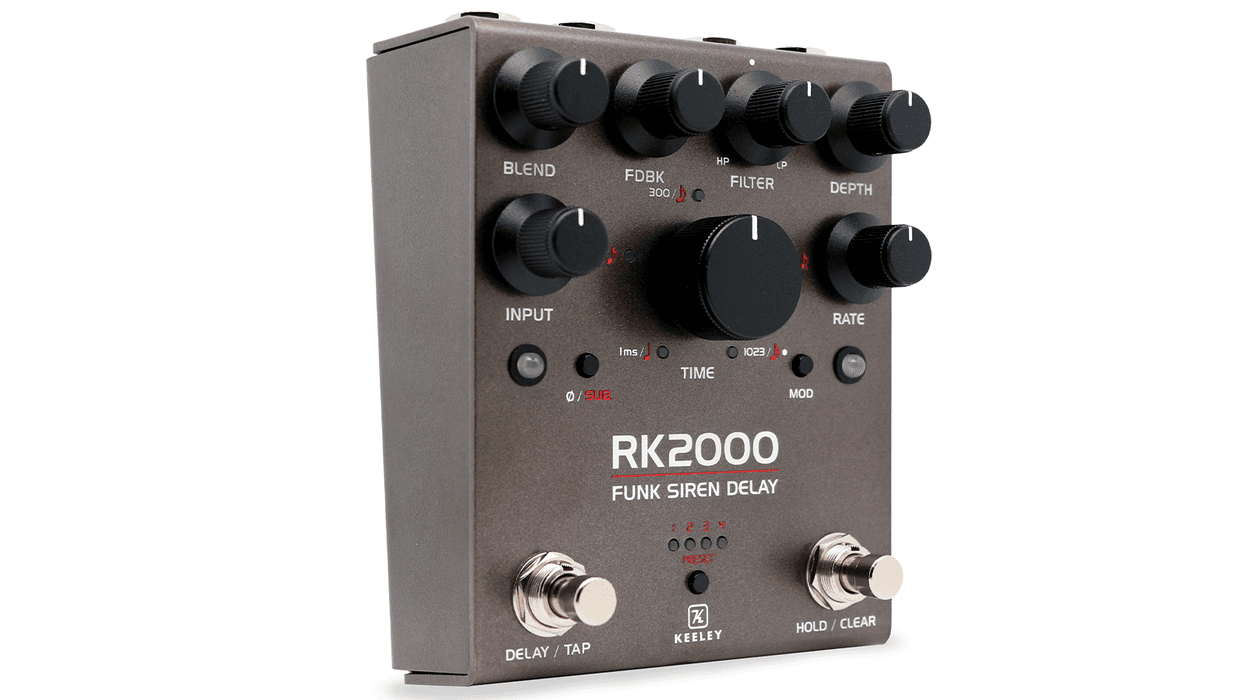

Spoiler alert: the new RK2000 Funk Siren from Keeley Electronics ain’t your ordinary delay pedal – and that’s a massive understatement.
Designed in collaboration with Trey Anastasio and his guitar tech Justin Stabler, the RK2000 is based on the iconic Ibanez DM2000 rackmount delay, a classic from the 1980s and an integral part of Anastasio’s sound in Phish and other projects.
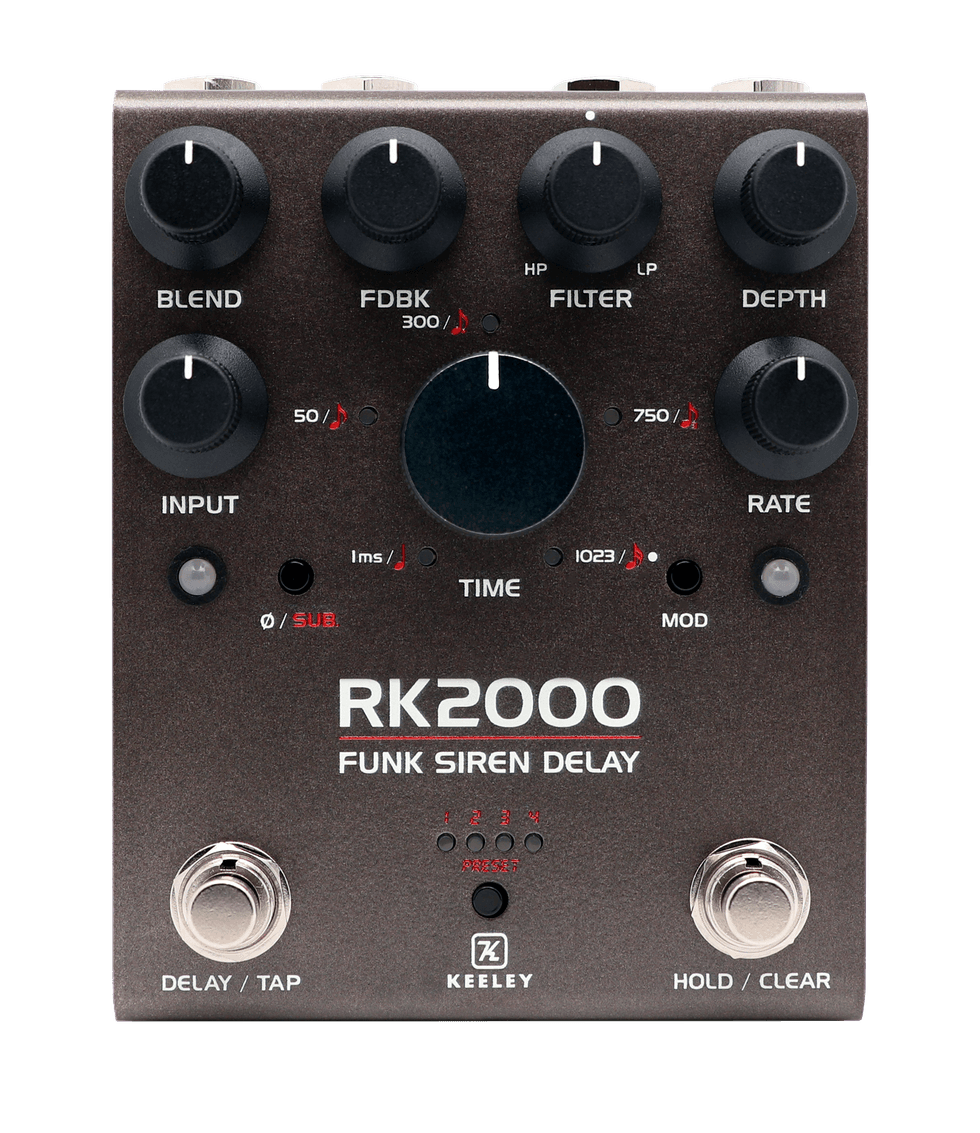
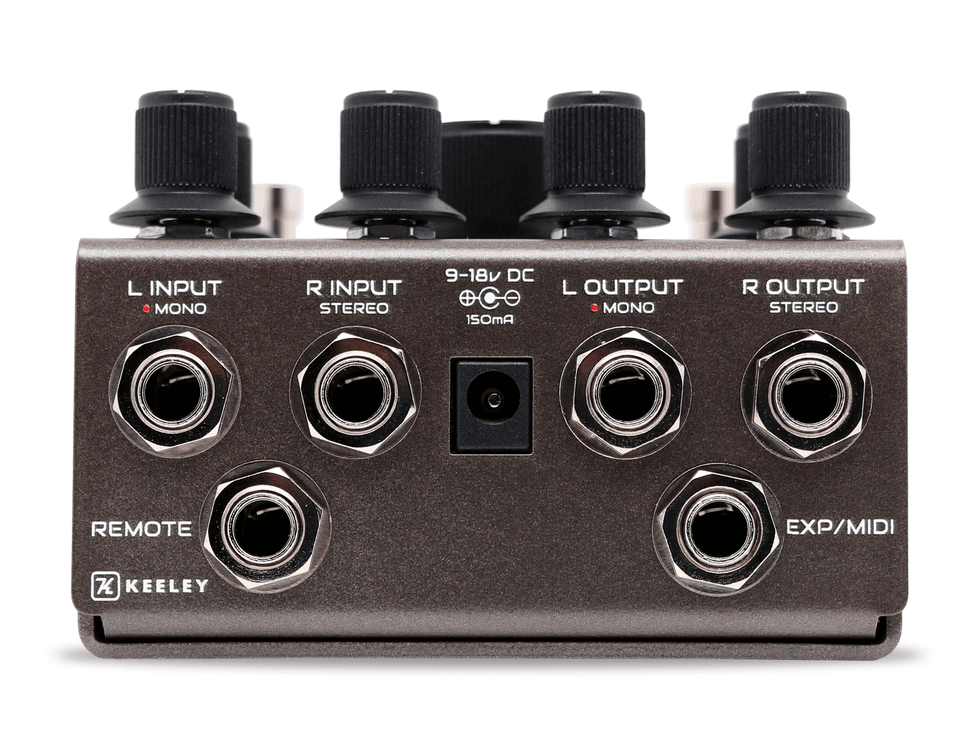
The RK2000 delivers the exact “Funk Siren” ambient loops made famous by Anastasio, with rock solid reliability, a ton of modern updates and expanded functionality, including adding modulation to your delay, tap tempo, full MIDI integration, five presets, expression pedal control and more.
And did we mention that it also happens to be a great sounding delay pedal? But that’s just the tip of the iceberg.
“If you're looking for a simple slap-back delay, this is NOT your pedal” Robert Keeley confesses with a laugh. “This is WAY more than that. But if you want to be the master of the universe, sending guitar notes into outer space, then gently recovering them and doing all kinds of insane stuff, then this is the pedal for you. If you're a Sonic Explorer, this will be your best friend.”
It’s Trés Cool…Even If You’re Not Trey
During a career spanning four decades (and counting!) Trey Anastasio has defined his unique sound with virtuosic playing and a fun-loving, adventurous approach. His choice of instruments, amps and effects are all part of that ethos – and his affection for the Ibanez DM2000 has been a constant throughout. Now you can tap into that 1980s-vintage wellspring as part of your sonic signature.
At its core, the RK2000 is a studio-quality stereo delay pedal with up to 1023ms of delay time, a dedicated Hold function for infinite repeats, and an LFO-driven modulation section capable of everything from subtle warble to “tape-reel” slams. And, of course, it nails the signature “Funk Siren” pitch quake that Anastasio’s fans will instantly recognize.
With a ton of functionality and flexibility at your disposal, you’ll find an enormous array of sounds and textures. The key features include….
- Modulation: a standout feature – and you can get pretty wild. Use the Depth knob to control how much your delay pitch shifts up and down. The Rate knob controls the speed of the modulation effect, ranging from syrupy slow to hyperactive and intense pitch warble.
- Filter knob: a simple and surprisingly powerful tool to shape the tone of your delay repeats. At noon, the filter is neutral. Turn left to cut bass or turn right to cut treble.
- Presets: you can store your settings across five local presets or 127 MIDI selectable locations.
- Phase of delay feedback: the pedal provides a two position button for toggling the phase of the delay feedback. Blue is normal. Red is inverted (180 degrees)
- Tap tempo and subdivisions: use the left footswitch to set tempos on the fly
- Hold function: use the right footswitch to engage the hold function and the current delay buffer for infinite repeats
- Expression pedal: a TRS expression pedal can be mapped to control the sweep of any single knob on the pedal.
The pedal’s modulation function is probably the first thing that will grab your attention as you experiment with the pedal. “It's kind of hard to describe how crazy this modulation is,” Keeley nods. “It can take a note and move it four octaves. So if I play a note on the 24th fret of the guitar at the top of its cycle, it will take it down all the way to zero hertz and then bring it back. And then you can set how slow it does that. It's hysterical when you put this delay pedal at say 500 to 700 milliseconds of delay, just a long analog delay. And then you can set it up to be in ping-pong mode where it's left and right. You can set it up so with the modulation on it bounces back and forth between each speaker. It's absolutely ridiculous. Every time you play it, you walk away with a smile. And especially since it's MIDI controlled, you can put all those parameters on an expression pedal. It’s a riot.”
A Beginner’s Guide To Adventureland
If you’re playing with the RK2000 for the first time, it’s easy to get a taste of its offerings via five factory presets, carefully chosen to illustrate the pedal’s wide ranging potential for magic and mischief.
Preset #1 –Funk Siren:
Preset #2 –Tape “Will” Degrade:
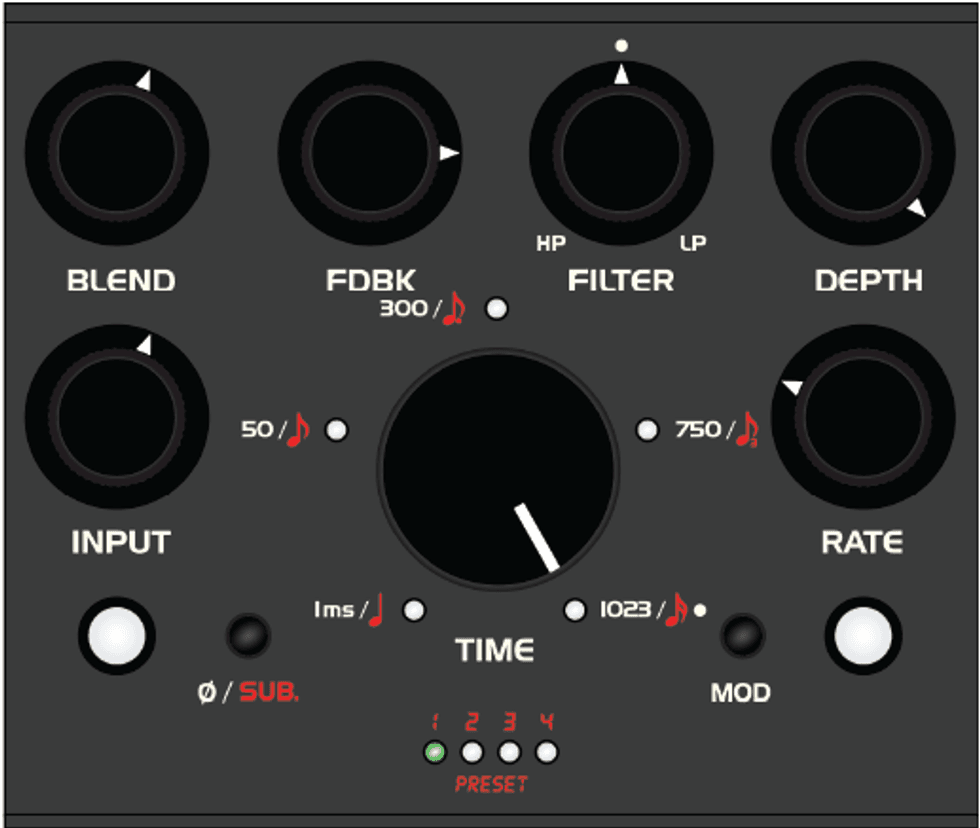
The pedal’s namesake effect is a pristine 1023 millisecond delay with generous feedback repeats. Kick it into gear, start layering your guitar phrases and have fun!
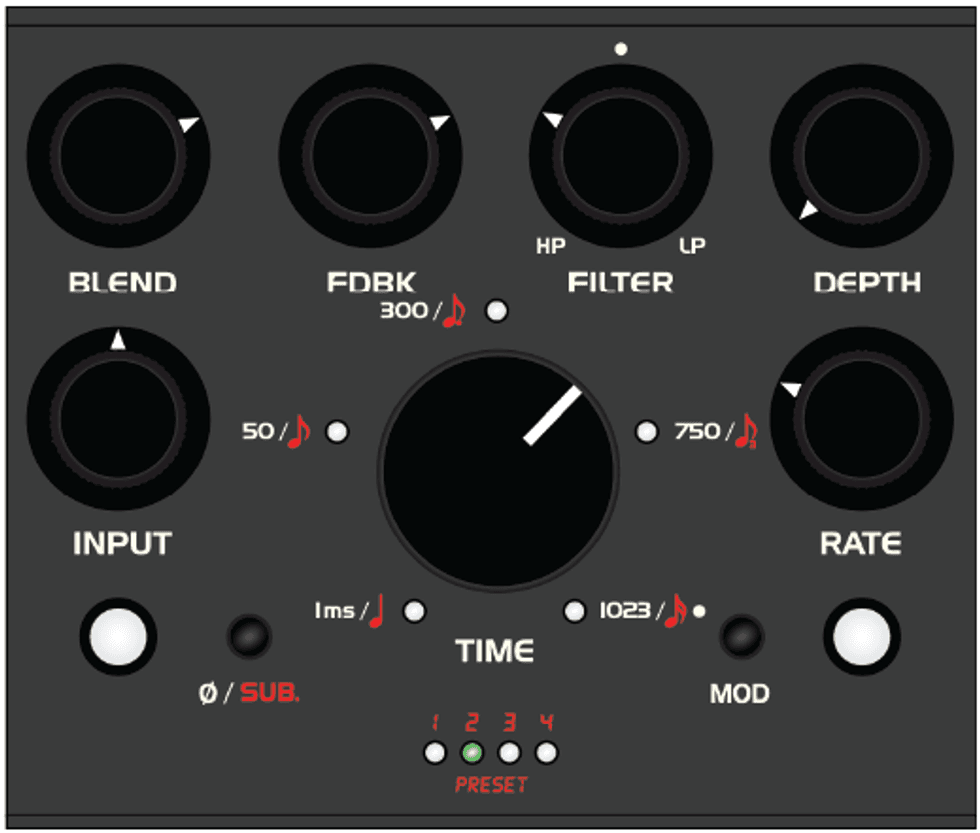
The pedal’s Filter control transforms this 500 millisecond delay, darkening each repeated echo.
Preset #3 – Slap Back:
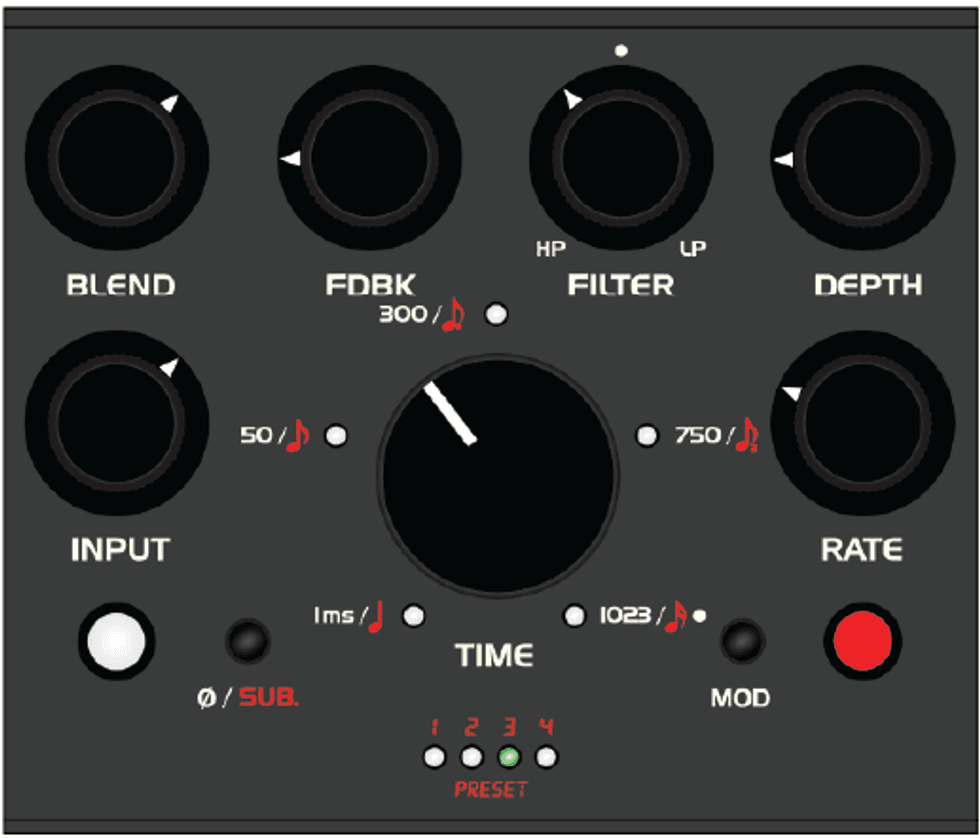
This classic 250 millisecond delay gets a bit of darkening from the Filter knob – and sneaky cool modulation adds an extra layer of moodiness.
Preset #4 – Little Bit-o-Chorus:
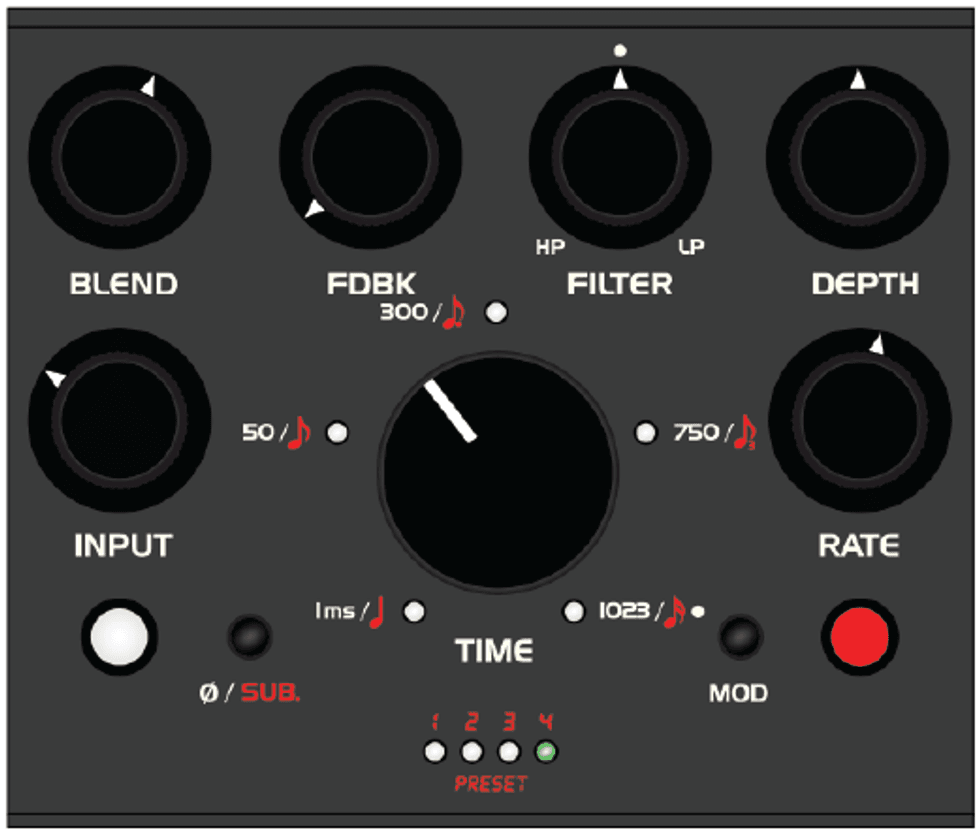
You can season this one to taste via the modulation depth knob, changing the effect from a delicate shimmer to a lush, syrupy swirl.
Preset #5 –Long Delay:
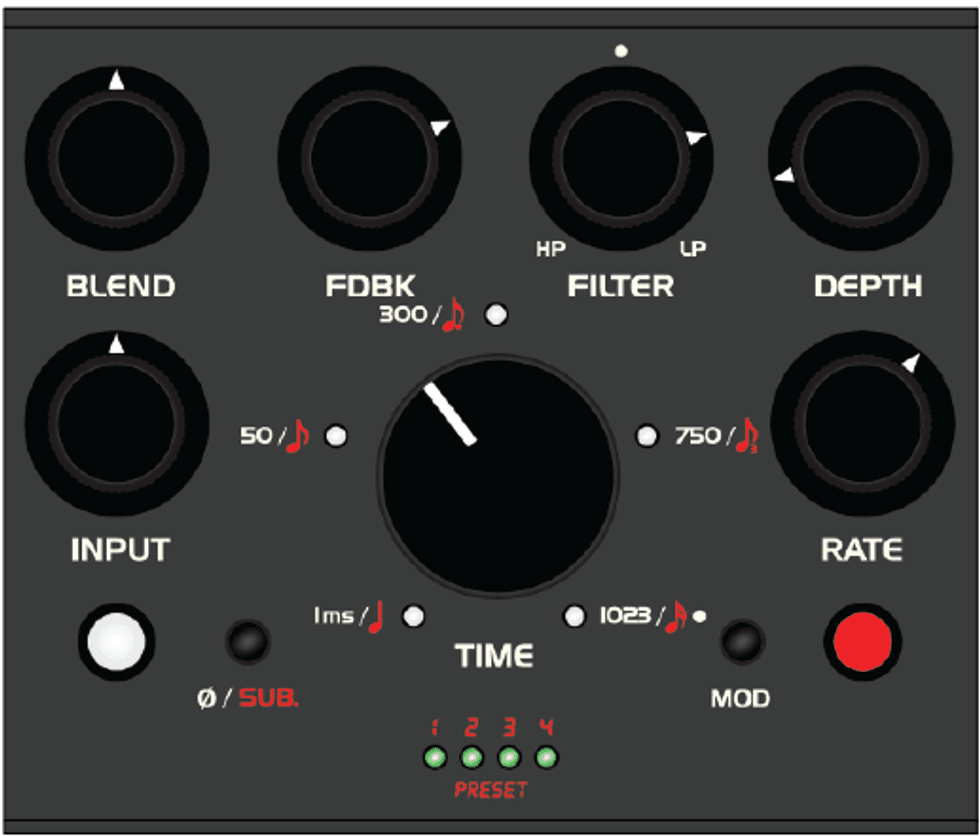
A nifty take on 250 millisecond delay, the Filter knob brightens each repeat with subtle modulation creating an almost cinematic vibe.
Of course you can always overwrite the presets with your favorite settings – and it’s easy to restore the factory presets if you wish. If you’re using MIDI to control the pedal, you’ve got 127 preset locations at your disposal.
Fishing For That Classic Ibanez Magic
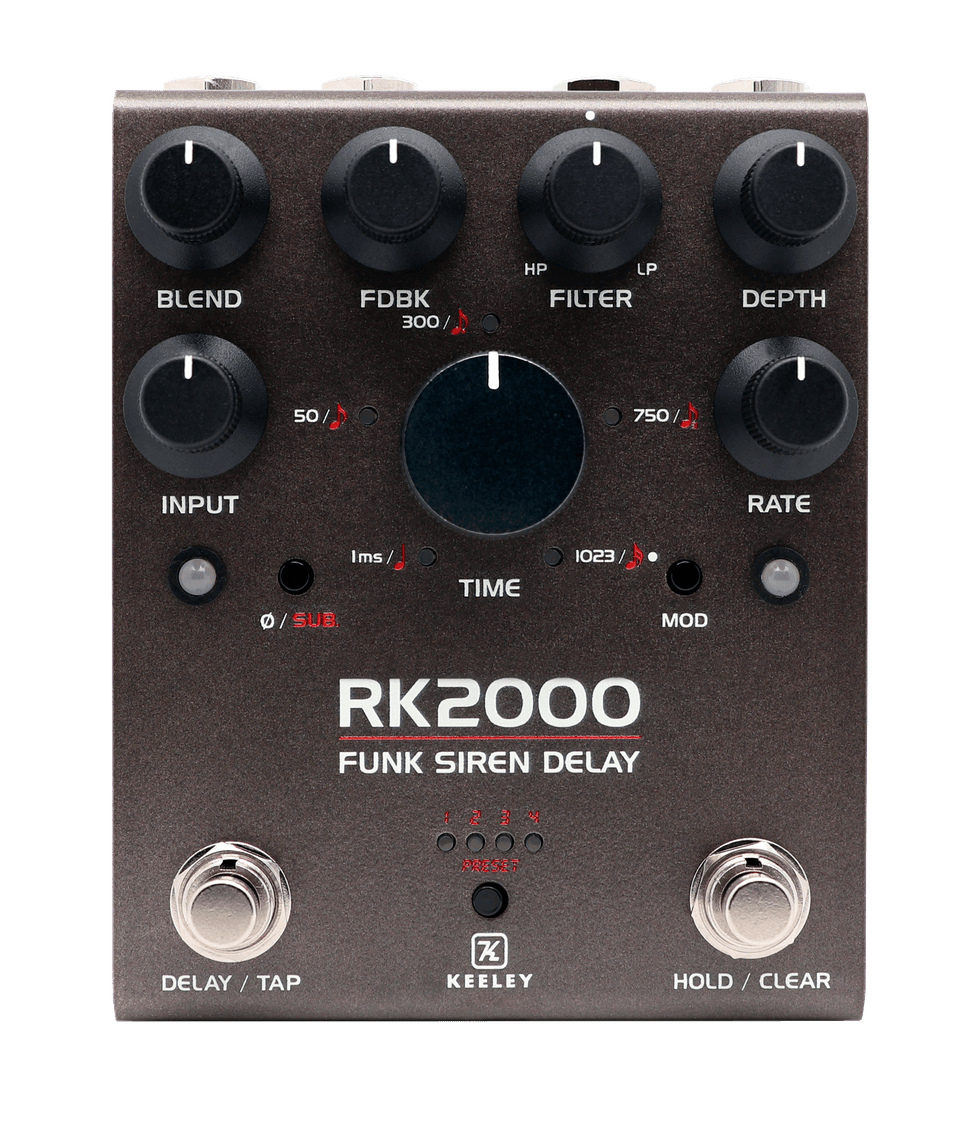
The RK2000 story began when Anastasio’s tech Justin Stabler approached the Keeley team with a not-so-simple request: create a pedal that would duplicate the sound of Anastasio’s 40-year-old Ibanez rack mounted delays. Keeley recalls Stabler’s plea: “He basically said ‘I am so sick and tired of these DM2000s because Trey literally has the one that he got when he was in high school. And these switches are bad. The maintenance is a nightmare.’”
Stabler’s request turned out to be a formidable challenge. “At first, I thought anything that they did in 1983 has got to be easy for us to do today. That was the biggest mistake ever,” Keeley laughs, “because if you look at the reviews that came out in ' 83, I think someone called it the most overengineered delay of the times. We discovered there was a modulation section in there that changes the pitch, the rate and the depth – and that was completely alien to us at first. Justin also told us ‘I think that there's something to do with the input control and how it affects the sound, because it's got a really unique delay.’ And so we get the schematic out and we realized that this thing is definitely a product of its time.”
The project instantly became a labor of love for Keeley. A longtime fan of metal bands, he got turned on to the Grateful Dead by a friend and then he discovered Phish. “For me, that was the link between the metal stuff, because Trey in the 90s is just a phenomenal rock guitar player. And it also had the improv of the Grateful Dead. So it was like, yeah, this is exactly what I want to hear!”
Anastasio had plenty of other fans on the Keeley team, so unlocking the secrets of the Ibanez DM2000 delay became more than just a pedal project: it became a mission for everyone involved. Keeley Electronics’ design team includes lead electrical engineer Craighton Hale and DSP programming is Aaron Tackett’s domain. Both have been with the company for over 15 years. And throughout the process, Justin Stabler helped ensure that Anastasio’s creative needs were front-and-center.
Now, the results from that collaborative process – more than a year in the making – have arrived. If you’re looking for a delay pedal that accommodates your wildest creative impulses and offers a ton of versatility, you’ll find it here. Don’t be afraid to heed the call of the Funk Siren and check out Keeley Electronics’ new RK2000.