
If there was a Mount Rushmore dedicated to celebrating American acoustic guitar builders, Richard Hoover would certainly be included among the legends.
When he first launched the Santa Cruz Guitar Company in 1976, the boutique acoustic guitar industry was essentially non-existent. Almost all acoustics were made by established and relatively large brands like Martin, Gibson, and Guild. “When we started our shop, it was, in fact, a new concept: humans making guitars rather than companies,” he says with a wry laugh.
Since then, Hoover has built hundreds of acoustic gems and inspired generations of musicians, as well as fellow luthiers. In those 50 years an entire thriving industry and ecosystem has grown, with dozens of masterful artists – many of them directly influenced and/or mentored by Hoover – building custom guitars of all types. And it’s no exaggeration to say that Richard Hoover is the godfather of the American boutique acoustic community.
To celebrate the company’s 50th anniversary, Hoover and his team have created a special collection of five limited-edition guitars. Dubbed the “Greatest Hits Collection,” each design is carefully chosen by Hoover himself to represent a facet of the Santa Cruz Guitar Company legacy.
The five models in this curated collection span various sizes and tonewoods, are intended for a variety of players and styles, and highlight different eras in the company’s ongoing evolution. But together they represent the full spectrum of SCGC’s acoustic designs and are united by a key factor that defines every Santa Cruz guitar: attention to detail in each hand-built instrument.
Here, Hoover provides the background story behind each anniversary model.
1929-00 50th Anniversary Limited Edition
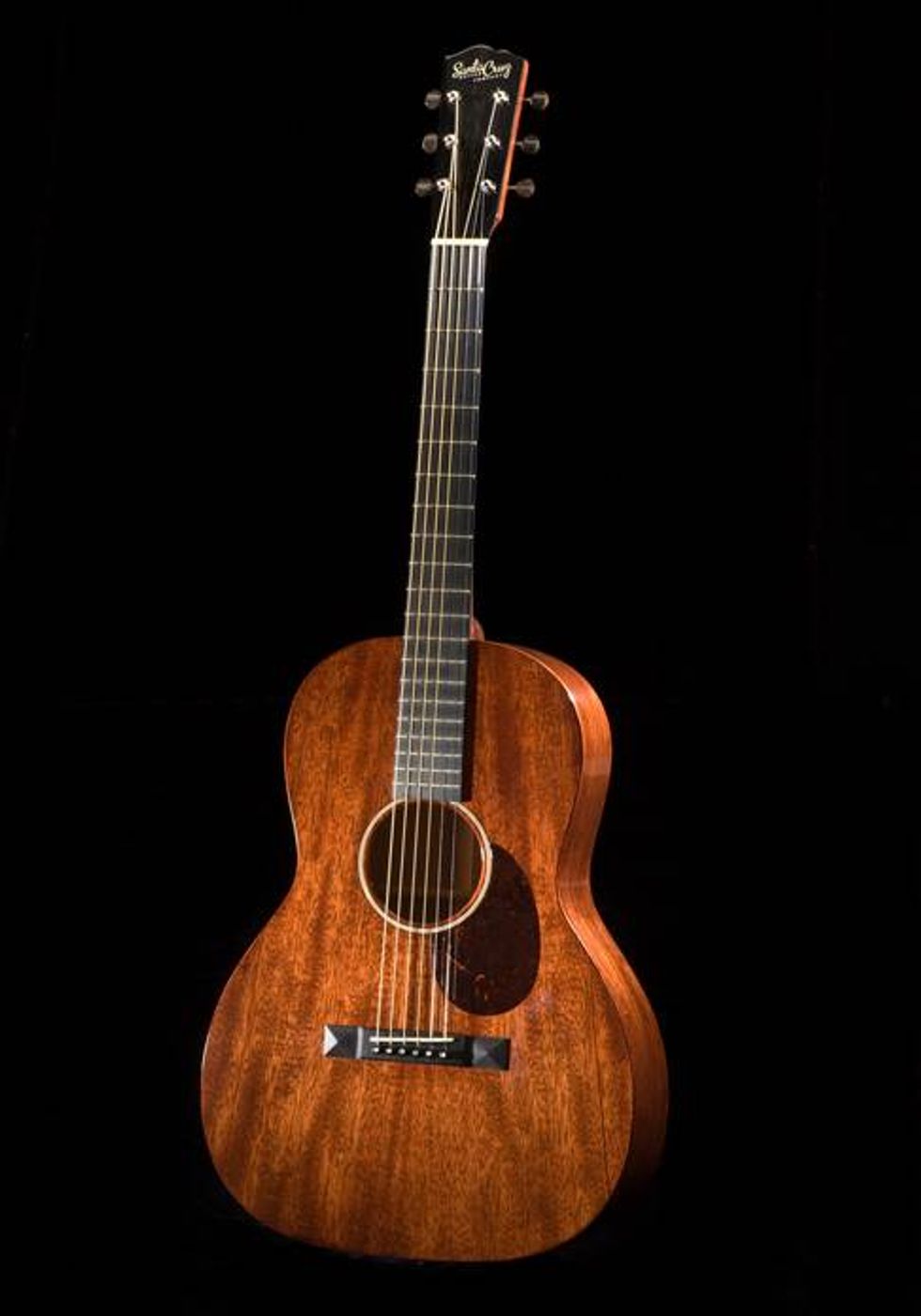
Originally created during 2008 financial crisis, this model was inspired by Depression-era all-mahogany guitars and helped build awareness for mahogany as a world-class tonewood.
“This one is really dear to my heart,” says Hoover. “When we started the Santa Cruz Guitar Company in 1976, I had a plan to get mahogany the respect it deserved as a tonewood because it's spectacular and one of my favorites.” Hoover built some mahogany guitars starting in the late 1970s, but “the market wasn't in a mood to accept it, and the reason goes way back in history, before guitars even, to furniture and pianos. Back then, the fancy stuff was made from rosewood, usually Brazilian, and it was more decorative. The cheaper stuff was made from mahogany, and it was plainer. So, by association, mahogany got the reputation of being a lesser wood, or a bargain wood.”
But Hoover loved working with mahogany, and during the 2008/2009 financial crisis he saw an opportunity. “I thought ‘This is the perfect time to introduce an all-mahogany guitar and take a lesson from Martin.’ As the depression began in 1929, nobody could afford anything—and Martin, in their wisdom, decided to make a really plain guitar out of their least expensive wood and offer something at least a bit affordable. They used mahogany to create some wonderful instruments.”
During the 2008 financial meltdown, Hoover took a cue from Martin and hit upon an idea. “Instead of making a super-plain guitar, I wanted to build something simple but elegant. Not cheap at all, but okay to buy because it was simple. That presentation was really successful, and not only for us—it helped to fulfill my bucket-list dream of getting mahogany the respect it deserves as a tonewood in the marketplace. Several companies followed suit with all mahogany guitars and one of the great joys in my career is having Martin copy our copies of old Martins,” he laughs. “It was a dream come true for me because my taste is really simple elegance. I love doing the fancy work and all that, but personally I prefer the stuff that looks more expensive the closer you get to it.”
OM Pre War 50th Anniversary Limited Edition
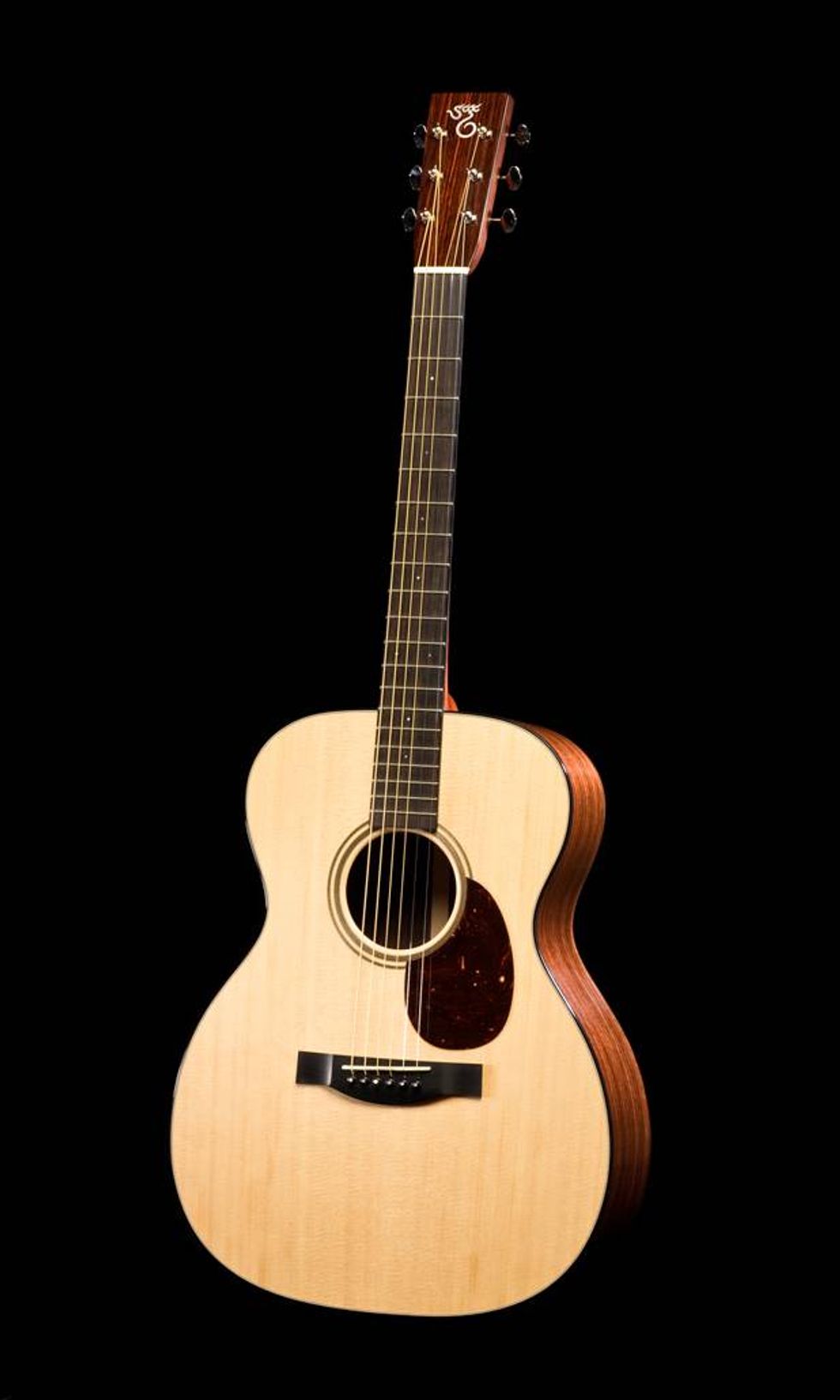
Introduced during the 2003-2004 recession, this model won industry awards for making Santa Cruz more accessible than ever: a boutique/professional guitar in an affordable price range.
“This was something that I thought about a lot. We made our first OM in the early 1980s, but it was a hard sell. In the marketplace the dreadnought was the king. If you were a grown up, you played a dreadnought. I used to say the OM was something that a retired music teacher or a maiden aunt might have in their house that you knew about, but you certainly wouldn't desire it. You want a grown-up guitar like a dreadnought.”
But by 2003 the mood had shifted—and an economic downturn provided an opportunity to design an OM with more low end. “This is the OM that we made that was like the dreadnought. We found there were people out there that were missing something: they wanted what they heard with an old Martin OM, and what it was is the EQ. So pre-war is just what it sounds like. We advance the “X,” which brings the legs up and loosens up the lower bout for more bass response, and we scalloped it in and more in the tradition of the pre-war guitar, which again boosted the bass.”
When it was originally released, the guitar carried a very fetching price. “We wanted marketability: an affordable, real boutique guitar. We made it plain—black celluloid binding, simple peripherals. It didn't cost any less to make, but we offered it at a lower price. And that really did work for us. So rather than become a mainstay that we sold a lot of, it introduced people to our guitars that normally wouldn't have picked them up in the first place.”
H Model 50th Anniversary Limited Edition
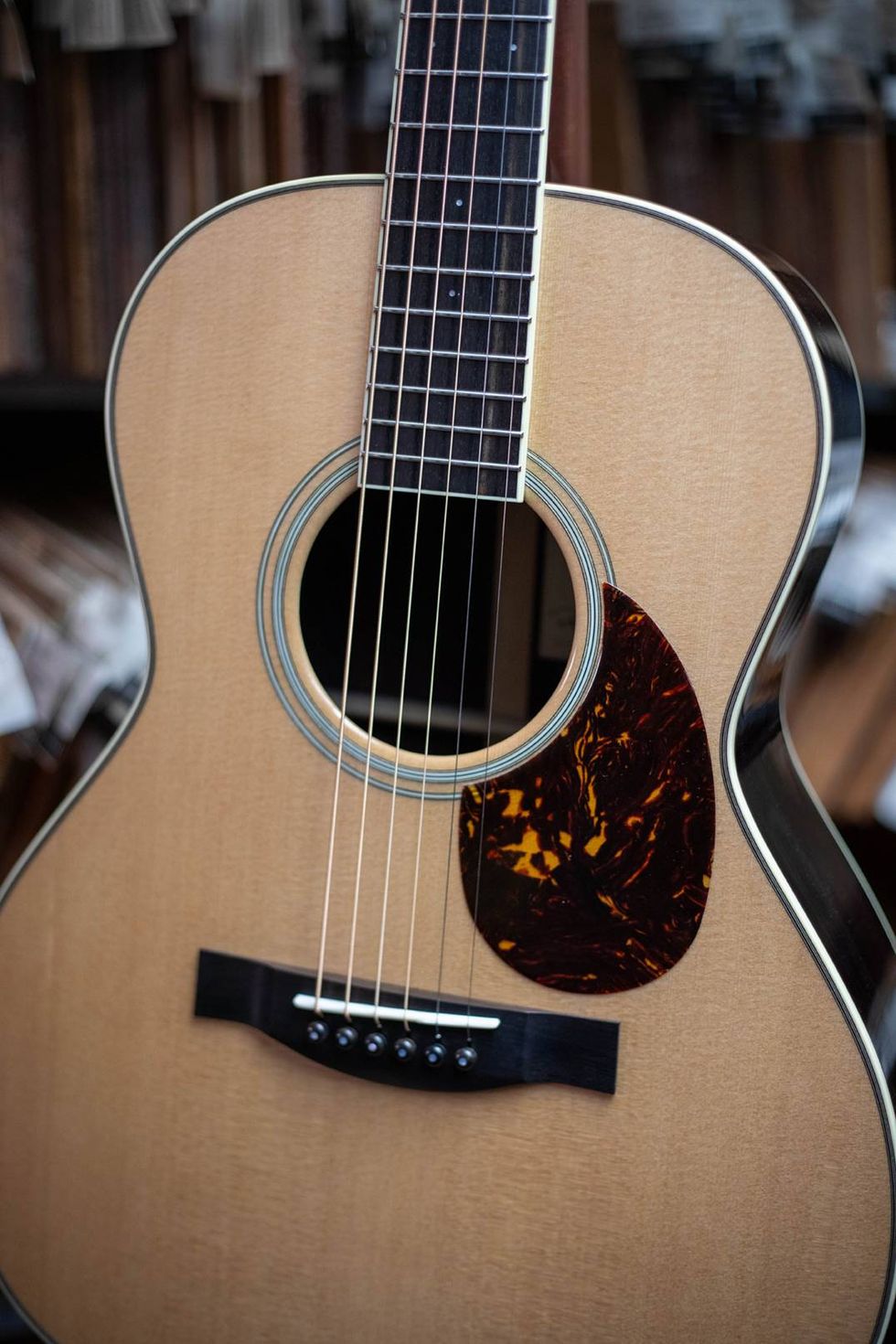
Introduced in 1978, this was one of SCGC's earliest departures from traditional guitar shapes. Hoover worked in collaboration with artist and luthier Paul Hostetter to create a unique, small jumbo instrument that offered balance, responsiveness, and tonal complexity. It has become one of the company’s most iconic models—equally at home in delicate fingerstyle passages and dynamic, articulate rhythm work. The special limited-edition anniversary model includes a custom scrimshaw heel cap and wax-sealed 50th Anniversary label.
“The first H was our first departure from a dreadnought. We did it at a time when nobody was playing anything but a dreadnought. We made the H in several versions, including where the neck joins the body at the 12th fret and another where it joins at the 13th fret. I tried to sell a guitar that was 12 frets, and it was impossible. It tried to sell a small body guitar, and it was impossible. To try to sell a guitar with 13 frets? We might as well make bowling balls and try to sell them in a music store.”
Hoover eventually developed a 14-fret model. “It was my favorite guitar, ever. Just the look of it, it glows. It's a great design, and it's incredibly versatile in the sense that it has a predominant bass, but not like a dreadnought—and that’s by design. And it's shockingly loud for what we call a small-body guitar today. The tricks behind that are in creating more airspace by making it deeper front to back and by putting a longer-scale neck than expected on a smaller guitar. And a tip of the hat to Rick Turner, who showed me that he was tilting his saddle back about 10 degrees from perpendicular. So when the strings break over the saddle, they push more directly down than pushing forward. And it's a remarkable innovation for making the guitar louder acoustically. So, there's a lot of tricks in this instrument to make it what it is.”
Firefly 50th Anniversary Limited Edition
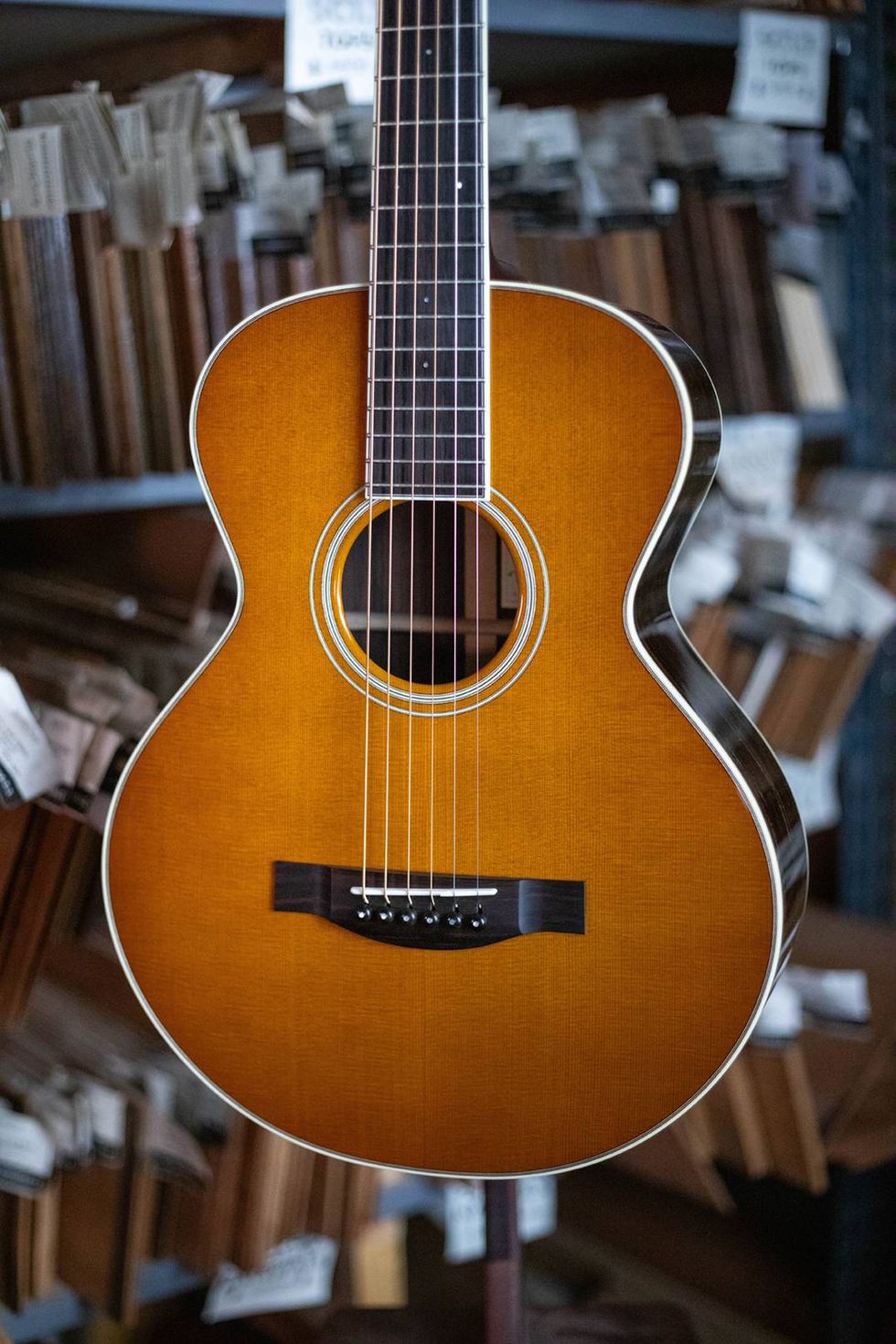
Designed with the smallest proportions for intimacy and immediacy, this model delivers remarkable clarity and presence. The anniversary model includes custom scrimshaw heel cap and wax-sealed 50th Anniversary label.
Hoover acknowledges his love for parlor guitars from the late 1800s, and he’s candid about how the guitar evolved with ever bigger bodies in the 1900s. “Guitars didn't get bigger to sound better. They just got bigger to be louder, so they could be heard during stage performances, like vaudeville. You can’t take a parlor guitar onstage and follow an act where there's banjos, children, and barking dogs. How are you going to compete with that?” he laughs.
Hoover longed to build a guitar that captured the intimacy of a parlor, with a little extra oomph and eye-catching modernity. And thus, the Firefly was born. "We built a guitar in the tradition of 150 years ago, but with modern styling. We knew that the world did not need another parlor guitar where people go, ‘Oh, how cute. Maybe someone else will buy it but I'm not going to buy a little guitar like that.’ We knew it needed to look modern, and with 14 frets to the body. It has as long a scale as we could get into it for tension, and it was braced in the same spirit of the guitars that were made in the 1860s and 1870s. It was strong enough to withhold the tension of strings but no more than that was necessary. So what we came up with is exactly what I wanted to show the world: the beauty of a small-body guitar. And I take pleasure when someone says, ‘Wow, I'm so surprised that a sound like this came out of such a small guitar.’ I may sound biased, but I love that instrument, and I think it's probably one of the coolest things we've ever done.”
FTC 50th Anniversary Limited Edition
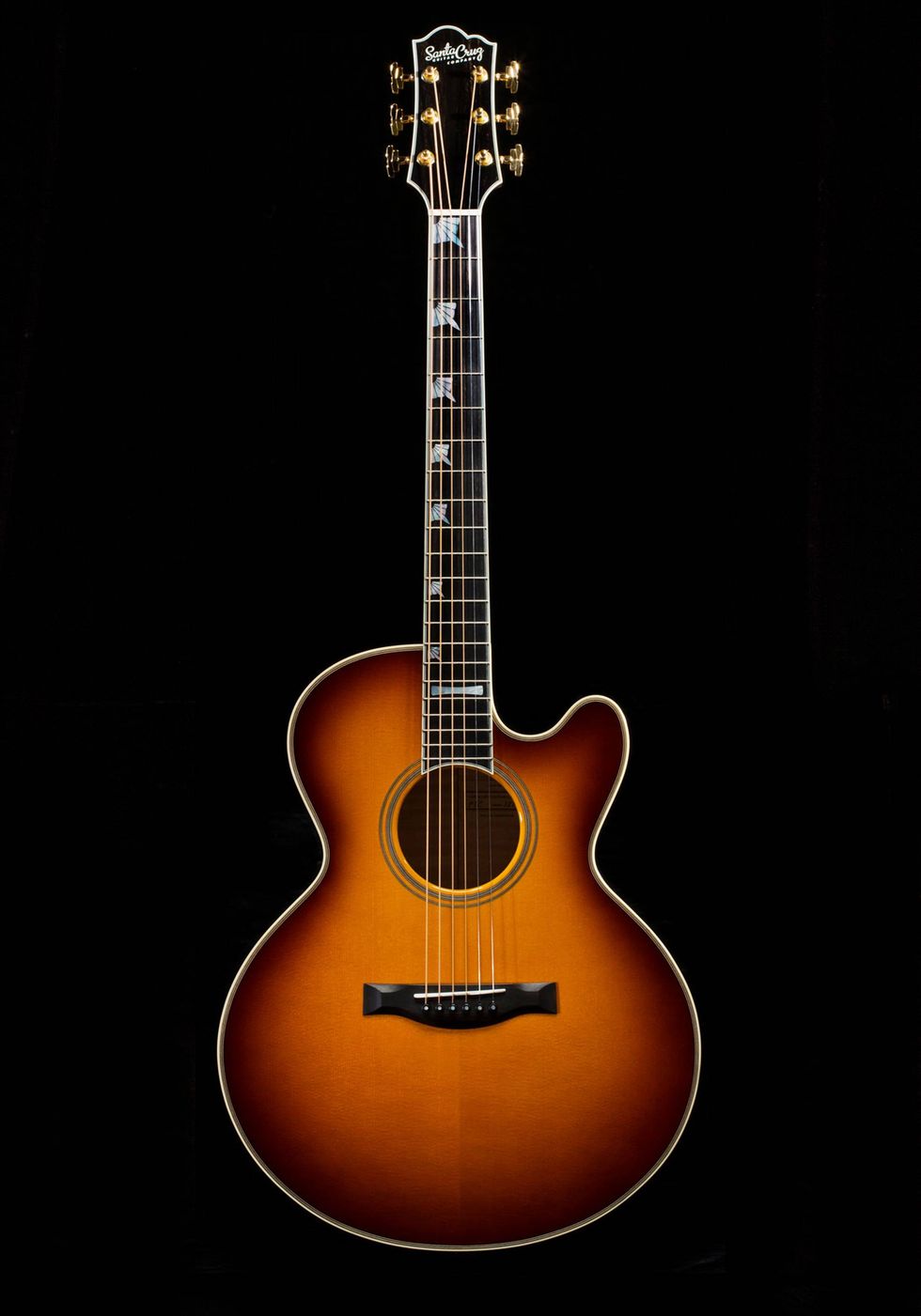
Introduced in 1978 — one of SCGC's earliest explorations beyond traditional flat-top design – this model paired a flat top with an arched back for new levels of focus and projection, and soon became a favorite of Eric Clapton. The anniversary model includes custom scrimshaw heel cap and wax-sealed 50th Anniversary label.
This model was originally inspired by the Windham Hill artists of the late 1970s. These players were using open tunings on dreadnought models. “FTC stands for flat top cutaway. It was designed to be super versatile, and when I say versatile, I don't mean everything for everybody. But we wanted to create something that was not limited by the dreadnought's predominant bass, and that projected sound with less effort.”
The guitar’s design is a delicate balancing act. “There’s a little physics involved. The guitar is like ringing a bell: the volume and energy go 360 degrees everywhere. But to focus that, we wanted to use the trick that the archtop builders used back in the big band era, where it was almost a percussive rhythm instrument meant to cut through the whole orchestra and reach an audience acoustically. And so it was designed to project forward, not lose energy by going backwards to the player. We wanted that projection and power going forward, but we didn't want the lack of sustain that the archtops had.”
Although the FTC was not a hit in its own right, it did have a big impact on the Santa Cruz Guitar Company’s trajectory in the early 1980s. “Eric Clapton saw our tiny ad in Frets magazine, and he wrote us a handwritten letter and ordered a guitar. That helped immensely, because we went from being this quaint company on the west side of Santa Cruz to the company that made a guitar for Eric Clapton. That opened doors tremendously. That's why this guitar is on my greatest hit list—because it was so important in our development, and our introduction, really, to the world.”