

Effects pioneer Robert Keeley and guitar adventurer Andy Timmons reveal their newest collaboration.
Keeley Electronics’ new Nocturne reverb marks the latest chapter in an ongoing and expanding partnership between Andy Timmons, Robert Keeley, and the Keeley Electronics design group. They first teamed up in 2020 and have since developed effects such as the HALO Dual Echo (which captured Timmons' dual delay sound in a compact pedal) and Timmons’ signature Mk3 Drive. The new Nocturne reverb represents a fascinating new direction in the collaboration.
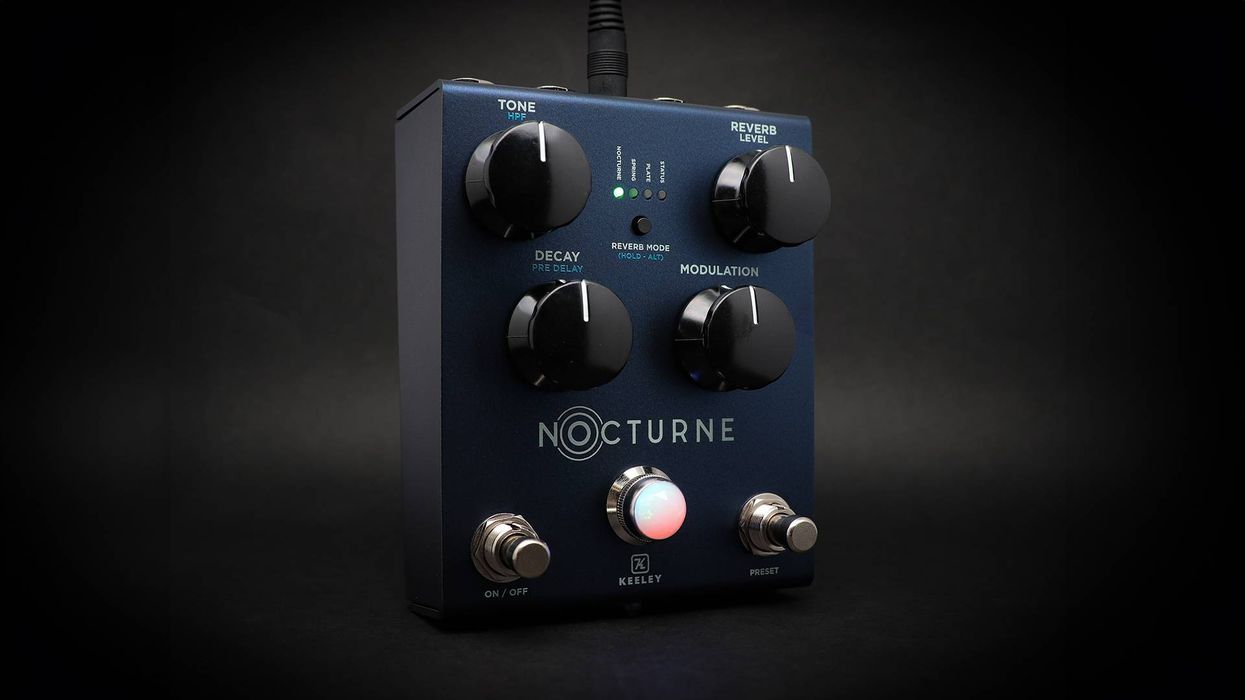
At its core, the Nocturne offers three distinct reverb modes in a single unit. Its Plate and Spring reverbs are based on bona fide classic sounds, while its titular Nocturne mode takes a fresh approach to reverb and delivers an otherworldly playing experience. It’s incredibly user-friendly, with a simple four-knob control set—Tone, Level, Decay, and Modulation—that makes it easy to shape your reverb space. Each reverb mode can be saved as a preset, so you can store your favorite sounds.
It’s an approachable, powerful pedal that offers instant gratification for just about any guitarist… even players who don’t normally use reverb. And that’s the biggest plot twist in the Nocturne story.
You see, Timmons doesn’t even consider himself a “reverb guy.”
“I've always used echo and delay instead of reverb. That's my ambience, that's my space,” Timmons admits. “Until now, there was never really a reverb that worked for me. I would use delays and try to curate them in the right way. But I had a different sound in my head, and I approached Robert to see if we could make it a reality. Now, my wall has come down for reverb. I just had to wait for the ‘Mr. Right reverb’ I guess,” he laughs.
Timmons’ “Mr. Right” reverb has arrived, and its calling card is the Nocturne reverb mode.
Knock, Knock, Knockin’ on Heaven’s Door
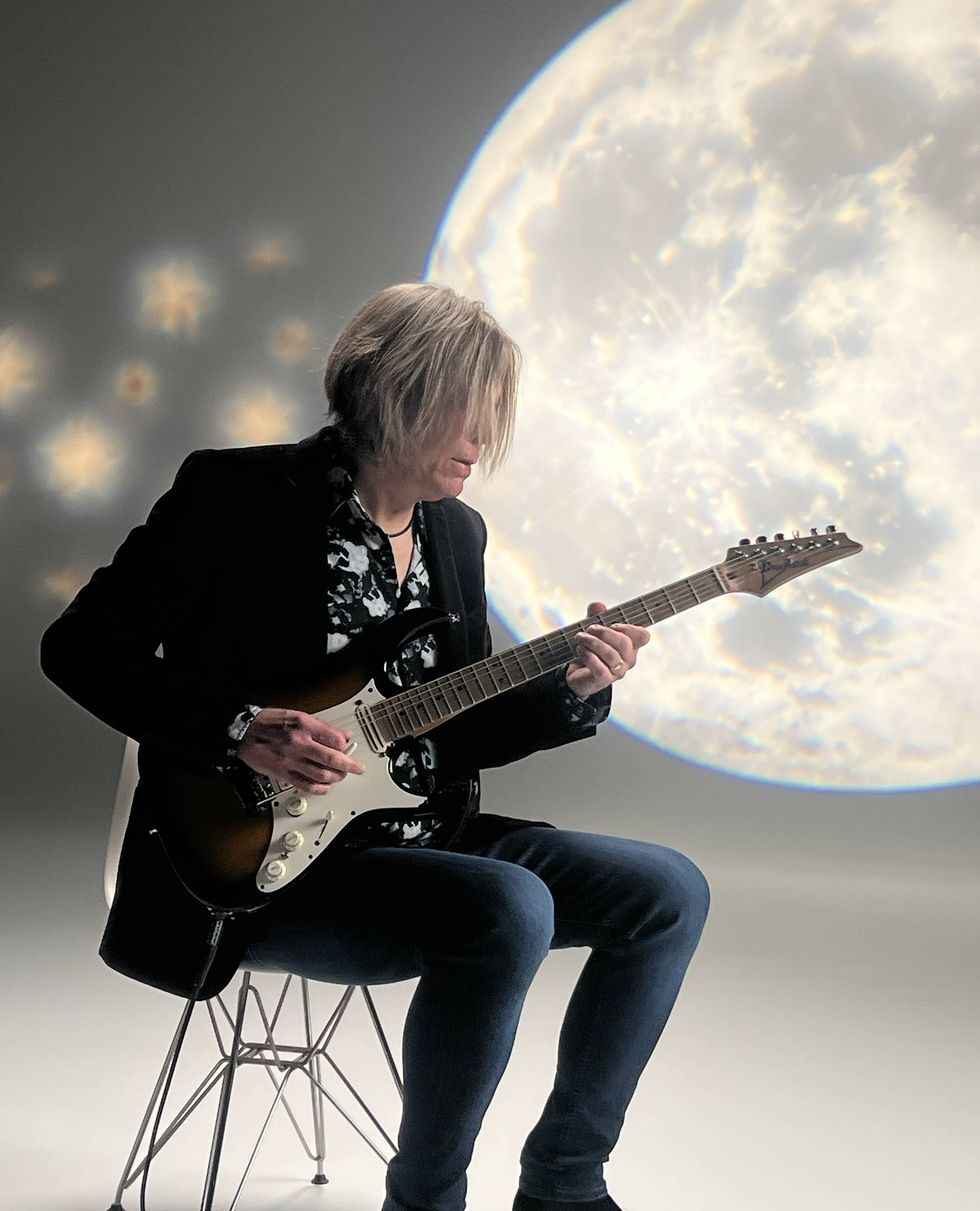
Andy Timmons at a Nocturne video shoot
Amid the pedal’s offerings, many players will view the Nocturne mode as the belle of the ball. It’s an immersive, almost heavenly reverb that sounds great when used sparingly—and sounds even better when it’s generously applied to clean, arpeggiated phrases or textural chords.
The brand-new reverb space is based on Keeley’s unique Halo delay algorithm. From subtle ambience to cinematic space, the Nocturne allows players to create that same expressive, touch-sensitive bloom that trails effortlessly behind every note, without the cross talk from echoes. It features a pre-delay echo that transforms into an expansive and engulfing reverb space. It’s difficult to describe—it simply sounds like it’s from another planet.
As Timmons says, “it creates a reverb from a different perspective. It’s not a usual reverb algorithm. It’s a fresh and different angle. I just want to sit and play in this dreamlike sound all day.”
Not surprisingly, Timmons has immediately put the pedal to creative use: “I've got a collection of songs that I've written—solo pieces called ‘The Outlier Nocturnes’—so I was basically waiting for this pedal. I'm already using it in the studio now that I have the right sound.”
Spring Fever
In designing the Nocturne, Robert Keeley and his team were determined to create a pedal that could satisfy a broad range of tastes. And for many guitarists, the first thing that comes to mind when they think of reverb is the classic reverb-drenched amp tones of the 1960s.
That includes Andy Timmons himself. “I’ll admit that I'm a closet surf guitarist,” he laughs. “I even have a surf record that's been in the can for years… I just haven't released it.When I run the Nocturne in spring mode into my dual showman and a 2x15 Fender cab, it’s just got that sound, man. It’s Dick Dale incarnate.”
Timmons’ personal passion for spring reverb and surf music helped spur the design process—but spring reverbs are fickle beasts, and notoriously difficult to replicate. To fine-tune the pedal’s Spring mode, Keeley worked closely with Aaron Pierce, a key partner in Robert’s design team at Keeley Electronics, and relied on modern technology to capture the vintage spring reverb mojo. “Aaron and I purchased a spring reverb or two and we put them through our audio analyzer. We worked hard to make it sound realistic and very drippy, just like the originals. When it comes to the iconic reverb sounds that we were searching for, I wasn’t sure I was going to be able to make it happen. But we finally got some awesome drip going with one, and that's the one I'm most in love with.”

Left to right: Andy Timmons, Robert Keeley and Aaron Pierce prepare to shoot a video featuring the Nocturne.
Having harnessed the elusive, authentic spring reverb sound he had been seeking, Keeley and his team were determined to capture another essential reverb flavor for the Nocturne’s third mode: vintage tube-driven plate reverb.
The chase led them to Austin, Texas….
Keeley Electronics Nocturne Reverb with Robert Keeley and Andy Timmons | A REVERB YOU’VE NEVER HEARD BEFORE!
Join Robert Keeley, Andy Timmons, and Aaron Pierce for a deep dive into the creation of the Keeley Electronics Nocturne Reverb—a design shaped by collaboration, experimentation, and a completely new approach to ambient space. In this panel-style conversation, the team breaks down the ideas, sounds, and engineering choices that led to a reverb unlike anything in the Keeley lineup.
Hear the stories, explore the process, and discover why the Nocturne truly is a reverb you’ve never heard before.
A Plateful of History
Tube-driven plate reverb is one of the defining sonic characteristics of classic recordings from the 1950s, 1960s and 1970s. Beginning with the 1957 introduction of the EMT 140 by the German company Elektromesstechnik (EMT), plate reverb quickly became ubiquitous in popular music. Each individual plate reverb has its own subtle flavor—a unique sonic fingerprint. If you’re going to create a modern digital effect based on a vintage unit, it’s crucial to find a great-sounding original specimen.
“The plate is a really exciting part of the story for me,” Keeley admits. “My plate is (based on) the one that they used at Austin City Limits since the mid-’70s. About 10 years ago (Mike Daane) got a hold of it. They (ACL) decided to stop using it to go to a digital system and it was at that point in time where we got to go down with our audio analyzer, the APX 515B, and we could study its frequency response and measure the reverb trails. We modified the frequency response of our reverb so it more closely matched the Austin City Limits plate reverb. Reverbs have a certain resonance. And if you play something percussive like a tom or a snare, you can hear the resonance in the Austin City Limits reverb—it’s a lower frequency than typical.”
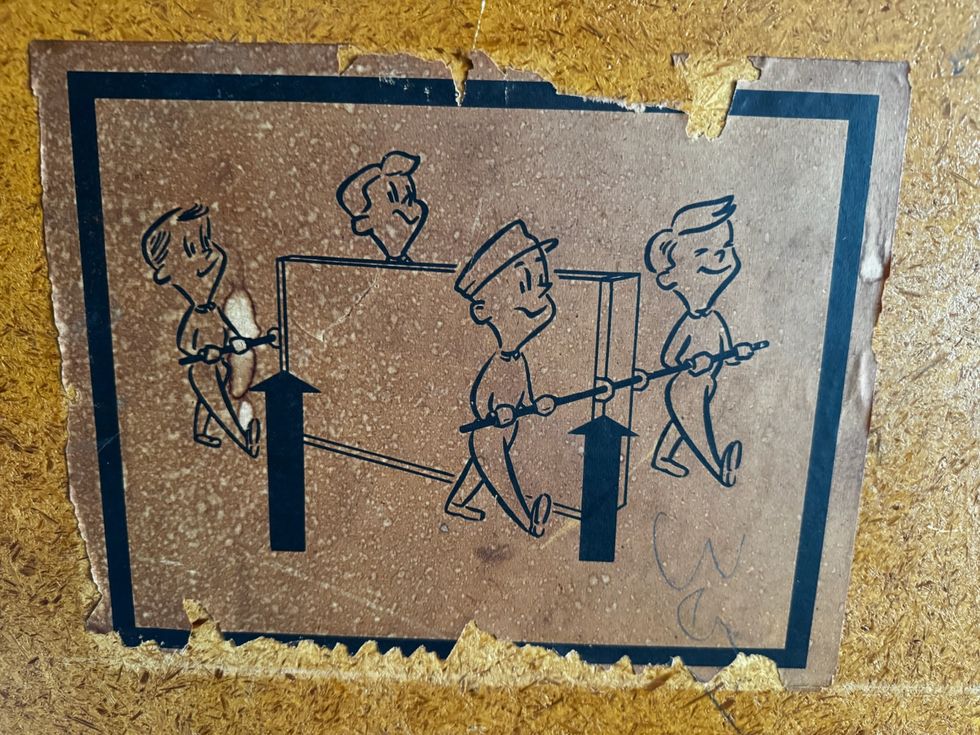
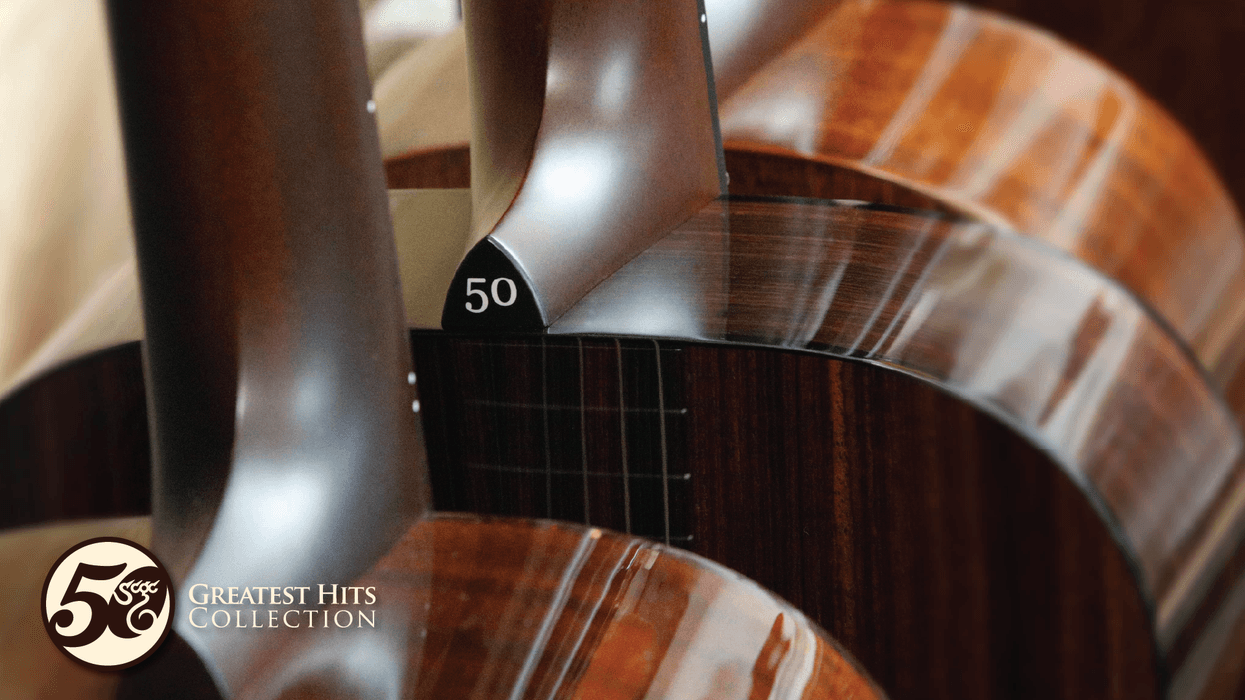
This sticker shows instructions from the German manufacturer on how to safely carry the massive 500-pound reverb housing.
This particular plate reverb boasts its own historic provenance. Beginning with an October 1974 performance by Willie Nelson, the Austin City Limits TV program has hosted the crème-de-la-crème of blues, rock and country music artists for decades. Stevie Ray Vaughan, B.B. King, Johnny Cash, Lyle Lovett, George Strait, Emmylou Harris, Wilco, Los Lobos, and Dolly Parton are just a few of the artists whose performances were channeled through this very reverb unit.
Timmons was enthused that the Austin City Limits reverb provided the basis for the Nocturne’s plate mode. “Every stereo tube plate reverb is gonna sound a little different, and it’s such an amazing opportunity to have the specific plate that was used on all the Austin City Limits shows for so many years. The design team could do a molecular level study of it with the amazing gear that Robert's got. I think that’s the one that took the most effort and revisions. But once Aaron [Tackett] figured out how to approach the plate, it was really exciting to hear how it turned out.”
HALO AND NOCTURNE—TOGETHER
For all of the technology and analysis that went into creating the pedal, the Nocturne is dead-simple to use: just three easily selectable reverb modes, four control knobs, plus some alt functions if you’re inclined to use them.
“And I'm not one of those that's inclined to do much tweaking,” Timmons admits. “I just want to turn something on and have it inspire me really quickly. That's what this format does so eloquently. It's encouraging, not daunting, and you feel it as soon as you plug in.”
Even though it’s an outgrowth of the Halo delay that Timmons and Keeley collaborated on earlier, Timmons says the Nocturne is designed to be used in conjunction with the Halo. “It's not meant to replace my Halo, but they work incredibly well together. I basically keep the Nocturne always on and I'm blending in the Halo occasionally. I was in the studio three days ago: I’m playing through my Keeley Mark 3 drive, the Halo, then the Nocturne into 2 vintage Marshalls. All the effects are being printed, and I'm listening back to the monitors and thinking, this is the best sound I've ever had! It's such a wonderful place to be, to be that happy with what's happening sonically. So now all I have to do is try to play to the level that the sound is allowing me to play. It's a dreamscape that I have never heard before.”
DIVE DEEPER IF YOU WANT TO
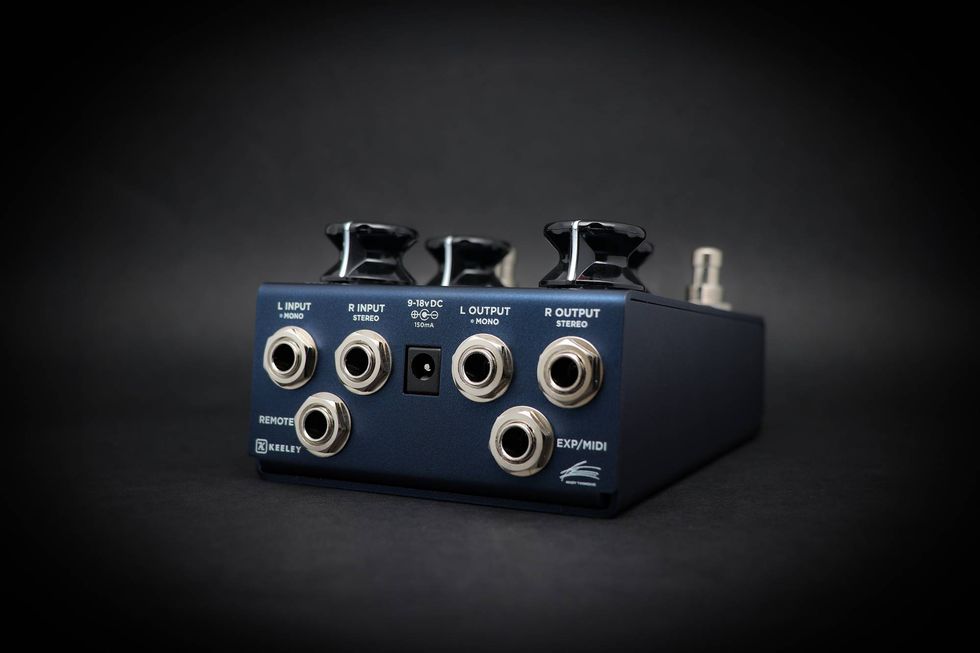
For players that do enjoy tweaking their settings, the Nocturne offers a flexible signal path with True or Buffered Bypass, Expression Pedal control, Remote Switching, and MIDI compatibility for up to 72 presets. Whether you’re running mono or stereo outputs, wet/dry, or full wet for parallel rigs, the Nocturne adapts easily to any setup.
Operation is intuitive with the Nocturne. If the indicator LED is blue then it's “wysiwyg”; the knobs set the tone or level of each reverb mode. If the LED is red, each reverb is a favorite or preset, where you can save the settings for each reverb mode. You can store and recall presets with a dedicated footswitch, and turn trails on/off.
Ultimately, Keeley and his team get the greatest satisfaction from seeing a player focus on playing, rather than tweaking. “These pedals are really near and dear to my heart,” he notes, “especially when it becomes a new platform like the Nocturne. We put a lot of time and effort into making sure that you could just walk up to this unit and not feel intimidated. just go out and have fun making music.”
With the arrival of Keeley’s Nocturne, you might have finally found your own “Mr. Right” reverb. Hear it and feel it for yourself. Plug into a Nocturne, turn up your amp and get inspired.