
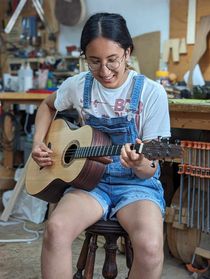
Most exciting new innovations in acoustic guitar have to do with the top, like new bracing systems, double tops, etc. This makes sense, because this is the main sound-producing component of the instrument. But a guitar is a whole system of parts that work together to produce sound, and the sides of the guitar play a significant role in this.
From an engineering perspective, there are two functions of guitar sides: first, to hold the structure of the guitar together and bear some of the tension of the strings; second, to transfer vibrations from the top to the back.
Traditional guitar sides are composed of a single layer of wood, which is bent into shape using heat. Then, kerfed liners are used to glue the sides to the top and back. This is the simplest way to construct sides, and it’s also the lightest method, since it involves the least wood. However, a single thin layer of wood is prone to cracking.
That’s not the only downside of traditional acoustic sides. They also absorb some of the energy of the vibrating top and back, which has a damping effect on the guitar, analogous to brake dampers in a car. Damping decreases the loudness and sustain of the guitar. To reduce the amount of damping, guitar sides should be as stiff as possible (without being too heavy) so that they transmit vibrations, rather than absorb them. This is the goal of structured sides.
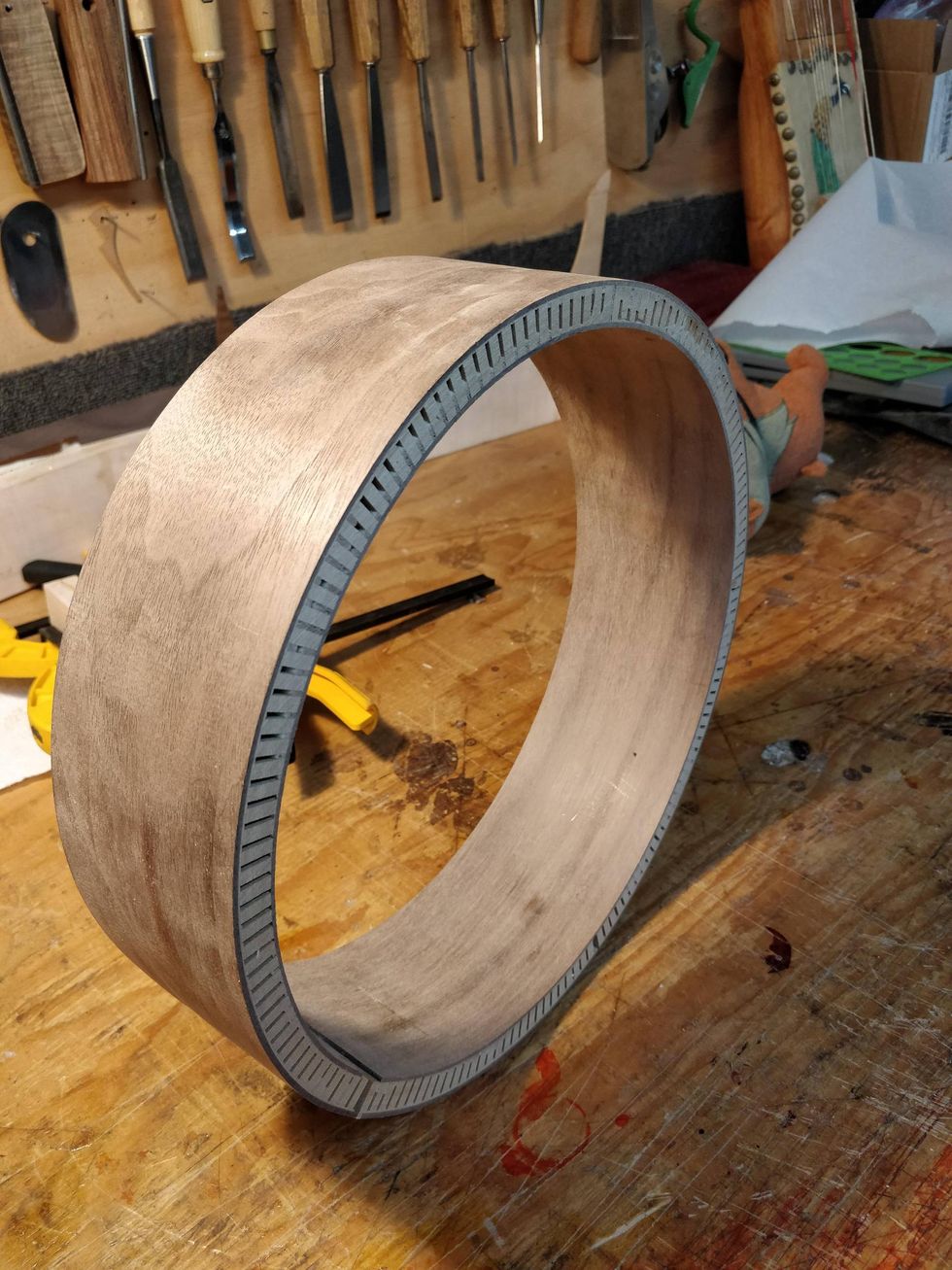
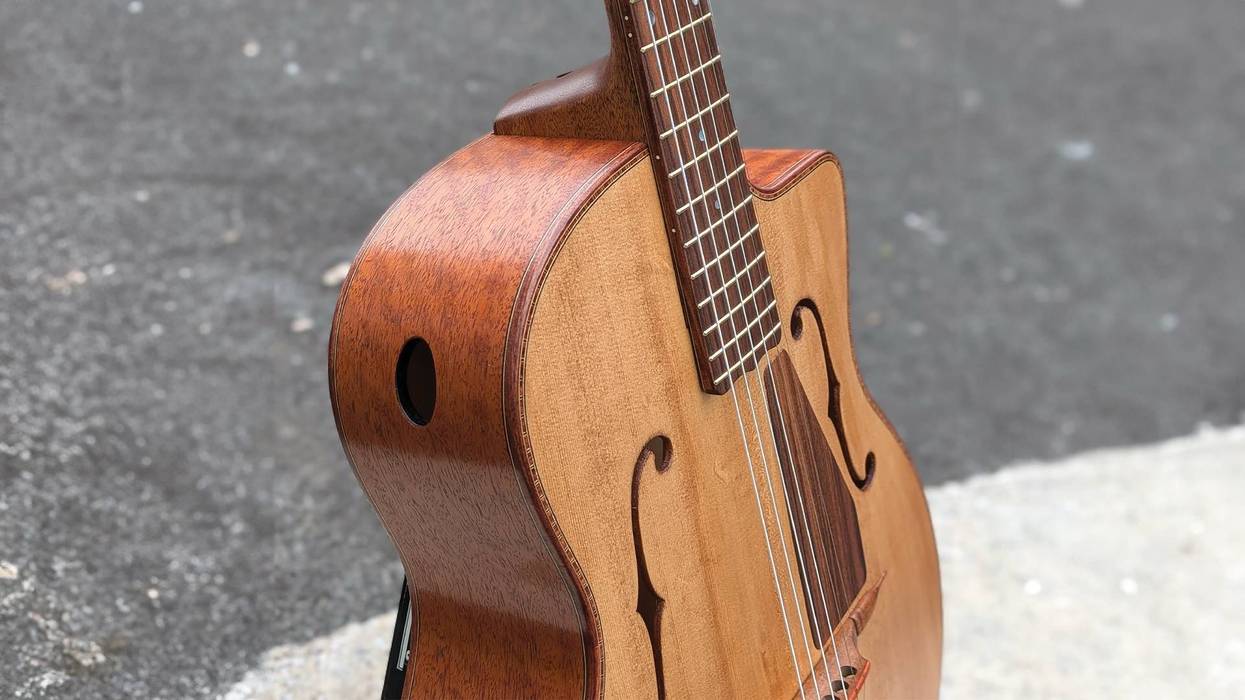
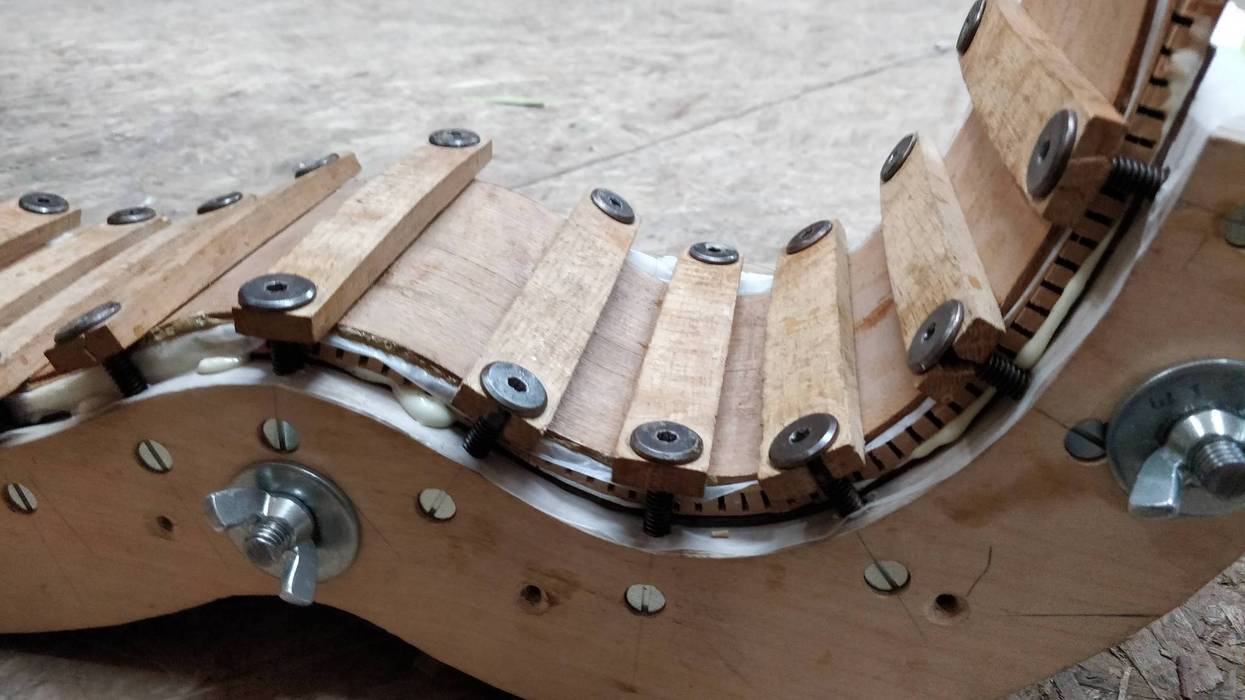
Photo courtesy of Mile End Guitar Coop
A logical way to increase the rigidity of the sides is to extend the top and bottom liners, making one big liner that spans the whole depth of the sides. This means the whole area of the side is reinforced, which in effect makes structured sides a type of laminated construct, with two plies. One ply is the outer “show” wood, and the other is the kerf bent piece that lines the inside. In general, lamination increases the rigidity of wood and helps counteract any internal stresses that may be present in one of the plies.
Several builders have contributed to the development of structured sides. Based on my research, the two-ply version was invented by Sheldon Schwartz. Another luthier, Allan Beardsell, then brought the idea to the workshop of Sergei de Jonge. While working at de Jonge’s shop, two founders of the Mile End Guitar Coop (Michael Kennedy and Jeremy Clark) learned about the technique. When they went on to found the coop, they took this technique with them and continued to experiment.
The next evolution was to add a third layer to the sides, thus making them even more stiff. This method was developed by Kennedy and Clark at the coop, and it’s currently the method that most of us in the coop use—the name “structured sides” comes from someone here. There are three plies: the outer show wood, the inner kerf bent layer, and a final thin layer on the inside of the guitar. The outermost and innermost layers are thin, solid pieces of hardwood. The inner kerf component is made of a lighter softwood, like cedar.
The physics of our three-ply sides are comparable to an I-beam. The stiffness of an I-beam comes from the two outer flanges. The middle section doesn’t add much rigidity; it simply holds the two flanges at a distance apart. The greater this distance, the more rigid your sides. Similarly, the inner kerf layer functions as a spacer for the outermost and innermost layers. This makes the sides much stiffer than if the two solid layers were glued directly together, meaning that structured sides have a higher stiffness-to-weight ratio than simply laminated sides. This also means that structured sides make the guitar more efficient by reducing the damping effect of the sides!
As a bonus, structured sides increase durability, doing a better job of supporting the body against the forces of string tension, so the back of the guitar can bear less of this stress. They also protect against side cracks and other damage; it takes a pretty big bump to the side of the guitar to get through all three plies.
Although structured sides were intended for acoustic guitars, I’ve been using the technique to build laminated banjo rims. This makes the banjo significantly lighter than a traditional solid rim. Recently, I built a tackhead banjo that weighed just 3.2 pounds when fully strung up!
All this said, I think there’s still plenty more room to experiment with sides. Maybe another filler material like Nomex could be used instead of the kerf layer. Maybe other instruments, like mandolins or upright basses, could benefit from structured sides? I look forward to seeing what the future holds for this technique!