

I don’t usually give advice because, as a friend of mine pointed out a long time ago, “Giving someone advice makes you an accomplice.”
And yet, here I am being someone’s accomplice, because I’m about to give you some knowledge, straight from the chef: If you want to get a guitar collector to pay attention, mention these four little words, “Uncirculated sunburst Les Paul.” If their hearing is in order, you will have their complete and undivided attention.
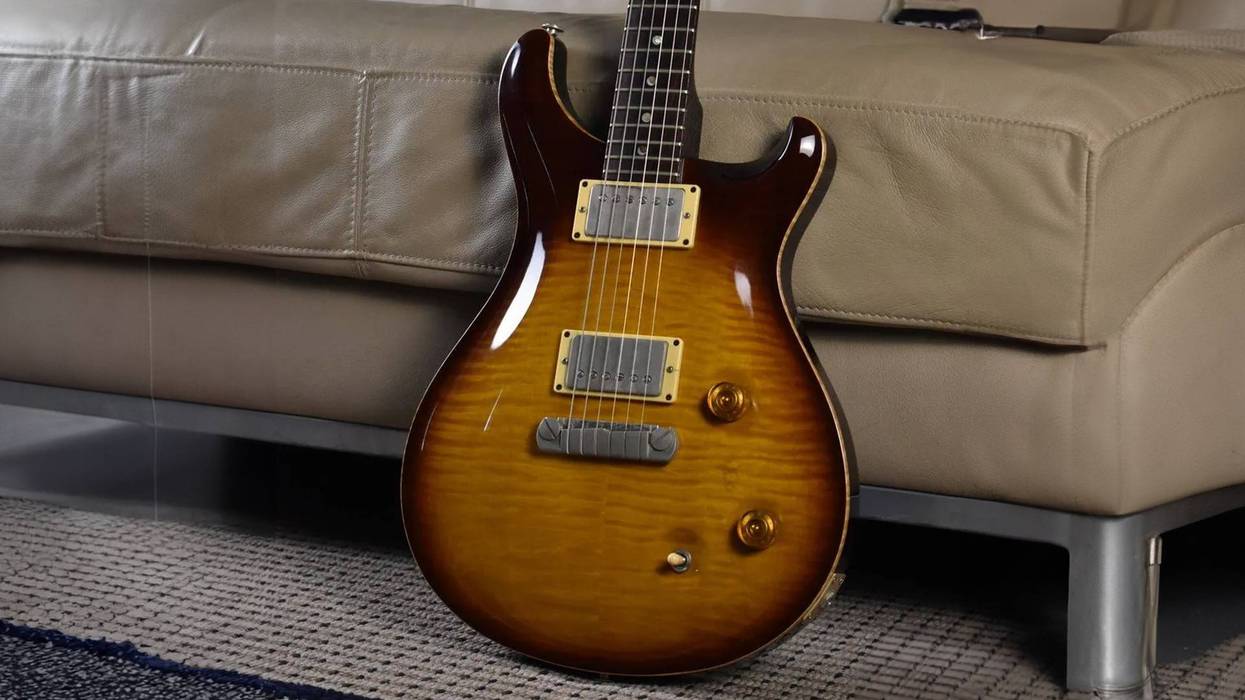
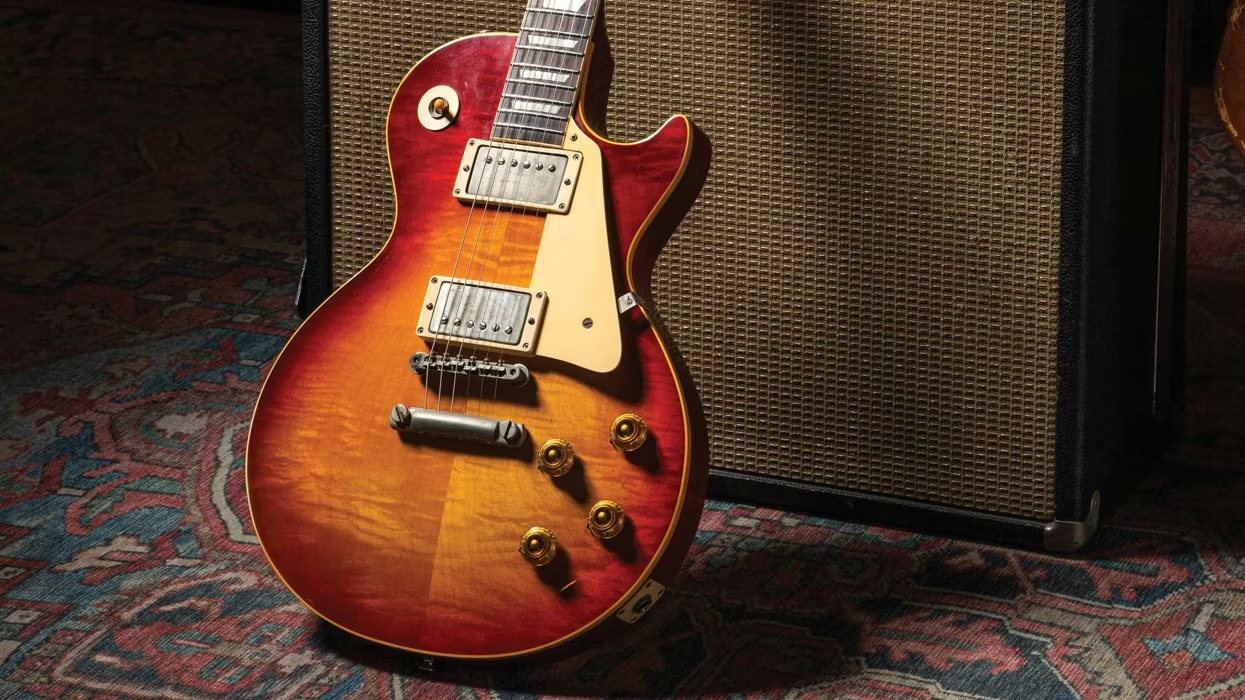
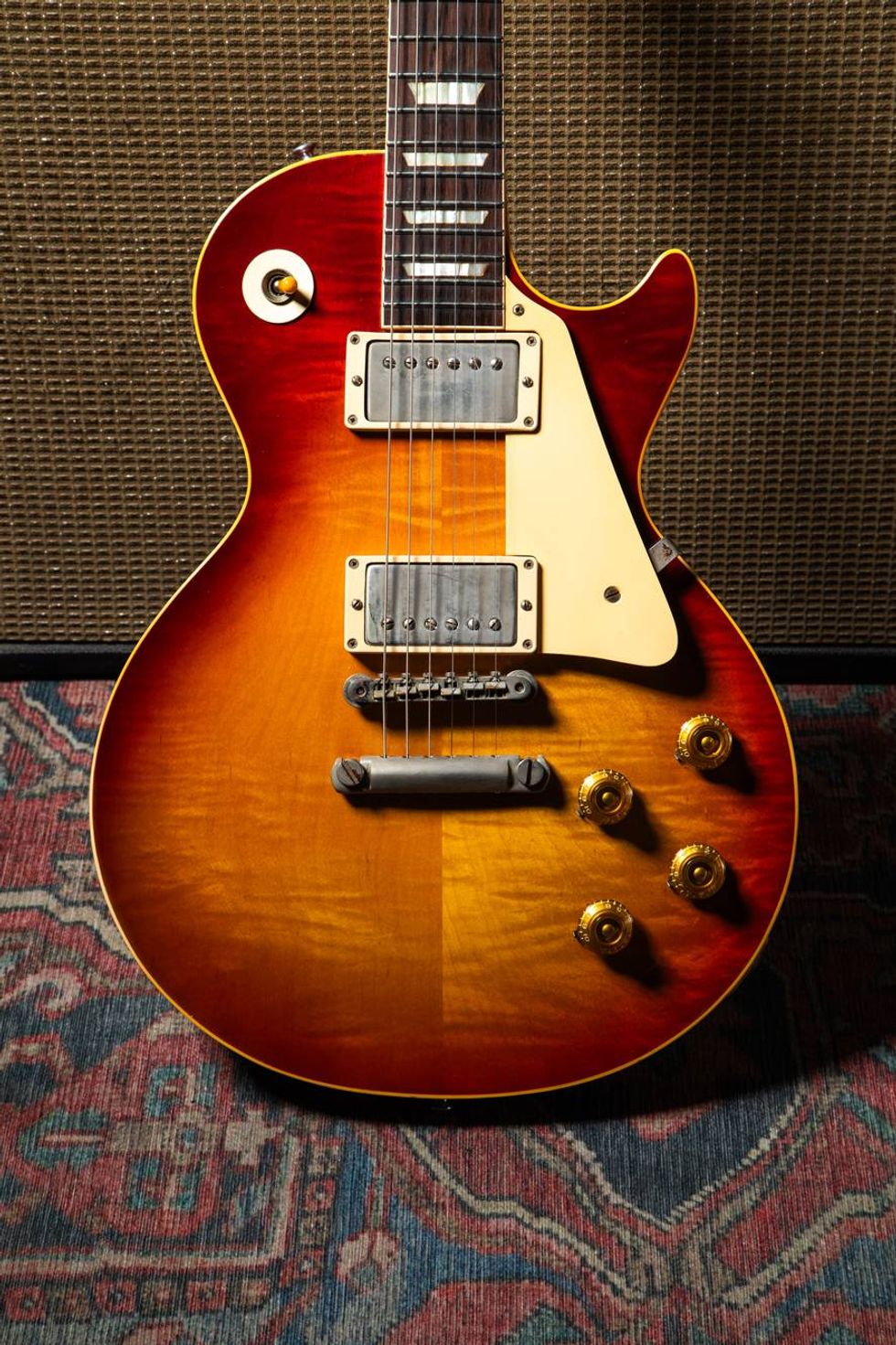
Carter Vintage recently picked up this gorgeous early-1960 Gibson Les Paul Standard from its second owner. He was quite discerning with his collecting choices. This 1960 ’burst is one of two sunbursts we brought back from his place on the East Coast, and there wasn’t a bad guitar in the whole bunch. In my conversation with him, the owner of the guitar told me he bought it in the early ’70s from the original owner. I asked him if he ever played the guitar professionally, or used it in a band—he hadn’t. He never played out with any guitar in his collection; he simply bought them because he thought they were cool, and guitars are a passion of his. He’d had the instrument for over half a century, and now it was time to pass it along to its next caretaker.
“This guitar has totally ruined other Les Pauls for me.”
Whenever I open a brown 5-latch Gibson case with a late-’50s Les Paul Standard in it, the first place my eyes go is the top. This guitar definitely pushed all my “personal fave” buttons: Gorgeous figured maple, “action” (how the figuring on the top moves and lights up as you angle the guitar in the light), and the color all hit the spot for me. The top on this guitar is one of my favorite ’burst tops ever. It’s not an overly flashy, wildly flamed guitar like the Stanley ’burst, or Nikki, but at the same time it’s not subtle, or understated, like a plaintop would be. If I had my pick of tops for a ’burst, this guitar would win, and out of around 15 sunbursts we’ve had in the store over the past year, this one takes the cake.
The next thing you notice on this ’burst is the color, and it’s crazy good. No iced-tea ’burst, lemon-drop top, or anything like that here. The red in the sunburst has been preserved incredibly well, and it fades perfectly into the amber and gold of the body’s center. These guitars are now in their late sixties, and to find one that’s not severely faded out is a rare occurrence.
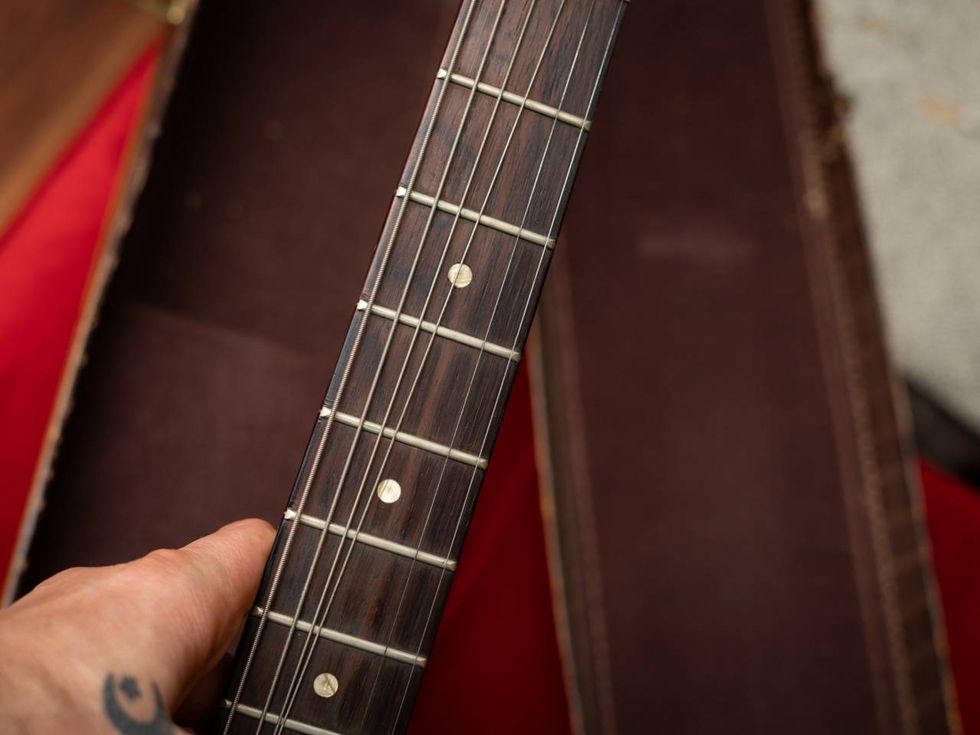
Now for the fun part—playing it! I picked the guitar up and was initially greeted by the slim neck. I don’t know about you but I really love, to the point of adoration, the slim necks on 1960-through-mid-’62 Gibsons. The old-school players called them “speed necks,” and that’s an excellent description. Once you learn how to relax while playing these things, you can really get around so effortlessly. I think this neck was actually taken down a bit slimmer than the way it came from the factory, because it’s in the “Jimmy Page Number 1” ballpark. Way back in the ’70s, I remember reading an interview in Guitar Player with Joe Walsh, and he said the thin-neck ’60s Les Pauls were his favorite for their sonics and feel. Joe knows guitars. That Page guy isn’t so bad either.
On to the sound. I was just talking with a big-time pro guitarist who plays for an even bigger-time country-music icon and, before plugging in the guitar, he posed a question that I hear quite often: “Sunburst Les Pauls, don’t they all sound great?” In a word, no. They definitely don’t all sound great. Some of them are about as forgettable as can be. My old friend Tom Murphy says that with the advent of the Murphy Lab finishing process at Gibson, they’ve caught up with the old guitars in how they sound and feel. As usual, Tom’s not wrong. I’ve heard some Murphy Lab guitars that can absolutely hang with their vintage counterparts. In some cases, they can lap the old guitar sonically. Not all the old ones sound great.
Back to our subject, this killer ’60 sunburst. Some rare vintage guitars sound and feel so good that nothing else even comes close. This 1960 ’burst is one of them. Bridge pickup, neck pickup, middle position, roll the tone off, roll it back up, turn the volume down, turn the volume up: There isn’t a switch position or control setting that isn’t absolutely stunning with this guitar. I’m more than a little bummed about the way this guitar sounds, the truth be told. My good friend Dave Cobb told me years ago that you have to be careful about what sonics you allow into your ears: “You can’t un-hear stuff, man. It’ll ruin you if you hear the wrong thing.”
This guitar has totally ruined other Les Pauls for me. Yes, it’s that good. For the life of me, I can’t quit hearing it in my head. But being ruined never felt so good. I love my job!