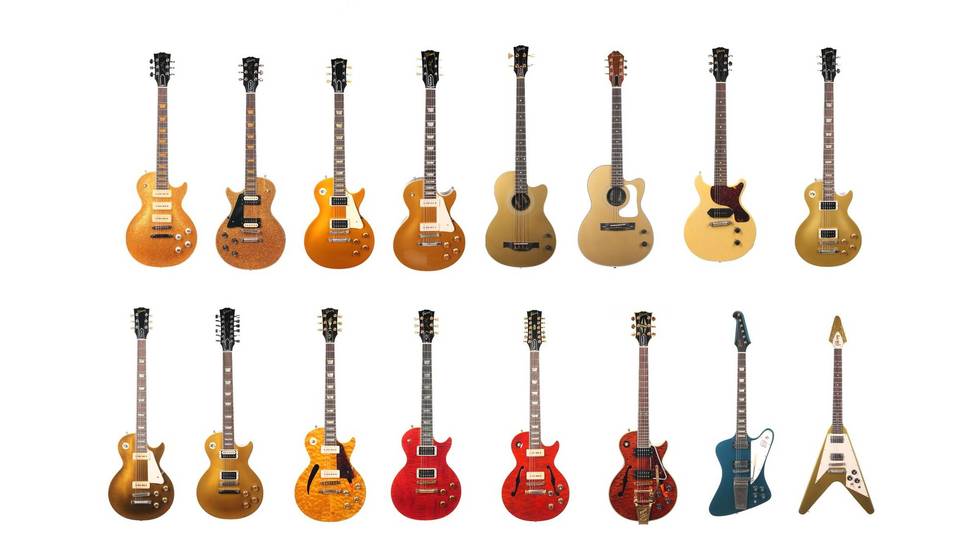

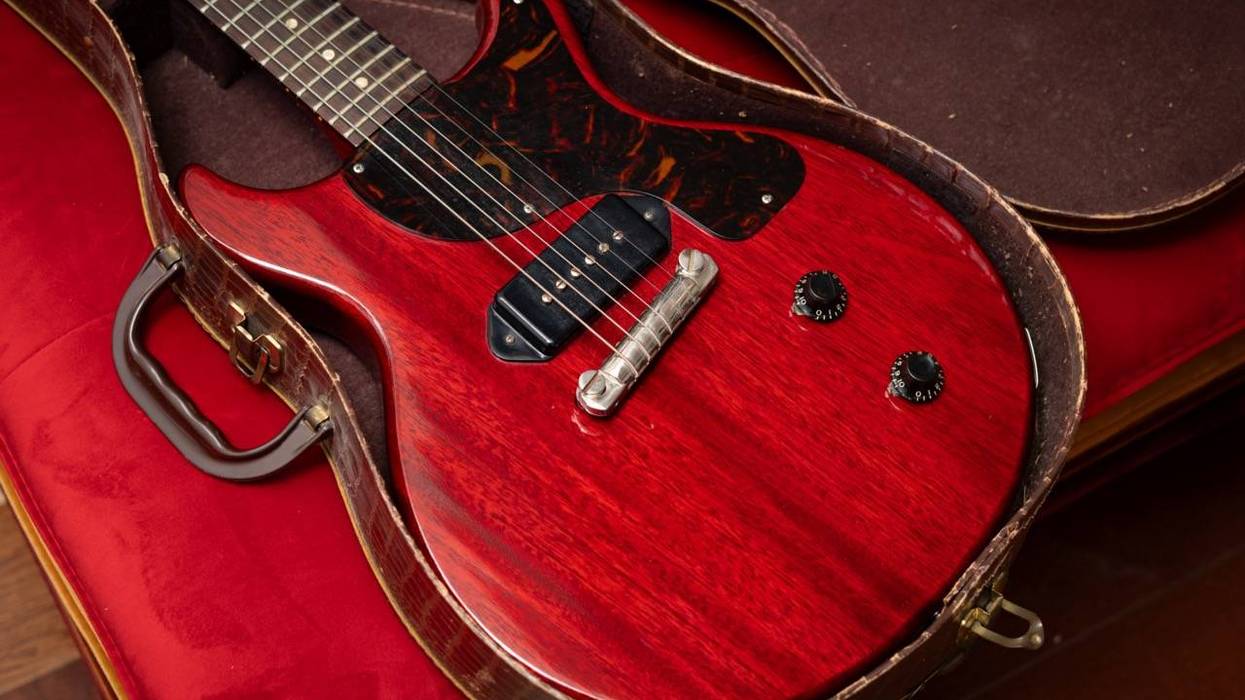
We recently traveled an hour from our shop to a small town (and down at least half a mile of actual dirt road) to the hilltop home of Buford, a man interested in selling a 1959 Gibson Les Paul Junior, a gift from his mother to his father back when it was new. We had seen snapshots, but were unprepared for the glory that awaited us when he opened the original alligator grain chipboard case. Even a spotlight couldn’t have made the glossy, unfaded, cherry-red lacquer finish shine much brighter. We have seen, played, and even owned a lot of Les Paul Juniors—single cutaway, double cutaway, 3/4, sunburst, cherry, TV yellow, refinished, lacking any finish at all, wraparound tailpiece, Bigsby, you name it. To collectors, they aren’t and haven’t ever been the brightest-shining Gibson star of the 1950s. While very well made, the variations of this model were built simply and offered at an affordable price. It has always been an underrated, championship-level workhorse, but once these instruments transitioned to being “used” guitars, they found their way to clubs more often than arenas.
But in addition to being well cared for and clean as a whistle, this particular guitar has a combination of specs many players (and collectors, who admittedly may also be players) want. This Junior’s six-digit serial number shows it was made in late 1959 (a stamped 9 xxxx with a space between the 9 and other 4 digits would have been done earlier in the year). The mahogany body is lightly and very deliberately contoured, unlike the slab mahogany with squared-off edges that this model would have had the year prior. It has a nice chunky neck paired with larger frets than would have been found on most made before 1960. Plus, it has a surprisingly robust “dog-ear” P-90, probably due to it saving up all its energetic magnetism for the 21st century. Unlike many Juniors, the bridge posts are tip-top straight, and the tortoiseshell pickguard is flat, with no cracks, chips, or even, well, picks. The buttons on the Kluson single-line tuners are still a stark white and every piece of metal looks virtually new. The red anodyne dye Gibson used back then reacts to being exposed to both light and hands, but the neck on this Junior is just as cherry red as the body. The vintage strings (a wound third!) didn’t even have the appearance of being played.
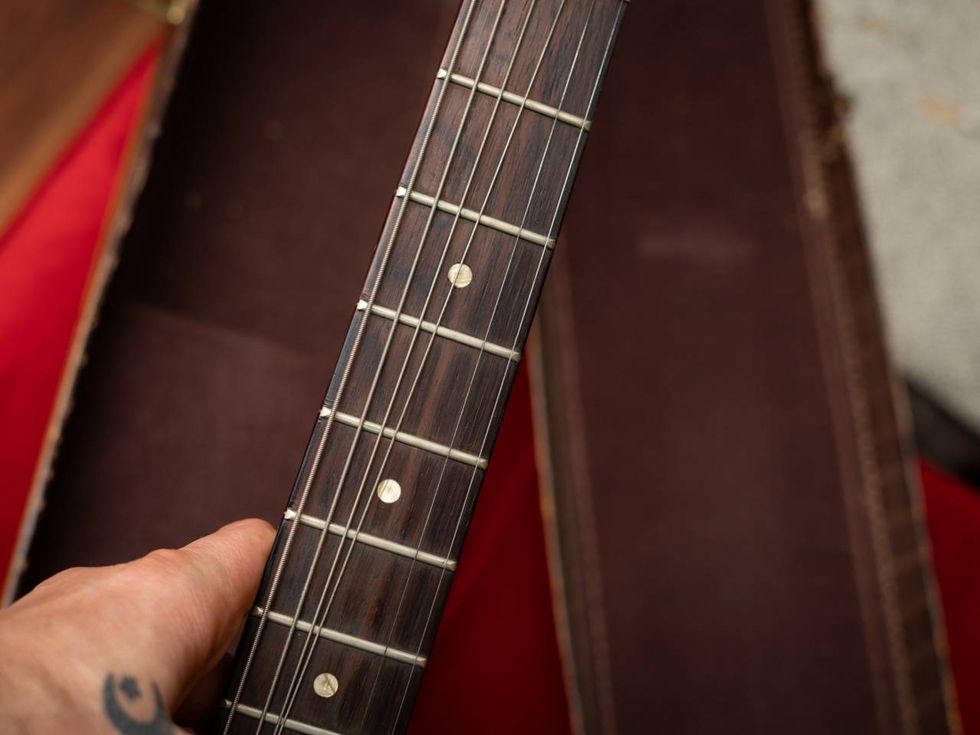
This unworn frets on this Junior suggest that it hasn’t had much player time in the past 67 years.
That all being said, just because a vintage guitar is in near-mint condition doesn’t mean it’s great overall. Some are super clean because they must have always been somewhat uninspiring. We’ve played stunningly beautiful bursts that didn’t have “the thing,” and over the years we’ve come to realize that some of the guitars that have been played to within an inch of their lives are like that for a very distinct reason: They brought out the best in the people who owned them.
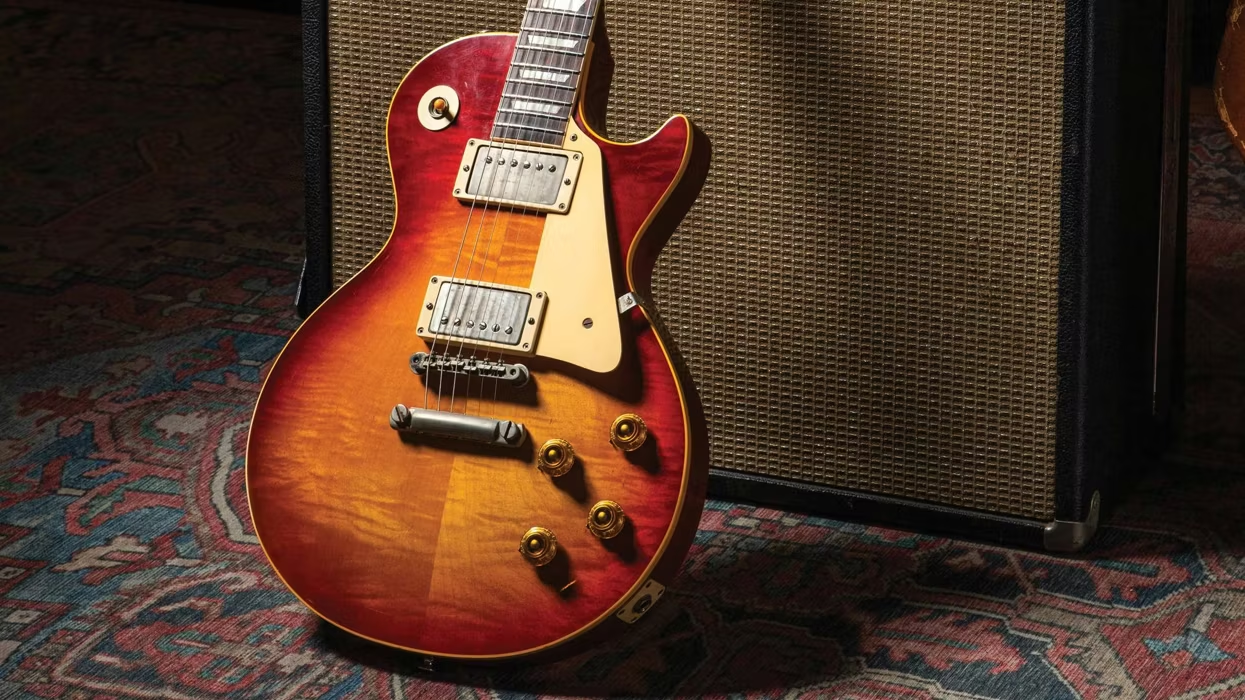
In this case, it seems both Bufords were hardworking men who just plain didn’t pick up the guitar and play it. Buford Sr. kept it safe (it was a gift, after all), and then Buford Jr. did the same because it was his dad’s. Considering this particular Gibson era, Buford Jr.’s mother could have just as easily purchased a 1959, 1960, or even a “brand-new” 1958 Les Paul Standard. Seeing such a clean, glossy, bright cherry Junior gives us hope that one of those Standards is still waiting in a closet somewhere, barely played and awaiting its second life in someone else’s hands (and preferably not in their closet, or sitting unused in a display case). To us, uncirculated vintage guitars, and more particularly the stories from the people ready to part with them, really are the most interesting vintage guitars these days. The pleasant drives out in the country are a nice bonus, too.