
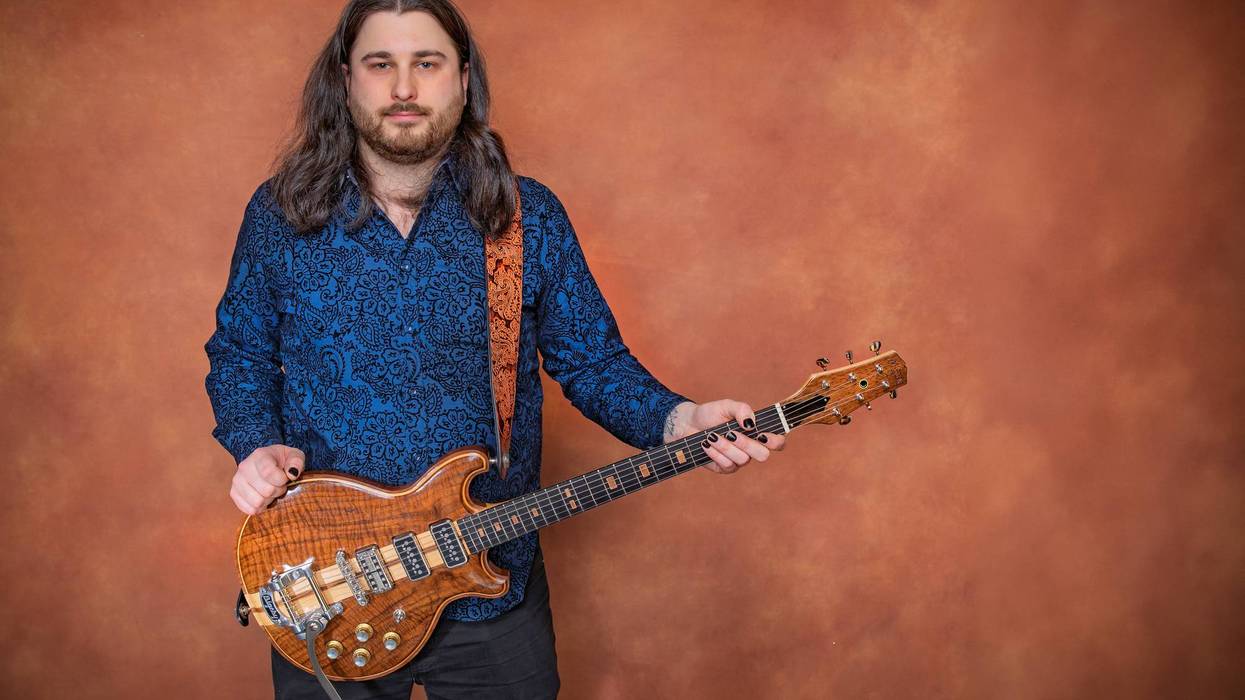

Reader: Matt Swanton
Hometown: Shirley, MA
Guitar: Wanita
For a while now, I’ve been chasing the perfect guitar to use in my writing as a blues artist. I’ve grown fond of guitars with neck-through construction, though I’ve struggled to find the right one since many neck-through guitars on the market are 24-fret shred machines better suited for metal or heavier genres. Because I work primarily in the blues and classic rock, neck-pickup tone is really important to me, and moving the neck pickup closer to the bridge to make room for two extra frets can change the sound significantly. But aside from the Gibson Firebird, options for 22-fret neck-through guitars are pretty slim.
A little less than a decade ago, I met a luthier by the name of Michael McCarten while playing a gig in Gardner, MA. After striking up a conversation, I started going to see him for the occasional repair job. Every time I went to his shop, I’d see some really cool double-cutaway guitars he built called the DC-13. Each one of them is completely unique, with different custom details related to a theme or the guitarist it was meant for. After a few years of wondering what I’d come up with if I had the money to afford one, I decided it was time. Michael graciously agreed to make my guitar with a 25.5" scale instead of his usual 24 3/4", as well as indulge my request for neck-through construction rather than a standard set neck.
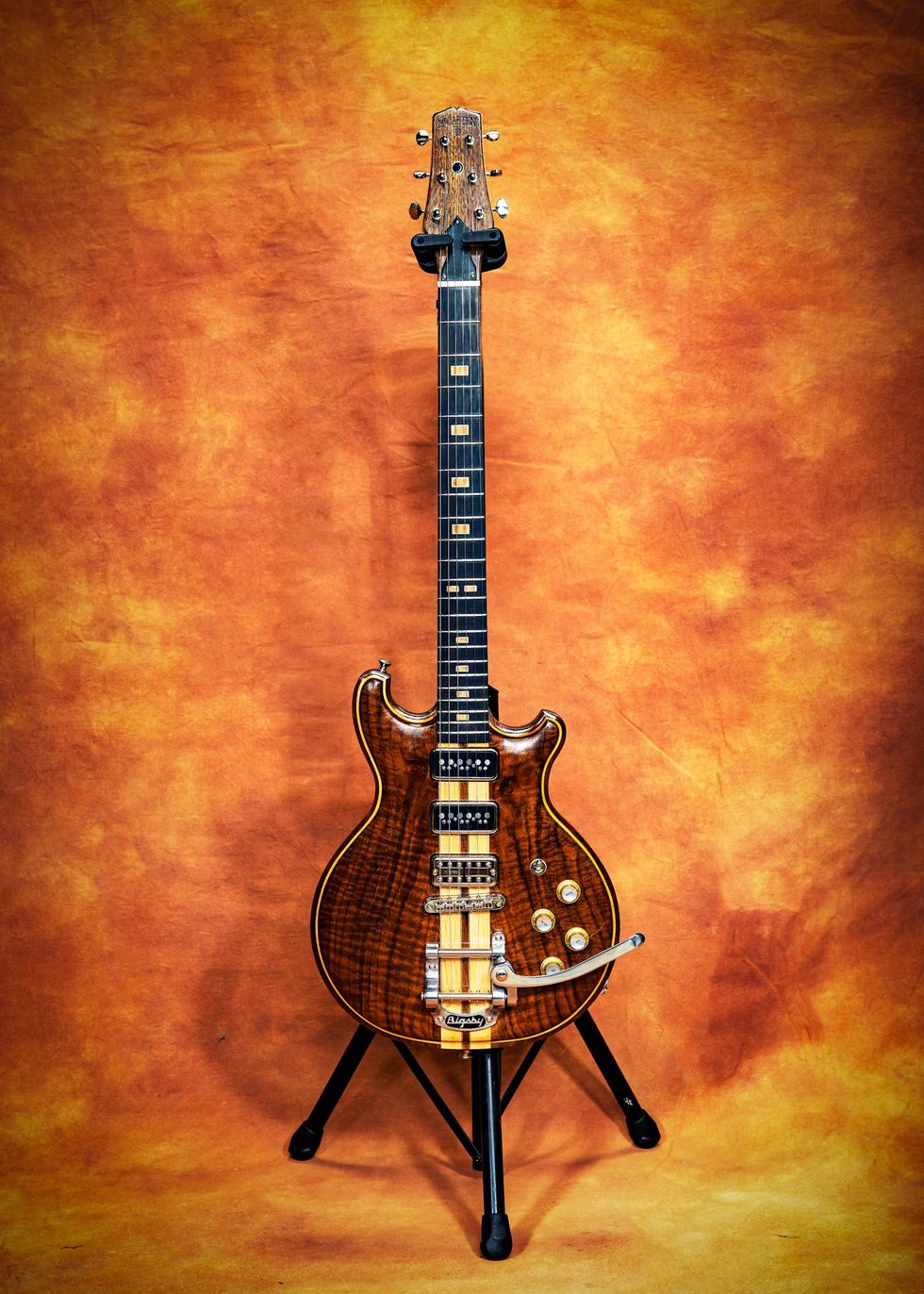
Though Matt Swanton loves the deep tones of neck-pickup blues-rock, he opted for a TV Jones Power’Tron pickup in the bridge and T-Armonds in the neck and middle positions.
I’ve decided to name this guitar “Wanita,” for no other reason than it just sounded right. The body consists of a figured claro walnut top, a chambered walnut back, and a layer of maple in between to give it a stylish contrast line—especially when it’s exposed at the German carve along the edge. The neck is quarter-sawn maple with layers of walnut, and the fretboard is ebony. The fretboard inlays are blocks of flamed maple inserted into a rectangular section of copper that used to be waveguide piping. The whole guitar has been finished with tung oil for a smooth finish that doesn't stick like gloss.
For pickups, I went with a Gretsch-inspired HSS type of approach, with a TV Jones Power’Tron in the bridge and T-Armonds in the neck and middle position. It’s wired like Peter Frampton’s Les Paul, where the selector switch sees just the bridge and neck pickup, which are connected to a single set of volume and tone pots, while the middle pickup is hitched to the second set of volume and tone controls. This enables unique pickup combinations—I can use the bridge and neck pickups alone or together, and blend in the middle pickup at various volume and tone settings. It adds up to a lot of voices. A Schaller roller bridge, a U.S.-made Bigsby B5, and Grover imperial tuners help make it feel tight, smooth, and together, too. But the whole guitar plays like a dream.