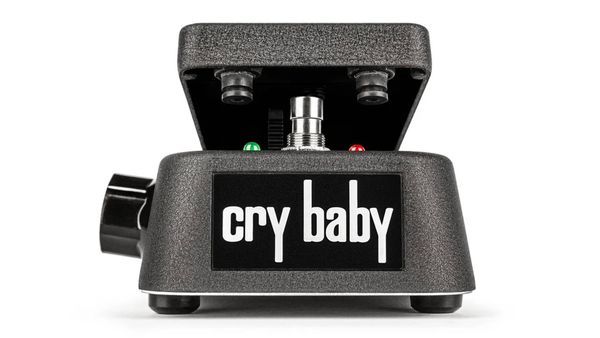

Sometimes simply referred to as “the ’90s wah,” the Dunlop Cry Baby BB535 first emerged in 1994 in the wake of the early-’90s grunge and alternative rock movement, which revitalized interest in an effect that felt somewhat dated by the previous decade.
But beginning with Slash's 1987 “Sweet Child o’ Mine” solo, and Mike McCready’s 1991 solos on Pearl Jam’s “Alive” and “Black,” the wah’s classic timbre blasted triumphantly on rock radio. Meanwhile, a new generation of heavy ax iconoclasts—Tool’s Adam Jones, Soundgarden’s Kim Thayil, Alice in Chains’ Jerry Cantrell, and Pantera’s Dimebag Darrell among them—were exploiting the wah for even darker, more menacing textures on drop-D riffs and raucous lead lines.
It was these darker tones and phasey “parked wah” colors, typically matched with high gain, that came to define the new wah way. Taking input from numerous name players of the time, Dunlop created the original Cry Baby BB535 with features that this new generation of ax-grinders asked for: An easy way to switch frequency ranges from darker to brighter that didn’t require a screwdriver and lots of swearing; higher-grade inductors for lower noise and less RF interference; a high-impedance buffer for stronger signal integrity across long cable chains; and a built-in boost for solos and volume compensation on the fly. (The original Cry Baby GCB95 could experience signal loss when engaged.) With the original BB535 they got all that, including four tiered and selectable frequency ranges, which Dunlop would expand to six ranges with the updated BB535 in 1999.
Way More Than Wakka-Wakka
It’s the six-range version that Dunlop has now reissued in 2026 as the Cry Baby BB535R, and honestly, the 27 years has been worth the wait, especially for the many players who’ve been combing online resellers for examples of the original, which adherents swear sounds better than any wah since. (Note: The popular Dunlop 535Q, which added a variable Q-control to the BB535’s six-range EQ section, was released soon after, effectively replacing the standard 535, and is arguably its equal in timbre and flexibility. The BB535 does not include a Q control, which allows players to select a range and then fine tune the width of that range.)
For all its expanded tone palette, to my ear, Dunlop didn’t sacrifice anything that the original CryBaby GCB95 did well.
While the 535Q uses Italian-made Red Fasel inductors, the BB535R uses the very same high-grade inductors that were first implanted into the BB535 in 1994. What’s the difference? Well, have you ever left your wah in its middle position, only to start hearing a random radio station coming through your half-stack? These higher-grade inductors, it’s argued, are far less prone to that kind of RF interference as well as ground noise, and therefore run quieter. And while inductors’ role in tone shaping can be hard to pin down, there’s no question that there’s something velvety in the BB535’s tone, especially in the middle to low frequency ranges, that might support Dunlop’s claim that better inductors impart warmer, more vocal tone. And the BB535R is definitely warm. Wah-wah pedals can hit you with serious treble spikes, and that only seems to happen with the BB535R in toe-down position, at the very highest peak range.
Gotta Have That Funk
Now, while the 535 clearly arose from the rock scene of the late ’80s and early ’90s, its multi-function capabilities and smoother tone are no less applicable to soul, funk, and r&b playing. It performs extremely well with clean tones—allowing the player to pick tone terrain that’s funky and character-rich but restrained in the sense that there are fewer treble spikes. That balance and control can be hard to achieve even with a very disciplined pedal foot, but it’s much easier to maintain here.
Another thing worth noting: For all its expanded tone palette, to my ear, Dunlop didn’t sacrifice anything that the original CryBaby GCB95 did well—they just made the original CryBaby platform a lot more versatile, and made it play way nicer with modern high-gain tones. So, devotees of icons like Hendrix, Carlos Santana, Prince, John McLaughlin, Jimmy Nolen, Eric Clapton, Michael Schenker, Ernie Isley, and Frank Zappa will still find that same great midrange focus, percussive bark, and grainy goodness on tap with the BB535R, which rejoins a wah family that now includes the 535Q, the CBM535Q Mini, and my favorite, the CBM535QAR Mini. (“AR” refers to “auto-return,” meaning that you never have to stomp and click to turn the wah effect on or off. It’s a very nice feature, especially in live performance, that keeps your lyrical flow seamless. It could be a great inclusion on a future version of the BB535R.)
Lastly, you’ve got to love that Dunlop moved the boost potentiometer to the side rather situating on the bottom. The pot is not sizable enough that you can adjust with your toe in the middle of a solo, but you can make relatively fast adjustments when you need to without disassembling your pedal board.
The Verdict
Whether you’re after the hefty tones of grunge’s chief progenitors, or the silky sounds of 1960s psychedelia and 1970s funk, the BB535R is both an eerily accurate component-by-component recreation of its original namesake and a terrific all-purpose wah-wah for the studio or stage environment. Given the prices that original 535s fetch on the used market, and the expanded tone range, increased boost levels, low-noise operation, rugged build, and smart new features that Dunlop have added to the BB535R reissue, its substantial street price of $229 still strikes me as reasonable. One can certainly buy a wah pedal for far less. But after all these years, few pedal effects offer players as much real-time control of their guitar’s frequency response as a wah does—especially with a built-in boost, and the BB535R elevates this flexibility to a higher level.
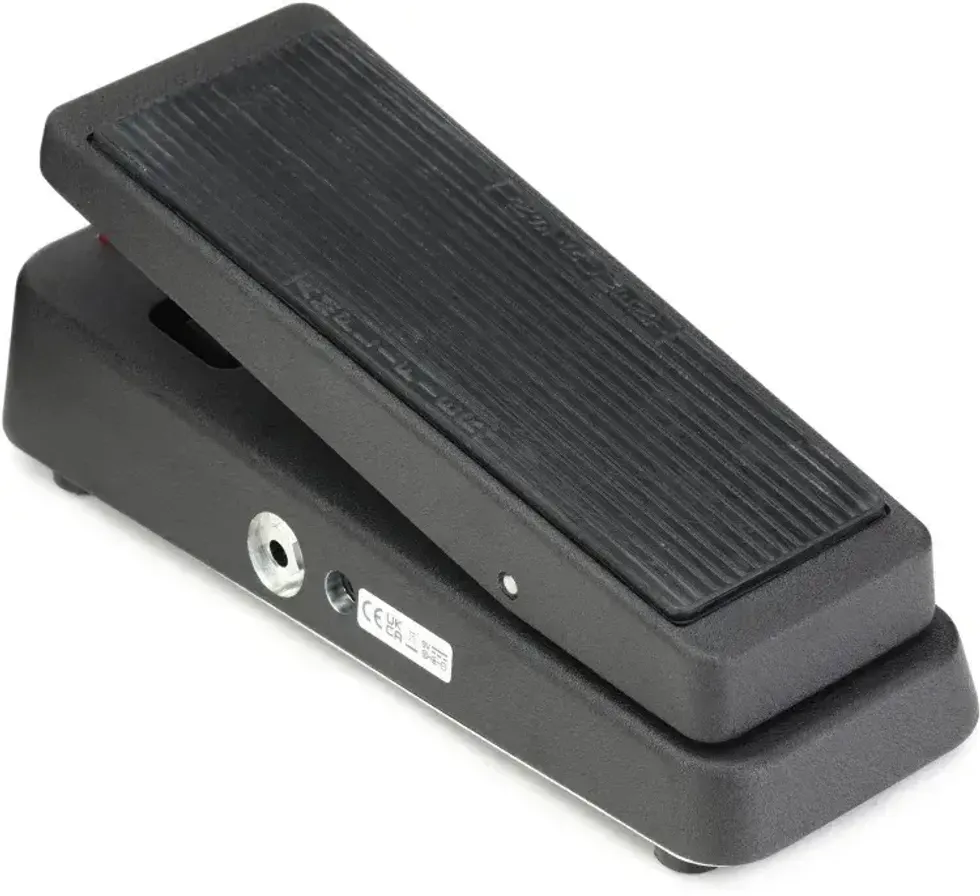
Cry Baby BB535 Multi-Wah Reissue
Wah Guitar Pedal with Boost, Range Selector, and High-Impedance Buffer