
Not long after the release of Sunn O)))’s self-titled 2026 LP, I drove from Humboldt County, on the far-Northern California coast, to San Francisco. The first segment of that drive passes through the Avenue of the Giants, a section of dense, towering redwoods that’s part of a sprawling landscape of mountains and tall trees that locals, somewhat ominously, call the Redwood Curtain. On the day of that drive, it rained like crazy and mists swirled around treetops and up and down and through mountain canyons. It was moody, mystical, elemental—a perfect day for a Sunn O))) voyage.
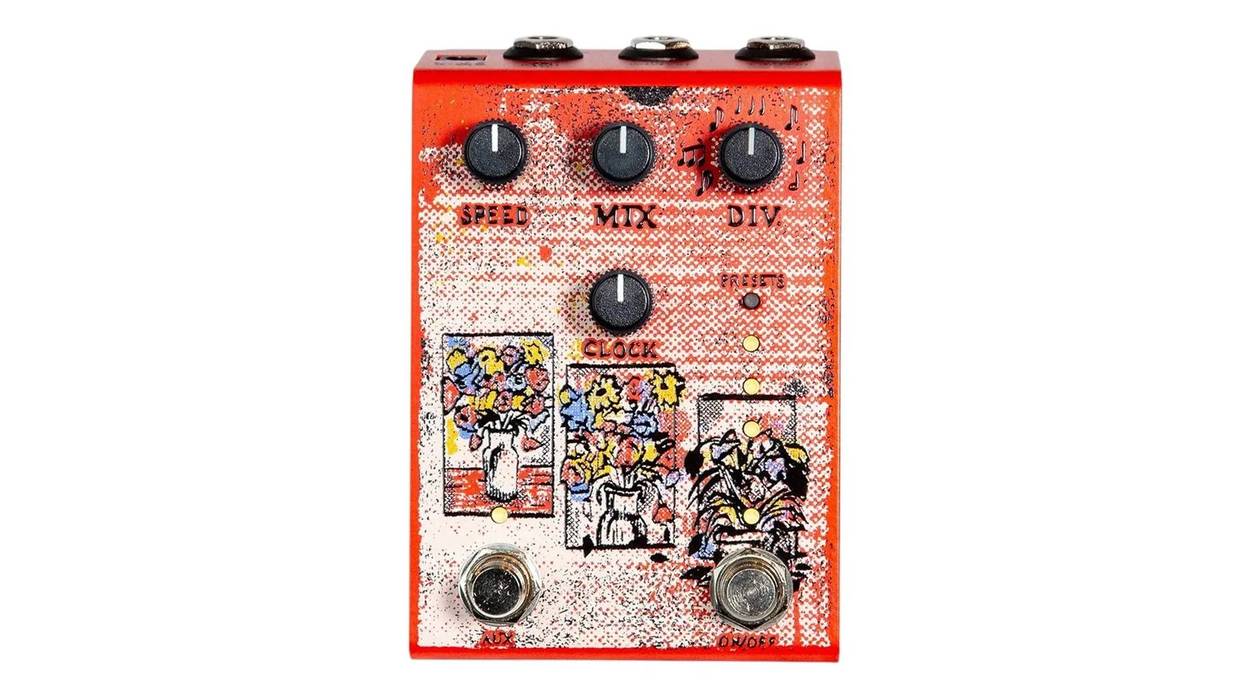
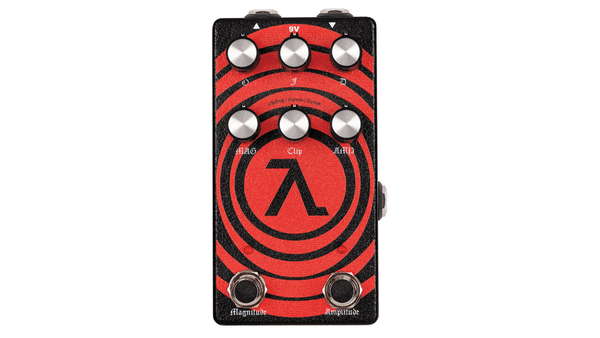
Experiencing Sunn O))) hypnosis on a road trip is good fun. But conjuring those hails of drone with your own fingers is, for me, intoxicating. EarthQuaker’s HalfLife octave/distortion/booster is the second pedal EQD designed for Greg Anderson and Stephen O’Malley of Sunn O))). Like the larger Life pedal before it, the HalfLife is designed to deliver the heavy complexity found in Sunn O)))’s harmonic sheets and tapestries of sound. It succeeds, and then some, by melding elements of the ProCo RAT 2 and Shin-Ei FY-6 SuperFuzz and FY-2 Companion Fuzz circuits. It’s not quite as flexible as those two pedals running side-by-side—the HalfLife has just a single gain control, rather than one for the RAT-style section and another for the FY-6. But the six controls interact in very fascinating ways, making the HalfLife versatile beyond heavy sensory bludgeonings—and maybe capable of sounds a RAT 2 and SuperFuzz simply can’t achieve.
A Tricksters Mix
The Shin-Ei FY-6 and RAT 2 are two of my favorite sources of distortion—alone and stacked. I don’t use that pairing for drones, but for fractured, chaotic passages. The HalfLife does that too. It also handles conventional drive and distortion, plus fuzzy, filtered, clipped, crusty, caustic octave tones that mangle riffs and solos.
The octave section is the trickster and wild card among the HalfLife’s functions. It’s situated just after the input and has but a single dedicated control that adds octave-up content. Higher octave settings don’t add much in the way of gain, but they excite easily distorted frequency peaks, and can totally reshape—or totally mutate—the gain from the RAT-style section.
This section’s control set is consistent with its inspiration. There’s a master volume, a gain control, and a very RAT-like filter/EQ with a nuanced sweep. Further downstream there’s a MOSFET booster that’s activated with the left footswitch. The boost is a pretty transparent one, but it can drive an amp sweetly by itself and lends many pounds of extra lift to the RAT-style section. The 3-mode clipping switch can be transformative, too. It moves between a very big, no-clip, straight op-amp setting; an asymmetric setting with two silicon diodes and one LED diode; and a third, symmetrical dual-diode clipping section, like you’d see in a RAT 2.
Buzz or Very Bigness
The HalfLife has no problem dishing Sunn O))) heft and complexity. Most Sunn O))) tones you hear live and on record involve at least a second fuzz (often a Sovtek Big Muff) and the thrust of a Sunn Model T or ten. But the HalfLife is plenty ferocious all by itself. At times—and especially at bass-heavy filter settings—it could stand in for Big Muff. It’s more focused and boxier than a Muff, on balance, but you can generate plenty of monster sustain, weight, and that Muffy kind of growl that glows with animated overtones. At treblier filter controls, the toothier RAT-like personality becomes more prominent, but there’s still heft in the signal that suggests Sovtek influence.
Incidentally, I preferred the traditional dual-silicon clipping setting for most Sunn O)))-style excursions. But I loved the louder, more compressed asymmetrical setting, and the raw no-clipping mode, too. Each has its charms, and each can illuminate different overtone spectra.
So, yep—the HalfLife is heavy. But there are fuzz surprises that live along very different tangents, too. My favorite of these is the 3-volt Maestro FZ-1 textures you get from a little gain and a dose of the octave control. These colors were as characterful, weird, and authentically 1960s-sounding as a lot of fuzzes designed for that purpose. And there are so many variations on this theme to explore. Depending on where you situate the octave, gain, and filter controls, you can dig into degenerate garage-psych or SuperFuzz rip. Even at tame low to medium-gain drive levels, the HalfLife is interesting and inspiring. Most sounds have a very RAT-ish foundation—a lot of focus, and with a bit of low-mid haze. But you can shape these endlessly with the octave and a bump from the boost. There are so many possibilities.
The Verdict
It’s easy to imagine a Sunn O)))-aligned pedal as a monolithic wall-of-doom machine. But the HalfLife is nothing of the sort. It’s crazy varied. I love swimming in its heaviest sounds, but I had just as much fun shaping buzzy, broken fuzz and drive output that transformed the dumbest riffs into keepers. Perhaps this isn’t the only distortion and drive you’ll ever need, but it gets surprisingly close.
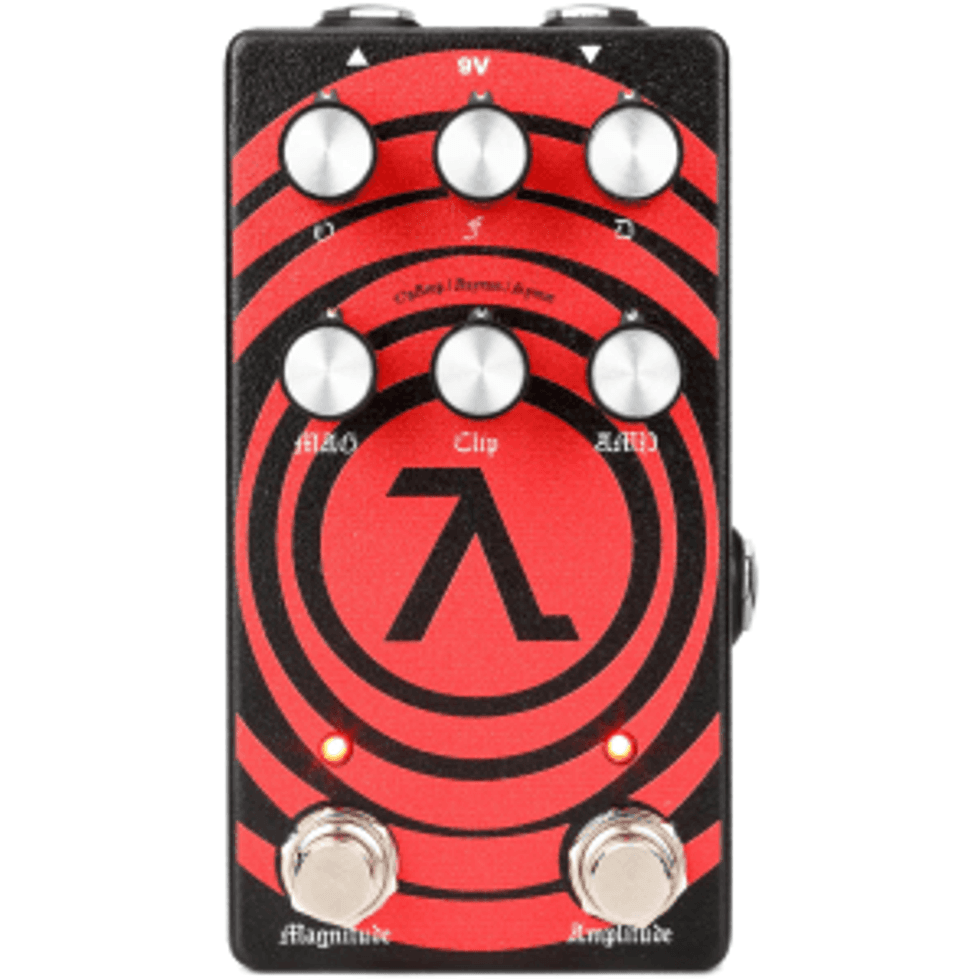
Sunn O))) HalfLife
Octave Distortion/Booster Guitar Pedal with Distortion, Amplitide, Magnitude, Filter, and Octave Controls, 3-way Clip Knob, Dual Footswitches, and Expression Jack