I thought I had everything a gigging bassist could possibly need. I usually get a pretty solid bass tone, the players and clients I engage with generally like it, and I tend to feel pretty good about my EQ choices. Some instruments I like to run direct, without much tonal color. Others I run through an amp, where I can get plenty of it. Between the two, I figured I had any session covered.
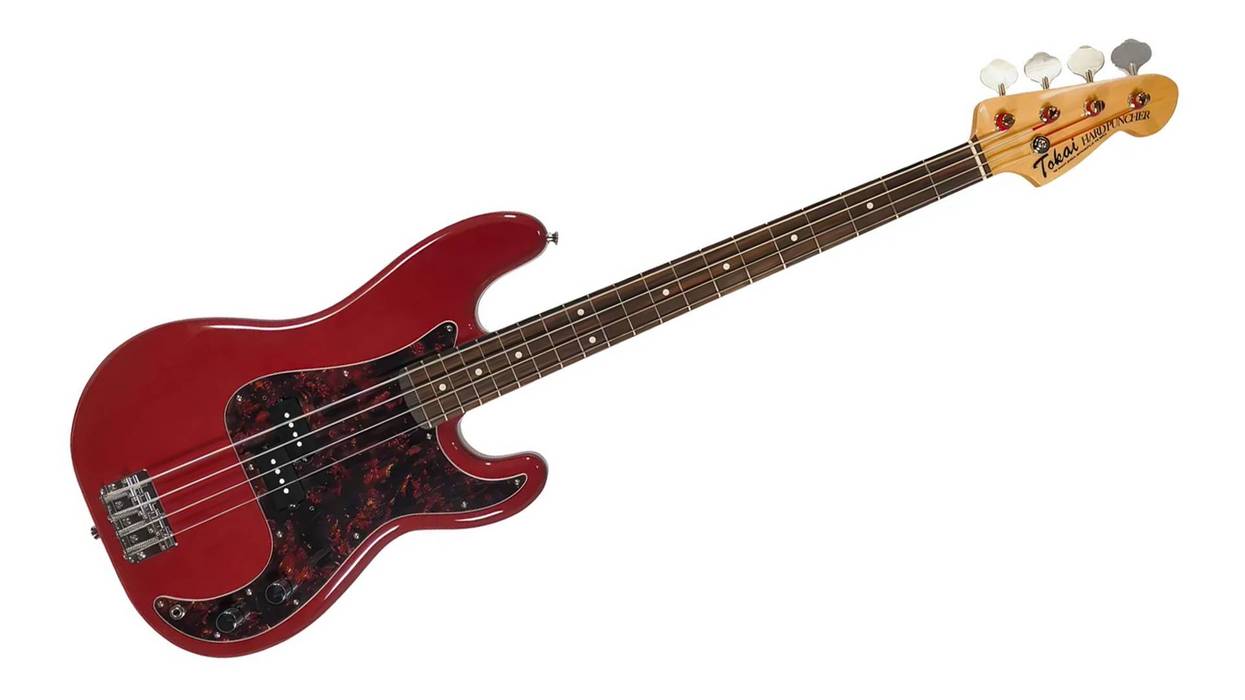
EarthQuaker’s Scrolls might have changed the standard for just fine, however. My P bass that sounds really good on its own? When I plugged it into the Scrolls it went from “just fine” to “sweet Mary!” EarthQuaker definitely ratcheted up the bar for what a DI’d bass can do onstage and in the studio.
Healthy Scrolling
Scrolls is a new bass DI box developed in collaboration with Japanese bassist Kentaro Nakao. Sometimes a pedal built for a specific player’s needs means essentials are overlooked. Not so with the Scrolls. Clearly, careful consideration was given to what the average bass player desires. But it also gave me things I didn’t know I wanted.
“When I turned it off, my bass suddenly sounded like a junior varsity team trying to compete with a professional squad.”
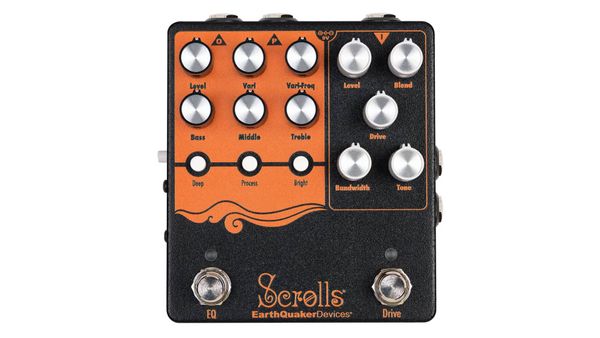
The pedal is divided into two robust sections, tied together by some common threads and some unusual ones. The first is a flexible drive section with wet/dry blend control, a clipping frequency knob (called “bandwidth” here,) and more. The second section is dedicated to EQ. Seems straightforward enough, right? Well, EarthQuaker decided to give players three output options: an XLR, a 1/4" out and a parallel buffered 1/4" out for a clean signal. In this configuration, a clean signal can go to an amp and/or front of house, where the signal can be manipulated and adjusted independent of the Scrolls. The effects loop lives between the drive and EQ sections, so if you add other effects, the loop will be after the drive but before EQ, leaving the EQ to shape the overall tone. Pretty clever, indeed.
Trust the Process
Scrolls’ EQ is the part of the pedal that sells the design. A DI’s job, after all, is to cover as many tones as possible for as many applications as possible, and Scrolls does that well enough that I can see it earning permanent real estate on a lot of pedalboards. The range comes down to how finely the EQ is divided—in the studio, it’s like having brushes from a fine liner up to a two-inch flat. Three push buttons—deep, process, and bright—provide a 80Hz boost, low-mid scoop, and 5kHz boost, respectively. Three corresponding tone knobs, which work with or without the pushbutton settings, cut or boost low, middle, and high frequencies. But the secret weapon might be the variable frequency control, which sweeps the emphasis anywhere from 20Hz to 10kHz and lets picky players slot their bass tone just so.
Though the numerous knobs look formidable, Scrolls is easy to use, too. I was able to take my bass from great to downright legendary in about 15 seconds. The pushbutton settings are excellent starting points, and activating all three adds up to a big, strong, and authoritative bass tone. The sweet spot for my P bass was a mix of boosts from the process and bright pushbuttons, and a little mid and treble boost from the corresponding EQ controls. I got used to this tone fast, and frankly, I didn’t want to box up the pedal again. When I turned it off, my bass suddenly sounded like a junior varsity team trying to compete with a professional squad.
The Verdict
EarthQuaker’s Scrolls is focused, smartly designed, and usable across just about any genre. The drive is the one section some players could find non-essential. It’s deeply tweakable—especially the wet/dry mix and the clipping frequency control—and harder-rocking players will love it. But I got what I needed from the EQ alone, and whether that's enough to justify the pedal comes down to your own tastes and objectives. As bass drives go, this is a flexible one, and in the right situation the two halves feed each other.
The Scrolls Bass Odyssey answers questions I hadn’t thought to ask. Can a great bass sound better going direct than it does through an amp? It can. Do I need three outputs on a bass DI? Turns out I do. Can I set this on my board, leave it there, and stop thinking about my bass tone? I think a lot of you will.
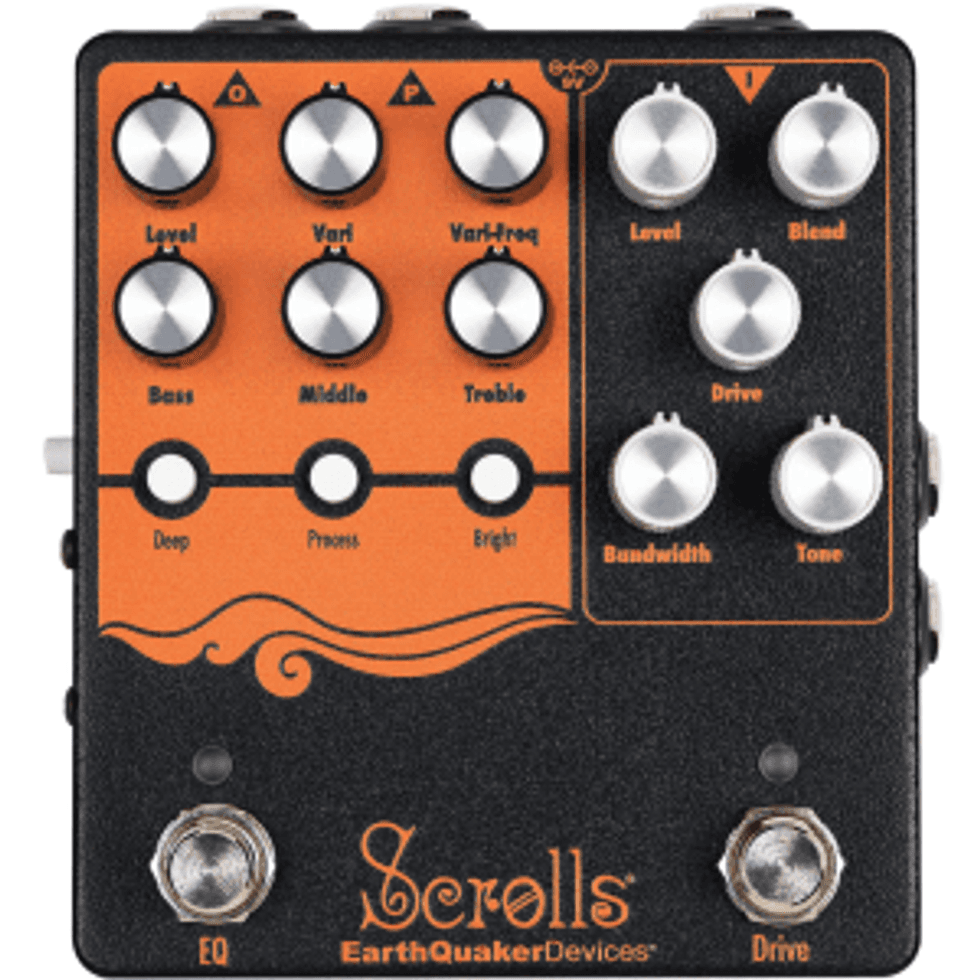
Scrolls Bass Preamp Pedal
Preamp Bass Guitar Pedal with EQ Channel, Drive Channel, FX Loop, XLR Direct Out, Parallel Out, and Ground Lift