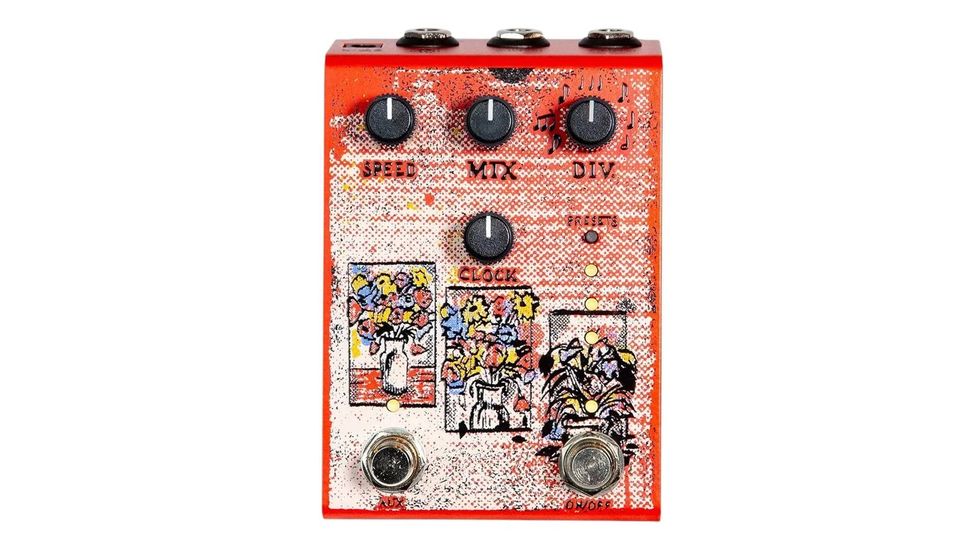
I have to resist reverse delay like most have to resist ice cream. A totally uninhibited version of myself would probably record multiple box sets’ worth of reverse-delay-based music given the chance. Old Blood's Setback reverse delay makes a project of that scope seem totally possible, too.
I spent many high-quality creative hours with the Setback, and while I never quite mastered it, I almost always loved what I found along the path to getting lost. Playing it usually feels like question-and-answer dialogue rather than a script. And in that give-and-take relationship, the Setback is generous about giving inspiration. It can also be full of surprises that are best taken as signs to follow. If you’re willing to let the Setback lead, you can tap into a rich well of composing, arranging, and recording ideas.
Stretch and Compress the Space-Time Mesh
There is a lot to uncover in the Setback. In one exploratory session with it I felt like I scored an abstract film or two in my head; toyed with all-wet, ’66-vintage-style reverse-tape solos; ripped a few snappy, melodic, and totally melted Richard Thompson/Fairport Convention phrases; brewed up various concoctions of cheap, dirty, broken garage-psych trip ambience; and happened upon cool rotary speaker and tremolo sounds. On another evening, I even played along to all of Fripp and Eno’s Evening Star and never once felt like a jerk blabbing all over the sound of geniuses at work.
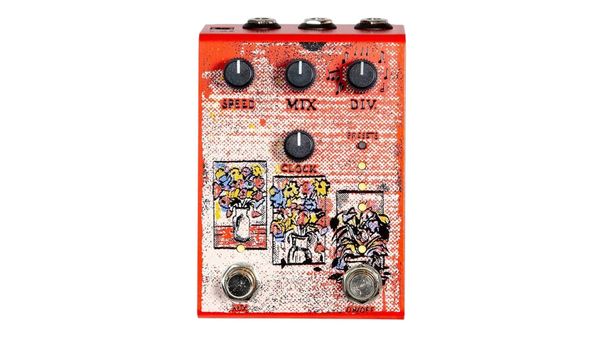
The Setback can genuinely sound and feel like a natural inhabitant of all these worlds. But as expansive as its tone palette is, the control set is pretty simple—at least on the surface. There are just four knobs, two of which are for echo subdivisions and mix. From there things get more unorthodox. Apart from the tap tempo footswitch, there is no repeat rate control in the most basic sense. Instead, there is a speed knob that approximates the effect of slowing or speeding-up tape playback. It changes the rate of the echo response, but it also alters pitch, which here is calibrated at speeds that correspond with an octave down, a fifth down, a fourth down, a unison/uniform playback-speed setting, and fourth-, fifth-, and octave-up intervals. The interval settings can make the pedal unpredictable, but they can make a phrase composed to utilize those intervals sing in lovely harmony with itself.
Technically the clock control also changes the repeat rate, but it doesn’t merely create a perfect copy of the dry signal—it also messes with the sample rate, which means that slower echo times will be gnarlier and glitchier. It takes a bit of concentration to grasp these functions in the early going, and the interrelations between controls can be elusive and hard to define. Thankfully there are three very manageable onboard presets and a whole lot more if you want to dabble with MIDI.
“I used my guitar control a lot—both to tame artifacts at harmonizing speeds but also to add a gauzy haze that evoked tape-age and vintage-amp and recording-desk tonalities.”
Meandering Wave Motion
Not every sound the Setback makes is appetizing. At any speed setting other than the 12 o’clock/unison position, dissonant notes can pop up and generate digital artifacts. Certain chord overtones can also clash in less than flattering ways, creating tinny digital refractions. Other hastily chosen combinations of subdivision, clock, and speed can be less than charmingly ugly, too.
But you can also work fast and intuitively across a broad range of enticing tones by starting from a familiar foundation. If you situate all the knobs at noon, more or less, it’s easy to get a warm, psychedelic meld of backwards tape and dry tones that keep melodies and picking dynamics intact. The Setback is responsive to other kinds of input dynamics, too. I used my guitar control a lot—both to tame artifacts at harmonizing speeds but also to add a gauzy haze that evoked tape-age and vintage-amp and recording-desk tonalities. Situating different gain sources upstream also activates varied peaks in the echoes, transforming their makeup and the voice of the pedal.
The Verdict
My outsized affection for reverse delay makes me a sucker for the Setback. But even my most objective self is impressed with how alive the Setback can feel as a complete musical instrument. It can effectively function like a synthesizer in your pedal chain, and its strangest textures can spark real, substantial musical ideas and illuminate riffs and melodies. It’s more than just weird too. There are many subtle colors to work with here and the expansive mix control means you can shade dry sounds with eerie fog summoned from the Setback’s outer limits. So, even weird tones can be part of liquid, lyrical phrases.
Add a looper and add some amp feedback? Forget about it. You can assemble whole manic, swirling orchestras populated by ghosts and other spectral presences. If you dig really recognizable, classic psychedelic reverse delay but foresee using it sparingly, there are cheaper routes to that effect. But Setback is capable of so many sounds that transcend reverse delay and elude reverse-echo cliches. It’s this richness that gives the Setback so much practical value.