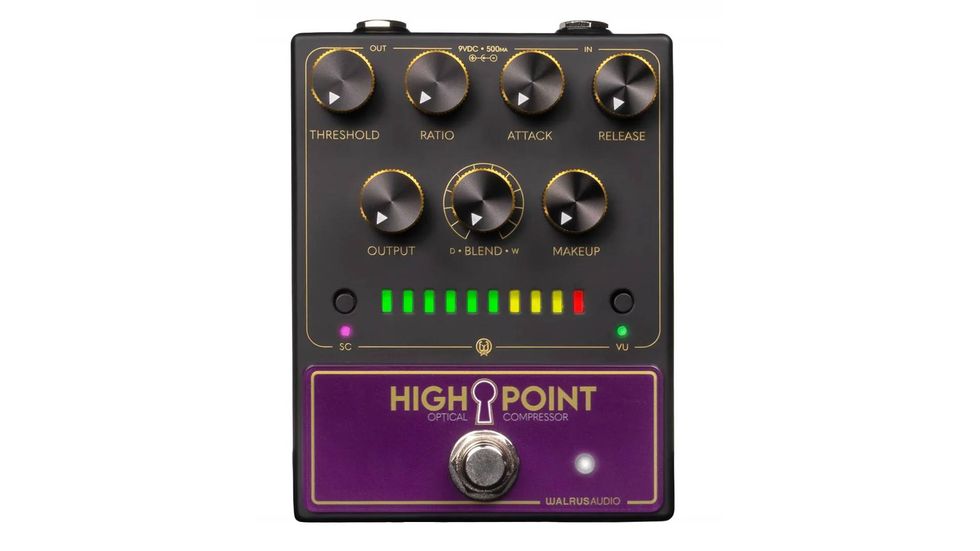
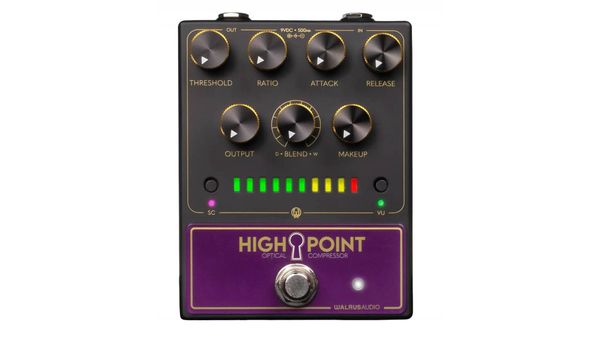

For some players, compression, and compression pedals, are exciting at a level just above a tuner or volume pedal—essential in some cases, but not the kind of thing that gets the blood pumping. For others, compression is an essential facet of their sound, perhaps even the core of it. For these players, the differences between compressors are meaningful and consequential, and separate a true creative device from a joyless, utilitarian tool. Walrus Audio’s Highpoint is more likely to appeal to players who see the painterly possibilities in a compressor. As an optical comp, it offers the smooth, fuzzy, non-linear glow that makes a good opto sound less sterile and bossy than a voltage controlled or FET compressor. It also has a control set that can get surgical. The $349 price reflects the pedal’s power and flexibility, and signals that this isn’t one for compression casuals. But while committed comp nuts might find the most to love here, less experienced users might be very surprised and impressed by what an asset the Highpoint can be.
Light and Sound Sensations
Advanced students of the compression arts can skip ahead here, but for those among you who are new to optical compression, a brief primer: In an optical compressor, changes in gain are communicated through the circuit via a light source and a photoresistor that reads that source’s energy. Photoresistors (which effectively define a compressor’s release characteristics) possess an inherent signal-processing lag—not enough to constitute a pronounced delay, but enough to color the edges of output with a warmish aura and, at the right settings, lend extra dimensionality that other compressors can rob from the signal. (Another famous effect, the Uni-Vibe, also uses an opto-circuit to achieve its warm, round, and chewy qualities.)
As you scan the range of the Highpoint’s seven controls, you have to work to bury the basic warmth in its compression. The Highpoint is a toasty glow additive, even at compression levels that you’d categorize as super squished. I love the effect of super-compressed guitars in certain arrangements and mixing situations, and use compression as a transformative tool as often as I use it as subtle tone sweetener. So, my standards for what constitutes tone suck may differ from those of a hardcore tone naturalist. Still, I found that the Highpoint obliterates a guitar’s voice at only the wettest, lowest-threshold positions. At just about every other combination of controls you tend to hear your guitar’s tone, and the characteristics of upstream effects, loud and clear.
Quality Control
The Highpoint’s knack for keeping an instrument’s essence intact makes using its very interactive, rangeful, sensitive controls extra satisfying. The wet/dry control opens up the possibility of using dramatically compressed tones as subtle shading. But all-wet settings can still generate a wide range of coloration, and shaping those colors in specific ways feels fast and intuitive—a sense enhanced by the smooth, gentle taper of the knobs themselves. This makes the Highpoint very forgiving. I never got the sense that I would get lost—or be unable to get back to where I started—if I wanted to make radical adjustments in the heat of a performance. But this intuitiveness pays double the dividends when crafting song arrangements and mixes. Easing a specific tone and dynamic profile back from an extreme place to a mellower one in small increments always felt effortless, and that means you can close the gap between a sound you imagine and the one you hear with confidence.
The Verdict
Compression is often regarded as an effect that diminishes the sense of touch. But the Walrus Highpoint seems designed to prioritize feel—not just in the way it can seamlessly span subtle and super-compressed tones, but in how easy it is to explore the realms between those extremes. It’s versatile and multi-dimensional, and it’s also fun—an adjective that even devout compressor users would be reluctant to use to describe their favorite comp.
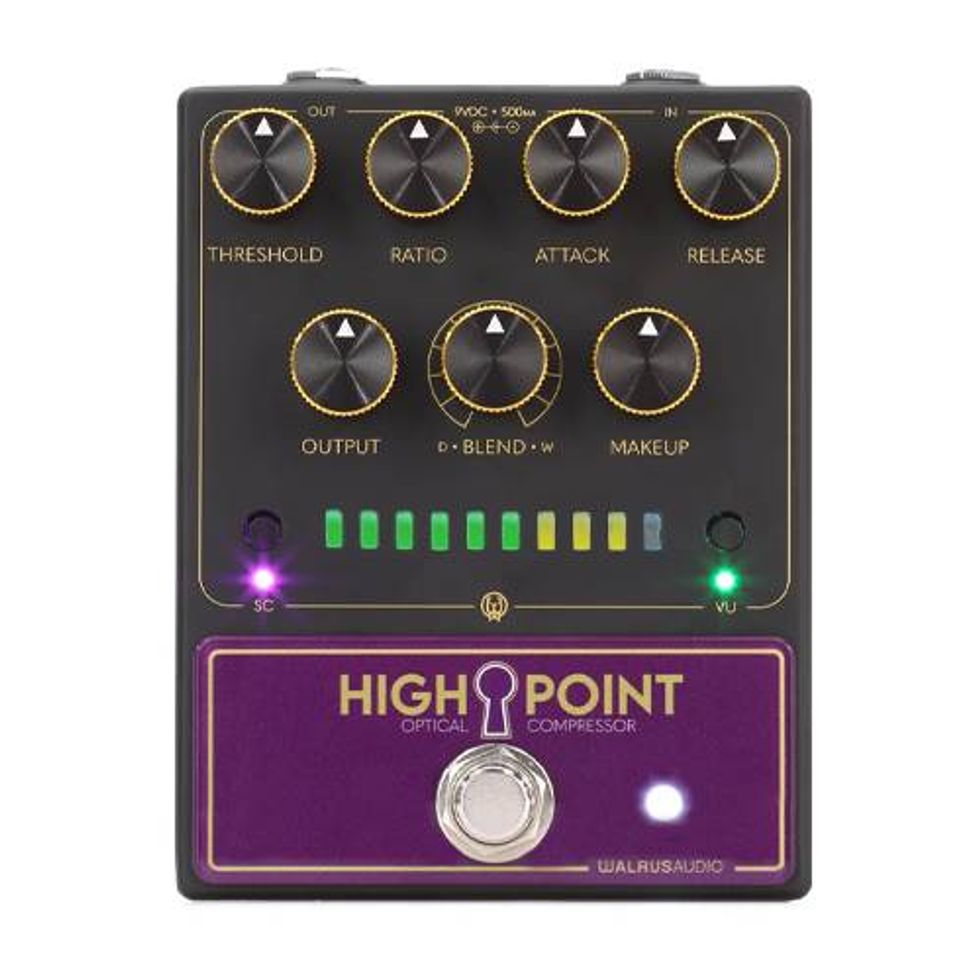
Highpoint Optical Compressor
Optical Compressor Guitar Pedal with Threshold, Ratio, Attack, Release, Output, Blend, Makeup, Sidechain, and VU Controls