
In design and engineering terms, a vintage fuzz is a comparatively basic thing. And most of the earliest vintage fuzzes evolved from common ancestry. But as we’ve discovered in the intervening years, even small differences in a simple design can mean profound shifts in performance and personality.
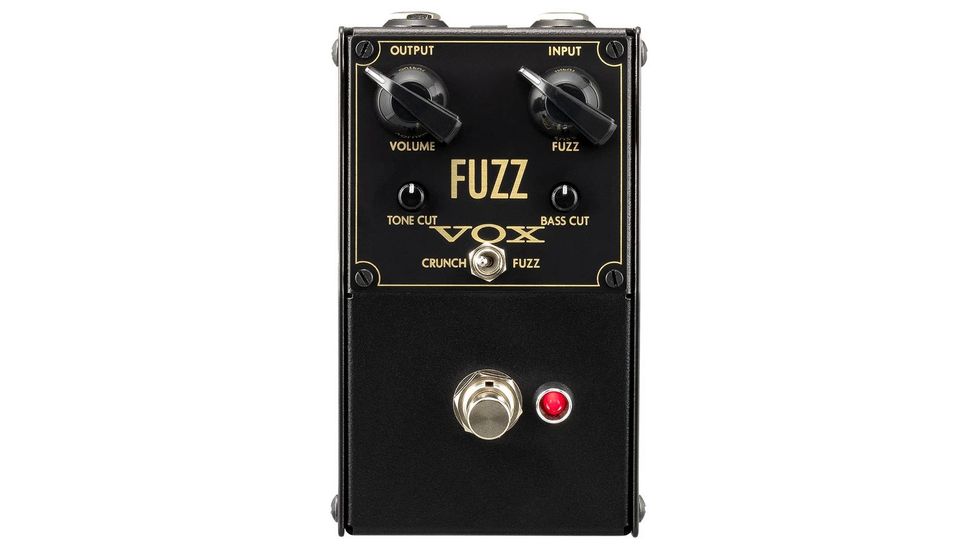
The first Tone Bender, the MK I, for instance, was a close relative of the Maestro FZ-1 (of “Satisfaction” fame.) The MK II was a more potent evolution—made most famous, probably, by Jimmy Page. But in between those releases, the Tone Bender took an interesting turn. The MK 1.5, as it’s now known, simplified by shedding a transistor. The change didn’t last long, but it proved to be an enduring platform, because the Tone Bender MK 1.5 is essentially a sibling of the Fuzz Face, Vox Distortion Booster, and the Italy-made Vox Tone Bender—which, collectively, could be the most recorded fuzzes of the 1960s. This design is also the foundation of the new Vox VFZ-1. Where the original MK 1.5 used germanium transistors, the VFZ-1 employs a pair of more stable silicon transistors. But it also adds bass and treble cut controls, as well as a switchable crunch mode (which works, more or less, just like turning your guitar volume down.) It’s a versatile circuit that reveals how flexible the MK 1.5 is as a fuzz foundation. It also reaffirms, in many cool ways, how those little changes can add up to real differences.
Silicon Cornerstone
Germanium versions of the Tone Bender MK 1.5 and Fuzz Face are rightly revered for their dynamic range and drive characteristics. But silicon Fuzz Face variants are very cool in their own ways. Jimi Hendrix and David Gilmour sold about seven gazillion records on the strength of silicon Fuzz Face tones, after all. That sound is recognizably the foundation of the Vox VFZ-1’s voice. At its core, it’s meaty and assertive in the high-mid range, with a growly, contoured low-mid accent. It sounds great with single-coils, and spectacular with humbuckers, which tame its spikier tendencies and shine a light on its capacity to meld sheer mass and throaty grit. Imagine a bellowing Orson Wells as a guitar/fuzz combo and you wouldn’t be far off. Its responsiveness to guitar volume and tone attenuation and touch dynamics is impressive, too. It may not be in a germanium Fuzz Face’s class in this regard, but you can definitely summon sparkly low-gain to near-clean tones via these techniques.
Range Rover
The VFZ-1’s utility is enhanced by the simple tone cut and bass cut controls, and both can be transformative depending on your aims. I had the most fun removing as much top end as possible with the tone cut, and letting the bass flow freely via a full-counterclockwise bass cut setting. The sounds produced at these settings don’t quite have Big Muff weight, but they’re close. In fact, if I was casting a fuzz for a desert drone rock role but needed a new twist on the theme, I would be thrilled to use this VFZ-1 setting with a humbucker to achieve that aim. You can still summon detail and shading with the guitar volume and tone controls in this setup, but the results are more guttural and less buzzy than you’d expect from a Tone Bender or silicon Fuzz Face.
The Verdict
Burly, blazing, scuzzy, and smooth, the Vox VFZ-1 is a genuinely exciting alternative to both the silicon Fuzz Face and Tone Bender-type circuits. Indeed, it can play those roles, but can also step well out of type. It’s sturdy and stylish, and at just less than $149 offers impressive flexibility at a price that aligns with much less versatile vintage-style fuzzes.

VFZ-1 Fuzz
Fuzz Guitar Pedal with Volume, Fuzz, Tone Cut, Bass Cut, and Crunch/Fuzz Controls




![Rig Rundown: The Black Crowes’ Rich Robinson [2026]](https://www.premierguitar.com/media-library/youtube.jpg?id=66952027&width=1245&height=700&quality=70&coordinates=0%2C0%2C0%2C0)