Fender offered up a magical sound recipe to the masses when the company mated reverb with tremolo in their early 1960s amps. The development came at an opportune time, too. Whether you were Phil Spector, Joe Meek, or Brian Wilson painting walls of sound; a teenager summoning the Banzai Pipeline in a garage-surf seance; or an ordinary joe spicing up a cocktail party with a stash of exotica LPs, atmosphere and sounds that evoked space and movement were alluring stuff. With psychedelia and Morricone’s spaghetti western masterworks looming, things were only going to get further out.
What’s striking is how the evocative power of this reverb-tremolo tandem has endured across decades—even as newer effects have emerged that sound bigger, more alien, and stir altogether different emotions. At its core, Source Audio’s Pathways reverb and tremolo pedal is rooted in the textures of the early to mid 1960s. But with the addition of room, plate, and hall reverb textures, the ability to switch effect order and reshape sounds via the Neuro app, and introduce contrasting textures via presets and MIDI, there’s plenty of room to roam and explore beyond vintage tone templates.
Big Waves, Desert Skies, and Stars Beyond
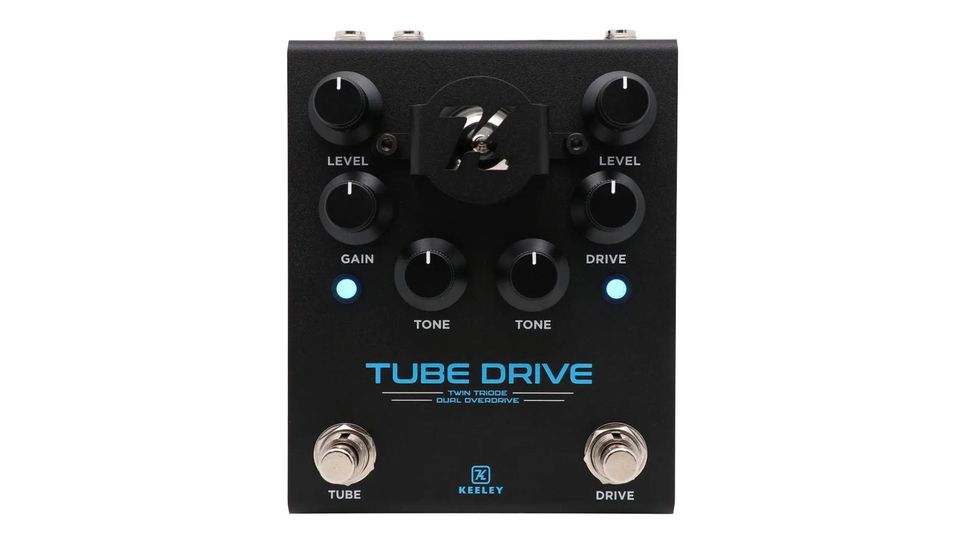
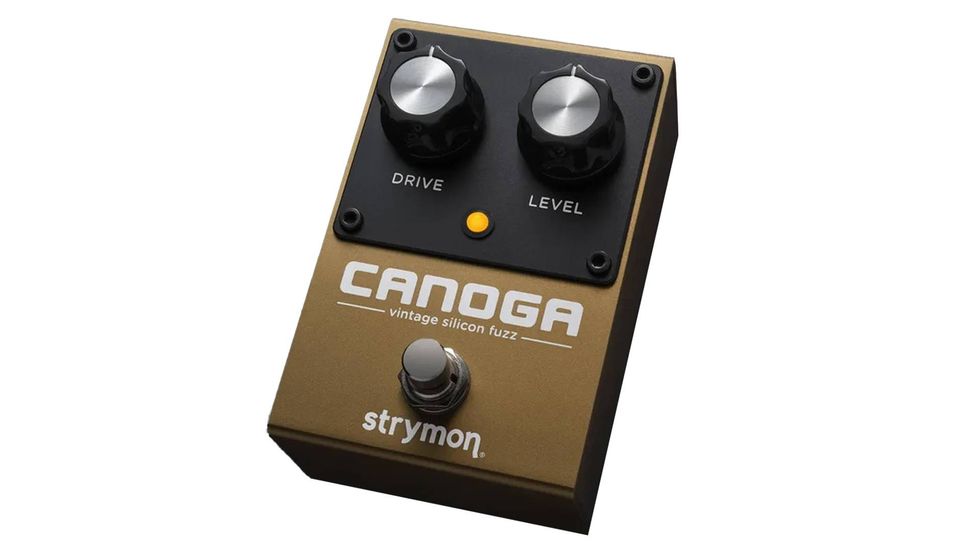
Reverb/tremolo combo pedals span a wide price range. Keeley makes a few that vary in cost from $149 to the low-to-mid $200s, where you start to see features like stereo output. Boutique amplifier maker Milkman offers a simple tremolo/reverb in the $250 range. Source Audio’s Pathways lives a bit upmarket; at $349, it’s priced right alongside Fender’s Tre-Verb and Strymon’s Flint. But thanks to the delays and the extra reverb options, Pathways is a little more feature rich—particularly on the surface, no-MIDI-tinkering level where most players will live.
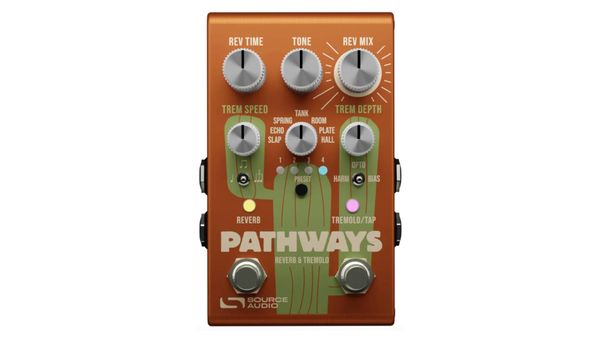
Stuffing so many features into a relatively compact enclosure means things can feel cramped at times, and some players that use the Pathways on crowded pedalboards might find the two footswitches—one of which is also employed for the tremolo’s tap tempo function—a little too close together for comfort. Navigating the control set is made easier, however, by a clever bit of graphic design: The arms of the cactus highlight the tremolo functions in green. The wet/dry reverb mix control, a feature that is pretty unique among pedals of this type, is surrounded by the rays from a beaming sun, which is apt given its capability to make the reverb an extra-powerful presence in a tone picture.
“The Pathways’ expansive range of reverb voices creates vibrant, brilliant, thrilling, luxurious, and inspiring spaces that can also sound clear, bright, and even a bit trashy and lo-fi in the very best sense.”
Pathways can be potent indeed. And while subtle colors are easy to summon thanks to the wet/dry mix, it’s hard to resist its biggest, splashiest sounds. Source Audio used a Fender 6G15 standalone reverb tank and a 1960s Fender Vibrolux as benchmarks for the tank and spring voices, respectively, during development. At times, the Pathways tank and spring settings lacked a little of the integrated feel I heard in the 6G15, 1960s Vibrolux Reverb, and '65 Deluxe Reverb reissue I used for comparison. To be fair, I don't have an amp with an effects loop, and my guess is that the Pathways would sound fuller and more seamlessly integrated in spring mode when hooked up that way. (It is, perhaps, not a coincidence that the tank setting sounded more like the real 6G15, which is meant to run into the front of an amp.) But even when run directly into the front end of the Vibrolux and Deluxe, the Pathways was full of character and personality, with a distinctly vintage essence that would transmit loud and clear in a recording.
It's important to keep in mind that vintage Fender reverbs can sound pretty different from one another, so establishing a single, definitive benchmark is difficult. And at any rate, Pathways consistently feels like a reverb that transcends Fender-style norms. The Pathways’ expansive range of reverb voices creates vibrant, brilliant, thrilling, luxurious, and inspiring spaces that can also sound clear, bright, and even a bit trashy and lo-fi in the very best sense.
Having the room, plate, and hall emulations onboard expands the functionality of the Pathways significantly. There are many useful, tight, compact room sounds that can be shaped to contain and/or enhance high gain signals, depending on where you set the three reverb controls. The plate emulation possesses the ghostly metallic overtones that make a real one so alluring in a recorded mix. It’s versatile, too, and can lend shadowy ambience at lower levels, as well as sound more controlled than the spring or tank at higher ones. The most radical ambience is found in the hall setting with mix and delay time levels at maximum, where reflections stack up like light refracted off a hundred disco balls. But at more modest levels, it might offer the most utility of any of the voices.
The slapback and short echo (288ms maximum) delay voices are cool features as well. The only catch here is that you can only alter the delay time by way of the alt function switch. As components of a preset menu, they can be awesome for radically shifting the vibe of a tune, but I suspect few players will replace dedicated delay devices with these echoes.
Throb and Roll
Source Audio’s Vertigo tremolo has always been one of of the best bargains in trem boxes, and it makes up the heart of the Pathways tremolo. The textures are beautiful, particularly the harmonic trem, which approximates the tremolo in Fender’s phase-y brown-panel amps. It’s a beautiful match for the Pathways' echo and spring reverb voices—particularly when you add in a bit of dry signal, which gives the modulations room to breathe. The throbby bias tremolo voice was part of one of my favorite Pathways recipes, which combined a modest spring reverb tone with a very dark tone setting. The optical tremolo, meanwhile, when paired with a deep tank reverb sound, is a very convincing slice of big-picture, high-octane vintage Fender-ness.
The Verdict
It says a lot about the Pathways that there isn't room here to list all its features. Source Audio’s Neuro app, for instance, provides many ways to fine-tune the output. And the onboard presets can be complemented by an additional 124 via MIDI. But the most appealing part of the Pathways experience is the sounds that any casual user can access without deep diving. The wide-ranging controls offer players the power to shape canonical vintage sounds or create more subdued or high-energy versions of those textures. At almost $350, it’s priced right alongside some very formidable competition. But Pathways more than holds its own, and provides a few routes to atmospheric sounds that the competition can’t deliver.
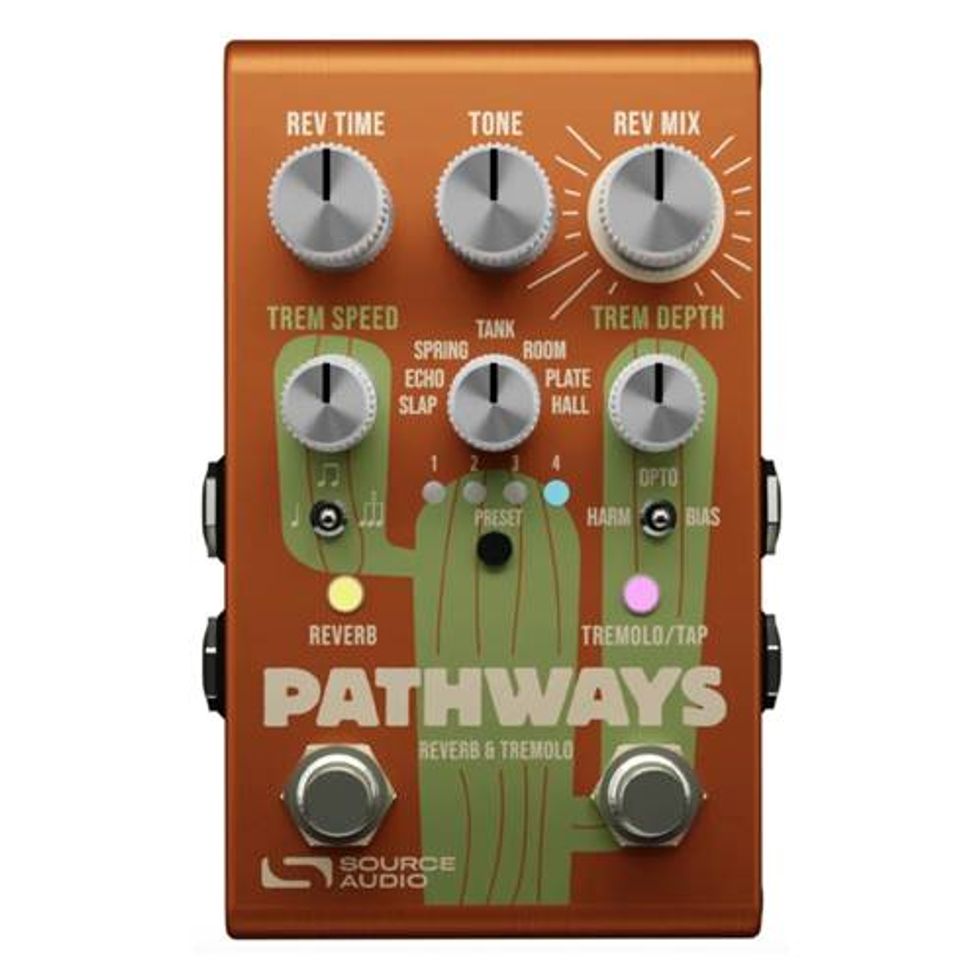
Pathways Reverb + Tremolo
Stereo Reverb/Tremolo Guitar Pedal with 7 Reverb Modes, 3 Tremolo Modes, 3 Note Divisions, Trem Speed, Trem Depth, Rev Time, Rev Mix, Tone, Presets, Tap Tempo, MIDI, USB-C, and Control Input