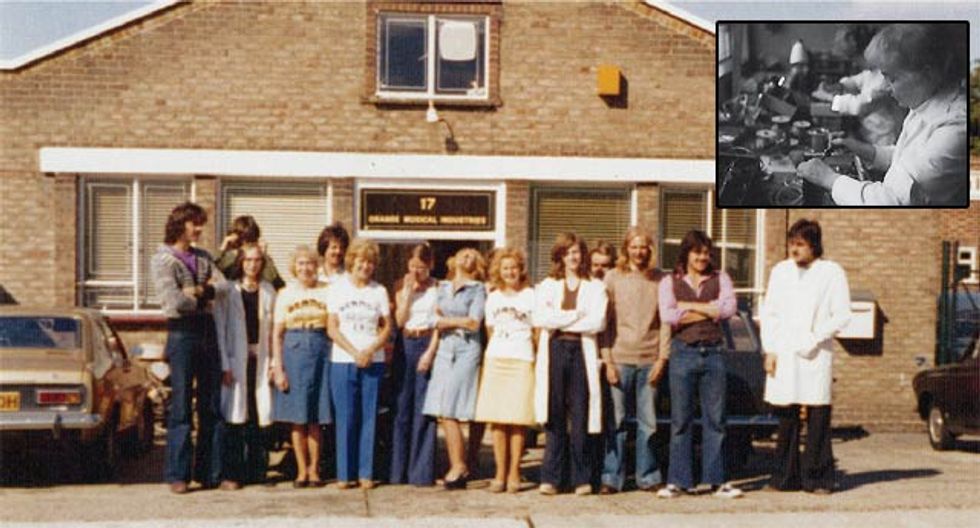
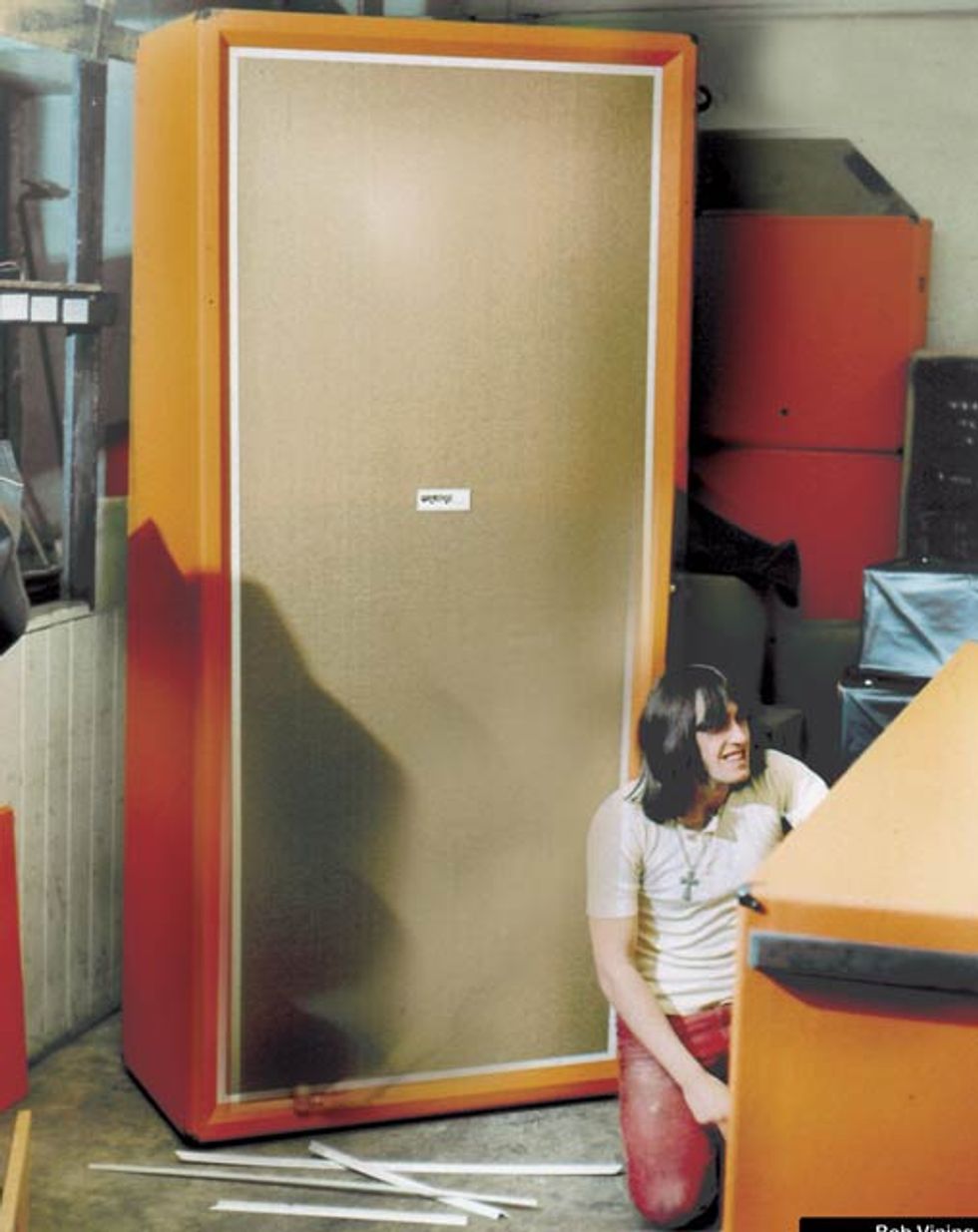
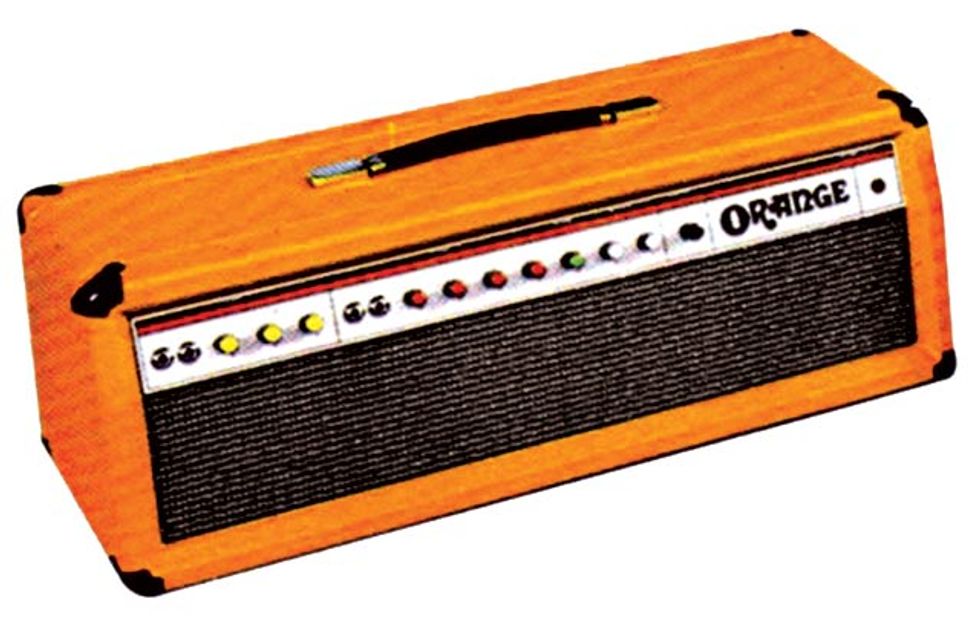
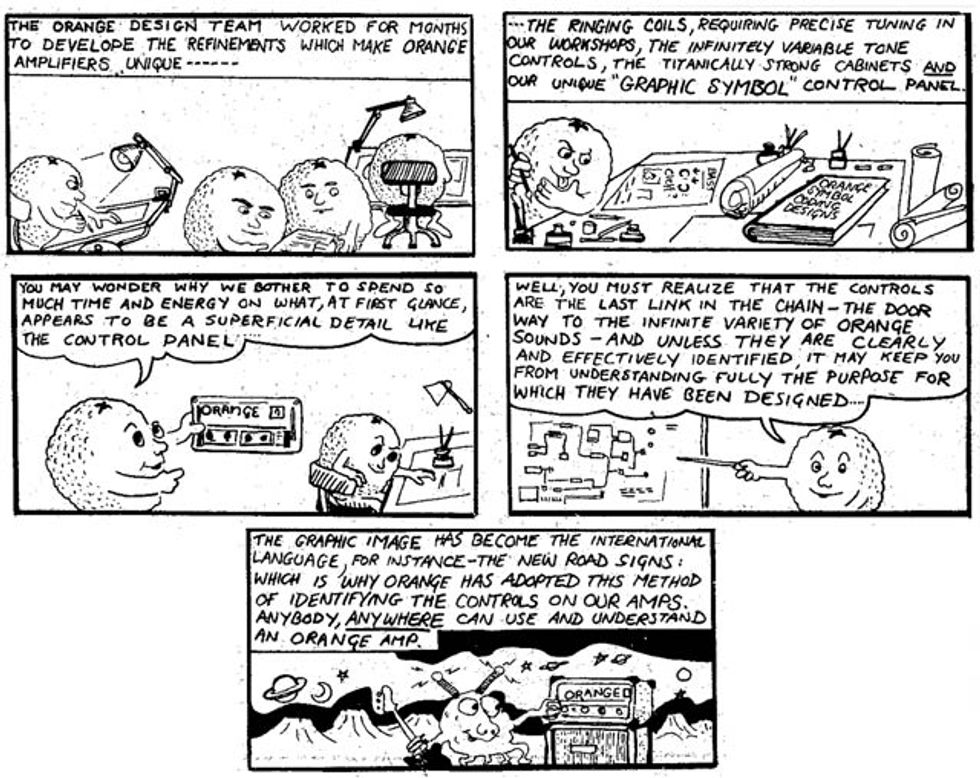
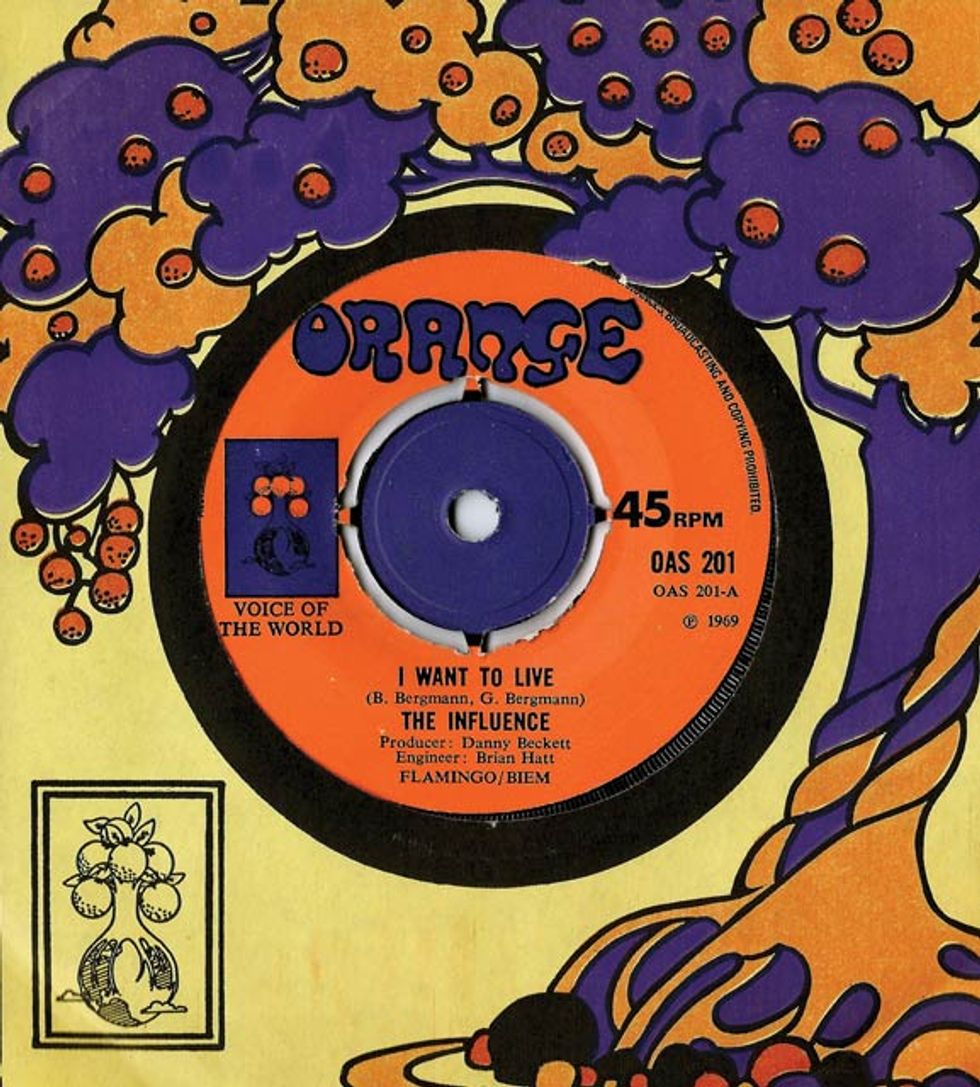
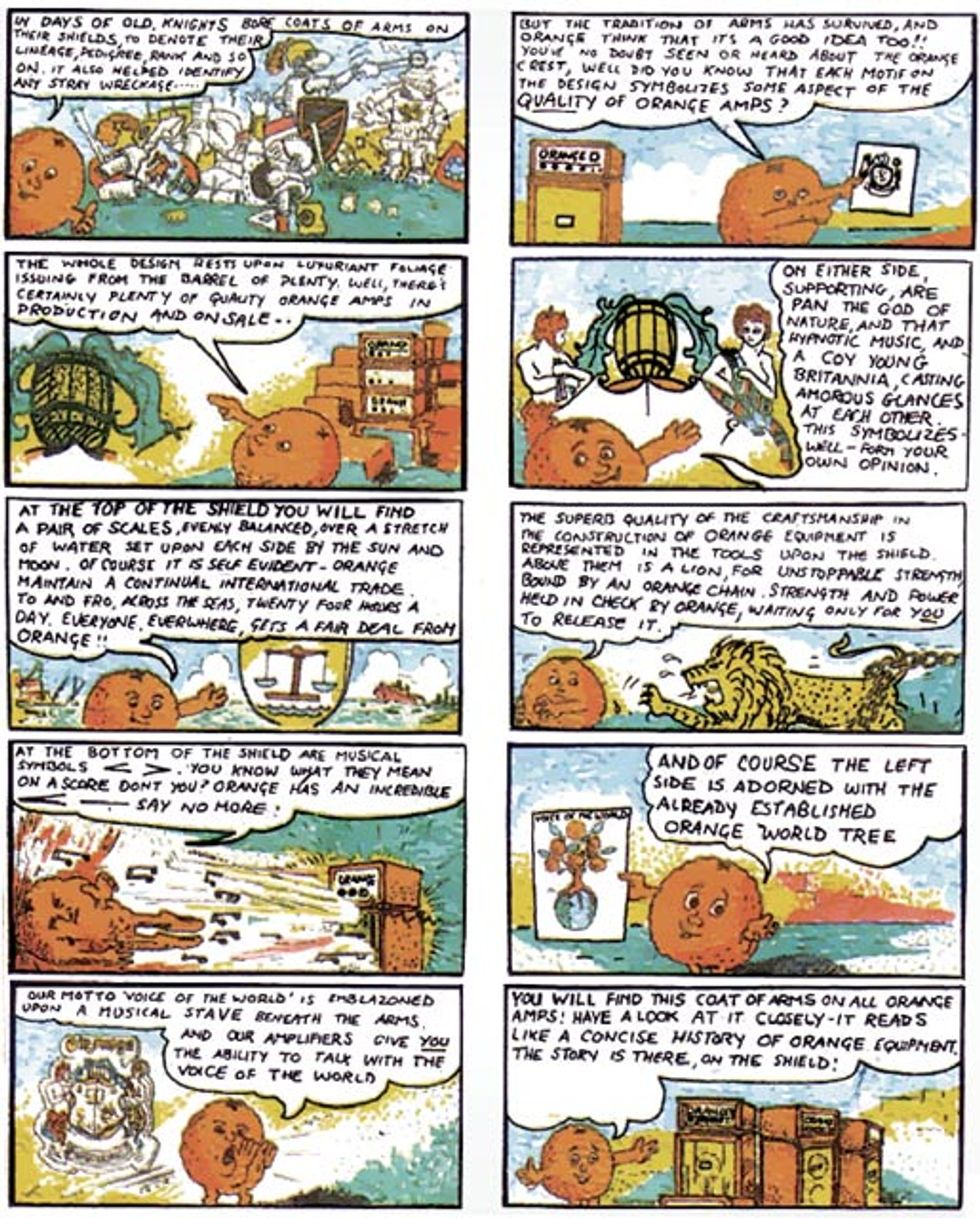
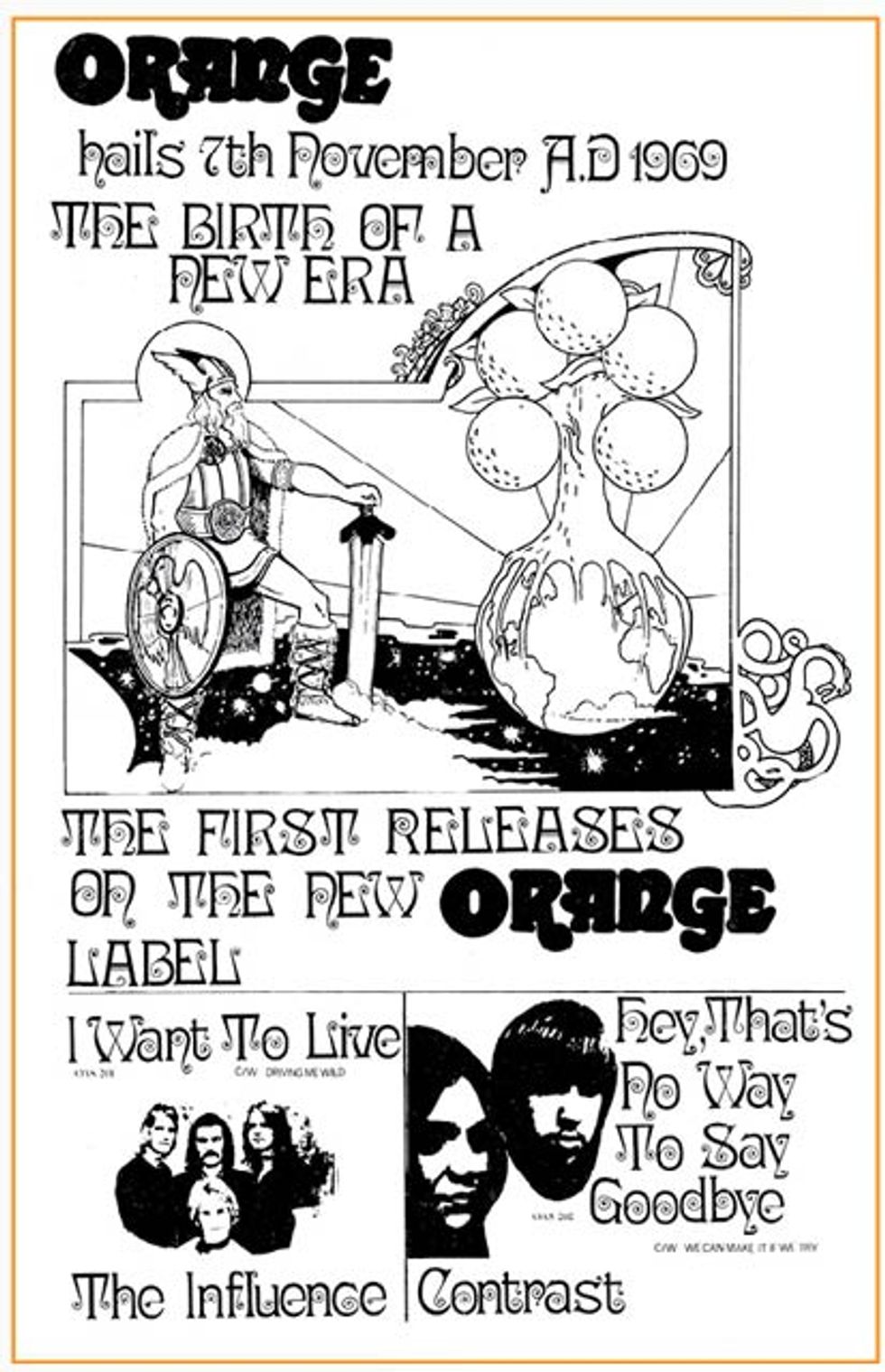
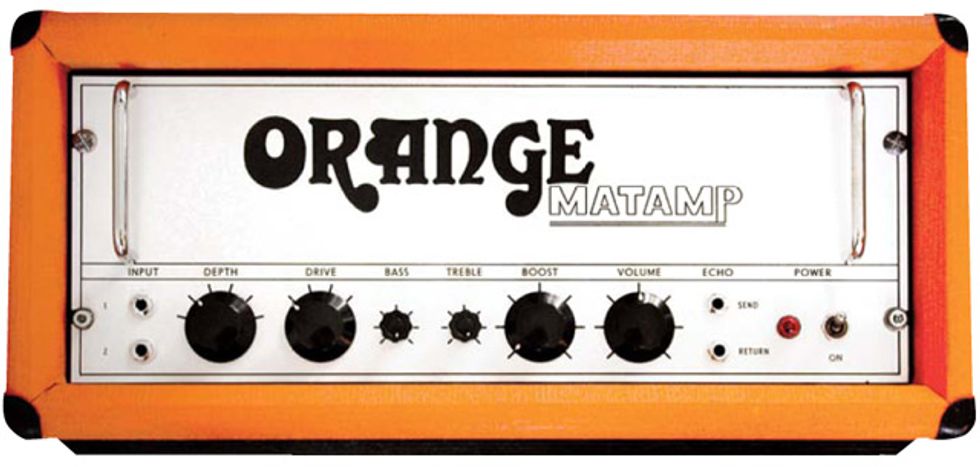
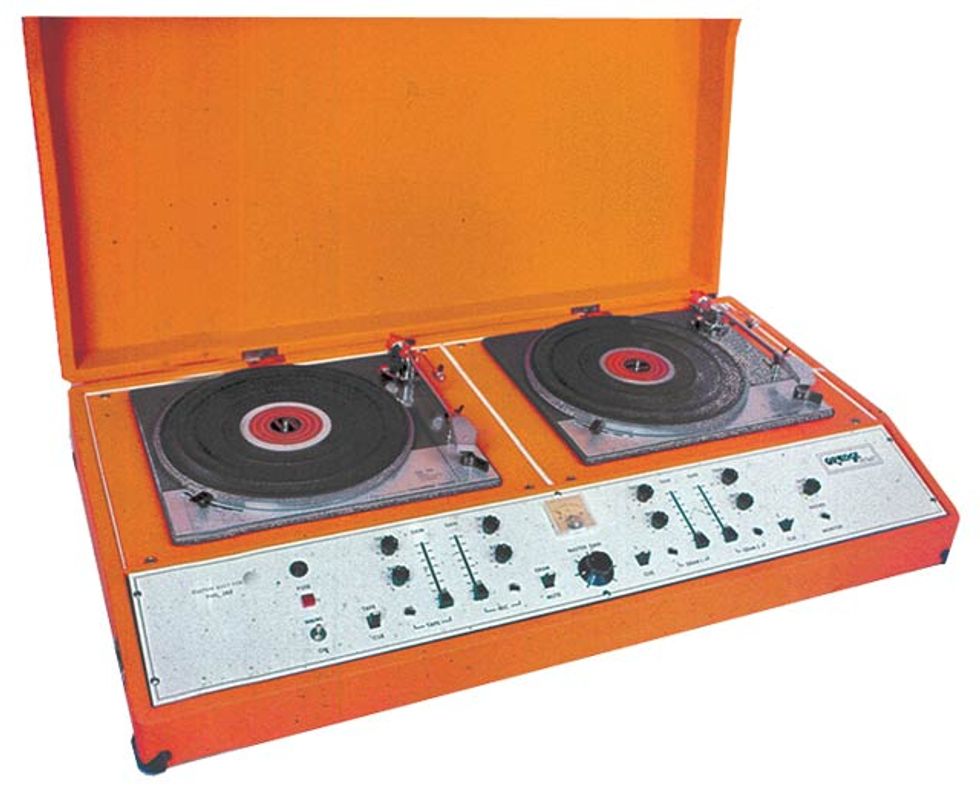

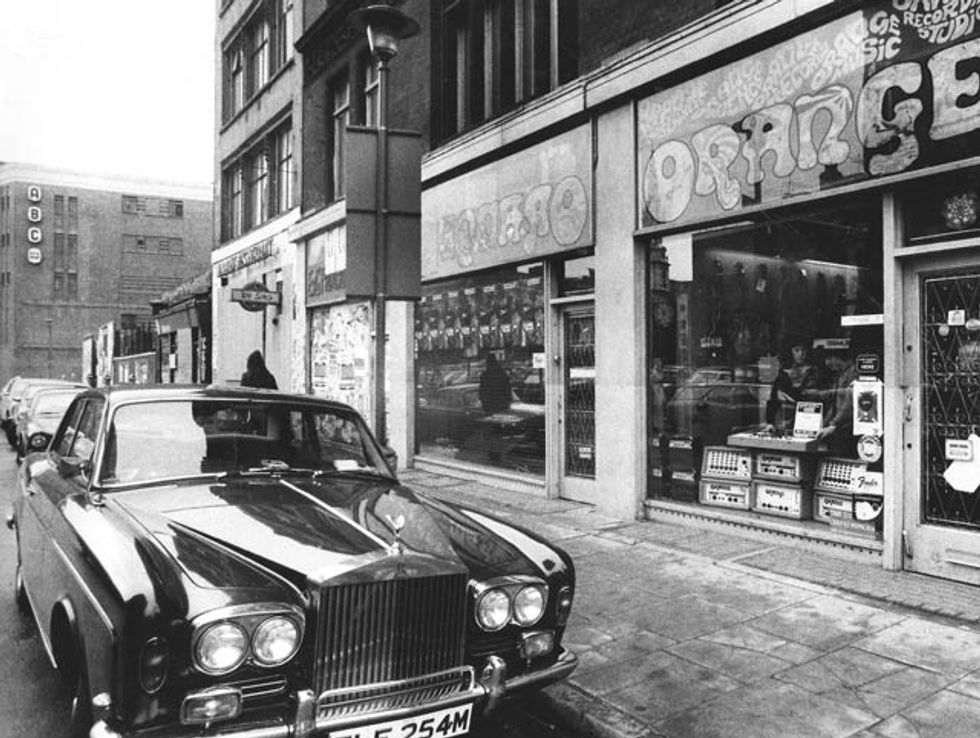
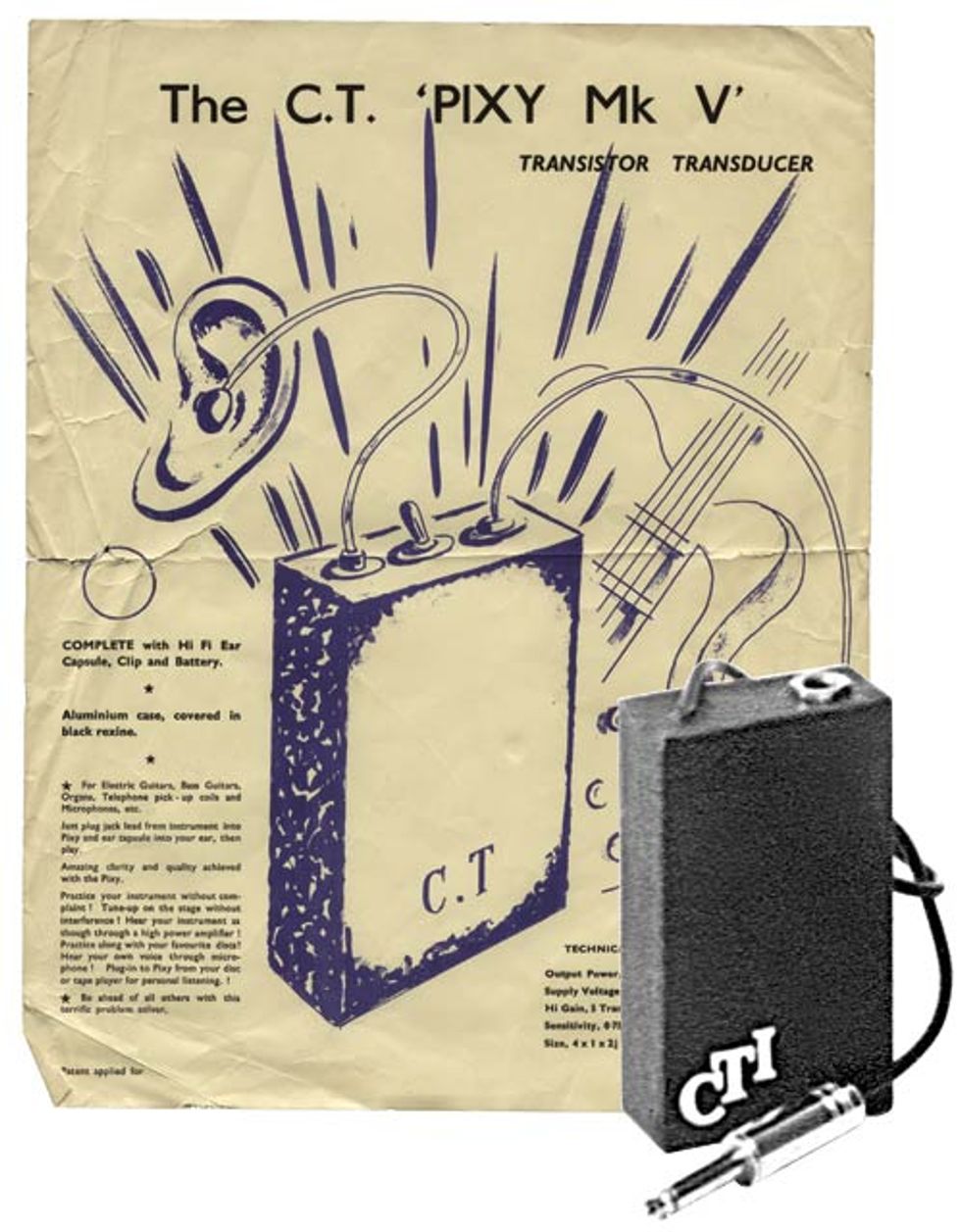
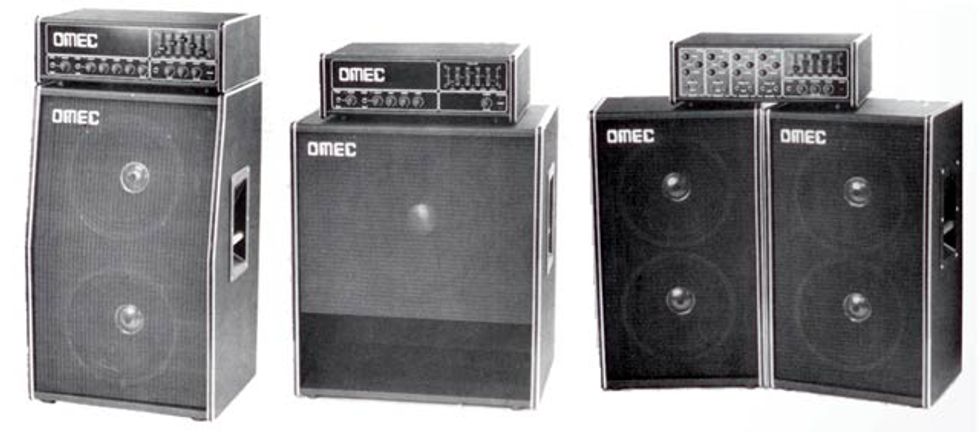
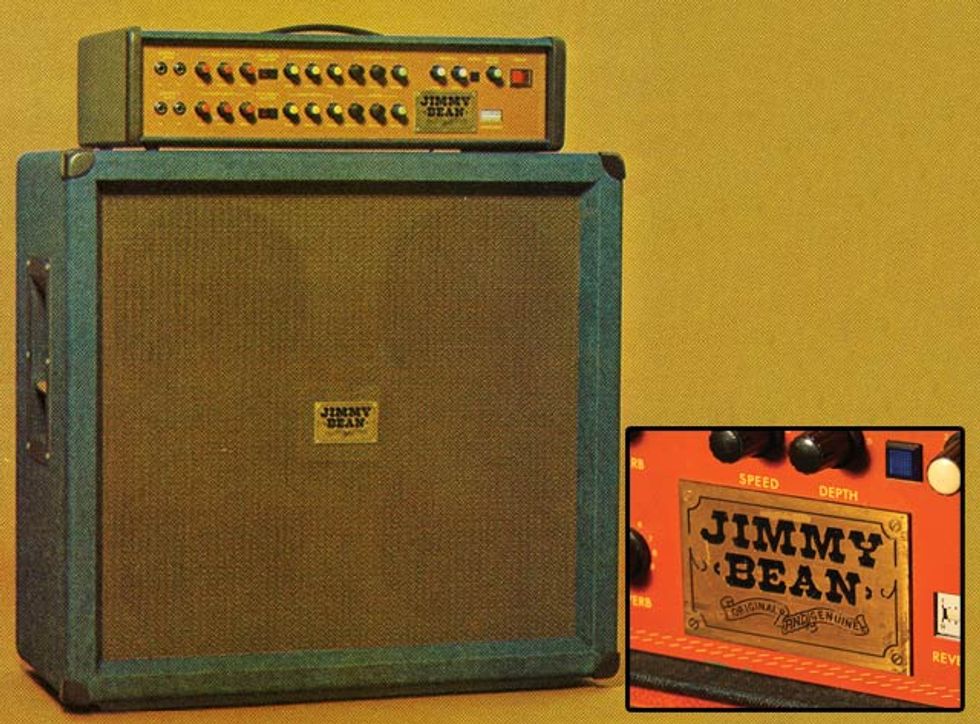
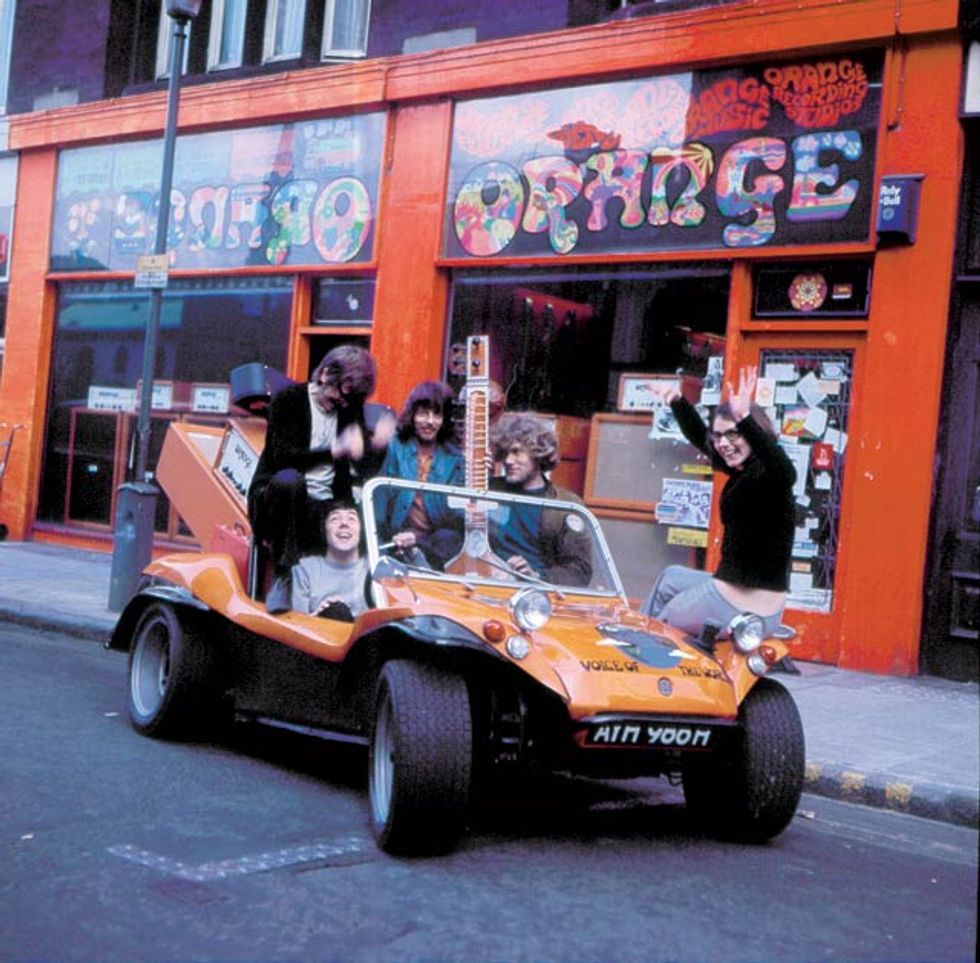
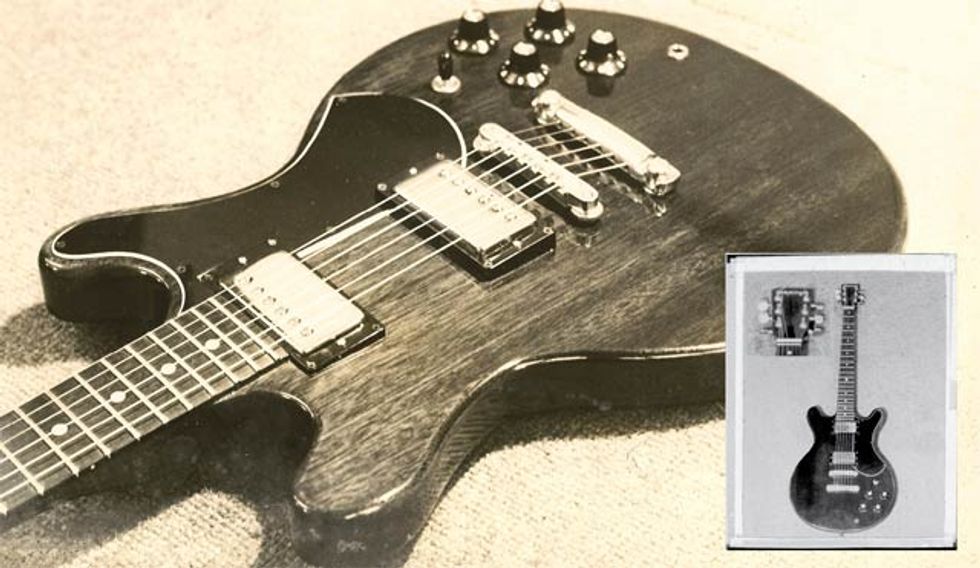
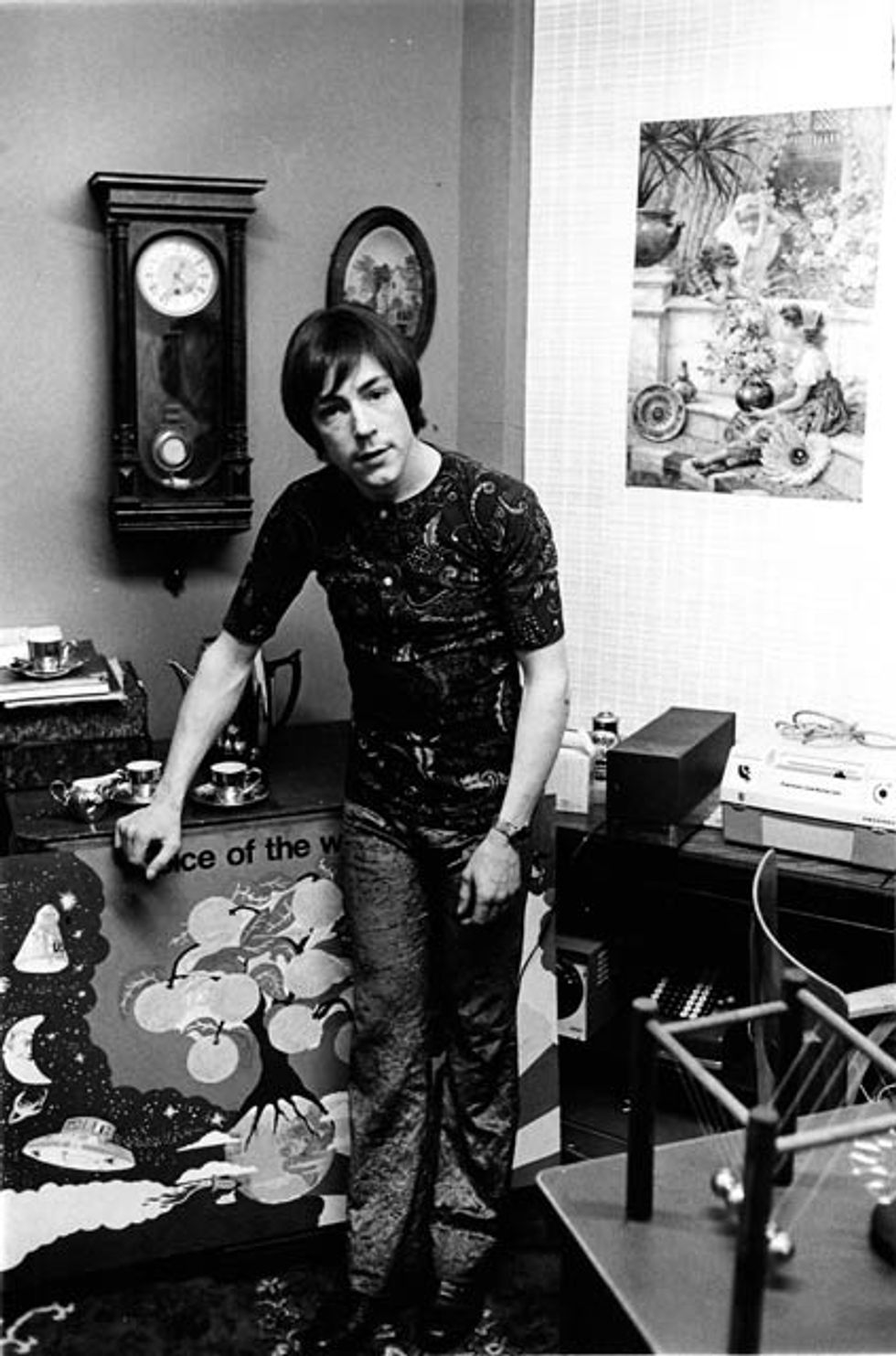
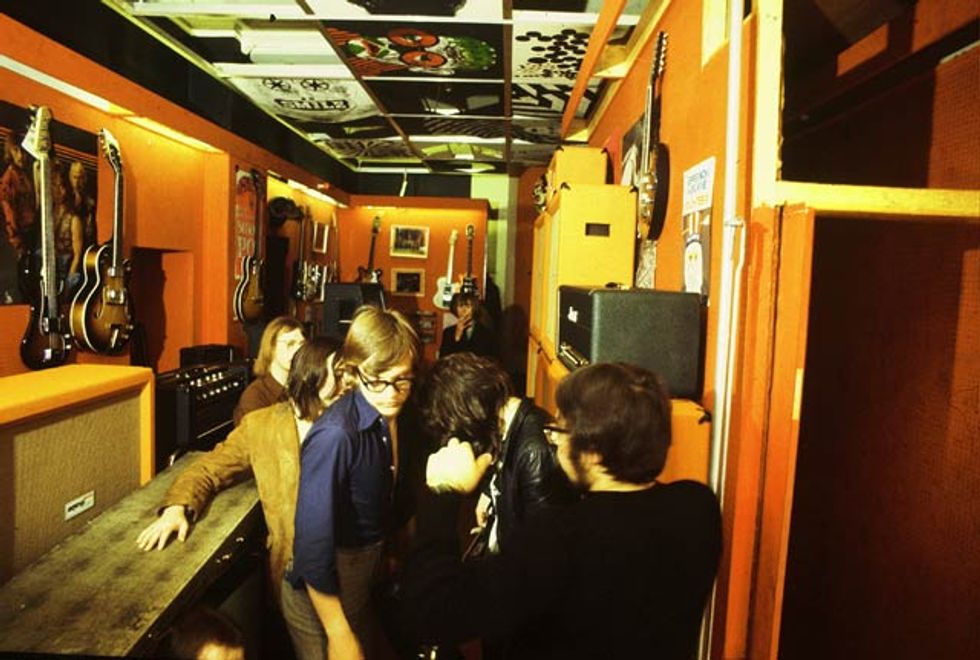
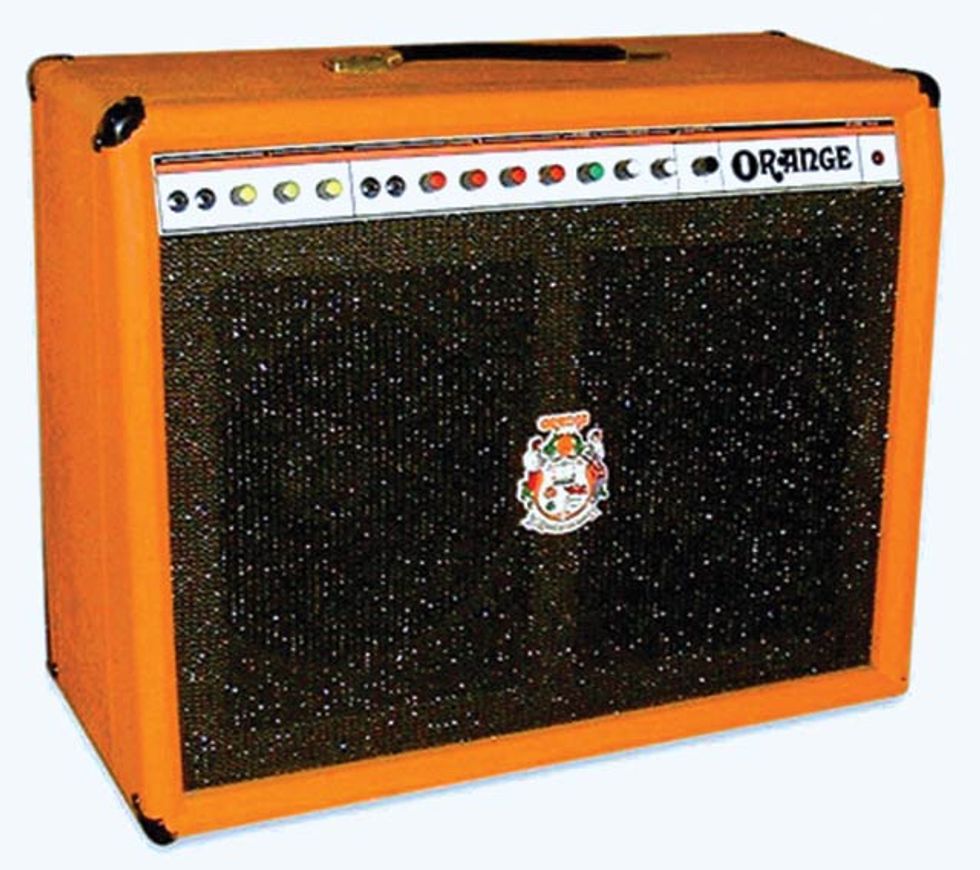
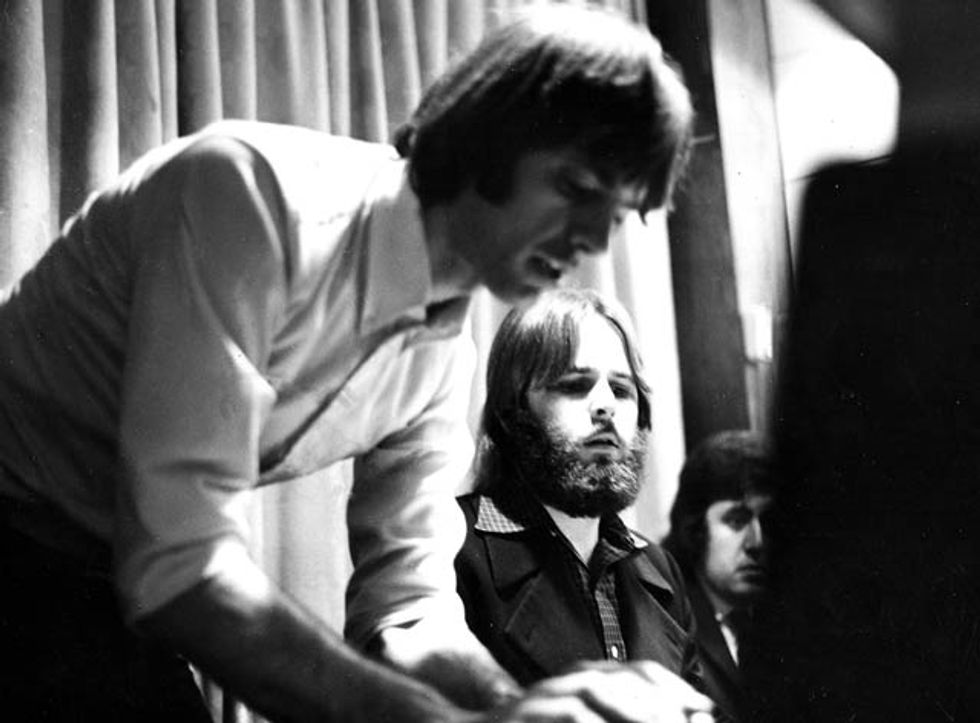
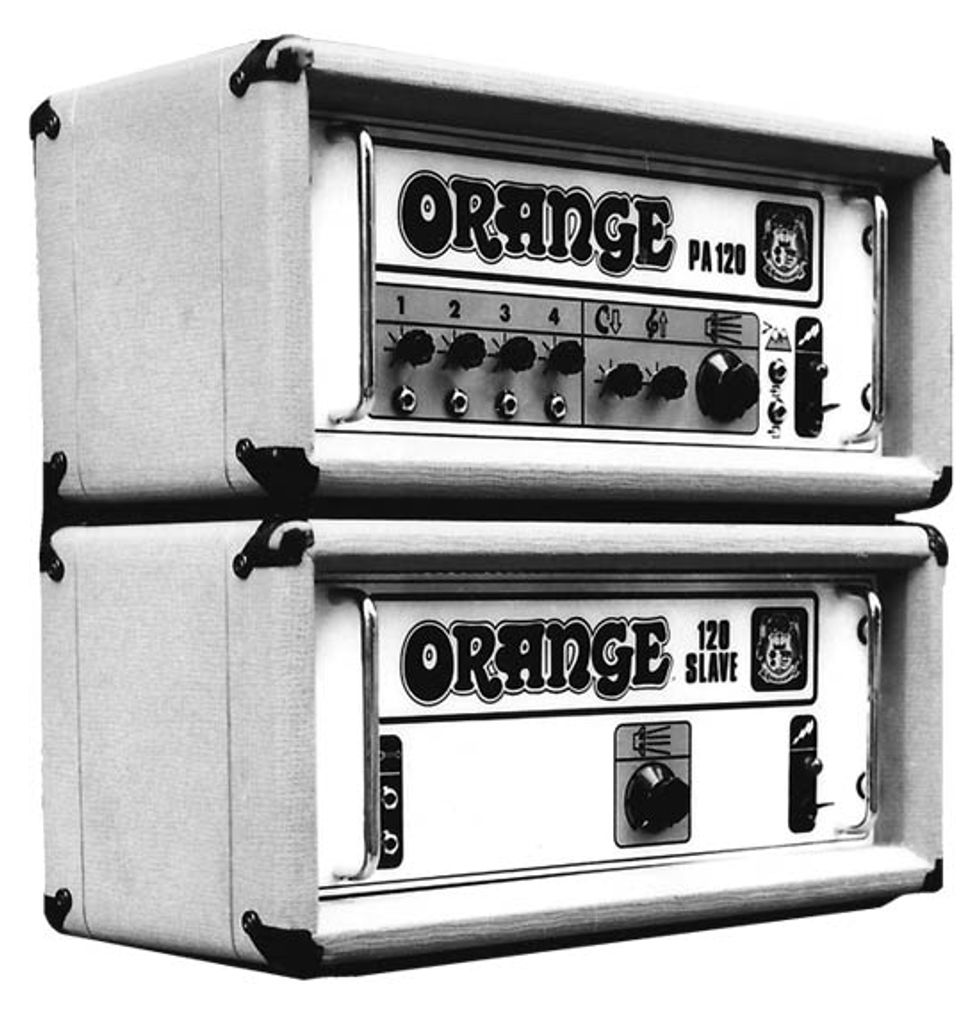
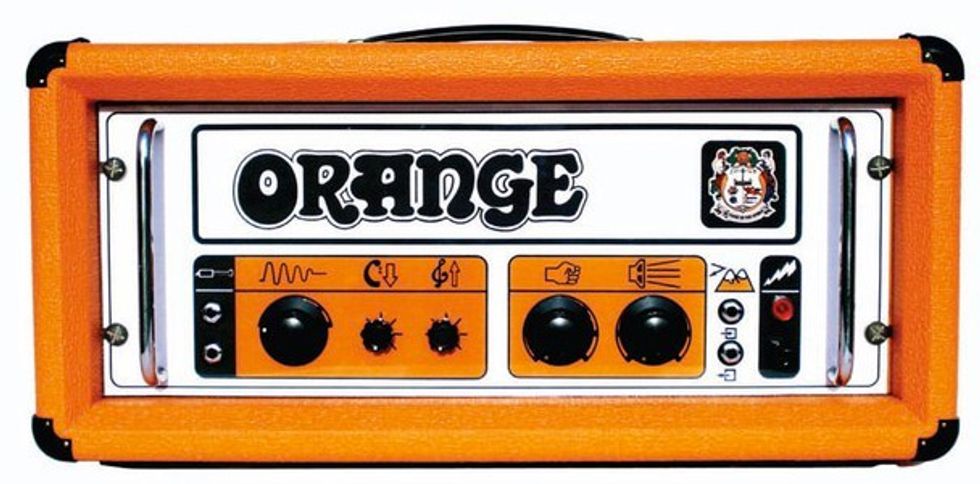
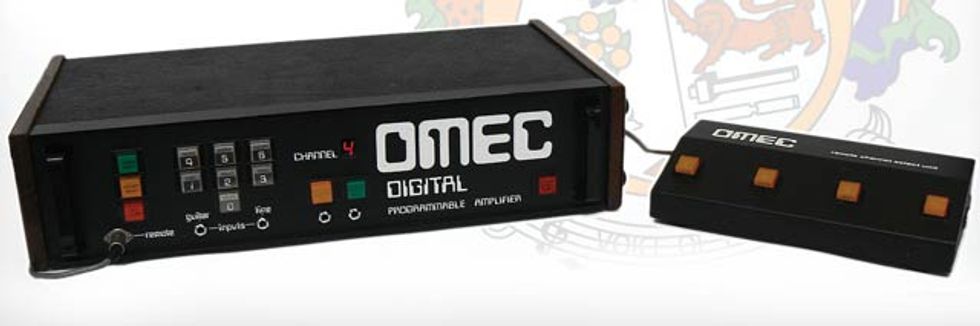
"In the early days, Orange branched into every music-related industry possible, starting with these Orange DJ Consoles. They also produced guitar and bass strings, microphones, drums, and stroboscopes."
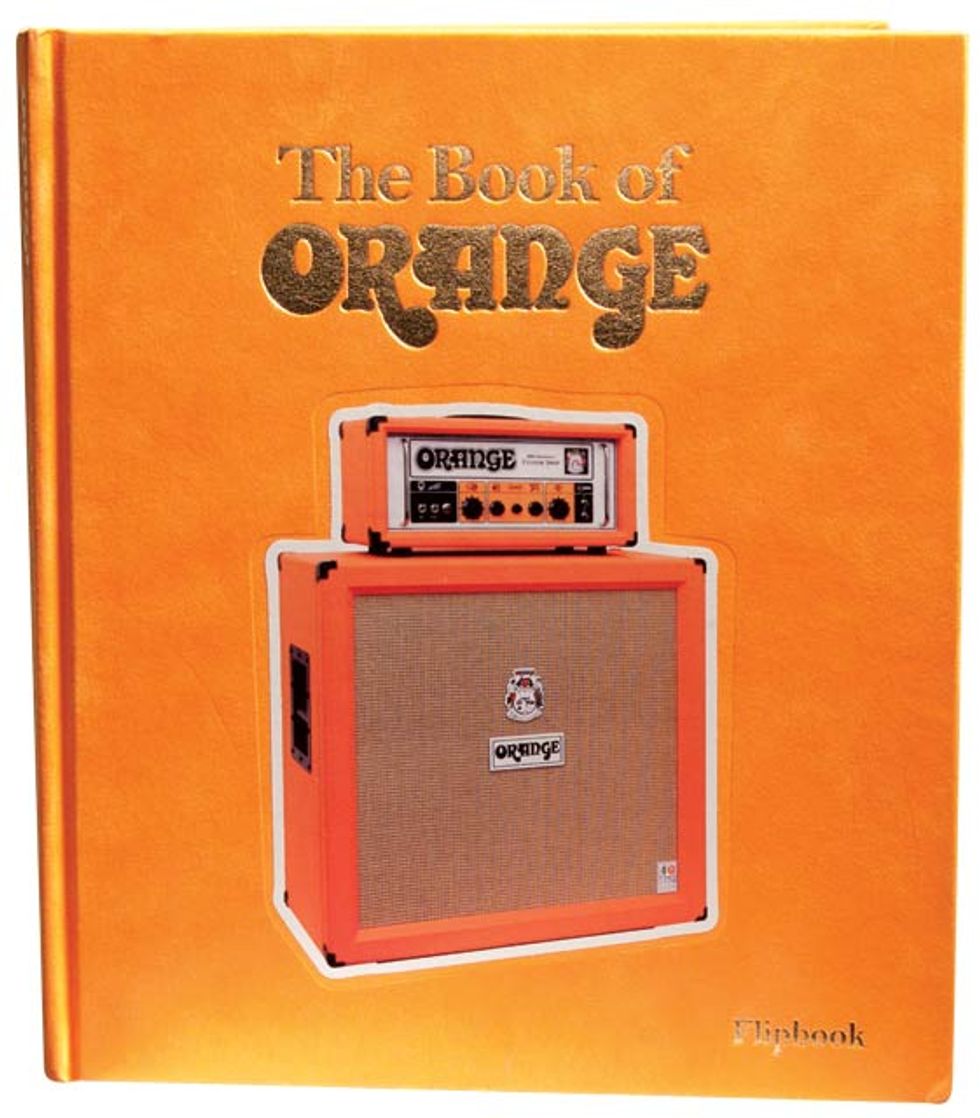
To read more from The Book of Orange, check out our exclusive excerpt!

Nashville guitarist Jack Ruch has made a name for himself on YouTube and Instagram, where he shares lessons and instructional videos that help guitarists take their playing to the next level. But he can be found performing all the time on stages around Music City, too, and back in March, he appeared at 3rd and Lindsley. That’s where PG’s John Bohlinger caught up with him for this Rig Rundown, which covers Ruch’s tasteful, tone-ful live rig. We’ve summarized the highlights below, but tune in to the video for all the details and sound samples.
Ruch depends on this trio out on the road. The 1963 Gibson ES-335 is his favorite, and his main instrument. It features original nylon saddles, which he says help mellow the brightness of the neck pickup (where he spends most of his playing time).
To its left is a Danocaster T-Style, built by Dan Strain in West Nashville specifically to look like Robben Ford’s Telecaster. It’s used for “Tele things,” and features ThroBak pickups, providing a neutral, versatile sound. Again, the neck pickup is Ruch’s home turf.
On the right is Ruch’s Historic Makeovers Les Paul, which he acquired earlier this year at Historic Makeovers, just north of Orlando, Florida. This LP was modified with a Brazilian rosewood fretboard and a reshaped neck. Ruch ordered it online without playing it, and so far, he couldn’t be happier with the decision.
All of Ruch’s guitars have D’Addario NYXL strings (.010–.046).
Dynamic Duo
Ruch runs a classic combination of a Fender Princeton Reverb (circa 1966, Ruch believes) and a boutique clone of a Fender tweed Deluxe, built by Lazy J in England. The Princeton has an old 10" Eminence speaker, and the Lazy J has a Celestion Blue. Both are set for clean rhythm tones.
Jack Ruch’s Pedalboard
Ruch’s tidy board was assembled by the gurus at Nashville’s XAct Tone Solutions. It includes a TC Electronic PolyTune 2 Noir, Analog Man King of Tone, Vemuram Budi-G, Analog Man Boss TR-2, Strymon Brigadier, and Catalinbread Topanga.
If ambient and experimental guitar sounds from the likes of Christian Fennesz, Eivind Aarset, Michael Brook, Stars of the Lid, and David Torn are your cup of mushroom tea, you owe it to yourself to experience the new EarthQuaker Devices Towers Stereo Reverberant Filter. The Towers’ unique signal path marries an infinitely repeating multi-tap delay with a cathedral-style reverb and a 2-pole resonant low-pass filter (much like you’d find on many synthesizers), along with a synth-like selectable low-frequency oscillator. The result is not only a pedal that offers a vast sense of space, but also a palette of warm, moving, high- and low-register stereophonic voices from angelic to sinister.
Soundscape Generator
Towers is not the first ambitious soundscape generator to which EarthQuaker founder and chief designer Jamie Stillman has applied his mad-scientist approach. Storied stomps like the excellent Afterneath, Astral Destiny, and Transmisser produced similar cascading timbres, sweeps, and voices, though it’s tempting to say that Towers—perhaps owing to its less aggressive 2-pole low-pass filter—is a warmer, more musical, and widely usable pedal. Simply by varying the mix level, you can veer from haunting, song-supportive stereo reverbs á la Jeff Buckley or Julien Baker, to the kind of cinematic, “where did the guitar go?” timbral windstorms of Christopher Willits’ “folding” audio techniques, or the expansive drone guitar colors of Medicine’s Brad Laner.
“LFO mode introduces a variably pendulating low-frequency oscillator into the sound, spreading chewy, spongey, oscillating flange-like effects across the lows and mids.”
The Towers features full stereo inputs and outputs—a first for EarthQuaker—plus an expression jack (TRS cable required) that’s assignable to any of the front panel’s main knobs: reverb length, wet/dry mix, center frequency, and filter cutoff. You play the Towers in one of three switchable performance modes: manual, where you set the filter frequency cutoff using the frequency knob; envelope, where your playing dynamics activate the sensitivity of the filter response; and LFO mode, which introduces a variably pendulating low-frequency oscillator into the sound, spreading chewy, spongey, oscillating flange-like effects across the lows and mids.
A Real Stretch
In addition to the footswitch used to engage the Towers’ effects, stepping on the stretch footswitch slows down the pedal’s internal processor, resulting in lower frequencies, doubled reverb length, randomized delay effects, and wicked filter smears. You can tap stretch as a momentary effect or hold to create fresh sounds. The length knob controls the duration of the stretch pitch-shift effects. (Fans of EarthQuaker’s Astral Destiny will recognize this feature.) And while the Towers is great for improvisational knob-tweaking on the fly, you can capture, keep, and call up eight of your favorite patches via the front panel’s preset selector.
Housed in a road-worthy steel chassis, and suited to most 9V power adaptors, Towers probably makes the most sense at the end of your amp’s send and return FX loop chain, or following your gain pedals and volume pedal in front of a cleanish amp. Why would you want a volume pedal with the Towers? Swells, in a word. While Towers is delightful with the mix at, say, noon, so you can hear your pick attack blended with the effect timbres, you’ll almost certainly want the option of sending Towers a smoother, longer attack from your guitar.
In this way, you can remove your pick attack entirely to emulate the kind of slowly building textures we’re accustomed to hearing from synthesizers and sound designers. While the volume pot alone is great for quick swells during more lyrical playing, you may find that using a volume pedal affords greater overall hands-free control and is conducive to overlapping textures. Volume pedal pioneers like John Abercrombie, Terje Rypdal, Bill Frisell, and others would probably have a blast with this set up.
The Verdict
The EarthQuaker Devices Towers may not be the kind of jack-of-all-delays/reverb pedal you’d opt to bring to a wedding gig, but it more than makes up for that with its almost painterly set of micro-echoes, filter cutoff sweeps, low-end LFO churn, and surprisingly warm ambiences. It will also affect your playing in unexpected ways—play too many dissonant notes, or just too many notes, period, and you may find yourself a bit seasick as the overtones clash and clang. Rather, the Towers rewards very slow arpeggios, motifs built from shell voicings, and single-note lines, especially wide intervals across a single string. Towers is designed to stretch and modulate time, so you’ll want to make sure you give it plenty of yours.
EarthQuaker Devices
Towers Soundscape Generator
Stereo Soundscape Generator Reverb Guitar Pedal with Length, Frequency, Mix, Preset, Filter, and Mode Controls
Pathways brings tremolo and reverb together in one compact pedal designed to feel great the moment you plug in. From spring reverb twang and classic amp tremolo to wider, more spacious textures, Pathways delivers sounds players reach for again and again - organic, musical, and easy to dial in.
Celebrating the 30th anniversary of the iconic Swollen Pickle fuzz, Way Huge has introduced a new version of its most corpulent effect. The Way Huge Jumbo Fuzz Swollen Pickle XXX seethes and simmers with high-gain saturation and fat, hairy lows, and – as the company describes it – the “ever-madder mad scientist Mister Huge has made some ethically questionable but sonically enlightened tweaks to enhance your control over the pedal’s sound.”
Way Huge replaced the traditional transistor array with high-gain discrete transistors for even more HAIR and changed out the Crunch knob for a toggle switch to make compression tweaks lightning fast. Finally, Way Huge overhauled the tone stack from top to bottom: new Hi and Lo knobs shape the high- and low-pass of the Filter control, while internal switches let players customize the sweep itself—from flat to ultra scooped or super bumped—giving you ever more intimate control over this surly cucumber’s voice. The Loudness and Sustain controls return to clobber your amp and set the fuzz intensity from mild crunch to end-of-days hellfire.
The pedal is available for a limited time only with fittingly wacky special edition artwork.
Way Huge Jumbo Fuzz Swollen Pickle XXX highlights:
Celebrated the 30th anniversary of the most corpulent fuzz
Upgraded for more control over the iconic Swollen Pickle voice
High-gain discrete transistors for even more HAIR
Crunch toggle makes compression tweaks lightning fast
Massively overhauled tone stack
Special limited edition
The Way Huge Jumbo Fuzz Swollen Pickle XXX carries a street price of $199.99. For more information visit jimdunlop.com.
Matteo Mancuso doesn’t like to think too much—not when he has a guitar in his hands, which seems to be most of the time. “The less I think, the better,” he says. “I like to be instinctive, especially when I improvise. Most of my music is centered around improvisation, so I need to feel very free. Otherwise, I’ll be second-guessing each move I make and I’ll be judging myself.”
He cites one of his favorite quotes, this one from drummer Vinnie Colaiuta: “Thought is the enemy of flow.” “I agree with that 100 percent,” he says. Which isn’t to suggest that Mancuso can blank his mind entirely. There are times when he’ll stop and listen to where his nimble bandmates—bassist Riccardo Oliva and drummer Gianluca Pellerito—are going, and if they’re headed in a cool direction, he’ll take right off with them. “That’s the beauty of playing with some very creative musicians,” he says. “They’ll usually present you with some good ideas if you just give yourself a moment to listen.”
Conversely, he reasons, should he ever find himself headed down the wrong musical path or boxed in a corner, he can always lay the blame on his bandmates. “That’s the most important part—the band leader never makes a mistake,” he says with a laugh. “It’s always the rhythm section’s fault.”
Things have been moving pretty fast for Mancuso since the release of his knockout 2023 debut album, The Journey, and they’re bound to accelerate even faster now that he’s finally gotten around to issuing a more-than-worthy follow-up, Route 96. His development and swift rise are already becoming the stuff of legend: Born in Palermo, Italy, he picked up the guitar at age 10 and was mentored by his musician father, Vincenzo. His rapacious musical appetite—everything from Angus Young to Django Reinhardt—was equaled by his preternatural skills, and it wasn’t long before he refined a lightning-fast, pickless fingerstyle that left many in the guitar community speechless.
Even before he graduated from music school (he studied jazz guitar at Palermo Conservatory of Music), videos of Mancuso and his one-time trio SNIPS signaled that something big was afoot. The band’s breakneck, chops-a-plenty cover of Pee Wee Ellis’ “The Chicken” went viral (it’s now at over three million views), and soon he was receiving huzzahs and hosannas from some of his idols. Steve Vai called him “the future of electric guitar.” Joe Bonamassa weighed in, saying that Mancuso had “reinvented the instrument.” And Al Di Meola went so far as to write him personally to say, “Matteo, what are you doing? You’re killing us!” In time, the young guitar star would jam—and hold his own—with all three admirers.
The praise has continued from all corners, but Mancuso is doing a good job of keeping his feet on the ground and his head on his shoulders. “I try not to pay too much attention to that stuff,” he says, adding, “but you know, I’m human. The point is, the best judge of what you’re doing is you. Whenever I see people saying these things, I try to keep everything in perspective. I don’t consider myself the best guitar player in the world. Believe me, I know what my strengths and weaknesses are.”
“Most of my music is centered around improvisation, so I need to feel very free.”
Asked to name a few of those weak spots, he answers without hesitation: “I’d like to follow my ear more during improvisations. Sometimes that can be hard if you know a lot of things on the guitar, because you’re relying on muscle memory. Another thing is timing—I always like to work with a metronome. It’s not necessarily a weakness, because I think I have a good feel for time, but it’s something I need to do every day. If you don’t keep up with it, your skills can degenerate pretty quickly. I also like to keep up with comping. I’m soloing most of the time, so it’s good to be able to comp with people.”
Whatever his perceived shortcomings, Mancuso is still operating at a vertiginously high level. He understands that there’s a portion of his audience looking to have their minds blown at every turn, but it hasn’t become a burden. “I guess there’s that ‘wow factor’ in my music, and I know when I’m doing that sort of thing,” he says. “The point is to express myself in a genuine way. I try to catch myself, like when I’m playing a solo and I’m doing everything I know—here’s a crazy tapping section, and here’s an alternate picking section—because I know people will go, ‘Whoa, that’s great.’ The temptation is to force myself to do complicated things, even if there’s no need to. I’m aware of it.”
The title of Mancuso’s new album, Route 96, refers to the year of his birth, as well as the 96kHz audio sample rate Steve Vai suggested he record at.
Photo by Paolo Terlizzi
Because he’s such an accomplished instrumental virtuoso (he can hit ferocious speeds like Di Meola or Van Halen, but also slip into violin-like legato phrasing like Eric Johnson at the drop of a hat), Mancuso’s compositional skills can go overlooked. The Journey offered heavy-duty prog-rock with a classical edge (“Silkroad”), supple-smooth jazz-swing (“Polifemo”), groove-filled jazz blues (“Blues for John”), and metallic rock (“Drop D”). The beauty of it all, and this is one of Mancuso’s greatest strengths, is how he managed to keep each song accessible but not predictable. There seemed to be an unsettled quality in one musical passage to the next, just long enough to keep you on the edge of your seat wondering where he would go next.
“That’s what it’s all about,” he says. “My goal is to always have an element of surprise, that feeling where you don’t always know how a song is developing, but it keeps heading toward something new. That’s what keeps things interesting. I think it’s very hard to achieve, but that’s what I’m trying to do most of the time.”
“My goal is to always have an element of surprise.”
A self-described “lazy guy” when it comes to composing, Mancuso put off thinking about a new album as long as he could. Eventually, his record label put the hammer down and imposed a deadline on him, forcing him to start working on new material. “I don’t even know if I’d have a new album if I didn’t have a deadline,” he says. “I don’t want to be as prolific as my label would like. I just want to play guitar.” Once he got with the program, new tunes started to reveal themselves, and little by little, Mancuso started to have fun with the process. “We played a lot of the new songs on tour, and that made a big difference. We’d been playing the same music for, like, three or four years, so it felt nice to change our setlist.”
One such tune was the aptly named “L.A. Blues One,” an easy-breezy shuffle that showcases the luscious combination of Mancuso’s clean, bell-like rhythm tone and his stinging, elastic soloing. “I really wanted to write something that was missing in our concerts—something simple with a stable groove,” he says. “For so long we’d been playing songs with all of these fast parts, so ‘L.A. Blues One’ is an important change of pace. It’s got a nice vibe, a blues shuffle, and the melody isn’t too busy. It’s a good song for people to settle into.”
By contrast, “Fire and Harmony,” a stunning blend of acoustic flamenco-tinged jazz and ripping electric fusion, has a lot going on, and in less capable hands it could fall apart. But Mancuso stitches each thread together like a master storyteller. “I knew I wanted to do something with both electric and acoustic soloing, so I started to develop the song based on that,” he says. “If you listen to the harmony in the intro, maybe you can hear the inspiration of Frank Gambale. I listened to his album Thunder from Down Under a lot as a kid.”
Mancuso says the number one factor in his sound is his fingers—or, more precisely, his nails.
Photo by Paolo Terlizzi
Thus far, Mancuso hasn’t taken part in a G3 Tour, but the ripsnorting, smart-alecky rocker “Black Centurion” gives you a pretty good idea of what he would sound like duking it out in a finale with Joe Satriani, Steve Vai, and Eric Johnson. “It’s something I always like to do with the more rocking songs—get a catchy riff and take it from there,” he says. “It’s very energetic. I’d say it’s got a Satch vibe.”
The album title, Route 96, refers to the year of Mancuso’s birth, as well as the 96kHz audio sample rate Steve Vai suggested he record at. “Most musicians record at 44 kilohertz, but Steve said that 96 gives better quality,” Mancuso explains. “It’s almost like the frames per second in filmmaking. The more frames you have, the smoother the film will look.”
Through the wonders of remote recording, Vai himself turns up in big, splashy, hi-beam form on the gonzo fusion-rock gem, “Solar Wind.” After laying down the tune’s main rhythms and some elegant leads, Mancuso emailed the file to Vai and waited to see what he would do. “I didn’t tell Steve what I was looking for, and I didn’t give him any kind of restrictions,” he says. “What he sent back was remarkable. It was pretty amazing, because he was touring with the SatchVai Band and BEAT at the time. He’s such a busy guy.”
“I would love to have a pop hit, but I don’t know if I’m able to do it.”
On a pair of bewitching cuts—“Warm Sunset” and “Isla Feliz”—Mancuso dips into a Latin-flavored mode. Both tracks follow the same framework: Start out gentle, then explode in a fireball at the end. Originally, he envisioned “Isla Feliz” as a purely acoustic piece, but he ultimately included sections of distorted electric soloing, while leaving plenty of room for his guest, gypsy-jazz star Antoine Boyer, to do his thing. “I think it’s a great combination—gypsy guitar, electric guitar, classical,” Mancuso says. “I gave Antoine the longer solos because that’s my general philosophy when I invite someone to play on one of my songs. I don’t want them to add just a tiny bit. Besides, you’re buying an album that has me playing lots and lots of solos. I like to keep it fresh.”
Gear-wise, Mancuso relied on his favored Yamaha Revstar and Pacifica custom models that he ran through different amp modeling processors, either a Line 6 Helix Stadium XL or a Fractal FM9. The only time he rocked out on real amps was for the song “Black Centurion,” on which he utilized a Marshall JCM800 for rhythms and a Mesa/Boogie Mark IIA for leads, both of which were paired with a Marshall 4x12 cabinet.
Mancuso with his custom Yamaha Revstar.
Photo by Larry DiMarzio
He stresses that the number one factor in his sound is his fingers—or, more precisely, his nails. “If my nails are too short, the sound is too muddy and dark no matter what pickup or amp I use,” he says. “If they’re too long, they get in the way while I’m playing. It’s very important to me that I have the right length to achieve the clarity and attack I like.”
Asked how he deals with chips and breaks, he holds up his right hand and waves around his index, middle, and ring fingers. “You see that? They’re fake,” he says. “I use acrylic nails on those fingers because natural nails don’t last long with an electric guitar. I remember last year they were completely broken, and I had to go to a nail salon in Tucson."
In all likelihood, Mancuso could play with a boxing glove and still come up with some incredible sounds. With his devastating gifts and mastery of so many musical styles, he could very well be the most versatile and fully formed young guitarist on the scene today, a status that affords him a host of options. He could record an all-out metal album and produce a monster. Or he could go pop and really flip people out. He isn’t ruling anything out.
“I would love to have a pop hit, but I don’t know if I’m able to do it,” he says. “The thing is, I’m not able to sing—that’s the key to that kind of success. George Benson is a great example. He made a lot of incredible music—“Breezin’,” “Weekend in L.A.”—but while he could sing, he also had tunes with no singing. There’s just a good song and a good melody. Maybe that’s a direction I’d like to have. The important thing is that I’m free to do the music I want. I’m open to every musical aspect.”