

In the late 1930s, Gibson began producing amplifiers to accompany the electric guitars that were quickly growing in popularity. They developed a significant amp line that spanned from simple and practical, to funky and unique.
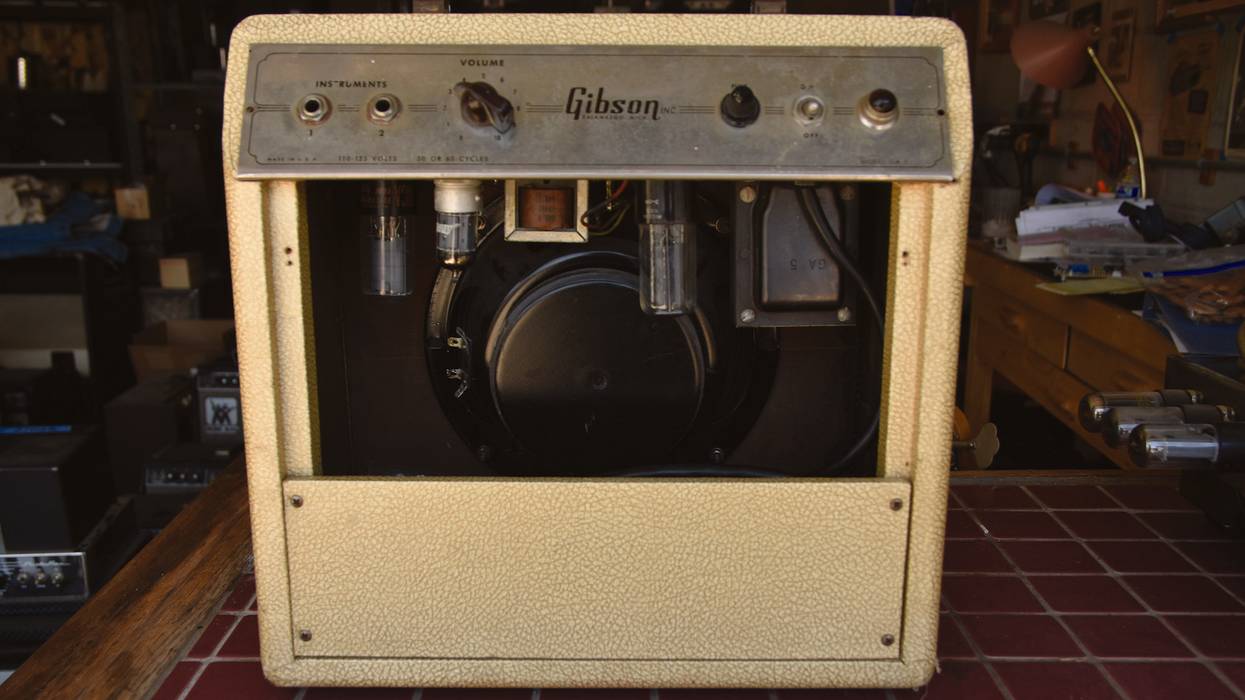
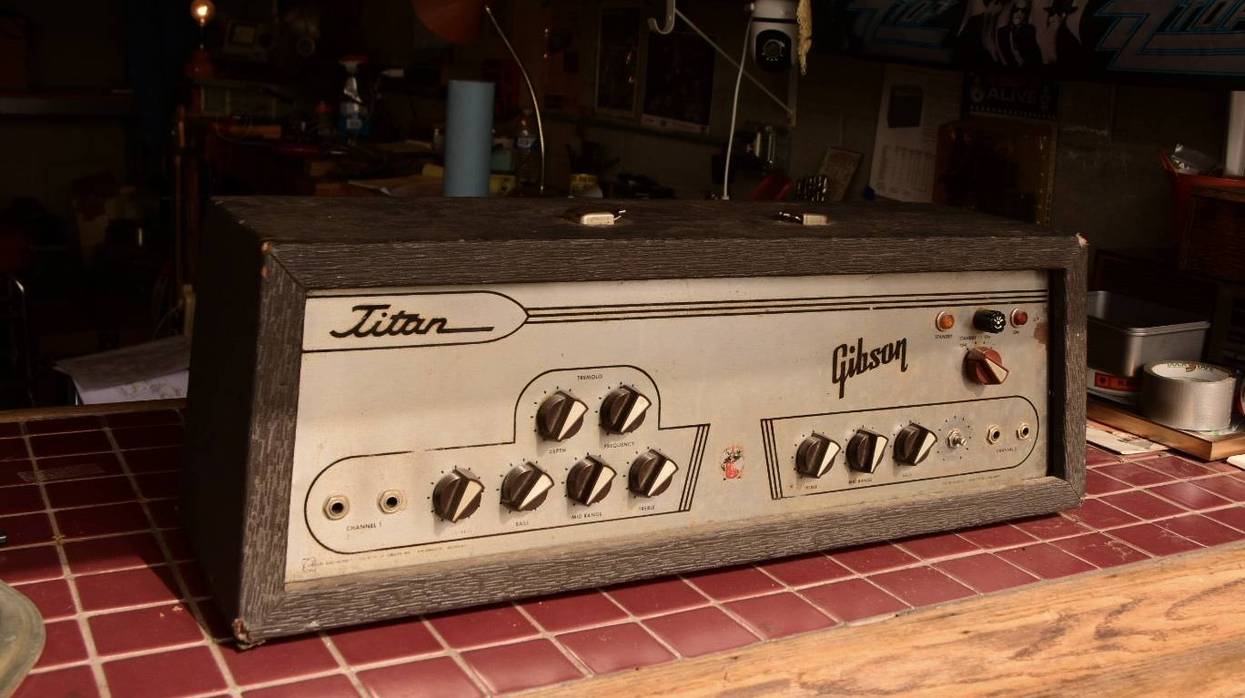
By the mid 1960s, the Beatles were all the rage. The Vox amplifiers and Rickenbacker guitars they used were visually sleek and psychedelic, which became the standard for amplifiers during that time. On the bench today, I have an amp that represents Gibson’s response to those fads: the Titan.
The Titan has a normal channel and an LDR-driven tremolo channel, and it is equipped with 11 tubes. Tonally, the amp was designed to have a lot of headroom via about 65 watts of power. According to the original catalog, the amp was intended to be used with either guitar or bass. This was a pretty powerful amp for Gibson at the time!
“The obscurity of the Gibson Titan makes me wonder if another one will ever come across my bench.”
What makes the Gibson Titan stand out visually is its sharp angles, shiny metal faceplate, and futuristic control panel design. The Titan is indeed a stylish amplifier, enough even for Keith Richards, who has been pictured using one.
The Titan came with different speaker cabinet configurations. This particular amp is a Titan III, which means its cabinet houses two 10" speakers and one 15" speaker. The Titan I was accompanied by a 2x12" cabinet, and the Titan V had a pair of 15" speakers. While I did not have the cabinet with the amp in the shop, I was sent photos of the speaker configuration with the original Jensen speakers and original crossover circuit.
This amp came to me with a few issues, which included low output and weak tremolo. Opening up the amp, I immediately noticed one of the replacement Sovtek 6L6 output tubes was cloudy and white. This indicates that the tube’s vacuum had been compromised, and it will no longer work properly. Typically, this happens if there is a failure inside of the tube that causes the glass to crack. The amp will get a fresh quad of 6L6s, which I figured would improve the output level.
Otherwise, I could tell that the amp had been previously re-capped. The previous technician replaced all of the electrolytic capacitors with Illinois capacitors (as pictured in the photo). I typically like to use higher quality F&T capacitors, as they tend to have a longer lifespan. The amp’s owner opted for the filter capacitor upgrade, which adds reliability to the amp’s power supply.
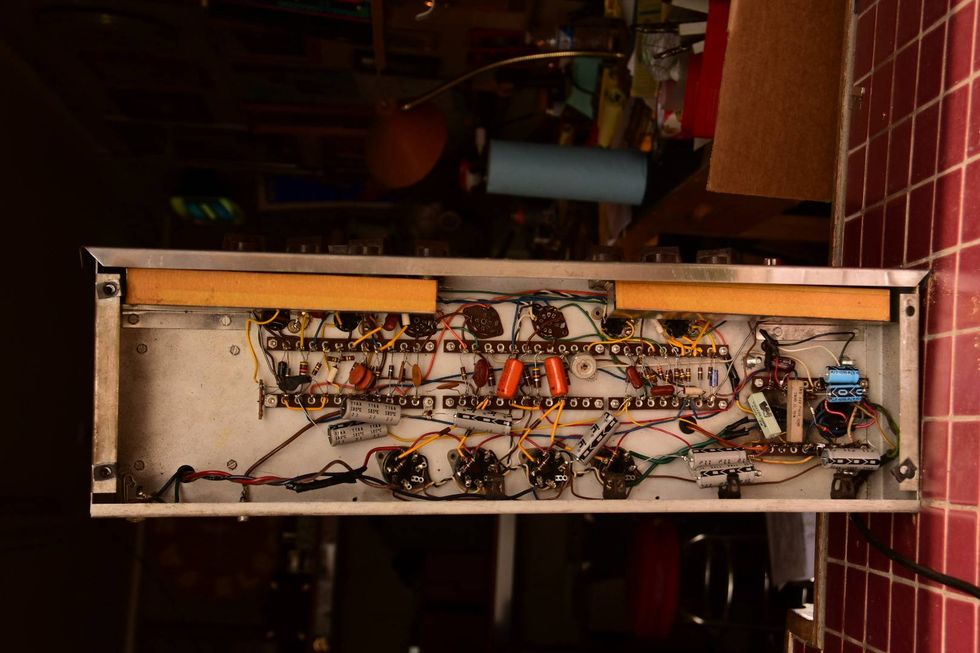
Channel one includes the tremolo, so I decided to tackle that first. Typically, tremolo issues are caused by weak oscillator capacitors, a bad LDR, or a bad tube in the tremolo circuit. In this case, the main issue was affiliated with the oscillator caps, so I replaced the three .02 uf disc capacitors. Once the tremolo was back in full force, I moved on to address some resistor replacements.
The 470 ohm screen resistors for the output tubes were pretty toasted. There is one screen resistor per 6L6 output tube, acting as a safety component to protect the tube. Often when a tube fails, there is damage to this resistor. Not only were the resistors themselves darkened in the center, but they measured pretty far past 470 ohms.
In addition to the screens, I replaced the preamp plate resistors. These components deal with both high voltage and signal flow, and they often wear out over time. In the case of this Titan, replacing the plate resistors was effective in solving any remaining output issues and minor background crackle.
Once the amp was serviced and the new tubes biased, I was able to enjoy it for a while. In general, it sounds thick and clean with tons of headroom. Despite having upwards of six tubes in the preamp section, the circuit design is not driving the preamp tubes very hard, resulting in multiple stages of clean amplification.
I found myself appreciating the tremolo as well. The oscillator capacitors in this amp are valued slightly larger than those used in a similar Fender-style circuit, resulting in a nice slow fluctuation of volume. Channel one is a bit louder than channel two thanks to its extra gain stage.
Titans are very rare, but the ones that do exist are commonly modified for more gain in the preamp section. The amp’s owner and I agreed that leaving the amp stock was the way to go. These amplifiers take pedals very well, and I feel that a boost or distortion pedal in front of this amp would sound very alive. It was a treat to work on this amp, and the obscurity of the Gibson Titan makes me wonder if another one will ever come across my bench.