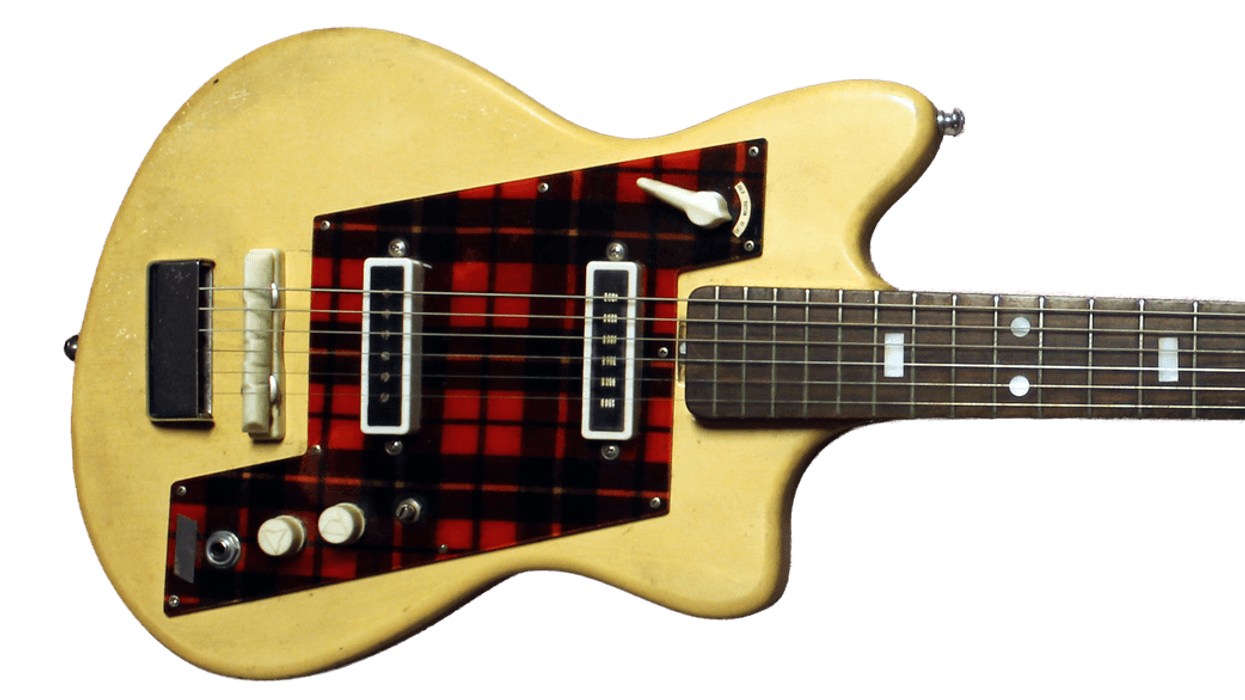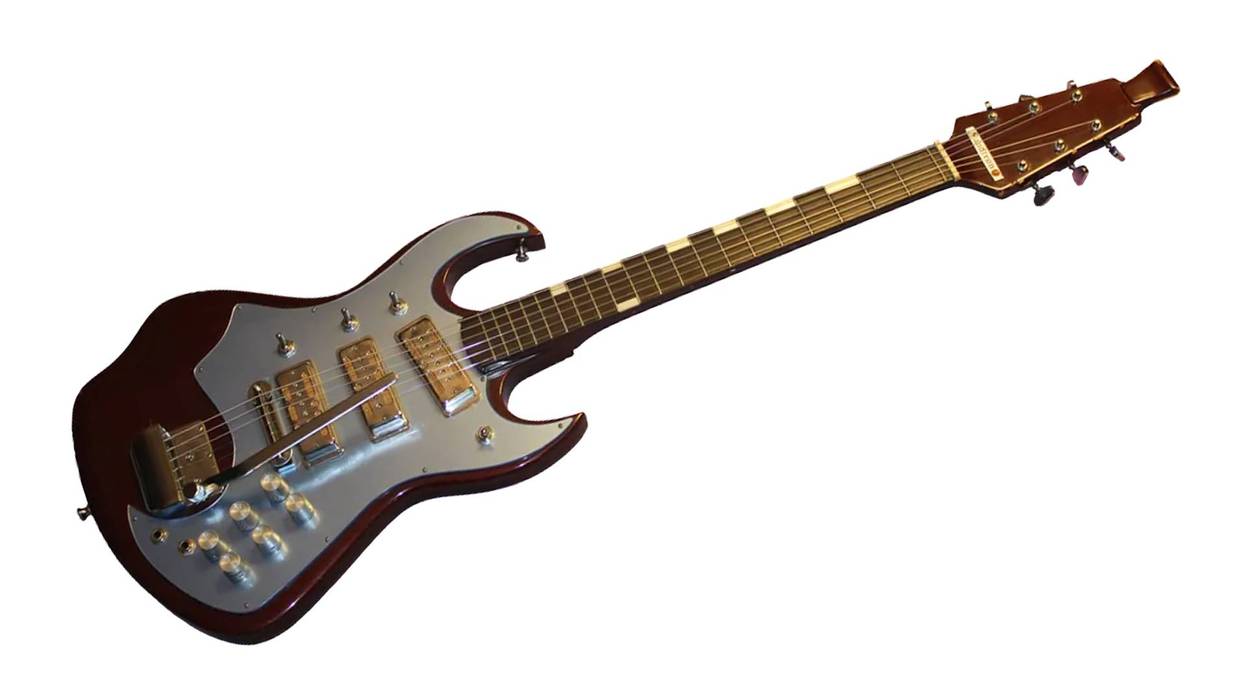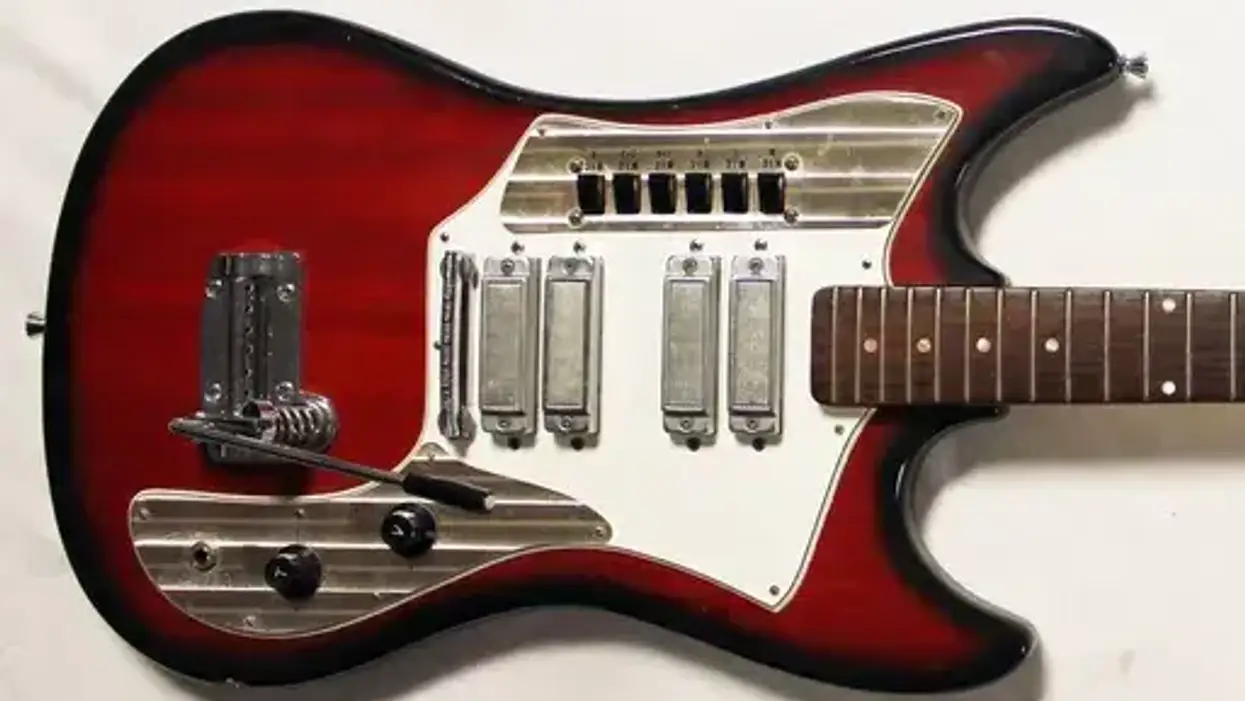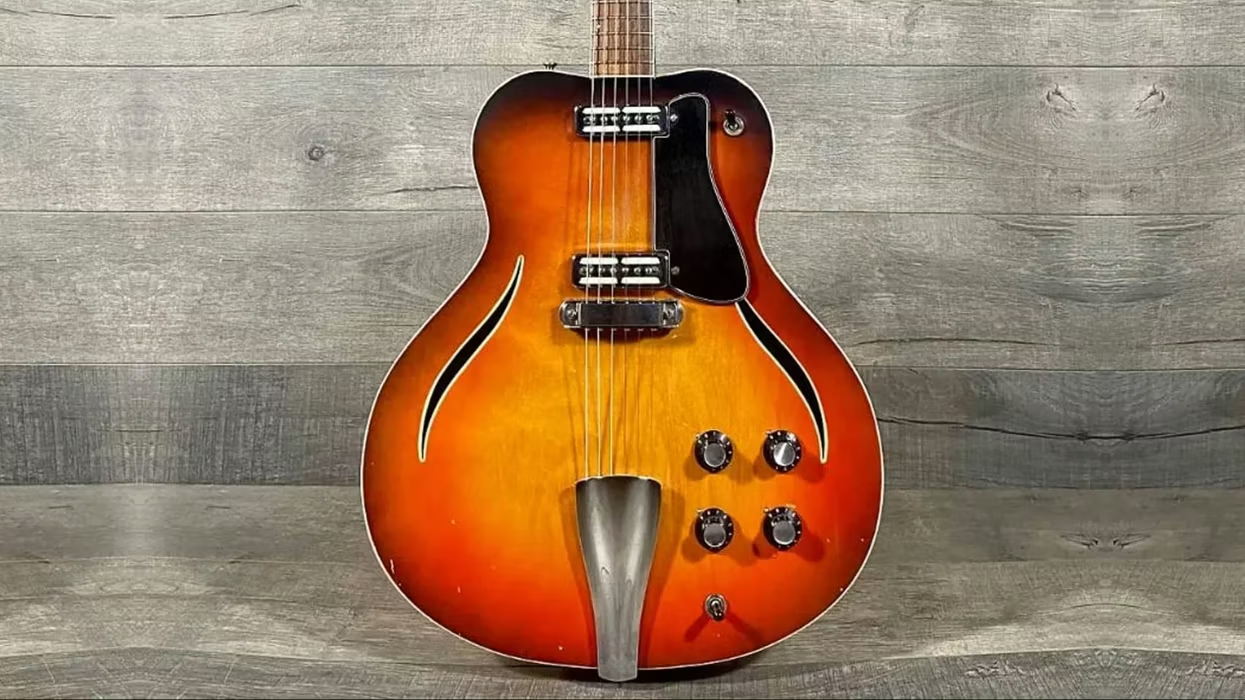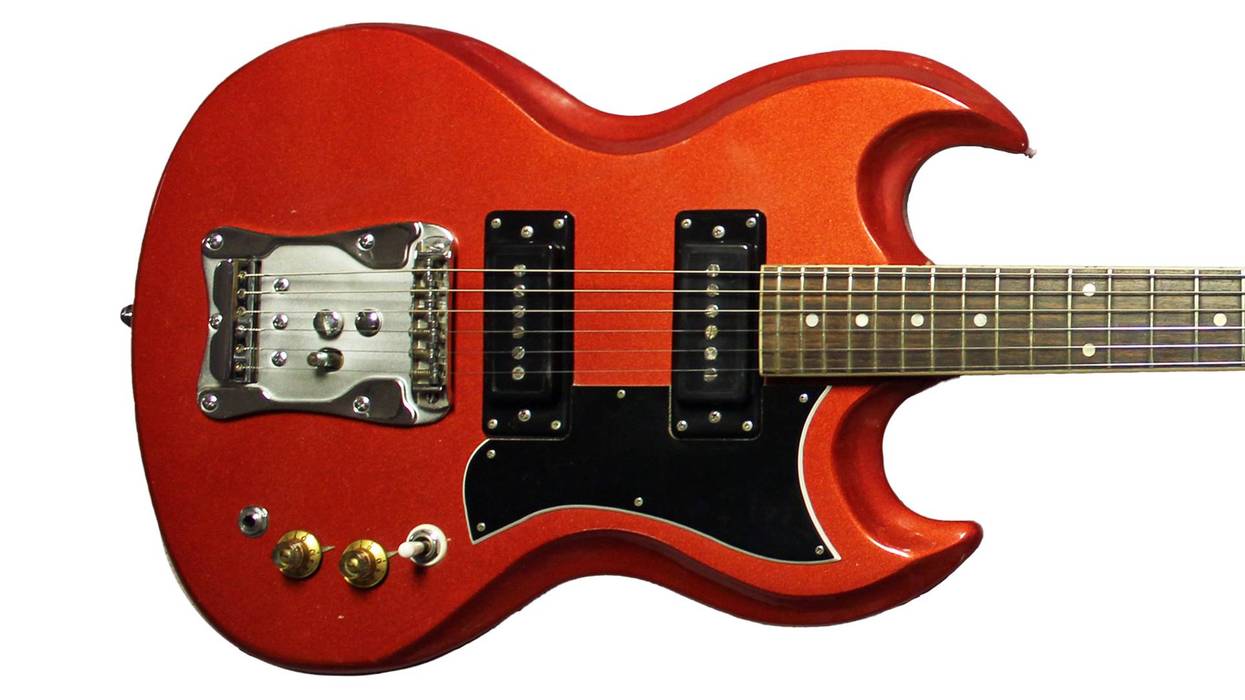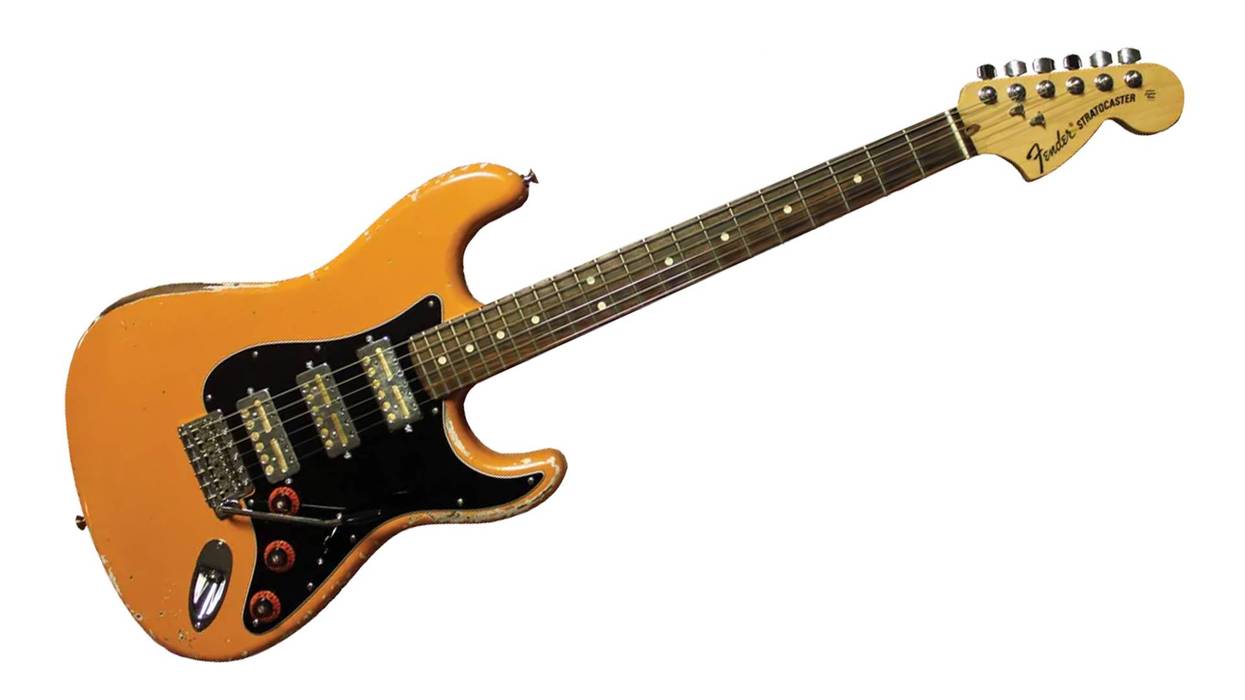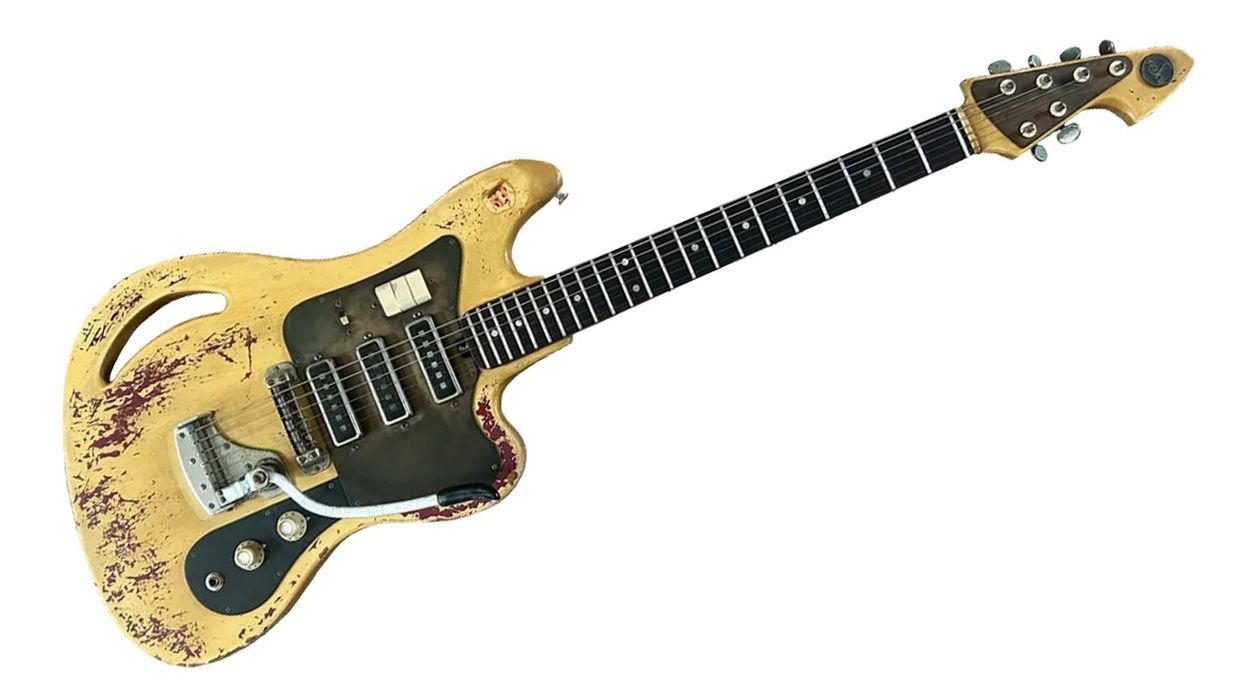

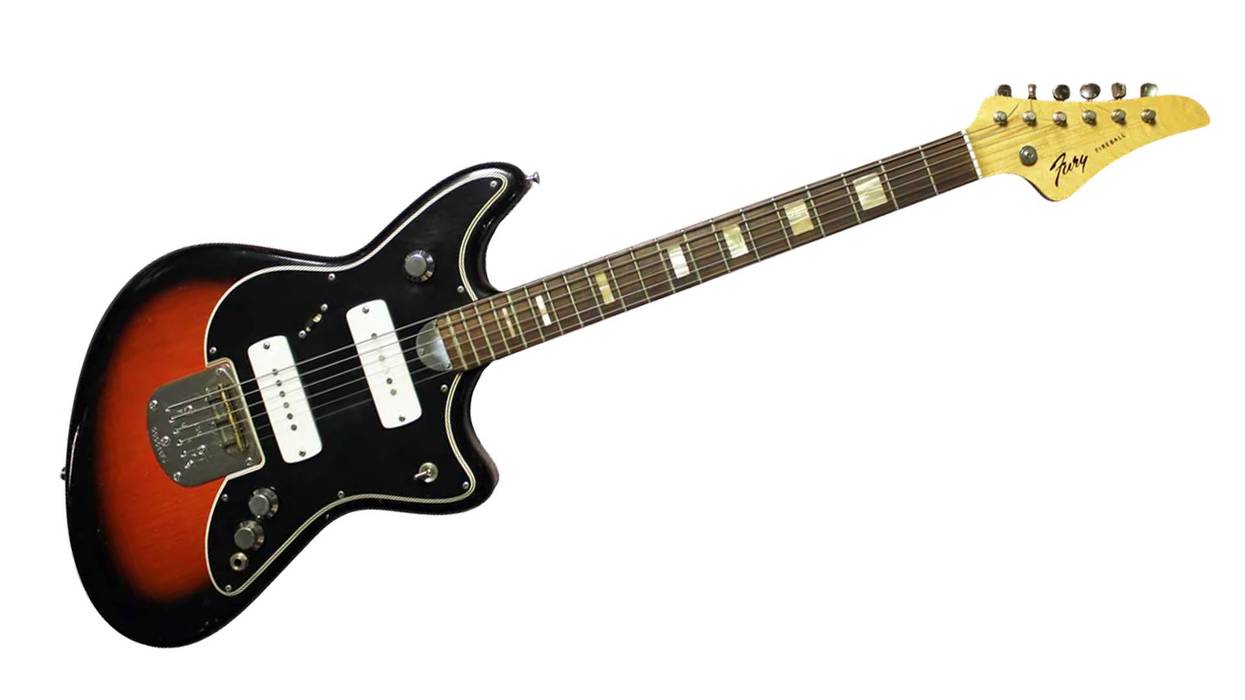

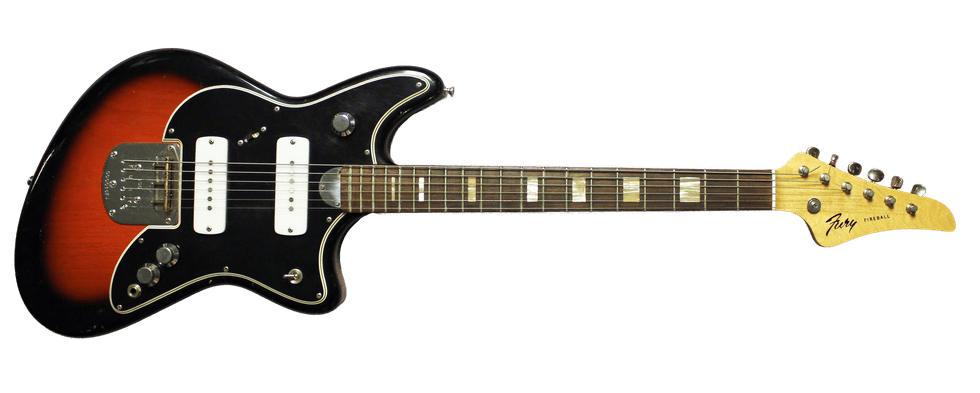
One regret-free chapter revolves around this super cool guitar, the Fury Fireball. It all started in a pawn shop in Colorado, circa 2013. Whenever I travel, I like to visit any local pawn shops and music stores I can find. I saw this unique Fury guitar in Denver, and I just had to have it. Nevermind that the original hard shell case was probably triple the weight of the guitar itself! Even though it added to our load on the trip home, it was totally worth it, because as soon as I got home, I set out to contact the builder to learn more about this instrument. Who did I find, but Glenn McDougall.
Over the course of my email correspondence with Glenn, I learned a lot about the guy. It turned out that I happened across one the first non-tremolo instruments he ever built. Not knowing the history of Glenn and his guitars, I naïvely asked if he could add a tremolo. Honestly, knowing now how he is, I’m surprised he didn’t end our conversation right then! For whatever reason, Glenn trusted me and began to open up about himself and his company.
The story of Glenn and Fury guitars started around 1956 in Canada. Glenn was playing guitar and already digging on music of the time, but he was the type of person to tinker and try to improve on existing designs. At first, he came up with the invention of a linear truss rod, an improvement on contemporary truss-rod designs. By 1959, he had built his first crude guitar to test the design. His earliest personal instruments included a Harmony arch-top, followed by a Gibson ES-175 and a Gibson L-5. Along the way, Glenn was striving for his own unique tone and guitar. He didn’t like Fender guitars unless they were played through a Gibson amp, and he liked how the darker tone of Gibson electrics worked well with Fender amps.
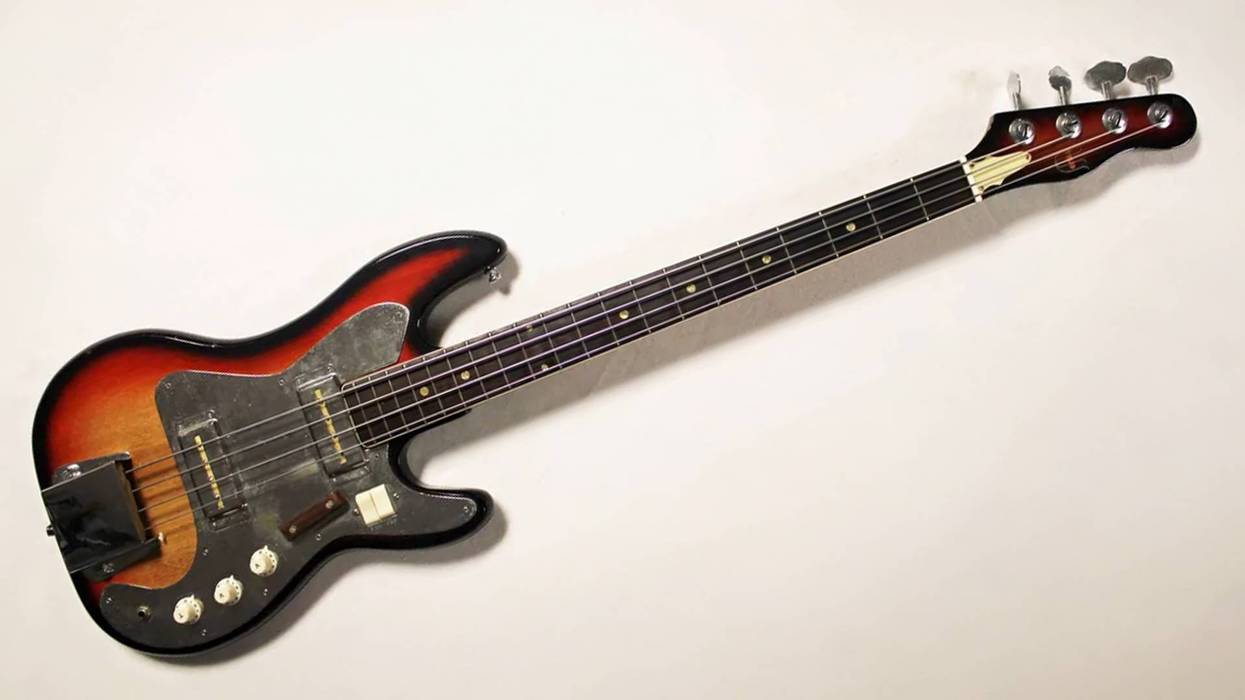
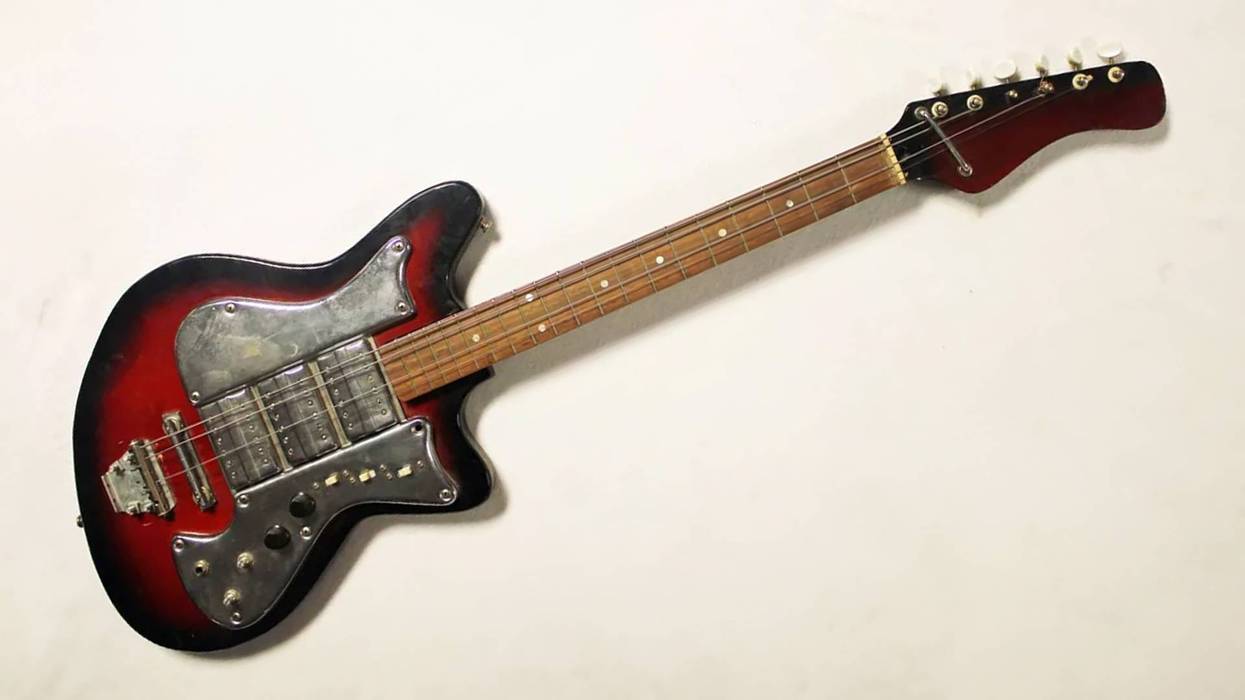
In 1962, Glenn started his own guitar company, Fury Guitars, and among his first models was the Fireball. Before long, he was producing a whole line of guitars, mostly by himself in his own shop. He only used North American wood, and took great pride in manufacturing every guitar part himself (except the tuners); he had specially designed knobs and strap pins produced by a CNC machine. By staying small, Glenn focused on making the best guitars he could.
His early “ZP” patented pickups stand alone in their design and sound. They’re powerful, and have enough grind when pushed, but I feel the best sound comes from their clean tone. Man, his guitars just sing! And I’m not even touching on his artistic eye. Glenn opposed being labeled as an artisan, instead thinking himself a sort of industrialist making his way in the world doing something he was good at. Regardless, he did have an eye for cool, and his guitars are kinda unlike anything you’ve probably seen. Glenn even designed his logo using India ink in 1961! Seriously, check out an old Fury catalog.
I wish I had the time and space to talk more about Glenn and his amazing guitars, but for now, let us raise a toast to this man. He passed in 2017, and I’ve been thinking about this man and his guitars for a long time. I hereby make a plea to our neighbors to the north to give the proper respect to one of their nation’s great innovators, a builder who was there among the first and second wave of great guitar designers across the world. Thank goodness we still have his guitars!