


I’ve been thinking a lot lately about time and the passage of things. I realized that I’ve been writing for Premier Guitar for over 10 years! Ten years is a long time to do anything of significance, but I can say there are about 100 columns of varied knowledge, humor, and stories to keep you engaged. And, miraculously, I still have more stories to tell!
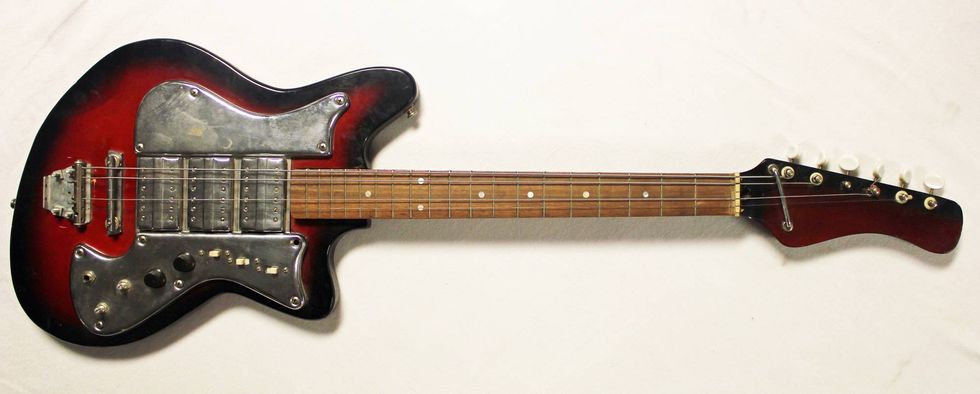
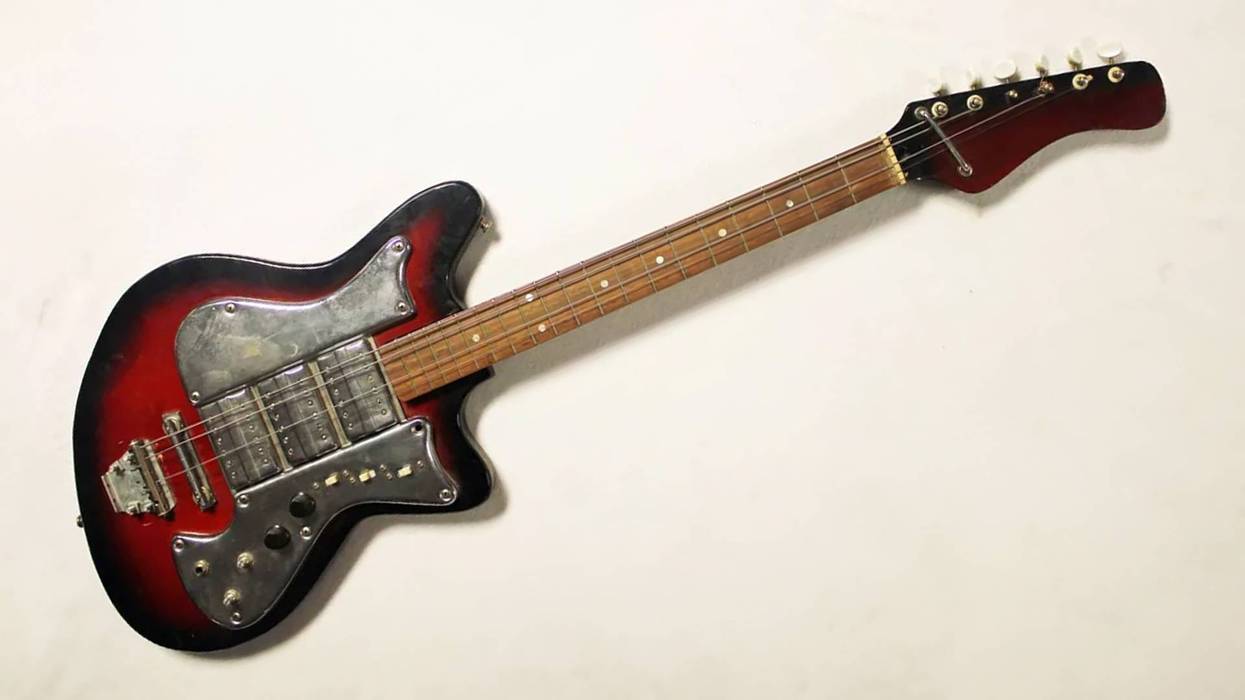
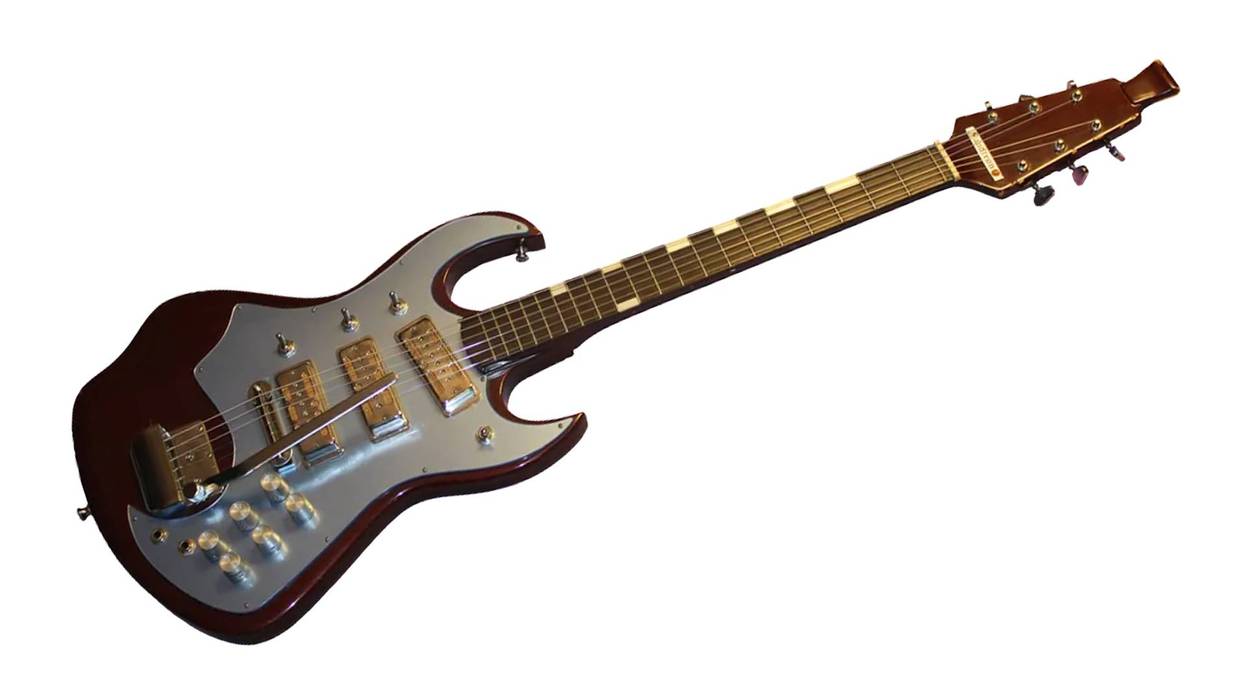
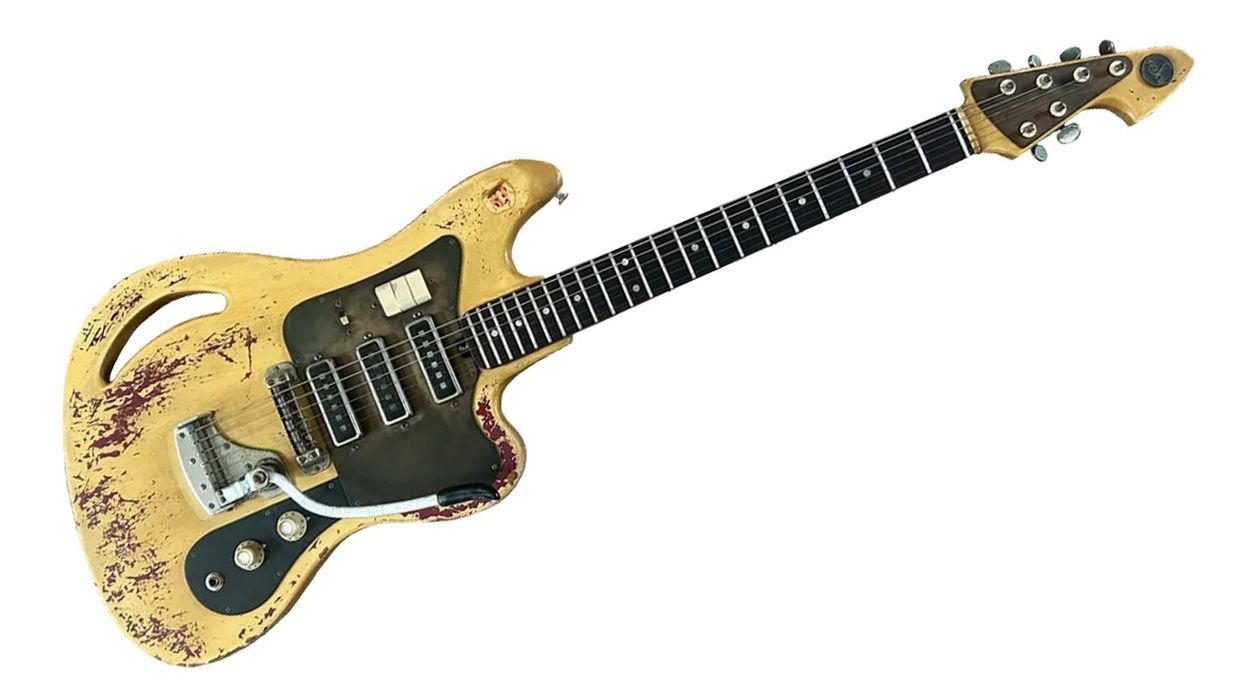
Our columnist’s quirky, unbranded electric—short a few strings in this photo—certainly isn’t a walk in the park to play.
Even though time is always fleeting, I’m still down for adventuring and learning. But, alas, there are fewer local guitar shops to explore compared to when I started writing my column. Forty years ago, there were about 30 eclectic stores between Philadelphia and New York—I was living the dream! Ten years ago, the number was down to maybe 15. Now, there are around eight cool shops in my area still in business, and that number will likely continue to dwindle with time.
One local spot I really love is West End Music in Allentown, PA. I’ve known Doc, the owner, for a long time, and he always seems to have interesting items appear—currently, he has a vintage Teisco Spectrum 5 guitar. I stopped in recently to buy a bass amp and catch up on the news that Doc has to find a new location somewhere else in town. Doc is originally from a small coal town in northern Pennsylvania that at one time had the highest suicide rates in the state; even the pawn shop shutdown in that depressed town. Long before I started writing for PG, Doc and another friend suggested that I drive up and check out the guitars that were left over from the pawn-shop inventory. And folks, it was then, in that small moment of time, that I saw a guitar that would change my life. I was able to buy five vintage electric guitars there for $100, and one of them was so odd that I wondered who would have produced it.
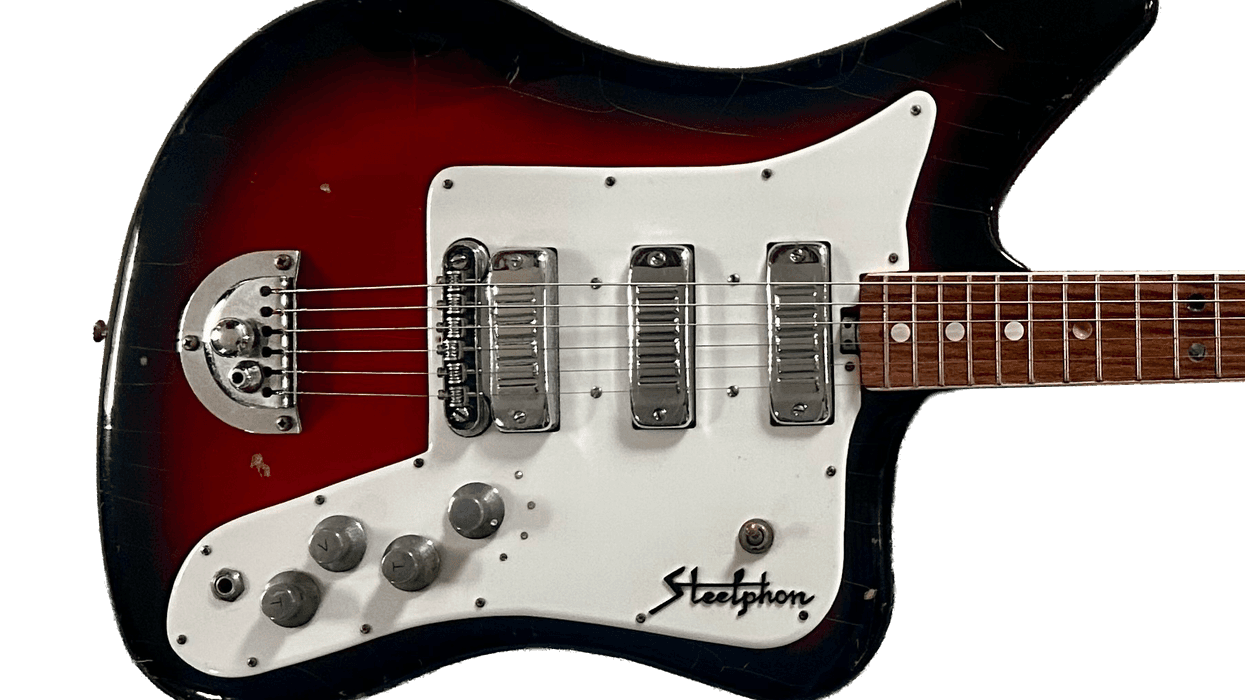
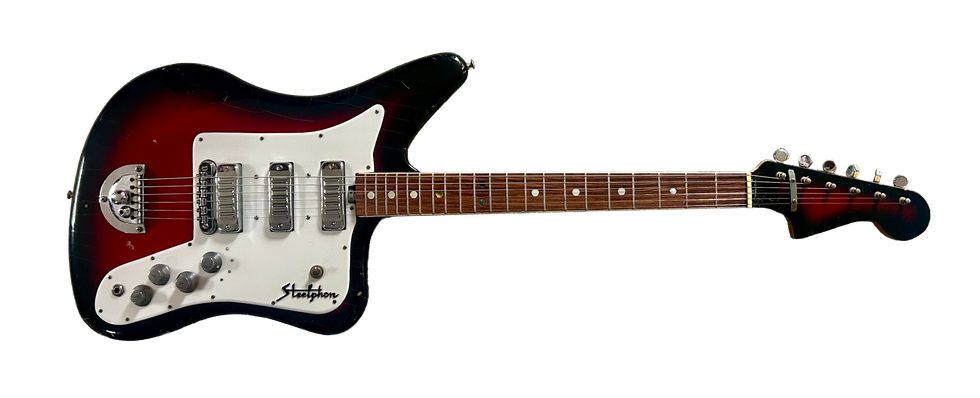
The weirdo was an amateurish no-name, although I have seen similar guitars with the “Douglas” or “Hickory” brand names. Taken as a whole, this club of an instrument looked like an electric guitar, but with more nuanced investigation, I came to some interesting conclusions. The instrument’s body was made of plywood and looked kinda clunky; it had an offset design, but the build process seemed crude.
“What designer or factory would rubber-stamp such a strange instrument?”
It was obvious that the guitar was made by a novice—perhaps even a noob. The neck joint was secured with one(!) screw and a washer to keep everything together. The frets were bad, the grounding was horrible, the tremolo was wonky, and the string alignment was all off. The pickups had large chrome covers that hid some rather weak single-coils. Feedback was a huge problem, and I fought with this guitar all the time.
Did I play it? Yep! Could I make music with it? Yeah! But man, it was a rough experiment. I couldn’t stop wondering who would make such a primitive guitar—what designer or factory would rubber-stamp such a strange instrument? My mind turned to the Japanese companies that were tasked with meeting the overwhelming demand for electric guitars while often having very limited lutherie experience.
I learned that this guitar dates to the mid-1960s, when many wood-producing factories were tasked with making electric guitars. There were all sorts of “pop-up” factories that made guitars for only a short time and then simply disappeared from history—which turned out to be the story with this strange 6-string. Surprisingly, I traced a few other guitars to the same forgotten factory where this one was made, and every single one had an amateurish feel.
Sound-wise, there were some interesting tones. One of my good friends describes it as the “empty-beer-can” sound, where there is a nasally, echoey quality that works particularly well for lo-fi surf or spaghetti Western tunes.
One of my favorite quotes comes from the name of a Charles Bukowski book: “The days run away like wild horses over the hills.” Yes, time does fly, because it seems like a lifetime ago that I got a phone call from an editor here at Premier Guitar. With time and practice, we all can hone our skills. And thankfully, the Japanese builders of my oddball beer-can guitar returned in the 1970s with a newfound desire to build high-quality guitars.
 Then, in the dream, I “awoke” and realized I was back in my bedroom, and it was all just a dream. The kicker is that I was still dreaming, because that “paddle” guitar was suddenly in my hands—then I woke up for real! How about that misadventure?