
If you’ve been reading along for all the long years I’ve been writing this column, then you probably know a little something about my kids, co-workers, and friends. That’s the trick for me with writing: Something is going on in my life or rattling around in my head, and I start thinking about connections, mostly with guitars and history.
Now, about a month ago, we adopted two puppies! They were running the streets of Philly (Philly jawns!), so we took them in to spoil and love ’em. When I first started writing for this wonderful publication years ago, we had just adopted two puppy brothers, but one of them passed, so we’d been thinking about getting some more dogs. Now we have three and I’m running on next to no sleep. When your kids say that they’ll help with training, DO NOT believe them!
Anyway, what I was meditating on recently is how dogs have such deep personalities and quirks. Just like kids, man, these two new pups are so unique. The female is super tiny, super feisty and super noisy! The male is fearless and knock-kneed, and together, the two of them are just so adorable and hyper and loving that our family is living the good life. We’ll learn to live around their quirks, and eventually everyone will settle into new roles.
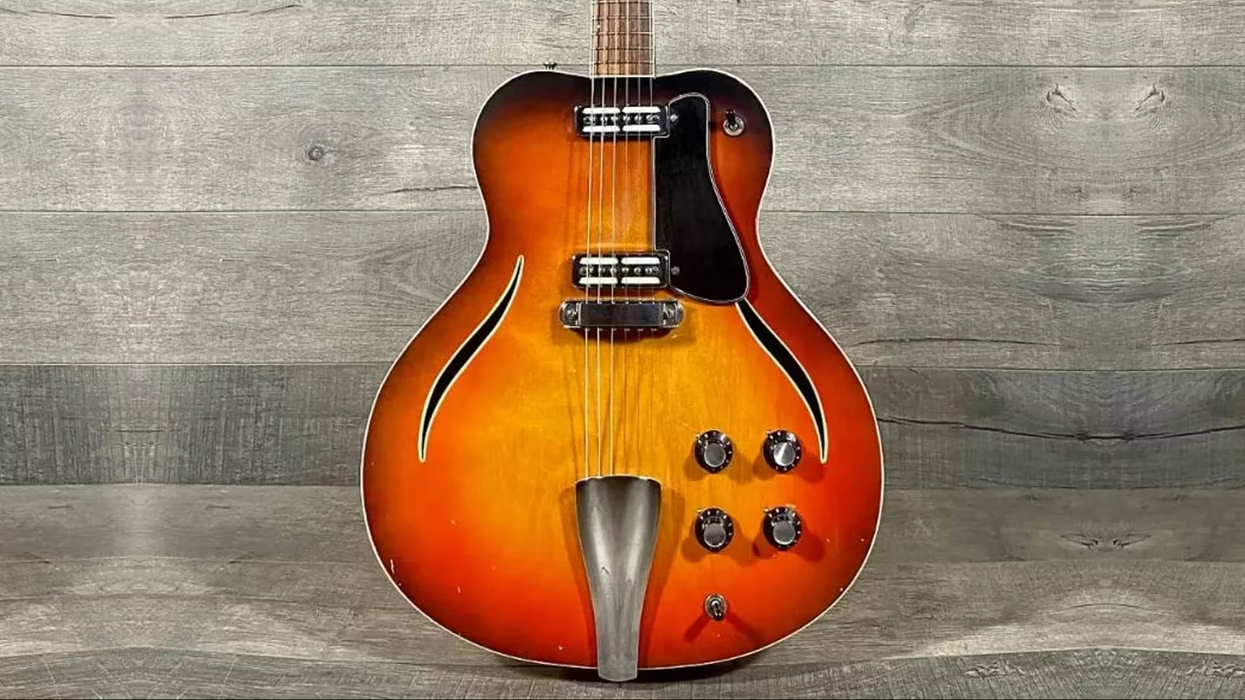
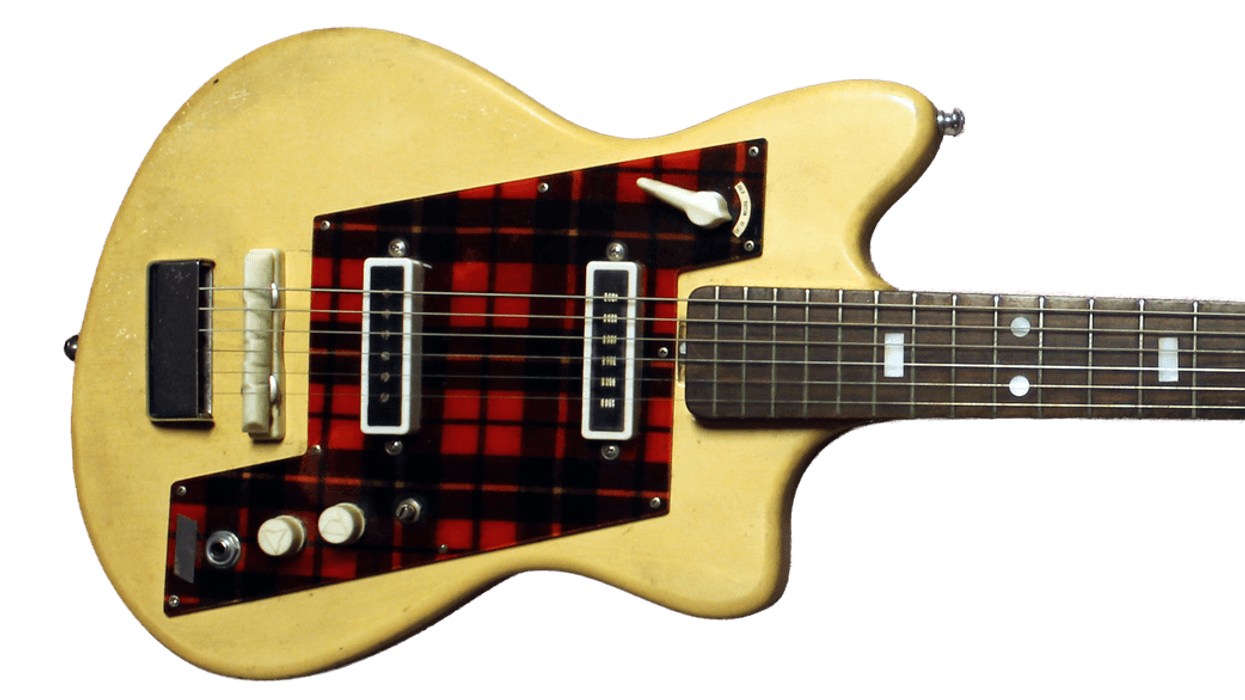
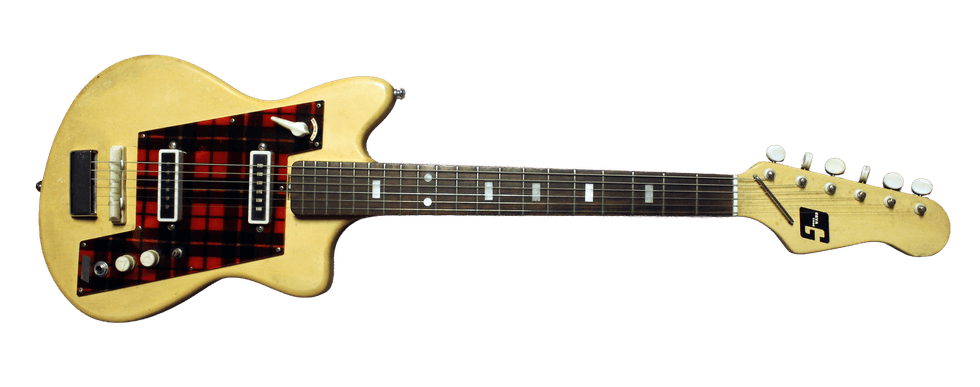
Of course, we all have our quirks, and as I’ve aged, I’ve come to terms with my own oddities. It’s so nice when people love you no matter what—and I’m a bonafide weirdo! But let me introduce some North American eyes to the weirdness of the Guyatone LG75. Only really appearing for about a year circa 1965, the LG75 was one of the quirkiest guitars I’ve ever owned (which is saying something).
First off, yes that is a plaid-patterned pick guard. Why? No idea. I mean, the Bay City Rollers did have a brush with stardom and tartan patterns, but that was in the ’70s. I don’t ever remember this pattern appearing on any other guitar I’ve seen, and curiously, these were sold primarily in the Japanese market. The Guyatone company was really picking up steam at that time and was cranking out all sorts of questionable guitar ideas; this was just one of them.
Second, the compensated but non-adjustable bridge can really give you trouble if the intonation is off. Good grief—I’ve spent so much time trying to get this guitar set up properly! At this time in Guyatone history, the Japanese Kasuga factory was making the wood parts of the guitar, and Guyatone was attaching their made-in-house electronics, but quality control was fairly hit-and-miss back then, and sometimes there were lemons. This guitar needed fret work, a neck angle repair, and plenty of precious time to deal with the aforementioned intonation issues.
Now, aside from all the challenges, who wouldn’t want to play this guitar?! With all that plaid, you could go hunting or settle into a ski lodge. It sounds pretty cool, and Guyatone always seemed to have solid electronics. (The Velvet Underground famously used a Guyatone electric guitar on their early recordings.) Yes, you have to fight with a lot of these old guitars. Yes, they can be weird and unpredictable. But isn’t that all part of the process? Even the color—yellowed off white—just looks like something Hank Marvin would be playing!
So, would you invest any time or money into a guitar like this? Would you accept its quirks and give it some TLC? These old import guitars are reaching around 60 years old now; are you prepared to give an old guitar a new lease on life? If so, you are my kind of people! Liking dogs helps, too.
![Rig Rundown: The Black Crowes’ Rich Robinson [2026]](https://www.premierguitar.com/media-library/youtube.jpg?id=66952027&width=1245&height=700&quality=70&coordinates=0%2C0%2C0%2C0)