
I don’t have many pleasant memories from the early months of the 2020 pandemic, but one bright spot was blowing the doors off my lockdown hideout with Sundragon’s stellar Standard combo. A collaboration between amp Jedi Mitch Colby, noted guitar collector and producer Perry Margouleff, and none other than Jimmy Page, the Sundragon was designed to replicate every design facet and idiosyncrasy of the heavily modified late-’50s Supro Coronado that Page used as a session player and on the entirety of Led Zeppelin’s epochal 1969 debut.
Both the prohibitively priced and Page-signed Limited version, as well as the Standard iteration of the amp, sold out almost immediately (the Standard is available again). Sundragon followed the success of the Standard with short runs of the Super Dragon, a recreation of Page’s go-to modified 1968 Marshall Super Bass, and the Nymph, a one-watt, 1x8 combo.
Enter the Dragonette
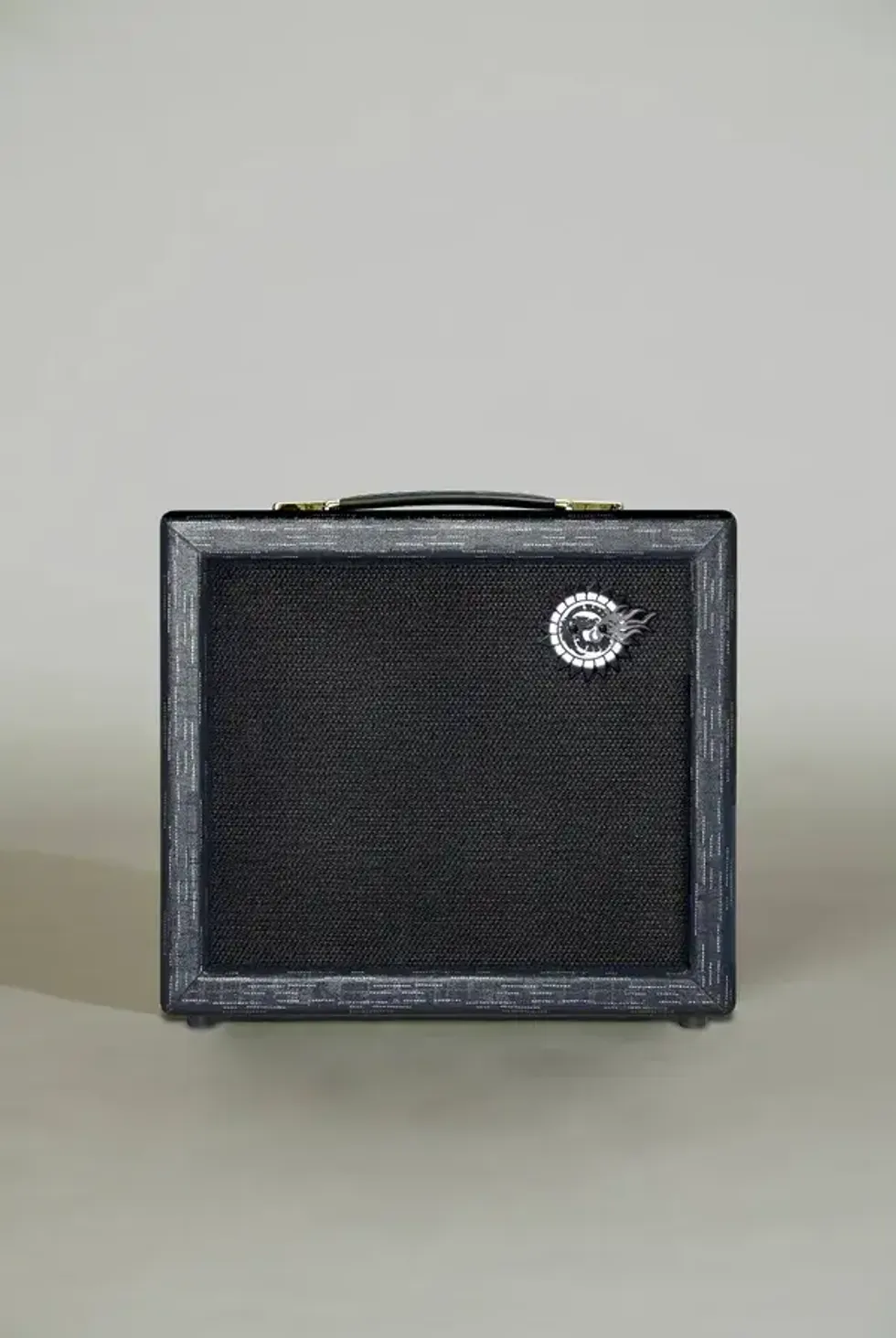
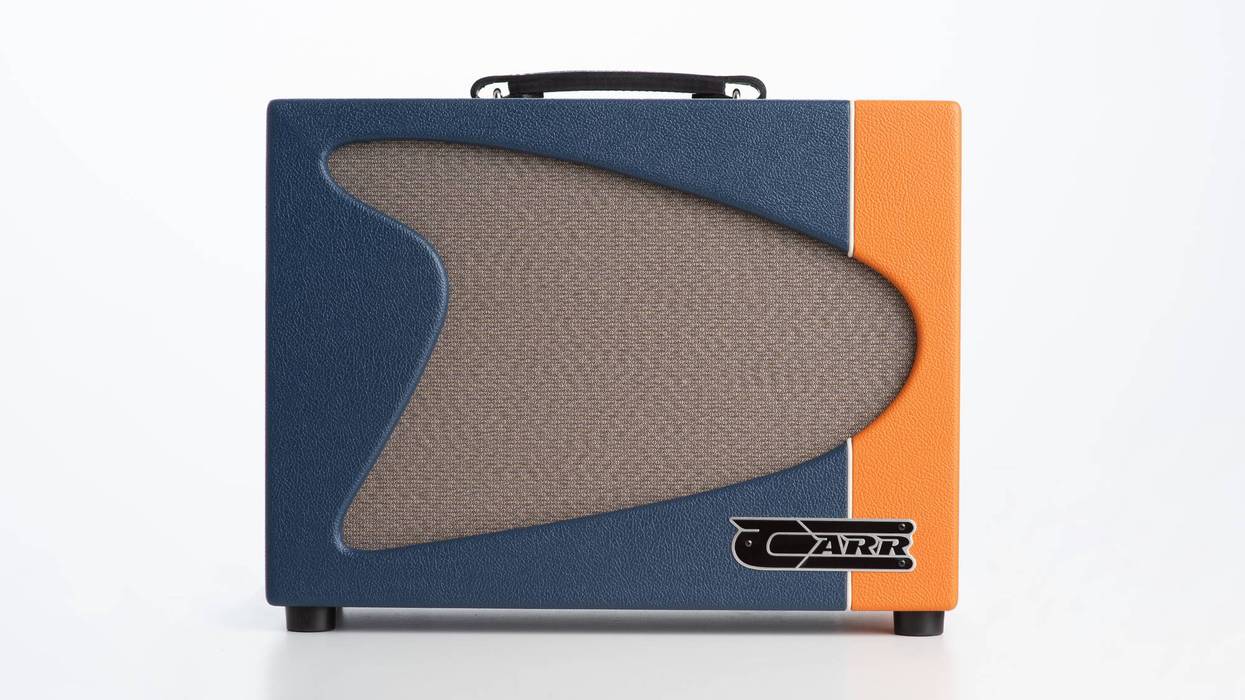
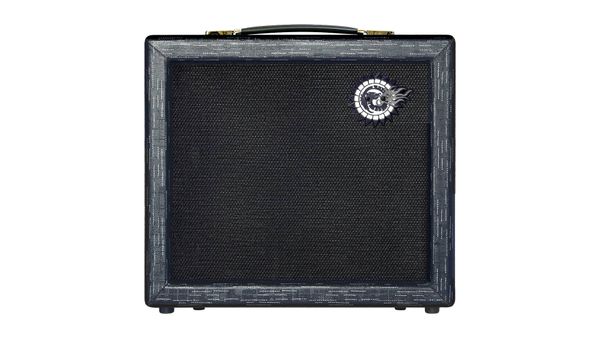
The partnership’s newest offering, the Dragonette, recasts the Nymph as a more muscular 6-watt, 1x10 combo. A limited, Page-signed edition featuring all new-old-stock tubes will be available. But we reviewed the slightly more accessible standard edition, which still features the same super-swanky solid phenolic knobs and grey and white vinyl wrap (inspired by vintage Supro amp style) that make the Limited edition such a looker.
The handsome enclosure is home to a pair of 12AX7 tubes in the preamp section and a duet of 6V6s that drive the 10" Celestion Alnico Gold speaker—all of which can be seen clearly via the port in the open-back cabinet. The control panel is simple—featuring just volume and tone controls and a 3-way rotary switch that moves between attenuated mode, full power mode, and full power with a treble booster. Mode 1 is the cleanest, while mode 2, which is structured like the original Sundragon’s input stage, is significantly hotter. The attenuated mode, at four watts, is just two watts less than full power—but it’s much cleaner and gets dirty at more neighbor-friendly volumes.
Colby’s design means the amp always sees a speaker load, too, so the amp functions safely when the internal speaker is disconnected. And by using the line-out jack and dedicated volume control, you could run the Dragonette silently into a mixer or DAW with speaker simulation or an IR plugin.
“There’s no fizz, no midrange slop, no flabby lows, and not a sign of mechanical noise or cabinet rattle, even when the amp is dimed.”
Bring It On Home
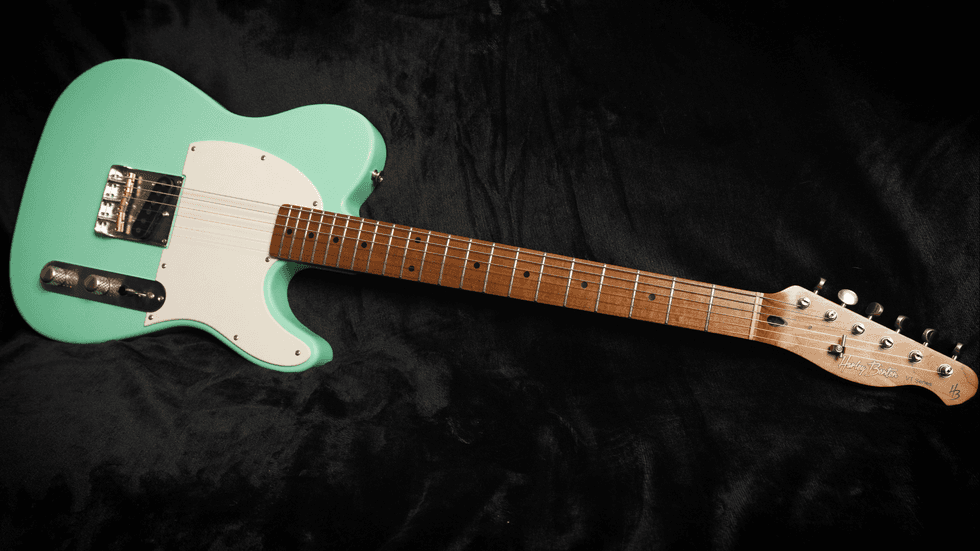
In the spirit of Mr. Page, I hooked up the Dragonette with a Gibson Murphy Lab 1957 Les Paul and a T-style equipped with DiMarzio Area T noiseless pickups. In attenuated mode, with the amp’s volume set just below the 11-o’clock position, the Dragonette produces glassy, almost three-dimensional clean sounds. Pushing the volume to 1 o’clock and beyond brings equally delicious edge-of-breakup tones that can be shaped extensively using guitar volume and tone controls. In full-power mode, the Dragonette begins to breathe fire, delivering tight classic-rock crunch at low amp-volume settings. Pushing the volume past the 2 o’clock position, meanwhile, yields a wide array of saturated high-gain tones that are modern, tight, and rich—there’s no fizz, no midrange slop, no flabby lows, and perhaps most importantly for recording applications, not a sign of mechanical noise or cabinet rattle, even when the amp is dimed.
Given the range of sounds available from the attenuated and full-power modes, the treble boost circuit seemed almost superfluous. It yields groovy Yardbirdsian sustain and Sabbathian sludge, but it’s probably a fair supposition that players who gravitate towards this amp will also have curated arsenals of boutique boosts and fuzzes to throw at it. The treble booster sounds fantastic, nonetheless. And minimalists will love having the option to use it without adding pedals to the mix.
Just for good measure, I also connected the Dragonette’s speaker output to an early-’70s Marshall 4x12 cabinet with “black back” 30-watt Celestions (the manual states that you can run the amp into 4-, 8- or 16-ohm loads without harming it). While the big cabinet moved more air, I preferred the focus and texture delivered by the Dragonette’s single Celestion.
The Verdict
Unless dead-clean, high-headroom Bakersfield country twang is your primary goal, the Dragonette is an amp that anyone with the means should investigate—especially if recording rock and blues is on the agenda. It performs well with single-coils and humbuckers, and this agreeability, plus the amp’s simple, intuitive controls, mean that you have to work really hard to make the Dragonette sound bad. The line out, meanwhile, creates possibilities for silent recording if you have a good speaker simulation on the other end. Obviously, a price-pushing $4K is an awful lot for a 6-watt amp. But if Jimmy Page signs off on it, who are we mere mortals to argue the price? And if you’re a studio hound, it might just be the only amp you'll ever need.