

As we get farther and farther away from the dawn of electric guitars, we naturally lose some of the innovators along the way. They’re the pioneers and groundbreakers on whose shoulders we stand, but forgotten geniuses deserve a spot at the table of recognition alongside the household names. And so today, in the wake of his recent passing, I want to honor Japanese guitar builder Yuichiro Yokouchi.
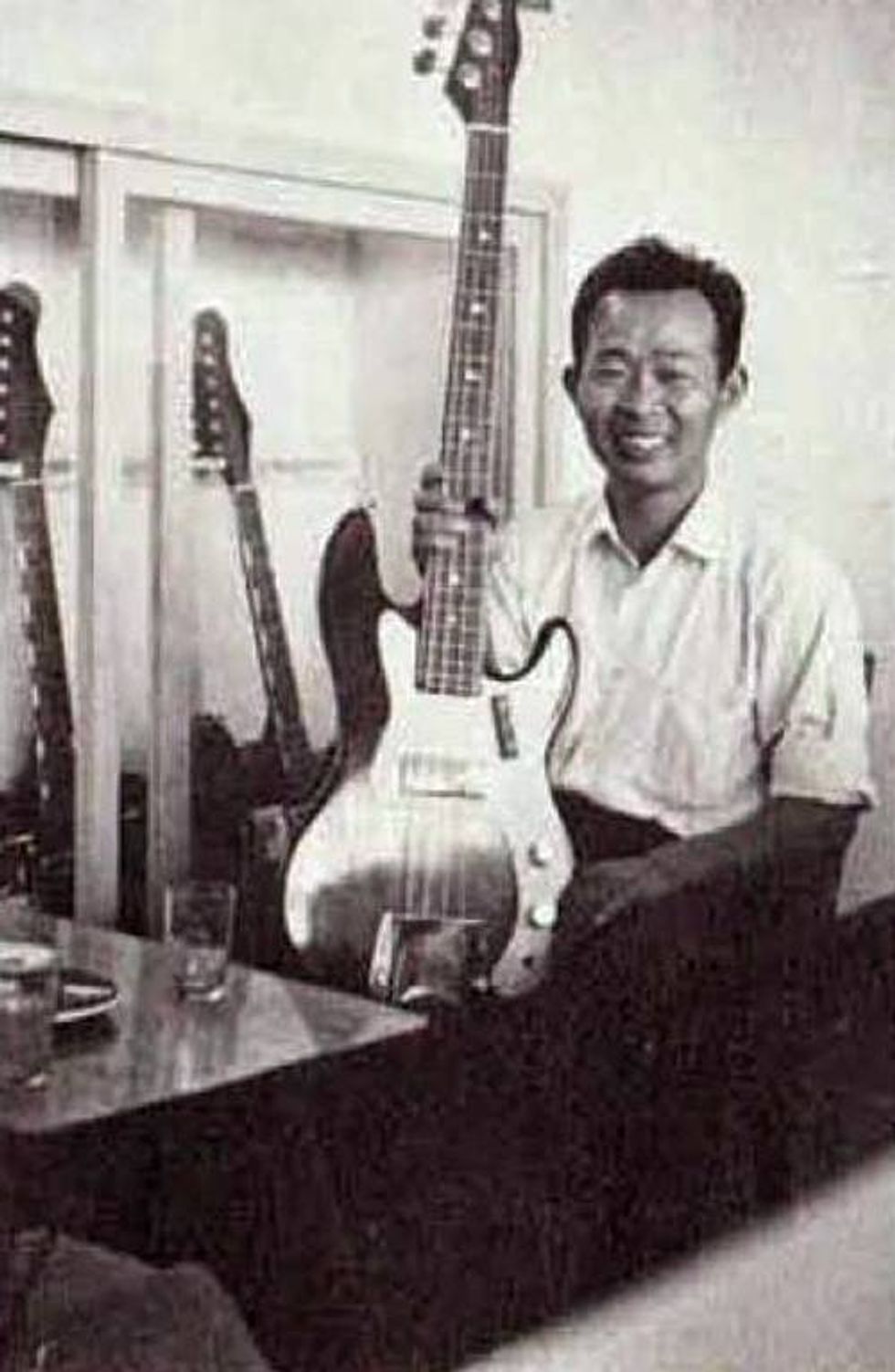
Yokouchi-san with a Fujigen-built bass.
Photo courtesy of Shoji Yokouchi
While his name might not glide off our Anglo-Latin tongues, Yokouchi-san’s profound impact on music still reverberates today. He founded Japan’s Fujigen-Gakki company, which made and still makes some of the finest guitars in the world. Fujigen posted a memorial across social media which read in part, “It is with profound sadness that we announce the passing of our founder, Yuichiro Yokouchi, at the age of 98. With the ambition to become Japan’s finest guitar manufacturer, he named our company after Mt. Fuji—an enduring symbol of the highest standard. Through his dedication and vision, he realized that ambition, laying the foundation for our company to become a world-class guitar manufacturer representing Japan.”
I was fortunate enough to have met the man several times, and instead of repeating some of the common facts about him (and all his deserving accolades), I’d rather share some of my own first-person accounts, in no particular order.
Yokouchi-san reminded me of Leo Fender! If you compare their pictures side by side, one could make the argument that they might be long-lost brothers! And when you consider both men’s musical accomplishments, the idea isn’t that far-fetched. Plus: Neither man could play guitar!
Yokouchi-san lived on the same property his whole life. Located in Matsumoto City, his original family home still stands on the property, along with other buildings—including the original Fujigen factory, which used to be a cow barn! In fact, Yokouchi-san transitioned from farmer to violin maker, and finally to guitar maker, because his children were taking violin lessons using the Japanese Suzuki method.
Yokouchi-san reminded me of Leo Fender! If you compare their pictures side by side, one could make the argument that they might be long-lost brothers!
He always wanted to eat dried, marinated grasshoppers with me—mostly to laugh at my facial expressions. He was a good-natured fellow, very kind and generous. I have piles of his gifts in my studio. I also sent many Fujigen-made guitars back to Japan to be displayed at his home.
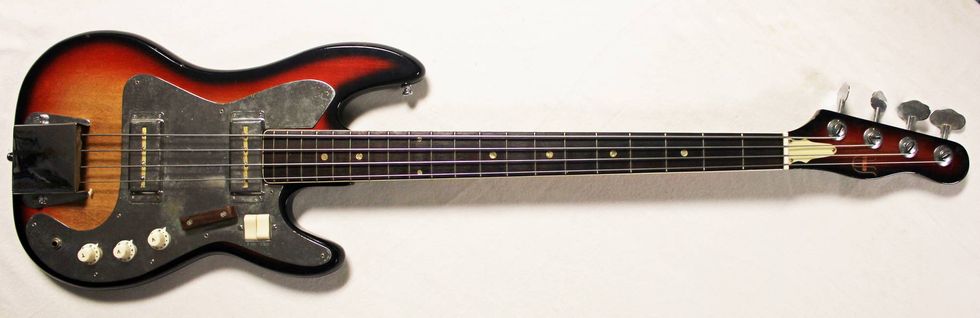
The Tulio EB bass.
Fujigen is the nicest guitar factory I’ve ever seen. Neat, orderly, and efficient, the facility is known for high-quality instruments. Heck, they even play classical music in the wood-drying rooms. It’s no coincidence that it’s located in Matsumoto City, known for its history of fine wood craftsmen.
Yokouchi-san kept everything, including old records, parts, and correspondences, from 60 years ago. By sorting through his records, I was able to fill in a lot of blanks when it came to Japanese guitar making.
Yokouchi-san’s sons went into the guitar business in his footsteps, and ushered Fujigen through some golden eras. Like their father, they knew everybody! During one of my visits to Japan, the Yokouchi family gathered people for an employee reunion. There were former workers there from all over!
Yokouchi-san wrote a book about his life story, and was considered a true success in his country, particularly in post-WWII Japan. He enjoyed a level of fame that drew many visitors from around the world. He greeted them all with his jovial smile, and often spoke to people in their native language. His English was excellent.
In an effort to jumpstart his company in the early 1960s, Yokouchi-san travelled to New York City by himself, with several demo guitars slung over his shoulders. He walked around the city trying to sell them, but at the time, he only spoke Japanese. Things didn’t go well. When a family saw him weeping on the street, they took him in, which led to the first U.S. sales of Fujigen-Gakki guitars!
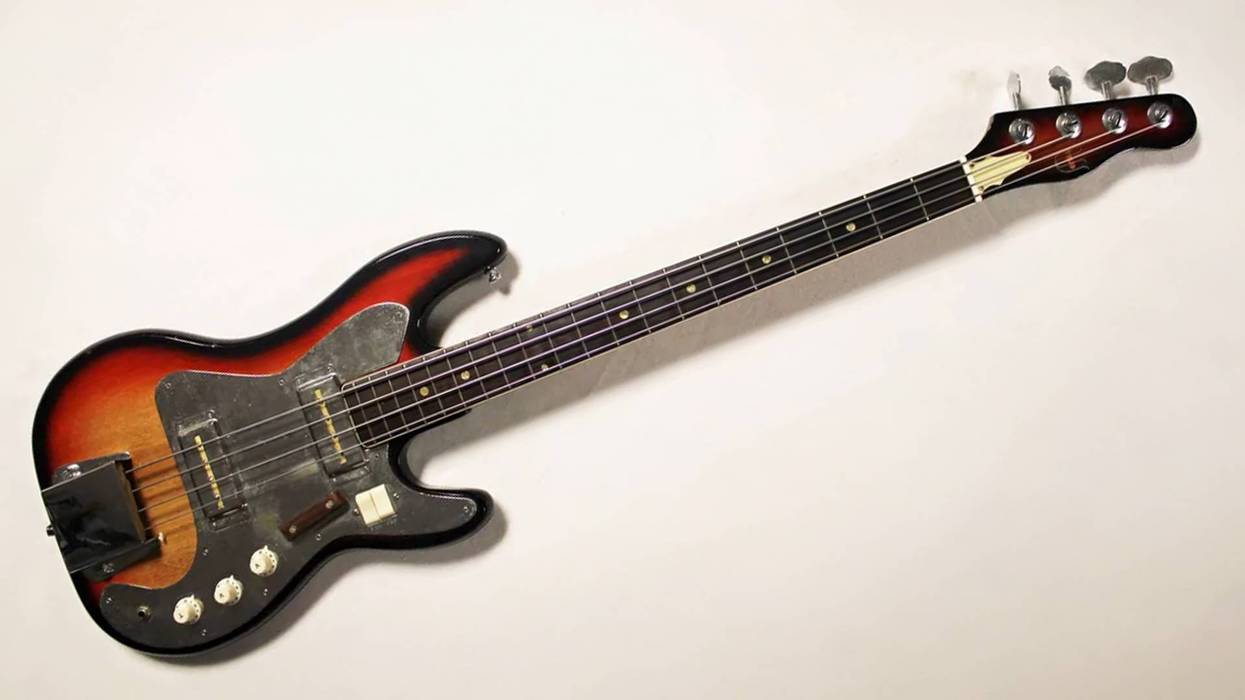
There are so many other anecdotes that I’d love to fit in here, but in the end, it’s all about Yokouchi-san’s legacy, which are the electric guitars he brought into the world. To honor the man, here’s a photo of one of his first electric guitars, a Tulio EB bass. Can you see the Fender connection there? I’m telling you—long-lost brothers. Cheers to the guitar-making greats!


 Then, in the dream, I “awoke” and realized I was back in my bedroom, and it was all just a dream. The kicker is that I was still dreaming, because that “paddle” guitar was suddenly in my hands—then I woke up for real! How about that misadventure?