

Alas, ’tis my favorite time of the year. As summer turns into fall, my hoodies come out, football season starts, and I harvest my little vegetable garden. I don’t take it too seriously, and mostly I just like to see what will grow. Basically, at its core, I enjoy taking care of things in general. Tending to a little garden is good therapy—if you know, you know. Now, I do get more serious with my tomatoes. See, one of my favorite routines is making a huge pot of spaghetti sauce (or gravy, depending on where you’re from). Man, we eat nothing but Italian dishes for about a month! I boil the tomatoes and grind them up with an awesome little tool and then let the juices reduce. Personally I like a little red cooking wine in my sauce, but all you have to do is season it to your taste. Simple, easy, and fresh!
I enjoy the whole process of choosing ingredients that I grow and simply letting the house soak with aromas from the simmering pot. I actually get happy when I see a “nice” tomato or a fine-lookin’ onion! Having everything at home and within reach contributes to my overall feeling of zen, and it’s one of my happy places.
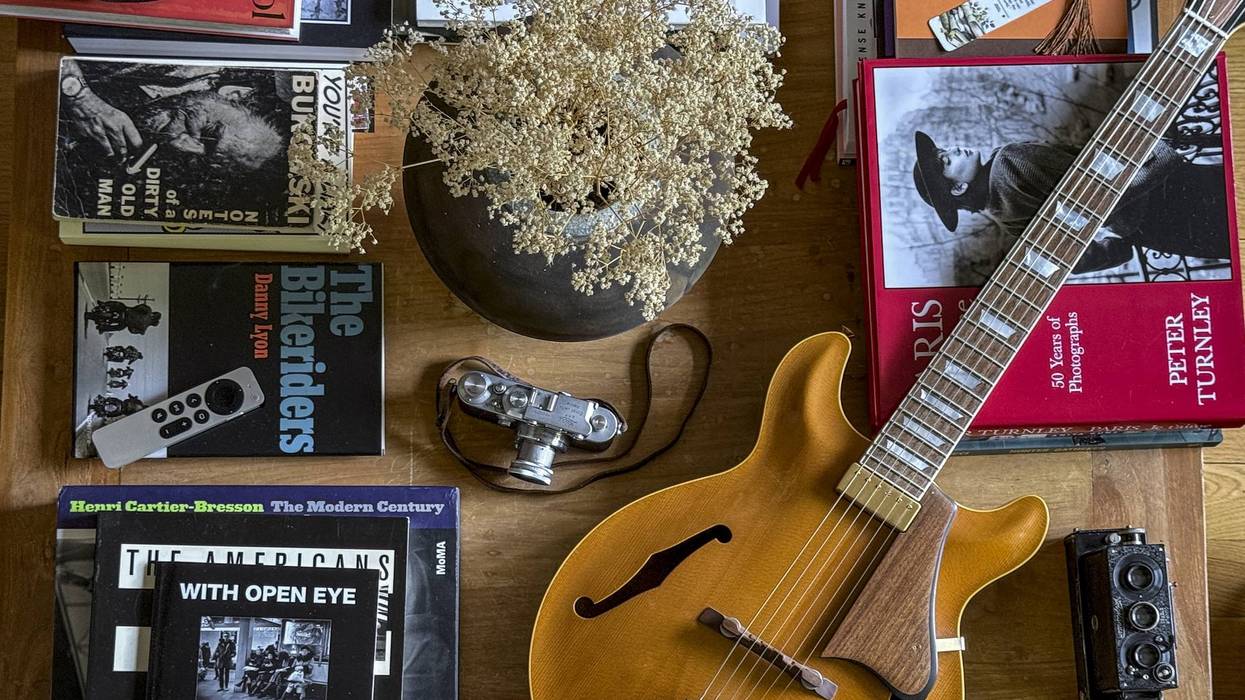
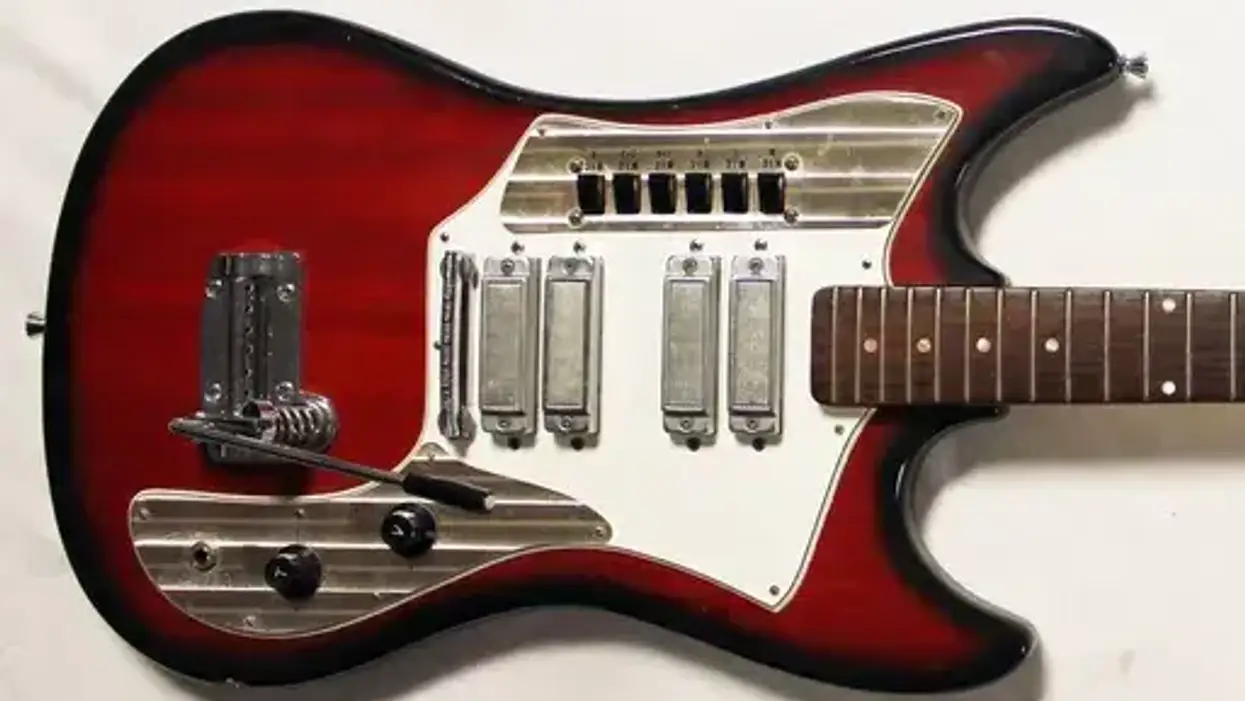
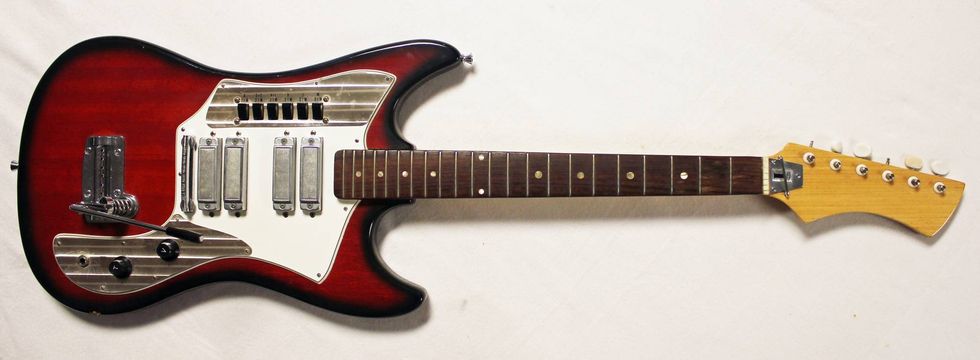
Normally I also have one or two guitar projects going every summer, too. This past summer I really struggled to build a few guitars (see last month’s article and my new puppies), but I was able to source some old parts and scrounge up what I have in my basement shop to basically restore this old Inter-Mark Cipher Valor. I like sourcing original parts to complete “husks,” which are like donors for parts. But I always feel kinda sad for these sacrificial guitars and have a need to make them whole again. Again, I enjoy tending to my guitars just like my garden—keeping everything happy and complete and content.
So as summer winds down, I want to write about my garden and my latest “project” guitar—more specifically, about gathering all the ingredients to make a guitar whole again. If you want to build a Fender- or Gibson-style guitar, there are all sorts of places to source parts, vintage or otherwise. But when you’re trying to rebuild a vintage oddball, you are gonna encounter some problems. It’s like with old car, motorcycle, or bicycle parts. So many obscure makers with proprietary parts—jeez, it can take a while to source those “ingredients.”
Take this 1960s Inter-Mark, for example. In Japan, these were made by a company called Shinko Gakki, which spent the post-war years making pianos and organs before eventually getting into acoustic—and then, in the mid-’60s, electric—guitars. They wound up going bankrupt shortly after. Shinko pickups? Copies of Italy’s Eko and Burns from the UK. Shinko used aluminum spun knobs. The truss rod cover also held the string guide. The pickup switching system was mostly based on Italian designs with push buttons and spring-loaded mechanisms. The tremolo units were also rough copies of Eko guitars. So how does one find parts?
For a while I was buying every Shinko-made guitar I could find, and I was able to finish off several guitars with original factory parts. See, all the above idiosyncrasies are primarily found on Shinko guitars, and you simply can’t buy an old Eko and part it out. Looks similar but not the same. This is why I cringe when I get questions about guitar parts. I have knobs that were only found on Shinko guitars, and they’re different from the Fujigen knobs. Even though both companies used spun aluminum, Shinko often used gold-plated knobs and Fujigen didn’t.
So now, at the end of the summer, I have my tomato sauce and another completed guitar. If you want to just jam on a guitar (which is what I mostly do), then go nuts. Or you can get into the weeds and try to make something whole again. Dig? It’s all about the sauce, brothers and sisters!