

As we approach our centennial, people often assume our shop only services Latin instruments. But since the 1940s, we’ve built more than 50 types of string instruments for artists across many genres. Apprenticing under my father and grandfather, I learned the delicate balance of tension, action, scale length, bracing, and intonation. Yet every week in Nashville, I see fine instruments misdiagnosed by techs applying electric-guitar logic to acoustic builds.While techniques vary, our history and client list demonstrate that our approach works. Let’s look at a few common errors—call it five things your tech may be getting wrong about acoustic tone and setup, and how a master luthier fixes them.
1. Treating Acoustic Action Like Electric Action
The Mistake: Players often seek a “shredder-low” action, leading techs to sand the saddle until strings barely clear the frets.
The Physics & Fix:
● Break Angle: Acoustic tops are driven by downward pressure. To drive a spruce or cedar top, you need a saddle break angle of at least 30 to 35 degrees; 45 is ideal.
● Energy Loss: A flattened saddle kills the leverage, and you end up keeping the vibrational energy in the string rather than transferring it through the bridge to the soundboard.
● The Delgado Fix: If action is high at the 12th fret but the saddle is low, the neck angle may have shifted, requiring a reset. Sometimes, shaving the bridge or micro-ramping pin slots helps, provided you maintain proper saddle height.
2. Using the Truss Rod to Fix Action Height
The Mistake: Techs often tighten the truss rod as an action adjustment, but only do this if correcting excessive neck bow.
The Physics & Fix:
● Relief vs. Geometry: The truss rod exists for one specific job: controlling neck relief (bow) to accommodate string vibration. It should not be used as an action adjustment screw.
● The Delgado Fix: Check neck relief first with a straight-edge. While setup preferences vary by playing style, here is a helpful baseline guide for action height:
For Acoustic Guitars:
● Low E string (0.090”/2.30mm) | High E string (0.075”/1.90mm)
For Classical Guitars
● Low E string (0.120”/3.00mm) | High E String (0.100”/2.30mm)
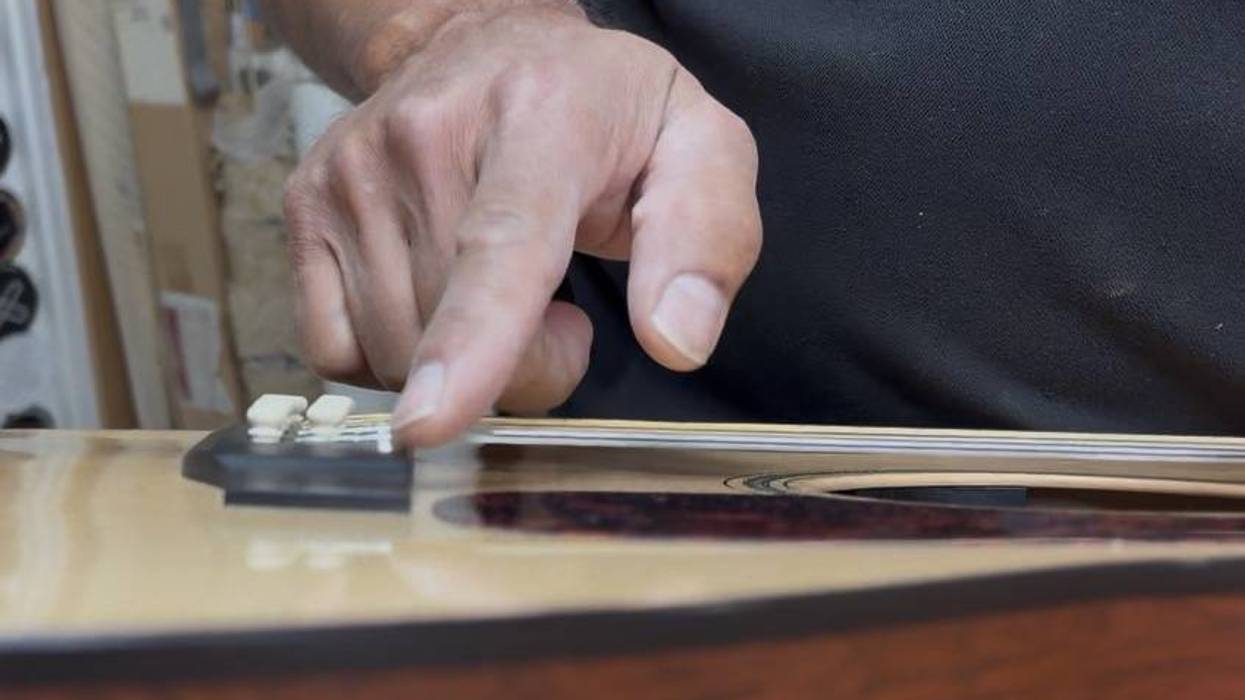
3. Misunderstanding Saddle & Nut Material vs. Slot Fit
The Mistake: I often say there are little things that can make a bad guitar good or a good guitar great, and the same is true in reverse. Using materials that absorb vibration vs. transferring vibration can make a huge difference in tone and volume.
The Physics & Fix:
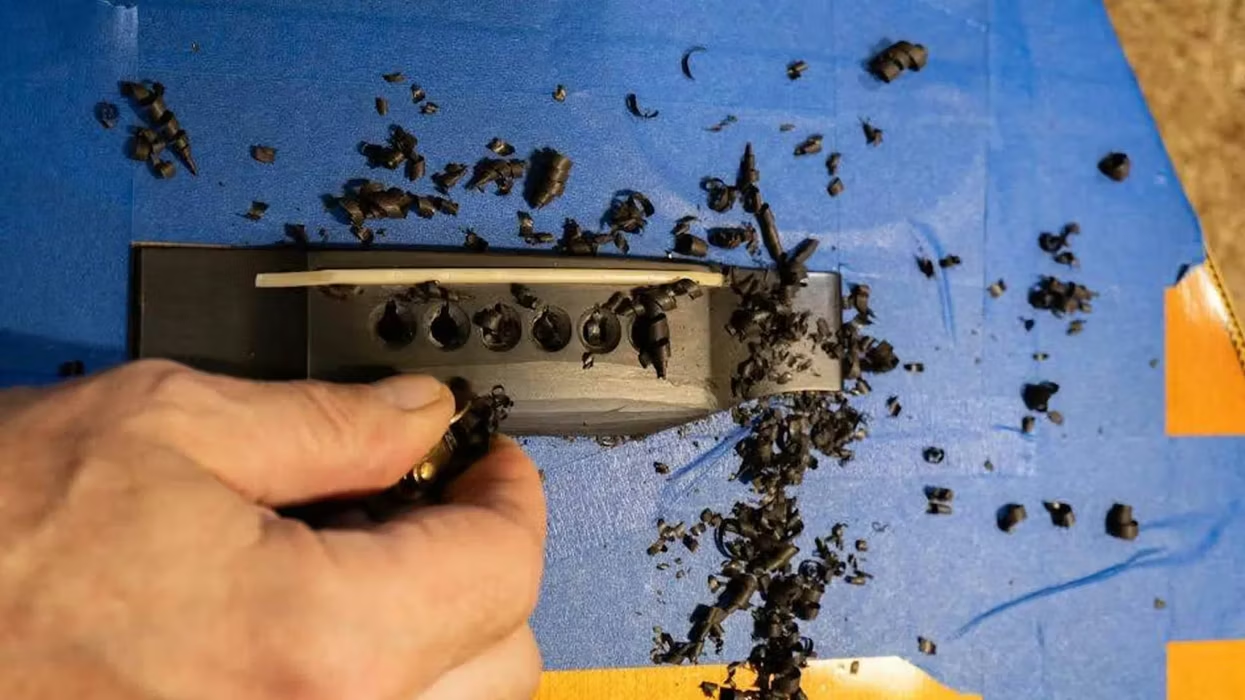
● Fit Over Material: A hand-carved bone saddle that sits loosely in the bridge slot or has an uneven bottom performs far worse than a properly fitted synthetic saddle (though bone remains preferred when fitted correctly).
● Pickup Balance: For undersaddle piezos, the saddle bottom must be perfectly flat. Hand-sanding often creates a crown, leading to uneven string-to-string volume.
● The Delgado Fix: Every nut and saddle must fit with zero tilt or play—snug enough but not so much you need pliers to remove it. The slot bottom must be squared to ensure direct contact with the bridge wood or pickup element.
4. Misdiagnosing Dryness vs. Over-Humidification
The Mistake: Shops frequently assume buzzing or top deformation always indicates dryness, recommending aggressive humidification.
The Physics & Fix:
● The Over-Humidification Problem: A guitar stored above 60 percent relative humidity (RH) absorbs excess water weight. The top swells and rises, raising action and making the tone sound muddy, compressed, and lacking high-end air.
● The Dryness Trap: Conversely, a dry guitar (under 35 percent RH) shrinks, dropping the top, lowering action, causing fret ends to sprout and cracks in the wood.
● The Delgado Fix: Stabilize the guitar at 40–50 percent RH for 72 hours before any diagnosis. Adjusting a “wet” or “dry” guitar results in a setup that fails once normal humidity returns.
5. The Bridge Pin Tone Myth vs. Mass
The Mistake: Selling heavy brass or dense exotic-wood bridge pins on the claim that they “increase sustain and low end.” I won’t argue that plastic pins are the best choice, but I’d go with wood pins that match—or come close to—the material the bridge is made of.
The Physics & Fix:
● Top Mass: In lutherie, mass is the enemy of responsiveness. Heavy brass pins add dead weight to the soundboard, slowing acceleration and killing projection.
● The Role of Pins: Bridge pins are simply mechanical wedges meant to anchor the string ball-end against the bridge plate underneath the top—not to hold the string down from above.
● The Delgado Fix: Ensure the string ball-end seats directly against the hardwood bridge plate, not wedged under the tip of the pin. Traditional unslotted pins with ramped/slotted bridge bridges provide superior coupling, lighter weight, and longer bridge plate life.
While technique and preference exist across different players, following these fundamental principles will improve your guitar’s tone and playability.