

When most people look at an acoustic guitar, especially the body, they assume they understand how it works. A common belief is that it behaves like a speaker. In a very loose sense, that’s not entirely wrong. But it also misses what’s really happening.
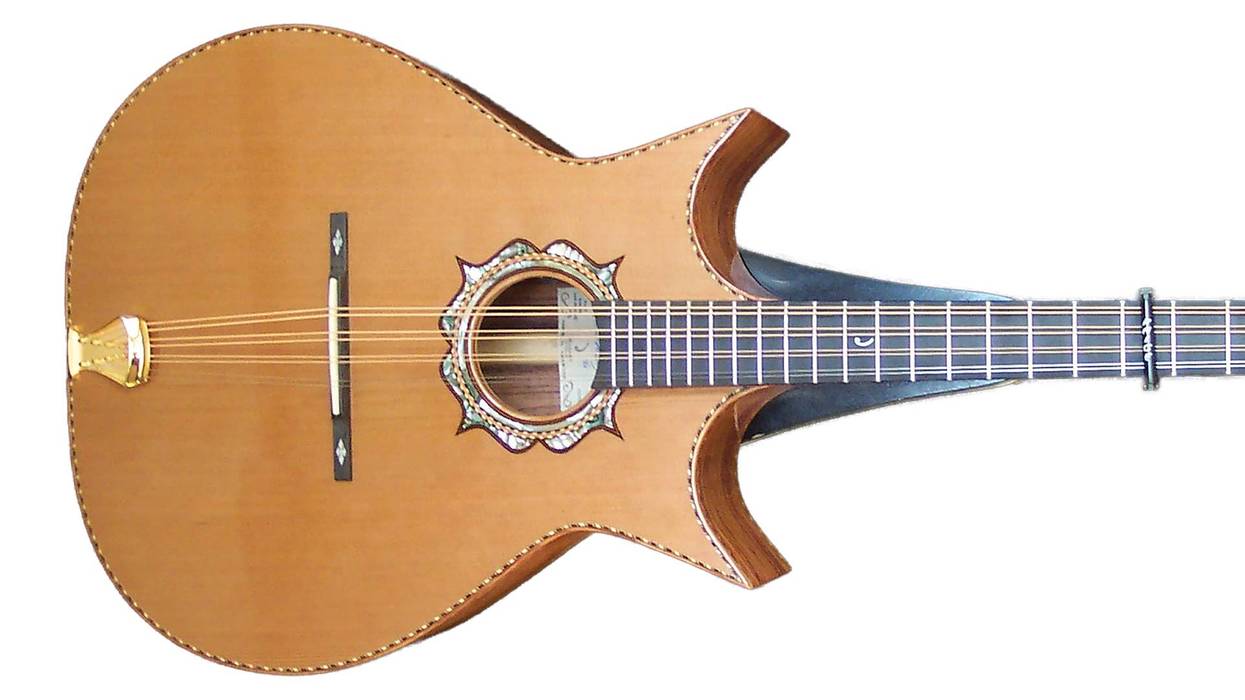
At its core, the acoustic guitar is a system in balance. When the instrument is strung to pitch, the tension placed on the top is significant, often around 140 pounds of total string load. How that top is thicknessed and how the braces are carved is in direct response to that force. The tension of the strings is constantly being opposed by the structure of the top, and that balance is what allows the instrument to store and release energy in a controlled way. The strings pull, and the structure counters—and this balance is not incidental; it is the foundation of how the instrument functions.
When a string is struck, energy is introduced into that system. What follows is not just vibration, but organization. The top begins with what is known as monopole motion, which is the primary pumping action of the instrument and the source of its fundamental voice. Within that motion, a core resonance develops, often referred to as the Helmholtz frequency; however, it is more accurately titled “air resonance.” The Helmholtz effect is similar to blowing across the top of a glass bottle, but an acoustic guitar is not a rigid system. The top and back flex, they move and breathe, forming a coupled system in which the air, top, and back interact to create the lower register of the instrument.
“At its core, the acoustic guitar is a system in balance.”
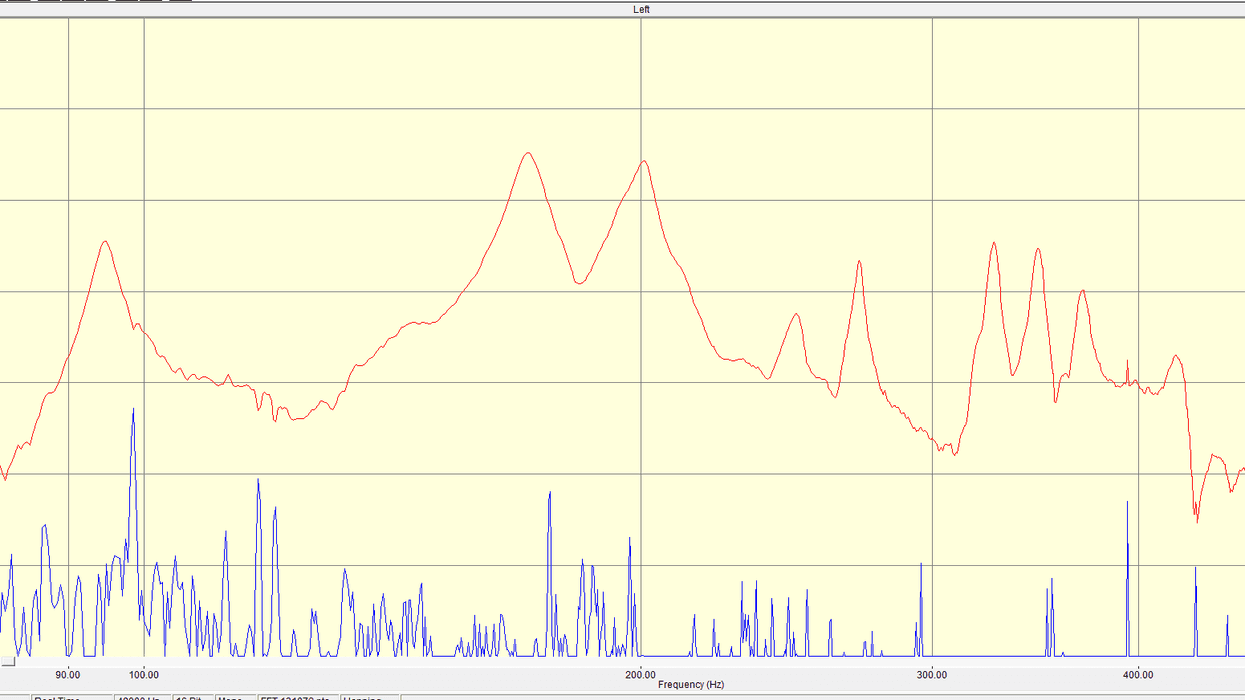
This air-top-back interaction becomes clear when the body is excited and observed on a Fast Fourier Transform (FFT) analyzer. Three primary features emerge: the air resonance, the top mode, and the back mode of vibration. Every guitar exhibits these frequencies. Even inexpensive instruments reveal them, though at that level they are largely functions of geometry. If the guitar does not respond well sonically, those same markers often reveal why.
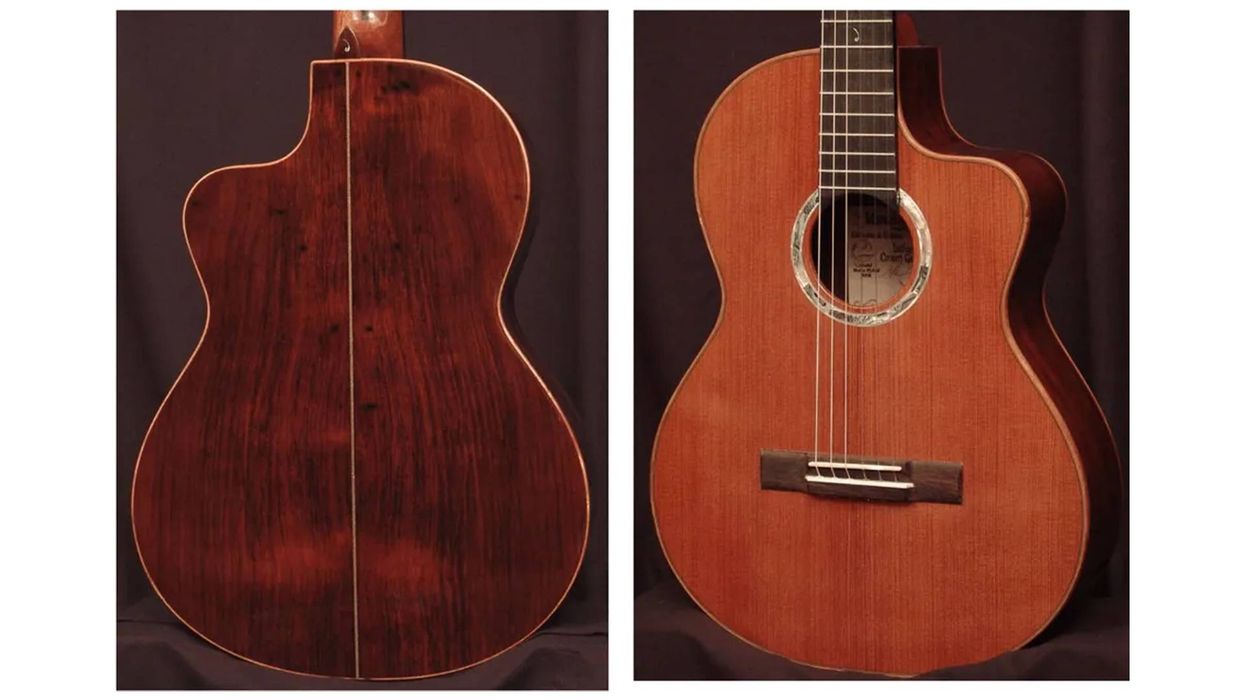
In a more refined and controlled instrument, this system is shaped by physical choices. A more flexible top and back will generally lower the air resonance, while a stiffer system will raise it. The same is true of the sound hole: Smaller openings lower the resonance, while larger ones raise it. These are direct mechanical consequences.
Beyond this first layer is where the character of the guitar begins to emerge. Within the wooden structure of the instrument are nodes and antinodes, regions of stillness and motion, that organize how energy moves through the system. In a refined instrument, these patterns begin to drive the next level of behavior. Higher-order harmonics are excited, and more advanced modal patterns come into play. This shift, from simple motion to a more organized system, is what shapes tone, response, and identity.
From this geometry-driven foundation, the guitar reveals a ladder of higher-order behavior, dipoles, tripoles, and quadrupoles, that shape its character. While nodes and antinodes extend into higher frequencies, contributing to clarity, shimmer, and a sense of reverb, it is these mid-to-upper-order modes that define an acoustic instrument’s voice. When functioning properly, independent in motion yet unified in effect, they organize the instrument’s response into a clear hierarchy of tone and balance. This is where a world-class instrument begins to separate itself from the average, everyday guitar.
When these modes are present and active, the instrument takes on a different level of refinement. This is what players perceive as depth, clarity, and responsiveness. On a great guitar, these modes are not hidden; they are evident, both in sound and, if measured, on an analyzer or visualized through Chladni patterns. Whether seen or measured, their role is the same: They define how the instrument speaks. If a guitar is built too heavily, often in the interest of durability, these modes become dampened. The instrument still functions, but the refinement and subtlety are reduced.
When the wood is well-chosen and the structure properly balanced, these patterns, nodes, antinodes, and modes are allowed to develop. This is where material properties come into play. The speed at which sound travels through the wood, and how efficiently that energy is converted into sound, influence how these patterns emerge and resolve. These are not secondary considerations; they are central to the outcome.
In the end, what separates a great instrument from an average one is not a single feature. It is the way these small, interconnected behaviors come together. The balance of tension, the flexibility of the system, and the presence of higher-order harmonics—all these subtle things are what turn an instrument into an ideal conduit of musical expression.